Essential oils for dandruff: what actually works, and what most guides get wrong
Most advice about essential oils for dandruff starts with a list: tea tree, rosemary, peppermint, lavender, and on it goes. A list is easy to write. It is also why so many people try three oils, see no change, and decide nothing natural works. The truth is quieter and more useful. Dandruff has a specific cause, a few essential oils genuinely act on that cause, and one popular habit (oiling the scalp) can make the real thing worse. If you understand the mechanism first, the right choices become obvious.
In this guide we explain what dandruff actually is, how it differs from a dry scalp, which oils have real evidence behind them, how to use them safely, and when flaking is a sign to see a doctor instead. We close with a Balinese view of scalp care, rooted in the coconut groves and kayu putih trees we grew up beside.
Dandruff is not dry scalp: the difference every list skips
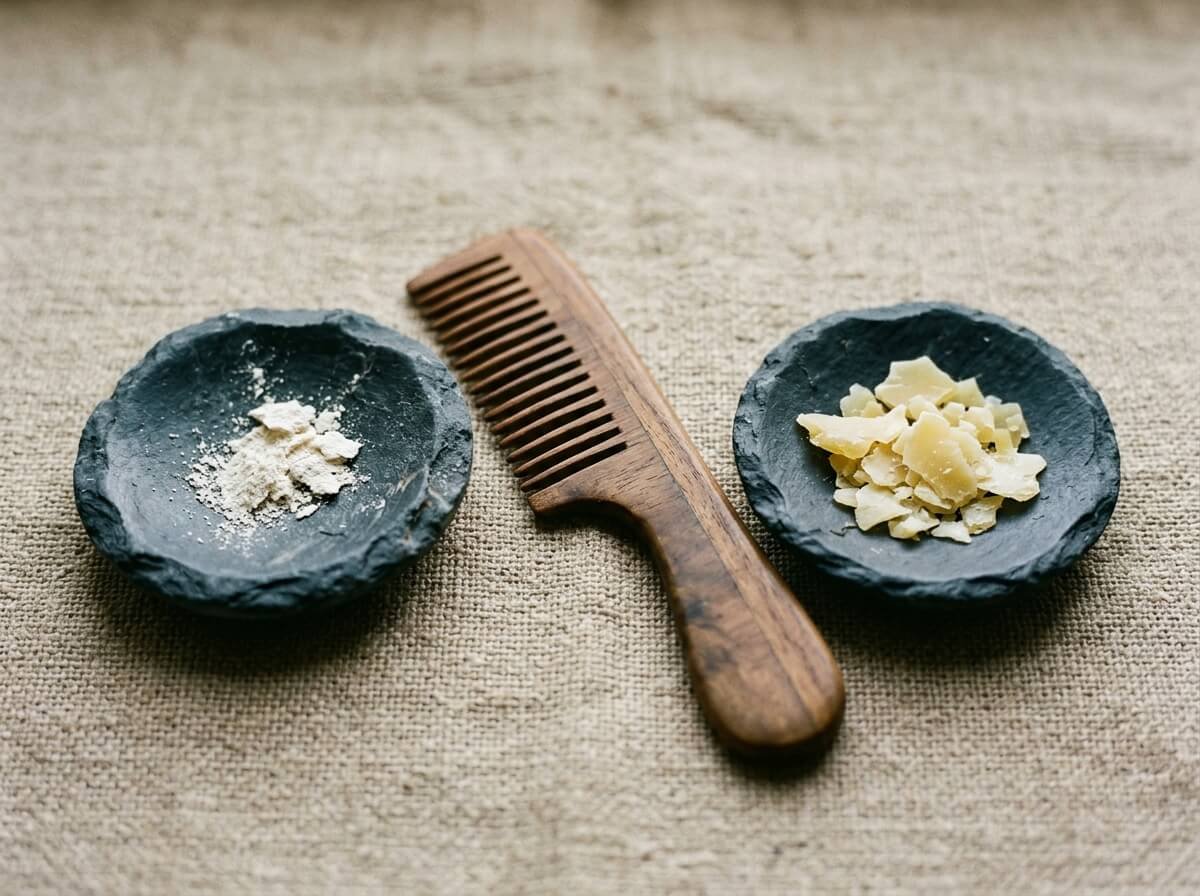
Two very different conditions both shed flakes, and they need opposite care. Getting this wrong is the most common reason a scalp routine fails.
What dry scalp looks like
A dry scalp is short on moisture and lipids. The flakes are small, fine, and white, a little like a dusting of powder on dark clothing. The scalp often feels tight, especially after washing, and the dryness usually shows up elsewhere too: rough shins, chapped hands, or tight facial skin. It tends to worsen in cold weather, air-conditioned rooms, and after hot showers or harsh shampoos.
What dandruff looks like
True dandruff is the mild end of a spectrum that dermatologists call seborrheic dermatitis. The flakes are larger, slightly oily or waxy, and often yellowish or off-white. They cling to the hair near the root rather than drifting off. The scalp itself may look a little greasy and can itch. Dandruff often flares with stress, illness, sweat, and hormonal shifts, and it frequently gets worse when people wash less often, not more.
Why the distinction matters
Dry scalp asks for moisture: gentler cleansing, fewer stripping detergents, and nourishing oils. Dandruff asks for balance: regular cleansing, less excess sebum sitting on the skin, and an antifungal action. Give an oily, dandruff-prone scalp a rich overnight oil and you may feed the problem. Give a dry scalp a strong clarifying wash every day and you strip it further. A quick self-check helps:
- Flake size and feel: small and powdery points to dryness; larger and waxy points to dandruff.
- Scalp oiliness: a scalp that looks greasy within a day of washing leans toward dandruff.
- Skin elsewhere: dry skin across the body suggests dry scalp; flaking in the eyebrows, beside the nose, or behind the ears suggests seborrheic dermatitis.
- Response to washing: dandruff often eases with more frequent washing; dry scalp often worsens.
Many people have a little of both, especially in seasons that swing between humid and dry. That is fine. The point is to know which one is leading, because it decides which oils belong in your routine. For a broader foundation, our piece on why scalp care is crucial to hair care covers the basics of the skin beneath your hair.
How dandruff actually forms: yeast, sebum, and sensitivity

Every human scalp hosts a yeast called Malassezia, most often the species M. globosa and M. restricta. It is a normal resident, not an infection you caught. What makes it interesting is its diet: Malassezia cannot make its own fatty acids, so it lives on the oils our scalps produce.
The three-part recipe
Researchers describe dandruff as the meeting point of three factors.
- Sebum. The scalp is one of the oiliest areas of the body. More sebum means more food for the yeast.
- Malassezia activity. The yeast uses enzymes called lipases to break sebum triglycerides apart. It consumes some of the fatty acids and leaves others behind, notably oleic acid.
- Individual sensitivity. In some people, those leftover fatty acids slip into the outer skin layer and trigger irritation. The skin responds by speeding up cell turnover. Cells shed before they have matured properly and clump together into visible flakes.
That third factor explains why two people with similar yeast levels can have very different scalps. Dandruff is not about being unclean. It is about a particular skin barrier reacting to a particular set of byproducts.
What this means for care
Once you see dandruff this way, the levers become clear. You can reduce the yeast population, clear away excess sebum and its byproducts, and calm the irritated barrier. Medicated shampoos target the first lever with antifungals such as ketoconazole, selenium sulfide, or zinc pyrithione. Essential oils with real anti-dandruff value work on the same lever, through their own antifungal compounds. Moisture alone, the answer for dry scalp, does not touch the cause of dandruff at all. That is the quiet truth most oil lists leave out.
The essential oils for dandruff with real evidence
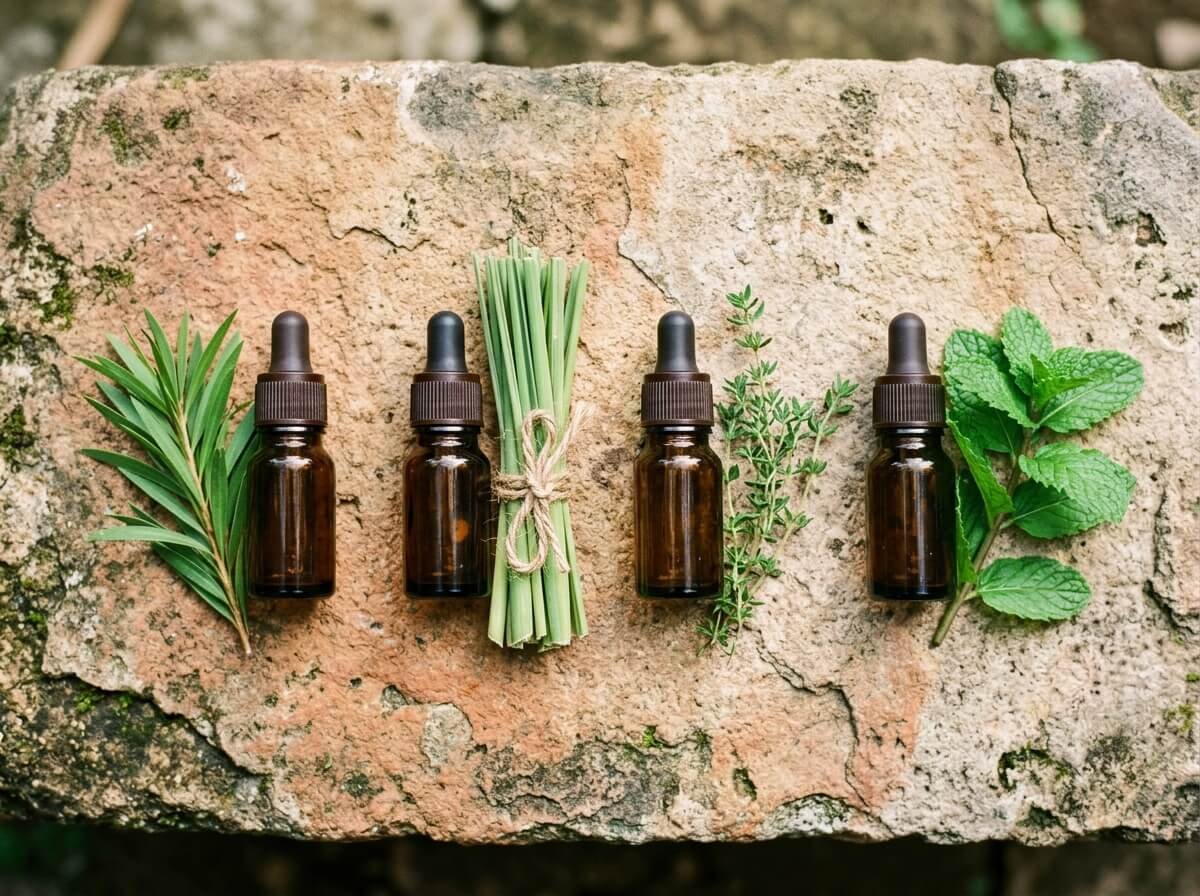
Not every oil that smells fresh or makes the scalp tingle has evidence for dandruff. A tingle is a sensory effect, often from menthol, not proof of antifungal action. Here is an honest grading, strongest first.
Tea tree oil: the one clinical trial
Tea tree (Melaleuca alternifolia) is the only essential oil with a well-known randomized, placebo-controlled human trial for dandruff. In a 2002 study published in the Journal of the American Academy of Dermatology, 126 people with mild to moderate dandruff used either a 5% tea tree oil shampoo or a placebo shampoo daily for four weeks. The tea tree group improved by about 41% on the severity score, compared with about 11% for placebo. Participants also reported less itch and greasiness, and the shampoo was well tolerated.
Its main active compound, terpinen-4-ol, shows antifungal activity against Malassezia in laboratory work. Our tea tree essential oil benefits guide goes deeper into the chemistry. For a pure single note to blend at home, our Tea Tree Essential Oil is Melaleuca alternifolia, nothing added.
Lemongrass oil: a small human study plus lab work
Lemongrass (Cymbopogon) oil inhibits Malassezia in laboratory tests, and a small pilot study of a lemongrass hair tonic in about 30 volunteers found reduced dandruff after one to two weeks. It is promising, but one small study is a starting point, not a verdict. Lemongrass is also a known skin sensitizer, so dilution matters even more here.
Thyme and peppermint: lab evidence only
Thyme oil, rich in thymol, and peppermint oil both show antifungal effects in petri-dish studies, and a 2022 review of essential oils for dandruff listed them among the promising candidates. Promising is the honest word. We do not yet have good human trials for either on dandruff. Peppermint’s cooling sensation can ease the feeling of itch, which many people value. Our Mint Essential Oil is Mentha arvensis, a cornmint relative of true peppermint, with a similar fresh, cooling character and plenty of menthol.
Rosemary oil: loved for hair, unproven for dandruff
Rosemary has a moment right now, mostly for hair growth, which we cover in rosemary oil for hair growth. For dandruff specifically, the evidence is thin: some antimicrobial activity in the lab, and a lot of enthusiasm online. It can be a pleasant, clarifying addition to a blend. It should not be your main antifungal.
Lavender: calming, not curative
Lavender is gentle and soothing, which makes it a kind companion for a sensitive scalp. It is not a dandruff treatment on its own, and lavender can still irritate reactive skin when overused.
What this grading means in practice
If you want one oil with the strongest case, choose tea tree. If you want a blend, build it around tea tree and let the others play supporting roles for scent and sensation. And if a product promises to cure dandruff with rosemary alone, it is selling a story, not a result.
The counterintuitive trap: why oiling can feed true dandruff
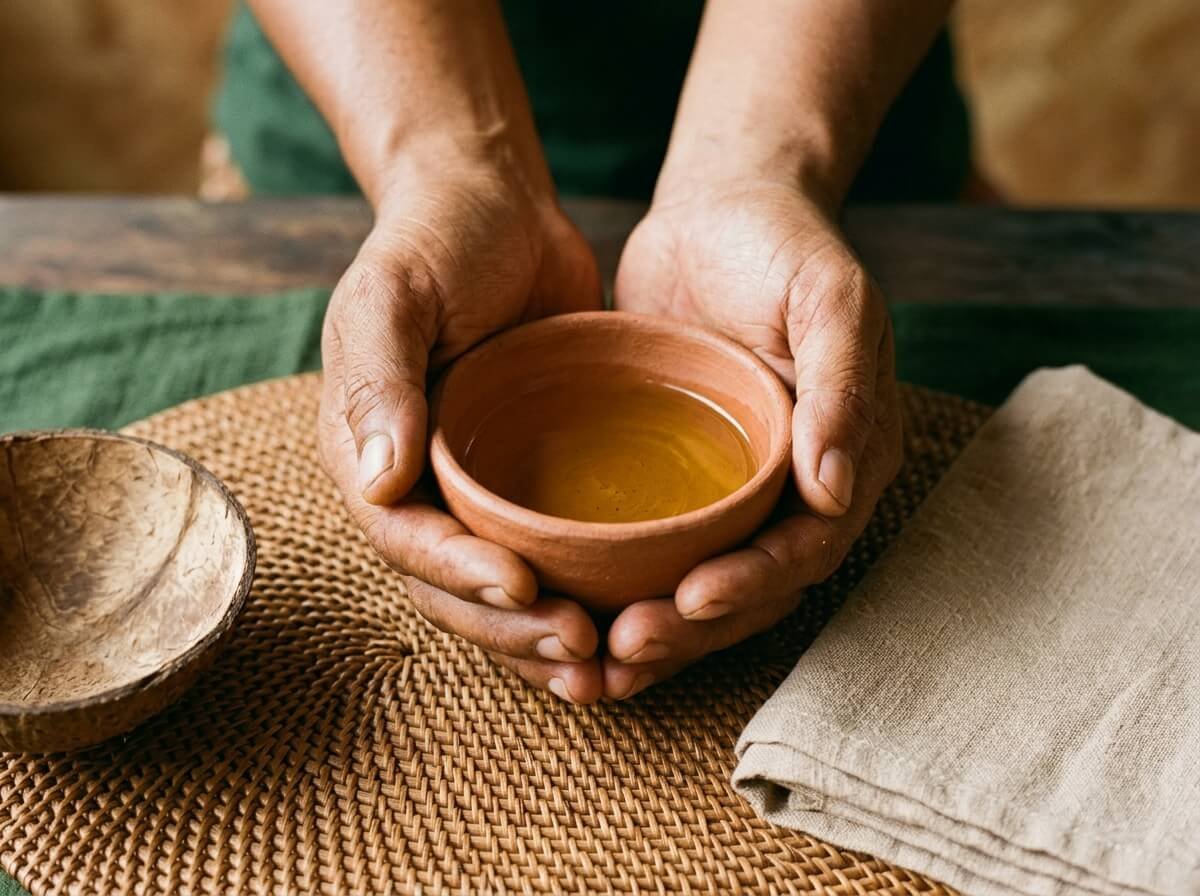
Scalp oiling is one of the oldest hair rituals across South and Southeast Asia, and we love it. For a dry scalp, a warm oil massage before washing restores softness and calms tightness. Our post on coconut oil for hair shares how we practice it.
For true dandruff, though, the logic changes. Malassezia feeds on lipids. Leaving a heavy layer of oil on an already oily, flaky scalp overnight can give the yeast a feast. Oils high in oleic acid, such as olive oil, are the most commonly cited concern, because oleic acid is the very byproduct that irritates sensitive scalps. This is why some people find their flakes get worse, not better, after weeks of overnight oiling.
If you have dandruff and still want to oil
You do not need to give up the ritual. You need to adjust it.
- Keep it short. Apply a light, diluted blend 20 to 30 minutes before washing, not overnight.
- Wash it out fully. Follow with a thorough cleanse so no oil film remains on the skin.
- Choose lighter carriers. Coconut oil is mostly lauric acid, a medium-chain fatty acid, and some lab studies suggest it is less favorable to Malassezia than oleic-rich oils. Lab results are not a guarantee, so watch how your scalp responds.
- Let the essential oil do the work. In a dandruff blend, the carrier is a vehicle. Tea tree is the active part.
If you have dry scalp
Oil freely, with care. A coconut-based scalp oil worked in before washing is exactly what a tight, powdery scalp asks for. Our Lavender Hair Oil, made with virgin coconut oil and lavender, suits this kind of slow, nourishing ritual. You can also learn about candlenut in our kukui oil guide, another traditional Indonesian hair oil.
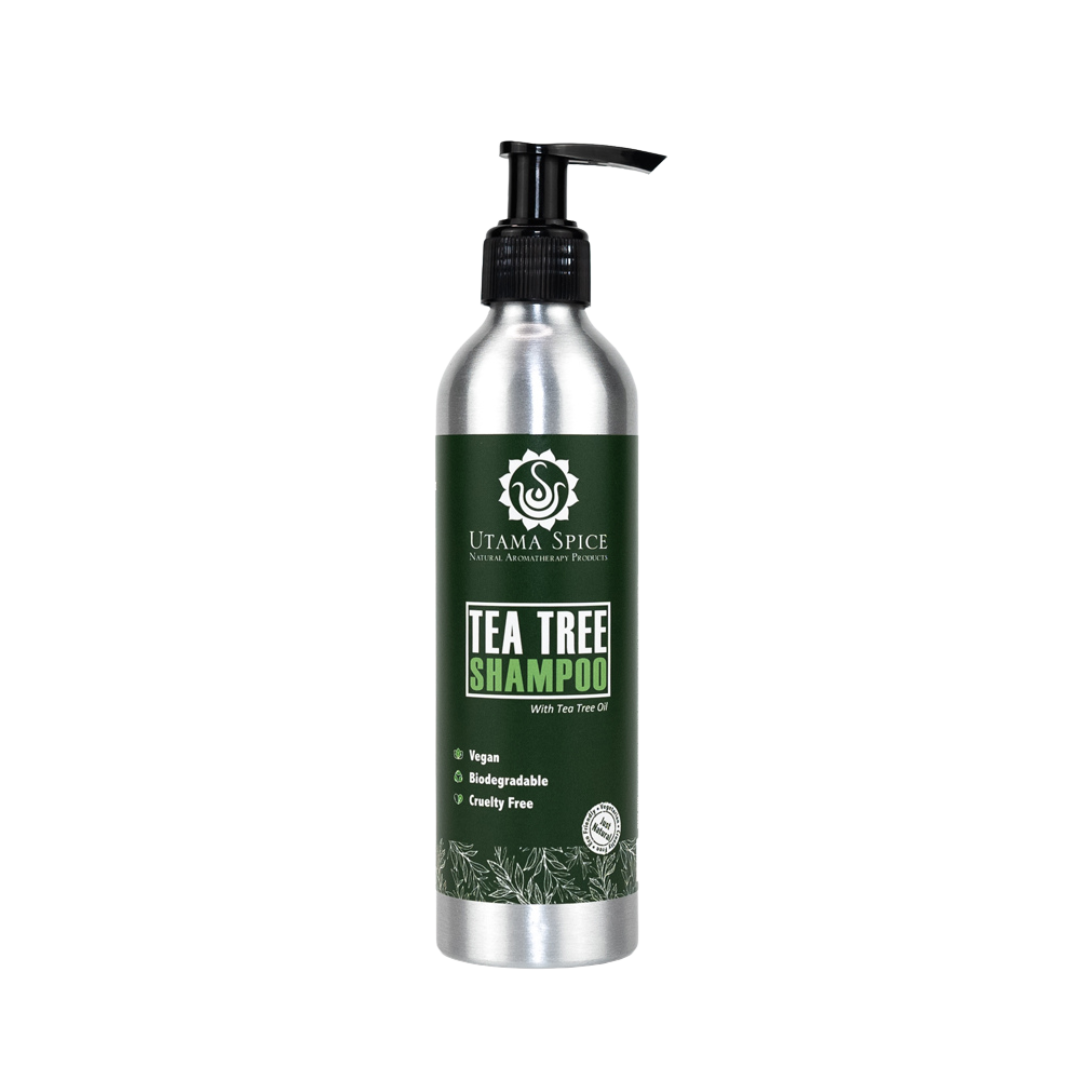
A tea tree cleanse for oily, flaky scalps
Our Tea Tree Shampoo is hand-blended in Bali on a coconut and castor oil base with tea tree, origanum, and mint essential oils. It clears buildup and excess oil, the food dandruff yeast loves, and now comes in a recyclable aluminum bottle.
How to use essential oils on the scalp safely
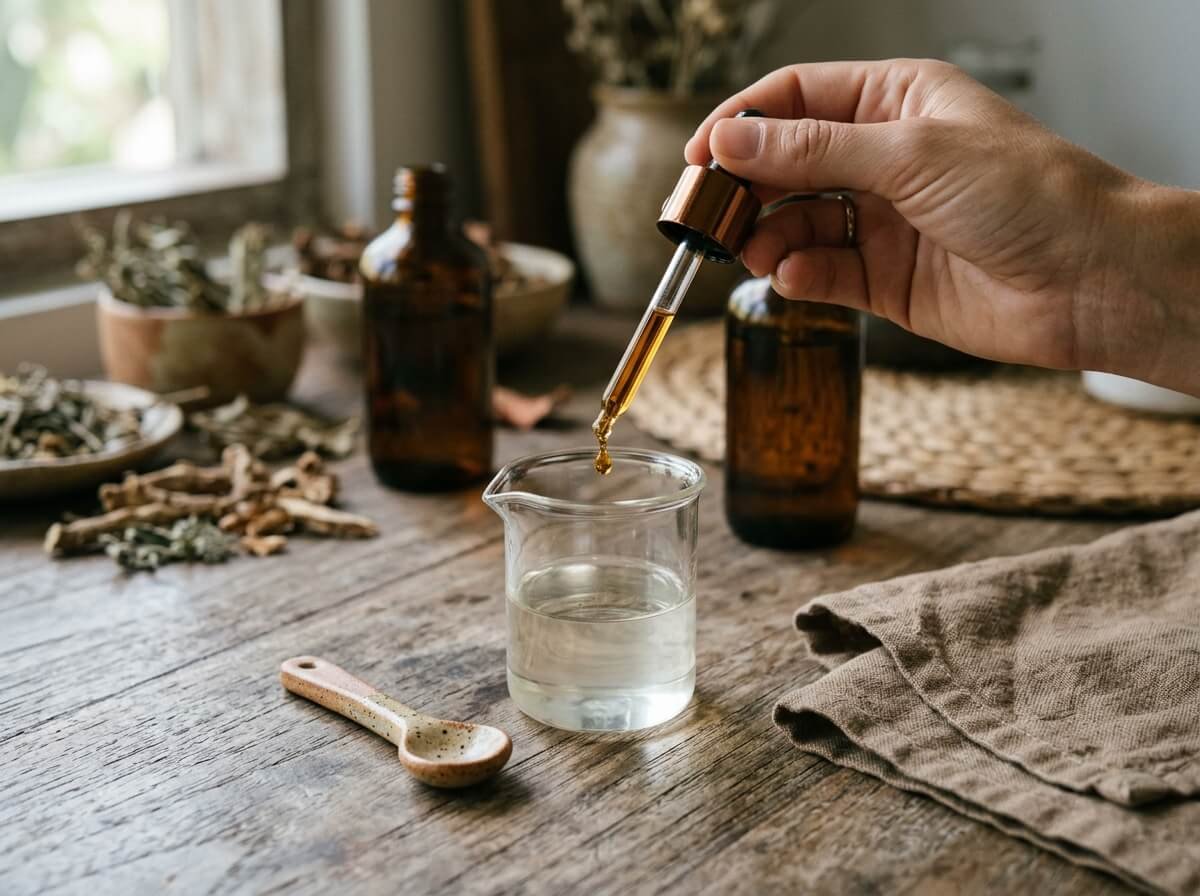
Essential oils are concentrated plant chemistry. That concentration is the reason they work, and the reason they need respect. A scalp that is already inflamed is more reactive than healthy skin, so these rules matter.
Never apply essential oils neat
Undiluted tea tree or lemongrass on the scalp can cause burning, redness, and contact dermatitis, which looks a lot like the flaking you were trying to treat. Always dilute. Our step-by-step guide on how to dilute essential oils includes conversion tables.
Useful dilution guides
- Pre-wash scalp oil: 1% to 2%, roughly 6 to 12 drops of essential oil in 30 ml of carrier oil.
- Adding to your own shampoo: a few drops per palmful of shampoo is plenty. The clinical trial used a 5% tea tree shampoo, which is a rinse-off product formulated for that level. Do not push leave-on blends anywhere near that.
- Sensitive or reactive scalps: start at 0.5% to 1% and build slowly.
Patch test first
Apply a little of your diluted blend to the inner forearm and wait 24 to 48 hours. Any redness, itching, or swelling means the blend is not for you. Patch test again whenever you switch oils.
Care for the oil itself
Tea tree oil becomes more irritating as it oxidizes. Keep bottles tightly capped, away from heat and light, and use them within about a year of opening. If an oil smells sharp, stale, or different from when you bought it, retire it.
Who should take extra care
Children under six, pregnant or breastfeeding people, and anyone with a known fragrance allergy should speak with a health professional before using essential oils on the scalp. Keep menthol-rich oils like peppermint away from the faces of small children. Never apply oils to broken, scratched, or bleeding skin. For a fuller safety foundation, read our essential oil safety guide.
A simple routine to start with
- Wash two to three times a week (or more often if your scalp is oily) with a gentle tea tree shampoo such as our Tea Tree Shampoo, leaving the lather on the scalp for three to five minutes before rinsing.
- Once a week, massage in a 1% tea tree blend in a light carrier 20 minutes before washing.
- Condition the lengths only, keeping heavy conditioner off the scalp.
- Give it four weeks, the length of the clinical trial, before judging the results.
When it is not dandruff: red flags worth a doctor’s visit

Flaking is a symptom, and several conditions share it. Natural care is wonderful for everyday dandruff. It is not a substitute for a diagnosis when something else is going on.
Scalp psoriasis
Psoriasis forms thick, well-defined, silvery-white plaques on red skin. It often extends past the hairline onto the forehead, neck, or behind the ears, and may appear on elbows, knees, or nails too. It is an immune condition that usually needs medical treatment.
Tinea capitis (scalp ringworm)
This fungal infection is most common in children. Look for round scaly patches, broken hairs, black dots where hairs have snapped, or patchy hair loss. It needs prescribed oral antifungal treatment. Essential oils and shampoos alone will not clear it.
Contact dermatitis
If flaking, burning, or a rash began after a new hair dye, shampoo, or styling product (or a new essential oil), you may be reacting to an ingredient. Stop the new product and see whether the scalp settles.
Moderate to severe seborrheic dermatitis
When flaking comes with significant redness, crusting, or spreads to the eyebrows, the sides of the nose, or the chest, the condition has moved beyond simple dandruff and a doctor can help.
See a doctor if
- Flaking has not improved after four weeks of consistent care.
- The scalp is raw, weeping, bleeding, or very painful.
- You notice hair loss in patches.
- Plaques are thick or spread beyond the scalp.
- A child has a scaly patch with broken hairs.
Our post on essential oils for eczema covers how to support reactive skin alongside medical care, rather than in place of it.
A Balinese view: scalp rituals and tea tree’s Indonesian cousin
In Bali and across Indonesia, hair care has long been an act of family care. Grandmothers worked coconut oil into children’s hair. Candlenut (kemiri) oil has been used for generations to soften and darken hair. And the salon tradition known as creambath, a long scalp massage under a rich hair mask, is still a weekly pause for many Indonesians. These rituals share one thread: slowness. Hands on the scalp, attention on the skin, time set aside.
Meet kayu putih
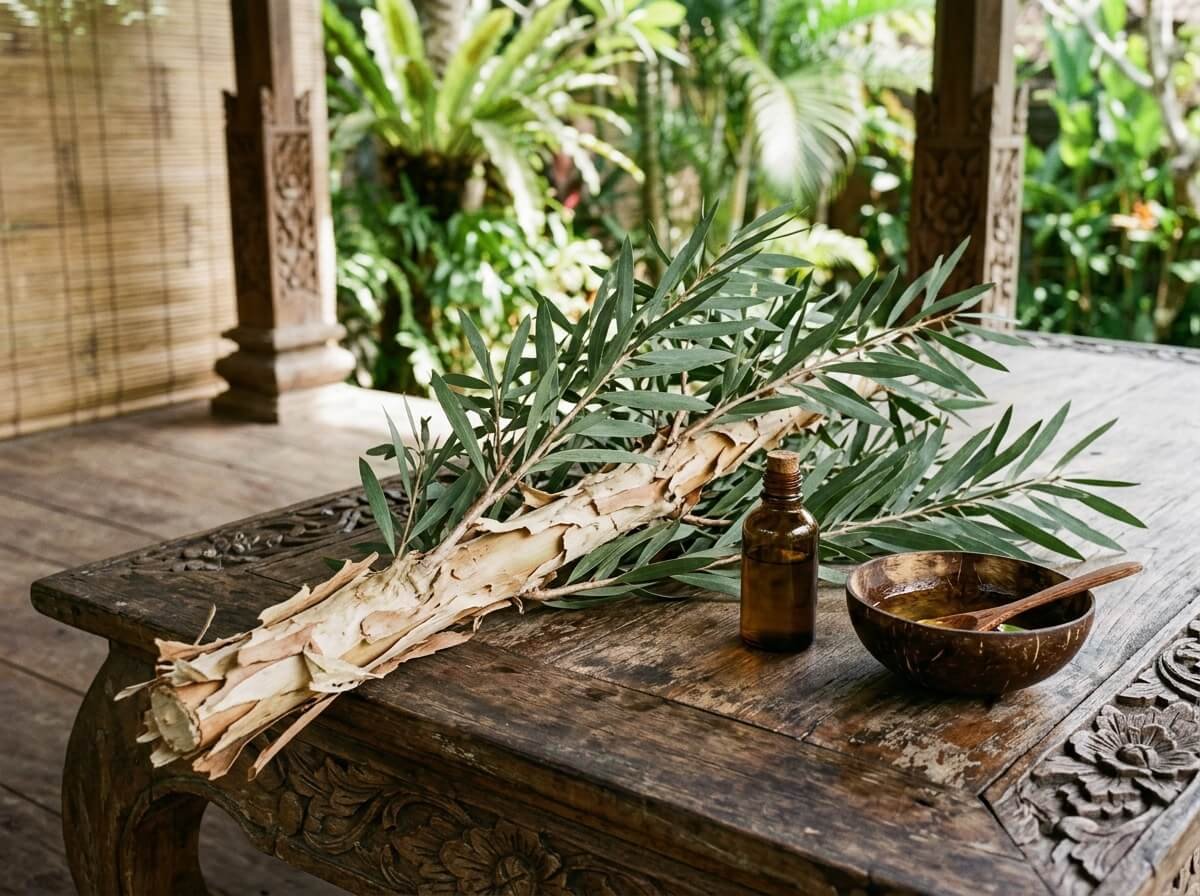
Tea tree is Australian. Its close Indonesian relative is cajeput, Melaleuca cajuputi, known locally as kayu putih, meaning white wood, for its pale papery bark. Minyak kayu putih is a household staple across the archipelago, rubbed on chests, tummies, and temples, especially in the eastern islands where the trees grow wild.
The two are related but distinct. Tea tree’s lead compound is terpinen-4-ol, the one tied to its antifungal action. Cajeput is richer in 1,8-cineole, which gives it a brighter, more camphor-like scent. Cajeput has not been tested in a dandruff trial, so we will not tell you it works the same way. It can, however, bring a clean, familiar warmth to a scalp blend alongside tea tree. Our cajeput essential oil benefits post tells its full story, and our Cajeput Essential Oil is distilled from the same tree.
What the tradition teaches
The heritage lesson is not a specific oil. It is consistency and touch. A weekly scalp ritual, done gently and washed out well, does more than any single heroic treatment. It is how our grandmothers cared for hair, and it is how we still approach formulation in our Ubud workshop: honest ingredients, used with patience.
Essential oils for dandruff: frequently asked questions
How often should I use tea tree oil for dandruff?
In the clinical trial, people used a 5% tea tree shampoo daily for four weeks. For most, washing with a tea tree shampoo two to four times a week works well, adjusted for how oily your scalp is. A diluted pre-wash scalp oil once a week is plenty.
Is tea tree oil as good as a medicated dandruff shampoo?
For mild to moderate dandruff, tea tree has respectable evidence, but medicated antifungals such as ketoconazole have far more research behind them. If tea tree care has not helped after four weeks, a medicated shampoo or a doctor’s visit is a sensible next step. Many people use both, alternating through the week.
Can rosemary oil cure dandruff?
No oil cures dandruff, because the yeast is a permanent part of the scalp. Care manages it. Rosemary’s evidence is strongest for hair growth, not dandruff. Use it as a supporting note, with tea tree as the active.
Should I put coconut oil on dandruff?
If your flakes are small, white, and your scalp feels tight, coconut oil before washing can help. If your flakes are larger and your scalp is oily, keep oiling short and wash it out fully, or skip it. Leaving any oil on an oily, flaky scalp overnight can feed the yeast.
Can I add essential oils straight into my shampoo bottle?
You can, but mixing a few drops into each palmful as you wash gives more control and keeps the oils fresher. If you prefer a ready blend, look for a shampoo that names its essential oils on the label. Our tea tree shampoo guide explains what to look for.
Why does my scalp tingle with peppermint oil?
Menthol activates cold-sensing receptors in the skin. The tingle feels fresh and can ease itch, but it is not a sign of antifungal action. More tingle is not more treatment.
Does dandruff mean I am not washing enough?
Not exactly. Dandruff is a sensitivity to yeast byproducts, not a hygiene problem. That said, sebum buildup feeds the yeast, so many people with dandruff do better with more frequent, gentle washing.
Final thoughts on caring for a flaky scalp
Dandruff rewards understanding more than effort. Once you know it is a yeast-and-sensitivity story, not a dryness story, the path is simple: cleanse regularly, keep oils short and rinsed out, let tea tree do the antifungal work, dilute every essential oil you use, and give the routine four honest weeks. If your scalp is simply dry, flip the approach and nourish it.
The most useful thing any of us can do is stop chasing the longest list of oils and choose a few, well. If you are building out the rest of your routine, our guide to the best natural shampoo explains what to look for on a label, and our natural conditioner for hair post covers caring for the lengths. Keep conditioner on the ends with our Hydrating Conditioner, and let the scalp breathe. Care for the skin beneath your hair, and the rest tends to follow.