Ingredient Tuesday: sereh, the lemongrass stalk at the heart of Balinese cooking
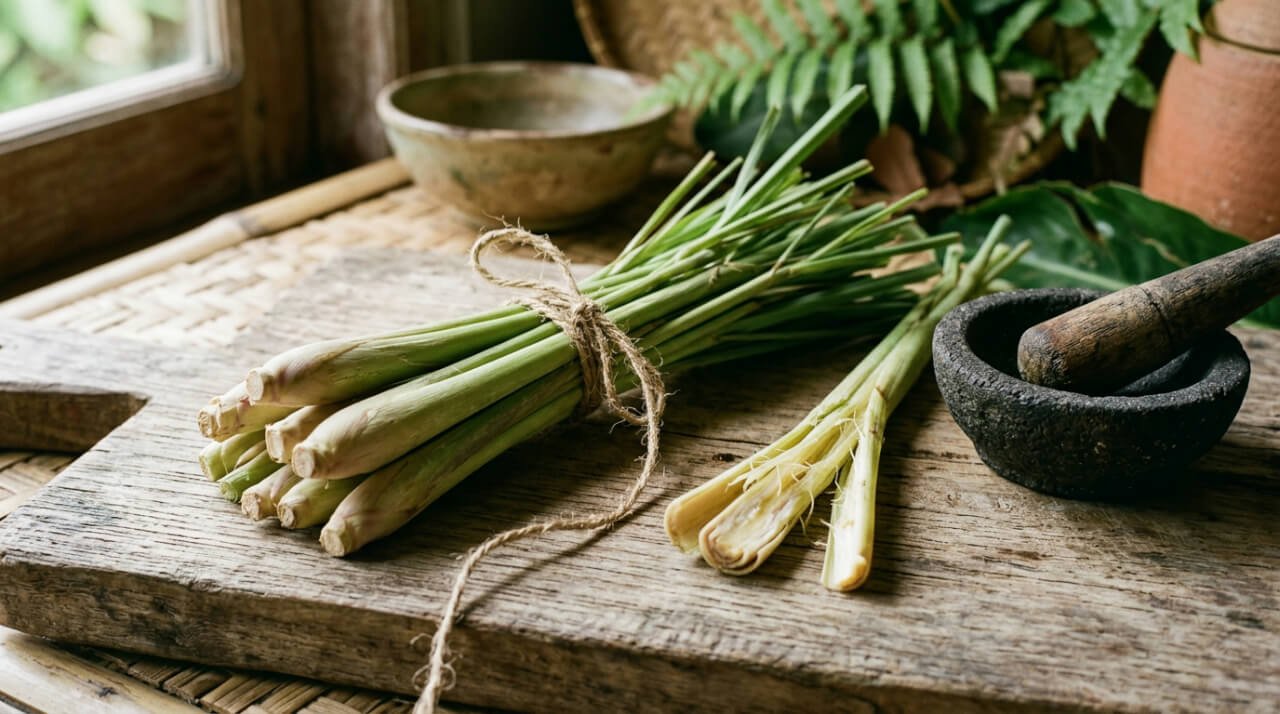
Walk through any Balinese market in the early morning and you will find sereh tied in loose bundles beside the shallots and galangal: pale, woody stalks with long blades of grass still attached. Lemongrass grows easily in family gardens across the island, and it is one of the aromatics pounded into base genep, the spice paste at the heart of Balinese cooking. Bruise a stalk with the back of a knife and the whole kitchen smells bright, clean, and faintly of lemon, even though there is no citrus anywhere near it.
Why a grass smells like lemon
That scent has a name. Lemongrass oil (from Cymbopogon citratus) is usually 65% to 85% citral, a pair of closely related molecules called geranial and neral. Citral is the same compound that gives lemon peel its sharp edge, which is why the grass and the fruit smell like cousins. It is also behind most of what researchers have studied in lemongrass, including antimicrobial activity in laboratory work. The plant keeps its oil in tiny cells inside the leaf and stalk, which is why nothing happens until you bruise, cut, or distil it.
The honest limit
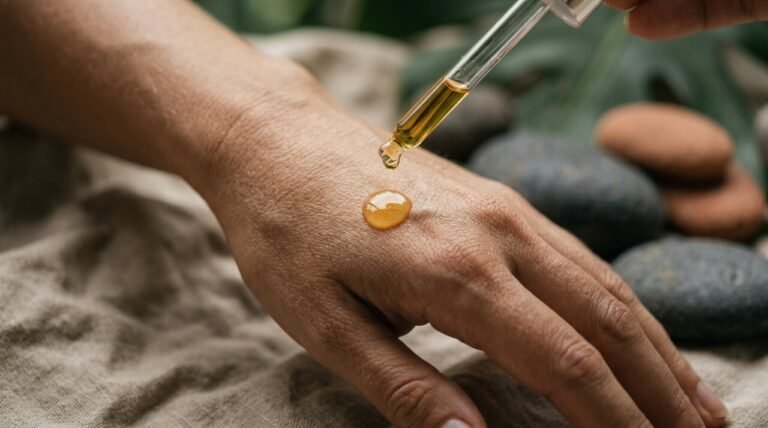
Citral is potent, and it is a known skin sensitiser. That does not make lemongrass something to fear, but it does mean it should never go onto skin undiluted. For most adult skin, about one drop per teaspoon of carrier oil (roughly 1%) is plenty. Patch test first, keep it off broken skin, and remember that its insect-deterring effect is real but short-lived, because the aromatic compounds evaporate quickly. We explain the full picture, including dilution and repellent use, in our guide to lemongrass essential oil benefits.

Use the whole stalk
In a Balinese kitchen, nothing about sereh goes to waste. The tender inner core is sliced into sambal matah, the tougher outer layers are knotted and simmered in broth, and the leftover blades often end up steeped in hot water as a simple evening drink. It is a good lesson in how to treat an ingredient: understand which part does which job, and use each one well.
A small ritual to try: before you start cooking or cleaning this week, bruise one fresh stalk of lemongrass, set it in a bowl of warm water on the counter, and let the scent open up the room for a few minutes. No bottle needed.
If you would like to bring sereh into your own routine, our Lemongrass Essential Oil is steam-distilled and single-note, ready for a diffuser or your own carrier blend. If you prefer it already diluted, our Lemongrass Ginger Body Oil pairs it with warming ginger in a coconut oil base.
A humble grass, sold in bundles by the roadside, carrying one of the brightest scents in the plant world. That is often how the best ingredients arrive.