Essential oils for psoriasis: what they can (and cannot) do
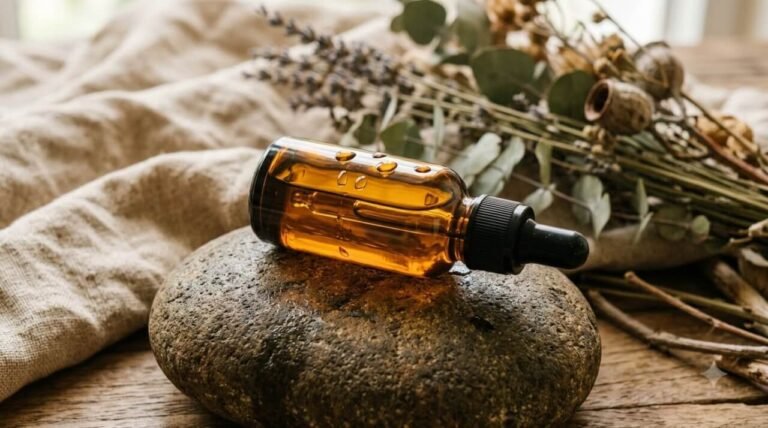
Search for essential oils for psoriasis and you will find the same list again and again: tea tree, lavender, frankincense, oregano, chamomile, and a few more. The list reads almost word for word like the ones written for eczema, dandruff, and acne. That sameness is the first clue that something is missing. Psoriasis is not a dry skin problem or a fungal problem. It is an immune condition that shows up on the skin, and that changes what any oil, essential or otherwise, can honestly do for it.
We have been blending botanical skincare in Bali since 1989, and we love essential oils. That is exactly why we want to be clear about their limits here. This guide explains what psoriasis actually is, why most oil lists get it wrong, what the evidence says, why irritation itself can create new plaques, and what gentle, low-fragrance care looks like day to day. No overblown claims. Just the truth, told with care.
What psoriasis actually is, and why that changes the conversation
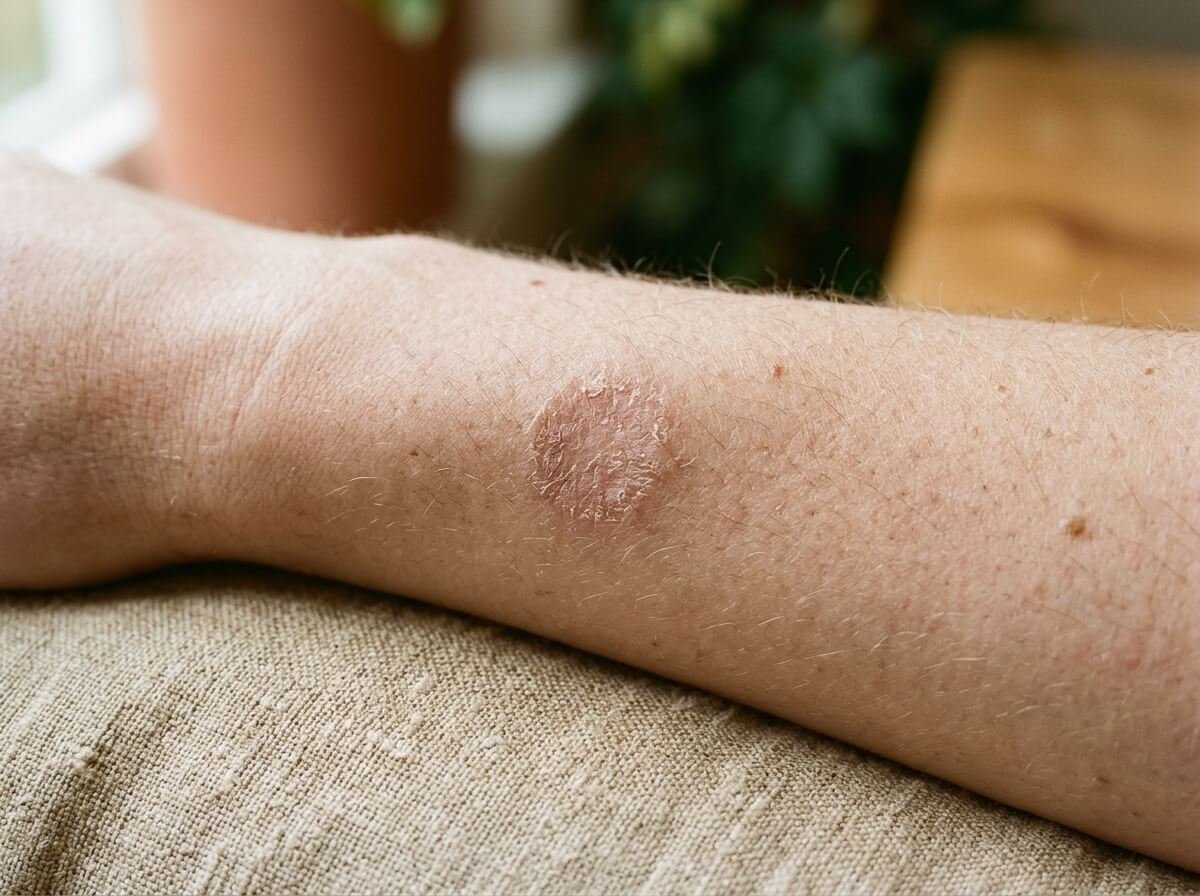
Psoriasis is a chronic, immune-mediated condition. Around 2% to 3% of people live with it, and it is not contagious. In psoriasis, part of the immune system (a signalling loop that dermatologists often describe as the IL-23 and IL-17 pathway) stays switched on when it should rest. Those signals tell skin cells to multiply far faster than normal.
Healthy skin renews itself over roughly a month. In a psoriasis plaque, new cells race to the surface in a matter of days. They pile up before they can mature and shed, and that pile becomes the raised, well-defined, often silvery-scaled patch that people recognise. The redness underneath comes from inflammation and extra blood flow feeding that fast turnover.
How it differs from eczema and dandruff
This is where the mechanism matters. In our guide to essential oils for eczema, the core problem is a leaky skin barrier that lets moisture out and irritants in. In our guide to essential oils for dandruff, a yeast called Malassezia is a central player. Psoriasis is neither. Its engine sits in the immune system, so the skin surface is where the problem shows, not where it starts.
That is also why psoriasis is linked to things far beyond the skin. Up to about one in three people with psoriasis develop psoriatic arthritis, and the condition is associated with higher cardiovascular and metabolic risk. A surface remedy cannot reach any of that.
Common triggers worth knowing
- Stress: one of the most commonly reported flare triggers.
- Infections: strep throat in particular can set off guttate psoriasis, the small drop-shaped type.
- Skin injury: cuts, scratches, sunburn, tattoos, and friction (more on this below).
- Cold, dry weather: many people notice flares as the seasons turn.
- Some medicines: including lithium, certain blood pressure medicines, and some antimalarials. Never stop a prescription without your doctor.
- Alcohol and smoking: both are associated with more severe disease.
Keep that list in mind. Several of those triggers are things a gentle routine can actually help with, and one of them is something a careless oil routine can make worse.
Why most essential oils for psoriasis lists could be reprinted for eczema
Read three or four of the top-ranking articles side by side and a pattern appears. Each names somewhere between eight and 11 oils. Each oil gets a paragraph about being “anti-inflammatory,” “antimicrobial,” or “soothing.” Each closes with “dilute in a carrier oil and do a patch test.” Swap the word psoriasis for eczema, and almost nothing would need to change.
There are three reasons for this, and none of them are about the reader.
- Lab results get stretched. Many oils calm inflammatory markers in a petri dish. That is a real finding, but it is a long way from clearing a plaque on a human elbow.
- “Antimicrobial” is borrowed from other conditions. Killing microbes helps with acne or dandruff. Psoriasis is not an infection, so it is mostly beside the point.
- Lists sell bottles. A list of 11 oils is easy to write and easy to shop from. An honest article that says “mostly, keep fragrance off your plaques” sells far less.
We say this as a brand that sells essential oils. Our Outlaw energy exists for exactly this moment. Care means telling the truth, even when the truth is “use less.”
The more useful question is not “which oil?” but “which job?” Psoriasis-prone skin needs three things from any topical: help with dryness and scale, the least possible irritation, and calm for the nervous system that may be driving flares. Some botanicals can help with the first and third. Concentrated essential oils on a plaque work against the second.
The honest evidence: what oils can support, and what they cannot treat
Here is a calm, plain-language look at the oils most often recommended, and what the research actually shows.
Tea tree oil
Tea tree has good evidence for mild acne and some for dandruff. For psoriasis, there are no quality clinical trials. Tea tree is also a known contact allergen, especially once the oil oxidises with age and air exposure. On already inflamed skin, that is a real risk with no proven upside.
Lavender oil
Lavender has meaningful evidence for one thing that matters here: inhaled lavender can support relaxation and sleep. Since stress is a recognised flare trigger, that is a legitimate role. On the skin, lavender contains linalool, which can become sensitising as it oxidises. Its best place in a psoriasis routine is in the air, not on the plaque.
Oregano, frankincense, and the rest
Oregano oil is one of the most irritating essential oils there is, rich in carvacrol, and has no human psoriasis trials. Frankincense shows anti-inflammatory activity in lab studies, but again, no meaningful trials on psoriasis skin. Many others on the lists sit in the same place: interesting chemistry, no human proof.
Bergamot: a warning, not a remedy
Some articles hint that bergamot can help psoriasis because of a link to light therapy. There is a grain of history in that. PUVA, a medical treatment, pairs psoralens (compounds related to those in bergamot) with controlled UVA light under strict supervision. Doing a home version with a cold-pressed citrus oil and sunlight is a reliable way to get a phototoxic burn, and a burn is a trauma that can trigger new plaques. Please do not try it.
Aloe vera, tamanu, and gentle carrier oils
The more interesting evidence sits outside the essential oil aisle. Aloe vera has mixed results: one early trial with an aloe cream showed improvement in mild to moderate plaques, while a later trial found aloe no better than the plain cream base. Even that is useful, because it suggests the base itself, a soothing emollient, was doing real work. Tamanu oil contains calophyllolide and other compounds with documented anti-inflammatory and wound-healing activity in research, though not psoriasis trials specifically. We cover its tradition in our piece on the benefits of tamanu oil for skin care.
What dermatology guidelines do consistently recommend is moisturising. Emollients soften scale, reduce itch and cracking, and help prescribed treatments work better. That is not glamorous, and it is not a cure. It is the single most evidence-backed thing you can do at home.
The Koebner phenomenon: why irritation itself can trigger a new plaque
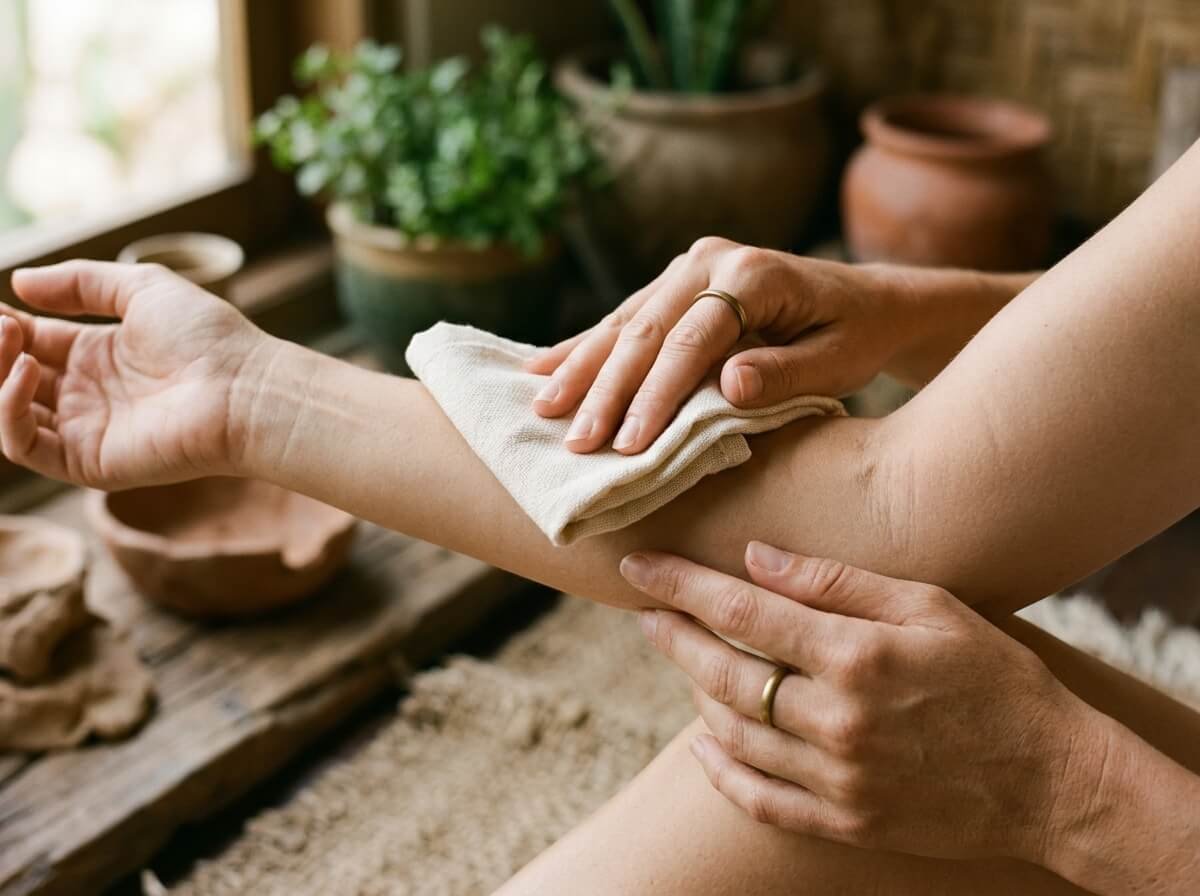
This is the part almost no oil list mentions, and it is the most practical thing in this guide. In the 1870s, the German dermatologist Heinrich Koebner noticed that people with psoriasis often developed new plaques exactly where their skin had been injured. A scratch, a scrape, a sunburn, a tight waistband rubbing the same place day after day. The plaque followed the line of the injury.
This is now called the Koebner phenomenon, or the isomorphic response. Estimates vary, but roughly a quarter of people with psoriasis experience it, and some studies put the figure higher. The skin does not need a deep wound. Enough irritation can be enough.
What this means for topical care
Any product that irritates the skin is a potential Koebner trigger. That includes a too-strong essential oil, a fragrance you are sensitive to, a harsh scrub, or picking at scale. On ordinary skin, irritation causes a few days of redness. On psoriasis-prone skin, it can leave a new plaque that lasts for months.
- Do not pick or peel scale. Soften it and let it lift on its own.
- Skip abrasive scrubs on psoriasis-prone areas. Our guide to repairing the skin barrier explains gentler ways to support skin.
- Pat, do not rub, when drying off after a bath.
- Avoid sunburn. Moderate, sensible sun can feel good for some people. A burn is an injury.
- Keep fragrance light on any skin that tends to flare. Our list of skincare ingredients to avoid shows how to read a label for fragrance allergens.
Once you know about Koebner, the logic of the oil lists falls apart. The question is no longer “which oil is anti-inflammatory?” It becomes “which product is least likely to irritate?” And for most essential oils on a plaque, the honest answer is “not this one.”
What actually helps: cooling, gentle barrier support, and fragrance-light choices
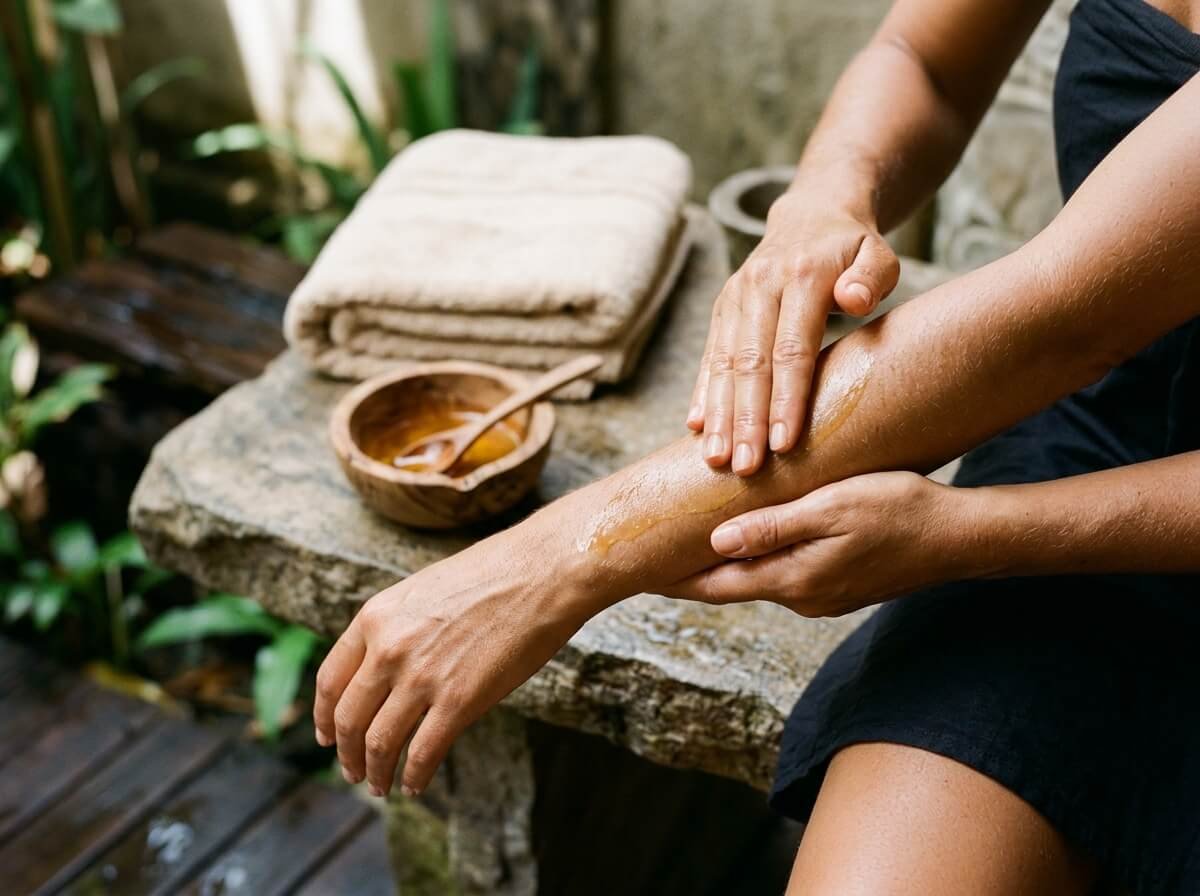
Gentle care for psoriasis-prone skin is simple. It is not a cure, and it should sit alongside whatever your dermatologist prescribes. But it can make daily life calmer, softer, and less itchy.
A daily ritual in four steps
- Lukewarm, short baths or showers. Hot water strips oils and increases itch. About 10 minutes is plenty. A mild, low-fragrance wash is enough; our guide to natural body wash explains what to look for.
- Pat dry, leave the skin a little damp. Moisture locked in at this stage lasts longer.
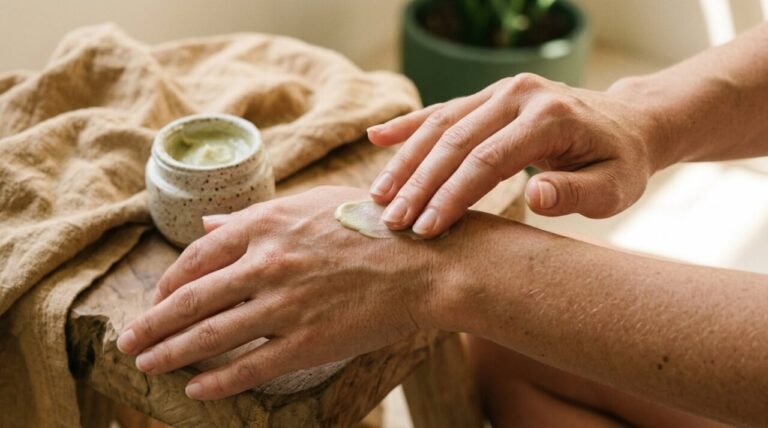
- Seal within three minutes. Apply a plain, fragrance-free oil or a thick cream while skin is still damp. Our guide on how to use body oil walks through the damp-skin method.
- Repeat at night. A second layer before bed, perhaps under soft cotton sleeves on elbows, helps soften scale overnight.
Single-ingredient oils over blends
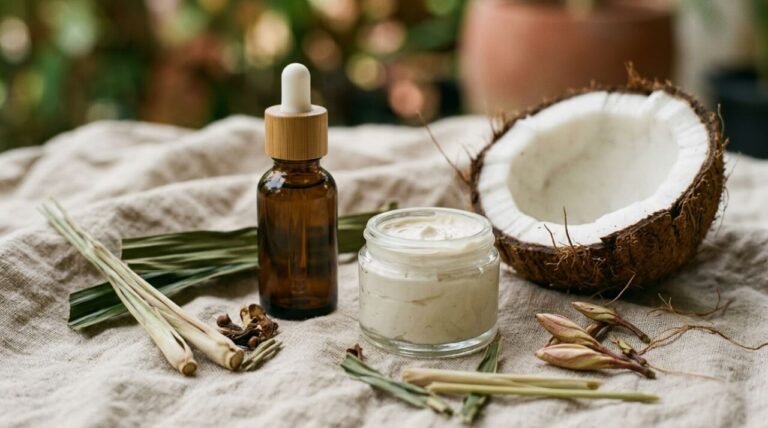
For psoriasis-prone skin, the fewer ingredients the better. A single, cold-pressed oil gives you one variable to watch instead of 12. Our Tamanu Oil is one ingredient, cold-pressed Calophyllum inophyllum seed oil, with no added fragrance. Argan Oil is another single-ingredient option, light and quick to absorb, rich in linoleic acid. Plain Virgin Coconut Oil, cold-pressed in Bali, is a soft, inexpensive emollient that many people find soothing on the body. We explore it further in is coconut oil good for your skin.
As always, patch test first. Apply a small amount to the inner forearm, away from any plaque, once a day for three days. If there is no redness, itch, or stinging, you can use it more widely.
Cooling for itch
Itch is often the hardest part of psoriasis, and scratching is a Koebner trigger. Cool compresses help. So does keeping a moisturiser in the fridge. Some people enjoy aloe for its cooling feel. Our Aloe Vera Gel is soothing, but in the spirit of honesty, it contains lavender essential oil and a little grain alcohol, so try it first on unaffected skin and keep it off cracked plaques. Our guide to aloe vera gel for skin covers how to use it well.
The same honesty applies to our Sensitive Face Serum. It is gentle and many people with reactive skin love it, but it does contain lavender, blue chamomile, and jasmine. If your facial skin flares easily, the plain tamanu or argan may be the better fit.
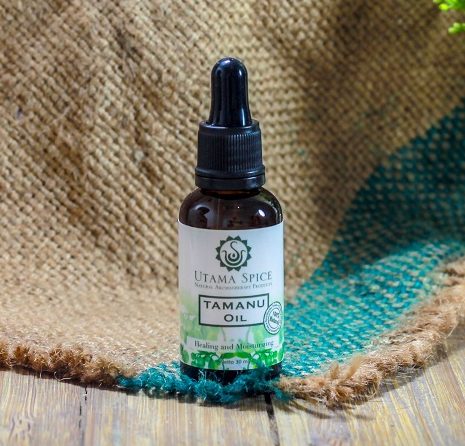
One ingredient, nothing added
Our Tamanu Oil is pure, cold-pressed Calophyllum inophyllum seed oil with no added fragrance. A rich, green-gold emollient for dry, scaling skin that needs calm rather than complexity. Patch test first, and use it alongside your dermatologist’s plan.
Scalp psoriasis is not dandruff: a gentle approach
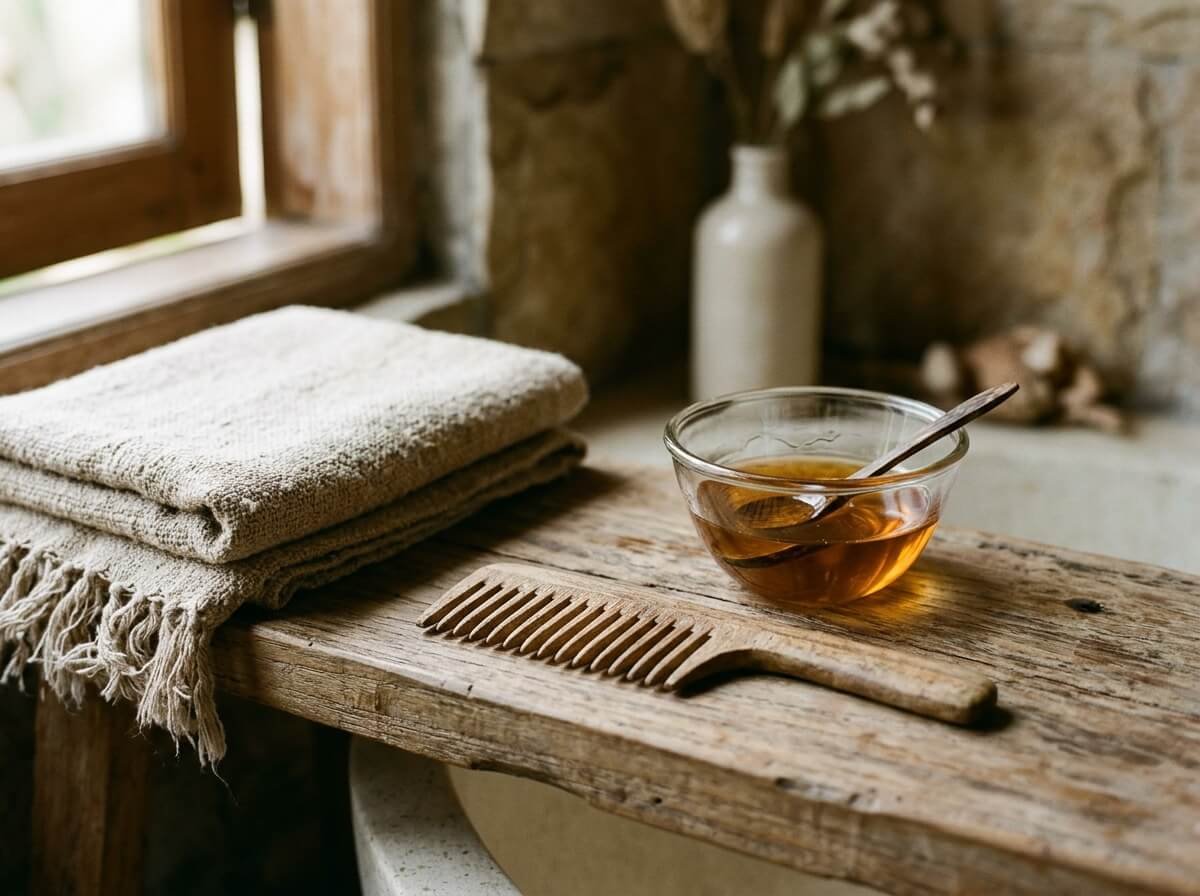
About half of people with psoriasis have it on the scalp at some point. It is often mistaken for dandruff, and treating it like dandruff can make it worse. Here is how to tell the two apart.
- Scalp psoriasis: thick, silvery, well-defined plaques that can extend past the hairline onto the forehead, neck, or behind the ears. Often itchy, sometimes sore.
- Dandruff and seborrhoeic dermatitis: softer, greasier, yellowish or white flakes spread more diffusely through the hair, linked to yeast and oil.
Because dandruff involves yeast, antifungal ingredients like tea tree can make sense for it. Scalp psoriasis is a different condition. The priority is softening and lifting thick scale without scratching or tearing the skin underneath.
A softening pre-wash ritual
- Warm a little Virgin Coconut Oil between your palms until it melts.
- Part the hair and press the oil gently onto the plaques. Press, do not rub.
- Cover with a soft cotton cap or towel and leave for an hour, or overnight if you prefer.
- Use a wide-tooth comb to ease away any scale that has lifted. Stop if anything resists or bleeds.
- Wash with a mild shampoo and lukewarm water.
Many dermatologists suggest something similar, often paired with medicated shampoos containing coal tar or salicylic acid. A plain oil on its own will soften scale. It will not change the immune activity underneath, so if scalp plaques are thick, widespread, or spreading, ask about medicated options.
A note on our scalp products: our Tea Tree Shampoo and Lavender Hair Oil both contain essential oils. They suit an oily or flaky scalp well, but if your scalp psoriasis is inflamed or cracked, the plain coconut oil is the gentler choice.
Essential oils for psoriasis: frequently asked questions
Can essential oils cure psoriasis?
No. Psoriasis is an immune-mediated condition with no cure. Treatments, from creams to light therapy to biologic medicines, aim to control it. Essential oils have not been shown to change the course of the disease.
Is there any safe way to use essential oils if I have psoriasis?
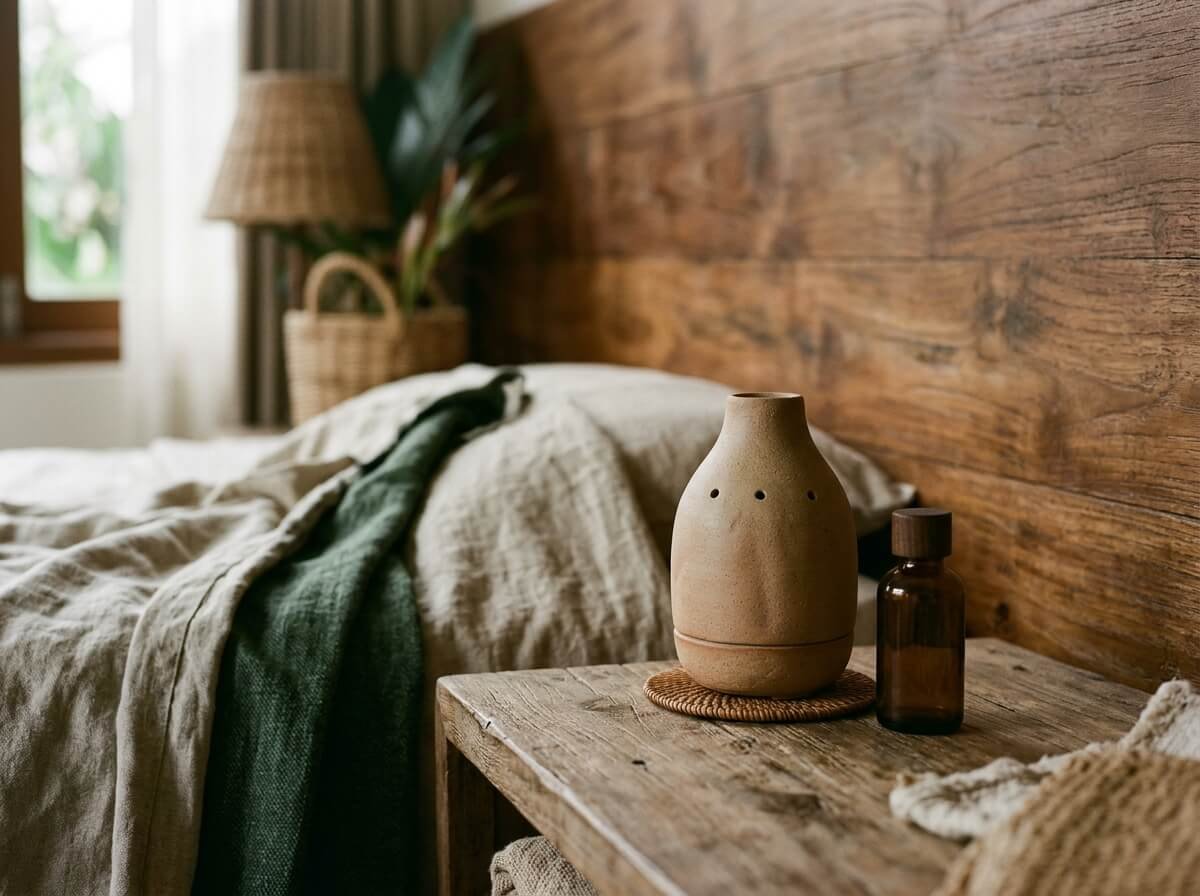
Yes. The gentlest route is inhalation. A few drops of a calming oil like Lavender Essential Oil in a diffuser in the evening can support rest, and less stress may mean fewer flares for some people. Keep the oil in the room, not on the plaque.
What if I still want to apply an essential oil to my skin?
Use it only on unaffected skin, at 1% dilution or less, and never on open, cracked, or bleeding plaques. Our guide on how to dilute essential oils shows the exact drop counts. Patch test for three days first. If anything stings or reddens, stop.
Which oil is best for psoriasis plaques?
For plaques themselves, a plain, fragrance-free carrier oil or thick emollient is a better choice than any essential oil. Tamanu, argan, and virgin coconut oil are all single-ingredient options. They soften and moisturise; they do not treat the immune cause.
Does sunlight help psoriasis?
Controlled ultraviolet light is a real medical treatment called phototherapy, given in measured doses. Everyday sun is less predictable. Short, sensible exposure feels good for some people, but sunburn can trigger new plaques. On face and hands, a mineral option like our Zinc Natural Sunscreen SPF50 keeps things simple.
Can psoriasis and eczema or rosacea appear together?
Yes, and they can look similar, which is why a diagnosis matters. If you also deal with facial redness, our guide to natural skincare for rosacea follows the same gentle, low-fragrance principles.
Why do my plaques get worse in winter?
Cold air, low humidity, indoor heating, and less sunlight all dry the skin and can intensify flares. Moisturise more often in the colder months, use a humidifier if indoor air is dry, and keep baths short and lukewarm.
When to see a dermatologist, and why oils are a support, not a substitute

Psoriasis is very treatable today. Topical steroids and vitamin D analogues, phototherapy, and modern biologic medicines that target the IL-23 and IL-17 pathway directly have changed life for millions of people. Some people reach almost completely clear skin. That is far beyond what any oil can offer, and it would be a disservice to suggest otherwise.
Please see a doctor if
- You have not had a diagnosis yet, and are unsure whether it is psoriasis, eczema, or a fungal rash.
- Plaques are spreading, covering a large area, or appear suddenly after an infection.
- Your joints are stiff, swollen, or painful, especially in the morning. This can be psoriatic arthritis and is worth catching early.
- Your nails pit, thicken, or lift.
- Skin becomes widely red, hot, or painful, or you feel unwell. Seek urgent care.
- Psoriasis is affecting your sleep, work, or mood. That alone is reason enough.
Where gentle botanical care fits
Think of daily care as the ground your treatment stands on. Soft, well-moisturised skin cracks less, itches less, and gives medicated creams a better surface to work on. A calm evening ritual helps with stress and sleep. Avoiding irritation reduces the risk of new plaques. None of that replaces your dermatologist. All of it supports the plan you make together.
Bring your products to appointments, or photos of the labels. A good dermatologist will tell you which of your oils and creams are fine to keep, and which to set aside while skin settles. For a broader view of building a simple, low-ingredient routine, our natural skincare routine guide is a calm place to start.
The honest summary is short. Essential oils for psoriasis belong in the diffuser, not on the plaque. Plain oils and emollients belong on the skin, applied gently and often. Treatment belongs with someone who can see the whole picture. What you give your skin is care and patience; what you get back is calmer, softer days. That is not a cure. It is something steadier: real, rooted care that works with the treatment, not against it.