Dry cuticles: an oil-then-seal ritual for hands that crack and peel
Dry cuticles have a way of announcing themselves. A sweater snags on a ragged edge. A hangnail stings in lemon juice. The skin around each nail turns white, flaky, and tight, and no amount of hand cream seems to reach it. If this sounds familiar, you are in good company, and the fix is gentler than most product shelves suggest.
This guide is our answer to the question we hear most in the dry months: what actually helps? We will look at what the cuticle does, why it dries out, and why a simple two-step habit (oil first, then a seal) does more than any single product. We will compare the plant oils that suit this small patch of skin, walk through a 60-second ritual, and be honest about when dry cuticles need a doctor rather than a drop of oil.
What your cuticle actually does

Most of us use the word “cuticle” for the whole border of skin around the base of a nail. Dermatologists split it into two parts, and the difference matters for how we care for it.
The cuticle and the eponychium
The cuticle itself is a thin layer of clear, non-living tissue that sits on the nail plate. It grows out from under the skin fold and clings to the nail as it moves forward. The eponychium (also called the proximal nail fold) is the living skin that overlaps the base of the nail. Together they form a seal between the nail and the finger.
That seal has one job: to keep water, bacteria, and yeast away from the nail matrix, the living tissue tucked under the skin where each new nail forms. When the seal is intact, the matrix stays protected. When it cracks, splits, or gets cut away, a small door opens.
Why this changes how we care for it
Once we see the cuticle as a protective layer rather than untidy skin, the goal shifts. We are not trying to remove it or make it invisible. We are trying to keep it soft, flexible, and whole, so it can do its quiet work.
There is also a long view here. Fingernails grow slowly, roughly three millimeters a month, so a full nail takes around six months to replace itself. Damage to the matrix today can show up as ridges or white marks for a season. Care today shows up the same way. We wrote a short version of this idea in our Ritual Monday cuticle oil post, and this guide goes deeper.
Why dry cuticles peel and split
The skin around the nail is thin, it has no oil glands of its own nearby, and it takes more daily friction than almost any other skin on the body. That makes it one of the first places to show dryness. A few common causes tend to stack on top of each other.
Washing, soap, and hot water
Every wash rinses away some of the natural fats that hold water in the skin. Soap is good at its job: it lifts oil and dirt alike. Hot water speeds this up. For people who wash their hands 10 or 20 times a day (parents, cooks, carers, healthcare workers), the nail fold rarely gets a chance to recover between rounds. Our guide to natural antibacterial soap covers how to choose a gentler wash, and lukewarm water helps more than most people expect.
Hand sanitizer
Alcohol-based sanitizer stings on broken skin, so it gets the blame for dry hands. The picture is more mixed. Many sanitizers include glycerin to soften the effect, and some research suggests frequent soap-and-water washing can be harder on skin than the rub itself. Either way, both strip a little more from an area that has little to spare. The answer is not to stop cleaning our hands. It is to put back what cleaning takes away.
Dry air, wind, and cold
Winter air holds less moisture, and indoor heating dries it further. Skin loses water faster into dry air, and the nail fold, already thin, cracks first. Wind and cold add friction and slow the skin’s own repair. If you are in the northern hemisphere right now, this is likely the main driver behind what you see. Our winter skincare routine covers the wider seasonal shift.
The tropics are not exempt. Here in Bali the air is humid most of the year, yet the people who work with their hands in water all day, cooking, cleaning, or tending gardens, still get split, sore cuticles. Humidity helps, but constant wetting and drying does its own damage.
Picking, biting, and salon cutting
This is the cause we can most easily change. Picking at a dry edge pulls away living skin along with the dead flake, and that usually leaves a bigger tear. Biting adds saliva, which dries the skin further as it evaporates. Cutting the cuticle in a salon can leave the edge looking tidy for a few days, but the skin often grows back thicker and more ragged, and every cut is a small opening for infection.
When it is more than dryness
Sometimes the cause sits deeper. Hand eczema, contact dermatitis from a new soap or glove, and psoriasis can all show up first around the nails. If one hand or one finger is much worse than the rest, or the skin is thickened, scaly, or itchy, keep that in mind as you read on. We cover this more in the final sections.
Oil, then seal: the two-step logic
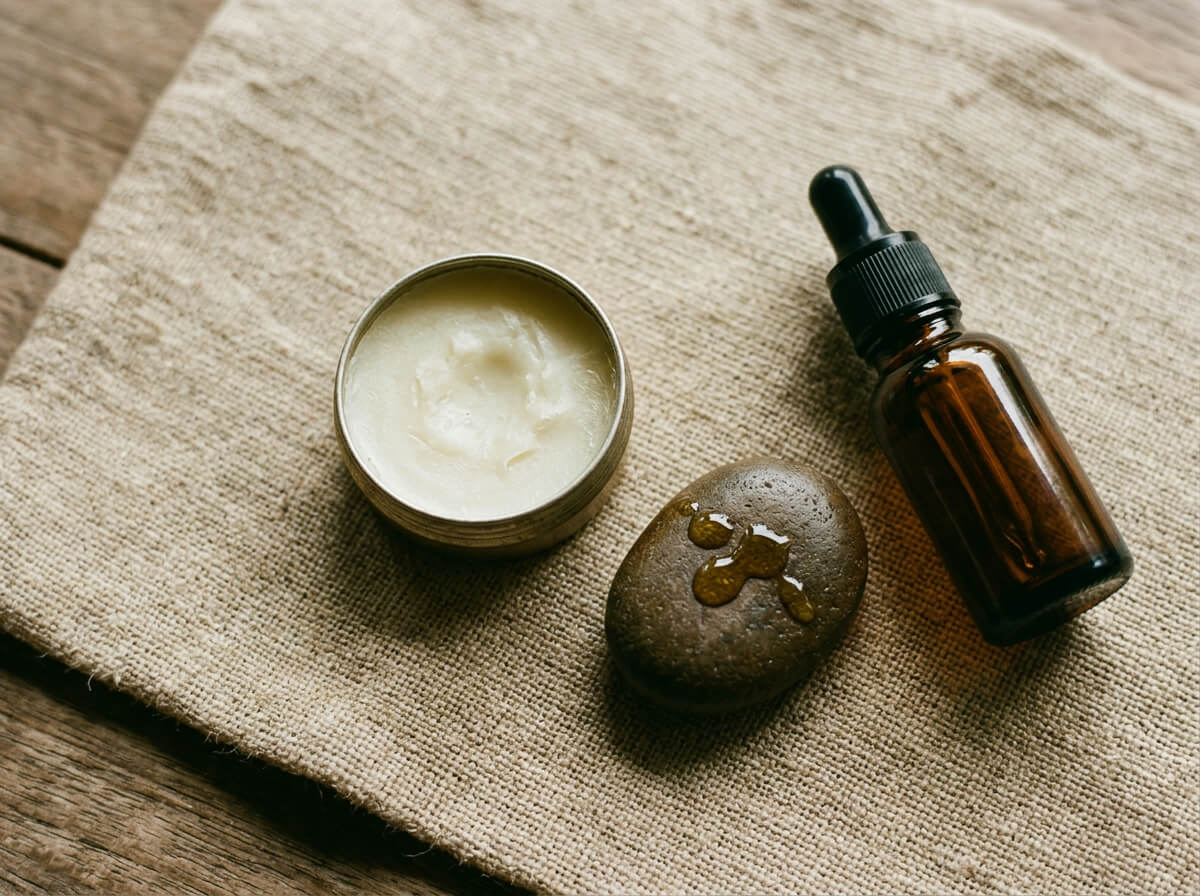
Here is the idea at the center of this guide. Dry skin needs two things: something to soften it, and something to hold that softness in. One product rarely does both well on such a small, busy patch of skin. Two thin layers do.
Step one: oil to soften
A liquid plant oil is small enough in texture to work into the creases of the nail fold. It replaces some of the fats that washing removed and makes the dead cuticle tissue flexible again, so it bends instead of cracking. Massaging it in also warms the skin and gives you a reason to slow down for a moment, which matters more than it sounds.
Oil on its own, though, is easy to lose. The next time you wash your hands, much of it goes down the drain.
Step two: a seal to hold it in
The second layer is an occlusive: a thicker, waxier texture that sits on the surface and slows the loss of water from the skin underneath. Dermatologists often recommend petrolatum here, and it is the most effective occlusive studied, blocking more than 98% of water loss in laboratory tests. That is why so many cuticle products are built around it.
Plant butters and beeswax do the same job in a different way. They seal less completely than petrolatum, and we will not pretend otherwise. What they offer in return is a layer that also carries fatty acids the skin can use, a texture that softens with body warmth, and a choice for people who prefer to keep petroleum by-products out of their routine. For a nail fold that just needs to stay supple between washes, a thin layer of balm is usually enough. If you want to understand the difference between balms and butters in more depth, our guide to body balm vs body butter explains it.
Why order matters
Seal first and the oil cannot get past the wax. Oil first and the seal locks it in place. It is the same logic we follow in our guide on how to repair your skin barrier: water and soft lipids first, then something to hold them. On the fingertips, the layers are just much smaller.
Choosing a cuticle oil: argan, coconut, and jojoba
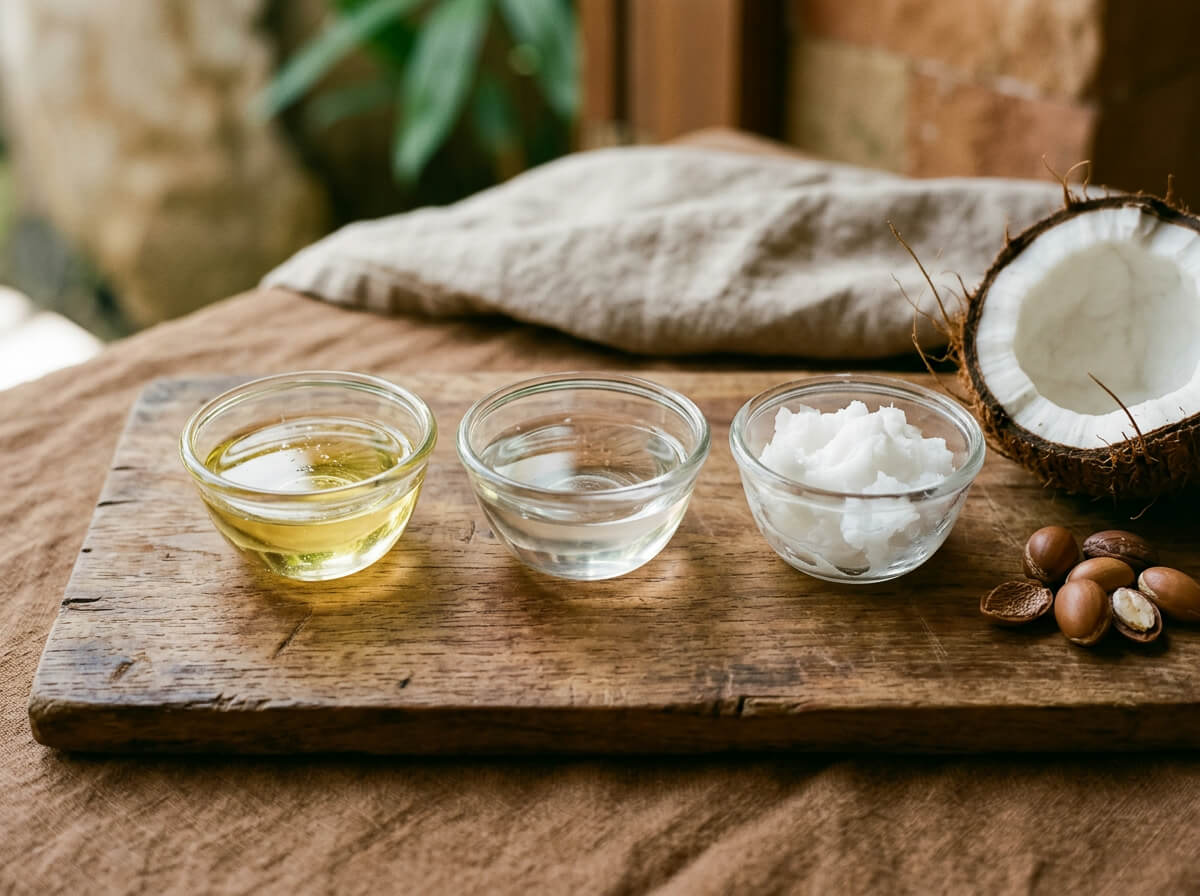
Almost any pure, plant-based oil will help dry cuticles more than nothing at all. The differences come down to texture, how fast the oil sinks in, and how it fits your day. Here is how three of the most common choices compare.
Argan oil
Argan oil is pressed from the kernels of argan trees in southwestern Morocco. It is not a Balinese ingredient, and we say so plainly. We keep it close because it suits this job so well. It is rich in oleic and linoleic acids and naturally carries vitamin E. Its texture is light to medium, and it absorbs within a minute or two, leaving very little residue on fingertips that need to type, cook, or hold a cup. If you want one oil for daytime, this is a good place to start. Our Argan Oil 30ml is a single-ingredient, cold-pressed oil, and a bottle lasts many weeks at a drop per finger. You can read more in our full guide to argan oil benefits for skin.
Virgin coconut oil
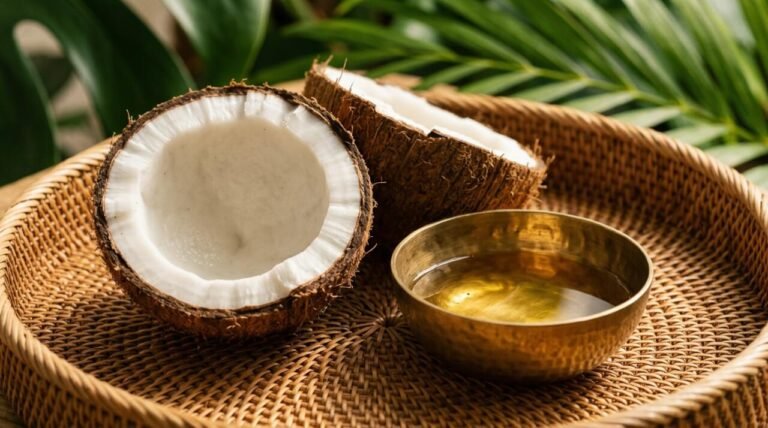
Coconut oil is the oil we know best. It runs through nearly everything we make, and our coconut comes from Bali plantations through our partnership with Aluan. It is high in lauric acid and has a richer, slightly heavier feel than argan. One small study found virgin coconut oil as effective as mineral oil for very dry skin on the legs, which makes it a fair, gentle choice for the hands.
Coconut oil also has a quirk. It turns solid below about 24°C, so in a cool northern kitchen it sits in the jar as a soft white paste. Warm a little between your fingertips first. In Bali it stays liquid almost all year. Because it feels richer, many people prefer it for the evening. Virgin Coconut Oil 100ml works for cuticles, hands, and the rest of the body, and our guide to coconut oil for skin covers where it shines and where it does not.
Jojoba oil
Jojoba is technically a liquid wax, not an oil, and its structure is close to the waxy part of our own skin’s sebum. It is very stable, it does not go rancid easily, and it absorbs quickly without a greasy finish. That makes it popular in commercial cuticle pens. We do not sell jojoba as a single oil, but it is one of the botanicals in our Radiant Hand Cream 30 ml, alongside argan, rosehip, marula, and wild-harvested illipe butter.

A simple way to choose
- For daytime and busy hands: argan or jojoba, because they absorb fast.
- For evening and very dry skin: virgin coconut oil, because it feels richer and lingers longer.
- For sensitive or reactive skin: a single, unscented oil. Leave essential oil blends for later, once the skin has healed.
Whatever you choose, use it pure and unscented on cracked or broken skin. Essential oils can sting open skin and, over time, can cause sensitivity. Save fragranced products for skin that is whole.

One drop, ten fingers, a softer seal
Our Argan Oil is cold-pressed and single-ingredient, with nothing added. It sinks in within a minute, so it suits the after-wash step of a daily cuticle ritual, and one small bottle lasts for weeks.
The 60-second cuticle ritual
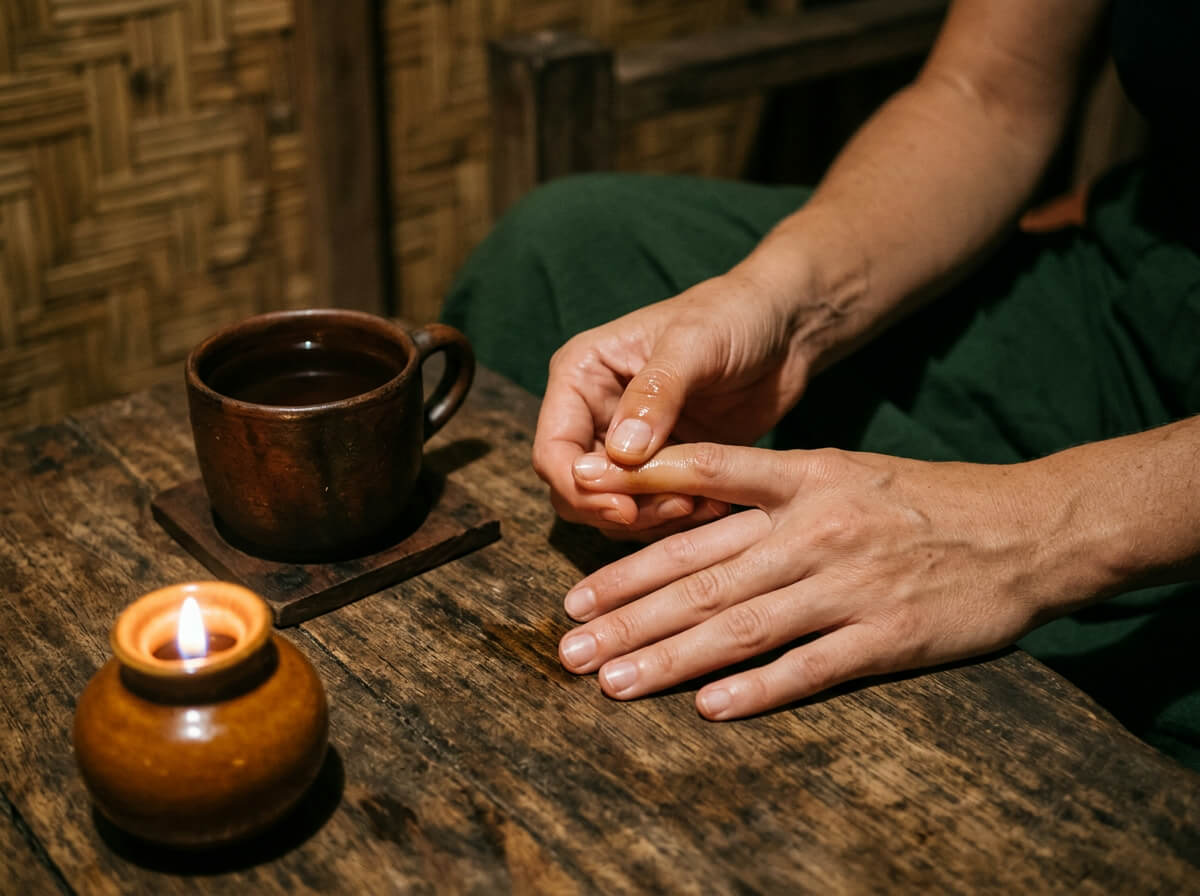
The best routine is the one we will actually keep. This one takes about a minute and slots into moments that already exist in the day.
After washing
Right after you wash and pat your hands dry, while the skin is still faintly damp, is the best time to apply oil. Damp skin takes up oil more evenly, and you are replacing what the wash just removed.
- Pat your hands almost dry with a soft towel. Leave them faintly damp, not wet.
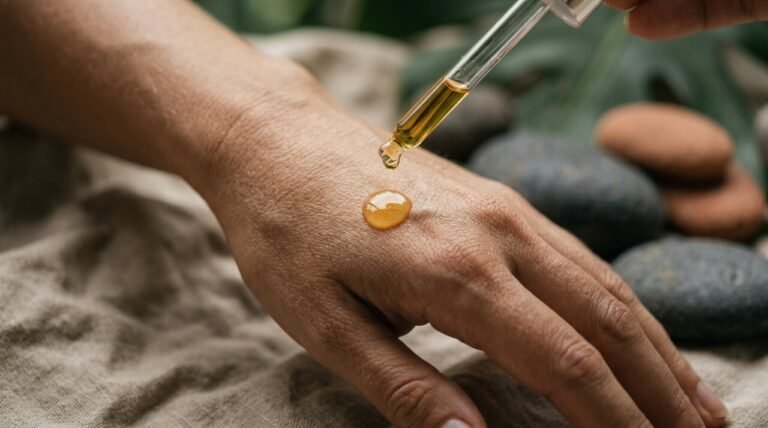
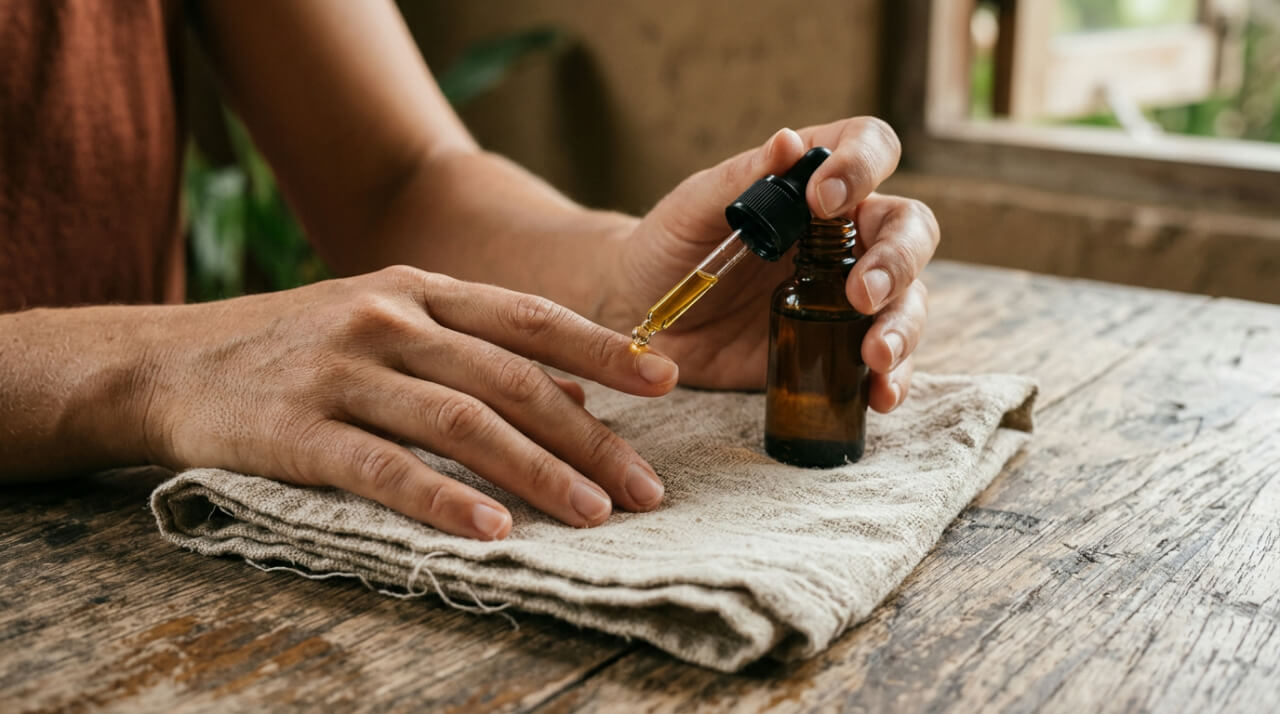
- Place one small drop of oil at the base of each nail. A little goes a long way.
- With the pad of your opposite thumb, massage each nail fold in slow, small circles for a few seconds. Work along the sides of the nail too, where hangnails usually begin.
- Smooth any extra over the backs of your fingers and knuckles.
- Finish with a pea-sized amount of hand cream or a thin layer of balm, focused on the fingertips.
Before bed
Night is the most useful time for cuticle care, because nothing washes the layers away for hours. Repeat the oil step, then add a slightly thicker layer of balm over each nail fold. Our Fresh Soul Body Balm is a simple blend of virgin coconut oil and beeswax, hand-poured in Bali. It does contain essential oils (fennel, mint, vetiver, and nutmeg), so use it on dry but unbroken skin, and keep it away from open cracks.
The overnight cotton-glove method
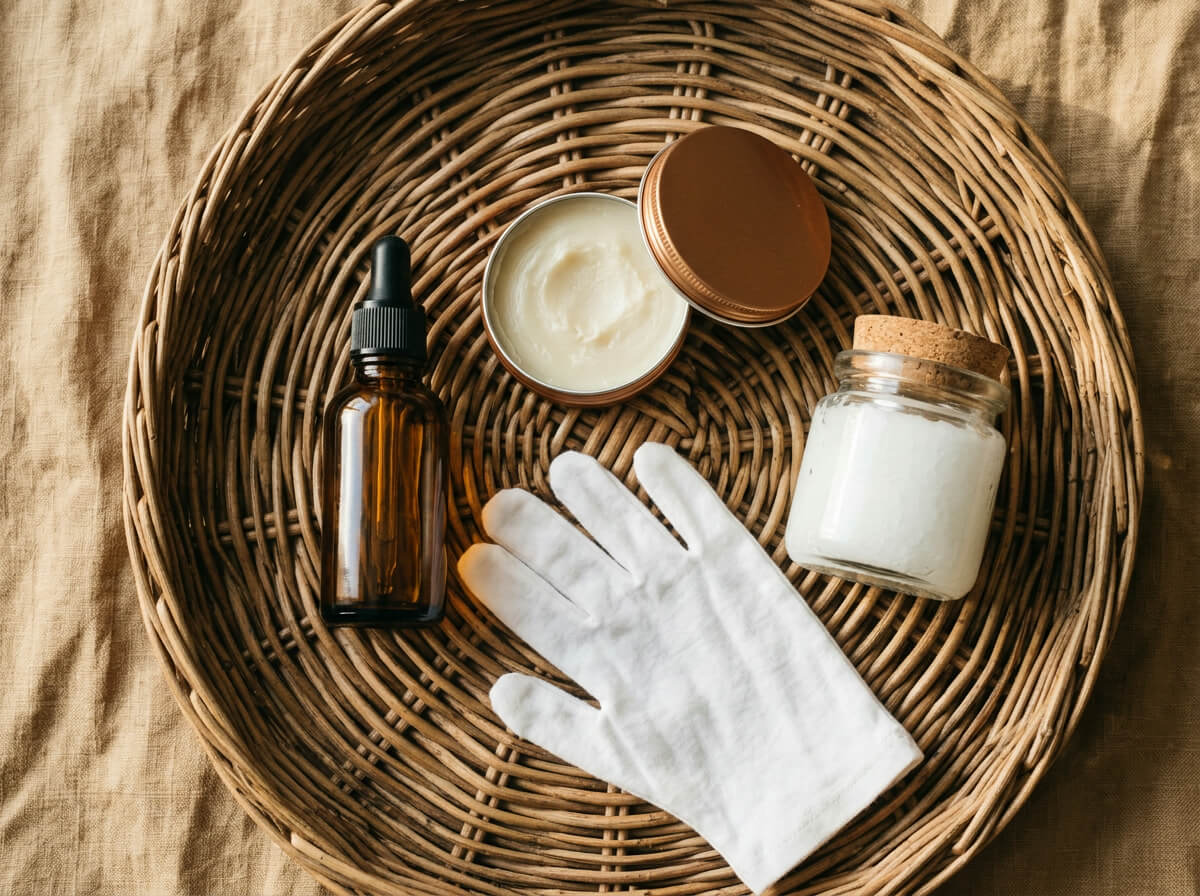
For cuticles that are very dry, split, or rough, dermatologists often suggest this simple step. After oil and balm, slip on a pair of clean, breathable cotton gloves and sleep in them. The gloves keep the layers on your skin instead of your pillowcase and hold in a little warmth. Most people notice a real difference after three or four nights. Wash the gloves often.
If you enjoy slower rituals, our Slow Saturday hand ritual turns this into a weekend pause, and our hand cream sink ritual keeps the habit next to the tap.
How long until it helps
Softness often returns within a few days. Splits and peeling take longer, usually one to two weeks of steady care. Because nails grow so slowly, any ridges or marks from older damage may take months to grow out. That is not a sign the ritual is failing. It is just the pace of nails.
Push, do not cut: gentle care for hangnails and ragged edges
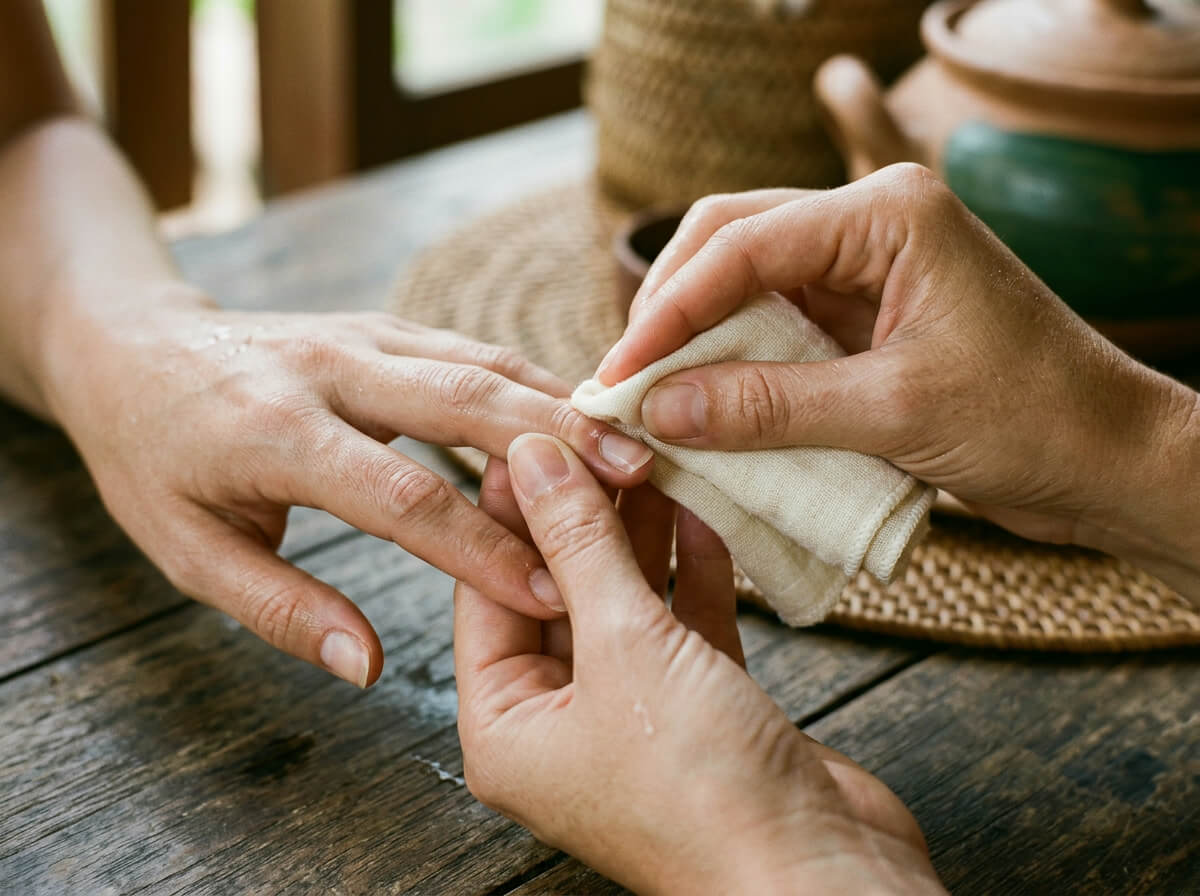
If there is one habit worth changing, it is this one. The American Academy of Dermatology advises against cutting cuticles, and many nail professionals now agree. The living skin fold is not excess. It is a barrier.
How to push back softened cuticles
If the cuticle has crept up the nail and you want a neater edge, soften it first. After a bath or shower, or after soaking your fingertips in warm water for a few minutes, gently ease the cuticle back with a soft washcloth or the pad of your thumb. A wooden orange stick wrapped in cotton works too. Go slowly. If it resists, stop and try another day. Never use metal pushers with force, and never push the living fold back so hard that it lifts from the nail.
What to do with a hangnail
A hangnail is a small torn strip of skin at the side of the nail. Pulling it or biting it almost always tears it further. Instead, soften it with oil, then snip only the loose, dead tip with clean, sharp nail clippers, as close to its base as you can without cutting living skin. Add a drop of oil afterwards. Keeping the area supple is the best way to stop the next one.
A word about salons
Professional manicures can be a lovely ritual. If you visit a salon, you can simply ask them not to cut your cuticles and to push them back gently instead. Bring your own tools if you are unsure about hygiene. A good technician will respect the request.
When dry cuticles need a doctor
Most dry cuticles respond to oil, a seal, and a little patience. Some signs mean the skin needs more than home care. We are not doctors, so please treat this as a guide to when to ask, not a diagnosis.
Signs of infection (paronychia)
An infection of the nail fold is called paronychia. It often begins with a small tear from a hangnail, picking, or cutting. See a doctor or pharmacist if you notice:
- Redness, swelling, warmth, or throbbing pain around the nail
- Pus, or a yellow or white pocket under the skin
- Redness spreading up the finger, or a fever
- A tear that bleeds and will not heal after a week or two
Some infections build slowly over weeks, especially in hands that are often wet. The nail fold becomes puffy and tender, and the cuticle may disappear. This kind also needs a professional look.
If you have diabetes, poor circulation, or a weakened immune system, see a doctor sooner rather than later for any nail fold that looks infected.
Signs of eczema or psoriasis
If the skin around your nails is red, itchy, thickened, or scaly, or if your nails show tiny pits, ridges, or lifting, the cause may be eczema or psoriasis rather than simple dryness. These are worth naming with a dermatologist, who can recommend treatment. Gentle oils can still be part of your routine alongside it. We have written about essential oils for eczema and essential oils for psoriasis, with an honest view of what plants can and cannot do.
When nothing seems to help
If you have kept up the ritual for three or four weeks and your cuticles are still cracking, something else may be going on: an allergy to a soap, glove, or nail product, or a skin condition that needs a closer look. A short appointment can save months of guessing.
Dry cuticles: questions we often hear
Can I use body oil or face oil on my cuticles?
Yes, as long as it is a plant oil and the skin is not broken. Many body oils contain essential oils, so keep those for whole skin. A single, unscented oil like argan, coconut, or tamanu is the safest choice for cracked edges. Our Tamanu Oil 30ml is fragrance-free and richer than argan, which some people like for the overnight step.
Is hand cream enough for dry cuticles?
Hand cream helps, but it often misses the small creases of the nail fold, and most creams are mostly water. Massaging a drop of oil into the cuticle first, then using cream or balm, works better than cream alone. Our guide to natural hand cream explains how to choose one.
How often should I oil my cuticles?
Once or twice a day is a good rhythm for most people: after a morning wash and before bed. If your hands are in water often, add a drop after each long wash.
Does cuticle oil help nails grow?
Oil does not speed up how fast nails grow. What it can do is protect the nail fold, reduce hangnails, and help nails stay flexible so they split and peel less. Healthier growth comes from protecting the matrix, not from forcing it.
Should I worry about dry cuticles in children?
Children who bite their nails or pick at their fingers often get dry, sore cuticles. A tiny drop of plain coconut oil at bedtime is gentle and safe for most children. Avoid essential oil products on young hands, and see a doctor for any signs of infection.
What else helps in winter?
Wear gloves outside when it is cold, and rubber gloves (with cotton liners if you can) for washing up. Use lukewarm water instead of hot. A humidifier in the bedroom helps the whole body, not just the hands. Our older guide on how to replenish dry, winter-damaged skin and our cracked heels home remedy follow the same oil-then-seal logic for the rest of the body.
A small ritual, held daily
Dry cuticles are rarely a problem that needs a strong product. They are a sign that a small, hard-working patch of skin needs steady care. Oil to soften, a seal to hold it, and the patience to leave the living fold alone. A minute a day is enough. The nail fold will do the rest, quietly, the way it was made to.