Ingredient Tuesday: kukui nut oil, the candlenut that lit Bali and softened its skin
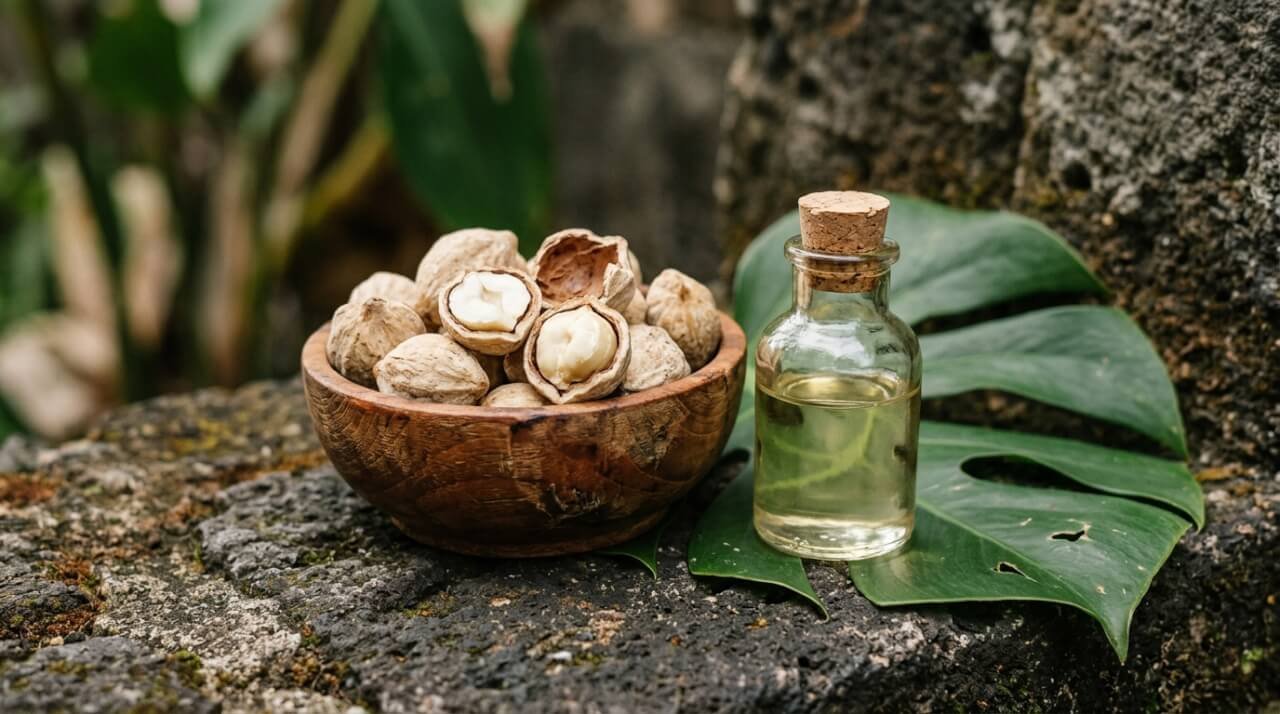
Strike a match against Balinese history and you may find kukui at the flame. The candlenut tree, Aleurites moluccanus, known across Indonesia as kemiri, carries nuts so rich in oil that people once threaded them onto reeds and burned them like slow candles. That same oil, pressed rather than lit, has soothed skin and hair here for generations.
In a Balinese kitchen, kemiri is ground into base gede, the mother spice paste. In the hands of traditional healers, it took a quieter role: rubbed into dry skin, worked through hair and scalp, smoothed over minor burns and rough patches. One tree, feeding both the pot and the skin.
The reason it works sits in the fatty acids. Kukui oil is high in linoleic and alpha-linolenic acid, the same polyunsaturated lipids that form part of the skin’s own barrier. Skin recognises them, so the oil absorbs quickly and settles without a heavy film. It is what people mean when they call something a dry oil: present, then quietly gone, leaving softness rather than shine.
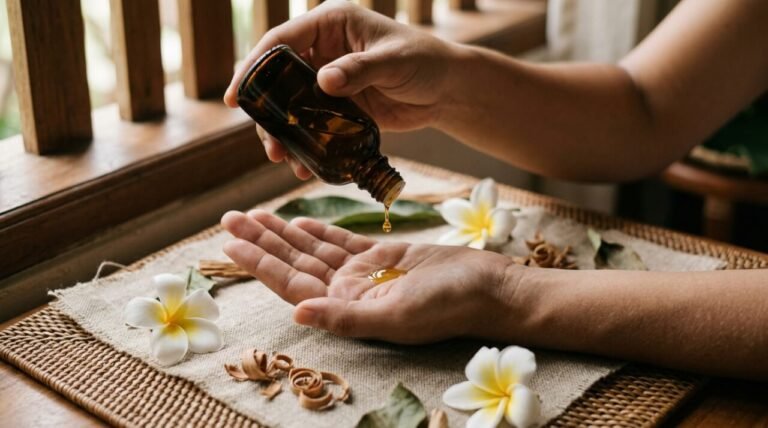
If you want to meet this ingredient in daily ritual, kukui is one of the botanicals in our Herbal Silk Hair Oil, warmed between the palms and drawn through the lengths and scalp. To see how it sits alongside the other tropical oils Balinese makers reach for, our guide to a real Balinese face oil is a good next read.
The takeaway for today: an ingredient earns its place through use, not marketing. Kukui lit rooms, seasoned food, and cared for skin long before anyone printed it on a label. That is heritage doing its quiet work.