Ingredient Tuesday: nyamplung, the coastal nut that only gives its oil after weeks in the sun
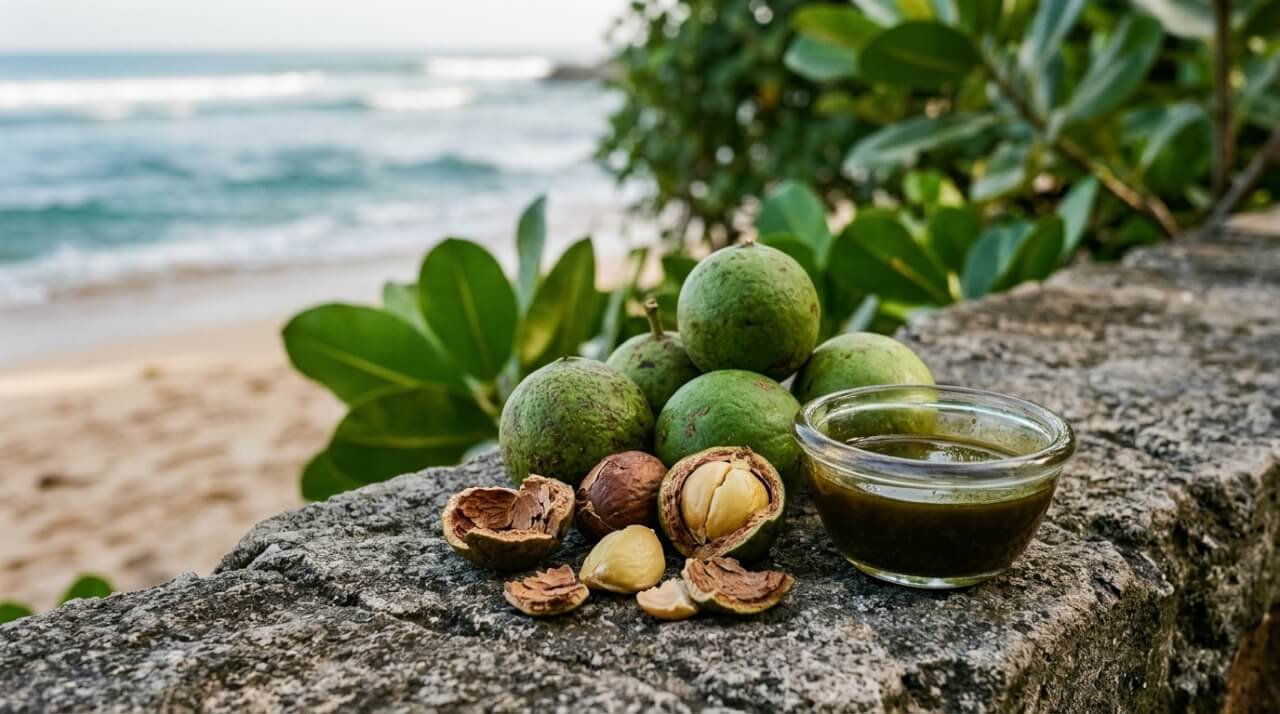
Walk along almost any stretch of Indonesian coast and you will find nyamplung growing just back from the sand: a broad, low tree with glossy leaves, roots sunk into salty ground where little else will take hold. Coastal villages have planted it for generations as shade and as a windbreak. Its round green fruit falls onto the beach year after year, and inside each one sits a single pale nut. Elsewhere in the world, that nut is known as tamanu.
An oil that has to wait
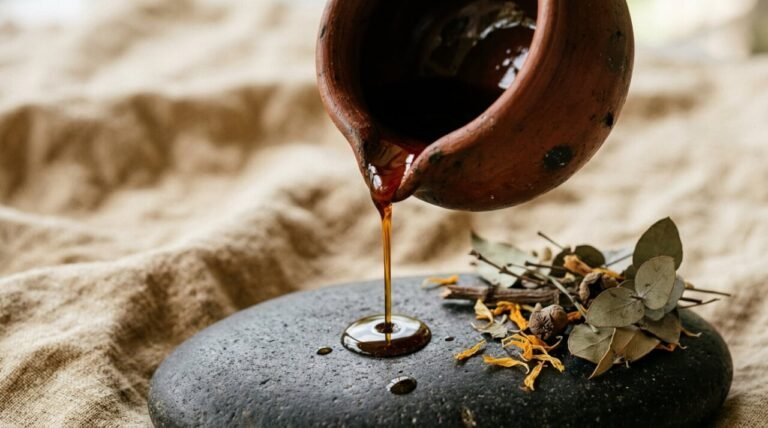
A freshly cracked tamanu kernel looks almost dry. Press it the day it falls and you get very little. The oil only arrives with patience. The nuts are gathered, then left to dry in the sun for weeks, and slowly the kernel darkens, turns sticky, and fills with oil. Only then is it pressed, and what comes out is thick, deep green-gold, with a strong nutty, earthy scent that nobody mistakes for anything else.
That colour tells you something. Tamanu oil (from Calophyllum inophyllum) carries the usual skin-friendly fatty acids, oleic and linoleic among them, but also a group of compounds most plant oils do not have, including calophyllolide. In laboratory and animal research, calophyllolide has been linked to calmer inflammation and faster recovery of damaged tissue. Much of that character lives in the green fraction of the oil, which is why heavily refined, pale tamanu is a different thing.
The honest limit
Tamanu has a long reputation as a coastal first-reach oil for rough, weathered, and scraped skin, and the early science is encouraging. It is not a cure, and it will not erase scars or turn back time. It is also pressed from a tree nut, so anyone with a nut allergy should check with their doctor before using it, and everyone should patch test first. The scent is strong, and the oil is rich, so a little goes a long way. We cover the full research picture, including what tamanu cannot do, in our guide to tamanu oil benefits.

One drop, not a dropperful
Because tamanu is so concentrated, the gentlest way to begin is to treat it as a booster rather than a whole step. Most people find it easiest blended into something lighter that their skin already knows.
A small ritual to try: tonight, put your usual face oil or a few drops of a light carrier in your palm, add one single drop of tamanu, and warm the two together between your hands for a few breaths before pressing them into your skin. Notice the scent change as it warms. If your skin is happy after a week, you can move to two drops.
If you would like to bring nyamplung into your own ritual, our Tamanu Oil is cold-pressed and unrefined, with nothing added, so the green stays in the bottle. For more ways to blend it with other island oils, our Balinese face oil guide is a good next read.
A seaside tree, a nut that asks for weeks of sun, and an oil that rewards the wait. Some of the best care is simply the result of not rushing.