Natural deodorant for men: a guide to making the switch with confidence
Switching to a natural deodorant for men is one of those decisions that sounds simple but comes with questions. Will it actually work? What happens during the first week? And why does every article online seem to be selling something instead of explaining anything? This guide is the educational resource we wish existed when we started formulating natural deodorants in Bali more than 35 years ago. No product rankings, no affiliate links: just the science, the tradition, and the practical knowledge you need to make the switch with confidence.
Whether you are an athlete who trains in tropical heat, someone looking to reduce chemical exposure, or simply a person who reads ingredient lists before buying, this article walks you through how natural deodorant for men works, what ingredients to look for, and how to navigate the adjustment period that trips up most newcomers.
Why men are switching to natural deodorant
The shift away from conventional antiperspirants is not a trend driven by marketing. It is driven by a growing awareness of what we put on our bodies and why it matters. Conventional antiperspirants rely on aluminum-based compounds (usually aluminum chlorohydrate or aluminum zirconium) to physically block sweat glands. The aluminum salts form a temporary plug in the sweat duct, preventing perspiration from reaching the skin surface.
While regulatory agencies have not definitively linked aluminum in antiperspirants to disease, many men choose to avoid it on the precautionary principle. The underarm area is one of the body’s most absorptive zones, and applying synthetic compounds to it daily for decades raises reasonable questions. A 2022 study in the International Journal of Environmental Research and Public Health found that regular antiperspirant use can alter the underarm microbiome, potentially disrupting the natural bacterial communities that help regulate odor in the first place.
Beyond aluminum, conventional deodorants often contain parabens (synthetic preservatives), propylene glycol (a penetration enhancer), and synthetic fragrances made from undisclosed chemical blends. For men dealing with sensitive skin, razor irritation, or a general desire to simplify their daily routine, the ingredient list on a typical drugstore stick can look more like a chemistry experiment than a personal care product.
The cultural shift matters too. The same generation of men who read nutrition labels on food are now reading labels on their body care products. This is not about fear. It is about informed choice, a quiet act of self-respect that starts with knowing what goes on your skin each morning.
How natural deodorant works differently from antiperspirant
The most important distinction: natural deodorant does not stop you from sweating. It is designed to neutralize odor, not block perspiration. This is a feature, not a flaw. Sweating is one of the body’s primary thermoregulation mechanisms, and your underarms are part of that system for good reason.
Odor does not come from sweat itself. Fresh perspiration is nearly odorless. The smell develops when bacteria on the skin surface break down the proteins and fatty acids in apocrine sweat (the type produced under the arms). Natural deodorants work by targeting this bacterial process rather than shutting down the glands entirely.
Most effective natural deodorants use a combination of three strategies:
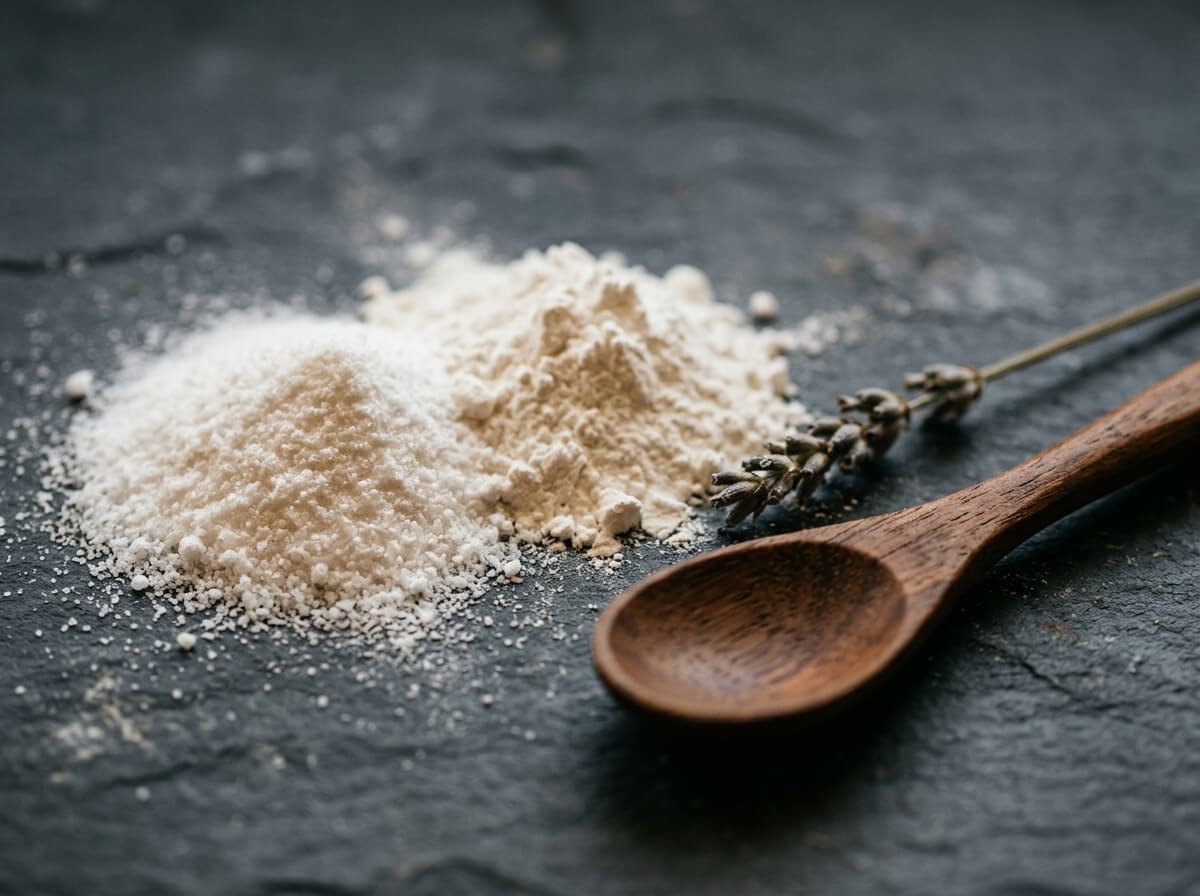
- Moisture absorption: Ingredients like arrowroot powder (Maranta arundinacea) and tapioca starch draw moisture away from the skin, keeping the underarm area drier without blocking pores.
- pH adjustment: Baking soda (sodium bicarbonate) creates an alkaline environment that is inhospitable to odor-causing bacteria. Some formulations use magnesium hydroxide as a gentler alternative.
- Antimicrobial botanicals: Essential oils such as tea tree, rosemary, and lavender have documented antimicrobial properties that help keep bacterial populations in check.
The result is a product that works with your body’s natural processes rather than against them. You will still perspire, as your body needs to, but the underarm environment stays balanced and odor stays managed. For men who live in warm climates or exercise regularly, this approach often proves more comfortable than the sealed, occlusive feeling of aluminum-based products.
The adjustment period: what to expect in the first two weeks

If you have used conventional antiperspirant for years, your body will go through a recalibration when you stop. This is the stage where most men give up, concluding that natural deodorant does not work. Understanding what happens during this window makes all the difference.
During the first three to seven days, you may notice increased moisture and stronger odor than usual. This is not because the natural product is failing. It is because your sweat glands are re-activating after being chemically suppressed by aluminum compounds. The underarm microbiome is also shifting, and the bacterial populations that were held in check by synthetic antimicrobials are temporarily rebalancing.
A 2019 study published in PeerJ found that habitual antiperspirant users had significantly different underarm bacterial communities compared to non-users. When they stopped using antiperspirant, their microbiome took roughly two weeks to stabilize. During that transition, some participants experienced more odor than baseline, but it normalized as the natural bacterial balance was restored.
Practical tips for the adjustment period:
- Start on a weekend or during a less demanding social period.
- Apply natural deodorant to clean, fully dry skin (moisture dilutes the active ingredients).
- Reapply once midday if needed during the first week.
- Wear breathable fabrics like cotton or linen rather than synthetics that trap moisture.
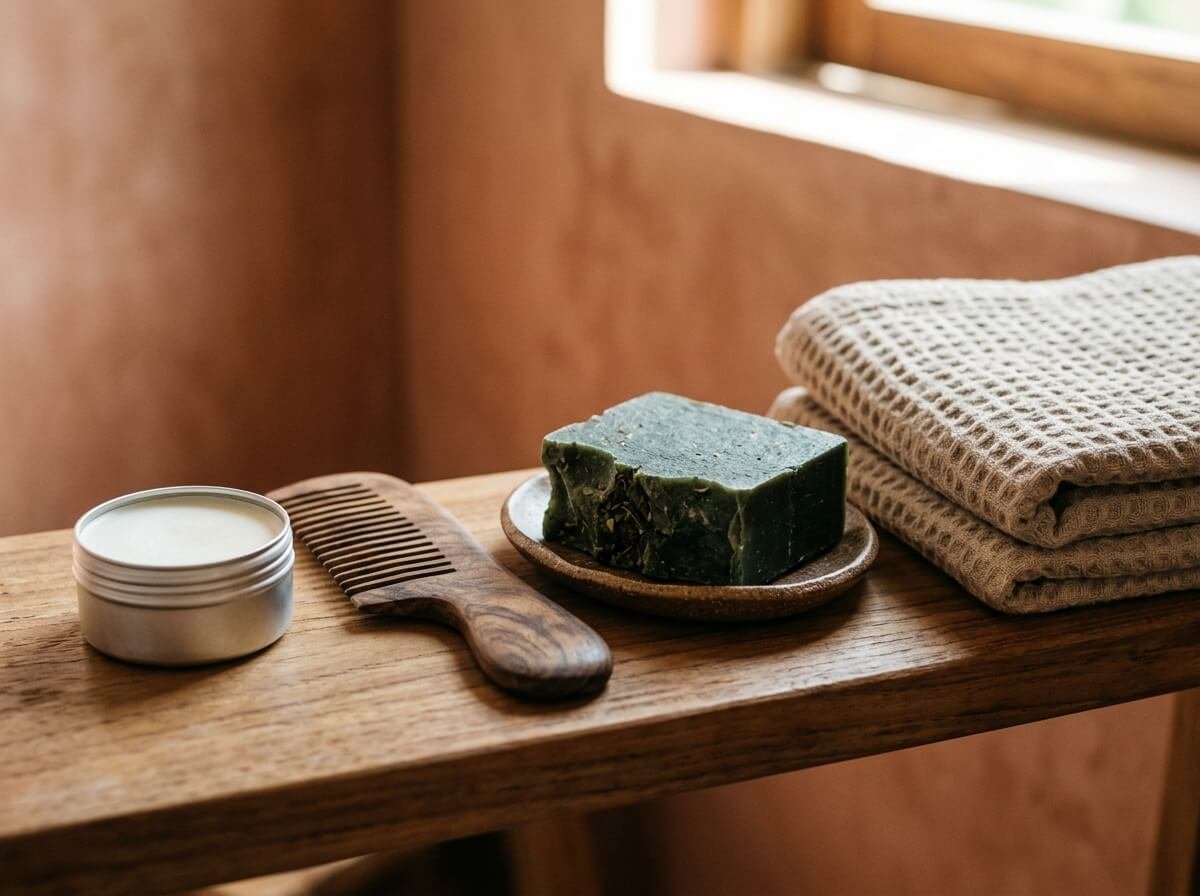
- An underarm wash with a gentle, pH-balanced natural soap midday can reset the bacterial environment.
By the end of week two, most men find that their natural deodorant performs as well as, or better than, the conventional product they left behind. The key is patience and the understanding that this brief transition is your body reclaiming its natural function.
Key ingredients in natural deodorant for men
Not all natural deodorants are created equal. The ingredient list is where you separate genuine formulations from greenwashed marketing. Here are the functional ingredients that matter, grouped by what they do.
Moisture absorbers
Arrowroot powder is the gold standard for moisture management in natural deodorants. Derived from the rhizome of Maranta arundinacea, it absorbs moisture effectively without irritating sensitive skin. Unlike talc (which carries contamination concerns), arrowroot is gentle, sustainable, and pairs well with other botanical ingredients.
Tapioca starch works alongside arrowroot, providing additional absorbency and a smooth application texture. Together, these two starches create a dry feel that lasts for hours without the chalky residue some men associate with natural products.
Odor neutralizers
Baking soda (sodium bicarbonate) is the most effective natural odor neutralizer, but it is also the most common irritant. At concentrations above 15 to 20%, it can cause redness and irritation in men with sensitive skin. Look for formulations that use moderate amounts or pair it with soothing carrier oils. If you are baking-soda sensitive, magnesium hydroxide offers similar pH-shifting action with less potential for irritation.
Carrier oils and waxes
Grape seed oil provides a lightweight, non-greasy base that absorbs quickly into skin. It is rich in linoleic acid, which supports the skin barrier without clogging pores. Beeswax gives solid deodorant its structure and creates a gentle protective layer that helps active ingredients stay in contact with skin longer. For men who prefer plant-based options, candelilla wax or carnauba wax serve similar structural roles.
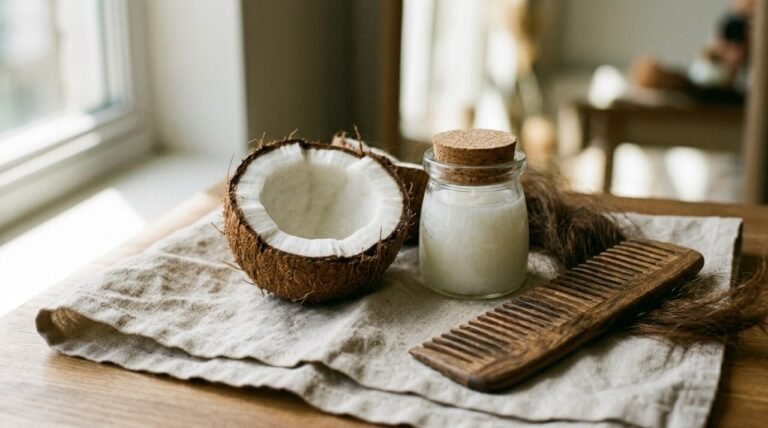
Coconut oil appears in many formulations as both a carrier and an antimicrobial agent. Lauric acid, its primary fatty acid, has demonstrated antibacterial activity against several strains of odor-causing bacteria. In Bali, where our formulations originated, coconut oil has been used as a body care staple for generations, long before the Western wellness world caught on.
Antimicrobial essential oils
This is where natural deodorant for men gets interesting. The essential oil blend determines both the scent profile and the antimicrobial efficacy of the product.
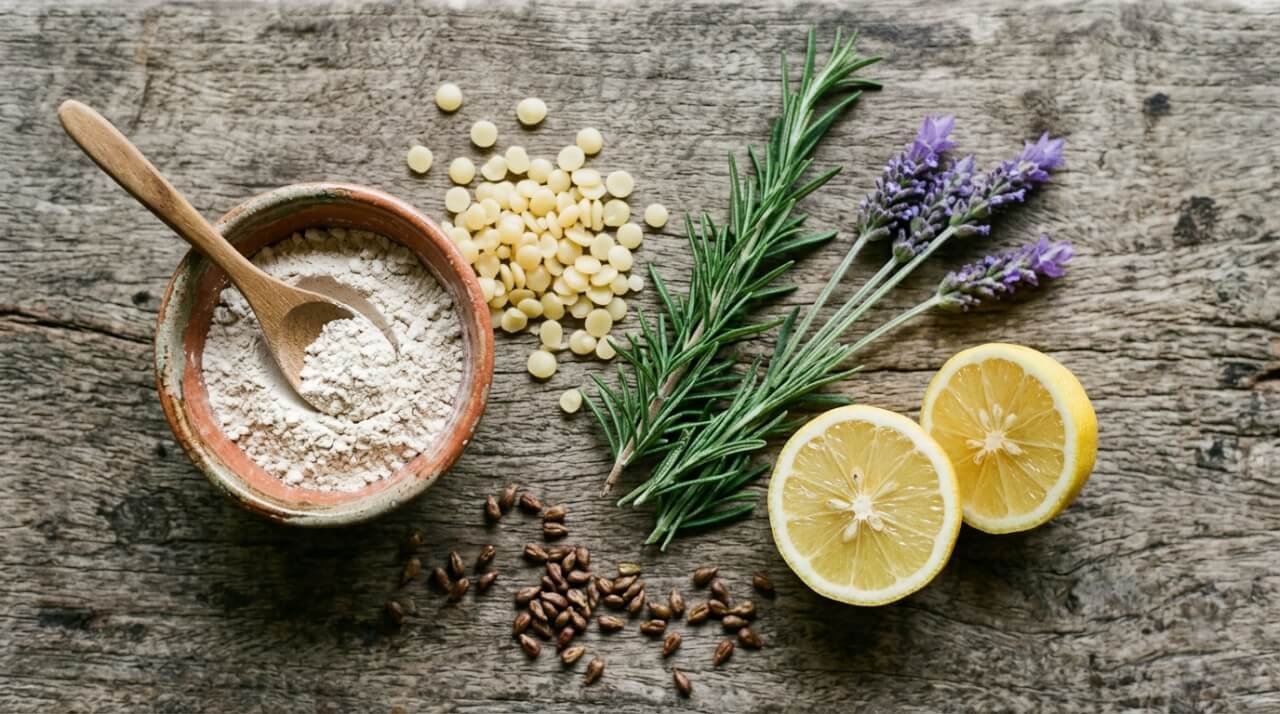
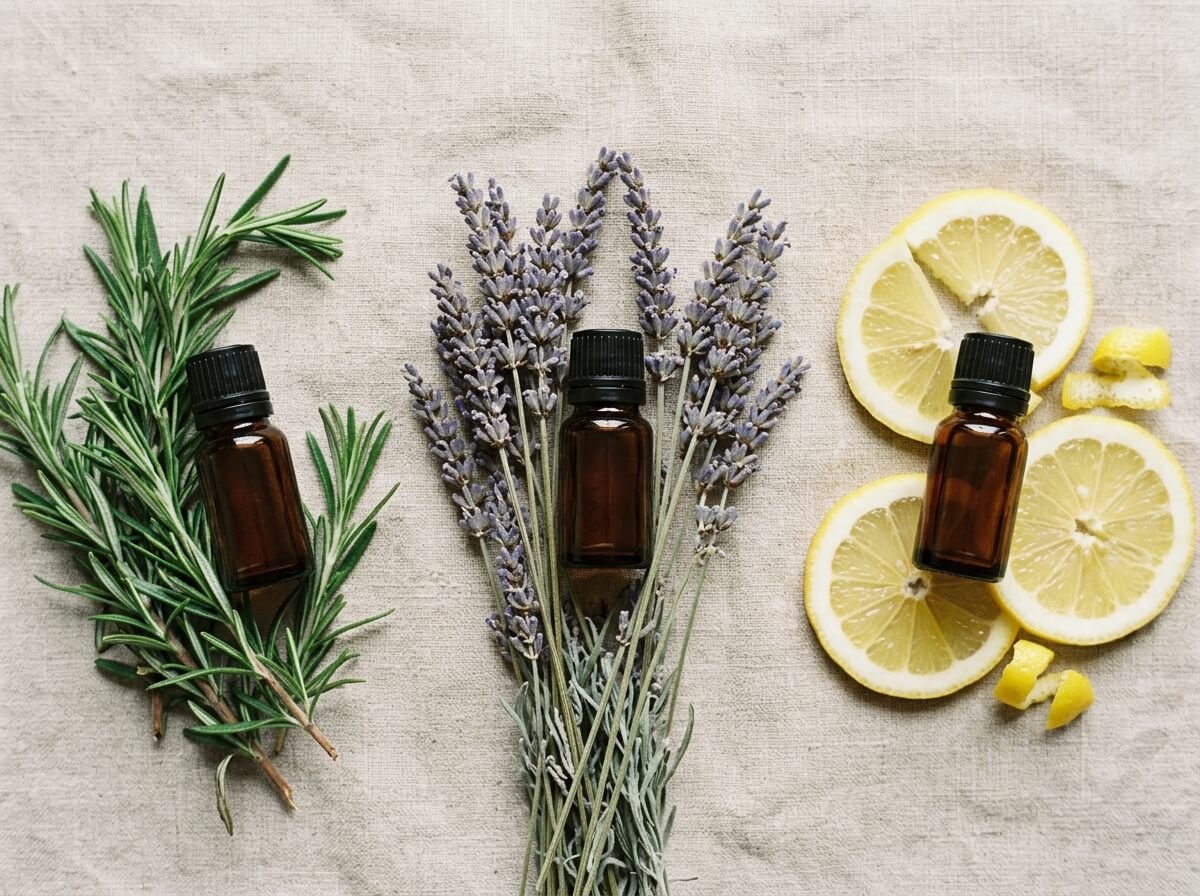
Rosemary oil (Rosmarinus officinalis) contains 1,8-cineole and camphor, both of which have documented antibacterial properties. It carries a grounding, herbaceous scent that works well in masculine formulations. Lemon oil (Citrus limon) is a natural astringent with strong antimicrobial activity, and its bright citrus note provides energy and freshness. Lavender oil (Lavandula angustifolia) brings both calming properties and broad-spectrum antimicrobial action, making it one of the most versatile essential oil combinations in natural personal care.

If you want to experience these botanicals in a ready-made formulation, our His Deodorant combines grape seed oil, arrowroot, beeswax, and a rosemary-lemon-lavender essential oil blend: the exact ingredients described above, crafted in small batches in our Bali workshop.
How to choose the right natural deodorant for your skin type
Men’s skin is generally thicker and oilier than women’s skin due to higher testosterone levels, which means the underarm area has different needs. Choosing the right natural deodorant starts with understanding your skin type and lifestyle.
For sensitive skin
If you experience razor burn or redness from shaving, avoid formulations with high baking soda concentrations. Look for products that use magnesium hydroxide or zinc ricinoleate as the primary odor neutralizer. A rich carrier oil base (like grape seed or jojoba) will also help buffer any potential irritation. Apply to fully healed skin, never immediately after shaving.
For active lifestyles and hot climates
If you train regularly or live in a tropical climate, you need a formulation with strong moisture absorption. Prioritize products with higher concentrations of arrowroot and tapioca starch. A solid balm format tends to outperform cream or paste formats in high-heat conditions because it maintains its structure and does not melt in your gym bag. Keep a backup for midday reapplication on heavy training days.
For minimal-scent preference
Not every man wants to walk around smelling like a lavender field. Some natural deodorants offer unscented or very lightly scented options that rely on the antimicrobial properties of carrier oils and pH adjusters without a strong essential oil presence. Cedarwood and vetiver are good choices for a subtle, woodsy scent that fades quickly.
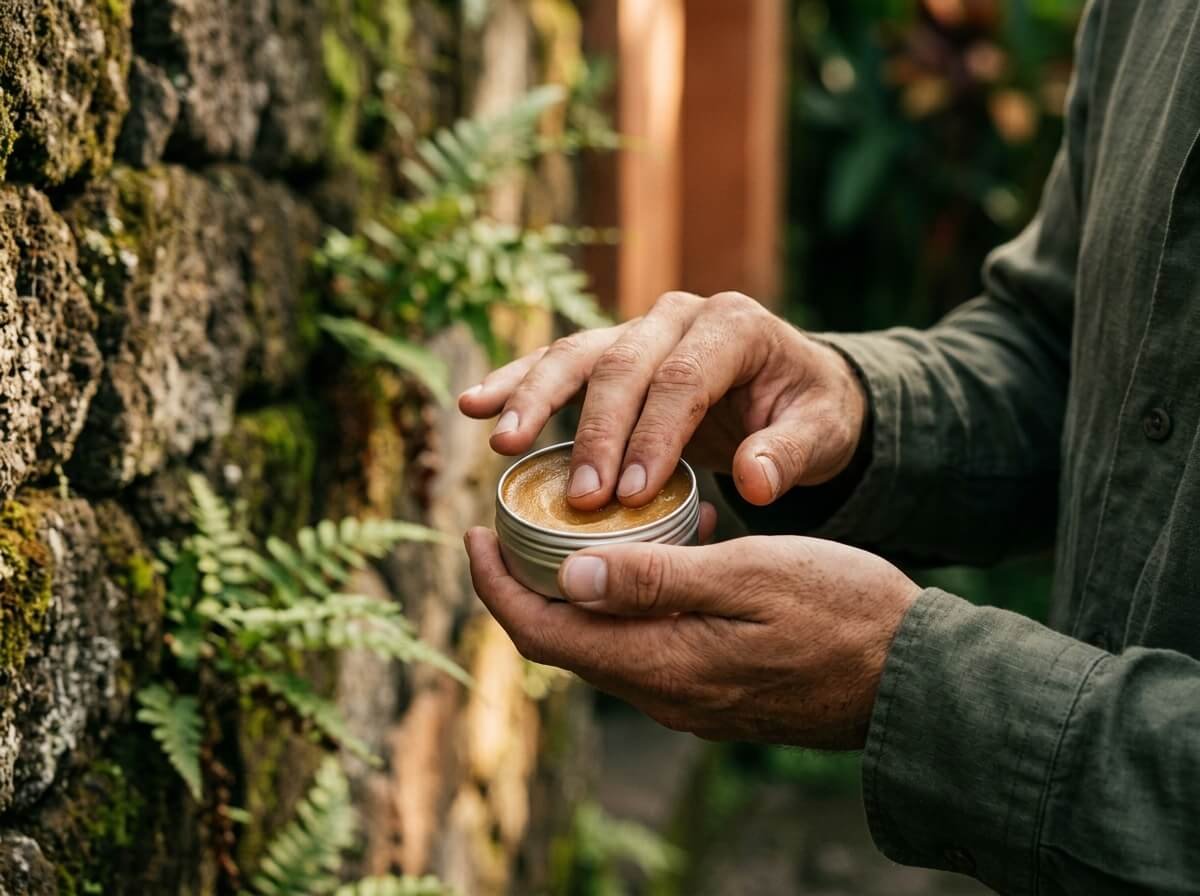
The format matters too. Natural deodorants come as sticks, balms (in tins), creams, and even pastes. Balm format in a tin is the most common for men’s products because it is portable, waste-minimal, and easy to dose. You warm a small amount between your fingertips and apply directly, giving you precise control over how much you use.

Crafted for men who read the label
Our His Deodorant uses grape seed oil, arrowroot, beeswax, and a rosemary-lemon-lavender essential oil blend. Nine ingredients, each one you can pronounce, each one with a purpose. Aluminum-free, synthetic-free, crafted in small batches in Bali.
Common mistakes men make when switching to natural deodorant
Knowing the pitfalls saves time and frustration. Here are the six most common errors.
Applying to damp skin
This is the number one reason natural deodorant underperforms. The absorbent ingredients (arrowroot, tapioca starch) need to contact dry skin to work properly. Water dilutes their effectiveness. After showering, towel off thoroughly and wait a minute or two before applying.
Using too much or too little
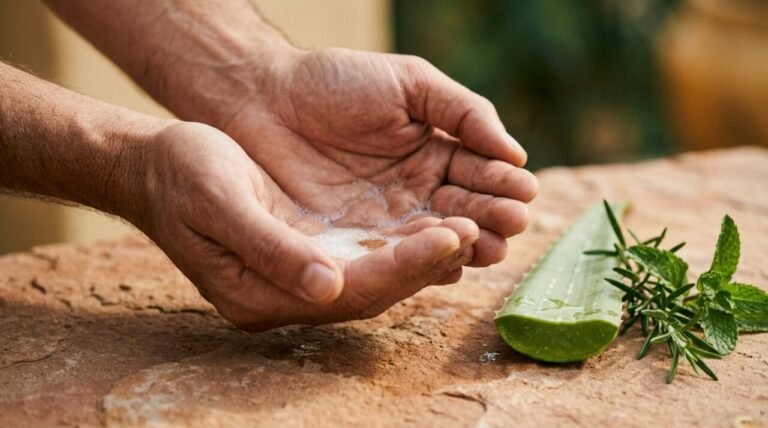
Natural deodorant is more concentrated than conventional sticks. A pea-sized amount per underarm is usually sufficient for a balm format. Overapplying can leave residue on clothing, while underapplying reduces efficacy. Find the amount that gives you a thin, even layer and adjust from there.
Giving up during the adjustment period
As discussed above, the first one to two weeks are not representative of long-term performance. If you quit on day three, you have not actually tested the product. You have tested your patience. Commit to two full weeks before evaluating.
Ignoring the ingredient list
Just because a deodorant says “natural” on the label does not mean it is. Marketing terms like “inspired by nature” or “with natural extracts” can mask a formula that is 95% synthetic. Flip the product over and read the full ingredient list. A genuine natural skincare product should have ingredients you recognize, or at the very least, ingredients that trace back to a plant, mineral, or bee.
Wearing synthetic fabrics
Polyester and nylon trap moisture and create a warm, enclosed environment where bacteria thrive. Even the best natural deodorant will struggle against a synthetic undershirt in a hot office. Opt for natural fibers: cotton, linen, bamboo, or merino wool. The fabric you wear is part of your odor management strategy.
Expecting a conventional deodorant experience
Natural deodorants feel different. Balm formats require hand application. You may notice a slight warmth from essential oils. The scent profile changes throughout the day rather than remaining static. None of these differences mean the product is inferior. They mean it is real, and your body is engaging with genuine botanical ingredients rather than synthetic fragrance chemicals designed to mask everything.
Frequently asked questions about natural deodorant for men
Does natural deodorant work as well as conventional antiperspirant
For odor control, yes. A well-formulated natural deodorant can match or outperform conventional options after the adjustment period. For sweat reduction, no, because that is not what it is designed to do. If your primary concern is visible sweat marks, natural deodorant requires a mindset shift: allow your body to perspire naturally and focus on odor management and breathable clothing.
Will I smell bad during the transition
You may notice stronger odor during the first week as your microbiome recalibrates. Midday reapplication and a quick underarm wash with natural soap can manage this. By week two, most men report that their baseline odor is actually lower than when they used conventional products.
Is baking soda safe for underarms
For most people, yes, at moderate concentrations. If you have sensitive skin or experience irritation, look for baking-soda-free formulations that use magnesium hydroxide instead. Never apply baking soda directly to freshly shaved skin.
How long does one tin of natural deodorant last
A standard 40 to 60 gram tin typically lasts six to eight weeks with daily use. Because you use a small amount each application, natural deodorant is often more economical per day than conventional sticks, despite a higher upfront price.
Can I use the same natural deodorant as my partner
Many natural deodorant formulations are unisex. The primary difference between “his” and “hers” versions is usually the essential oil blend (scent profile), not the functional ingredients. Some couples share a single unscented tin. The best natural deodorant is the one whose ingredients suit your skin and whose scent you enjoy.
Does natural deodorant stain clothes
Some oil-based formulations can leave faint marks on light fabrics if overapplied. Allow the deodorant to absorb for one to two minutes before dressing. Natural deodorants do not cause the yellow staining that conventional antiperspirants create. That yellow discoloration comes from aluminum salts reacting with sweat proteins, a problem eliminated when you remove aluminum from the equation.
A natural choice, grounded in botanical science
The decision to switch to a natural deodorant for men is not about following a wellness trend or signaling virtue. It is about understanding what goes on your body, respecting the biology that keeps you healthy, and choosing ingredients that work with your skin rather than against it. The adjustment takes patience. The ingredient knowledge takes curiosity. But the result, a body care routine grounded in botanical science and honest formulation, is worth both.
At Utama Spice, we have been crafting natural body care in Bali since 1989. Our formulations use cold-pressed coconut oil, pure essential oils, and ingredients sourced through partnerships that support local communities and protect the ecosystems these botanicals come from. Every product reflects a simple belief: what you put on your body should be as honest as what you put in it.
Start with one switch. Read the label. Give your body two weeks. The rest tends to follow naturally.