Refill Friday: zero waste isn’t a trend, it’s how Bali always shopped
Zero waste gets talked about like a new idea. A movement. A hashtag born somewhere else and shipped to the rest of the world with a logo attached.
Walk through a traditional Balinese market, though, and you will see the same practice that shaped how this island has always provisioned itself: coconut oil ladled from a large jug into whatever container a customer brought, rice measured by the scoop into a cloth sack, spices weighed loose and wrapped in banana leaf. No single-use packaging, because single-use packaging was never the default. Refill was not a campaign. It was Tuesday.
What changed is not the practice, it is the framing. Industrial packaging arrived, convenience got marketed as progress, and an entire generation grew up assuming a new bottle for every purchase was simply how commerce worked. The old way did not disappear because it failed. It got crowded out, then quietly rebranded decades later as an innovation.
This is the part we want to say plainly: when a brand calls refill “revolutionary,” it is worth asking revolutionary compared to what. Compared to the last forty years of plastic, maybe. Compared to how Balinese households and warungs have operated for generations, it is simply a return.

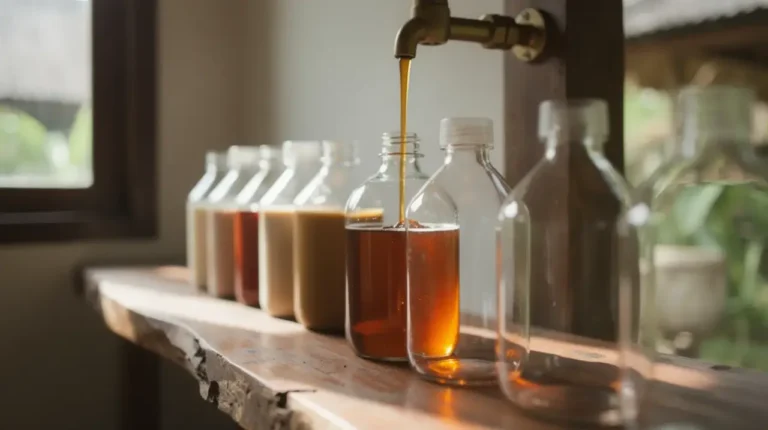
We run our own refill stations in that same spirit, not as a sustainability feature bolted onto a product line, but as continuity with a system that already worked. Bring your container, we fill it. The container you already own is the most sustainable packaging that will ever exist, because it requires nothing new to be made at all.
None of this is about perfection. We are not asking anyone to abandon modern packaging overnight or to feel guilt over a shelf of bottles already at home. Progress over perfection means noticing where an old habit still works and choosing it when you can, refilling the jar instead of replacing it, carrying the glass bottle back next time you pass the counter.
If you want to see what that refill network looks like in practice, including the riders who carry it through Ubud’s back lanes every week, read about the person behind the delivery.
The takeaway: refill culture does not need reinventing. It needs remembering. Bring the container. Skip the new bottle. Let the old system do what it always did.