Ingredient Tuesday: kelapa, the coconut Bali has pressed into oil for generations
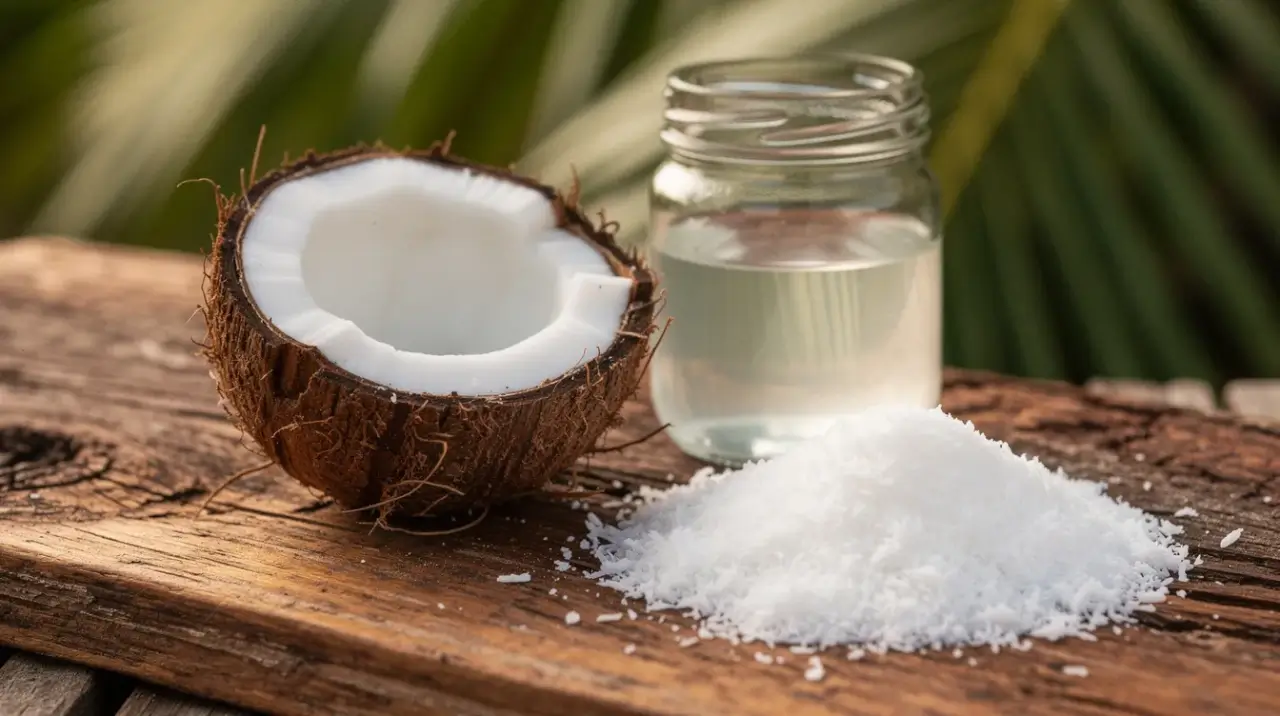
In a Balinese family compound, the coconut palm is rarely more than a few steps away. Its fronds are woven into baskets, its husk becomes rope and scrubbing fibre, its water is drunk straight from the shell. And for generations, its flesh has been grated, pressed into thick santan (coconut milk), and simmered slowly over a low fire until clear, fragrant oil separates out. That oil, minyak kelapa, went into the cooking pot, onto the skin, and through the hair, often from the same jar.
What the oil is made of
Virgin coconut oil is unusual among plant oils because nearly half of it is a single fatty acid: lauric acid, a medium-chain fat also found in human breast milk. Lauric acid has well-documented antimicrobial activity in laboratory studies, which helps explain why coconut oil has such a long history as a skin salve in hot, humid places. A 2004 clinical trial comparing virgin coconut oil with mineral oil on very dry skin found the coconut oil improved hydration just as well, with no adverse reactions. Coconut oil has also been shown to reduce protein loss from hair when used before washing, because its small, straight molecules can actually enter the hair shaft rather than sitting on top of it.
The honest limit
Coconut oil is not for every patch of skin. It ranks high on most comedogenic scales, so faces prone to congestion or breakouts usually do better with lighter oils (we explain which in our guide to non-comedogenic oils). Where coconut oil truly shines is below the jawline: elbows, shins, heels, hands, and the lengths of dry hair. We would rather tell you that plainly than pretend one oil suits everyone.

Virgin, not refined
The word “virgin” matters. Refined coconut oil is usually made from dried copra and then bleached and deodorised, which strips away much of the scent and some of the protective compounds. Virgin oil is pressed from fresh coconut meat without high heat or chemical refining, so it keeps its soft, nutty aroma and more of its natural antioxidants. A quick sense check: good virgin oil smells faintly of fresh coconut, never of nothing at all.
A small ritual to try: coconut oil turns solid below about 24°C, so in cooler rooms it looks like a white balm. Scoop a little, hold it in your palms for a few breaths until it melts clear, then press it into damp skin after the shower. The warmth of your hands does the work.
If you would like to try this ingredient on its own, our Virgin Coconut Oil is fresh, cold-pressed, and unscented. For an everyday body lotion built on the same base, our Coconut Lotion Lavender pairs it with lavender for the evening.
One tree, many uses, nothing wasted. Bali has always understood coconut that way.