Natural sunscreen for face: how to protect your skin with mineral, reef-safe SPF
Your face absorbs more ultraviolet radiation than almost any other part of your body. It is always exposed, always facing the sun. Choosing a natural sunscreen for face protection is one of the simplest decisions you can make for long-term skin health, and one of the most important. Yet the sunscreen aisle is a maze of chemical filters, synthetic fragrances, and bold claims that rarely hold up under scrutiny.
Mineral sunscreens, built on zinc oxide and a handful of nourishing botanical carriers, offer a different path. They sit on the skin’s surface and physically deflect UV rays rather than absorbing them into the body. For those of us who read ingredient lists and care about what we put on our skin, this distinction matters. In Bali, where traditional herbal knowledge has informed skincare for generations, the principle is simple: protect with what nature already provides.
This guide walks through the science of mineral face sunscreen, the ingredients that matter, how to apply it properly, and why choosing reef-safe formulations protects more than just your skin. Whether you are building a daily ritual or preparing for a tropical holiday, the right natural sunscreen for face care starts with understanding what goes into the bottle.
Why your face needs a dedicated natural sunscreen

Facial skin is structurally different from the skin on your arms, legs, or torso. It is thinner, contains more sebaceous glands, and is home to a delicate microbiome that responds quickly to what you apply. A body sunscreen formulated for thicker skin can clog pores, trigger breakouts, or leave a heavy residue that feels uncomfortable under makeup or moisturiser.
The face also sits at the front line of UV exposure. Unlike covered limbs, your forehead, nose, and cheeks receive direct sunlight throughout the day. According to dermatological research, the face and neck account for a disproportionate share of photoaging and sun-related skin concerns. This is why a purpose-formulated natural sunscreen for face application deserves its own place in your routine.
Natural mineral sunscreens use zinc oxide as their primary active ingredient. Unlike chemical UV filters such as oxybenzone or avobenzone, zinc oxide works by reflecting and scattering UV radiation on the skin’s surface. It does not penetrate into the bloodstream, and it provides broad-spectrum protection against both UVA (aging) and UVB (burning) rays.
For face-specific formulations, the carrier base matters just as much as the active mineral. The best natural face sunscreens use lightweight botanical oils, such as coconut oil or jojoba, that complement the skin’s own lipid barrier without overwhelming it. When paired with vitamin E for antioxidant support, the result is a formula that protects while it nourishes.
What makes a sunscreen truly natural (and what to avoid)
The word “natural” on a sunscreen label carries no legal definition. Brands can, and frequently do, apply it to products that contain synthetic preservatives, petrochemical emollients, or nano-engineered particles. Reading the full ingredient list is the only reliable way to know what you are putting on your face.
A genuinely natural sunscreen for face protection will typically contain:
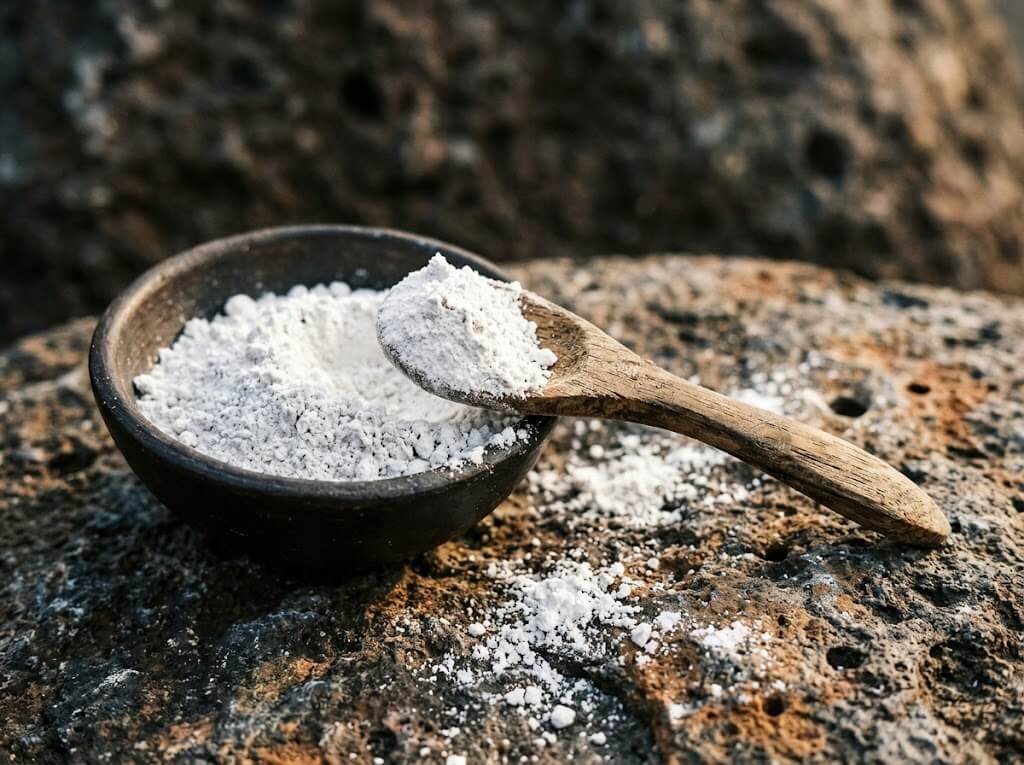
- Non-nano zinc oxide as the sole active sunscreen agent. Non-nano means the particles are large enough (over 100 nanometres) to sit on the skin surface without penetrating it.
- Botanical carrier oils like coconut oil, jojoba, or sunflower seed oil that moisturise without synthetic additives.
- Natural emulsifiers and thickeners such as beeswax, shea butter, or illipe butter that stabilise the formula and give it a workable texture.
- Antioxidants like vitamin E (tocopherol) or green tea extract that support the skin’s own defence against free radicals.
What you want to avoid is equally important:
- Chemical UV filters (oxybenzone, octinoxate, octocrylene, homosalate) that absorb into the skin and have raised endocrine-disruption concerns in peer-reviewed studies.
- Synthetic fragrances listed simply as “parfum” or “fragrance,” which can mask dozens of undisclosed chemicals.
- Parabens and phthalates used as preservatives or texture enhancers in conventional formulations.
- Nano zinc oxide or nano titanium dioxide where particle sizes small enough to penetrate the skin barrier are used to reduce the visible white cast.
If you are already conscious about the products in your skincare routine, perhaps you have explored witch hazel as a natural toner or incorporated a botanical face serum into your mornings, extending that same scrutiny to sunscreen is the next logical step. The skin on your face spends more time exposed than any other surface. It deserves ingredients you can trust.
Zinc oxide: the mineral shield your skin trusts
Zinc oxide has been used in topical skin applications for centuries. Long before modern sunscreen formulations existed, zinc compounds were applied to heal wounds, soothe irritation, and protect skin from environmental exposure. Today, it remains the gold standard for mineral sun protection, and for good reason.
Unlike chemical filters that require 15 to 30 minutes to activate after application, zinc oxide works immediately. The moment it touches your skin, it begins reflecting UV radiation. This makes it practical for daily use: apply, and you are protected.
How zinc oxide protects
Zinc oxide is a physical (or mineral) UV filter. It creates a thin, reflective layer on the skin’s surface that scatters and absorbs ultraviolet photons before they can reach the living cells beneath. It covers the full UV spectrum, both UVA (320 to 400 nm, responsible for deep skin aging) and UVB (290 to 320 nm, responsible for sunburn). No single chemical filter achieves this breadth on its own.
The white-cast question
The most common concern with zinc oxide sunscreens is the visible white cast. Conventional brands address this by reducing particle size to the nano scale, but this introduces the risk of particles crossing the skin barrier. A well-formulated natural sunscreen for face care resolves the white cast through smart carrier chemistry instead: lighter-weight botanical oils, transparent wax bases, and careful zinc concentration (typically 20 to 25%) that balances protection against cosmetic elegance.
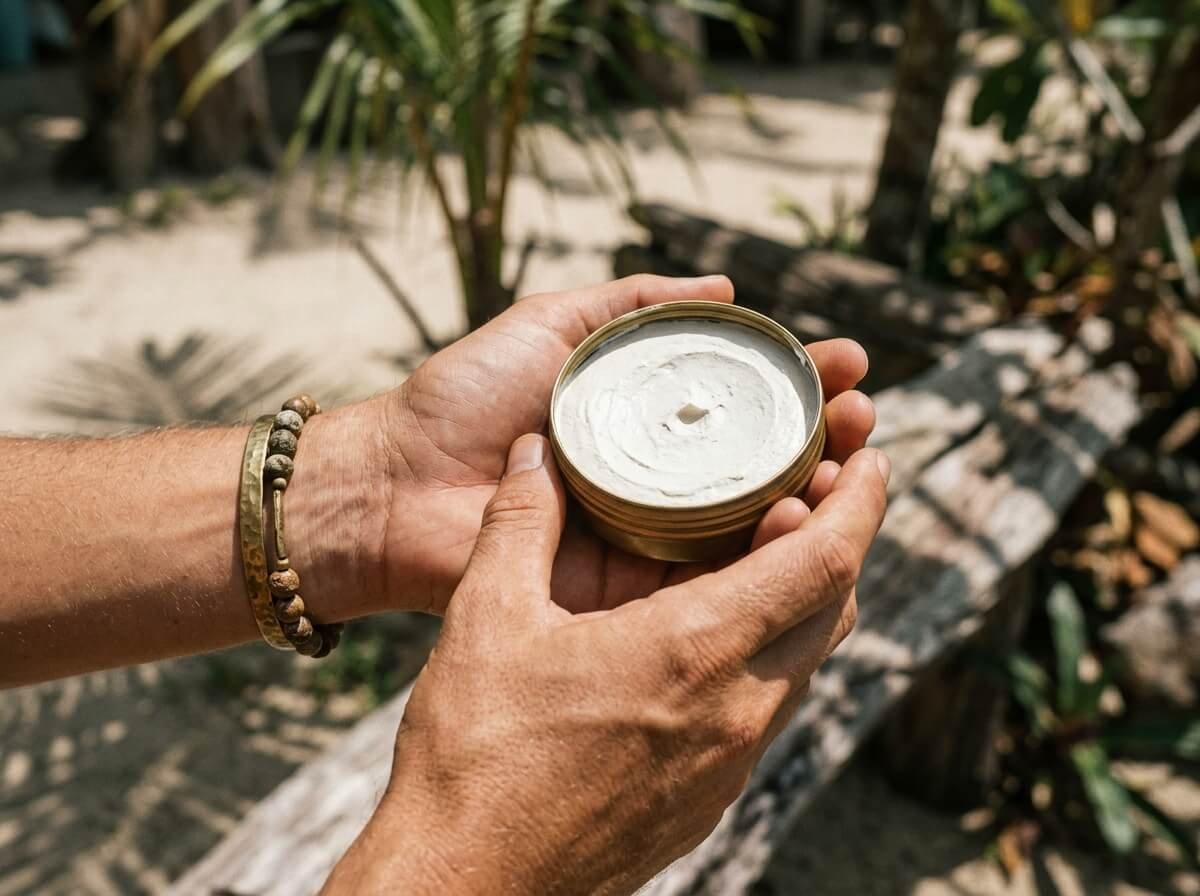
At Utama Spice, our Zinc Natural Sunscreen SPF50 uses a minimal ingredient list, pure water, zinc oxide, vitamin E, and beeswax, to deliver SPF 50 protection that absorbs cleanly into the skin. No nano particles, no chemical filters, no synthetic fragrance. The formula is designed for equatorial conditions, where UV intensity is at its highest year-round.
The science here is straightforward. Zinc oxide is one of only two mineral UV filters recognised as safe and effective by the US FDA (the other is titanium dioxide). It has an established safety profile spanning decades of use, and it does not degrade in sunlight the way many chemical filters do. For choosing the best natural sunscreen, zinc oxide should be the first ingredient you look for.
How to choose the right natural sunscreen for your face
With dozens of natural sunscreen brands on the market, narrowing down the right one for your face requires asking a few targeted questions.
Consider your skin type
Oily and acne-prone skin benefits from lightweight, non-comedogenic formulations where the carrier base uses lighter oils (jojoba, hemp seed) or aqueous zinc suspensions. Dry or mature skin responds well to richer bases with shea butter, illipe butter, or coconut oil that provide additional moisture alongside sun protection.
If your skin is sensitive or reactive, look for formulations with the fewest possible ingredients. A short ingredient list is often a sign of intentional formulation. The fewer variables on your skin, the fewer opportunities for irritation. Our HydroBotanic 3-in-1 Hydrating Face Cream pairs well as a pre-sunscreen moisturiser for those who need an extra hydration layer.
Check the SPF rating
For daily face protection, dermatologists recommend SPF 30 as the minimum. SPF 30 blocks approximately 97% of UVB radiation, while SPF 50 blocks roughly 98%. The marginal difference in protection is small, but for high-UV environments (tropical latitudes, high altitude, reflective surfaces like water or sand) SPF 50 provides a meaningful additional buffer.
Read beyond the label
Claims like “reef-safe,” “organic,” and “dermatologist-tested” are not regulated in most markets. Look for third-party certifications (EWG Verified, COSMOS, USDA Organic) or brands transparent enough to list every ingredient with its function. A company that tells you where its zinc oxide comes from and why it chose beeswax over a synthetic emulsifier is a company that respects your intelligence.

Understanding ingredient sourcing connects to a larger story. When you know that the coconut oil in your sunscreen comes from sustainable Balinese groves, or that the illipe butter was wild-harvested by families in Kalimantan through our Forestwise partnership, you see the full picture of what “natural” truly means. It is not just about what is in the formula. It is about where those ingredients come from and who benefits from their harvest.

Zinc oxide protection, crafted in Bali
Our Zinc Natural Sunscreen SPF50 uses pure water, zinc oxide, vitamin E, and beeswax. Nothing else. Formulated and tested under equatorial sun, it absorbs cleanly and protects broadly, the way mineral sun care should work.
Applying natural sunscreen the right way

Even the best natural sunscreen for face protection underperforms if applied incorrectly. The most common application mistakes are using too little product and failing to reapply.
How much to use
The standard recommendation is approximately half a teaspoon (about 1.2 ml) for the face and neck alone. Most people apply only 25 to 50% of this amount, which drops their effective SPF dramatically. If your SPF 50 sunscreen is applied at half thickness, you may be receiving closer to SPF 7 protection.
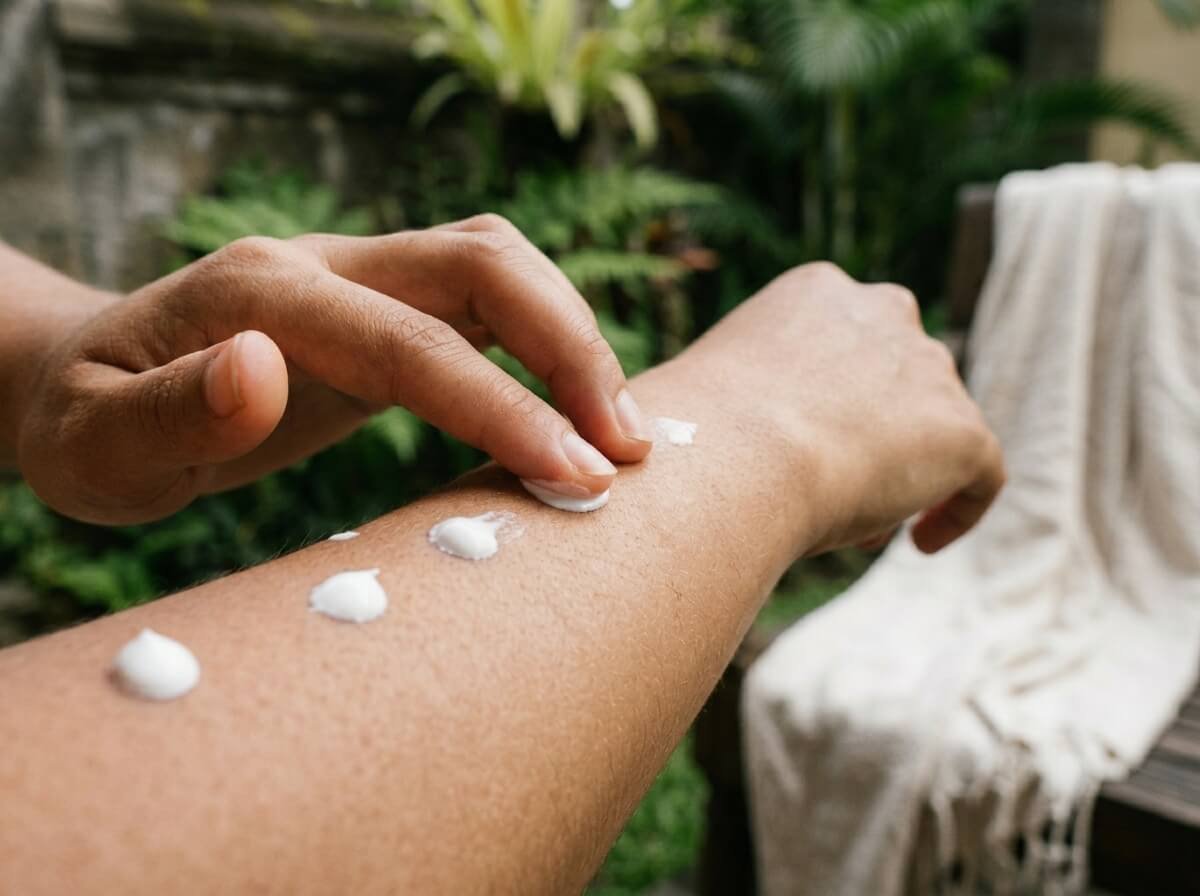
A practical method: dispense a generous amount onto your fingertips and apply in small dots across your forehead, cheeks, nose, chin, and neck. Then blend outward using gentle, even strokes. With zinc oxide formulations, dabbing rather than rubbing helps maintain even coverage.
When and how often to reapply
Reapply every two hours during continuous sun exposure, or immediately after swimming, sweating, or towel-drying. Zinc oxide is more resistant to degradation than chemical filters, but physical abrasion (touching your face, blotting with tissue) gradually removes it.
For a daily office routine where outdoor exposure is limited, one application in the morning is often sufficient. If you spend extended time outdoors, bring your sunscreen with you. A compact tin format, like our Zinc Natural Sunscreen SPF50, makes reapplication practical even on the go.
Building a sun-care ritual
In Bali, skincare is not a checklist. It is a ritual, a moment of attention. Sunscreen can be part of that same intentional rhythm. Start with a clean face (a gentle botanical wash, not a harsh foaming cleanser). Apply a lightweight serum or moisturiser if your skin needs it. Then, as the final layer, apply your mineral sunscreen. Let it become part of your morning, not an afterthought.
After a day in the sun, restore with aloe vera gel to cool and rehydrate the skin. This simple before-and-after approach, protect in the morning, restore in the evening, reflects a whole-skin philosophy. Sunscreen is one piece of a connected practice, alongside essential oils for skin health and nourishing botanicals that support your skin’s resilience from within.
Natural sunscreen and reef safety: protecting oceans from the Coral Triangle
The connection between what you put on your face and what washes into the ocean is direct. An estimated 14,000 tonnes of sunscreen enter coral reef environments every year. Chemical UV filters, particularly oxybenzone and octinoxate, have been shown to cause coral bleaching at concentrations as low as 62 parts per trillion.
Bali sits at the heart of the Coral Triangle, the most biodiverse marine region on Earth. For a brand rooted here since 1989, the health of these reefs is not an abstract environmental concern. It is a daily reality. The water our community swims in, the coastlines our families depend on, the marine ecosystems that sustain Balinese livelihoods, all are affected by the sunscreen choices tourists and locals make.
Zinc oxide, in non-nano form, is widely considered the safest sunscreen active for marine environments. It does not dissolve in water, does not bioaccumulate, and does not trigger the hormonal disruption in coral that chemical filters cause. Choosing a natural sunscreen for face protection that relies solely on zinc oxide is one of the most straightforward ways to reduce your personal impact on reef ecosystems.
But “reef-safe” labelling remains unregulated. Many products carrying the claim still contain octinoxate or oxybenzone in concentrations below a certain threshold, or use nano particles that may still cause harm at the cellular level. True reef safety means reading the full ingredient list and choosing formulations that are genuinely free of chemical UV filters. Hawaii, Palau, and Key West have banned the most harmful chemicals, but legislation alone cannot solve this. Consumer choices can.
Our commitment extends beyond formulation. Through the Seven Clean Seas partnership, Utama Spice removes an equivalent weight of ocean plastic for every gram of product we produce. Sun protection that protects the ocean too: that is what care looks like when you live on the Coral Triangle.
Frequently asked questions about natural sunscreen for face
Is natural sunscreen as effective as chemical sunscreen?
Yes, when properly formulated and applied. Zinc oxide provides broad-spectrum UVA and UVB protection. The key is using enough product (half a teaspoon for face and neck) and reapplying every two hours during sustained exposure. SPF ratings on mineral sunscreens are measured under the same FDA-standard testing protocols as chemical sunscreens.
Will natural sunscreen for face leave a white cast?
Some zinc oxide formulations do leave a visible white tint, especially at higher concentrations. However, well-formulated products minimise this through lightweight carrier oils and careful zinc particle sizing (non-nano but micronised). Applying in thin, even layers and allowing a few minutes to settle helps the product blend into most skin tones. Tinted mineral sunscreens are also available if cosmetic blending is a priority.
Can I use natural sunscreen under makeup?
Yes. Apply your mineral sunscreen as the last step of your skincare routine, before primer or foundation. Allow 60 to 90 seconds for it to set. Zinc oxide formulations create a smooth base that most cosmetics layer over without pilling or separation. If you prefer a minimal routine, many natural sunscreens double as a light moisturiser.
How do I remove natural sunscreen at the end of the day?
Oil-based cleansers dissolve zinc oxide effectively. Coconut oil, jojoba oil, or a dedicated cleansing oil followed by a gentle face wash (the double-cleanse method) removes sunscreen without stripping the skin. A nourishing face serum applied afterward replenishes any moisture lost during the day.
Is natural sunscreen safe for children and sensitive skin?
Zinc oxide is one of the gentlest UV filters available and is commonly recommended by paediatricians for children over six months. Its non-penetrating mechanism and minimal ingredient interaction make it suitable for eczema-prone, rosacea-affected, or otherwise reactive skin. Always patch-test on a small area first if you or your child has known sensitivities.
Does natural sunscreen expire?
Yes. Most sunscreens, including mineral formulations, carry a shelf life of two to three years. After this period, the active ingredients may degrade or the emulsion may separate, reducing effectiveness. Store your sunscreen in a cool, shaded place (not the dashboard of a hot car), and replace it annually if you use it daily.
Choosing sun protection as an act of care
Sunscreen is often treated as an afterthought, something grabbed at the beach or applied hastily before a morning commute. But choosing a natural sunscreen for face care is worth more attention than that. It is a decision about what sits on your skin for hours each day, what washes into the water when you swim, and what kind of supply chain your purchase supports.
Mineral sun protection, built on zinc oxide and carried by botanical ingredients you can pronounce and trace, is the clearest expression of the principle we have followed since 1989: what you give, you get back. Give your skin honest protection, give the ocean ingredients it can tolerate, give your daily routine a moment of intention, and the results show.
The sun is not the enemy. Unprotected exposure is. A natural sunscreen for face use, applied consistently and chosen with care, lets you enjoy the warmth of the day while your skin stays resilient, healthy, and genuinely protected. That is what thoughtful sun care looks like, from the Coral Triangle to wherever you call home.