Ingredient Tuesday: kayu manis, the Sumatran cinnamon that grows like a savings account
This week, kitchens around the world fill with the smell of cinnamon: pies, mulled drinks, the first round of holiday baking. Much of that cinnamon started life as bark on a tree in the highlands of Sumatra. This Ingredient Tuesday is about kayu manis, Indonesian for “sweet wood”, and the species named on our labels: Cinnamomum burmannii.
Almost half the world’s cinnamon
Indonesia grows roughly 43 percent of the world’s cinnamon and ships more of it by volume than any other country. Most of it comes from small family plots, often one or two hectares, in Kerinci Regency in Jambi Province and in the Tanah Datar and Agam regencies of West Sumatra. If you have seen “Korintje cinnamon” on a spice jar, that name is an older spelling of Kerinci.
A tree that is allowed to wait
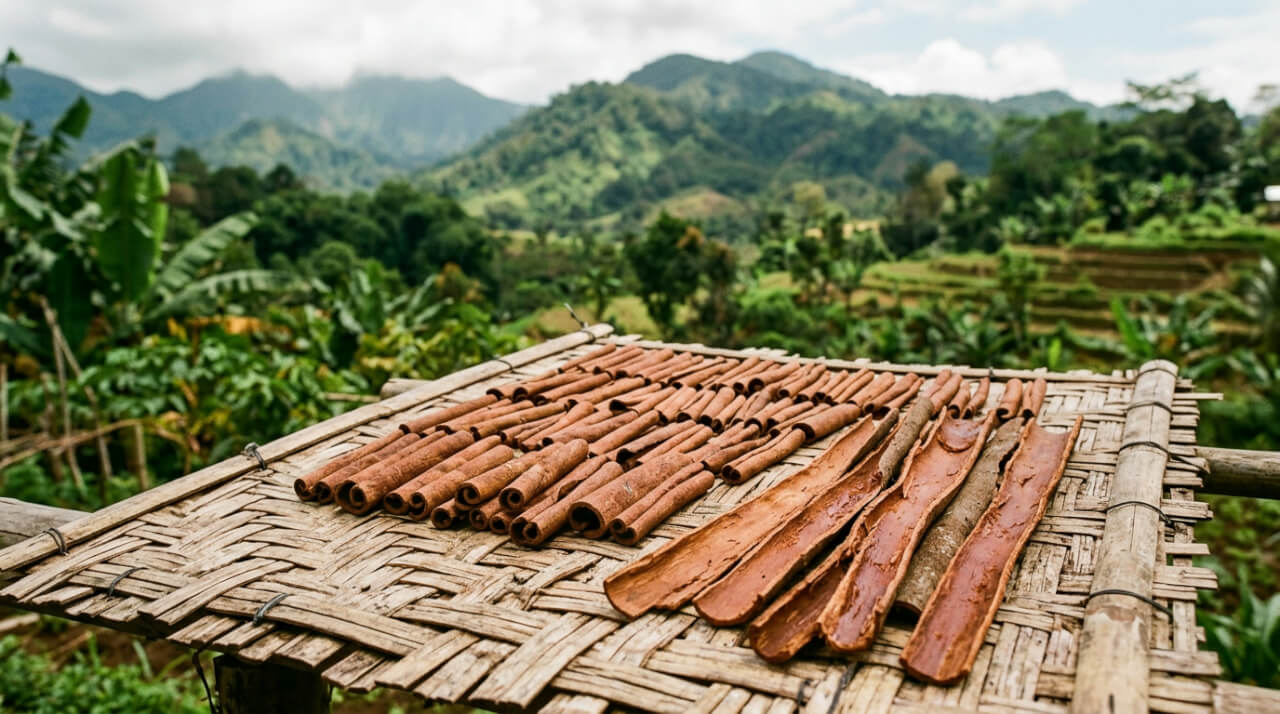
Cinnamon is a slow crop. The earliest harvest comes about eight years after planting, and many farmers wait 10 to 15 years, because the bark thickens with age and holds more of its aromatic oil. When the time comes, the outer bark is scraped away and the inner bark is peeled off in long strips. It then dries in the sun for up to three days, curling into the quills we call cinnamon sticks.

Because a tree may be cut only a few times in a farmer’s working life, many Kerinci families think of their cinnamon as a savings account. The trees grow quietly on the hillside, and a harvest team is called in when the household needs it. In 2013, a group of Kerinci growers became some of the first cinnamon farmers in the world to earn Rainforest Alliance certification. It is a useful reminder that a spice we buy for a few dollars holds a decade of someone’s patience.
Warm in the jar, careful on the skin
Indonesian cinnamon is a cassia-type cinnamon: bold, sweet, and spicy. Its main aromatic compound, cinnamaldehyde, is also a well-known skin sensitizer, which is why cinnamon bark essential oil should never go on skin undiluted. Cassia types also carry far more coumarin than Ceylon cinnamon. That matters in the kitchen rather than on the skin: if you bake with cinnamon every day, Ceylon is the gentler everyday choice, and kayu manis can be the occasional treat.
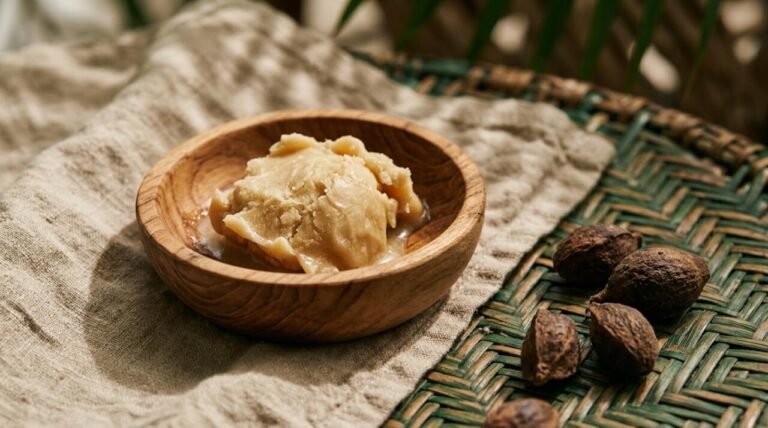
In our Cocoa Love Body Butter, a small amount of Cinnamomum burmannii bark sits alongside cocoa seed butter, virgin coconut oil, and vanilla. It is there for warmth of scent, not as an active. As with anything containing spice, try it on a small patch of your inner forearm first, and skip freshly shaved or broken skin. If you are curious about the butter it is paired with, our guide to cocoa butter for skin explains why it melts so easily on contact, and our winter skincare routine shows where a rich butter fits as the air turns dry.
This week, read the cinnamon jar. If it says Indonesian or Korintje, that bark most likely spent 10 years or more on a Sumatran hillside before it reached your kitchen. Something that took that long to grow is worth enjoying slowly.