Cocoa butter for skin: what it actually does, and where it does not belong
Cocoa butter for skin shows up in nearly every body care aisle, usually beside a promise of firmer, more youthful-looking skin. That promise oversells what the ingredient actually does. Cocoa butter is a genuinely good fatty acid moisturizer for the body, with one caution almost no guide states plainly: it is comedogenic, so skin prone to breakouts is better served elsewhere, especially on the face. This guide separates what the research actually supports from the marketing language stacked on top of it, including where cocoa butter earns its place in a routine built primarily around coconut oil, the base we reach for first.
We will walk through what cocoa butter is, what happens when it meets skin, why the face and the body deserve different treatment, how to choose between a whipped body butter and a pourable lotion, what cocoa butter genuinely cannot do, and how it layers alongside coconut oil in daily care.
What cocoa butter actually is
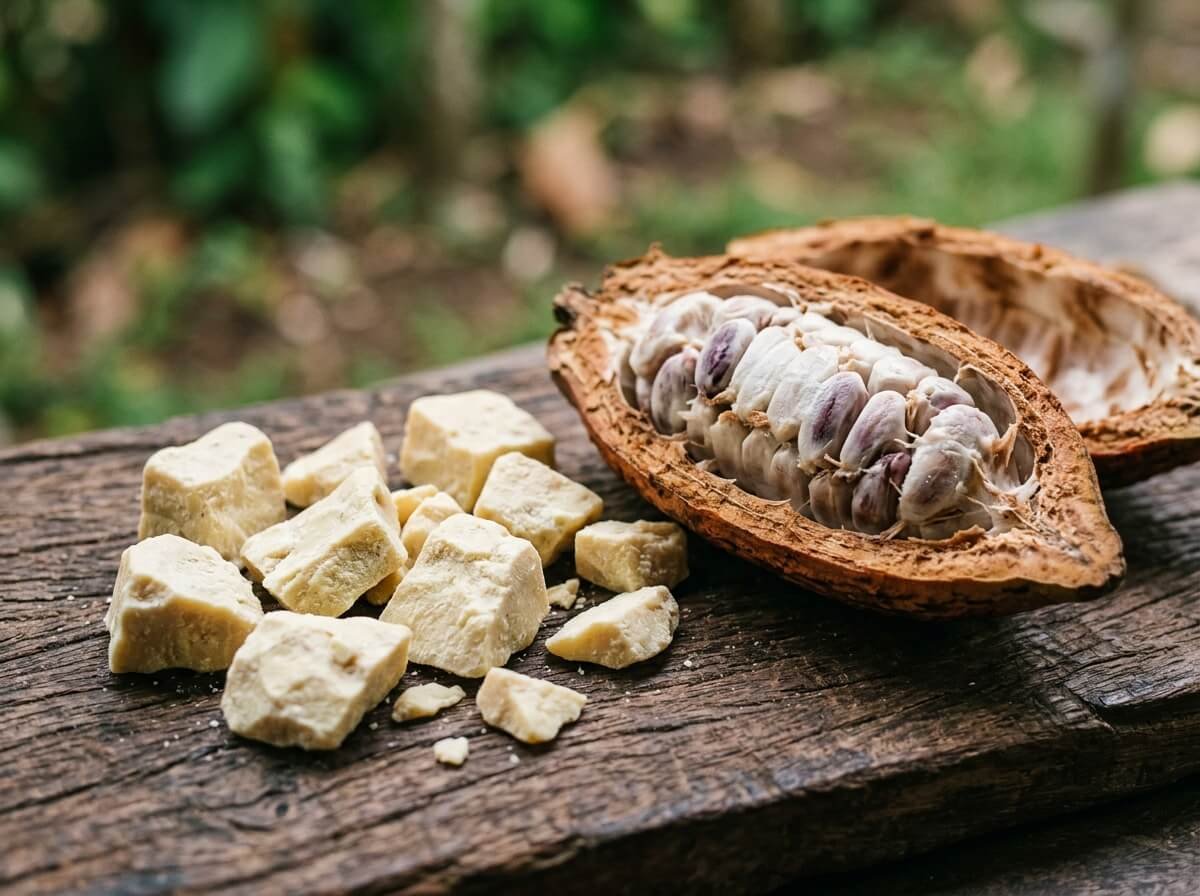
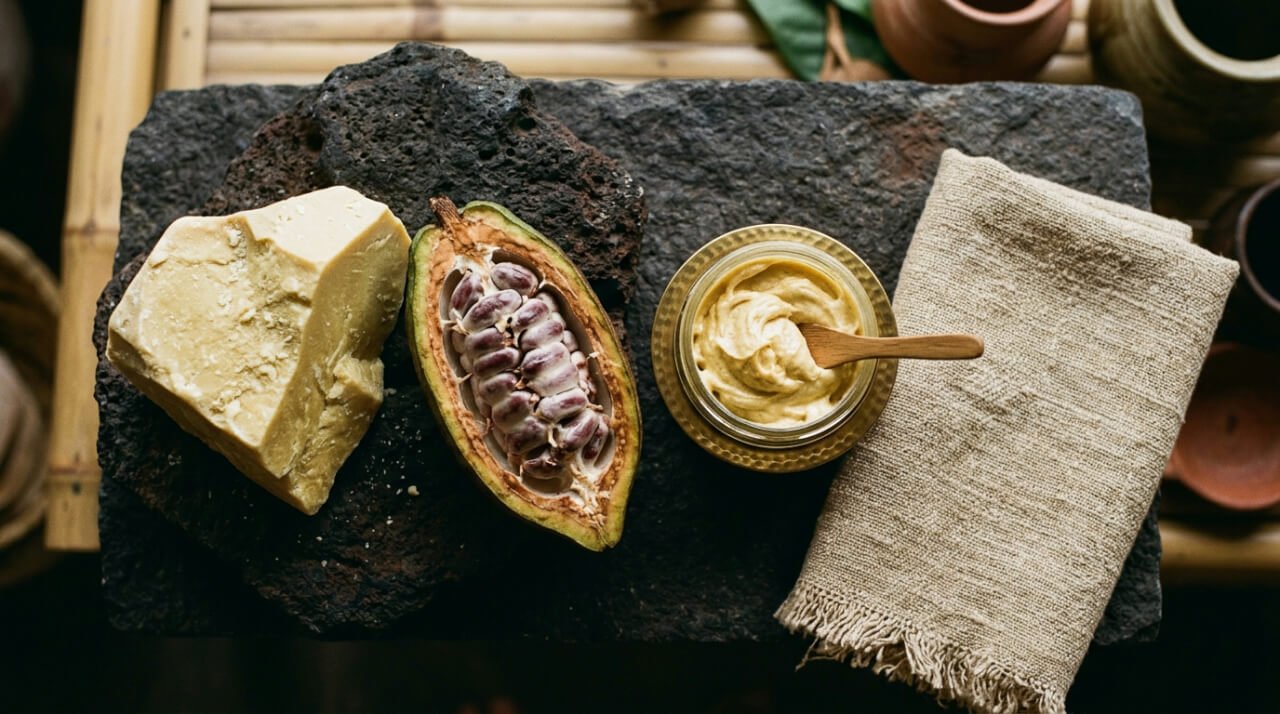
Cocoa butter is the pale yellow fat pressed from cacao beans, the same beans that become chocolate. It has been used in skin and body care for generations, largely because it is solid at room temperature, melts readily on contact with skin, and carries a faint, warm cocoa scent that most people find comforting rather than overpowering.
One honesty check worth making before anything else: cocoa butter is not a Balinese ingredient. Cacao is native to Central and South America and now grown across West Africa and parts of Southeast Asia, but it does not belong to the same wild-harvested, Kalimantan-and-Bali lineage as illipe butter, kukui oil, or the coconut oil that anchors most of our body line. We import cocoa butter deliberately, as a complement, not a heritage claim. In our formulations it works alongside our house coconut oil base rather than replacing it, and we think that distinction matters more than most brands are willing to say out loud.
Chemically, cocoa butter is rich in saturated fatty acids, primarily palmitic, stearic, and oleic acid, in roughly equal measure. That fatty acid profile is what gives it a firm, waxy texture and a long shelf life without needing heavy preservation, and it is also what makes cocoa butter behave differently on skin than a lighter oil like coconut or a serum-style formula.
Sourcing is worth a plain word too, since we do not think transparency should stop at the ingredients we grow ourselves. The global cacao supply chain has well documented labor and environmental problems, particularly around smallholder farming regions in West Africa, and an imported ingredient carries that history whether a brand mentions it or not. We choose cocoa butter suppliers that can verify fair labor practices and traceable sourcing, the same standard we hold our wild-harvested Bali and Kalimantan partners to, and we would rather say so directly than let silence imply the question does not apply to ingredients we did not grow ourselves.
There is also a refined versus unrefined distinction worth knowing before you shop. Unrefined, or raw, cocoa butter keeps its natural chocolate scent and a slightly rougher, more golden appearance, with more of its original antioxidant compounds intact. Refined cocoa butter is deodorized and bleached lighter, which strips most of that scent along with some of the minor plant compounds, in exchange for a more neutral base that formulators can build a fragrance on top of without fighting a strong cocoa note. Neither is inherently better; it depends on whether you want the chocolate scent as part of the ritual or prefer a blank canvas for other botanicals.
The real science: fatty acids and barrier support, honestly graded
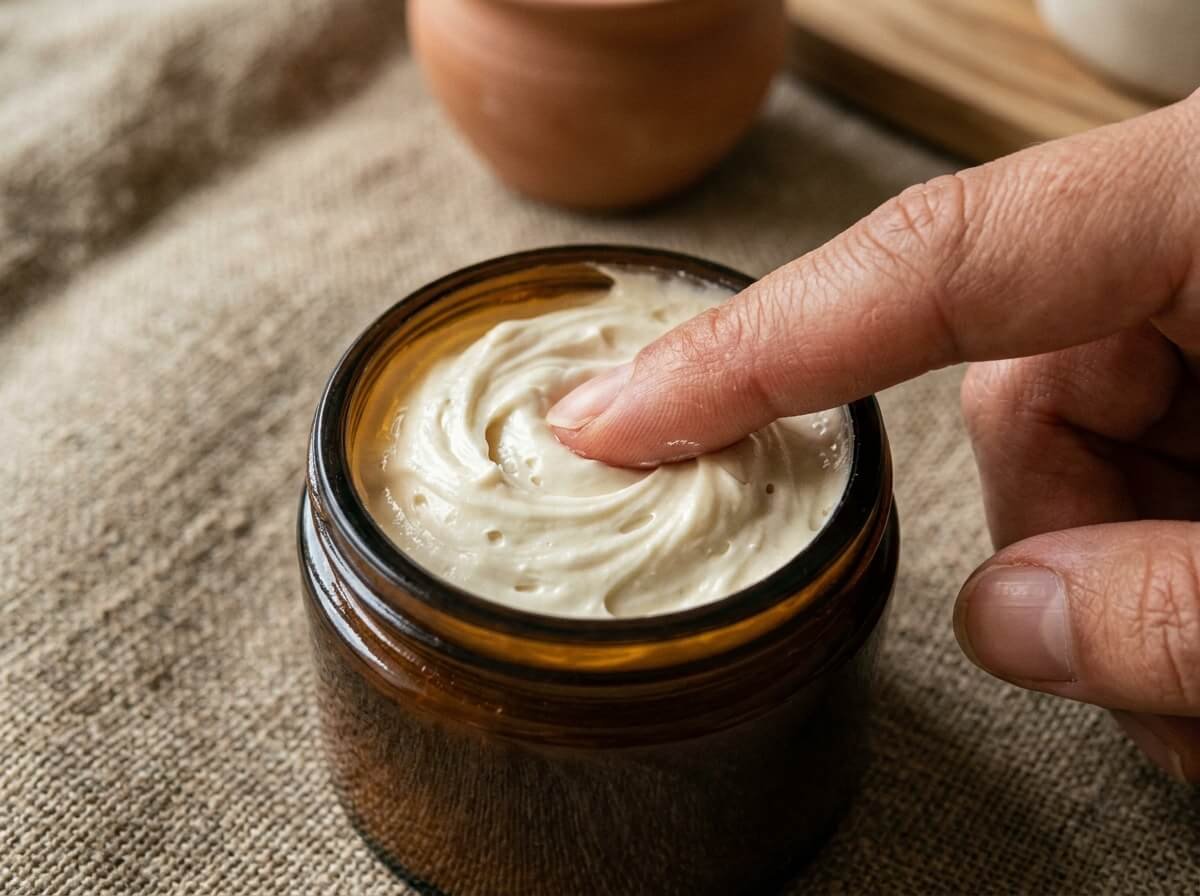
Here is what the evidence actually supports. Cocoa butter’s fatty acids sit on top of skin and slow the rate at which water evaporates from the surface, a mechanism called occlusion. This is well documented and uncontroversial: an occlusive layer reduces transepidermal water loss and can measurably improve the look and feel of dry, rough skin within days. If your skin is genuinely dehydrated, especially on the body, cocoa butter’s fatty acid film does real, provable work.
What is thinner, and more heavily marketed, is the antioxidant story. Cocoa butter contains polyphenols, and polyphenols do have antioxidant activity in a test tube. Whether the small amount surviving in a finished body butter meaningfully affects skin aging is a separate question, and it is one the research has not answered with confidence. Claims like firmer, younger-looking skin lean on this thin evidence and present it as settled. We would rather tell you plainly: cocoa butter moisturizes reliably through occlusion, and any additional antioxidant benefit is a bonus we cannot promise, not a headline feature.
There is also a texture-and-elasticity claim worth grading honestly. Regularly moisturized skin does tend to look more supple and take pressure changes, like a growing belly, more comfortably. That is a real, if modest, effect of consistent moisture, not a unique property of cocoa butter over any other rich emollient.
It helps to compare cocoa butter to the ingredient most people already understand intuitively: petroleum jelly. Both work primarily by occlusion rather than by delivering active ingredients deep into skin. Cocoa butter’s advantage over a plain petroleum base is sensory, not clinical: it melts at close to body temperature, so it spreads and absorbs in a way that feels less like a coating and more like a rich cream, and it carries a warmth and scent that most people find genuinely pleasant to apply as an evening ritual rather than a chore. That sensory quality is a legitimate reason to choose it, even once you have set the marketing claims aside.
Why it belongs on the body, not the face

This is the caution nearly every cocoa butter article buries or skips entirely, and it is the one piece of information most likely to actually change how you use the ingredient. Cocoa butter carries a high comedogenic rating, meaning it is quite effective at sitting in pores and trapping sebum, dead skin cells, and bacteria underneath. On the body, where pores are less dense and breakouts are rarely a concern, that is irrelevant. On the face, particularly for anyone prone to congestion, blackheads, or inflammatory acne, it is a real risk.
The fatty acids most responsible for that comedogenic behavior, palmitic and stearic acid, are the same ones doing the beneficial occlusive work on the body. That is not a contradiction so much as a reminder that skin care ingredients are not universally good or bad. Context is what determines the outcome for your skin. A rich, occlusive fat is exactly right for a dry shin or a wind chapped forearm, and exactly wrong for an oily, breakout prone cheek.
If you love the way cocoa butter feels and want to bring some of that richness to your face routine, reach for a formula built for facial skin instead, with lighter, non comedogenic oils in the base. We have a full breakdown of which carrier oils sit lowest on the comedogenic scale in our guide to non-comedogenic oils, worth reading before you introduce anything new to acne prone skin.
Comedogenic ratings themselves are worth a note of honesty too. They come from decades-old rabbit-ear assays and small human studies, not a precise universal scale, and individual skin responds differently. Some people use cocoa butter on their face for years without a single breakout, usually skin that runs dry rather than oily. The rating is a reasonable starting caution, not a guarantee either way, which is exactly why a patch test on the jaw or the inside of the wrist for a few days beats guessing from a label alone.
Body butter or lotion: choosing Cocoa Love Body Butter vs Cocoa Love Lotion for your climate and routine
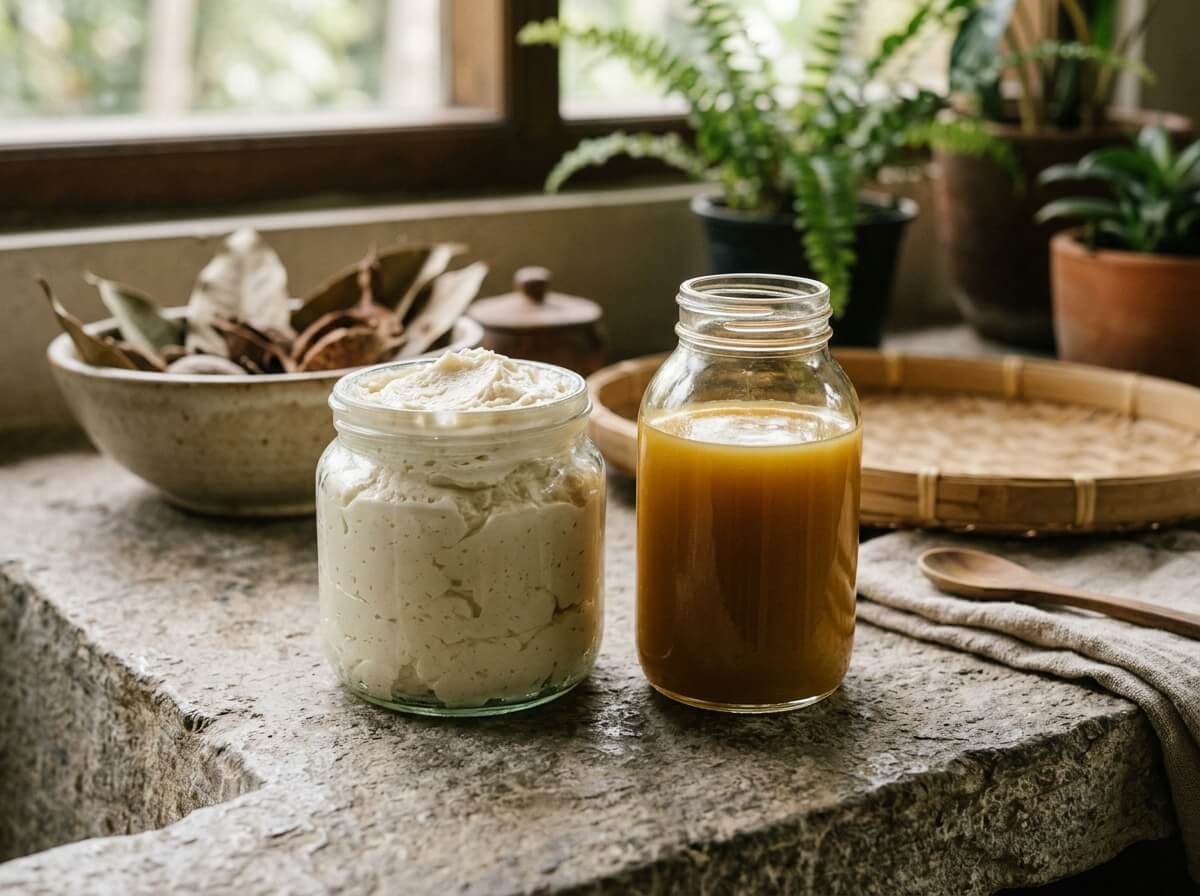
Once cocoa butter is headed to the body, the next honest question is format. A whipped body butter and a pourable lotion solve slightly different problems, and the difference comes down to water content and climate more than it does to quality.
Our Cocoa Love Body Butter is closer to pure cocoa butter, whipped with coconut oil into a soft, spreadable texture with very little added water. It sits richer on skin, takes a moment longer to fully absorb, and is the better choice for genuinely dry climates, cold months, or rough patches on elbows, knees, and heels that need a heavier occlusive layer overnight. A little goes a long way, which also makes it the more refill friendly of the two, since a jar lasts through a season of use.
Our Cocoa Love Lotion blends cocoa butter into a lighter, water based formula that absorbs faster and layers more comfortably under clothing during the day, or in a humid climate where a heavier butter can feel like too much. If you live somewhere like Bali, where the air itself carries moisture most of the year, the lotion is usually the more comfortable daily choice, with the body butter reserved for particularly dry stretches of skin or an evening ritual before bed.
Neither format changes the underlying caution from the section above. Both belong on the body, not the face, regardless of which texture you prefer.

A practical way to decide: if you can press a fingertip into the jar and leave a lasting indent, that is a body butter, and it wants slightly damp skin and a minute to fully melt in. If it pours or pumps, that is a lotion, and it wants to be smoothed on generously rather than rubbed in sparingly the way a face product would be. Neither is more or less effective; they are simply built for a different moment in the day, and many people end up keeping both on the shelf.
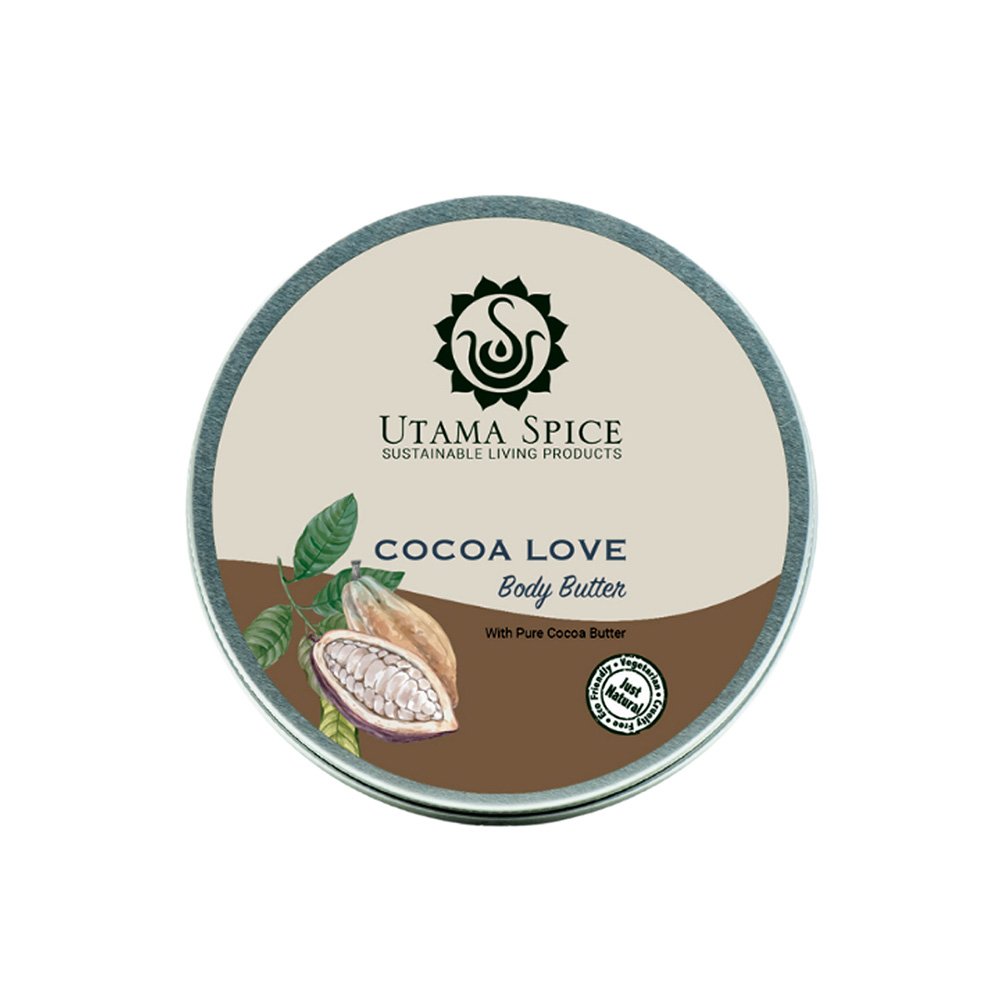
Bring cocoa butter’s richness to your body, honestly
Cocoa Love Body Butter is whipped with coconut oil into a rich, refillable jar built for dry patches, cold months, and an evening ritual, on the body, never the face.
What cocoa butter cannot do: an honest look at stretch marks and scars
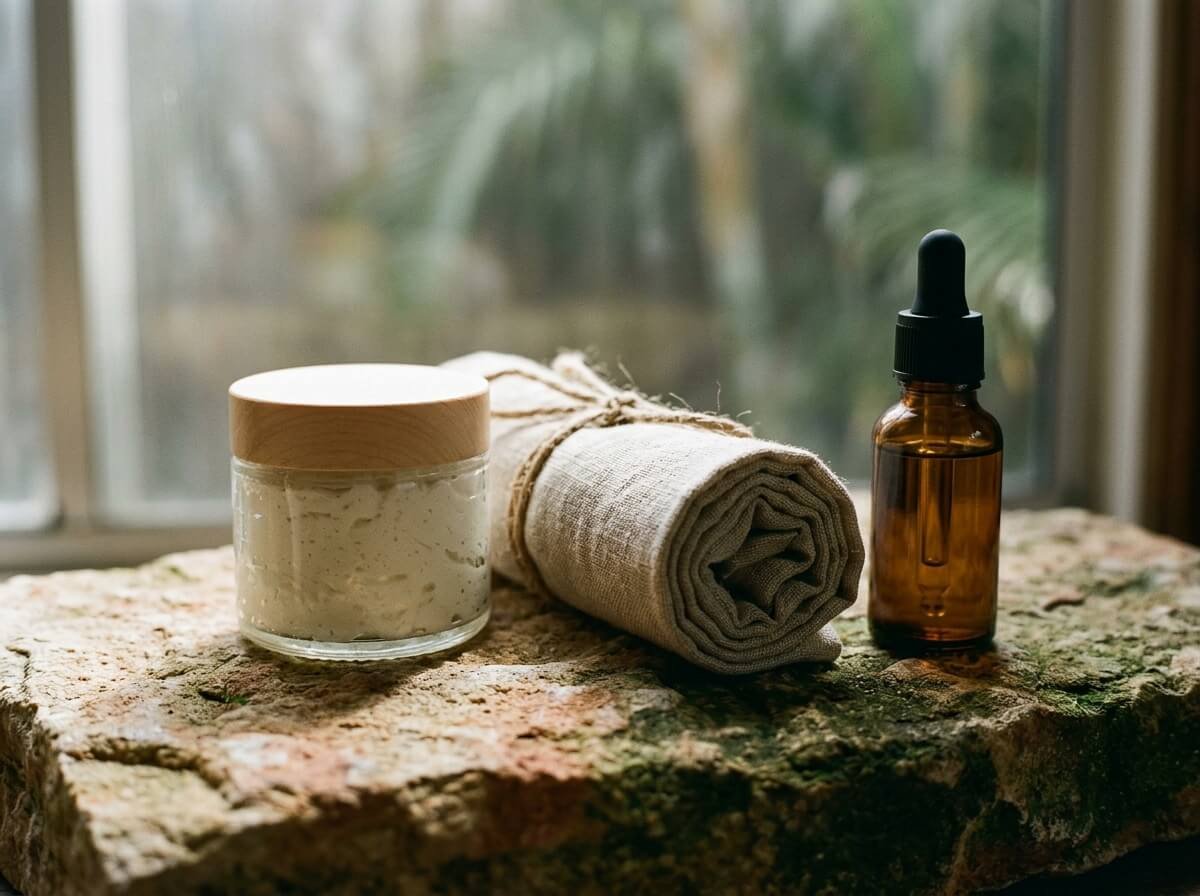
Stretch marks are the claim that sells the most cocoa butter, and it is also the claim with the thinnest evidence behind it. Stretch marks form when skin stretches faster than its collagen and elastin structure can keep pace, most often during pregnancy or rapid growth, and that process happens in the deeper dermis, well below where a topical moisturizer can reach. No cream, cocoa butter included, has been shown in controlled research to reliably prevent stretch marks from forming.
What cocoa butter can genuinely do is keep the surrounding skin supple and comfortable while it stretches, which some people find reduces itching and tightness, a real quality of life benefit even without a prevention claim behind it. For scars, the picture is similar: consistent moisture and gentle massage support the healing skin’s comfort and appearance over time, but the moisturizer is supporting the process, not driving it. We would rather you understand a scar’s timeline honestly than buy a jar expecting it to erase one.
If minimizing the appearance of a healing scar or a stretching belly is your actual goal, pair a rich moisturizer with the massage itself, since circulation and gentle pressure do more measurable work than any single ingredient. Our guide to natural stretch mark oil covers this pairing in more depth, including which botanical oils people reach for during pregnancy and why none of them are a guarantee.
Part of why the prevention claim persists is survivorship bias built into the marketing itself. Genetics, skin elasticity, and the rate of stretch are the strongest predictors of whether marks form at all, and someone whose skin was always going to stay relatively smooth will happily credit the jar of cocoa butter they used the whole time. That does not make the ritual worthless. Comfort during a physically demanding stretch of life is a real outcome. It just is not the same outcome the label implies.
Layering cocoa butter with coconut oil, the house base
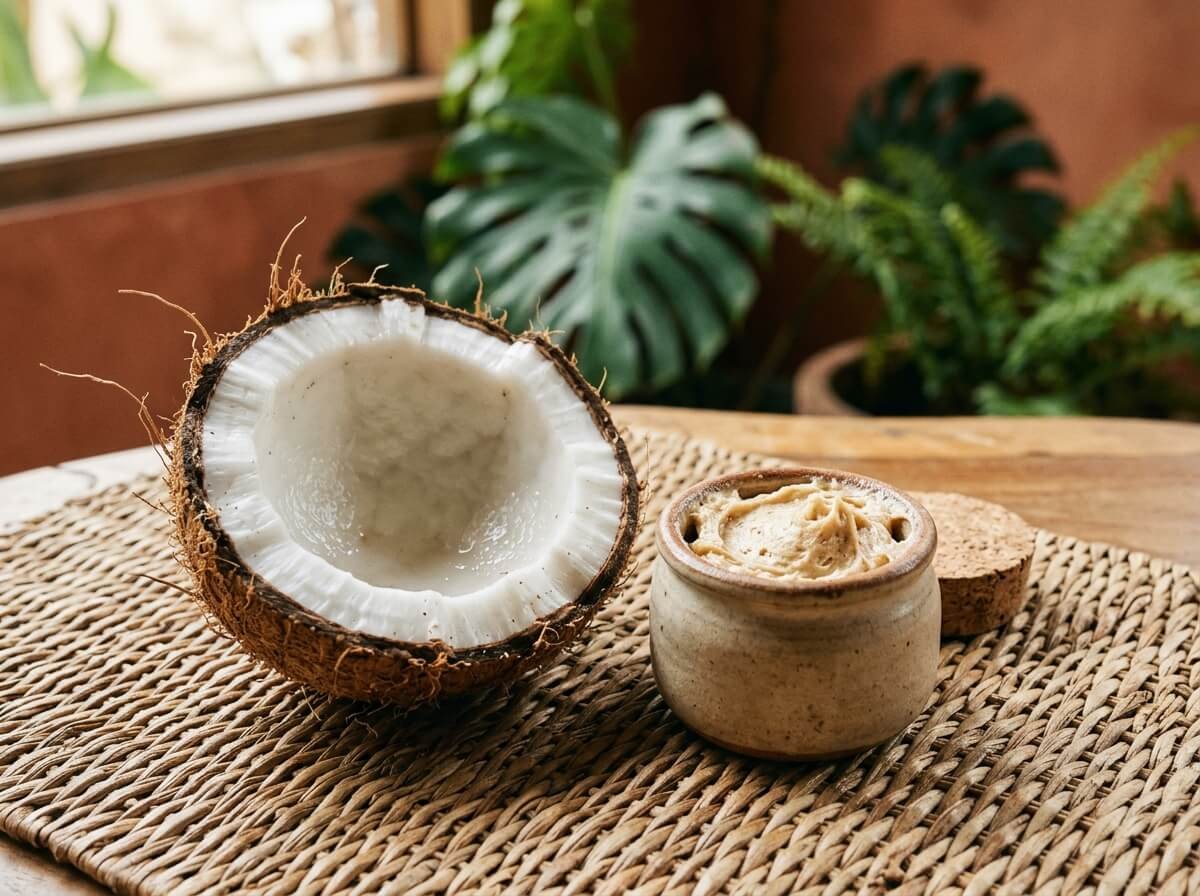
Because cocoa butter is not our heritage ingredient, we think about it as a layer on top of the coconut oil foundation most of our body line is built around, rather than a replacement for it. Coconut oil, sourced through Balinese smallholder growers via our Aluan partnership, is lighter, absorbs faster, and carries lauric acid that behaves differently on skin than cocoa butter’s heavier fatty acid profile. Our full breakdown of that ingredient lives in coconut oil for skin: the honest Balinese guide.
A simple layering routine: apply a thin coat of Virgin Coconut Oil right after a shower while skin is still damp, letting it absorb for a minute or two, then follow with Cocoa Love Body Butter or Lotion on any spots that still feel dry, elbows, heels, knees. The coconut oil locks in shower moisture quickly; the cocoa butter adds a heavier, longer lasting seal on top where you need it most. You are not choosing one ingredient over the other so much as using each for what it does best.
If you are curious how cocoa butter compares to the butters we do consider heritage, illipe and shea both show up in our formulations for different reasons, and our side by side comparison in illipe butter vs shea butter is a useful companion read. And if the whole butter versus oil question feels bigger than cocoa specifically, our guide to body balm vs body butter and our comparison of body oil vs body butter both walk through how to choose a format for your climate, not just an ingredient.
A packaging note worth adding here, since it is part of how we think about every product we import: Cocoa Love Body Butter and Lotion both ship in refillable glass, part of the same refill system covered in our guide to zero waste skincare. Refilling an imported ingredient does not undo the fact that it traveled, but it does mean the jar itself only enters the world once.
Timing matters as much as the products themselves. Skin absorbs moisture most efficiently within a few minutes of a shower or bath, while it is still slightly damp, before that surface water evaporates on its own. Layering coconut oil first, then cocoa butter on top of the areas that need it, works with that window rather than against it. Wait until skin is fully dry and both ingredients have to work harder to rehydrate what has already evaporated, which is part of why a rushed, five-second post-shower swipe rarely delivers the same result as a slower, two-step ritual done while skin is still cool from the water.
Frequently asked questions

Is cocoa butter good for your face?
Generally, no. Cocoa butter’s high comedogenic rating makes it likely to clog pores, which is a real risk for anyone prone to blackheads or breakouts. Reserve it for the body and reach for a lighter, non comedogenic oil on your face instead.
Does cocoa butter really prevent stretch marks?
No controlled research shows any topical moisturizer, cocoa butter included, reliably prevents stretch marks, since they form in the deeper dermis beyond where creams can reach. It can keep stretching skin more comfortable, which is a genuine benefit on its own.
Is cocoa butter a natural or organic ingredient?
It is a natural, plant derived fat, cold pressed from cacao beans. Natural does not automatically mean right for every skin type; the comedogenic caution above applies regardless of how the butter was sourced.
Can I use cocoa butter every day?
Yes, on the body. Daily use on dry patches, elbows, knees, and heels is exactly where cocoa butter’s occlusive strength is most useful, especially after a shower while skin still holds some moisture.
What is the difference between cocoa butter and shea butter?
Both are rich, occlusive plant fats, but shea butter generally carries a lower comedogenic rating and a softer texture at room temperature. Our illipe and shea comparison covers how shea behaves against another heritage butter in more detail.
Should I choose the body butter or the lotion?
Choose the body butter for genuinely dry skin, cold months, or an evening ritual, and the lotion for daily wear in a humid climate or under clothing. Both use the same cocoa butter, formulated for a different texture and absorption speed.
Why does Utama Spice use an imported ingredient at all?
Because it works, and because we would rather name it honestly as an import than stretch a heritage story it does not belong to. Cocoa butter complements our coconut oil base; it does not replace the wild-harvested ingredients that define our Balinese line, like illipe butter and kukui oil, covered in our recent piece on the butter skin trend.
How can I tell if a cocoa butter product is high quality?
Check the ingredient list rather than the front label. Cocoa butter, sometimes listed by its botanical name theobroma cacao seed butter, should sit near the top of the list, not buried after a page of water, fillers, and synthetic fragrance. A short ingredient list with recognizable names is usually a better sign of quality than any claim printed on the jar.
Cocoa butter earns its place in a body care routine when it is used honestly: on the body, not the face, as a genuine moisturizer rather than a stretch mark cure, and as a complement to the coconut oil foundation that carries most of our line. Read the label, respect the comedogenic caution, and let the ingredient do the one job it does well.