Romantic massage oil for couples: a ritual guide for home
A good romantic massage oil for couples does not need a shopping list of essential oils or a chemistry lesson in dilution ratios. It needs warmth, a little time, and an oil that is already blended and ready to use. This is a guide to the ritual itself: how to set the space, choose an oil that fits the occasion, move through a simple sequence, and avoid the small mistakes that turn a slow evening into an awkward one. We will also be honest about what the oil is actually doing, and what is mostly folklore, because that honesty tends to make the ritual feel more grounded, not less romantic.
What a romantic massage oil for couples actually does
Let us start with the claim that sells most massage oil blends: that a particular mix of botanicals is aphrodisiac, meaning it chemically stirs desire on contact. The honest answer is that this idea is largely folklore. Warm spice notes like cinnamon and cubeb, or floral ones like rose, carry centuries of association with romance, but there is little rigorous evidence that a scent alone changes arousal in a reliable, measurable way. We would rather say this plainly than dress up a body oil as something it is not. No greenwashing, and no scent-washing either.
What is real, and well documented, is the effect of touch itself. Slow, deliberate massage lowers stress hormones, eases muscle tension, and gives two people a shared, unhurried block of attention that a normal evening rarely offers. That is the actual mechanism at work: not the oil’s scent working on the body chemically, but the ritual it enables. Skin-to-skin contact, sustained for ten minutes or more, is one of the more reliable ways two people can down-shift together after a long day, and it does not require candles or a playlist to work.
A romantic massage oil for couples is best understood, then, as a tool for slowing down together, not a shortcut to a feeling. The oil’s real job is practical: it reduces friction on the skin so hands can move slowly and evenly, it carries a scent that both people associate with the ritual over time, and it signals, simply by being brought out, that the next ten or fifteen minutes are set aside for each other. That signal matters more than any single ingredient in the bottle.
This is not a new idea in Bali. Pijat, traditional Balinese massage, has long combined touch, warmed oil, and unhurried attention as a form of care between family members, not just a spa treatment reserved for visitors. Elders would massage tired shoulders after a day in the rice fields, and mothers would work warmed oil into a child’s limbs before sleep. The through-line across all of it is patience: care delivered slowly, by hand, without needing to be dramatic to be meaningful. If you want the fuller picture of how touch, scent, and ritual fit into daily life here, our guide to Balinese beauty rituals traces that heritage in more depth. We borrow from that same patience for the ritual below: care as something practiced slowly, together, rather than performed for effect.
There is also a quieter, more practical benefit worth naming. Two people rarely sit still and pay full attention to each other for fifteen uninterrupted minutes in an ordinary week. A massage forces that pause, simply by requiring one person to be present with the other’s body and the other to receive it without multitasking. Couples who make this a habit often report that the conversation during and after tends to be calmer and more honest than conversation squeezed between chores or screens, not because the oil changed anything chemically, but because the ritual made room for it.
Setting the ritual: space, warmth, and checking in before you begin
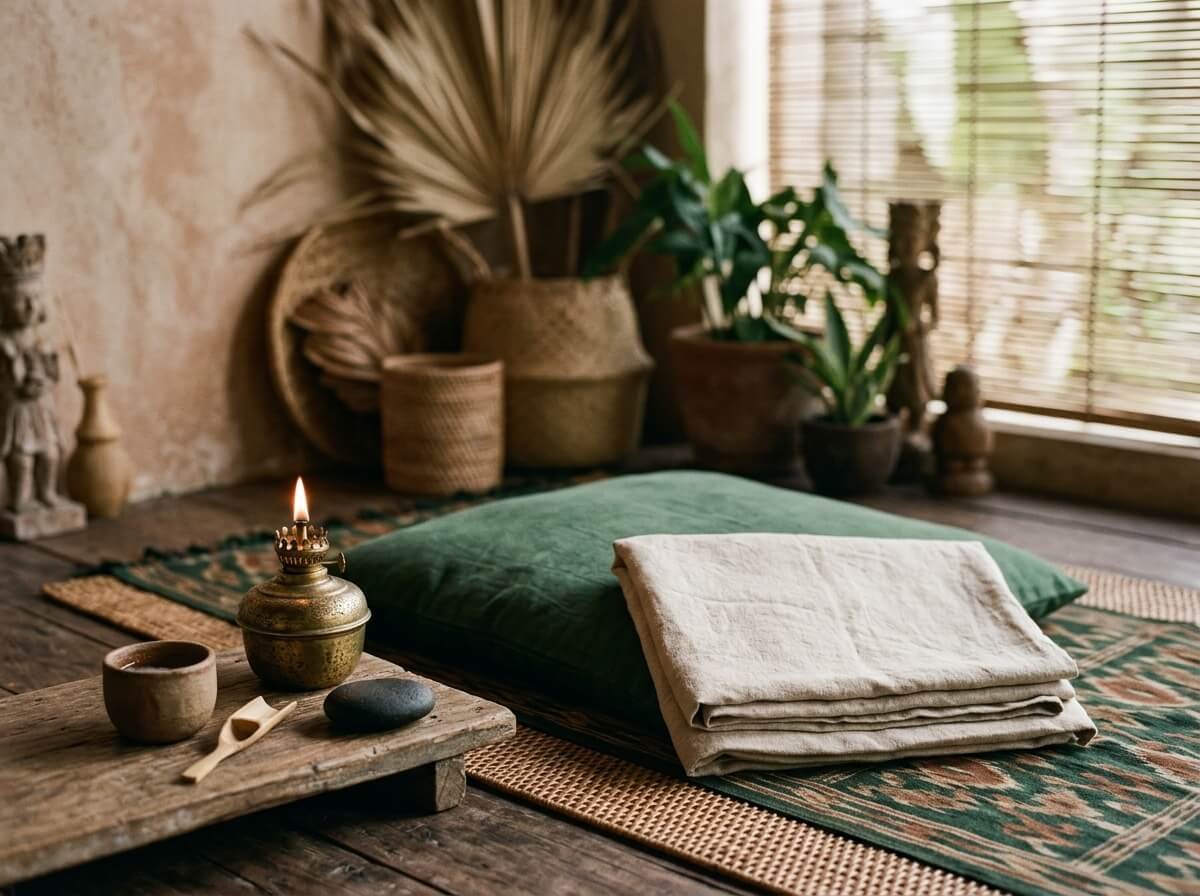
Most home massages fail before the first stroke, usually because the room is too cold, the surface is uncomfortable, or one person is still thinking about the day. None of this is about candles or a particular aesthetic. It is about removing the small frictions that pull attention away from the person in front of you. A few minutes of preparation changes all of that, and the preparation itself becomes part of the ritual rather than a chore before it.
- Warm the room. Bare skin cools quickly, and a cold room shortens any massage into a rushed one. A space heater or a warm shower beforehand both work.
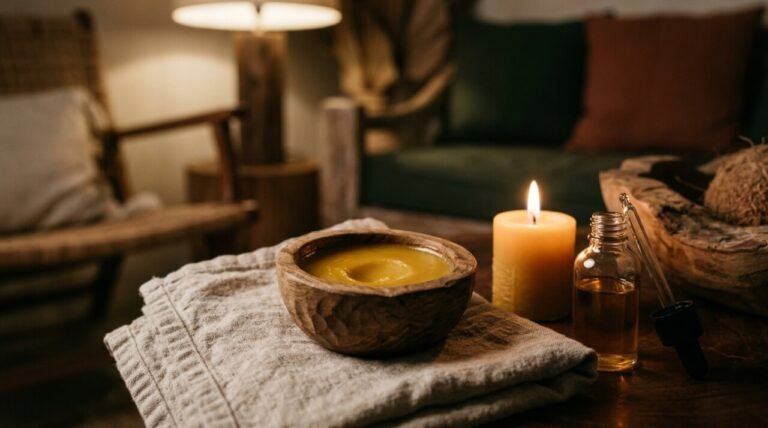
- Lay down a towel or an old sheet you do not mind staining. Body oil marks fabric, and worrying about the linens undercuts the whole point of slowing down.
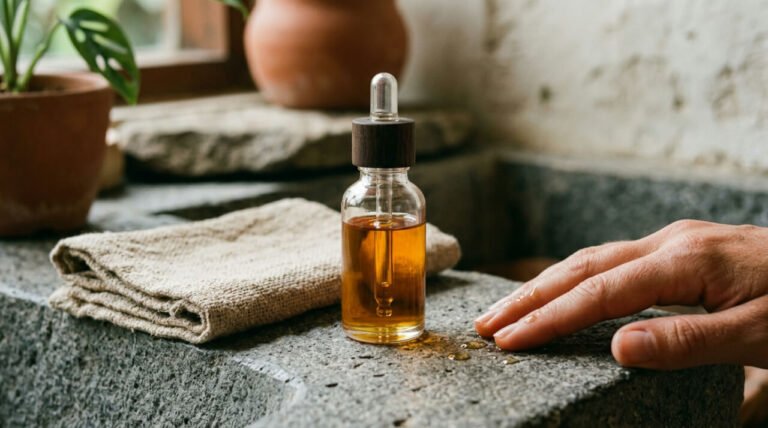
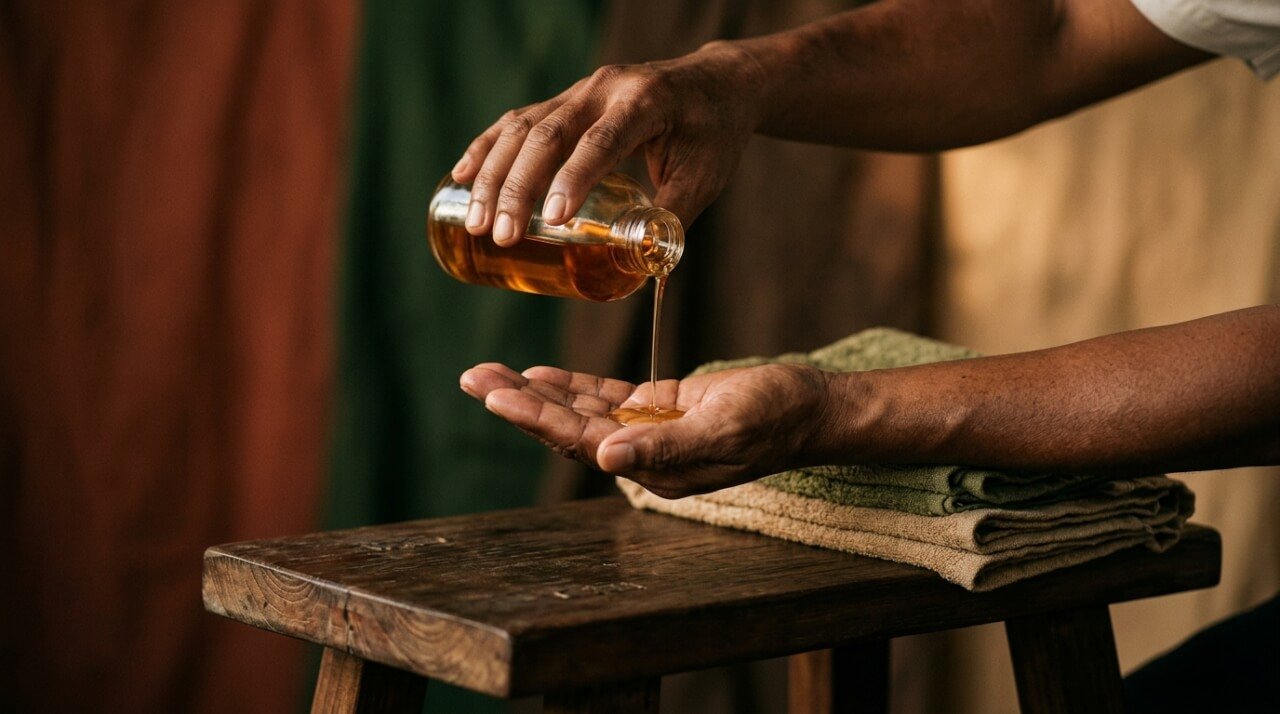
- Warm the oil bottle briefly in your hands, or set it in a bowl of warm water for a minute. Cold oil on warm skin is an unwelcome surprise, and it is the fastest way to make someone tense back up.
- Put the phone away, screen down, notifications off. This sounds obvious and is still the most common thing people skip, and the one that breaks the mood fastest when it buzzes.
- Ask, plainly, what feels good. Pressure, ticklish spots, and sore areas are different for everyone, and checking in partway through matters more than getting the sequence technically right.
- Agree on roughly how long you have. Fifteen unrushed minutes beat forty-five minutes that keep getting interrupted by a glance at the clock.
None of this requires special training. It requires attention, which is the actual gift a massage ritual gives, more than any single technique or oil could on its own. Couples who do this regularly tend to say the preparation itself, the deliberate slowing down before anyone touches anyone, is half of what makes it feel different from an ordinary evening.
It is worth deciding in advance who goes first, or agreeing to trade halfway through, rather than working it out in the moment. Taking turns keeps the ritual reciprocal rather than one-sided, and it gives each person a turn at both roles: the steady, attentive giving of a massage, and the harder practice of simply receiving care without doing anything in return. Many people find the second part more difficult than the first, and that discomfort tends to ease with repetition rather than technique.
Choosing a romantic massage oil for couples: Aphrodisia, Lavender, or Rose Allure
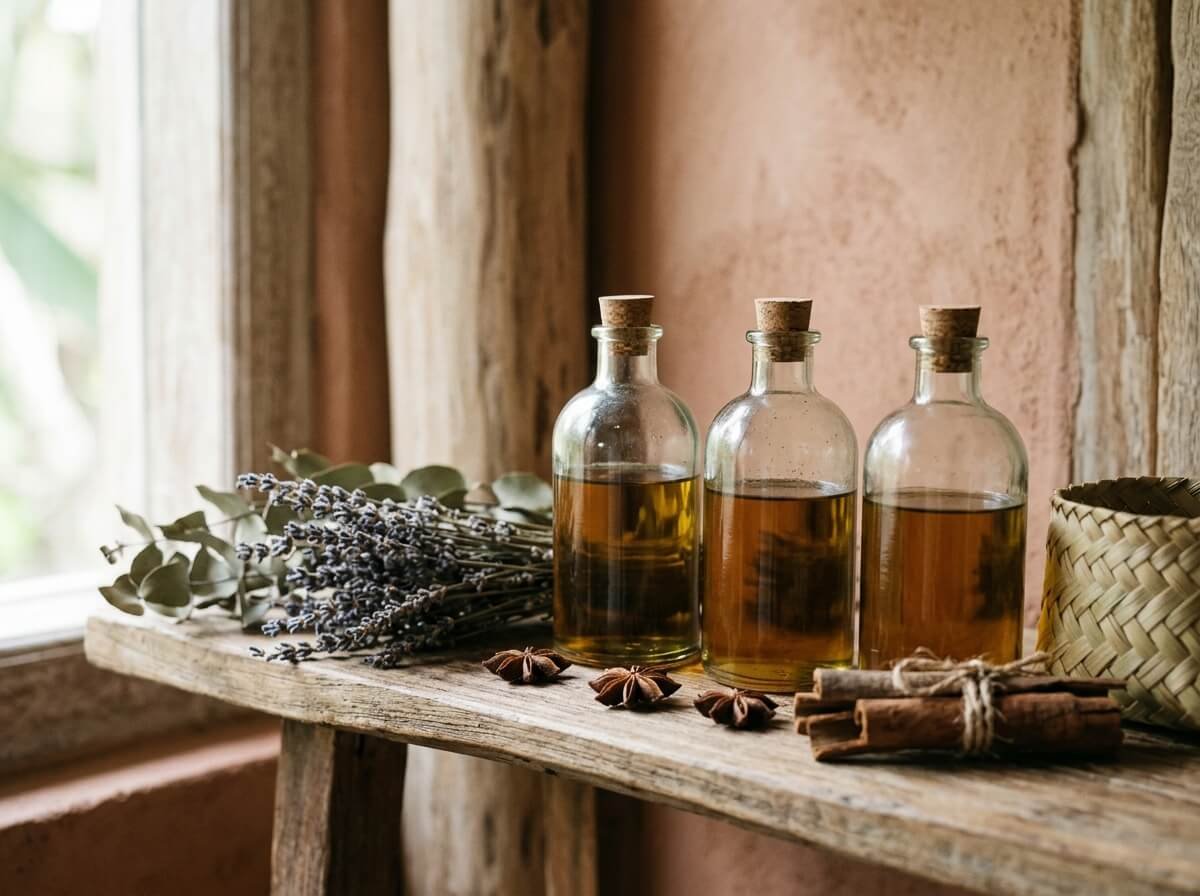
If you want to understand carrier oils, dilution ratios, and how a massage oil is actually formulated from raw botanicals, our guide to aromatherapy oils for massage covers that ground in full, including how to build your own blend safely if that is what you are after. Here, we are choosing between three ready-to-use, already-diluted options, so there is no measuring, no patch-testing a new blend, and no risk of getting a ratio wrong on the one evening you actually wanted to relax.
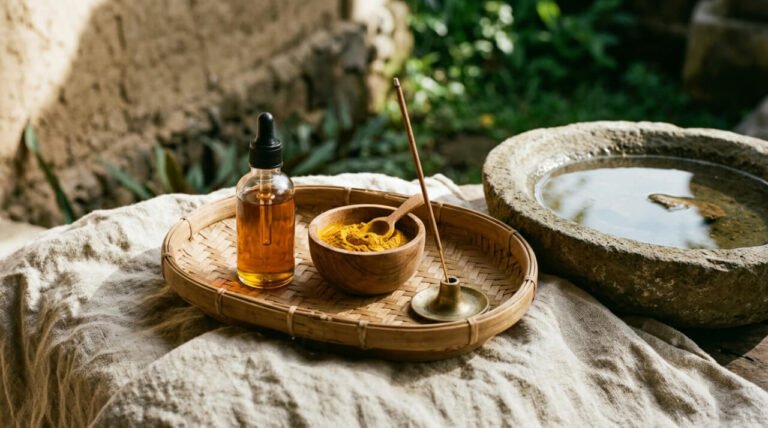
Our Aphrodisia Body Oil is the warm-spice option, blending cubeb, cinnamon, and patchouli into a coconut carrier. It is the closest thing we make to a traditional romantic blend, warm and a little smoky, and it suits an evening that calls for something a little bolder or a first attempt at making this a regular practice. For a calmer mood, or skin that reacts to warm spice notes with sensitivity, our Lavender Body Oil trades intensity for quiet, and works well when the goal is rest and reconnection as much as romance, particularly after a stressful week. If dry or mature skin is part of the picture, our Rose Allure Body Oil leans hydrating and floral rather than warm and spiced, and rewards slower, longer strokes across drier areas like elbows, shoulders, and shins.
There is no wrong choice among the three, and switching between them by mood over time is part of building the habit. A grounded, honest oil choice, one picked for how it actually feels on the skin and in the room, serves the ritual far better than one picked because the label made a bigger promise.
Scent memory is worth mentioning here, because it is the one place where the folklore and the science genuinely meet. Smell is tightly linked to memory formation, more so than any other sense, which means a scent used consistently for this specific ritual, and nowhere else in daily life, starts to trigger the associated calm and closeness on its own after a handful of uses. This is a real, well-documented effect of repeated pairing, not a property of any one ingredient. It is also a good argument for choosing one oil and returning to it, rather than rotating scents every time.

A simple sequence anyone can follow: shoulders, back, hands, feet
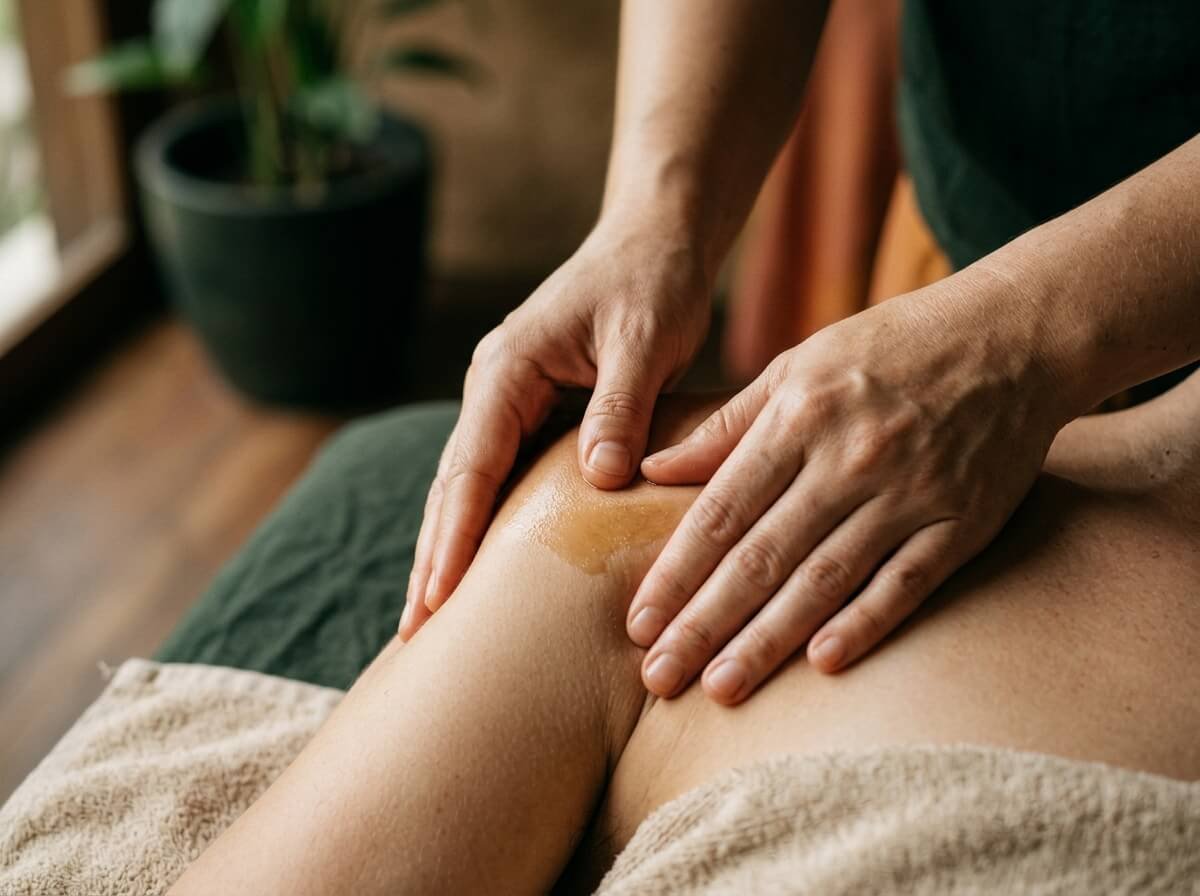
You do not need formal training to give a massage that feels good. You need a sequence simple enough to remember without thinking too hard about it, and permission to skip anything that does not land well for the person receiving it. This four-part sequence covers the areas that hold the most tension and reward the most attention, in an order that flows naturally from one to the next.
- Warm a small amount of oil between your palms before the first touch, rubbing your hands together for several seconds. Cold oil breaks the mood immediately and makes the receiving partner tense up rather than relax.
- Start at the shoulders with slow, flat-palm strokes, moving from the neck outward toward the upper arms. This is where most people carry tension from a full day without noticing it, especially anyone who spends hours at a desk or holding a phone.
- Move down the back with long, even strokes, following the spine’s natural curve rather than pressing directly on the bones themselves. Keep the pressure on the muscle either side of the spine, not on the spine itself.
- Take each hand and work the palm with your thumbs in small, slow circles, then gently pull and roll each finger from base to tip. Hands hold surprising tension from a full day of typing, gripping, and carrying things.
- Finish at the feet, using firm, even pressure along the arch and around the ankle. Feet are often the most neglected part of the body and, for many people, the most appreciated part of a home massage once they get past any initial ticklishness.
Ten to fifteen unhurried minutes is enough to cover all four areas properly. Slower is almost always better than more technical, and there is no rule that says you need to finish the whole sequence in one sitting. Stopping after the shoulders and back, if that is where the evening naturally settles, is still a complete ritual.
Once the four core areas feel familiar, the same sequence extends easily to the legs and scalp for couples who want a longer session. Legs respond well to the same long, even strokes used on the back, moving from ankle toward knee rather than the reverse. A scalp finish, a few minutes of slow circles at the temples and base of the skull with clean, dry hands, works well as a closing gesture after the oil has already been applied elsewhere. Neither addition is necessary, but both are easy ways to extend the ritual on an evening when there is more time to spend.

Ready when the evening is
Aphrodisia Body Oil comes already blended and diluted, cubeb, cinnamon, and patchouli in a coconut carrier, so there is nothing to measure before the ritual begins.
Common mistakes that undercut the ritual
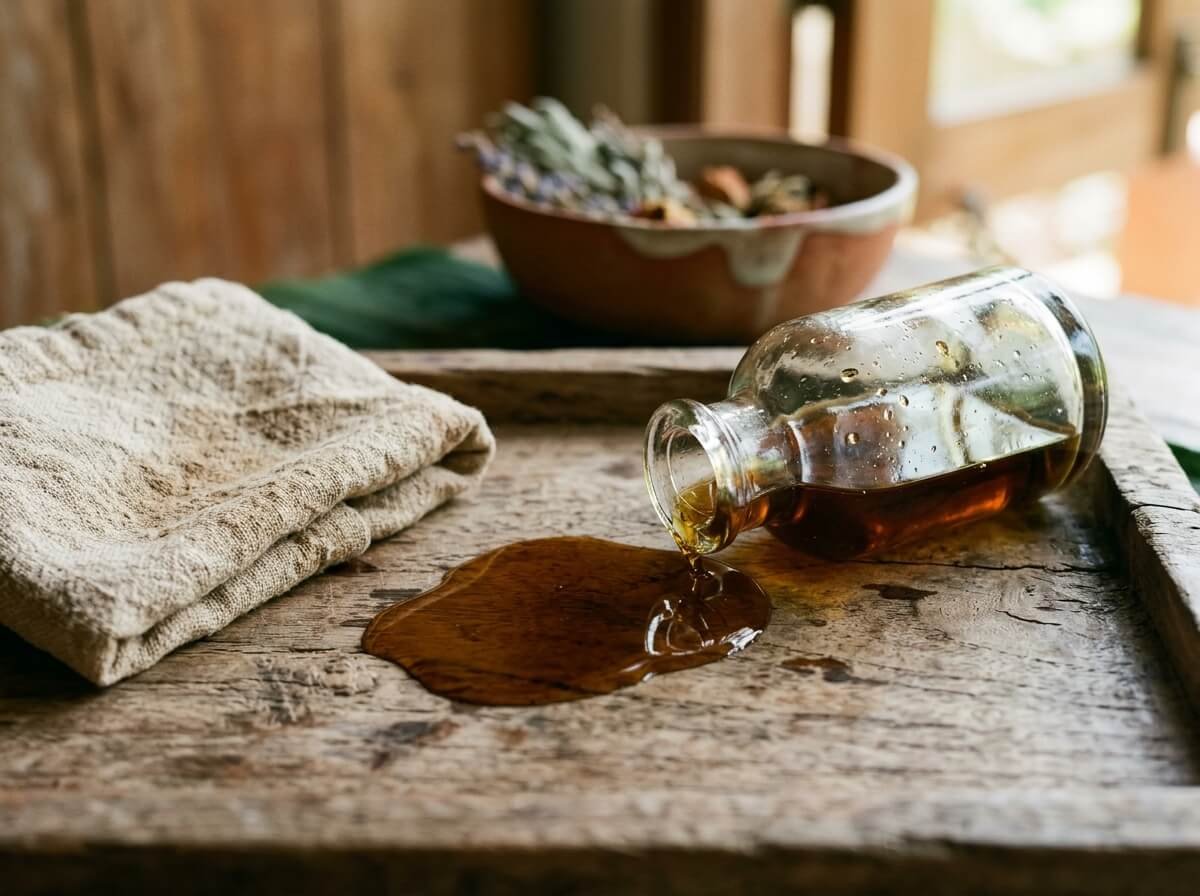
A few habits quietly undo an otherwise good ritual, and most of them are easy to fix once you know to look for them. Knowing them ahead of time is the simplest way to avoid learning them the hard way, mid-massage.
- Too much oil. A little goes further than it looks, especially with a rich carrier like coconut oil. Excess oil pools on the skin, feels heavy rather than smoothing, and stains fabric without adding any real benefit to the massage itself.
- A cold room. Comfort with bare skin depends almost entirely on temperature, more than on technique. Warm the space before you begin, not partway through once someone is already shivering.
- Rushing. A five-minute massage squeezed in under time pressure reads as an obligation, not a ritual, no matter how good the technique is. If time is genuinely short, shorten the sequence to one or two areas rather than rushing through all four.
- Guessing at pressure. What feels good changes by the day, by the muscle group, and by the person. Ask, rather than assume, and adjust as you go instead of committing to one pressure for the whole session.
- Skipping the warm-up. Oil straight from a cool bottle interrupts the mood before it starts and can make the first touch feel clinical rather than warm. Warm it in your hands first, every single time, even if it feels like an unnecessary extra step.
If sore muscles rather than romance are the main goal for the evening, the sequence above still works, but our guide to essential oils for muscle pain covers warming and cooling options built specifically for genuine soreness, which calls for a different oil than an evening focused on connection.
One more mismatch worth naming directly: the two of you may simply want different things from the same massage, one wanting firm, deep pressure and the other wanting something closer to a light, grazing touch. Neither preference is wrong, and neither person should quietly endure the other’s default. Saying so out loud, before or during, costs nothing and prevents the quiet resentment that builds when one partner spends the whole massage wishing it were different without mentioning it.
Aftercare: sealing in the moment, and the oil
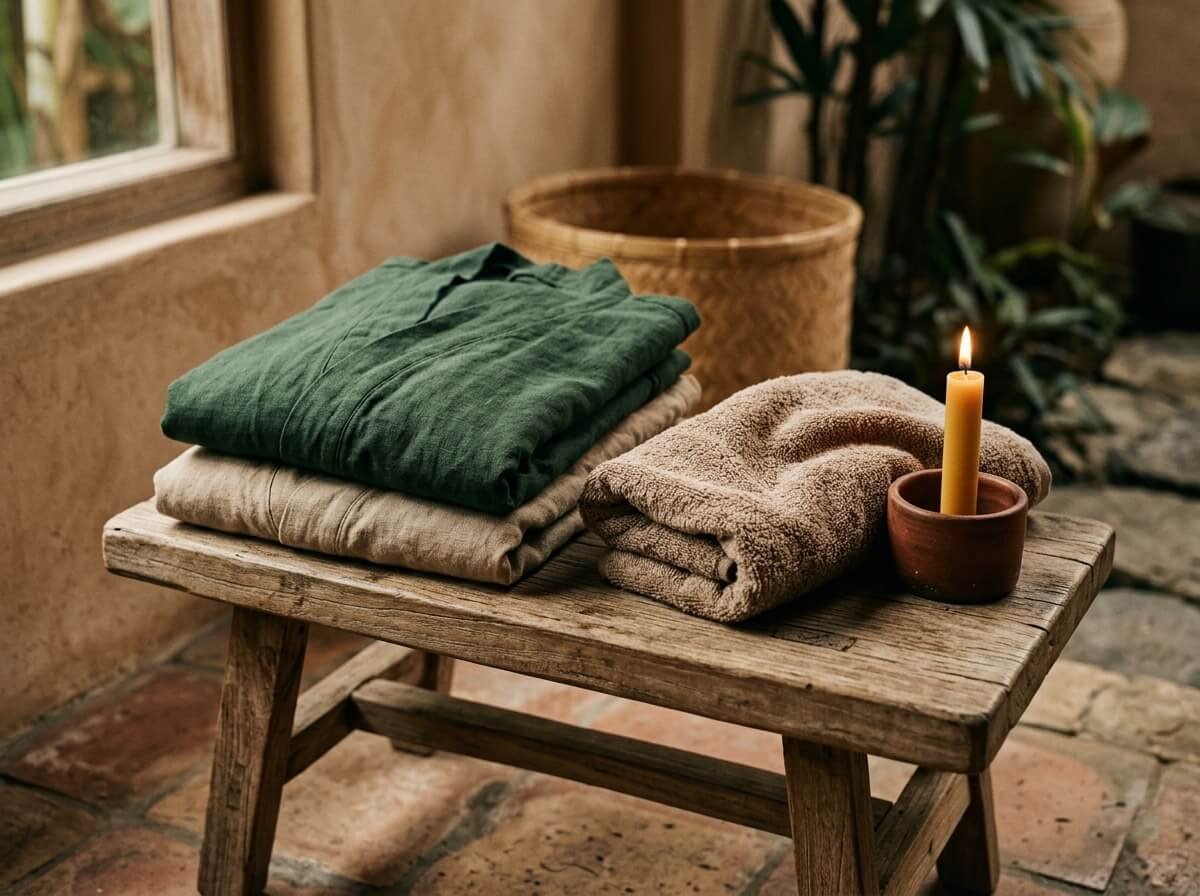
A body oil does not need rinsing off, which is one of the quieter advantages of choosing an oil over a lotion or cream for this particular ritual. Left on the skin, it continues to absorb for the next hour or more, so resist the urge to shower immediately afterward even if the instinct is strong. A light towel to blot any excess from the sheets or hands is enough, and a glass of water for both of you helps, since a longer massage can be more dehydrating than people expect, especially in a warm room.
The minutes right after matter as much as the massage itself, and they are the part most people cut short. Stay close, keep the lighting low, and let the conversation stay quiet if it wants to rather than immediately moving on to the next thing on the evening’s agenda. This closing stretch, unhurried and undemanding, is often the part remembered longest, longer than the technique of any individual stroke.
There is no need to apply a separate lotion or cream afterward. A well-formulated body oil already carries enough fatty acids and emollients to support the skin barrier on its own, and layering another product on top mostly just wastes the second product. If skin still feels dry the next morning, that is worth noting for next time. It usually means slightly more oil was needed during the massage itself, not that an additional step is missing afterward.
Making it a returning practice rather than a one-off
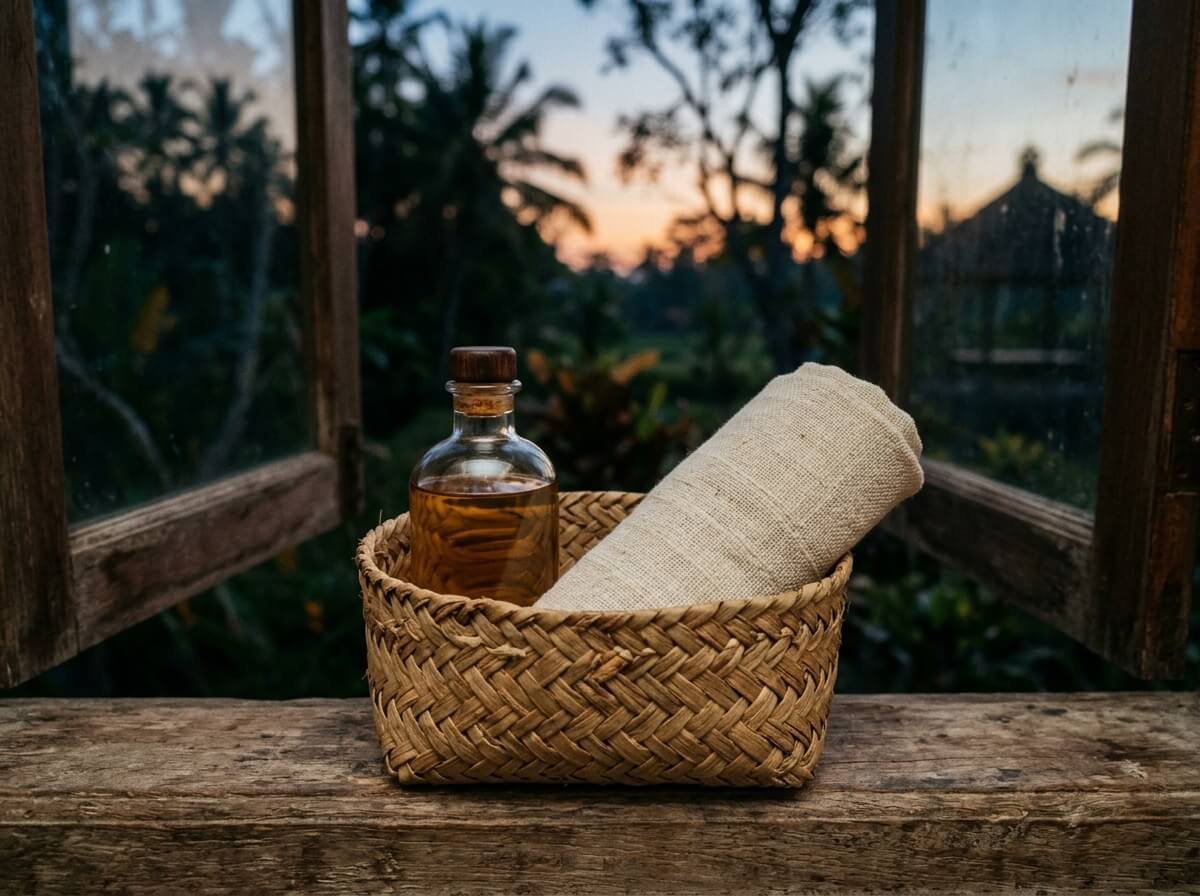
A romantic massage oil for couples earns its place on a shelf when it gets used more than once. Treating it as a rare, special-occasion purchase, kept in a drawer and brought out only on anniversaries, is one way to lose the habit before it forms. Keeping the bottle somewhere visible, alongside a folded towel on a shelf or nightstand, is a small, practical nudge toward doing this again without needing a specific occasion to justify it.
This is the same thinking behind our post-shower body oil ritual: small, repeated acts of care matter more, over time, than occasional grand gestures. Once a month is a fine place to start, and once a week is where most couples find the ritual starts to feel less like an event and more like a rhythm. If lavender is more your evening pace than warm spice, our guide to lavender essential oil benefits explains what the calming evidence actually supports, without overstating what a single scent can do.
A glass bottle of body oil also happens to be a low-waste choice for a ritual meant to repeat. It has no applicator to replace, no pump to wear out, and it lasts many sessions before it needs replacing at all. That is a small, practical form of the same refill-minded thinking we bring to everything else we make: fewer things to buy, fewer things to throw away, more use out of what is already on the shelf. A ritual worth returning to and a product built to be returned to tend to go together.
What you give, you get back. A shared ritual, practiced with patience and returned to often, tends to prove that far more reliably than any single bottle of oil could on its own.