Ingredient Tuesday: turmeric, the golden root of Balinese jamu and lulur
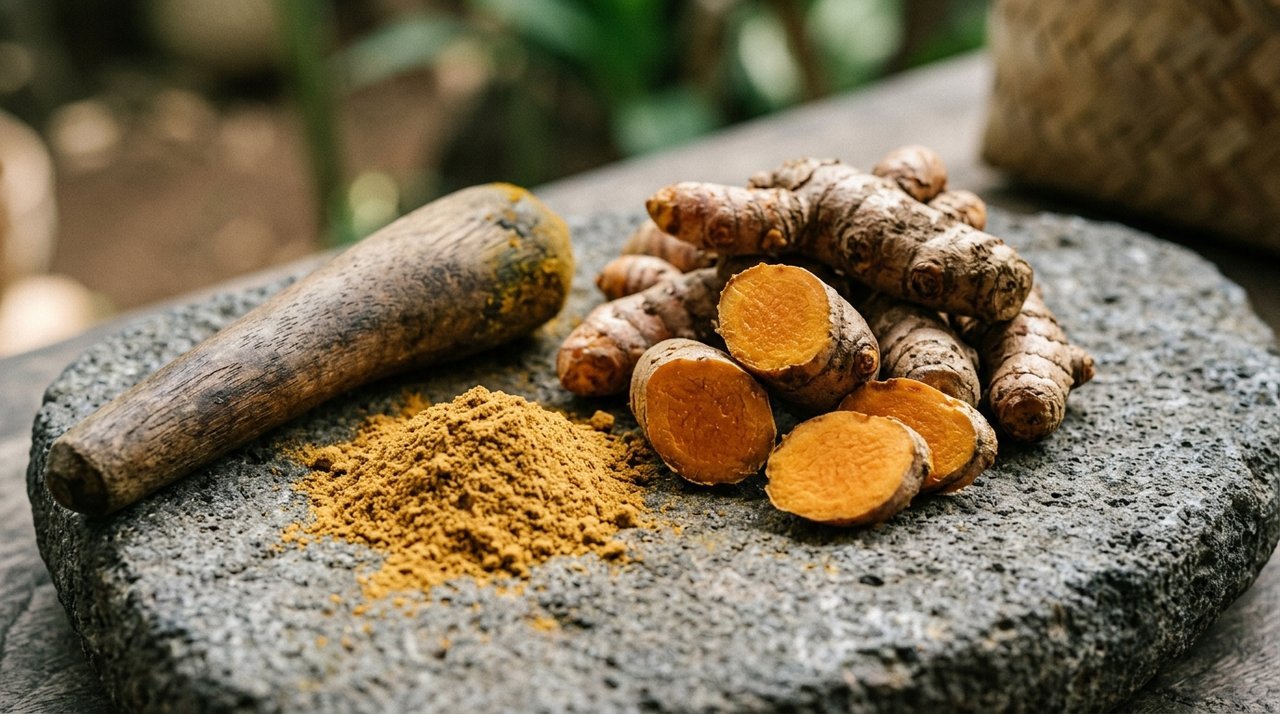
Walk through any Balinese kitchen and you will find it: a knuckle of bright orange root, its skin dusty, its flesh staining everything it touches. This is kunyit, turmeric, and long before it reached wellness shelves abroad it was already medicine, food, and skincare here. The same root a grandmother grates into a morning tonic is the one she grinds into a bride’s scrub.
The science inside the color
That vivid pigment is not decoration. It comes from curcuminoids, a family of plant compounds that make up roughly two to five percent of the dried root. Curcumin, the most studied of them, is a genuine antioxidant, which in plain terms means it helps skin defend against the daily oxidative stress of sun, pollution, and time. Traditional healers did not have the word antioxidant, yet they read the plant correctly through generations of careful observation.
How Bali has always used it
Turmeric sits at the center of three living rituals. In jamu, the herbal tonics of the archipelago, kunyit is simmered with tamarind into a sour-bright drink taken for balance. In lulur, the golden body scrub once reserved for brides, it brightens and softens the skin. And in boreh, the warming herbal paste, it joins ginger and rice to ease tired muscles. This is the same plant wisdom we blend from, carried forward by the grandmothers and balian who taught it.
An honest note on using it
Turmeric is generous, and it is also stubborn. Raw, it stains skin, cloth, and stone a cheerful yellow that lingers. This is why tradition never used it alone: it was always balanced with rice flour, oils, or tamarind that temper the pigment and carry it kindly. A little does the work of a lot. If you want the plant without the mess, a formulated scrub or paste is the gentler way in, which is exactly what boreh and lulur have quietly known for centuries.
One root, three rituals, and a whole tradition of reading nature closely. That is turmeric: not a trend, but a practice we are simply keeping.