How to get rid of frizzy hair: what humidity is doing, and the oils that help
If you want to know how to get rid of frizzy hair, the first thing worth knowing is that frizz is not a flaw in you or your hair type. It is a signal. Each fuzzy strand is telling you something about the outer layer of the hair, how much water it holds, and how much the air around it is pulling in or drawing out. Most anti-frizz advice skips straight to a product. We want to start with what is happening, because once you see the cause, the calm fix becomes obvious.
This guide explains what frizz is at the level of a single strand, why summer humidity frizz and winter static are opposite problems, which wash-day habits quietly make it worse, and how plant oils differ in what they can do. Then we look honestly at silicones, share what a humid island has taught us about hair oiling, and finish with a simple weekly routine and answers to common questions.
What frizz is, and why some hair drinks the air

A hair strand has a soft inner core, the cortex, wrapped in a protective outer layer called the cuticle. The cuticle is made of flat, overlapping cells that lie like roof tiles. When those tiles lie flat, light bounces off them evenly, the strand feels smooth, and it sits neatly beside its neighbours. When the tiles lift, chip, or wear away, the strand roughens, catches on the strands around it, and stands apart. From a step back, that is what we see as frizz.
The invisible water-repellent layer
Healthy cuticles carry a thin, oily coating bonded to their surface. Its main component is a fatty acid called 18-MEA (18-methyleicosanoic acid), and it is the reason clean, healthy hair sheds water rather than soaking it up straight away. Heat styling, bleaching, colouring, sun, chlorine, and plenty of rough handling strip this layer over time. What is left underneath is far more hydrophilic, which simply means it attracts water.
Porosity: how fast hair takes in and loses water
This is where the word porosity comes in. Low-porosity hair has a tight, intact cuticle that is slow to absorb water and slow to lose it. High-porosity hair has a lifted or worn cuticle that drinks water fast and gives it up just as fast. Hair is rarely one or the other from root to tip: the newest growth near the scalp is usually the least porous, and the ends, which may be two or three years old, are often the most porous of all. That is why so many of us see frizz first along the lengths and ends.
Why the cortex swells
Inside the cortex, keratin proteins are held in shape partly by hydrogen bonds, the weak links that water can break and re-form. When porous hair takes up moisture from humid air, those bonds shift, the cortex swells, and the strand bends out of its set shape. Because the damage is uneven along each strand and from strand to strand, the swelling is uneven too. Some hairs kink, some puff, some stay smooth. The result is that soft, unruly halo.
So frizz is, first of all, a porosity problem. The fix is less about forcing hair flat and more about protecting the cuticle, slowing the movement of water in and out, and handling hair gently enough that we stop creating new damage.
Humid frizz and winter static: two opposite problems

Most guides treat all frizz as one thing. It is really two.
Humidity frizz: too much water coming in
In warm, damp air, porous hair takes up water vapour, the cortex swells unevenly, and curls loosen or puff while straight hair develops a fuzzy outline. This is the frizz of summer, tropical holidays, and steamy bathrooms. The aim here is to slow water down: a light seal on the lengths, a conditioner that smooths the cuticle, and fewer of the habits that lift it.
Winter frizz: too little water, plus static
In cold, dry air, and indoors under heating, the opposite happens. Hair loses moisture, the strands become stiff and light, and friction from wool hats, scarves, and pillowcases builds a static charge. Charged strands repel each other and float. The aim here is different: put moisture and a little conditioning back, reduce friction, and help the hair hold on to what it has.
Why the difference matters
If we treat winter static with the summer playbook, a thin seal on already dry hair, we get limp, crunchy ends that still fly away. If we treat summer frizz with heavy winter conditioning, we can end up flat at the roots and puffy at the ends. Read the air before you reach for the bottle. As a simple rule, humid days call for a light seal, and dry days call for moisture first and a seal on top.
With winter settling in across much of the northern hemisphere, many readers will be dealing with the static kind right now. The same dry air that tightens the skin on our faces is drawing water out of our hair too, which is why our guide to a calm routine for dry scalp pairs naturally with this one.
Wash-day habits that quietly create frizz
Before adding anything to your routine, it is worth looking at what to take away. A few everyday habits lift the cuticle again and again, and no oil can keep up with them.
Water that is too hot
Hot showers feel good, especially in winter, but very hot water strips more of the hair’s natural oils and leaves the cuticle rougher. Warm water for washing and a cooler final rinse is a gentler pattern. The cool rinse will not seal the cuticle on its own, but it does leave hair less stripped and less swollen than a scalding one.
Washing more often than your hair needs
Shampoo is designed to lift oil, and it cannot tell scalp oil from the protective coating on your lengths. Many people with dry or curly hair find that washing two or three times a week, rather than daily, is enough. Fine, straight hair on an oily scalp may need more. Let the scalp, not habit, set the rhythm. Focus shampoo on the scalp and let the rinse run through the lengths rather than scrubbing them.
Harsh cleansing
Strong cleansers, including some sulfates, can leave porous hair feeling squeaky and rough. They are not dangerous, and they are useful when you need to clear heavy build-up. For frizz-prone hair, though, a gentler, coconut-based shampoo used mostly at the roots is kinder day to day. Our All Natural Shampoo #6 is built on a coconut oil base with castor oil and a blend of essential oils including rosemary and cananga. We explain how to choose a pair in our guide to natural shampoo and conditioner.
Skipping conditioner
Shampoo leaves the hair surface slightly negatively charged, which is part of why freshly washed hair can tangle and fly away. Conditioners contain positively charged ingredients that settle on the damaged, most negative parts of the strand, smoothing the cuticle and reducing static. For frizz-prone hair, conditioner is not optional. Our Hydrating Conditioner pairs castor oil and argan oil in a simple rinse-out formula. We cover the plant-based options in our guide to natural conditioner for hair.
Rubbing with a rough towel
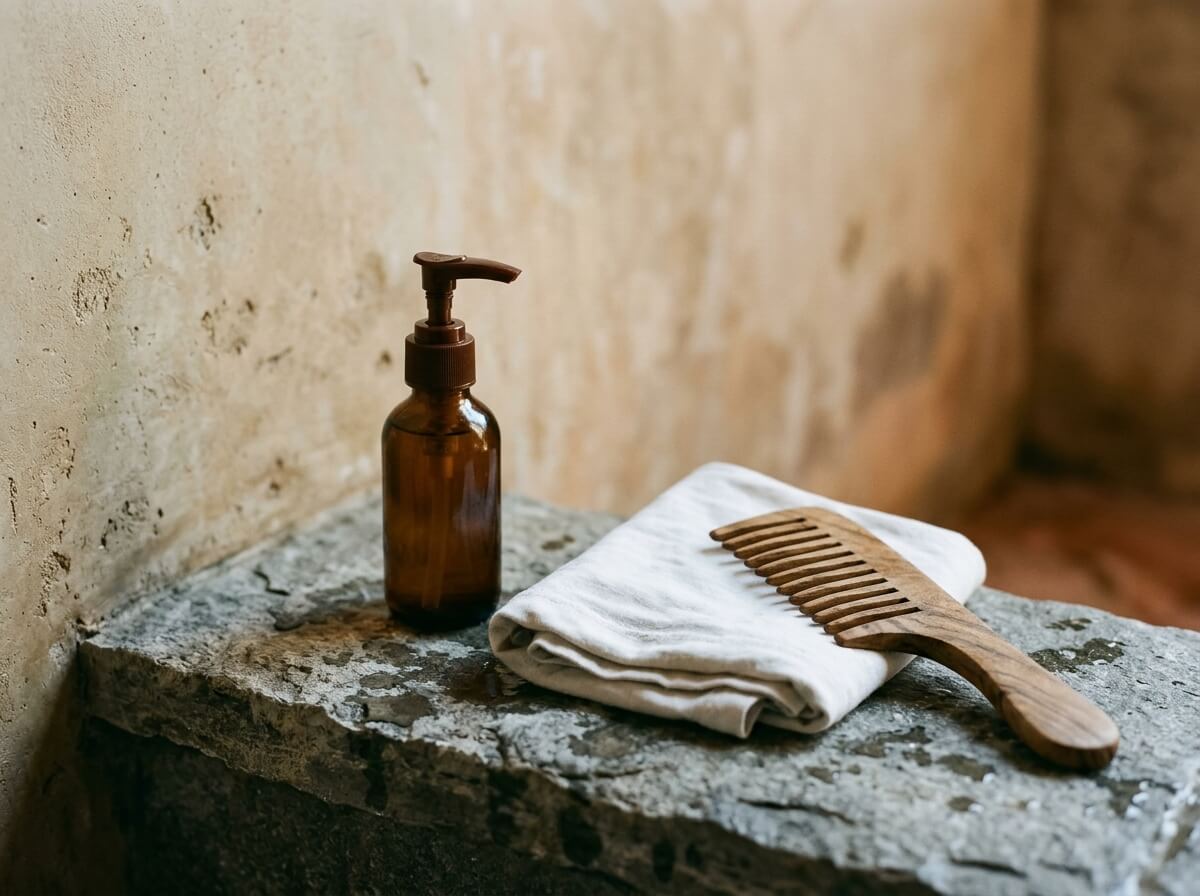
Wet hair is at its weakest and most stretchable. Rubbing it with a terry towel roughens the cuticle and breaks fine strands, and those broken ends become tomorrow’s frizz. Instead, squeeze out the water with your hands, then press or scrunch the hair in a soft cotton t-shirt or a smooth cloth.
Brushing when wet, and heat without a pause
Detangle wet hair with a wide-tooth comb, starting at the ends and working up. Save brushes for dry hair. If you use a hairdryer, let hair air-dry partly first and keep the dryer moving on a medium setting. Heat at high temperatures is one of the fastest ways to wear away that protective outer layer.
How to get rid of frizzy hair with oils that soak in and oils that seal
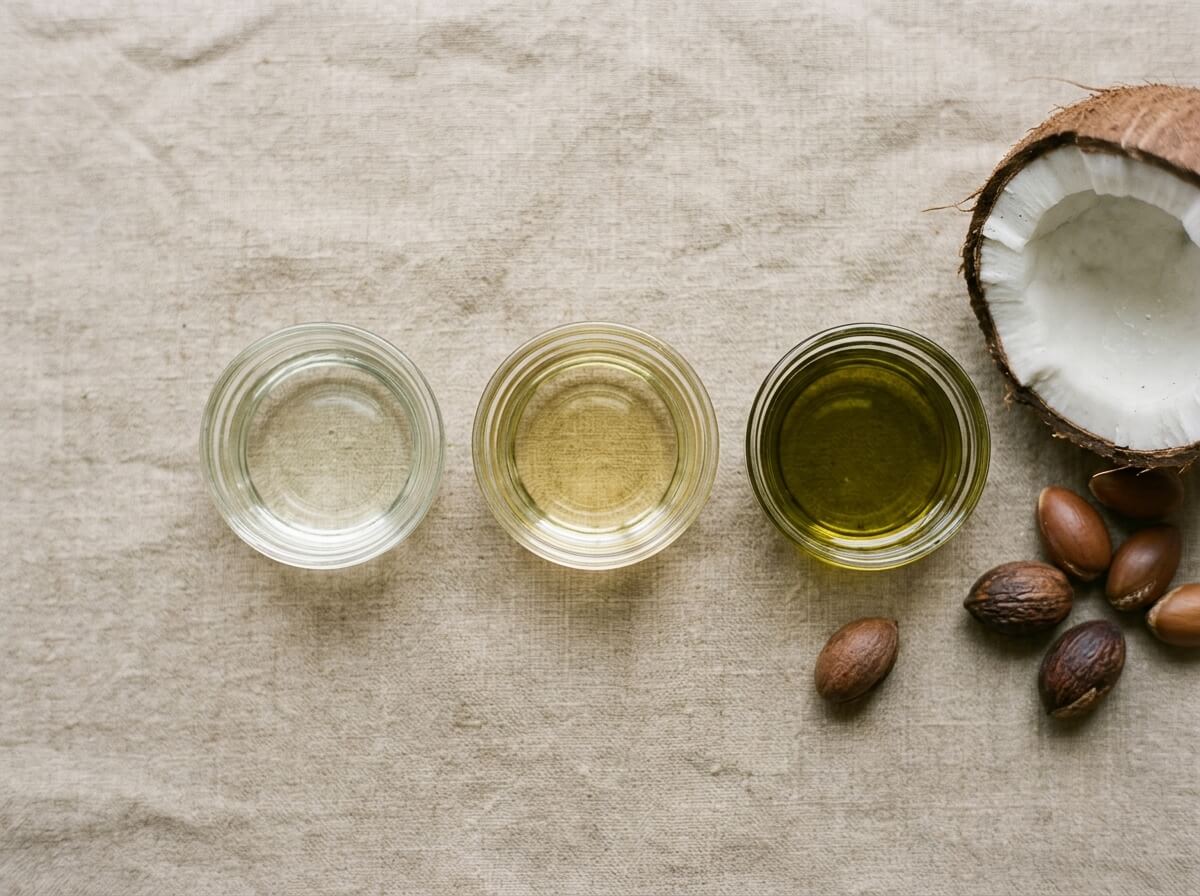
Here is the part most anti-frizz articles leave vague. They mention “nourishing oils” without saying which ones or why. Plant oils are not all alike. Some can pass into the hair shaft, and most mainly sit on the surface. Both are useful, in different ways.
Coconut oil: the oil that gets inside
Coconut oil is unusual. It is rich in lauric acid, a fatty acid with a fairly small, straight-chain structure and a natural affinity for hair proteins. In a well-known study published in the Journal of Cosmetic Science in 2003, Rele and Mohile found that coconut oil, used as a pre-wash and post-wash treatment, reduced protein loss in both damaged and undamaged hair. Sunflower oil and mineral oil, tested alongside it, did not have the same effect. Later work by the same researchers suggested coconut oil penetrates the hair, while mineral oil stays on the surface.
Why does that matter for frizz? A strand that has taken in a little oil takes up water a little more slowly. Applied before washing, coconut oil appears to limit how much the cortex swells and shrinks during each wash. Some researchers call that repeated swelling and drying hygral fatigue. It is still a working theory rather than settled science, but the pre-wash oil habit it explains is one of the oldest hair practices in the tropics. We go deeper in our guide to coconut oil for hair.
Cold-pressed Virgin Coconut Oil is the simplest place to start. One note: coconut oil is solid below about 24°C, so in a cool room warm a little between your palms first.
Argan oil and other sealing oils
Argan oil is rich in oleic and linoleic acids and vitamin E. The evidence that it penetrates hair the way coconut oil does is thin, so we prefer to describe it honestly: it is a light, silky sealing oil. A few drops smoothed over the lengths add slip and shine and help the surface hold water in on dry days. A small bottle of Argan Oil lasts a long time because so little is needed.

Tamanu oil, pressed from the nut of the Calophyllum tree that grows along Indonesian coasts, is richer and greener, with a nutty, earthy scent. It is better known as a skin oil, and its thickness makes it a good choice for the very ends of coarse or curly hair rather than the lengths of fine hair. We compare the two side by side in argan oil vs tamanu oil.
How to layer them by hair type
- Fine or low-porosity hair: coconut oil as a short pre-wash treatment only, rinsed out, then one or two drops of a light oil on the ends of dry hair. Heavy oils left in will weigh it down.
- Medium, wavy, or colour-treated hair: a pre-wash coconut treatment once a week, conditioner every wash, and a few drops of argan or hair oil on damp ends.
- Thick, curly, coily, or very porous hair: pre-wash oil, a generous conditioner, and a sealing oil on damp lengths. Some curly-haired people layer a leave-in conditioner first and oil on top to lock it in.
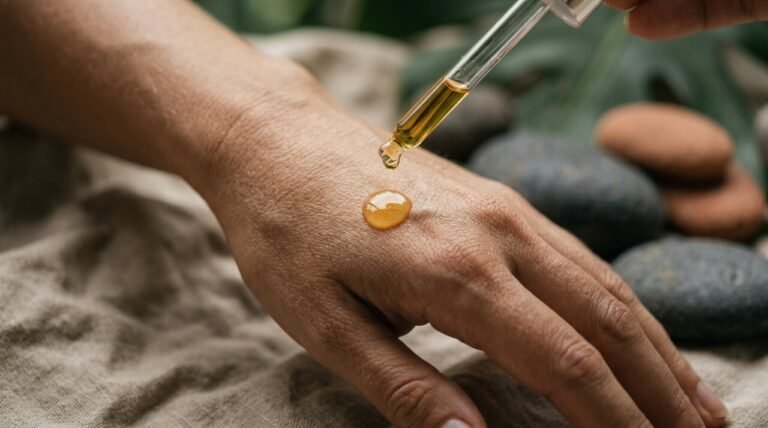
The one thing all hair types share: less is more. Start with two drops, warm them in your palms, and press them into the ends. You can always add a third. If you are choosing a dedicated hair oil, our guide to natural hair oil explains what to look for on the label, and the best natural hair oil compares the main carrier oils by hair type.

A coconut-based oil for calmer ends
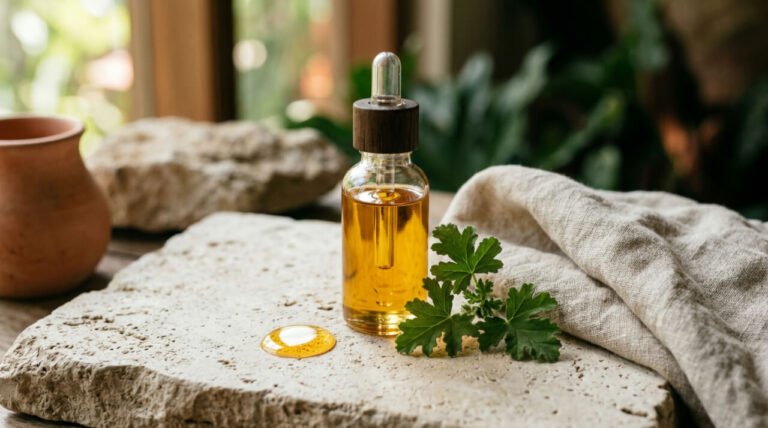
Our Lavender Hair Oil starts with virgin coconut oil, the oil that can pass into the hair shaft, and adds pure lavender essential oil. Use it as a weekly pre-wash treatment or press two drops into damp ends. Handmade in Bali, with no synthetic oils or added colours.
The silicone question, answered honestly
Look at the ingredient list of almost any anti-frizz serum and you will find words ending in -cone or -siloxane: dimethicone, amodimethicone, cyclopentasiloxane. Silicones dominate this category for a reason.
What silicones do well
Silicones form a thin, smooth, water-resistant film around each strand. That film reduces friction, adds shine, protects against some heat damage, and slows the movement of humid air into the hair. On the day you use them, they work, often better than any plant oil. There is nothing dangerous about them on hair, and we do not believe in frightening anyone away from a product that helps them.
The trade-off
The same film that keeps water out can also build up. Some silicones, such as dimethicone, do not dissolve in water and are not fully removed by gentle cleansers. Over weeks, layers can leave hair heavy, dull, or limp, which often leads to stronger shampoos to strip it back, and stronger shampoos rough up the cuticle we were trying to protect. Not every silicone behaves this way. Some are designed to be water-soluble or to deposit only where hair is damaged. But the cycle of coat, build up, strip, repeat is real for many people, and it is the part of the anti-frizz aisle that rarely gets explained.
A plant-based alternative
If you would like to step off that cycle, you do not need to change everything at once. A plant-based routine works on the same principle, smoothing and sealing the surface, and it washes out with gentle cleansers:
- A coconut oil pre-wash once a week to limit swelling.
- A conditioner on every wash, left on for a few minutes.
- A few drops of sealing oil on damp ends instead of a serum.
- Gentle drying, as above.
Expect a short adjustment period. Hair that has been coated for a long time may feel different for two or three washes as old layers lift. That is normal, and it settles.
What humid Bali teaches about hair oiling

Utama Spice began in Ubud in 1989, and we have spent more than 35 years making hair and body care on an island where humidity often sits around 80% for much of the year. Frizz is not an occasional problem here. It is the climate. That has shaped how we think about hair.
Coconut oil as a household staple
Across Indonesia and much of tropical Asia, coconut oil has been a household hair oil for generations, used long before anyone measured protein loss in a laboratory. Families have long made it at home by grating mature coconut, pressing out the milk, and cooking it down slowly until the oil separates. The practice is simple: oil the hair, often before washing, comb it through, and let it rest. It is a lived answer to a damp climate, and modern research has since caught up with part of the reason it works.
Candlenut oil
Another familiar oil in Indonesian homes is minyak kemiri, oil from the candlenut tree, the same tree known in the Pacific as kukui. Candlenuts are a kitchen staple, roasted and ground into spice pastes, and their oil has long been used on hair across the archipelago, often for shine and to keep long hair soft. We share more about this nut in our guide to kukui oil. We would be careful not to overstate it: the claims often attached to candlenut oil, such as making hair grow thicker or darker, are not well supported by research. What is clear is its place as an everyday, practical hair oil.
Respecting the tradition
These are ordinary household practices, not hidden rituals, and we would rather describe them plainly than dress them up. What they offer is a mindset: oil as a regular, unhurried part of caring for hair, not an emergency fix. That idea runs through our own Lavender Hair Oil, which starts with virgin coconut oil and adds pure lavender essential oil for a calm, herbal scent.
If you want to bring the habit home, our warm oil scalp ritual and this short Slow Saturday practice for oiling hair ends are both easy places to begin.
A simple weekly routine to get rid of frizzy hair
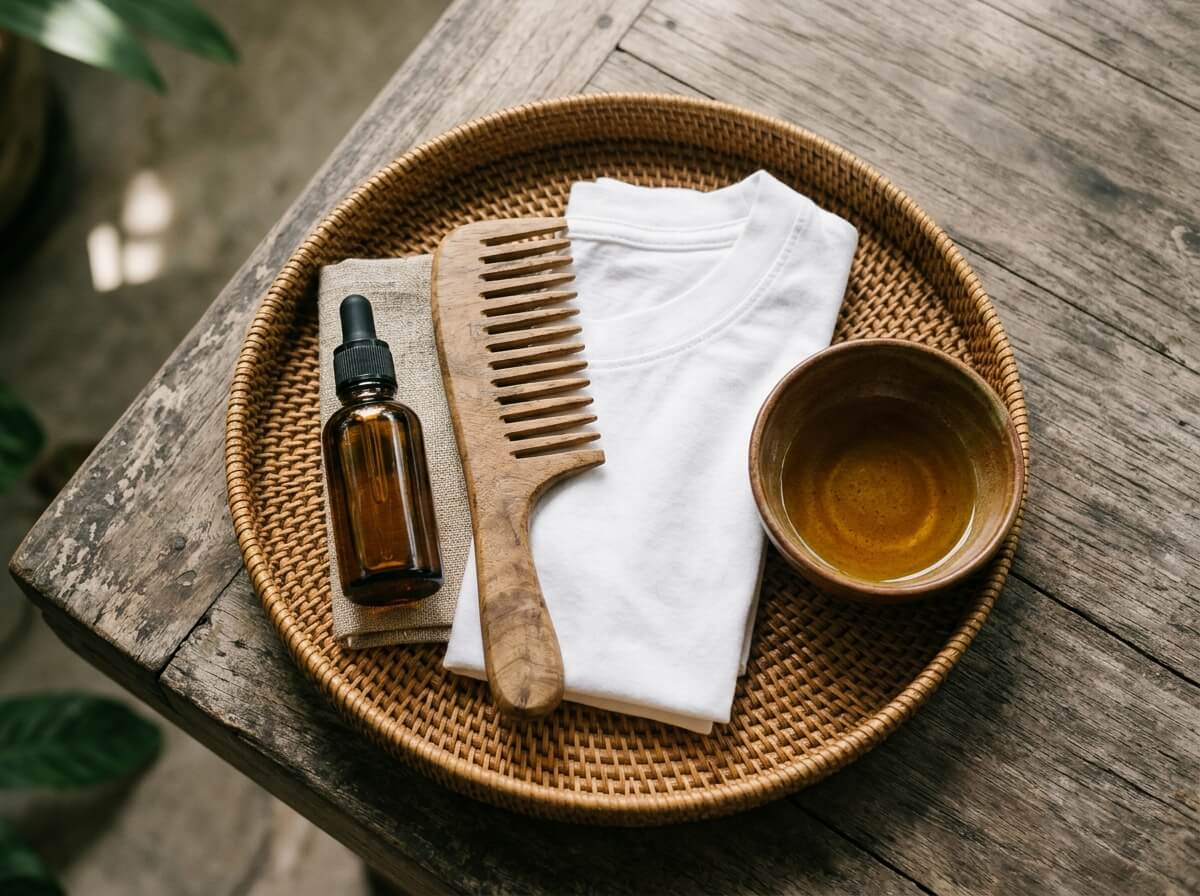
You do not need a 10-step routine. Here is a calm weekly rhythm that covers the cuticle, the cortex, and the habits that matter most. Adjust the number of washes to your scalp.
Once a week: the pre-wash oil
- Warm one to two teaspoons of coconut oil, or your hair oil, between your palms.
- Work it through dry hair from the mid-lengths to the ends, leaving the scalp out if it gets oily easily.
- Leave it on for at least 30 minutes, or overnight with your hair loosely braided and a towel over the pillow.
- Wash as usual. You may need to shampoo the roots twice to lift the oil.
Every wash day
- Wash with warm water, focusing shampoo on the scalp.
- Condition the lengths and ends, and leave it on for three to five minutes.
- Detangle gently with a wide-tooth comb while the conditioner is in.
- Finish with a cool rinse.
- Squeeze, then scrunch or press hair dry in a cotton t-shirt.
On damp hair
Smooth two or three drops of oil over the ends while hair is still damp. Let it air-dry partly before any heat, and keep the heat medium.
Between washes
On humid days, a tiny drop of oil smoothed over the outer layer of dry hair tames the halo. On dry, static-prone days, mist the lengths lightly with water first, then seal with a drop of oil. Sleep on a smooth pillowcase if you can, and tie long hair loosely so it does not rub all night.
Give it time
Frizz that comes from long-term damage will not vanish in a week, because the damage lives in hair that has already grown. What changes quickly is how the hair behaves. What changes slowly is the hair itself, as new, healthier growth replaces the old. Regular trims of the most worn ends speed that up.
Frequently asked questions about frizzy hair

How often should I wash frizzy hair?
For most people with frizz-prone hair, two or three times a week is enough. Curly and coily hair often does well with once or twice a week. Very fine hair on an oily scalp may need more frequent washing, in which case keep shampoo on the roots and always condition the lengths.
Will oil make my hair greasy?
Only if you use too much or put it in the wrong place. Keep oil off the scalp unless you are doing a pre-wash treatment, start with two drops, and focus on the ends. Fine hair does best with oil as a pre-wash treatment that rinses out.
Can I oil my hair every day?
You can smooth a drop or two on dry ends daily, especially in winter. A full oil treatment every day is usually too much and leads to build-up and extra washing, which brings us back to the start of the cycle.
Is coconut oil good for every hair type?
Coconut oil helps most hair types as a pre-wash treatment. Some people with very low-porosity or protein-sensitive hair find that coconut oil left in leaves their hair stiff or dull. If that sounds like you, use it only before washing and choose a lighter oil, such as argan, for the ends.
Why is my hair frizzy right after washing?
Usually a combination of stripping, skipping or rushing conditioner, rubbing with a towel, and brushing wet hair. Change one habit at a time, starting with the towel and the conditioner, and you will see which one makes the difference.
When should I see a professional?
If frizz comes with sudden breakage, thinning, hair coming out in clumps, or an itchy, flaking, or sore scalp, it is worth seeing a dermatologist or a trichologist. Those can point to something more than a dry cuticle.
Final thoughts
Learning how to get rid of frizzy hair is really learning how to protect the outer layer of each strand. Read the air: humid frizz needs a light seal, and winter static needs moisture first. Take away the habits that lift the cuticle. Use coconut oil where it can soak in, and lighter oils where you only need a seal. Be honest with yourself about silicones, and choose with open eyes.
Most of all, be patient. Hair is slow, and the calm routine is the one that lasts. A few drops of oil, a softer towel, and a little time will do more than any promise on a bottle.