Heat rash home remedy: how to calm prickly heat naturally
When the air turns thick and warm, a cluster of tiny red bumps can appear across the chest, the back, or the creases of the elbows, and they sting and prickle as if someone had dusted the skin with fine sand. That is heat rash, and the most reliable heat rash home remedy is simpler than most people expect. It is not a cream or a paste. It is cool air, loose cloth, and a pause from anything that traps sweat against the skin. In Bali, where the rainy season keeps humidity high for months, we see prickly heat often, in travellers stepping off the plane, in children after a long afternoon of play, and in anyone who wears a backpack on a scooter in the midday sun.
In this guide we explain what heat rash actually is, why the real remedy starts with removing heat and occlusion, which gentle botanicals help, and why a body-care brand like ours will tell you to put the richest body butter away for a few days. We also cover the remedies to skip, a daily ritual for living in humidity, and the signs that mean it is time to see a doctor.
What heat rash actually is: a blocked sweat duct, not an allergy
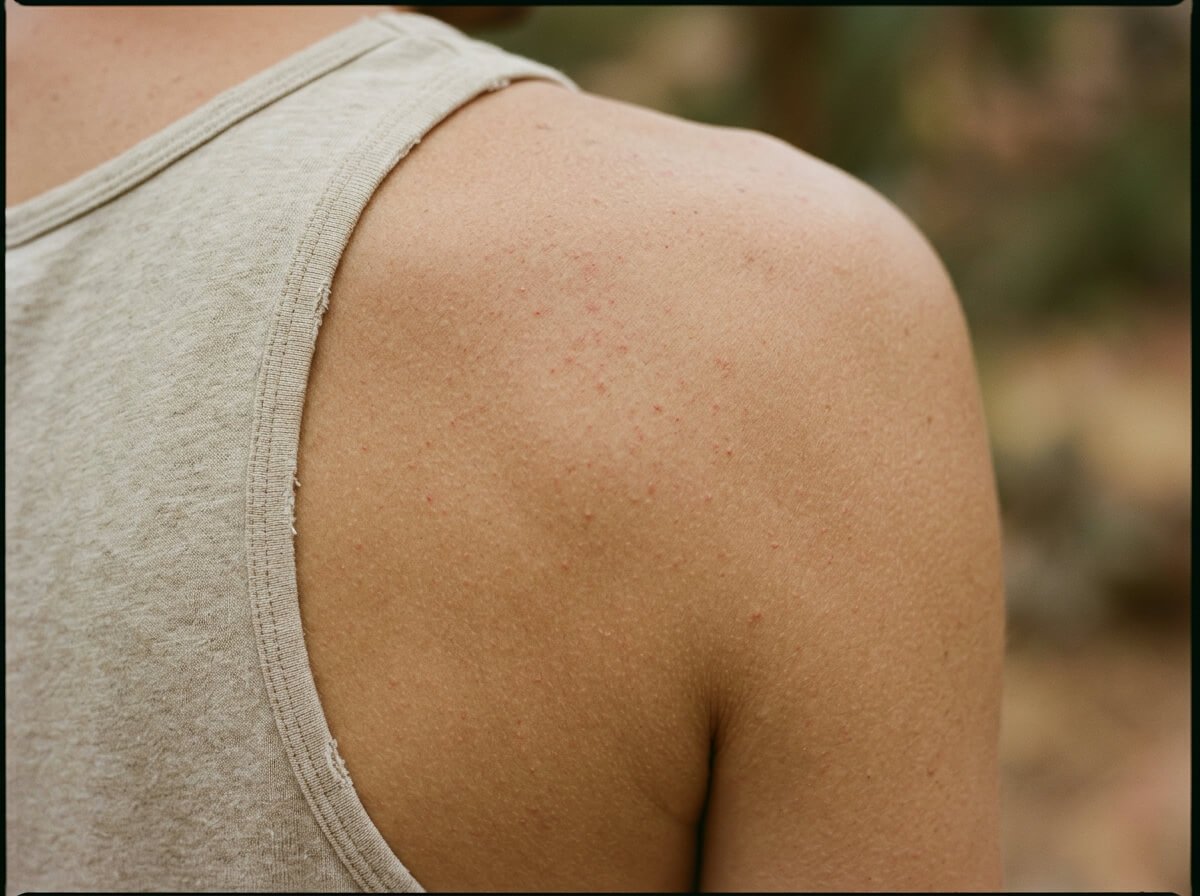
Heat rash has a medical name, miliaria, and a very physical cause. Our skin is threaded with millions of tiny eccrine sweat ducts, narrow coiled tubes that carry sweat from glands deep in the skin up to the surface. When we sweat heavily for a long time, especially in humid air where sweat cannot evaporate, the openings of those ducts can swell and close. Sweat keeps coming, but it has nowhere to go. It leaks sideways into the surrounding skin, and the skin responds with small bumps, redness, and that familiar prickling sensation.
This matters because it changes how we think about the fix. Heat rash is not an allergy, not an infection, and not a sign that your skin is dirty. It is a plumbing problem. The ducts are blocked, and the body needs time, coolness, and open skin to clear them. Most mild heat rash settles on its own within a few days once the skin cools down and stays dry.
The three types, in plain words
Dermatologists describe three main forms, depending on how deep in the skin the blockage sits.
- Miliaria crystallina is the most superficial. It looks like tiny clear blisters, almost like dew drops, that break easily and rarely itch. It is common in newborns and after a fever or a sweaty night.
- Miliaria rubra is the classic prickly heat. The blockage sits a little deeper, so the bumps are red, itchy, and prickly. This is the form most adults and travellers meet, usually on the chest, back, neck, under the breasts, around the waist, and in skin folds.
- Miliaria profunda is the deepest and least common. The bumps are firm and skin-coloured, and they tend to appear in people who have had repeated rubra episodes over many weeks in hot climates. Because large areas of skin may stop sweating properly, this type deserves a doctor’s attention.
Knowing the type helps us stay calm. Crystallina and mild rubra are uncomfortable but usually harmless. They tell us the skin is overheated and overwhelmed, and they ask us to change the conditions, not to scrub, smother, or medicate.
Who gets it most
Babies get heat rash easily because their sweat ducts are still developing, and because well-meaning adults often wrap them in one layer too many. Travellers from cooler climates are also prone, especially in their first week somewhere hot and humid, when the body sweats heavily but has not yet adjusted. People who exercise hard in the heat, who work outdoors, who are bedbound, or who wear tight synthetic uniforms see it often too. If you have ever had prickly heat once, you are likely to meet it again in the same conditions.
The first hour: the heat rash home remedy that matters most
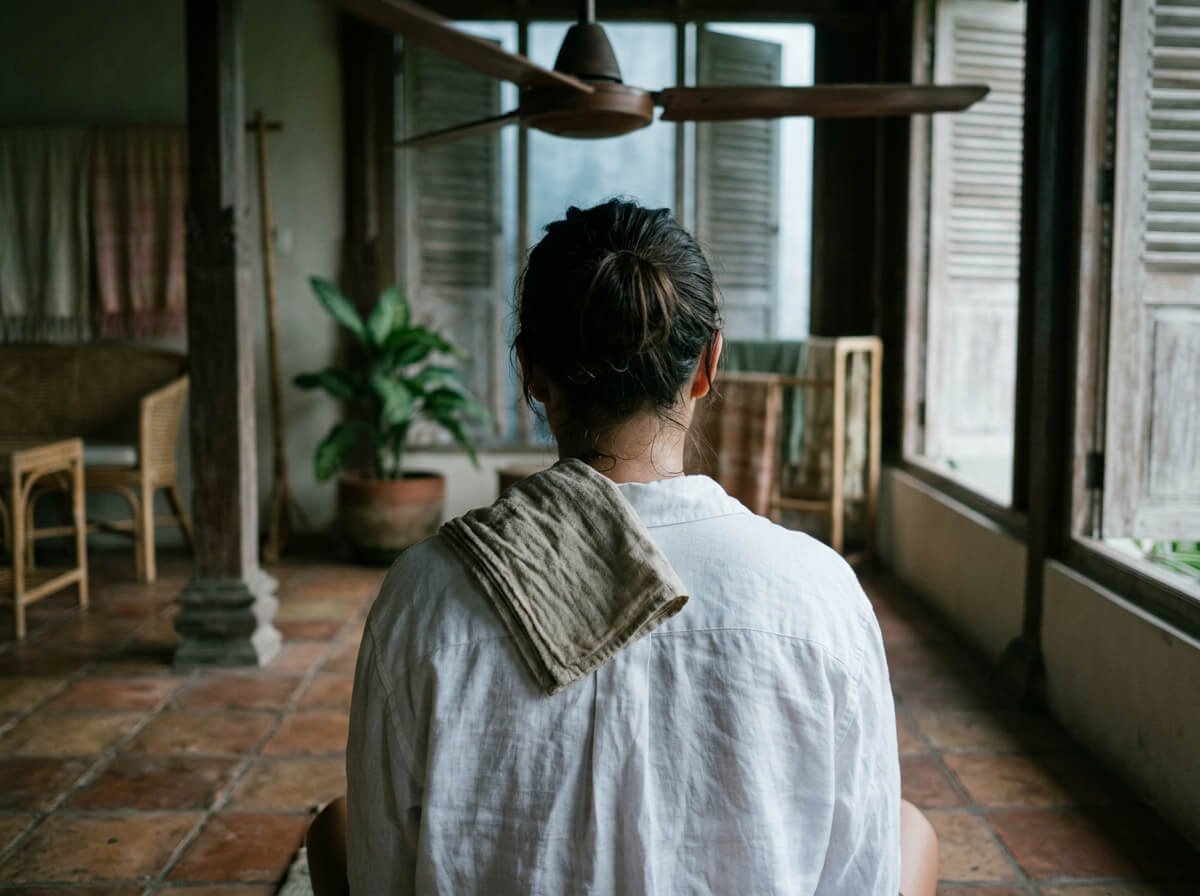
If we could keep only one heat rash home remedy, it would be this: cool the skin, dry it, and let it breathe. Everything else is secondary. The blocked ducts open again when sweating slows down, and sweating slows when the body cools.
Cool the body down
Move somewhere shaded, air-conditioned, or under a fan. In our homes in Bali that often means a tiled floor, open shutters, and a ceiling fan turning slowly overhead. A lukewarm to cool shower helps, as long as it is not icy, because very cold water can make the skin vessels clamp down and leave you feeling warm again soon after. Let the water run over the rash without scrubbing. Pat the skin dry with a soft cotton towel rather than rubbing it.
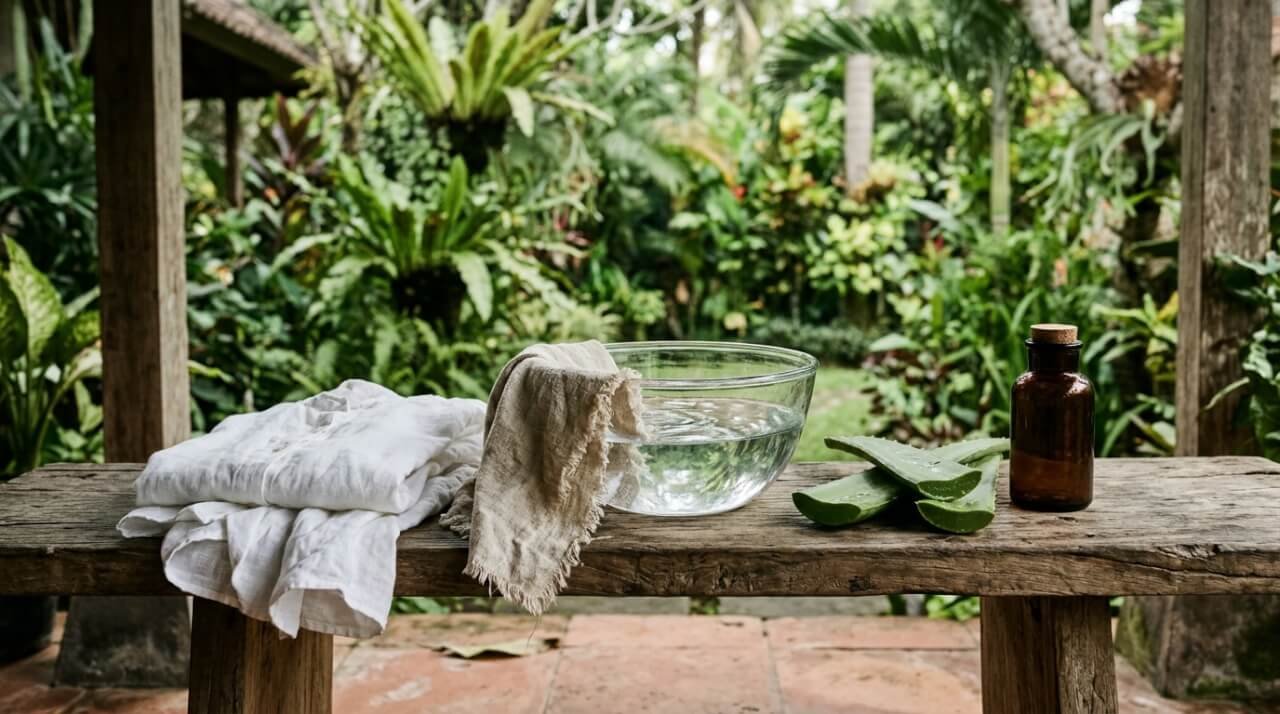
A cool compress is the next step. Soak a clean cotton or linen cloth in cool water, wring it out, and rest it on the area for 10 minutes or so. Rewet it as it warms. For the back of the neck and the chest, this is often the moment the prickling eases.
Remove the occlusion
Occlusion simply means anything that seals the skin and stops sweat evaporating. Tight synthetic shirts, sports bras, waistbands, backpack straps, plastic chair seats, and thick creams all count. Swap into the loosest cotton or linen you own. Let the affected area be open to the air where you can, even for 20 minutes. If the rash sits under the breasts, in the groin, or between skin folds, a strip of soft cotton tucked into the fold keeps the two surfaces from sealing together.
Slow everything down
Pause the run, the gardening, or the long walk until the rash settles. Drink water steadily so the body can regulate its temperature well. Sleep with a fan on and a single cotton sheet. For most people with mild prickly heat, these changes alone will bring visible improvement within a day and full relief within a few days.
Gentle botanical soothers that work with the skin
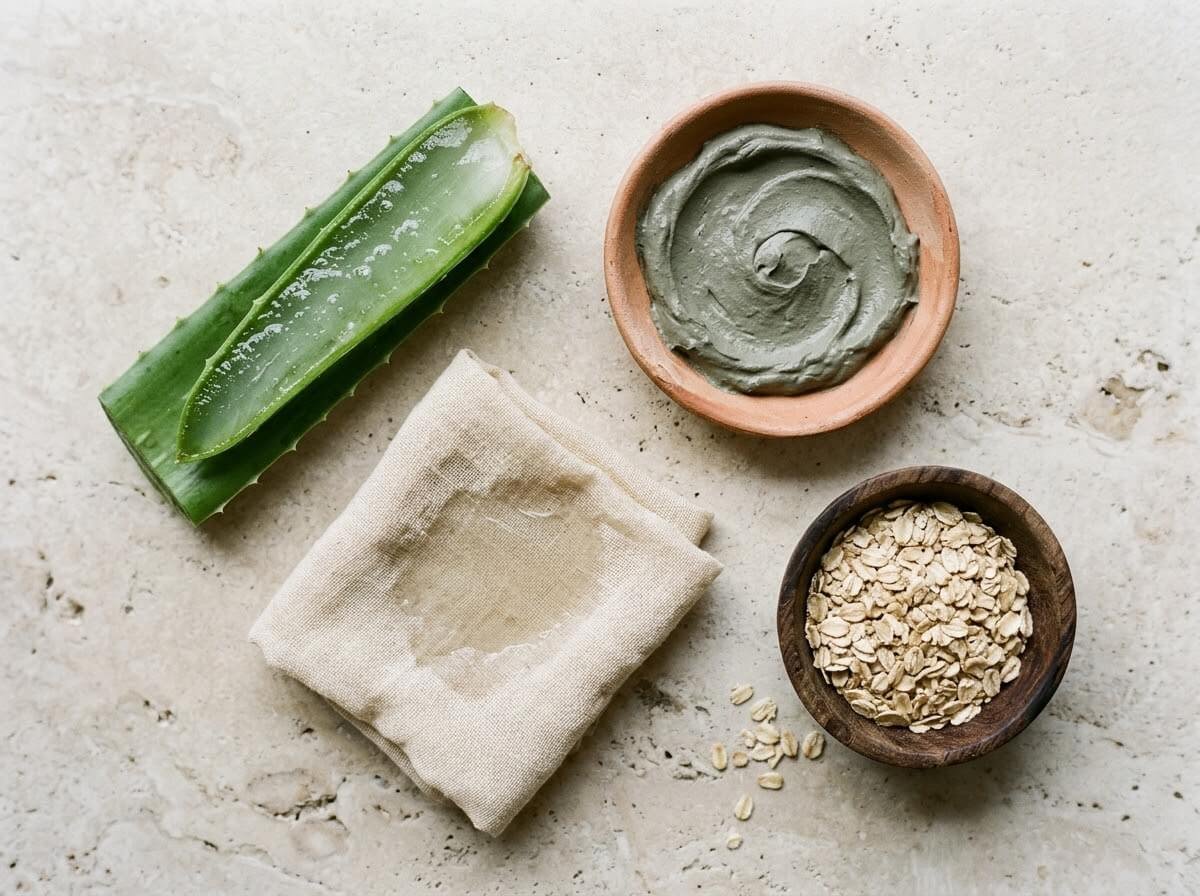
Once the skin is cool and open to the air, a gentle botanical heat rash home remedy can add comfort. A few soothing plants can ease the itch and calm the redness. The rule for all of them is the same: keep the layer light, keep it cool, and keep it brief. Heat rash does not need nourishment. It needs relief.
Aloe vera gel, light and cooling
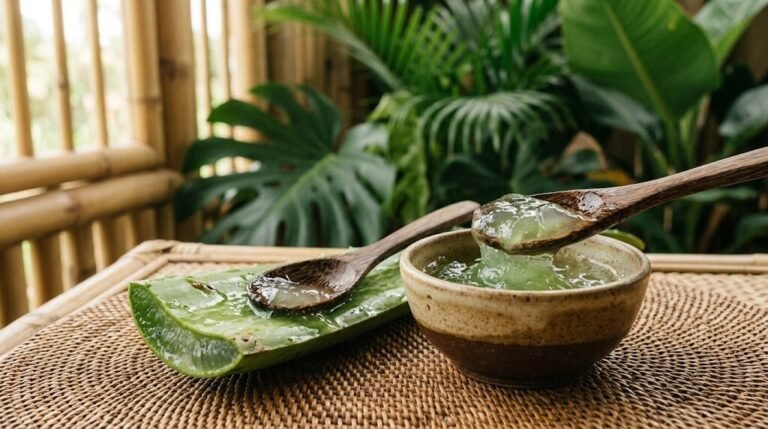
Aloe is the botanical we reach for first. Its gel is mostly water held in a light plant structure, so it cools the skin as it evaporates and leaves almost nothing behind to trap sweat. That is exactly the texture prickly heat asks for. We have written about aloe’s cooling effect on sun-heated skin in our guide to aloe vera for sunburn, and the same logic applies here, even though heat rash and sunburn are different problems. Keep the gel in the fridge for an extra cooling touch, and apply a thin layer that dries down within a minute.
If you prefer a ready gel to a fresh leaf, our Aloe Vera Gel is a light, water-based gel. It contains a little lavender essential oil and grain alcohol, so patch test it on a small area first, and choose fresh leaf gel or plain cool water for babies. For more ways to use it, our guide to aloe vera gel for skin goes deeper.
A witch hazel compress
Witch hazel is a traditional astringent, rich in tannins that tighten the skin’s surface and give a clean, cooling feel. For prickly heat, we use it as a compress rather than a leave-on layer. Pour a little onto a cool, damp cotton pad and press it gently over the bumps for a minute or two. Our Witch Hazel 100ml is a simple blend of witch hazel water and grain alcohol, which means it can sting on skin that has been scratched open, so keep it for intact skin. Our piece on why witch hazel is good for your face explains more about how it works.
Cool clay, briefly, on the body
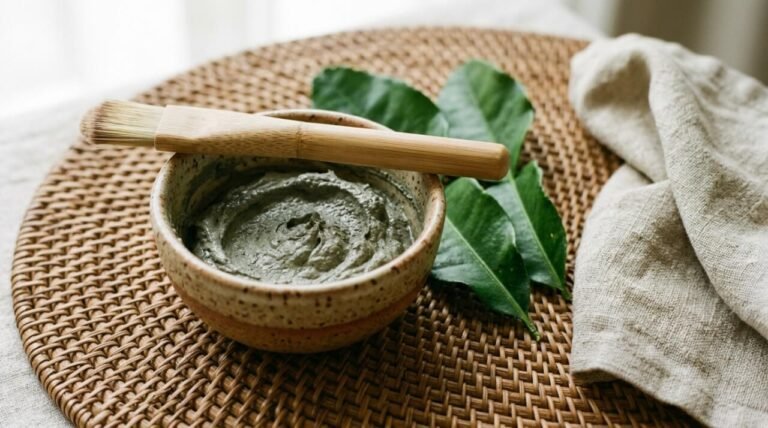
A thin layer of mineral clay mixed with cool water can feel deeply soothing on a hot back or chest. Our Face and Body Clay is a volcanic clay we use as a short cooling mask on the body. Mix it to a soft paste, spread it thinly, and rinse it off after five to 10 minutes, before it dries and tightens fully. Clay is absorbent, so leaving it on too long can make already irritated skin feel tight and dry. Skip this step on broken or weeping skin, and keep it away from babies.
An oatmeal bath
Colloidal oatmeal, oats ground so fine that they disperse in water, is recognised as a skin protectant that helps relieve itch. A cool or lukewarm bath with a cup of finely ground oats tied into a cotton cloth turns the water soft and milky. Soak for 10 to 15 minutes, rinse lightly, and pat dry. This is one of the gentlest options for children, too.
Why rich butters and oils can make prickly heat worse
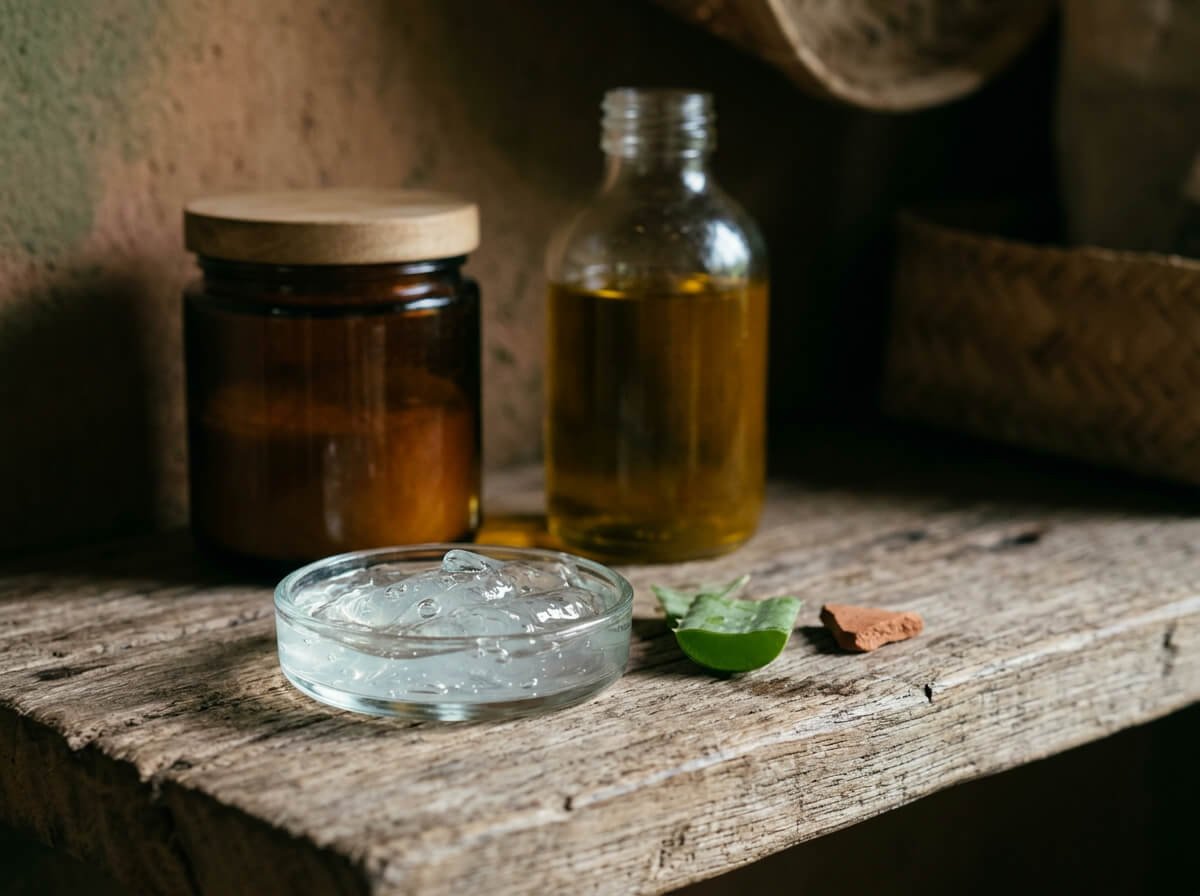
This is the part of the conversation few skincare guides will have with you, and it is an unusual thing for a body-care brand to say. When you have active heat rash, put your richest body butter away for a few days.
We love our butters. Illipe, cocoa, and coconut bring real comfort to dry skin, and they are at the heart of many of our rituals. But their strength is also the problem here. Thick butters, heavy oils, and petroleum-based ointments form a film that slows water loss from the skin. On dry winter skin, that is exactly what we want. On skin whose sweat ducts are already blocked, that same film keeps heat and sweat trapped against the surface, and it can deepen and spread the rash. Dermatology texts list occlusive ointments and tight dressings among the known triggers for miliaria for this reason.
What to use instead
While the rash is active, swap rich textures for water-light ones. Aloe gel, a cool compress, or simply clean, dry skin is enough. If your skin feels tight after showering, a very small amount of a light gel is plenty. Save butters and oils for skin that is not affected, or for the evening once the air has cooled and the rash has settled.
When to bring them back
Once the bumps have faded and the skin no longer prickles, which is usually within a few days, you can return to your usual body care. If the rash keeps returning in humid weeks, consider a seasonal rhythm: lighter gels and washes in the hottest, wettest months, and richer butters when the air dries out. Our guide to how to repair your skin barrier explains when richer textures earn their place. Seasonal care is not about buying more. It is about using what you have at the right time.
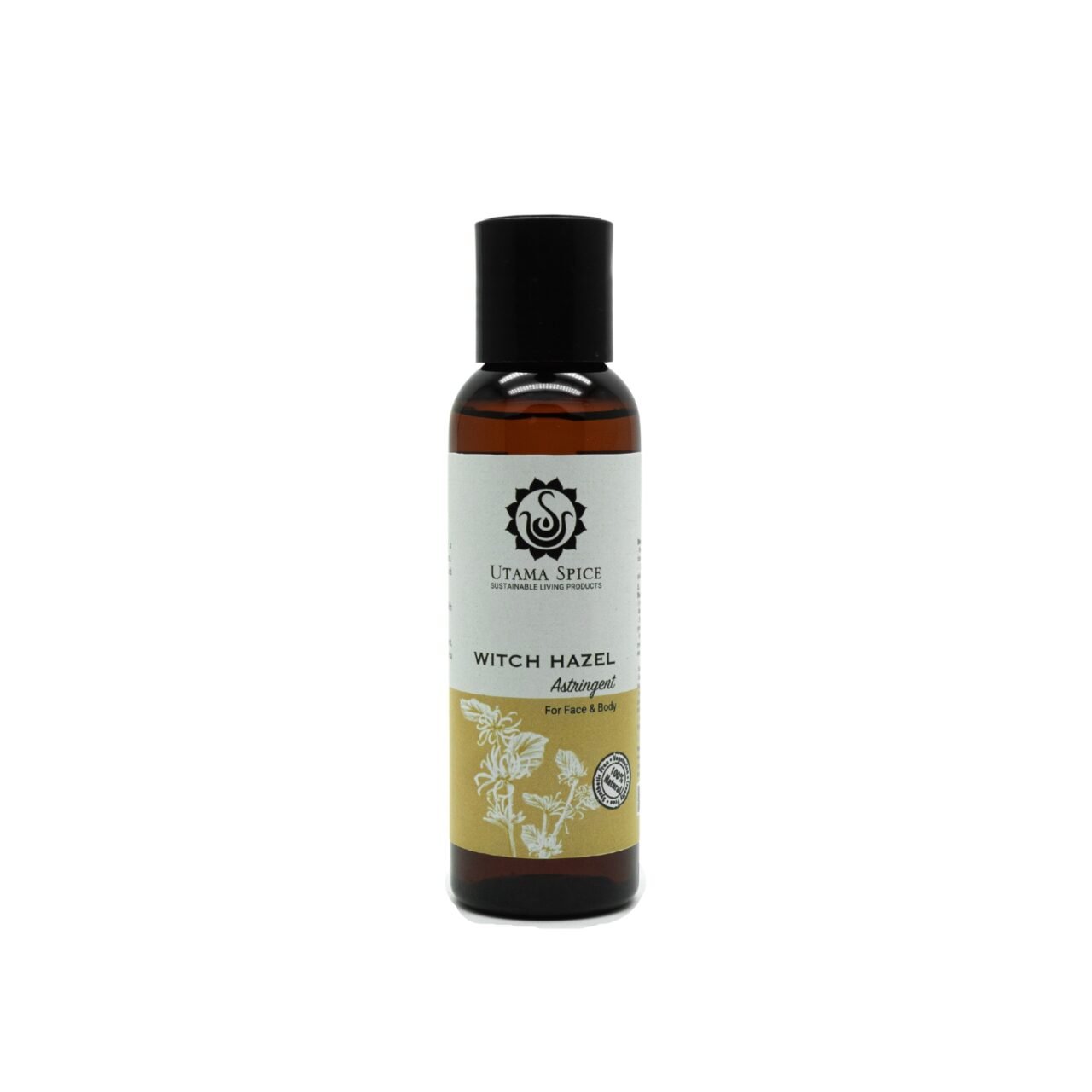
A cool compress for hot, prickly days
Our Witch Hazel 100ml is a simple, two-ingredient astringent of witch hazel water and grain alcohol. Press it onto a cool, damp cotton pad for a clean, calming compress on intact skin after the evening rinse.

Living in humidity: a tropical heat rash prevention ritual

Most heat rash advice is written for a sudden heatwave in a cool country. Living in humidity is different. In Bali, the rainy season brings warm, wet air that rarely lets sweat dry fully, and the risk of prickly heat stays with us for weeks rather than days. Over the years we have settled into a few habits that keep skin cool and calm. We shared some of them in our note on how humidity changes our skin, and here is the fuller ritual.
Rinse morning and evening
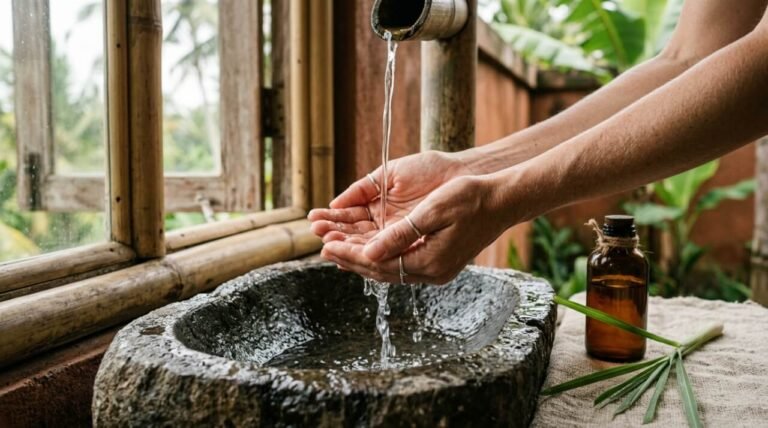
Traditional Balinese homes often have an open-air bathroom, a stone basin, and a simple dipper. The habit of mandi, pouring cool water over the body, is a practical answer to tropical heat. A short rinse in the morning and again in the evening clears sweat and salt from the skin before they can build up in the ducts. Use a gentle wash only where you need it, such as underarms, feet, and skin folds. Our Tea Tree Body Wash brings a cooling peppermint and tea tree freshness to the evening rinse, though people with very reactive skin may prefer an unscented wash. Our guide to natural body wash explains how to choose a gentle formula.
Dress for airflow
Loose cotton and linen let air move across the skin. A sarong is cooler than shorts. A loose shirt is cooler than a fitted one. At night, one cotton sheet is usually enough.
Air the folds and strap zones
The places where skin meets skin, or where a strap presses, are where heat rash appears first. After a scooter ride with a backpack, take the bag off, lift the shirt, and let the back breathe for a few minutes. Shift bra and bag straps through the day so they do not seal the same strip of skin for hours.
Give travellers an acclimatisation week
When we arrive in a hot, humid climate from a cooler one, the body needs roughly one to two weeks to adjust. During that time, it learns to sweat earlier and more efficiently. The first week is when heat rash is most likely. Plan lighter activity for the first few days, take the hottest hours slowly, and pack loose clothes. Our travel skincare routine includes more tips for arriving somewhere new.
Keep babies cool, not bundled
Babies need fewer layers in the tropics than most of us expect. A single cotton layer, a cool room, and time without a nappy can prevent many cases of prickly heat. If you use any products on a baby’s skin, keep them simple, and read our guide to essential oils safe for babies before reaching for anything scented.
Heat rash remedies to skip, or use carefully
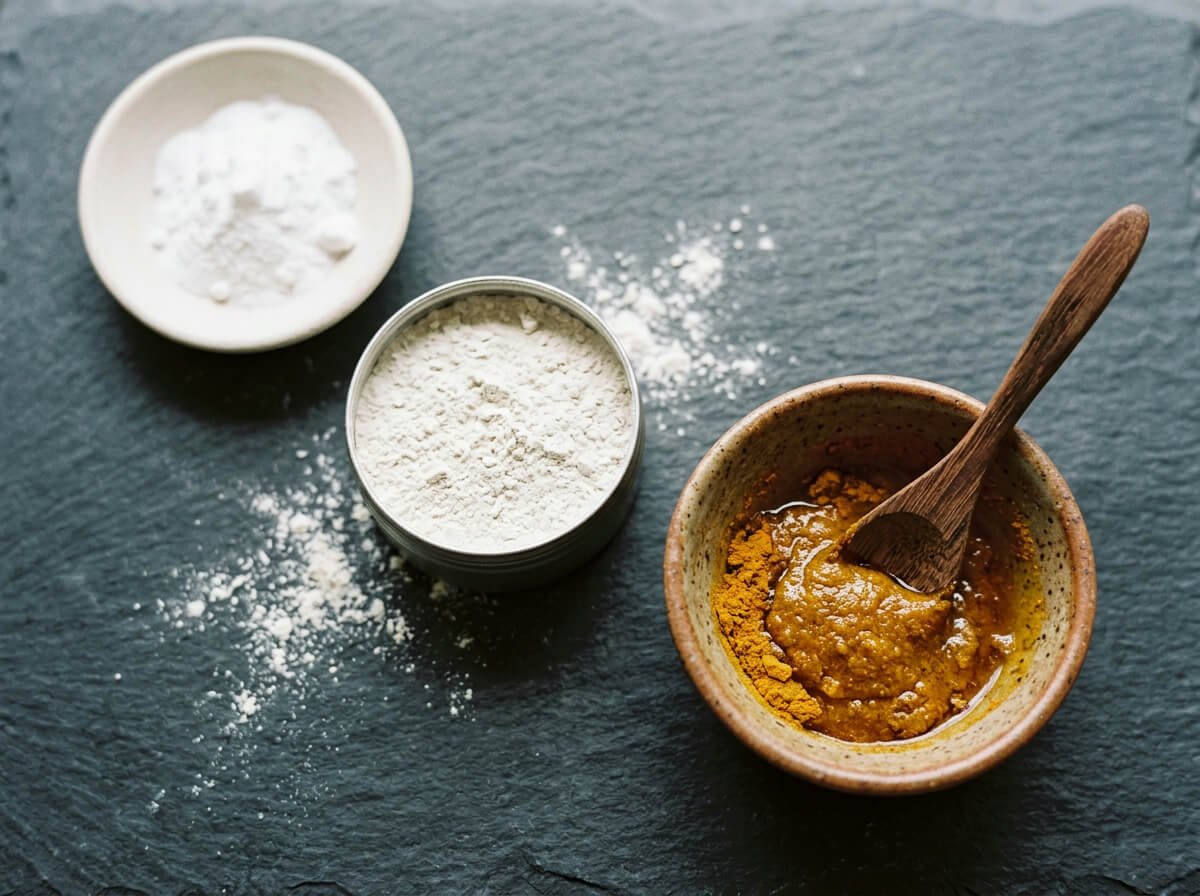
Search for heat rash home remedies and you will find long lists of kitchen-cupboard pastes. Some are gentle and fine. Others work against the skin. Here is our honest view of the most common ones.
Baking soda pastes
Baking soda is alkaline, while healthy skin is slightly acidic. A paste left on irritated skin can disturb that balance and leave it feeling tighter and drier. A small amount dissolved in a cool bath is a milder option, but we would choose an oatmeal bath first.
Heavy powders caked into folds
A light dusting of powder can absorb moisture, but heavy layers in sweaty folds tend to clump into a damp paste that holds moisture against the skin. Talc carries its own concerns: fine powder can be breathed in, which is a particular worry for babies, and the safety of cosmetic talc has been questioned because of contamination worries. If you use powder at all, choose a talc-free one, apply it lightly to dry skin, and never shake it near a baby’s face.
Sticky pastes on irritated skin
Honey and turmeric pastes are popular in many traditional remedies, including in our part of the world, and turmeric has a long, respected place in Indonesian jamu. But a thick, sticky paste spread over prickly heat behaves much like a heavy cream. It seals the skin and traps heat, and turmeric stains clothes and skin. We would keep these for other rituals, not for an active heat rash.
Heavily fragranced products and strong essential oils
Overheated, irritated skin is more reactive than usual. Perfumed lotions, strong essential oils applied neat, and cooling rubs with high levels of menthol or camphor can sting and inflame it further. If a product tingles hard on intact skin, it will likely feel worse on a rash. Our sensitive skin routine offers a calmer approach.
Scratching
It is the hardest one to skip. Scratching breaks the skin and can let bacteria in, turning a harmless rash into an infected one. Keep nails short, use a cool compress when the itch peaks, and reach for the cool cloth before the fingernails.
When it is not heat rash, and when to see a doctor
Many rashes look alike, and not every red, itchy patch in hot weather is prickly heat. Fungal infections in skin folds, folliculitis (inflamed hair follicles), insect bites, hives, and contact reactions to a new product can all appear in the same places. A rash that spreads beyond the sweaty areas, that has a clear ring-shaped edge, or that does not improve once the skin is cool may be something else.
See a doctor or pharmacist if
- The bumps fill with pus, or the skin becomes more painful, swollen, or warm to the touch.
- You develop a fever, chills, or swollen glands.
- The rash has not improved after three or four days of cooling and keeping dry.
- Large areas of skin stop sweating, or you feel dizzy, nauseous, or exhausted in the heat, which can be signs of heat exhaustion.
- You have firm, skin-coloured bumps that keep returning, which may point to miliaria profunda.
For babies and young children
Heat rash is common in babies and usually harmless, but young children cannot always tell us how they feel. Speak to a doctor if a baby has a rash and a fever, seems unusually sleepy or unsettled, is not feeding well, or if you are simply unsure. A pharmacist can also advise on calamine lotion or a mild cream for older children and adults when the itch is strong. These pharmacy options are worth knowing about, and there is no shame in using them alongside cooling care.
None of this is meant to alarm anyone. Most heat rash clears quickly with simple care. Knowing the signs simply helps us trust the gentle approach when it fits, and seek help when it does not.
Heat rash FAQ
Is heat rash contagious?
No. Heat rash is caused by blocked sweat ducts, not by bacteria or a virus, so it cannot pass from one person to another. If a rash in a family seems to be spreading from person to person, it is likely something else, and worth checking with a doctor.
How long does heat rash last?
Mild heat rash usually fades within a few days once the skin is kept cool and dry. Deeper or repeated rashes can take longer. If there is no improvement after three or four days, see a doctor or pharmacist.
Can adults get heat rash?
Yes. Heat rash is common in babies, but adults get it too, especially in humid climates, during hard exercise, in tight clothing, or in the first week after travelling somewhere hot.
Can I use coconut oil on heat rash?
Not while the rash is active. We love virgin coconut oil for dry skin and hair, but as an oil it forms a film over the skin, and that can trap more sweat in blocked ducts. Wait until the rash has cleared, then use it on dry areas if you like.
Does deodorant cause heat rash under the arms?
Deodorant does not cause heat rash, but heavy layers of any product in the underarm can add to the seal on already sweaty skin. Apply a thin layer to clean, dry skin. Our guide to natural deodorant for sensitive skin covers gentle options.
Is tea tree oil good for heat rash?
Tea tree has a respected role in skincare, as we explain in our guide to tea tree essential oil benefits. It is not a treatment for blocked sweat ducts, though, and applied neat it can irritate overheated skin. In a rinse-off body wash it is fine for most adults.
What is the fastest heat rash home remedy?
Cooling down. Move to a cool, shaded place, take a lukewarm shower, wear loose cotton, and let the skin air dry. For most people, those steps bring relief faster than any product.
Heat rash is the skin’s way of asking for a pause. When we cool down, loosen up, and let the skin breathe, it usually recovers on its own. The botanicals help with comfort, and the rich butters can wait for the cooler days ahead. What you give, you get back, and sometimes what the skin needs most is a little less.