Natural deodorant for sensitive skin: a barrier-first guide to switching without the flare
If you have ever switched to a natural deodorant and ended up with a rash, dark patches, or stinging underarms, the problem probably was not the swap itself. It was the order of operations. Most guides to natural deodorant for sensitive skin treat the switch as a product decision: try this brand, avoid that ingredient, repeat until something sticks. But underarm skin that reacts is usually telling you something more specific. It is a barrier that needs to heal before it can tolerate anything new, natural or not.
This guide treats the underarm as a skin barrier zone first and a product choice second. We will walk through why conventional and even some natural deodorants trigger reactions, how to read what your skin is telling you, a five-day reset protocol before you try anything active, which ingredients actually work for sensitive skin, and how a Balinese approach to gentle care can steady the whole process. Along the way, we will point to the specific botanicals and formats that make this transition easier, without asking you to choose between comfort and care for the planet.
Why sensitive underarms react to conventional deodorant
Underarm skin is thinner, warmer, and in almost constant friction with fabric and movement, which makes it more reactive than skin almost anywhere else on the body. Four ingredients cause most of the trouble.
- Aluminum compounds, used in antiperspirants to plug sweat ducts, can irritate skin directly and leave a residue that traps friction against the fabric of clothing.
- Synthetic fragrance, one of the most common triggers for contact dermatitis on thin, occluded skin.
- Alcohol, added to sprays and roll-ons for a quick-dry finish, which strips the skin’s protective lipid layer with every use.
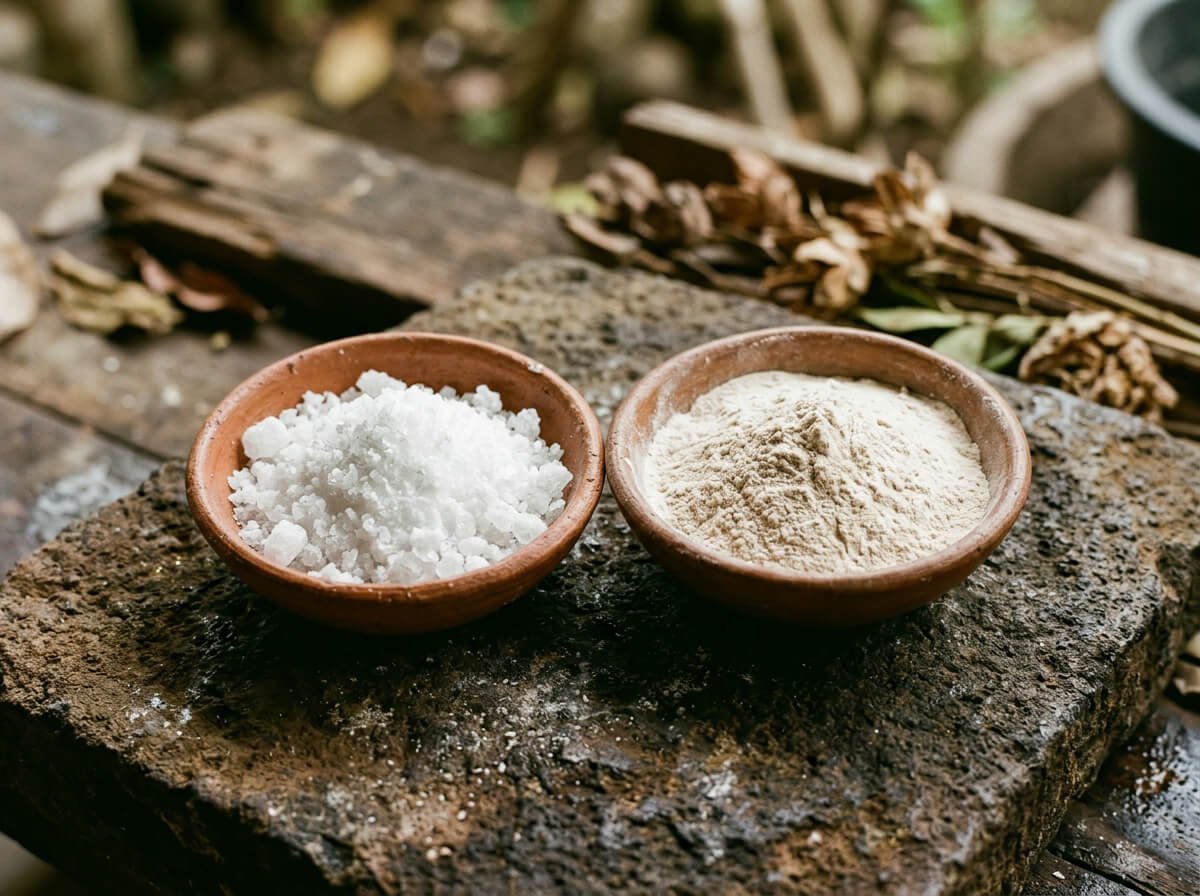
- Baking soda, the workhorse odor-neutralizer in many natural formulas. Its pH sits well above the skin’s natural range, and daily contact can disrupt the acid mantle that keeps the barrier intact.
Here is the part most advice skips: switching from an aluminum antiperspirant straight to a baking-soda-based natural deodorant does not give already-irritated skin a rest. It just changes which irritant it is dealing with. If your skin reacted to one, it may well react to the other, and the conclusion people draw (“I just can’t use natural deodorant”) is usually wrong. The real issue is skipping the reset in between.
Why the underarm reacts more than other skin
Three conditions combine to make this one patch of skin unusually vulnerable. First, occlusion: fabric sits against it for most of the day, trapping heat, moisture, and whatever product you applied that morning, which intensifies any irritant’s effect compared to skin left open to air. Second, friction: the constant motion of an arm against a torso creates low-grade mechanical stress that thins the outer skin layer over time, an effect dermatologists call frictional dermatitis. Third, warmth and moisture together create an ideal environment for the skin’s resident bacteria to multiply, which is part of what causes odor in the first place, but also means any irritation already present has more opportunity to become inflamed. None of this means the underarm is fragile. It means it needs products chosen with more care than, say, skin on your forearm.
Reading the signs: what your skin is telling you

Before choosing any product, take a week to notice what your underarms are actually doing. The signs cluster into a few categories, and each points to a different root cause.
- Immediate stinging or burning on application usually means the barrier is already compromised. Anything active, natural or synthetic, will sting broken skin.
- A rash that appears within hours points to a fragrance or alcohol reaction, a straightforward contact irritation.
- Darkening over weeks or months is often post-inflammatory pigmentation, the skin’s memory of repeated low-grade irritation, not a separate condition to treat.
- Itching without visible rash can mean the skin barrier is dry and under-lipidated, needing restoration rather than another active ingredient.
If you recognize more than one of these, do not layer a new deodorant on top and hope for the best. Give the skin a genuine reset first. That is the barrier-first approach the rest of this guide walks through.
One distinction worth making before you self-diagnose: small, tender bumps clustered around hair follicles, especially after shaving, usually point to folliculitis rather than product irritation. That responds to gentler shaving practice and time, not a deodorant change. If what you are seeing is a diffuse rash or dry, flaking patches rather than individual bumps, product irritation is the more likely cause, and the reset protocol below is the right next step. When in doubt, a patch test on the inner wrist, a less occluded area, can help you tell whether a specific product is the trigger before you commit to using it under your arm daily.
A five-day barrier-first reset before you switch to natural deodorant for sensitive skin

Before you apply any deodorant, active or otherwise, give the skin five days of quiet. This is not a detox in the trendy sense; it is simply removing every irritant so the barrier can rebuild.
- Stop all deodorant, antiperspirant, and depilatory products for the full five days. Wash with water and a gentle, fragrance-free cleanser only.
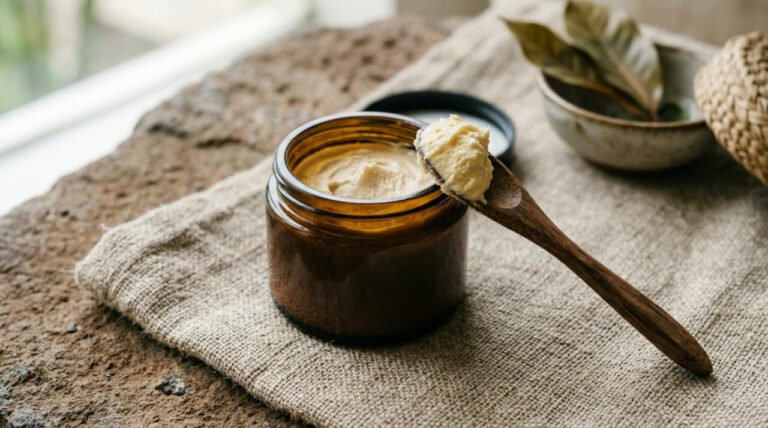
- Layer a thin coat of virgin coconut oil after washing, morning and night. Coconut oil is rich in lauric acid, which supports the skin’s own antimicrobial function without disrupting the barrier the way active odor-control ingredients can.
- Wear looser, breathable fabric where possible, since friction against irritated skin slows healing.
- Watch for the rash or darkening to visibly calm by day three or four. If it has not, extend the reset a few more days before introducing anything active.
- Patch test the new deodorant on day five, a small amount on one underarm only, and wait 24 hours before applying to both sides.
Five days feels slow next to the promise of an overnight fix, but it is the difference between a switch that sticks and a cycle of trying, reacting, and giving up. Real care rewards patience over speed.
Why five days specifically, and not two or seven? The outer skin barrier renews on roughly a two-to-four-week cycle overall, but the acute inflammatory response, the redness, stinging, and heat that follow a contact irritation, typically settles within three to five days once the trigger is removed. Five days gives most reactive skin enough runway to visibly calm without asking you to go two or three weeks without any deodorant at all, which is rarely practical. If your skin is still inflamed on day five, extending the reset is a better choice than pushing forward on schedule.
Two hidden irritants worth ruling out during the reset: laundry detergent residue on shirts, particularly scented or “ultra” formulas, and razor irritation from dry shaving. Switching to a fragrance-free detergent for the reset week and shaving the night before rather than the morning of, when skin is calmer and less prone to friction through the day, can make the difference between a clean reset and one still complicated by an unrelated irritant.
Choosing the right natural deodorant for sensitive skin: ingredients that work

Once the reset is complete, ingredient choice matters. Not all natural deodorants are formulated the same way, and for sensitive skin, a handful of substitutions make a real difference.
- Magnesium hydroxide instead of baking soda. It neutralizes odor-causing bacteria through a gentler, closer-to-skin-neutral pH, without the alkaline disruption baking soda causes over time.
- Arrowroot or tapioca starch for moisture absorption, a soft, non-abrasive alternative to cornstarch for anyone with a grain sensitivity.
- Kaolin clay, a mild, mineral-based absorbent that draws moisture without the friction of coarser powders.
- Shea butter and coconut oil as the carrier base, restoring lipids as they moisturize rather than stripping them.
- Probiotic or prebiotic actives, a newer approach that works with the skin’s own microbiome to manage odor-causing bacteria, rather than eliminating bacteria wholesale the way antiperspirants do.
- Calming botanicals such as sage, cedar, and calendula, which bring a grounded scent profile while soothing rather than provoking already-reactive skin.
Our own Probiotic Deodorant in Sage and Cedar was formulated around this exact logic: a probiotic base that supports rather than fights the skin’s microbiome, no aluminum, no baking soda, in a roll-on glass bottle. For a brighter, floral profile with the same barrier-conscious formula, the Nayla blend follows the same approach with a different scent story. Neither promises to eliminate sweat. Both are built to work with sensitive skin rather than against it, which is the whole point of a barrier-first switch.
Ingredients to keep avoiding, even in “natural” formulas
Not everything labeled natural is gentle. A few formulas worth reading twice before buying:
- High-concentration essential oil blends used for scent instead of a carrier-diluted approach, which can sensitize skin over repeated daily contact even when the individual oils are otherwise well tolerated elsewhere on the body.
- Alcohol-based natural sprays, which trade the drying effect of alcohol for a “natural” label without actually solving the barrier problem.
- Citrus oils applied without sun protection in mind, since several are phototoxic and underarms occasionally see sun exposure in sleeveless clothing.
The pattern to watch for is the same one from the start of this guide: an ingredient list can be entirely plant-derived and still not be formulated with sensitive skin in mind. Read for function, not just origin.

A deodorant formulated for the switch
Probiotic-based, aluminum-free, and paraben-free, our Sage and Cedar roll-on works with sensitive skin instead of against it. Grounded, woody, and gentle enough for daily wear once your barrier-first reset is complete.

The Balinese lulur lens: gentle exfoliation as underarm care

In Bali, lulur, a traditional turmeric and rice powder scrub once reserved for royal brides, is not about aggressive resurfacing. It is a slow, rhythmic ritual of gentle friction followed by nourishing oil, designed to soften and brighten skin over time rather than force results in a single session. Applied to underarm care, the same logic holds. A light, infrequent exfoliation, no more than once a week, on skin that is otherwise calm, can clear away buildup that traps bacteria and contributes to odor, without the aggressive scrubbing that reactive skin cannot tolerate.
The rule from the lulur tradition worth carrying into any sensitive-skin routine: exfoliate gently and rarely, then follow immediately with oil to seal moisture back in. Skip this step on skin that is actively rashy or broken. Ritual care is not a substitute for healing, it is what comes after.
This slow-formulation philosophy is not incidental to how we work. Many of the botanicals behind our body-care line, including the turmeric and rice powder base of a traditional lulur scrub, are hand-blended in small batches in Bali, often by the women of the Munti Gunung community whose partnership with Utama Spice has run for years. The pace of that work, small batches, careful sourcing, ingredients grown and harvested rather than synthesized, mirrors the pace this guide is asking of your skin. Healing and craft share the same rhythm: slow, attentive, and rooted in place.
The transition fortnight: what to expect in week one and week two

Give the switch two full weeks before judging whether it is working. Most people abandon a natural deodorant somewhere in the first ten days, right when the body is still recalibrating.
Week one
Expect the underarm microbiome to shift as it adjusts from an antiperspirant environment (dry, low-bacteria) to a normal-sweat environment. Odor may briefly seem stronger before it settles, a temporary “armpit detox” some people notice, not a sign the product is failing. Apply once daily to clean, dry skin, and resist the urge to reapply frequently, which can overload sensitive skin with actives.
Week two
By now odor control should feel more predictable, and any initial irritation from the reintroduction of product should be settling. If stinging or a rash reappears at this stage, pause and return to the barrier-first reset for two or three days rather than pushing through. When to push through and when to pause is a judgment call: mild dryness or a slight adjustment odor is normal, but visible redness or broken skin is your signal to stop.
When to see a dermatologist instead
Most sensitivity resolves with the protocol above, but a few signs warrant professional care rather than another round of the reset: a rash that spreads beyond the underarm itself, blistering, signs of infection such as warmth, swelling, or discharge, or irritation that has not improved after two complete cycles of the five-day reset. Sensitive skin deserves patience, not a refusal to ask for help when a pattern is not resolving on its own.
Choosing a deodorant you can refill, not just replace

A barrier-first switch is worth protecting once it works, and that means thinking past the first bottle. Glass roll-on deodorants can be refilled rather than replaced entirely, which matters for two reasons: fewer plastic components touching sensitive skin over time, and less packaging waste from a product you will use daily for years. This is the same logic behind our refillable body care range more broadly: care for your skin and care for what happens after the bottle is empty are not separate decisions.
If you are just starting to build ingredient literacy for sensitive skin more broadly, our guide to what clean beauty actually means is a useful next stop, as is our breakdown of natural deodorant ingredients to avoid if you want the fuller list of formulas to skip.
Refill culture is not an abstract sustainability talking point for us, it is arithmetic. Every roll-on bottle kept in rotation instead of thrown away after one use is one less piece of glass and plastic manufactured, shipped, and discarded. For a product you are applying to sensitive, healing skin daily for months or years, choosing a format built to be refilled rather than replaced is one of the simplest ways to make the switch you have just made last. Real care means rethinking the whole system: not just what touches your skin, but what happens to the bottle once it is empty.
Frequently asked questions
How long does it take for sensitive skin to adjust to natural deodorant?
Most people need the full two-week transition fortnight described above, though a genuinely reactive barrier may need the five-day reset first. Rushing this timeline is the most common reason a switch does not work.
Is baking soda always bad for sensitive underarms?
Not always, but its pH sits well above what skin naturally tolerates, so it is one of the first ingredients to remove if you are reacting. Magnesium hydroxide and probiotic formulas are gentler starting points.
Can I use coconut oil as a deodorant on its own?
Coconut oil supports the skin barrier and has mild antimicrobial properties, which is why it works so well for the reset protocol, but it offers limited odor control on its own for most people through a full day. Think of it as the healing step, not the daily-wear solution.
Should men and women approach this differently?
The barrier-first approach applies equally, though scent preference and sweat volume vary. Our guides to natural deodorant for men and natural deodorant for women go deeper on those specific formulation differences.
Can hormonal changes make underarm skin more sensitive?
Yes. Pregnancy, menstrual cycle shifts, and menopause can all change skin barrier function and sweat composition, which sometimes means a deodorant that worked well for years suddenly stops agreeing with your skin. If sensitivity appears out of nowhere with no product change, the barrier-first reset described above is still the right starting point before assuming the formula itself is at fault.
Do I need to apply natural deodorant more than once a day?
Most people do better with one application to clean, dry skin in the morning. Reapplying midday, especially with a formula containing magnesium hydroxide or essential oils, increases total exposure and can tip already-reactive skin back toward irritation. If odor control genuinely does not last through the day once your skin has fully adjusted, a stronger formula or a scent-layering approach is a better fix than reapplying the same product repeatedly.
Final thoughts: healing before switching
The most common reason a switch to natural deodorant fails for sensitive skin is not the product, it is the order of operations. Skin that has been irritated by one formula needs a genuine reset before it can fairly judge another. Give it five quiet days, choose ingredients built to support rather than strip the barrier, hold the line through the first uncertain week, and let a Balinese sense of gentle, unhurried ritual guide how you treat your skin along the way. Progress here looks like skin that no longer reacts, not skin that has been forced into an unrealistic ideal overnight. That is a standard worth keeping.