Essential oil roller: how to use one safely, and how to read the label
An essential oil roller looks simple: a small glass bottle with a metal ball at the neck, small enough to live in a pocket or a bag. What is inside matters more than the bottle. A genuine essential oil roller is a pre-diluted blend, essential oil suspended in a carrier oil at a safe topical percentage, built so you can roll it onto skin without the guesswork that neat essential oils demand. That single design choice, dilution done for you, is what makes a roller the gentlest entry point into topical aromatherapy, and also the easiest place to get quietly misled by a label that hides more than it says.
This guide walks through what a roller actually is, why the format exists, how to read a label honestly, where and how to apply one, the one caution that matters most in a tropical climate, and how a roller compares to a diffuser, a neat oil, or a blend. We will keep the science plain and the claims modest, because a roller is a ritual tool for mood and comfort, not a medicine.
What an essential oil roller actually is
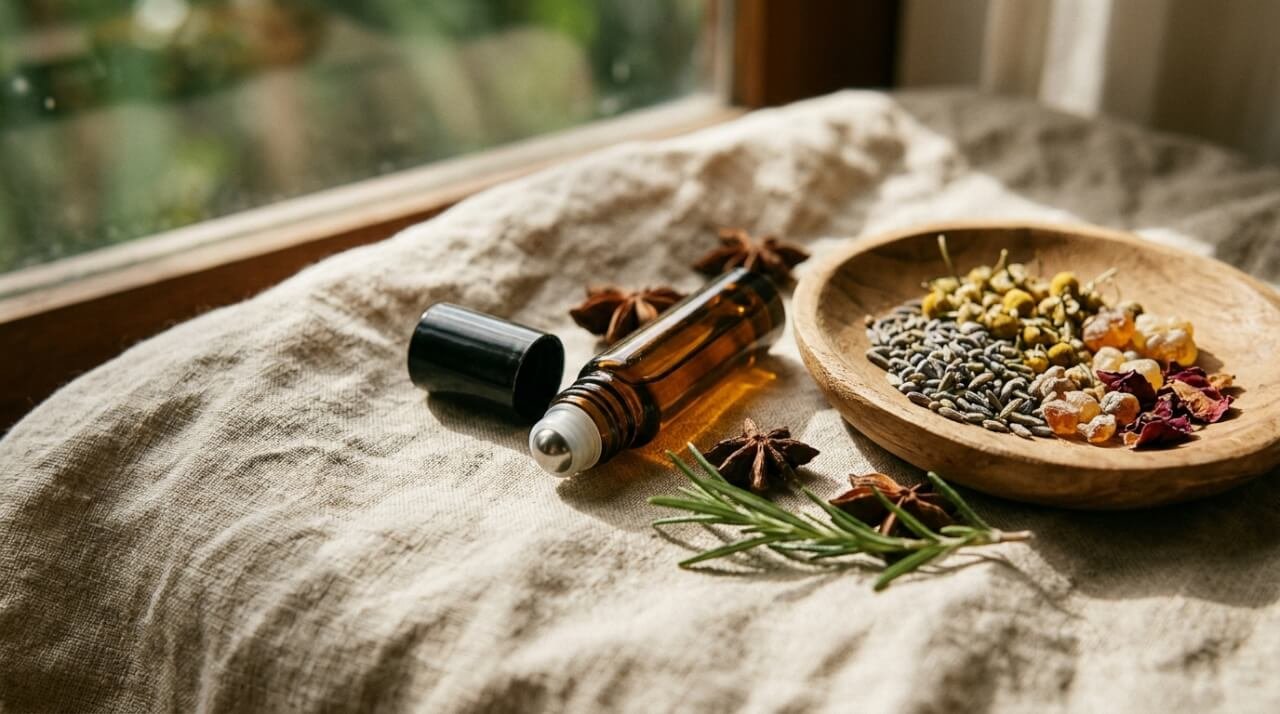
Strip away the packaging and an essential oil roller is two ingredients working together: a carrier oil (often coconut, jojoba, or sweet almond) and a small percentage of essential oil, usually between one and five percent depending on the blend and the intended use. The roller ball at the neck controls how much comes out with each pass, so a few strokes on the wrist or temple deliver a measured, repeatable dose rather than a flood.
This is different from a bottle of pure essential oil, which is concentrated and never meant to touch skin without dilution first, and different again from a fragrance oil, which may contain no plant material at all. If you want the fuller picture of that distinction, our guide to essential oil vs fragrance oil breaks down what the label hides and why it matters against skin.
Rollers exist because most people do not want to measure drops and carrier oil into a bowl every morning. The format does that math once, in the bottle, so the ritual itself can stay simple: uncap, roll, breathe. It is a small piece of engineering built around a real safety rule, not a marketing gimmick.
The idea of carrying a scented remedy close to the body is not new to us. Balinese healers have long paired botanical oils with touch, a warmed blend worked into the wrist or temple as part of a broader practice of care, not a stand-alone product. A roller is a modern, portable version of that same instinct: a small vessel for plant wisdom, sized for a pocket rather than a healer’s kitchen. Understanding it this way, as ritual with roots rather than a trend, changes how you choose and use one.
Why a roller is the safest way to wear essential oils on skin
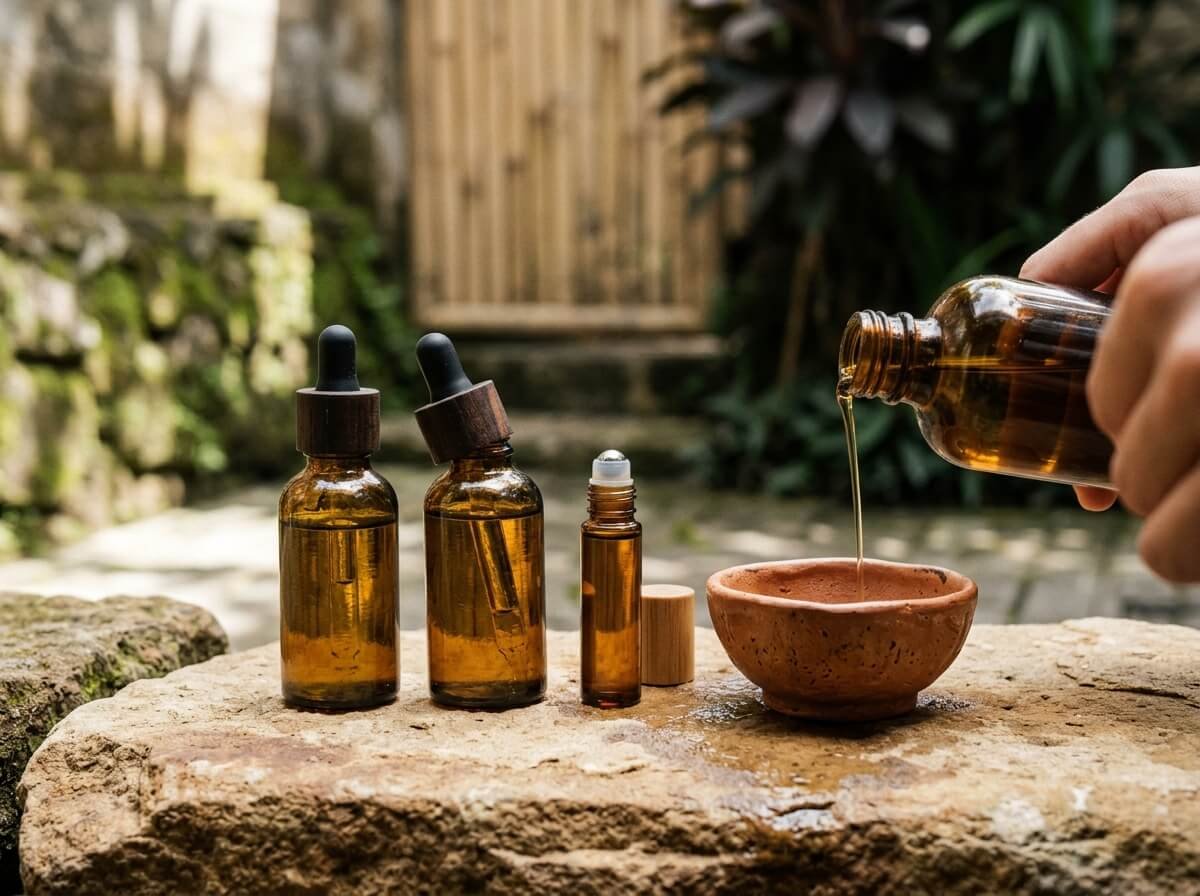
Aromatherapy has one rule that sits above the others: never apply a neat, undiluted essential oil directly to skin. Concentrated oils are potent enough to irritate, sensitize, or in some cases burn, especially on the thin skin of wrists, neck, and temples where a roller is usually applied. A pre-diluted roller solves this by design, the dilution work is already finished before the bottle reaches your hands.
That is also why a roller is a more forgiving starting point than buying a bottle of pure oil and diluting it yourself, particularly if you are new to essential oils and their benefits and have not yet built the habit of checking dilution percentages. A well-made roller removes the step where mistakes happen.
None of this makes a roller risk-free for everyone. Pregnant people, young children, and anyone with a history of skin sensitivity should patch test on the inner forearm and wait twenty-four hours before regular use, and should check with a healthcare provider about specific oils. A roller lowers the risk. It does not remove the need for basic care.
There is a second, quieter safety benefit to the pre-diluted format: consistency. When you mix your own dilution at home, small errors in measuring drops or carrier volume can shift the concentration more than you would expect, since essential oils are potent enough that a few extra drops meaningfully change the percentage. A roller made in small batches under consistent conditions removes that variability, so the blend on your wrist today is close to the blend on your wrist last month. For anyone still building confidence with topical use, that predictability is worth as much as the dilution itself.
How to read a roller label: carrier oil, dilution, and the fragrance red flag
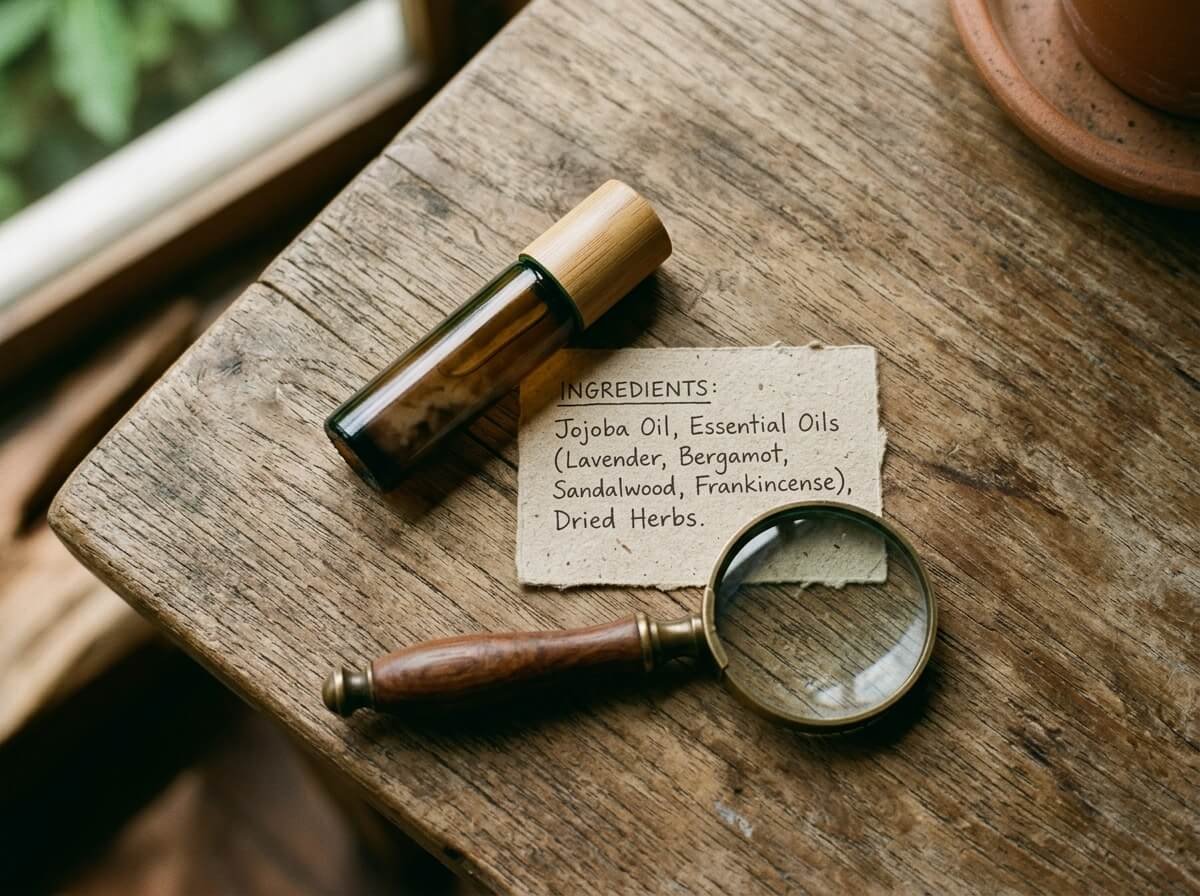
A trustworthy roller label tells you three things without you having to ask: which carrier oil is used, roughly what dilution the blend sits at, and which essential oils are actually inside, by name, not by mood description alone. If a label lists “calming blend” with no ingredient names underneath, that is a gap worth noticing.
Dilution percentage is the number most labels skip entirely, yet it tells you almost everything about how the blend was made. A general adult roller typically sits between two and five percent essential oil to carrier, a range considered safe for regular pulse-point use by most aromatherapy safety references. A blend meant for more delicate use, close to the eyes, on very sensitive skin, or in a children’s formulation, should sit closer to one percent or below. If a label gives you no number at all, you are trusting the maker’s judgment blind, which is a reasonable thing to do with a brand you already know and less reasonable with one you have never heard of.
The single word to watch for is “fragrance” or “parfum” on an ingredient list. On a genuine essential oil roller, every scent note should trace back to a named plant oil. When “fragrance” appears instead, it can mean synthetic aroma compounds standing in for the real botanical, often at a fraction of the cost and with none of the plant chemistry that gives essential oils their character. This is one of the clearest examples of the label gaps we cover in essential oil vs fragrance oil, and it applies just as much to a two-inch roller bottle as it does to a full-size perfume.
Carrier oil quality matters too. Cold-pressed, unrefined carriers like coconut or jojoba carry their own nourishing properties to skin, while a cheap, heavily processed filler oil contributes little beyond dilution. Our Pure Energy Essential Oil Roller is built on this principle: named essential oils, a considered carrier, and nothing hidden behind a marketing word.
Batch consistency is another honest signal worth checking for. Because essential oils are agricultural, harvested from a living plant rather than manufactured to a fixed formula, a transparent maker will note that scent can vary slightly by season or region. A brand that promises an identical scent on every single bottle, forever, is often leaning on synthetic stabilizers rather than the plant itself. A small amount of natural variation is a sign of authenticity, not a flaw to correct.
Where and how to apply a roller, and what to honestly expect
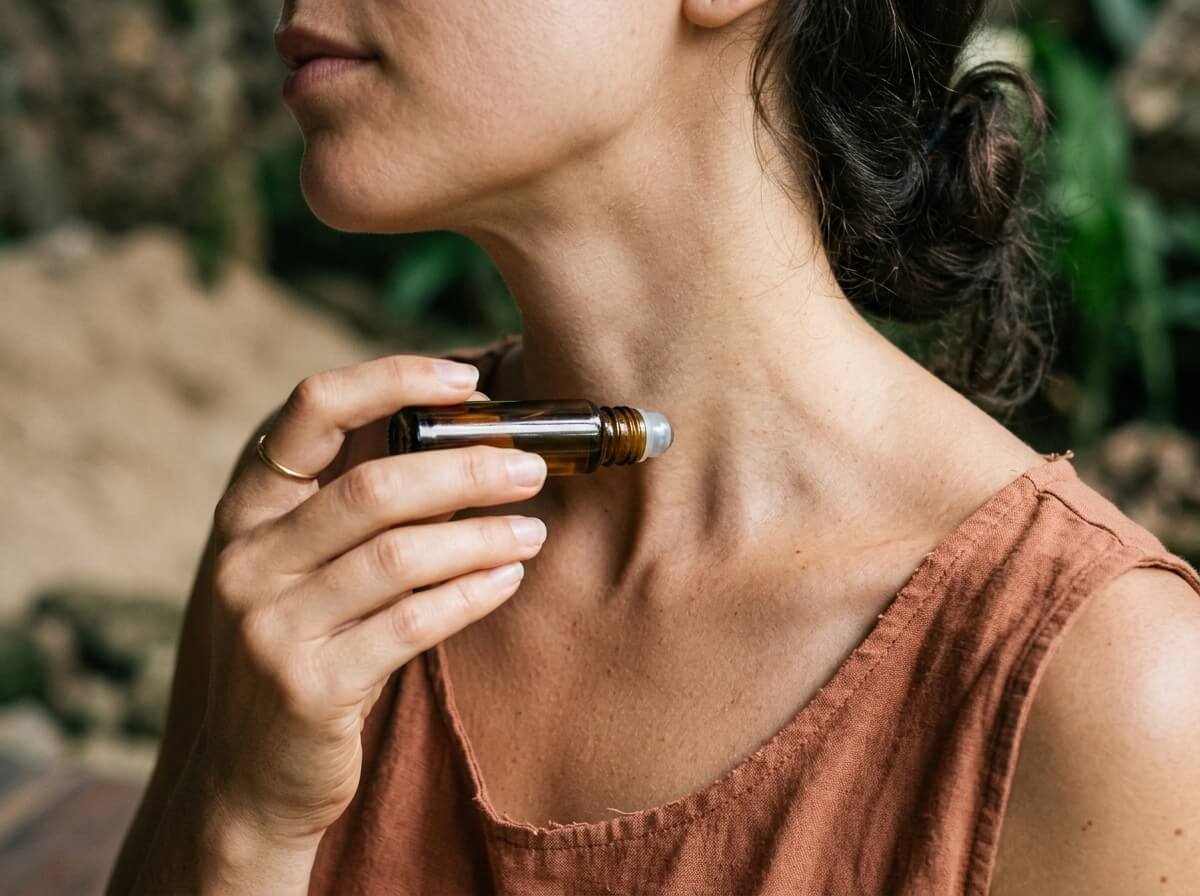
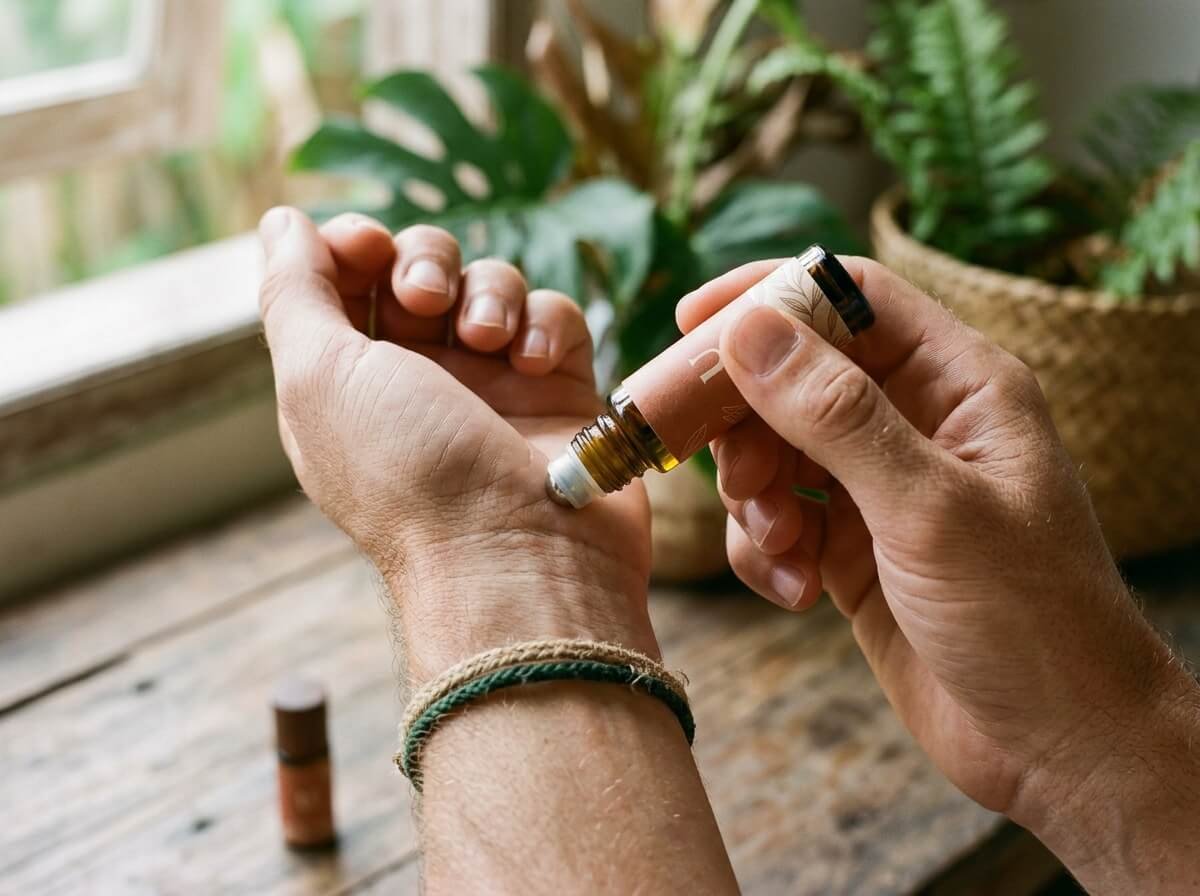
Pulse points work best because they carry warmth close to the skin’s surface, which helps the scent lift gently through the day. Wrists, the sides of the neck, behind the ears, and temples are the classic spots. Roll once or twice per point, then let the oil settle rather than rubbing it in hard, which can drive it past the surface layers you actually want it to sit on.
- Wrists: easiest to reapply through the day, easy to bring close to the nose for a quiet reset
- Temples and the base of the skull: useful before focused work or before winding down at night
- Behind the ears: subtle, long-wearing, good for a blend you want to notice without announcing
- Chest, just above the collarbone: warmth here carries scent upward with breathing
Set honest expectations from the start. A roller supports a mood, a moment of calm, a signal to your own nervous system that it is time to shift gears. It is not a treatment for anxiety, insomnia, or any diagnosed condition, and it should never replace care from a qualified practitioner. Framed this way, as ritual rather than remedy, a roller earns its place without overpromising.
Timing the application to the moment you actually need it matters as much as the spot you choose. A grounding blend rolled on before a difficult conversation, a bright citrus-free blend used mid-afternoon when focus fades, a calming blend on the inner wrist ten minutes before bed, each of these pairs a specific oil with a specific need rather than treating the roller as one generic mood-lifter for every hour of the day. That specificity is what turns a nice-smelling habit into a genuine ritual.
The tropical-sun caution: phototoxic citrus oils on skin you take outside
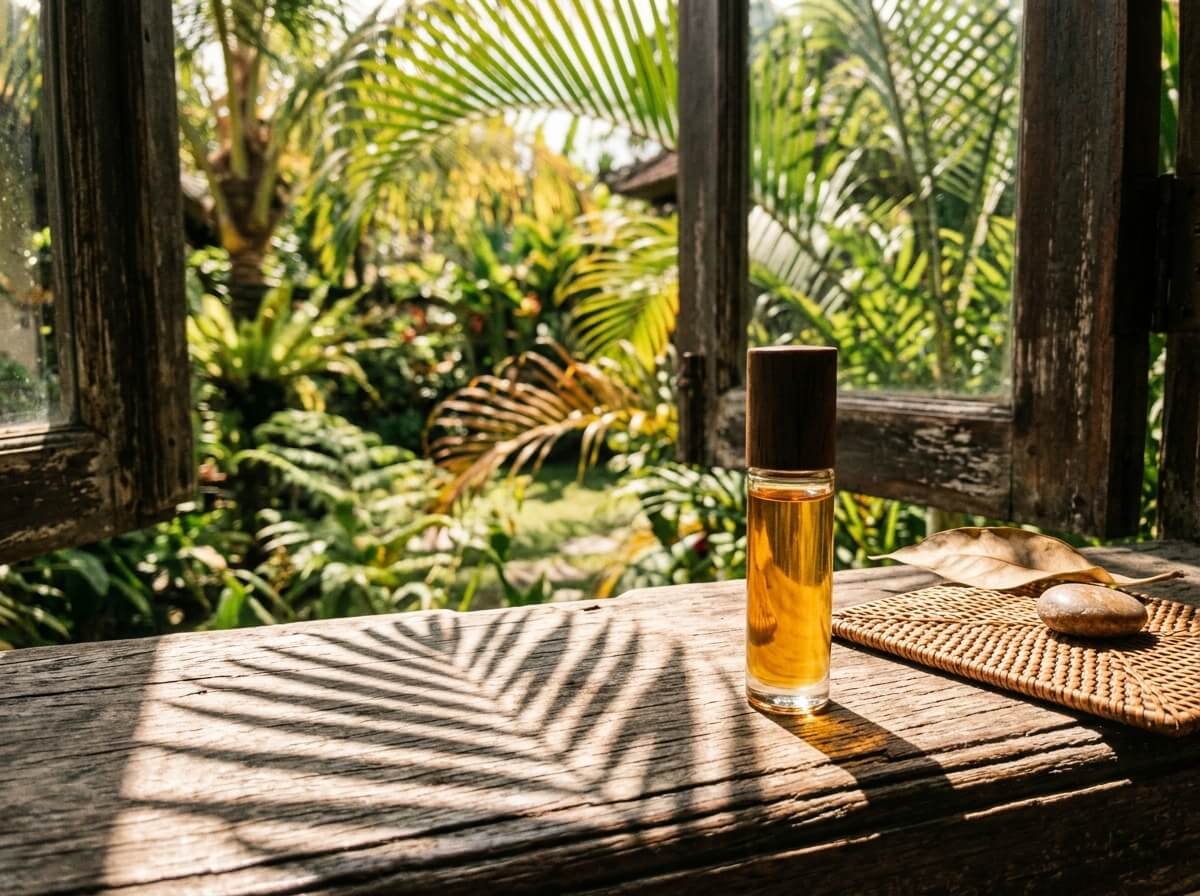
This is the one caution that deserves more attention than most roller guides give it, especially for anyone living in or visiting a sun-heavy climate like Bali’s. Certain citrus oils, bergamot, lime, and cold-pressed lemon among them, are phototoxic: they react with UV light and can cause burning, dark patches, or lasting pigmentation on skin that goes into direct sun after application.

A citrus roller worn on the wrist before a beach walk is exactly the scenario where this shows up. The fix is straightforward once you know it: apply citrus-forward rollers to skin that will stay covered or indoors, or move the application to the evening, well before any daytime sun exposure. Reputable makers steam-distill or otherwise treat phototoxic citrus oils to reduce this risk, and a transparent label will say so. When in doubt, ask, or choose a roller built around non-phototoxic oils instead.
Our Santi Essential Oil Roller and Blue Tansy Essential Oil Roller both lean on grounding, non-phototoxic profiles, which makes them easier daytime companions in a climate where the sun is rarely off duty. If you want the deeper botanical read on that particular calming oil, our piece on blue tansy benefits for skin is worth a look.
Roller vs diffuser vs neat oil vs blend: choosing the right format
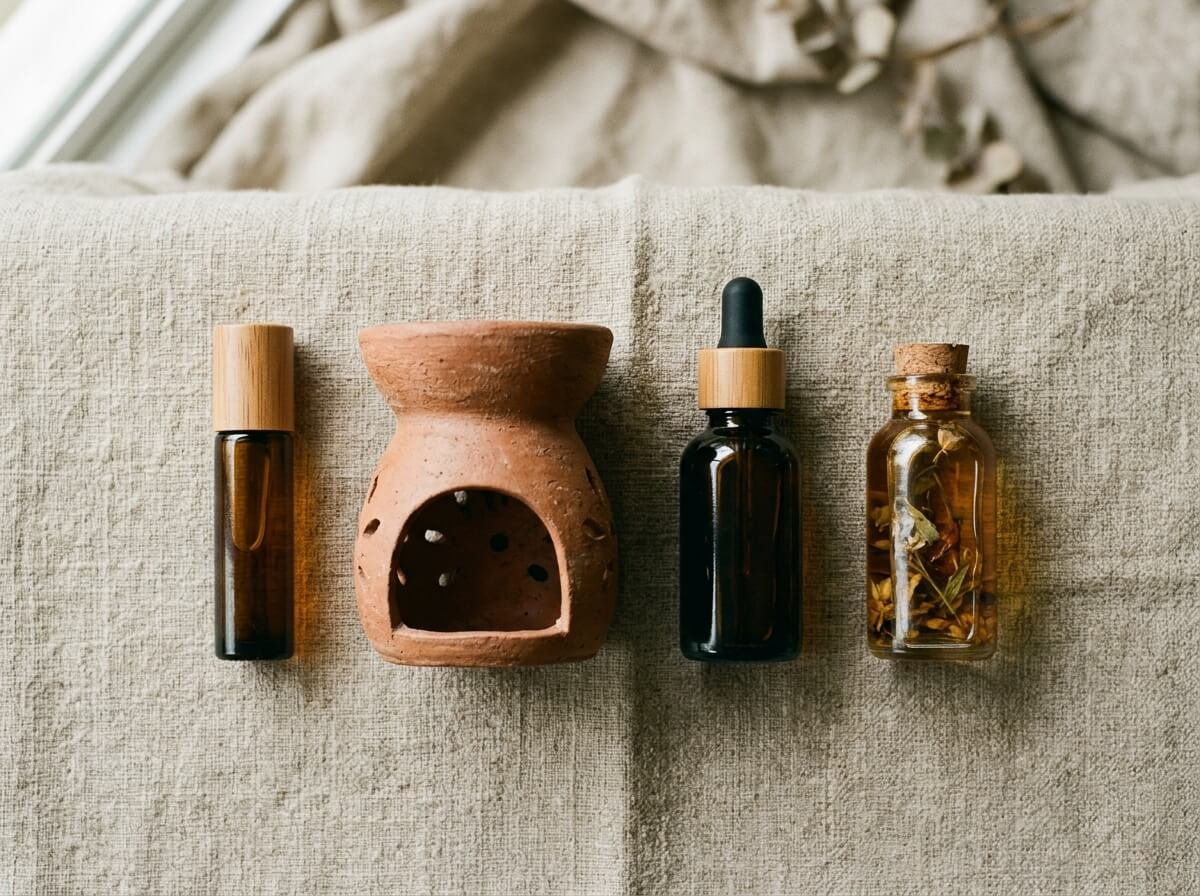
None of these formats is universally better, each solves a different moment. A diffuser fills a room and suits a shared space, a desk, a bedroom before sleep, and pairs well with the guidance in our aromatherapy oils for anxiety piece if calm is the goal. A neat oil, used only in a diffuser or properly diluted first, gives full control over a custom blend but demands more knowledge and more caution. A pre-mixed blend bottle, meant for further dilution or diffusing, sits between the two.
A roller is the personal, portable option: no room to fill, no dilution math, no waiting for a device to warm up. It travels in a bag, works at a desk without disturbing anyone nearby, and delivers the same oil in the same amount every time. If your day moves between spaces, home, office, transit, a roller is often the format that actually gets used, which matters more than any format’s theoretical benefits. For a wider view of the blend side of this decision, see our guide to essential oil blends.
Cost and longevity also favor the roller for daily use. A small bottle of diluted blend, used a few strokes at a time, lasts through months of regular application, while a diffuser draws on a fuller bottle of neat oil with every session and needs water and cleaning besides. Neither format is wasteful when used well, but the roller’s slow, metered release makes it the natural choice for someone who wants a consistent daily habit without restocking often.
If you already reach for a calming blend during stressful stretches, our guide to essential oils for stress and anxiety pairs naturally with a roller kept in a bag or desk drawer for exactly those moments.
Building rollers into daily ritual, and the refill case against single-use
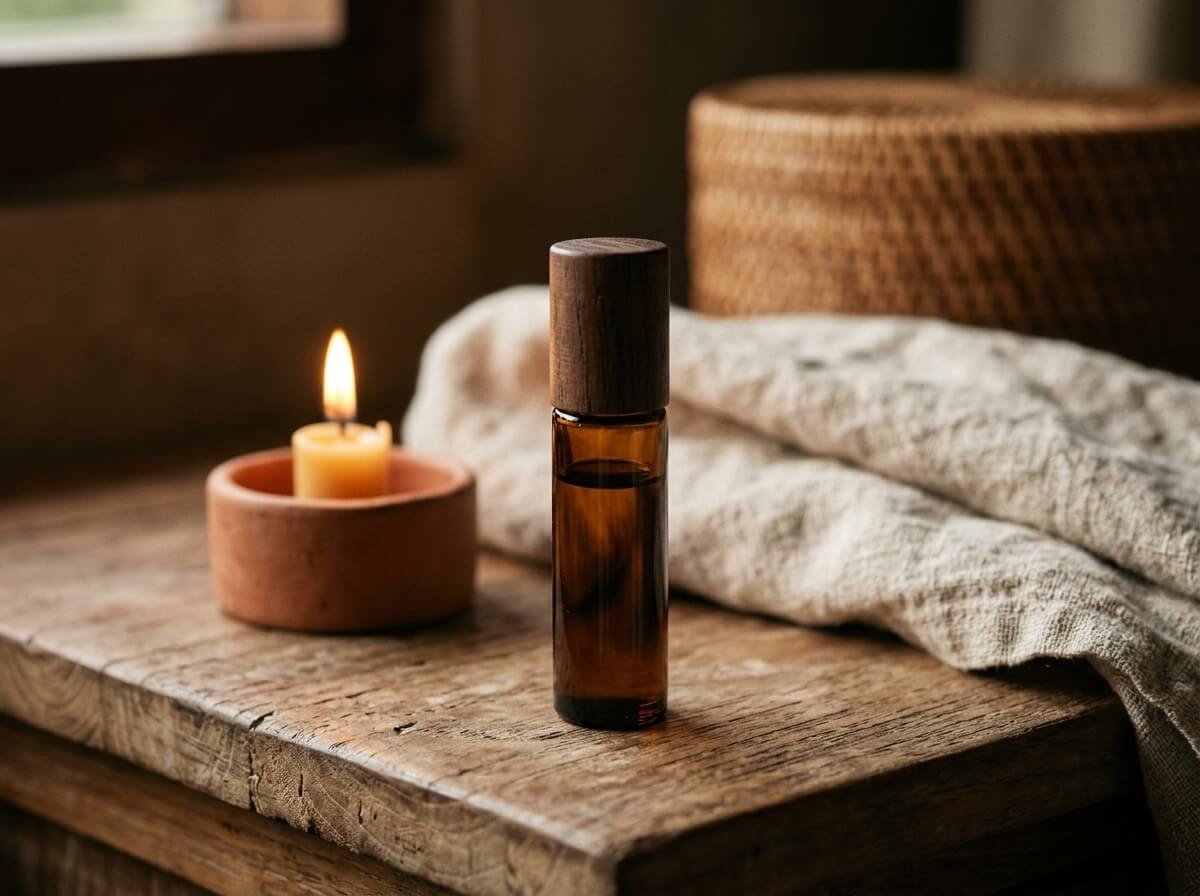
A roller earns its keep through repetition. Kept by the door, it becomes a small pause before leaving the house. Kept at a desk, it marks the line between focused work and a short reset. Kept on a nightstand, it can close the day the same way it opened. None of this requires more than a few seconds, which is exactly the point: care that survives a busy day is care that asks little of it.
The other quiet benefit of the roller format is how little glass it uses over time. A ten-millilitre roller lasts for months of daily pulse-point use, a small footprint compared to disposable diffuser cartridges or single-use aromatherapy inhalers. Choosing a refillable line and reordering the same glass bottle, rather than replacing plastic packaging every few weeks, is a small act, but small acts are how a refill culture actually gets built, one bottle at a time rather than one campaign at a time.
Our Bliss Essential Oil Roller was built with exactly this daily-ritual use in mind, small-batch blended in Bali and sized to travel with you rather than sit unused in a drawer.
None of this asks for a routine overhaul. A roller fits into a life that already exists, the bag you already carry, the desk drawer you already open, the nightstand already within reach. What it asks for is honesty from the maker and a little attention from you: check the label, understand the dilution, respect the sun caution, and let the ritual be as ordinary and repeatable as brushing your teeth. That ordinariness is the whole point. Care that requires ceremony every time rarely survives a busy week, while care built into an existing habit tends to last for years.
Frequently asked questions about essential oil rollers
Can I apply an essential oil roller straight to skin?
Yes, that is the point of the format, but only because the oil inside is already diluted to a safe percentage. Pure, undiluted essential oil should never go directly on skin.
How long does a roller blend last once opened?
Most carrier-oil blends stay stable for around one year when kept away from direct heat and sunlight. A darker glass bottle, cool storage, and a tightly replaced cap all extend this.
Are essential oil rollers safe during pregnancy?
Some oils are not recommended during pregnancy regardless of dilution. Check with a healthcare provider before regular use, and patch test any new blend first.
Can children use an essential oil roller?
Only blends specifically formulated and diluted for children, at a much lower percentage than adult rollers. A standard adult roller is not appropriate for young skin.
Why does my roller smell different from bottle to bottle?
Essential oils are agricultural products, so natural variation in harvest, season, and region can shift scent slightly between batches. A perfectly identical scent every time is actually a sign of synthetic fragrance standing in for the real plant oil.
Can I refill an empty roller bottle myself?
Some makers offer refill oil for their existing roller bottles, which is worth asking about directly, since it keeps the original glass in use rather than adding another bottle to the shelf. Do not mix leftover oils from a different blend into a roller not designed for it, since dilution percentages and oil interactions vary by formulation.
Does a roller lose potency over time even unopened?
Yes, slowly. Essential oils oxidize gradually with exposure to air, light, and heat, even inside a sealed bottle, which is why a cool, dark storage spot and a reasonably fresh purchase both matter more than most buyers expect.
A small ritual, chosen honestly
An essential oil roller does one thing well: it makes a safe, measured dose of a real plant oil easy to carry and easy to use, without turning a moment of care into a chemistry lesson. Read the label the way you would any other product that touches your skin, mind the citrus-and-sun rule, and let the ritual be small enough to actually keep. That is the whole promise of the format, nothing more, and nothing hidden.

Carry the ritual with you
Our Pure Energy Essential Oil Roller is pre-diluted, small-batch blended in Bali, and sized to travel. Named oils, a considered carrier, nothing hidden behind the word fragrance.