Ingredient Tuesday: kayu putih, the white-barked tree that grows where little else will
In almost every Indonesian home there is a small bottle of minyak kayu putih. It comes out for a blocked nose, a mosquito bite, or a tired back at the end of the day. Most of us know the smell long before we know the tree. Today we want to change that, because the tree behind the oil has a quiet story of its own.
White wood, in places other trees avoid
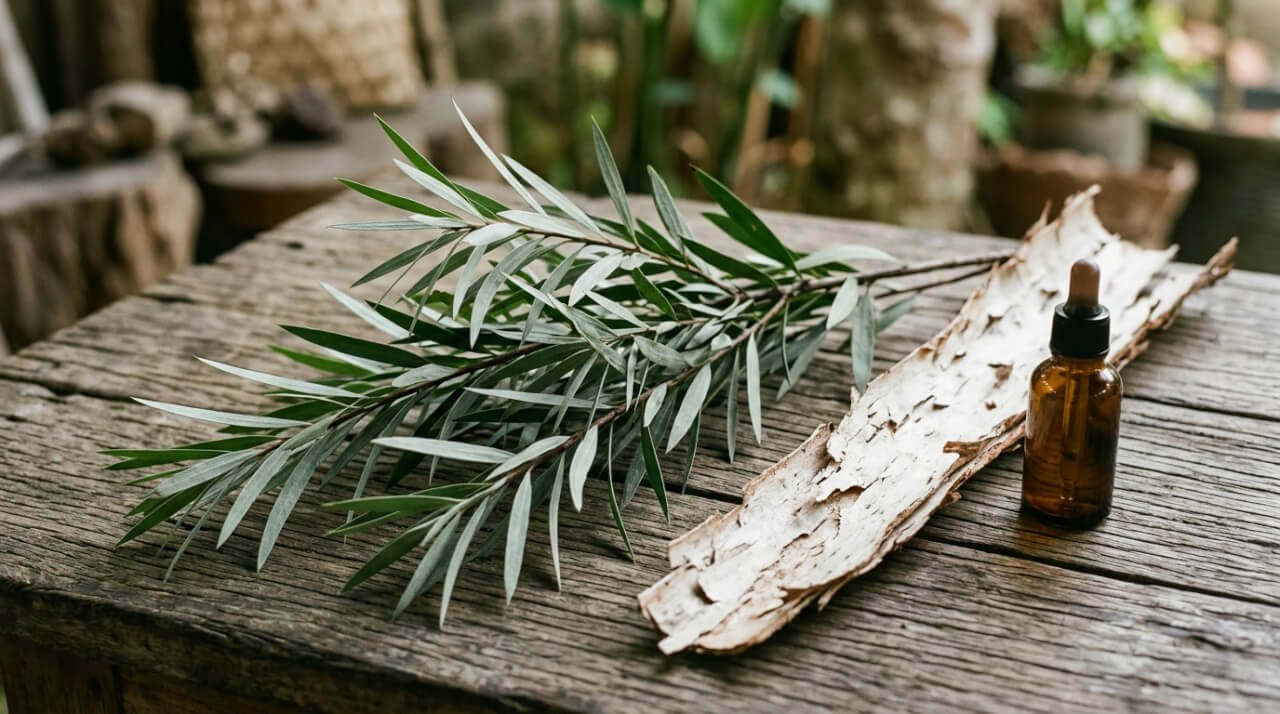
Kayu putih means “white wood.” The name comes from the pale, papery bark of Melaleuca cajuputi, which peels away in soft layers like old paper. The tree grows wild in the Maluku islands, on Buru, Seram, and Ambon, and further across the region.
What surprises most people is where it chooses to live. Forestry surveys describe it in low coastal plains that can flood more than a metre deep in the wet season, on heavy, poorly drained soils with very little fertility. It also tolerates fire in the dry months. Where many trees would drown or starve, kayu putih holds its ground. That resilience is part of why it has been planted to help restore degraded swampland in Southeast Asia.
A harvest that leaves the tree standing
The oil comes from the leaves and small twigs, not the trunk. Traditionally, harvesters cut leafy branches and carry them to a nearby still, where steam draws out the oil. The tree is not felled. It sends up fresh shoots from the cut stems and its roots, and in time those shoots are ready to be harvested again. Plantations often keep their trees pruned to about head height so new growth stays within reach.
Buru is still the heart of this craft. Village distillers there have worked the wild stands for generations. When Java began growing cajeput for oil in 1926, the seed came from Buru. One island’s trees became the parent stock for another’s.

We find this a useful way to think about any ingredient. Ask what the plant gives, and also what the harvest takes. With kayu putih, the answer is a branch and a season of regrowth, not the whole tree.
Using it with care
The fresh, camphor-like opening you notice comes mostly from 1,8-cineole, the same molecule found in eucalyptus. That is also why care matters. Dilute cajeput in a carrier oil before it touches skin. Keep it away from eyes, and keep it away from the faces of babies and young children, where cineole-rich oils can affect breathing. If you are pregnant or have asthma, check with a practitioner first. Our guide on how to dilute essential oils has the drop counts.
A small ritual to try: this evening, add two drops of cajeput to a tablespoon of coconut oil, warm it between your palms, and press it slowly into your shoulders and the back of your neck. Breathe in while it warms. For the full picture of the chemistry and traditional uses, read our guide to cajeput essential oil benefits.
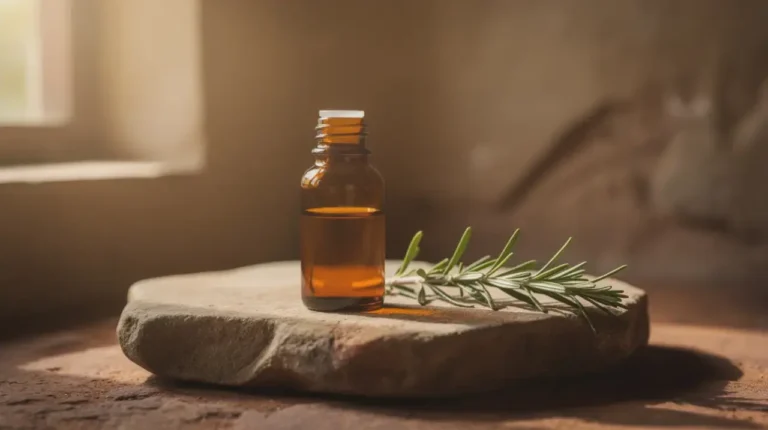
If you would like to keep the white-wood tree in your own home, our Cajeput Essential Oil is steam distilled from Melaleuca cajuputi leaves, with nothing added.
A tree that thrives where others struggle, and gives without being cut down. Some of the most useful wisdom grows in the hardest ground.