Natural air freshener: what actually freshens a room (and what only covers it up)
A natural air freshener is less a product than an order of operations. First you remove what smells, then you let fresh air in, and only then, if you still want to, you add a little scent. Most of what is sold as “air freshener” skips the first two steps and goes straight to the third, which is why a room can smell of synthetic linen and old damp at the same time. This guide is about doing it the other way round: honest, simple, and kinder to the people (and animals) who share the air.
We make aromatherapy blends in Bali, so we love scent. That is exactly why we want to be clear about what scent can and cannot do. Fragrance does not clean air. It sits on top of whatever is already there. Used well, it is a finishing touch, a small ritual at the end of a fresh room. Used as a cover-up, it hides a problem that keeps growing.
What a natural air freshener should do: remove, ventilate, then scent
Think of a fresh room in three layers. Each layer does a different job, and no layer can stand in for the one before it.
1. Remove
Odour is made of molecules. Some are released by bacteria in a damp towel, some by food in a bin, some by mould on a window frame, some by a dog bed that needs a wash. If the source is still there, it keeps releasing more. Removing means washing, emptying, drying, or absorbing the thing that smells. Nothing else on this list works as well, and nothing else lasts as long.
2. Ventilate
Once the source is gone, the molecules already floating in the room still need somewhere to go. Fresh air dilutes them and carries them out. Opening windows on opposite sides of a room for even 10 minutes moves far more air than any product can treat.
3. Scent
Only now does fragrance make sense. In a clean, aired room, a few drops of essential oil read as a clear, bright note. In a stale room, the same drops simply blend with the stale air, and you end up adding more and more to compensate.
Traditional Balinese homes understood this by design, and the most natural air freshener of all is still a window. A family compound is a cluster of open-sided pavilions set around a garden, with roofs deep enough to keep rain out and walls low enough to let breezes pass through. Air moves constantly. Rooms rarely smell closed in because they are rarely closed. Most of us live in sealed apartments and air-conditioned houses now, but the principle still holds: airflow first, everything else second.
Find the source first: damp, drains, fabrics, bins, and pets
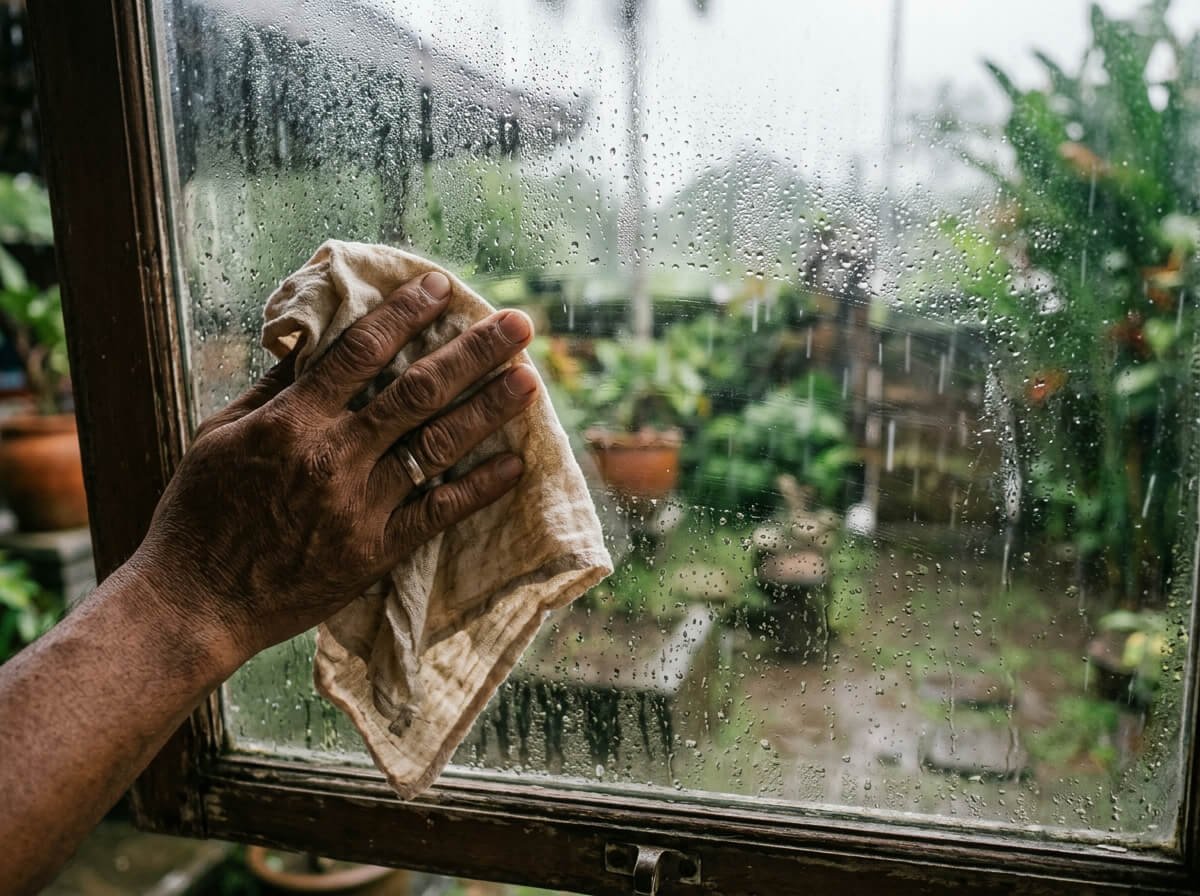
Before you buy or mix anything, spend five minutes being a detective. Walk into the room after you have been outside for a while, when your nose is fresh, and notice where the smell is strongest. Most household smells come from a short list of places.
Damp and mildew
A musty, earthy, slightly sweet smell almost always means moisture. Mould and mildew release volatile compounds that smell like old books or wet soil, and no fragrance will cover that note for long. Look at window frames where condensation collects, the back of wardrobes against cold walls, behind bathroom silicone, under sinks, in the drip tray of an air conditioner, and in the folds of shower curtains. In winter, when windows stay closed and people dry laundry indoors, condensation becomes the hidden source in many homes.
The fix is drying, not scenting. Wipe condensation each morning, keep a gap between furniture and outside walls, run a fan or open a window after showering, and aim to keep indoor humidity below about 60%. If you find visible mould on more than a small patch, treat it as a building issue, not a smell issue.
Drains and bins
A sour or sulphur smell near a kitchen or bathroom usually comes from a drain trap or a bin. Flush kitchen drains weekly with very hot tap water and a spoonful of baking soda (skip boiling water if your pipes are plastic), clean the rim and lid of the bin where residue collects, and empty food waste more often in warm weather. A sprinkle of baking soda in the bottom of a clean bin helps between washes.
Soft furnishings
Fabric holds odour. Cushion covers, rugs, curtains, throws, and mattresses absorb cooking smells, sweat, and smoke, then release them slowly for weeks. Washing the covers you can remove, airing the rest in sunlight, and vacuuming upholstery does more for a living room than any spray.
Pets and people
Pet bedding, litter trays, and gym bags are the usual suspects. Wash bedding weekly, scoop litter daily, and air shoes and sports kit away from living spaces.
Why natural scent still needs a light hand: terpenes, ozone, and indoor air
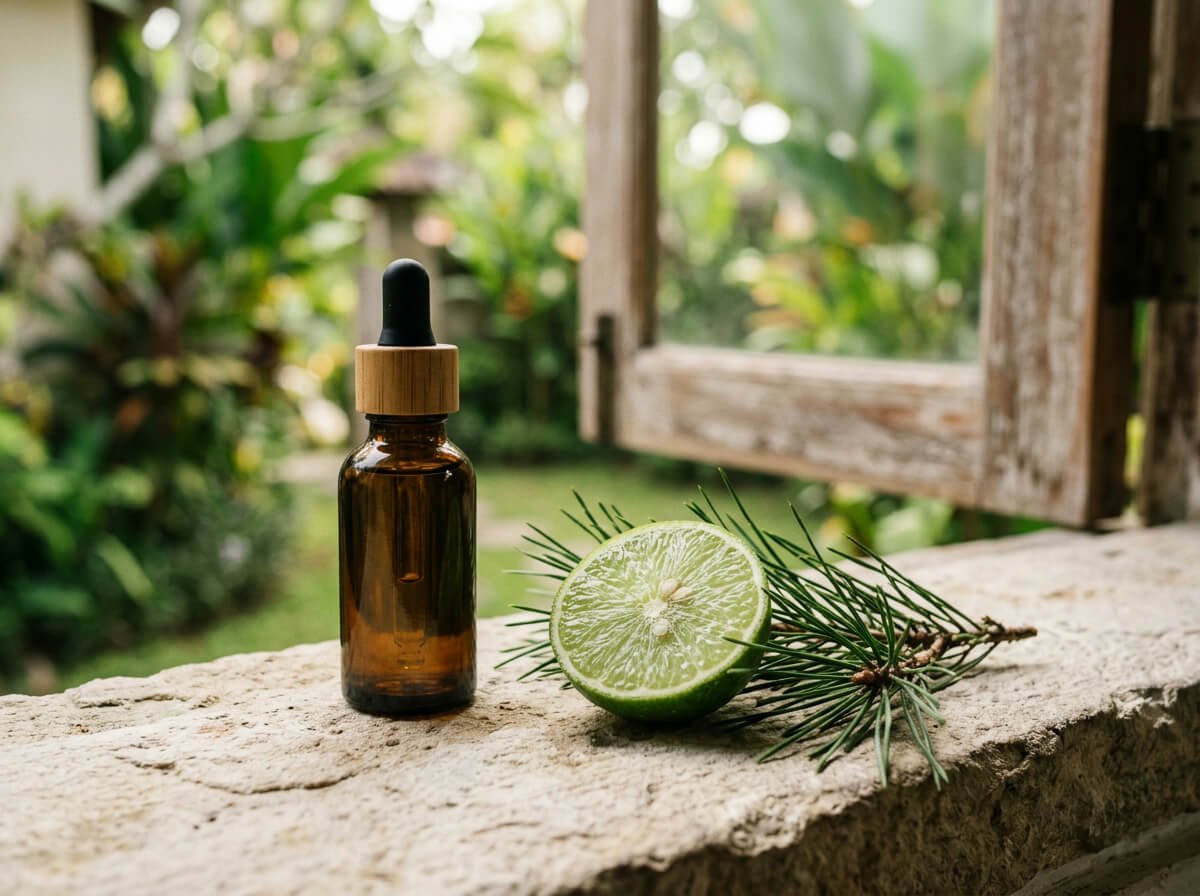
This is the part most “natural air freshener” guides leave out, and it matters. Natural is not the same as clean air.
Citrus peel oils, pine, and many other bright, fresh essential oils are rich in terpenes, a family of aromatic molecules that includes limonene and pinene. These are the molecules that make lemon peel smell like lemon and a pine forest smell like pine. Indoors, terpenes can react with ozone, a gas that drifts in from outdoor air (and is produced by some air purifiers and printers). That reaction forms new compounds, including small amounts of formaldehyde and fine particles.
This is well documented in indoor-air research. A widely cited review by William Nazaroff and Charles Weschler, published in Atmospheric Environment in 2004, looked at cleaning products and air fresheners and showed that terpene-based scents can produce these secondary pollutants indoors, especially when ozone levels are higher and ventilation is low.
What this does not mean is that a few drops of orange oil are dangerous. The amounts involved in a short diffuser session in a ventilated room are small. What it does mean is that the honest rules for natural scent look like this:
- Dose low. A few drops, not a cloud. If you can smell it strongly from the next room, it is too much.
- Run it intermittently. Short sessions of 15 to 30 minutes, then off. Your nose adapts to scent within minutes anyway, so continuous diffusion mostly adds to the air without adding to your experience.
- Keep air moving. Scent a room with a window cracked open or a door ajar, not a sealed one.
- Do not combine scent with ozone. Never run an “ozone generator” or ionising purifier alongside essential oils.
This is the Outlaw truth behind our own aromatherapy line. We would rather you use a little of our oil, well, than a lot of it carelessly. Calm confidence beats a room that smells like a shop.
Six ways to freshen a room with nothing to buy

Before you reach for any product, natural or not, try these. They cost nothing, use what you already have, and work on the cause rather than the symptom.
1. Cross-ventilate every day
Open windows or doors on opposite sides of the home for 10 to 15 minutes, morning and evening. Even in cold weather, a short, wide opening exchanges air quickly without chilling walls and furniture the way a window left slightly open all day does. In humid climates, do it in the cooler early morning when the outside air is drier.
2. Let the sun do its work
Sunlight and moving air dry fabric thoroughly, and dry fabric does not feed the microbes that make it smell. Hang bedding, cushion covers, rugs, and even pillows outside on a bright day. In Bali we still dry everything in the sun, from linens to spices, and the smell of sun-dried cotton is its own quiet luxury.
3. Baking soda in the right places
Sodium bicarbonate neutralises acidic odour molecules on contact. It works best close to the source: a small open jar in the fridge, a sprinkle in the bottom of a bin, or dusted onto a rug or mattress, left for an hour, then vacuumed. It does not freshen a whole room from across the floor, so place it where the smell starts.
4. Activated charcoal for closed spaces
Activated charcoal has an enormous internal surface area that traps many odour molecules. A small cotton bag of it works well in wardrobes, shoe cupboards, cars, and under sinks, where air barely moves. Like baking soda, it works on the air around it, not the whole house.
5. Wash what holds the smell
Wash cushion covers, throws, curtains, pet beds, and bath mats on a regular rotation. Add a cup of white vinegar to the rinse for towels that have started to smell musty. For a lower-waste routine with plant-based products, our guide to natural cleaning products walks through what works in each room.
6. Plants, with honest limits
Houseplants make a room feel alive and green, and that matters. But the popular claim that a few plants purify indoor air comes from a 1989 NASA study done in small sealed chambers, not real homes. A 2019 review by Bryan Cummings and Michael Waring found that you would need somewhere between 10 and 1,000 plants per square metre to match the air cleaning that normal ventilation already provides. Keep plants for joy, not as an air freshener. And watch the soil: over-watered pots are a common source of musty smells.

Scenting with care: diffusers, sprays, candles, and incense
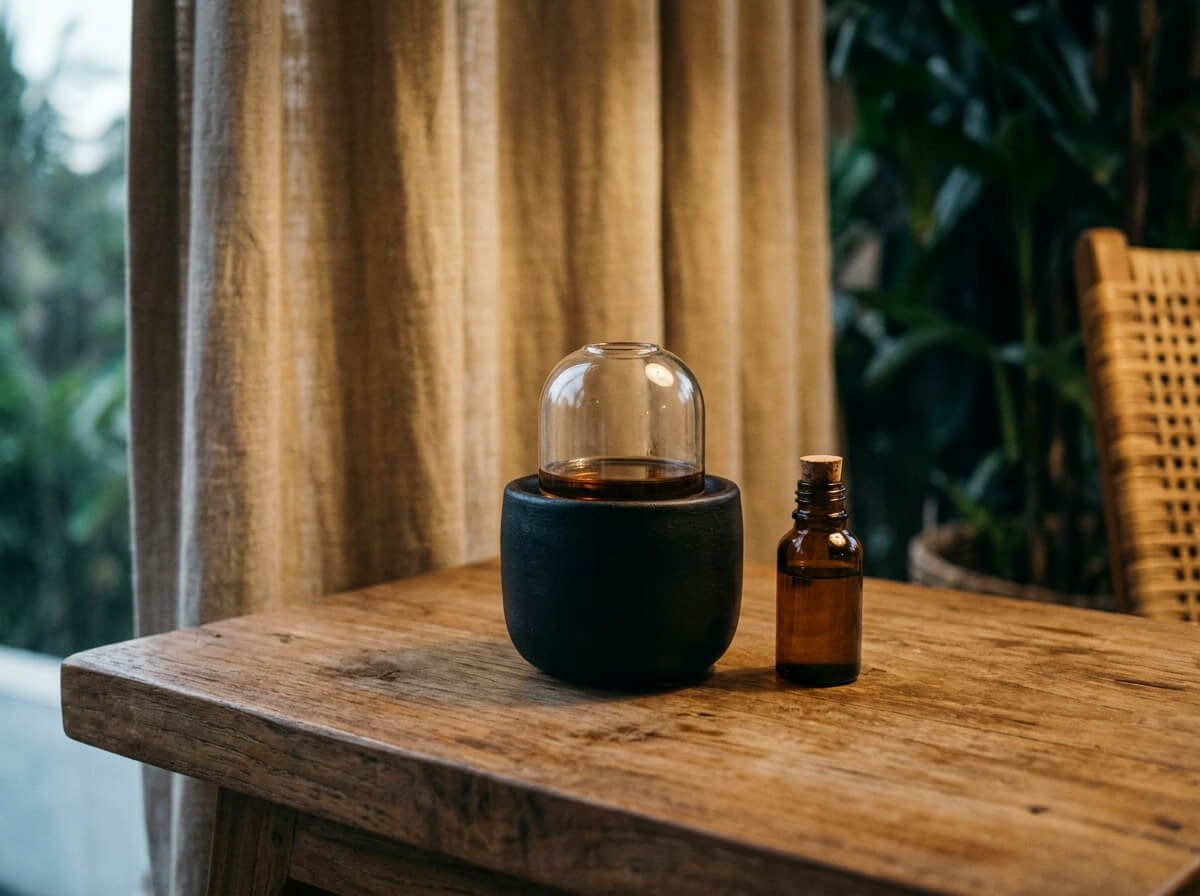
Now the room is clean, dry, and aired. If you want a natural air freshener to finish it, here is how the main options compare, and how to use each one well.
| Method | How long scent lasts | Waste | Best room | Care note |
|---|---|---|---|---|
| Nebulizing diffuser | While running, plus a short tail | Device lasts years; glass oil bottles | Living rooms, larger spaces | Undiluted oil: use a timer and short sessions |
| Ceramic or reed diffuser | Gentle and continuous | Reusable vessel, refillable oil | Bedrooms, bathrooms | Low output, keep out of reach of pets |
| Room or linen spray | Minutes to an hour | Refillable glass bottle | Any room, fabrics | Spray into air, not onto people or pets |
| Candle | While burning | Glass jar can be reused | Evening rooms | Combustion: trim wick, ventilate |
| Incense | While burning, plus lingering smoke | Ash and bamboo core | Open, airy spaces | Smoke: one stick, window open |
Nebulizing diffusers
A nebulizing diffuser uses air pressure to break pure essential oil into a fine mist, with no water and no heat. The scent is clear and true to the oil, and it carries well in larger rooms. Because it uses undiluted oil, it is also the method that most needs a timer and a light hand. We cover the details in our guide to the nebulizing diffuser, and if you are choosing between styles, our comparison of ceramic and nebulizing diffusers lays out the trade-offs.
Our own Danau Dua nebulizing diffuser is a small, quiet model with a ceramic base, made for a desk or bedside table. Fill it with a few drops, run it for 15 to 30 minutes in a room with some airflow, then switch it off.
What to put in it
Choose oils for how they make the room feel, not to mask a smell. For a clean, open, after-rain feeling, our Clearing Essential Oil Blend brings cubeb, cajuput, ginger, fennel, and mint together. It is bright and green, and lovely in a home office or a hallway. For a crisp citrus note with less of the sweet-peel character, our Kaffir Lime Essential Oil Blend is made from the leaf of the Balinese jeruk purut tree. Leaf oil is dominated by citronellal rather than the limonene of citrus peel, but it is still a reactive, terpene-family aroma, so the same rule applies: a few drops, short sessions, window ajar. Our kaffir lime essential oil benefits guide covers the leaf in more depth. In the evening, a single-note Lavender Essential Oil or our softer Deep Calming blend settles a bedroom. For more combinations, see our essential oil blends for diffuser recipes.

Scent a fresh room with a light hand
Our Danau Dua nebulizing diffuser turns a few drops of pure essential oil into a fine, waterless mist. Small, quiet, and built to last for years, it pairs beautifully with our Clearing or Kaffir Lime blends. Run it in short sessions, window ajar.
A simple DIY room spray
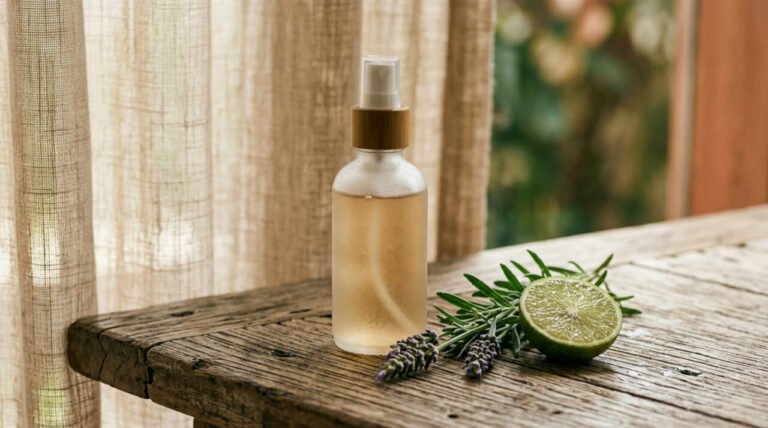
A spray puts scent exactly where you want it, for a moment, and then it is gone. That makes it one of the gentlest ways to scent a room. Here is a basic version:
- 100 ml distilled or boiled and cooled water
- 15 ml (one tablespoon) high-proof vodka or witch hazel, to help the oil disperse
- 15 to 20 drops of essential oil (roughly a 1% blend)
- A glass spray bottle you already own or can refill
Add the alcohol and oil to the bottle first, swirl, then add the water. Shake before every use, because oil and water separate. Spray two or three times into the air, high and away from people and pets, not onto polished wood or silk. Without a preservative, a water-based spray can grow microbes, so make small batches and use them within two or three weeks. If you prefer to scent fabrics, our DIY linen spray recipe is made for sheets and pillowcases, and if you would rather not mix your own, our ready-made Natural Linen Spray in orange and bergamot is available in a 500 ml bottle while stock lasts. For dilution maths you can trust, our guide on how to dilute essential oils has a full chart.
Candles and incense: lovely, but not air fresheners
We make candles and incense, and we use both. But neither one freshens air. Both work by burning, and anything that burns releases fine particles. A candle is a mood, a light, a ritual at the end of the day. Choose plant waxes and cotton wicks, trim the wick, and keep it away from drafts so it does not smoke. Our guide to natural candles explains what to look for, and reed diffuser vs candle compares the two for everyday scent.
Incense is smoke by design. Burn one stick at a time, with a window open, and let it be a moment of pause rather than a way to cover a smell. Our guides on how to use incense sticks and the best natural incense cover the craft and the care.
Pets, babies, and asthma: who shares the air
Scent is shared. Everyone in the room breathes it, whether they chose it or not. Before using any natural air freshener, think about who else is home.
Cats, dogs, and birds
Cats lack an important liver enzyme (part of the glucuronidation pathway) that people and dogs use to break down many compounds found in essential oils. That makes them more sensitive to oils like tea tree, citrus, pine, peppermint, and wintergreen. Birds have delicate, efficient respiratory systems that react quickly to anything airborne. Dogs are more tolerant, but their sense of smell is far stronger than ours, so what reads as faint to us can be intense to them.
The practical rules: never diffuse in a closed room with a cat or bird inside, keep sessions short, leave a door open so animals can walk away, and never put oils on a pet or its bedding. If a pet starts drooling, pawing at its face, coughing, or seems wobbly, stop diffusing, air the room, and call your vet. Our full guide to essential oils safe for pets goes oil by oil.
Babies and young children
Do not diffuse around babies under three months. For older babies and toddlers, choose gentle oils, keep sessions brief, and scent a room before the child comes in rather than while they sleep. Some oils that feel fresh to adults, including peppermint and high-cineole oils like cajuput and eucalyptus, are best kept away from young children altogether, so save blends like Clearing for adult spaces. Our guide to essential oils safe for babies covers ages and oils in detail.
Asthma, migraines, and fragrance sensitivity
Fragrance is a known trigger for some people with asthma and migraine. In national surveys by researcher Anne Steinemann, roughly a third of adults in the United States reported health problems such as headaches or breathing difficulties when exposed to fragranced products. Natural scent is not exempt. If someone in your home is sensitive, rely on the remove and ventilate layers, keep any scent to rooms they rarely use, and ask before you diffuse in shared spaces. Care means asking.
Plug-ins vs refillable rituals: the real cost
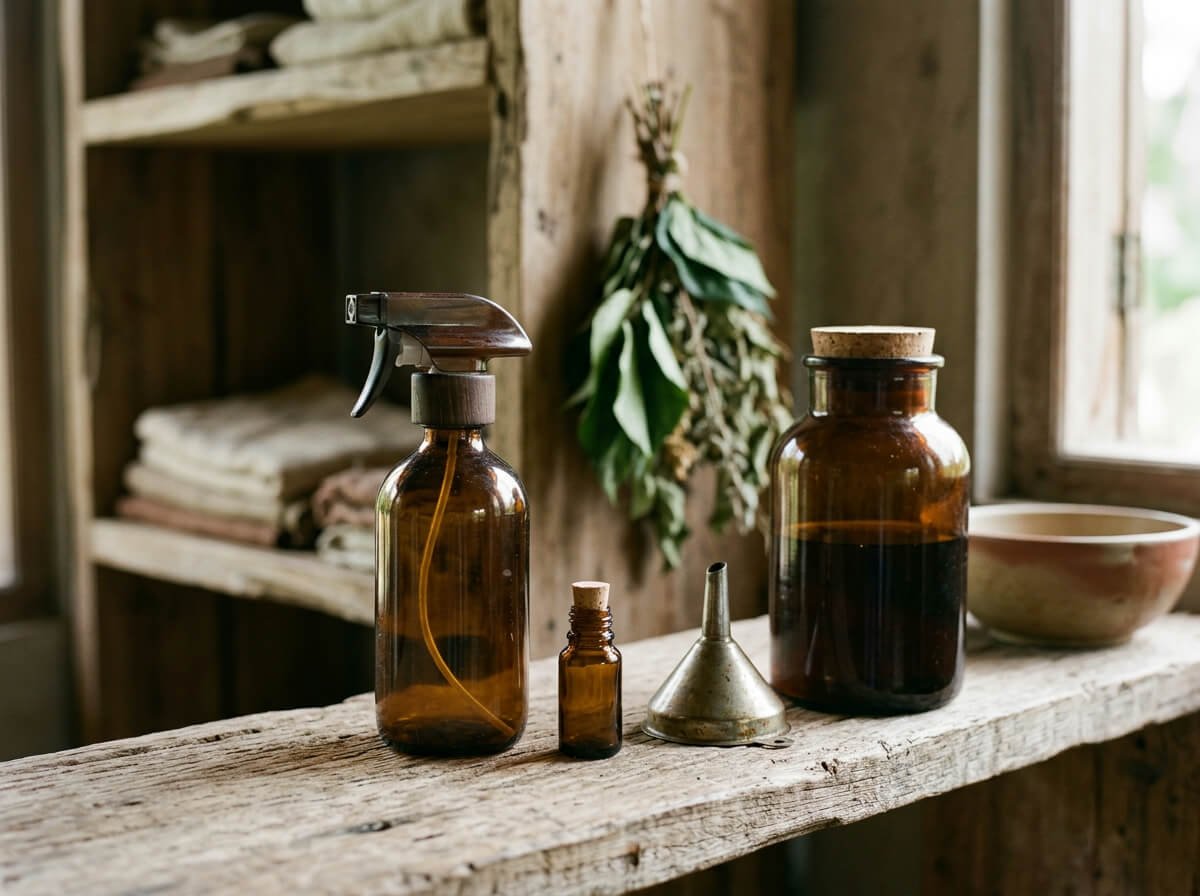
Plug-in air fresheners are convenient. That convenience has a cost, and it is not only on the receipt.
The waste
Each plug-in refill is a small plastic and glass cartridge filled with fragrance oil, designed to run for a few weeks and then be thrown away. Brands usually rate a refill at somewhere between 30 and 60 days on a low setting. Run one in three rooms all year and a household can easily go through 20 to 30 cartridges, plus the plastic warmers themselves, which are rarely recyclable. Gel and aerosol fresheners add more single-use packaging on top.
The ingredients
Most synthetic fresheners list “fragrance” or “parfum” as a single word that can stand for dozens of undisclosed compounds. We do not say every synthetic fragrance is harmful. We do say people have a right to know what they are breathing, and a single-word ingredient list does not tell them.
The refillable alternative
Compare that with a refillable routine. A diffuser is bought once and lasts for years. A 10 ml bottle of essential oil, used a few drops at a time in short sessions, lasts many weeks. A glass spray bottle can be refilled indefinitely. Our own refill program saved 2,245 bottles from landfill in 2025, and the same thinking applies at home: own the container, refill the contents. Our guide to a plastic-free bathroom is a good place to start making that switch room by room.
Is a refillable routine always cheaper? Not on day one. A good diffuser costs more than a plug-in starter kit. Over a year, without a stream of cartridges to replace, the maths usually tips the other way, and the bin gets lighter. Progress, not perfection.
Natural air freshener FAQ
Is there a natural plug-in air freshener?
Some brands sell plug-ins filled with essential oils instead of synthetic fragrance. That changes what is inside the cartridge, but it is still a single-use cartridge heated around the clock. A small nebulizing or ceramic diffuser on a timer gives you the same convenience with far less waste, and you control how much scent goes into the air.
What is the cheapest way to make my house smell good?
Open the windows, wash the soft furnishings, empty the bins, and dry anything damp. These cost almost nothing and fix most smells at the source. After that, a homemade room spray with a few drops of essential oil is one of the cheapest scent options there is.
How do I make a natural air freshener spray?
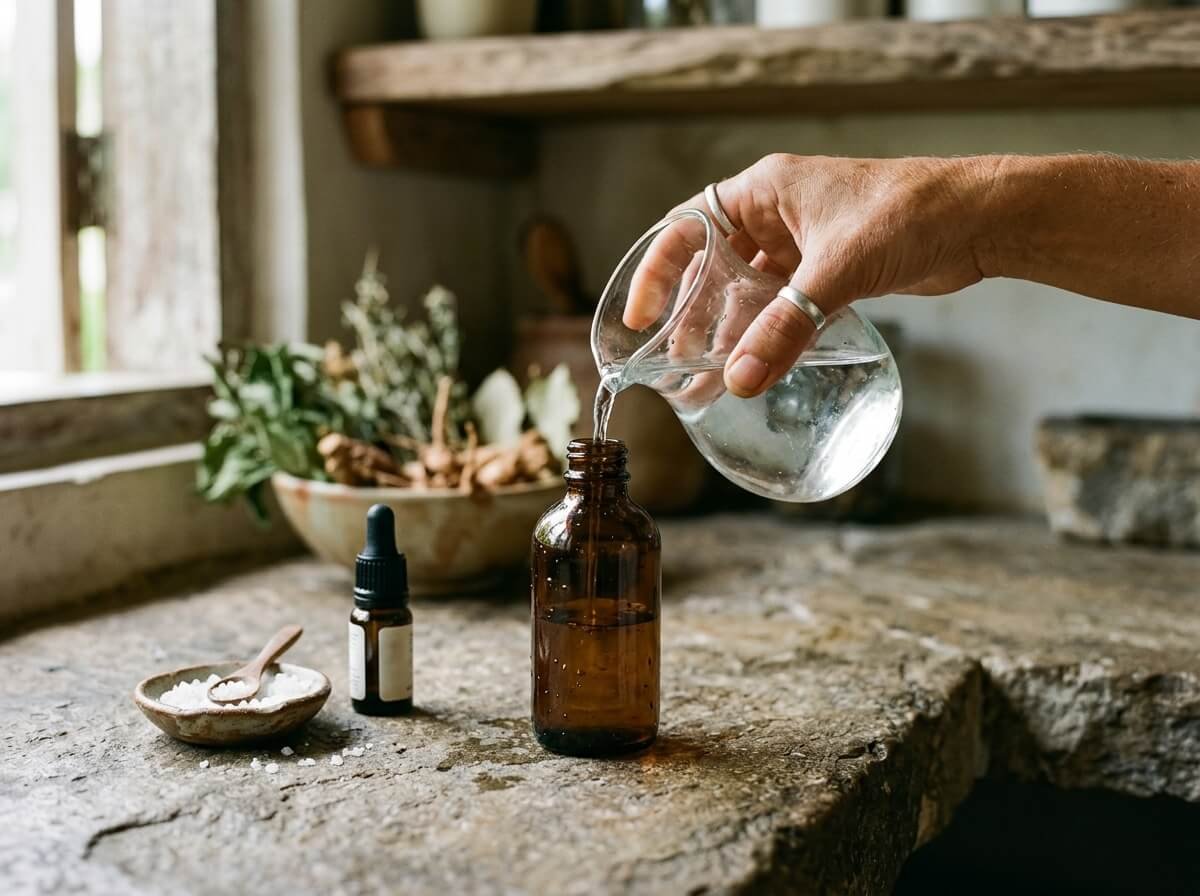
Mix 15 ml of high-proof vodka or witch hazel with 15 to 20 drops of essential oil in a glass spray bottle, then add 100 ml of distilled water. Shake before each use, spray into the air rather than onto surfaces, and use within two or three weeks.
Which essential oils are safest for a natural air freshener?
For most adult-only homes, gentle oils like lavender used briefly are a good starting point. Citrus and pine oils are lovely but terpene-rich, so keep sessions short and windows open. If you live with cats, birds, babies, or anyone with asthma, use the lightest touch, or skip diffusing and rely on fresh air.
A room that breathes
The freshest rooms we know are not the most scented. They are the ones where air moves, where fabric dries in the sun, where nothing damp is hiding behind the wardrobe, and where a few drops of something beautiful are added at the end, on purpose, as a small ritual.
That is what a natural air freshener really is: a habit more than a product. Remove what smells. Let the air in. Then, if you like, scent with a light hand and choose oils you understand. It asks a little more attention than a plug-in, and gives back a home that smells like itself. What you give, you get back.