Plant based anti aging skincare: a botanical guide to ingredients that actually work
Plant based anti aging skincare is having a long-overdue moment. Bakuchiol gets the press, turmeric trends every other month, and shelves are now stacked with serums promising the work of a retinol without the irritation. The marketing is louder than the science, and the science is more interesting than the marketing. If you have come here looking for a single hero ingredient to fix everything, we are going to gently point you somewhere else. The honest story is that botanical anti aging is a stacking job, and Balinese tradition has been quietly doing the stack for generations.
In this guide we cover what plant based anti aging skincare can genuinely do, where the marketing outpaces the evidence, and how to build a routine grounded in four pillars of skin care that actually address how skin ages. We will name the ingredients, point to the products that use them well, and share the ritual that holds it all together.
The honest definition of plant based anti aging skincare
Skin does not age because one molecule is missing. It ages because four processes run, every day, for decades. Your barrier loses some of the lipids that keep moisture in. Oxidative stress accumulates from UV, pollution, and metabolism. Collagen and elastin production slows, while the enzymes that break them down stay busy. And the routine choices we make, sun exposure, over-cleansing, aggressive exfoliation, quietly accelerate all three.
Plant based anti aging skincare, done honestly, supports each of those four pillars. It does not promise to reverse anything, because skin does not reverse. It promises to slow the slope, protect what is intact, and rebuild where rebuilding is biologically possible. That is the work, and a thoughtful stack of botanicals can do it. A single hero ingredient cannot.
We will also say what plant based skincare cannot do. It cannot replace SPF. It cannot deliver the receptor-level signaling of a prescription retinoid. It will not restructure a deep wrinkle. If those are non-negotiable goals, work with a dermatologist. If your goal is calm, resilient, well-supported skin that ages on its own terms, the plant world has exactly what you need.
The four pillars of skin aging, and what plants can actually do
Before we name ingredients, the four pillars are worth holding clearly. Most of the confusion in this category comes from brands marketing a single mechanism as the whole story. It is not.
- Barrier protection. The outer layer of skin holds moisture in and irritants out. When the barrier weakens, every other concern, sensitivity, dullness, fine lines, gets worse. Plant oils with the right fatty acid profile rebuild this layer.
- Oxidative defense. Free radicals from UV, pollution, and normal metabolism damage lipids, proteins, and DNA in the skin. Antioxidants quench them. Most of the strongest topical antioxidants come from plants.
- Collagen support. Collagen is the protein that gives skin its structure. After about age 25, you produce less of it. Certain plant compounds nudge fibroblasts to make more, and some slow the enzymes that break it down.
- The underrated pillar: not damaging skin in the first place. Sun, stripping cleansers, daily acids, hot water. The first three pillars are downstream of how kind you are to skin upstream.
The rest of this guide walks each pillar in turn. The same plants often appear in two or three pillars at once. That is not a coincidence. The most useful botanicals in skincare tend to be molecular generalists, which is exactly why one well-built ritual outperforms a cabinet of single-purpose serums.
Pillar one, barrier protection: kukui, illipe, and coconut
The skin barrier, also called the stratum corneum, is roughly fifteen percent ceramides, twenty-five percent free fatty acids, and ten percent cholesterol, embedded between corneocytes. If you read that and thought ‘this sounds like an oil,’ you are most of the way there. The botanical oils that rebuild the barrier are the ones whose fatty acid profile matches what your skin already makes.
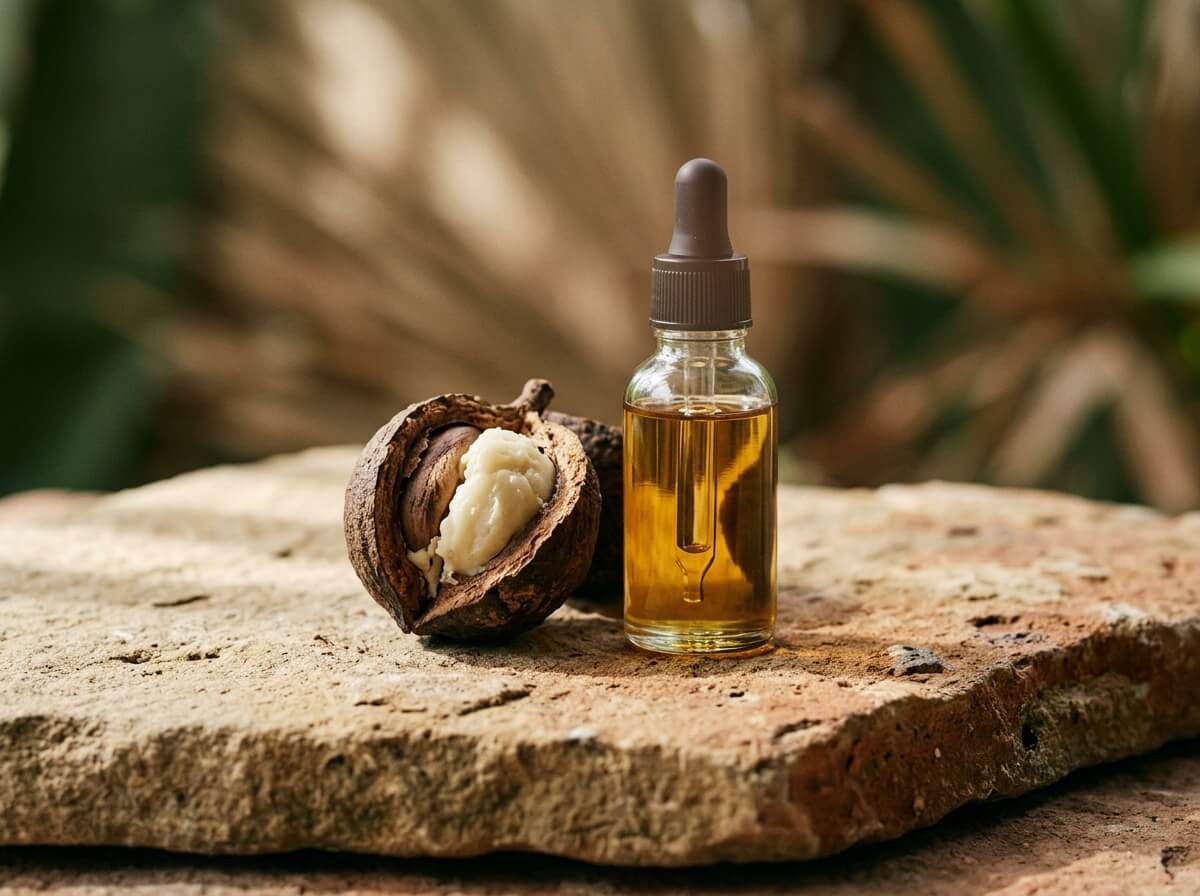
Kukui nut oil is the standout. Wild-harvested in Hawaii and parts of Indonesia, kukui is high in linoleic acid, the same omega-6 fatty acid that the body uses to manufacture ceramide-1. Skin low in linoleic acid tends to be inflamed and prone to acne, and a thin daily layer of kukui addresses that at the source. We go deep on this oil in our guide to kukui nut oil and its uses.
Illipe butter, pressed from the seed of the Shorea stenoptera tree in Kalimantan, has a melting point close to body temperature and a fatty acid profile reminiscent of cocoa butter, with higher stearic and oleic content. It glides on, melts in, and stays in. Illipe is the workhorse in our deeper guide to body butter and the barrier-repair case for it, and it shows up in body care like the Pure Energy Body Butter for the same reason coastal Balinese women have been using it for generations: it lasts.
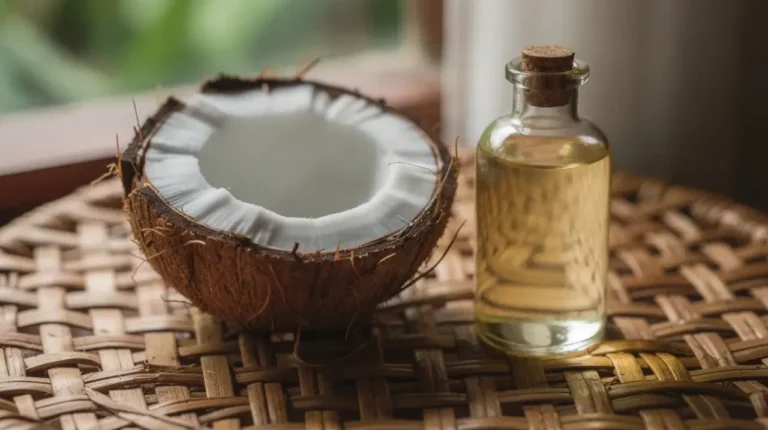
Coconut oil sits in a more nuanced spot. Its medium-chain triglycerides, especially lauric acid, give it real occlusive power and mild antimicrobial activity. It is excellent on body skin and on barrier-compromised hands, less ideal for those prone to comedones on the face. Our honest assessment of coconut oil for skin covers where it shines and where to swap it out for kukui.
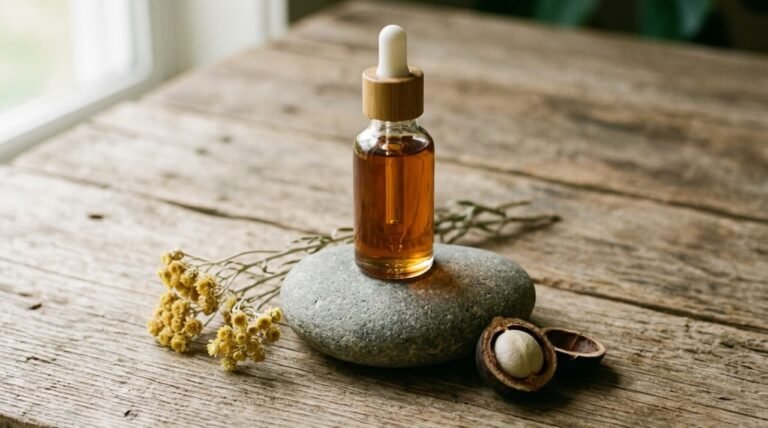
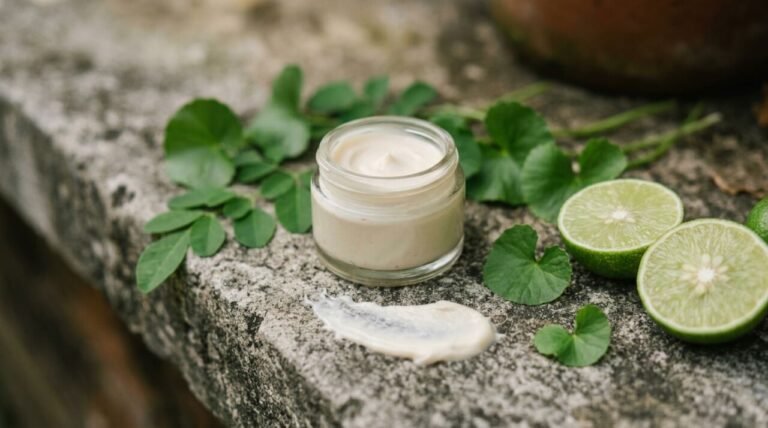
If you want a single product that handles the daily barrier job on the face, the Immortelle Helichrysum Face Serum layers a kukui-anchored carrier base with helichrysum, jojoba, and frankincense. For something lighter, the HydroBotanic 3-in-1 Hydrating Face Cream stacks plant oils with humectants for combination skin.
Pillar two, oxidative defense: turmeric, frankincense, and the antioxidant stack
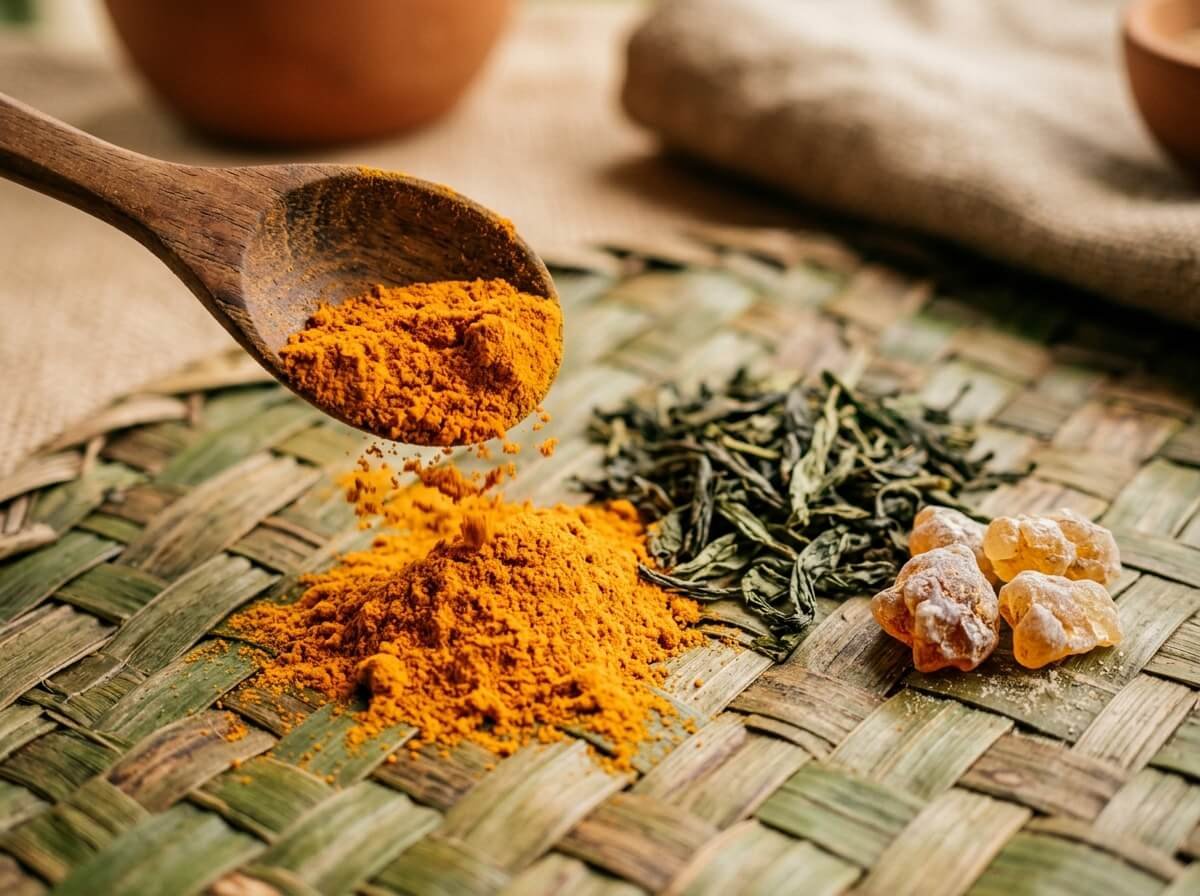
Antioxidants are the most marketed and most misunderstood category in skincare. The short version: a free radical is a molecule with an unpaired electron, looking for one to steal. When it steals from a lipid in your barrier or a protein in your dermis, that molecule is damaged. Antioxidants donate the electron themselves, neutralising the radical before it can react with something important.
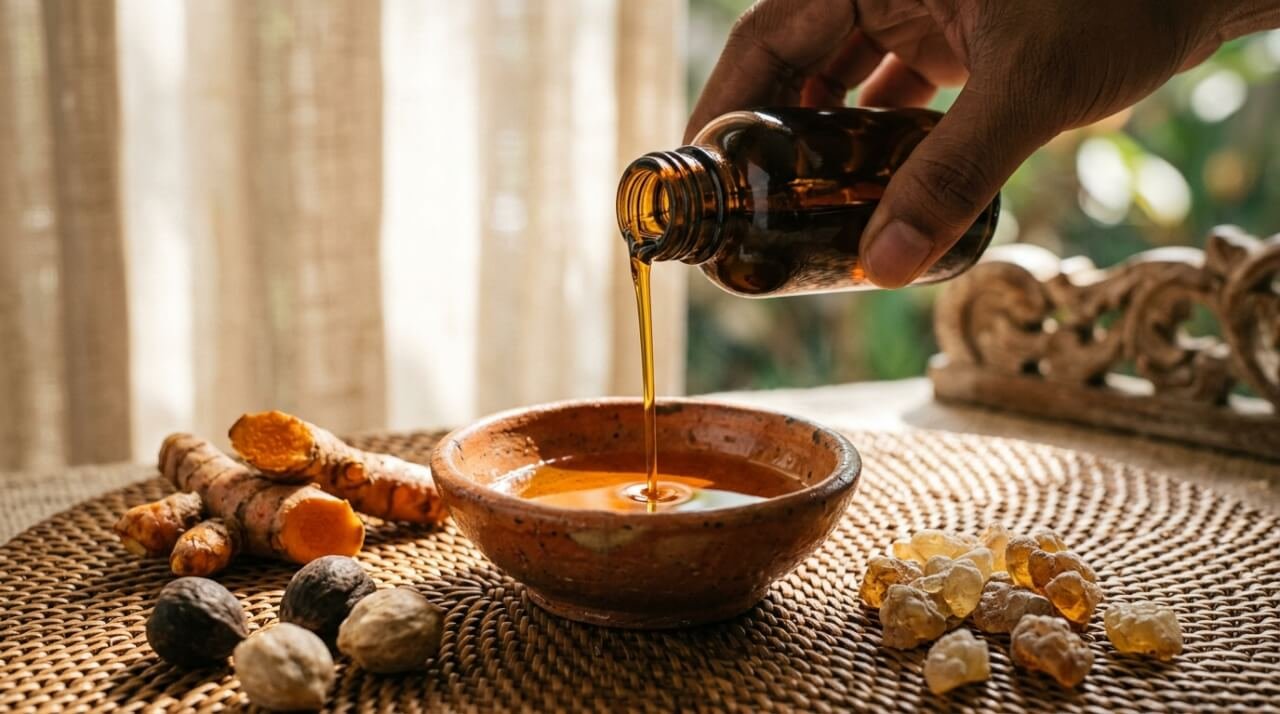
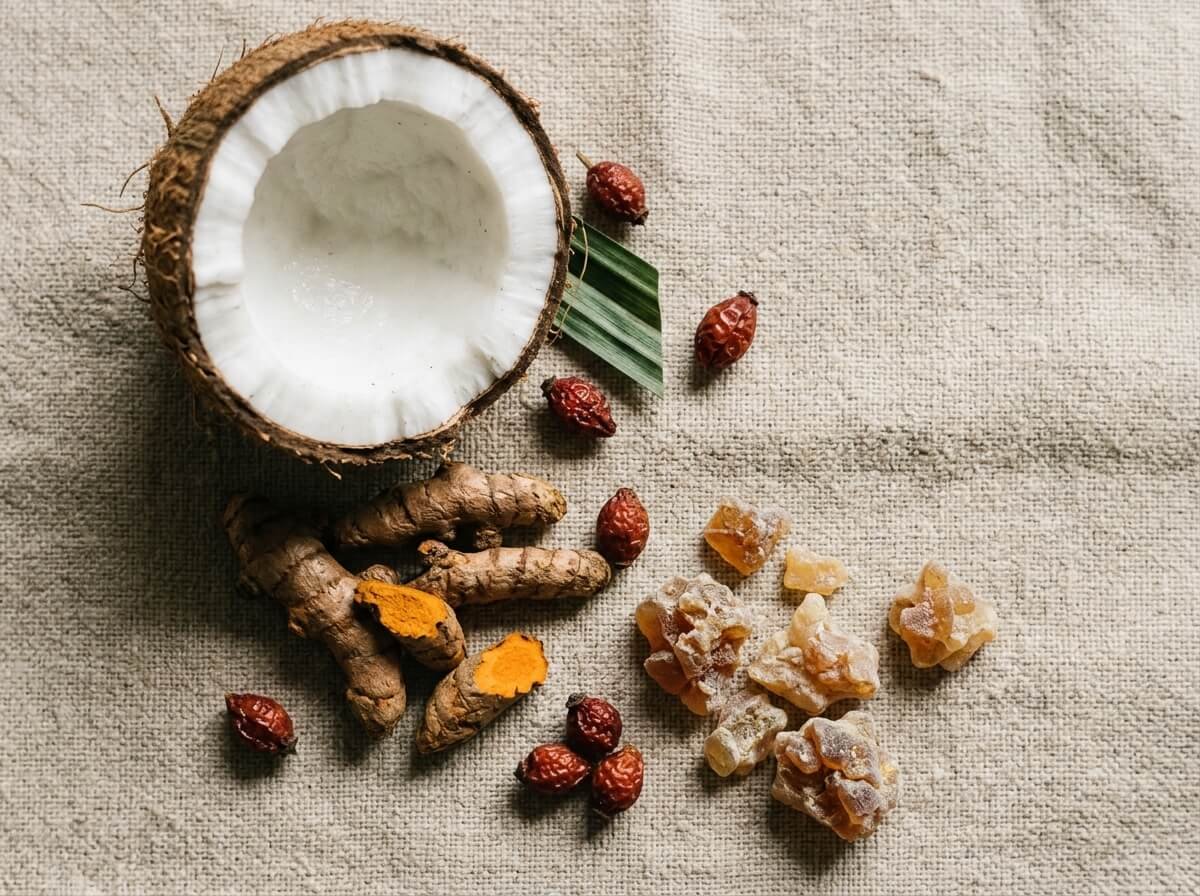
Turmeric brings curcumin, a polyphenol with documented antioxidant and anti-inflammatory activity in topical formulations. Curcumin is also a tyrosinase inhibitor, which is why traditional Balinese boreh paste uses turmeric to even out hyperpigmentation. We cover the science and the ritual in our insight into turmeric for natural skincare.
Frankincense essential oil, distilled from the resin of Boswellia species, contributes boswellic acids and a range of terpenes that have shown antioxidant activity in vitro and modest anti-inflammatory effects on stressed skin. The traditional use case is mature skin tone and the appearance of fine lines, and the modern data, while not yet conclusive, points the same direction. Our full piece on frankincense oil works through the evidence.
Rosehip seed oil carries trans-retinoic acid in trace, naturally occurring amounts, alongside generous beta-carotene and tocopherols. It is the closest the plant world gets to a true vitamin A analogue, though the concentration is too low to compare with a prescription retinoid. Green tea polyphenols, especially EGCG, round out the stack with one of the most studied antioxidants in dermatology research.
The pattern across these four is consistent. Each one is good on its own. Layered together, their effect is more than additive, because they each protect different cellular targets. This is what ingredient stacking actually means, and why a face oil with five well-chosen botanicals will usually outperform a single-actives serum.
Pillar three, collagen support: bakuchiol, vitamin C, and the case for restraint
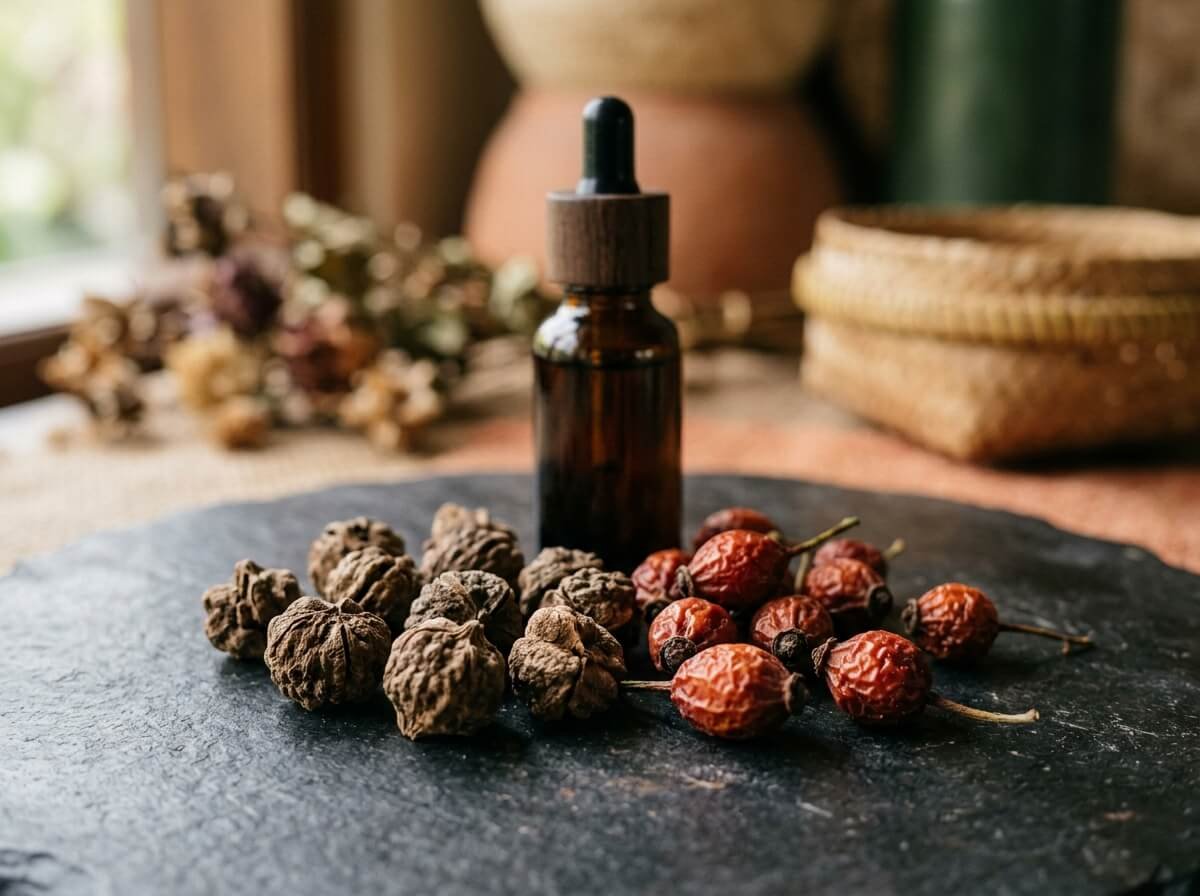
Collagen support is where the marketing gets loudest, and where readers are most often misled. Two clear-eyed points to hold: first, no topical ingredient stimulates collagen the way the body stimulates collagen when it is twenty years old. Second, several botanicals do something measurable, and that something is worth doing.
Bakuchiol, extracted from the babchi plant Psoralea corylifolia, is the headline act. A few published trials have compared bakuchiol to low-strength retinol and found similar effects on wrinkles and pigmentation, with less irritation. The honest verdict: bakuchiol is real, modestly effective, and well-tolerated. It is not a one-for-one swap for prescription tretinoin, and it does not work overnight. Twelve weeks of consistent use is the floor for visible change.
Vitamin C from natural sources, including kakadu plum, camu camu, and acerola, contributes L-ascorbic acid at lower, gentler concentrations than the laboratory-isolated form. The lab forms (15 to 20 percent L-ascorbic acid serums) outperform the botanical concentrations on raw efficacy. Botanical vitamin C wins on tolerance, formulation stability with companion antioxidants, and the absence of pH-driven sting. Pick based on your skin, not marketing.
Frankincense and copal resins also belong here. Boswellic acids inhibit elastase, the enzyme that breaks down elastin in the dermis. This is one mechanism, not a guarantee of visible change, but it earns frankincense its place in collagen-pillar formulations.
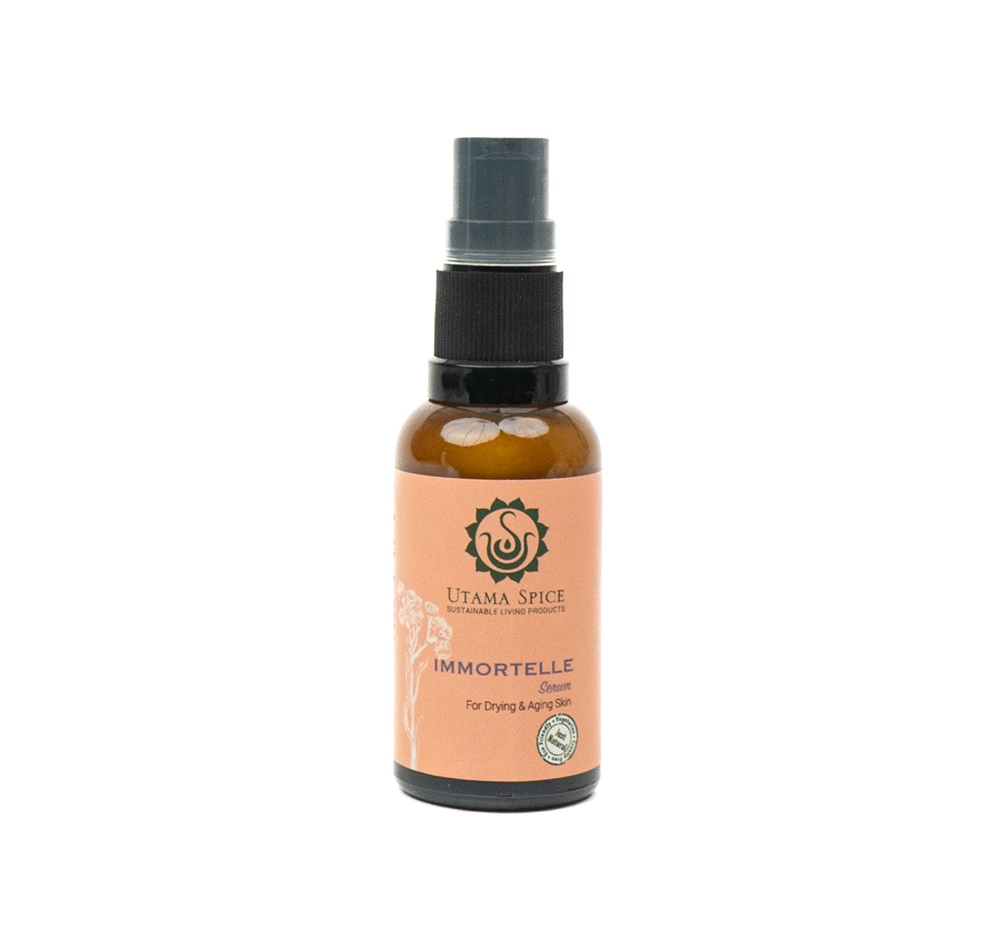
Helichrysum, frankincense, and the four pillars in one serum
The Immortelle Helichrysum Face Serum is our answer to single-hero anti-aging marketing. A barrier-friendly carrier base, helichrysum and frankincense for fine lines and tone, jojoba for tolerance. One bottle, four pillars, no buzzwords.
Pillar four, the most underrated: sun, stripping, and over-treatment
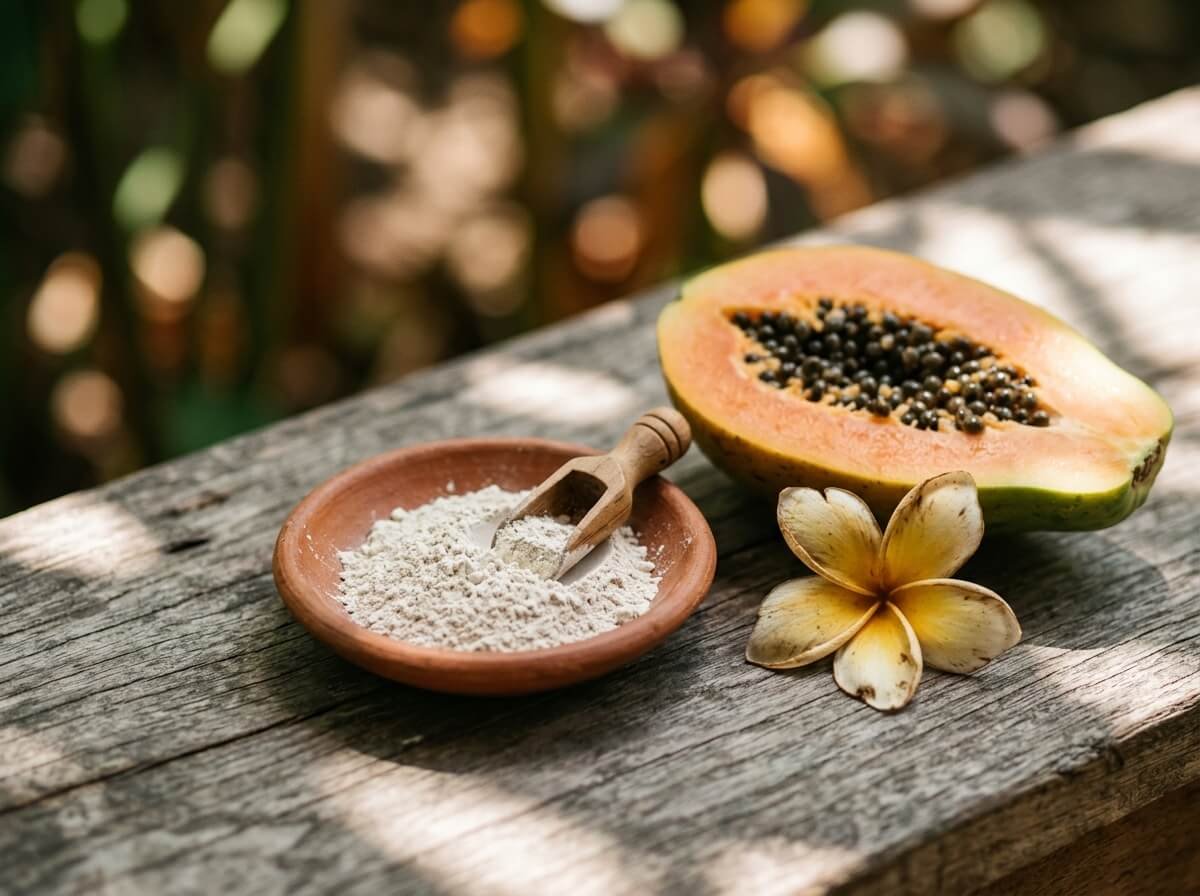
If we could only choose one pillar to teach, this is the one. Up to ninety percent of visible skin aging is attributed to cumulative sun exposure. Every other intervention is downstream of that. A perfect botanical stack, applied diligently, on skin that meets unprotected midday sun, will lose.
Daily broad-spectrum sun protection is non-negotiable. Mineral SPF, formulated with non-nano zinc oxide, sits on top of the skin and reflects UVA and UVB without absorbing into the bloodstream the way some chemical filters do. Our guide to natural sunscreen without chemicals explains the distinction, and the Zinc Natural Sunscreen SPF50 is the daily piece we recommend most often.
The second part of this pillar is harder to sell because it asks for restraint. Most people we talk to are over-cleansing, over-exfoliating, or both. Stripping the barrier with surfactants twice a day, layering two or three acids per week, and using hot water all combine to age skin faster than any environment ever would. If your skin feels tight after cleansing, you have just stripped your lipid barrier. Switch to a cream or oil cleanser, drop the morning acids, and watch your fine lines soften within a month.
The third part: stop chasing immediate results. Most actives, including botanical actives, need eight to twelve weeks of consistent use to show change. Constantly switching products denies any of them the time they need.
A Balinese rooted plant based anti aging ritual
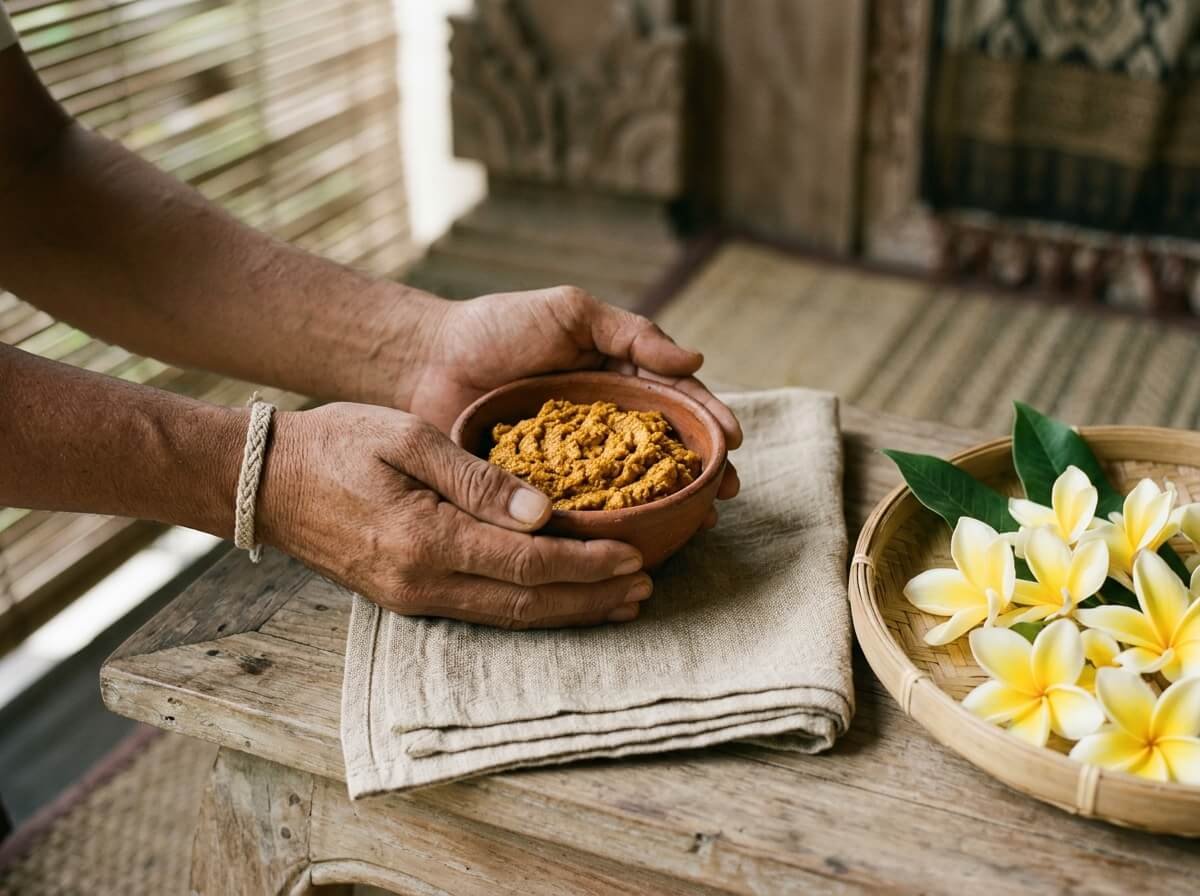
This is the routine we use ourselves, and that we teach to friends who want plant based anti aging without the buzzwords. It is structured by pillar, and by time of day, because the work is different in the morning than in the evening.
Morning, the protective phase
- Splash with cool water only, no cleanser. Your overnight oils are the protective layer. Keep them.
- Apply a hydrating mist or a thin layer of aloe vera gel to damp skin. Aloe brings polysaccharide humectants that draw water into the upper layers.
- Layer two to three drops of an antioxidant-forward face oil. This is where turmeric, frankincense, and rosehip do their daytime defense work. Our primer on choosing a face oil for your skin type walks the options.
- Finish with mineral SPF. Non-negotiable, even in cloud cover.
Evening, the repair phase
- Cleanse with an oil or cream cleanser. If you wore makeup or SPF, double cleanse, but gently.
- Apply a barrier-repair serum or facial oil. Helichrysum, frankincense, kukui, and bakuchiol all do their best work on the body’s overnight repair clock.
- Seal with a thin layer of body care on hands, neck, and decollete. Illipe and coconut shine here.
- Hot water is not the goal. Warm water, short shower, leave skin slightly damp before applying oils.
Weekly, the gentle reset
- Once or twice a week, a turmeric and rice flour mask. Boreh, the Balinese herbal paste, is the traditional version. Modern adaptations work just as well.
- Skip the weekly enzyme peel unless your dermatologist has specifically recommended one.
- Spend ten minutes with no phone, no screen. The nervous system component of skin aging is real, and the cheapest intervention is rest.
Buzzwords to skip, and questions readers ask us most
We close with the marketing language to discount, and the practical questions that come up in our inbox week after week.
Anti aging buzzwords without mechanism
- Reverses aging. No topical product reverses chronological aging. Skin can be supported, protected, and rebuilt at the barrier level. It cannot be made younger.
- Miracle. A miracle is, by definition, not reproducible. Anything that works in skincare works because of biology, and biology is reproducible. If the marketing reaches for miracle, the product is reaching for your wallet.
- Youth restoring. Same problem as above. Ask for the mechanism. If the brand cannot name one, the claim is decoration.
- 100 percent natural. A meaningless phrase. Preservatives in a water-based formula are not optional, and a well-formulated synthetic preservative is safer than a contaminated ‘natural’ alternative.
- Anti aging without age. If a product markets anti aging benefits but never says which age process it addresses, treat the claim as advertising.
Is bakuchiol the same as retinol?
No. Bakuchiol activates some of the same retinoic acid receptors as retinol, and a few published trials show comparable wrinkle reduction at twelve weeks. It is significantly gentler. It is not a structural equivalent and will not match the strongest prescription retinoids. For sensitive skin that cannot tolerate retinol, bakuchiol is a meaningful alternative. For severe photodamage, see a dermatologist.
How long until I see results?
Barrier and hydration: two to four weeks. Tone and brightness: four to eight weeks. Fine line softening: eight to twelve weeks at minimum, and that assumes daily SPF. Most people stop too early.
Do I still need a moisturizer if I use a face oil?
It depends on your skin. Oily and combination skin often do not. Dry or barrier-compromised skin benefits from layering a humectant (water-attracting) product under the oil. A few drops of aloe vera gel or a lightweight hydrating cream under your face oil is a good default.
Can plant based skincare replace SPF?
It cannot. Some botanical oils, raspberry seed and carrot seed, are sometimes marketed as natural SPF. Their measured SPF is too low and too inconsistent to rely on. Use a real mineral SPF every morning. This is the highest-leverage anti aging decision you can make.
Closing thoughts, and one quiet question
Plant based anti aging skincare, at its best, is not a faster path to younger skin. It is a more honest path to skin that ages on its own terms. The four pillars hold. The botanicals are real. The ritual is the part most people skip, and the part that matters most.
If you take only one thing from this guide, take this: protect your barrier, defend with antioxidants, support collagen modestly and patiently, and stop doing the things that are aging your skin in the first place. The plants are ready to help. The question is only whether you can give them the time.