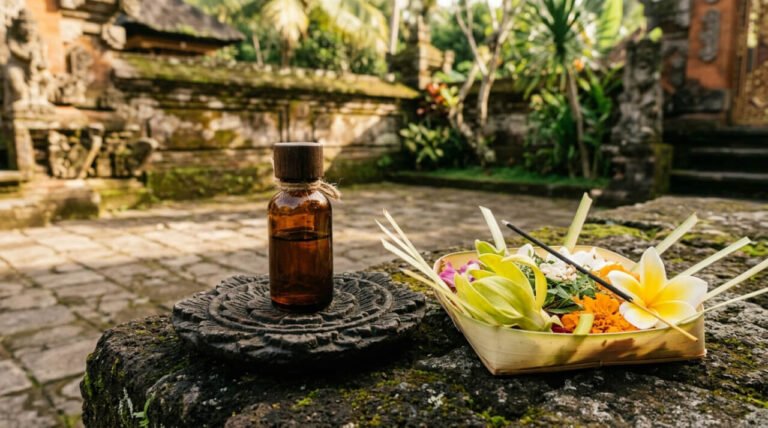
Aromatherapy diffuser blend recipes: Balinese rituals for every part of your day
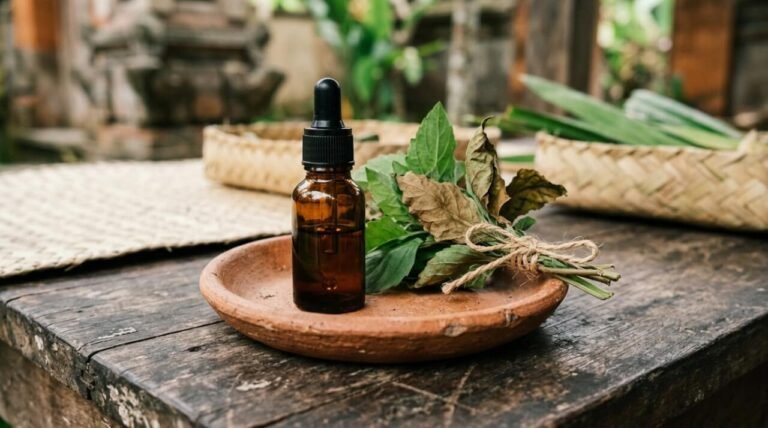
Most aromatherapy diffuser blend recipes online read like a Western season-and-symptom catalogue: sleep blends, allergy blends, holiday blends, congestion blends. Useful in places, but stripped of the older logic that made aromatherapy a daily practice in the first place. In Bali, scent has always belonged to the rhythm of the day. Frangipani at dawn, sandalwood smoke at temple, lemongrass in the kitchen, ylang-ylang at dusk. This guide takes that older rhythm and turns it into modern aromatherapy diffuser blend recipes you can use from morning to night, with the safety primer and synergy science kept in the same place as the recipes themselves.
Below you will find twenty-plus blends grouped by time of day, a clear note on dilution and drop counts, and a Balinese palette that gives every recipe its sense of place. The point is not to layer more scent into your life. It is to choose scent on purpose, with care for what each oil is asking of you.
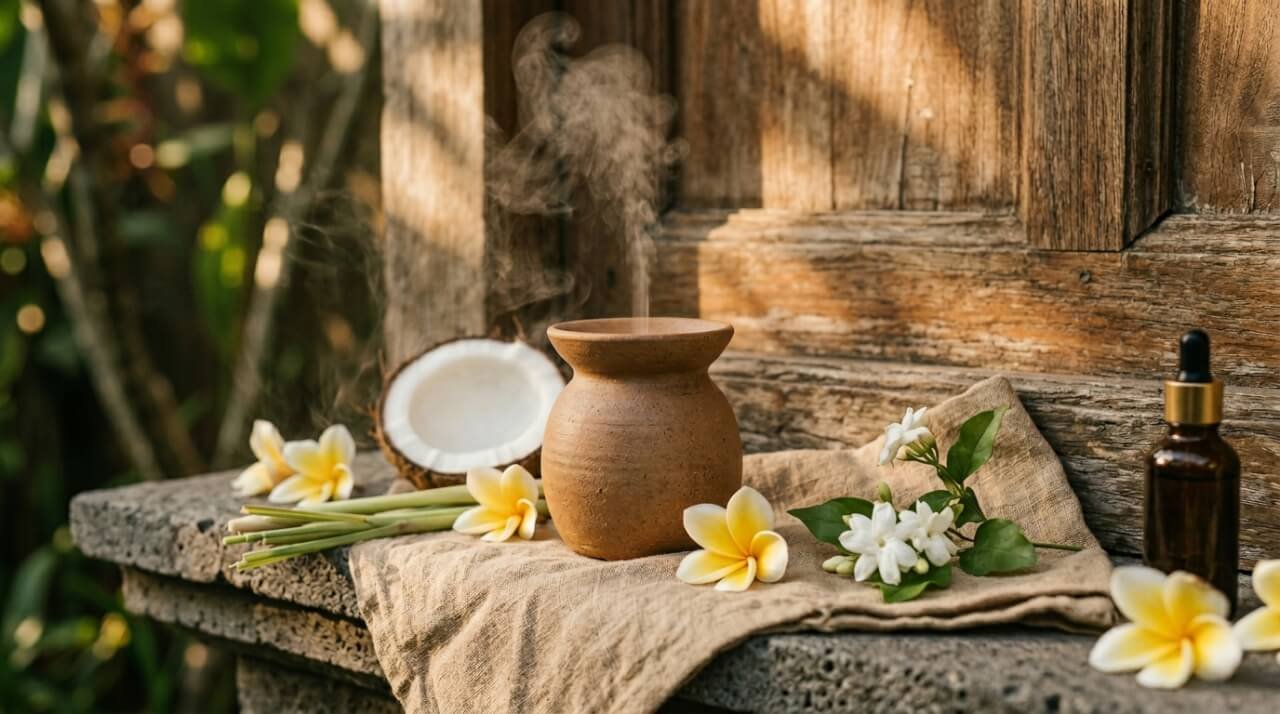
What makes a diffuser blend actually work
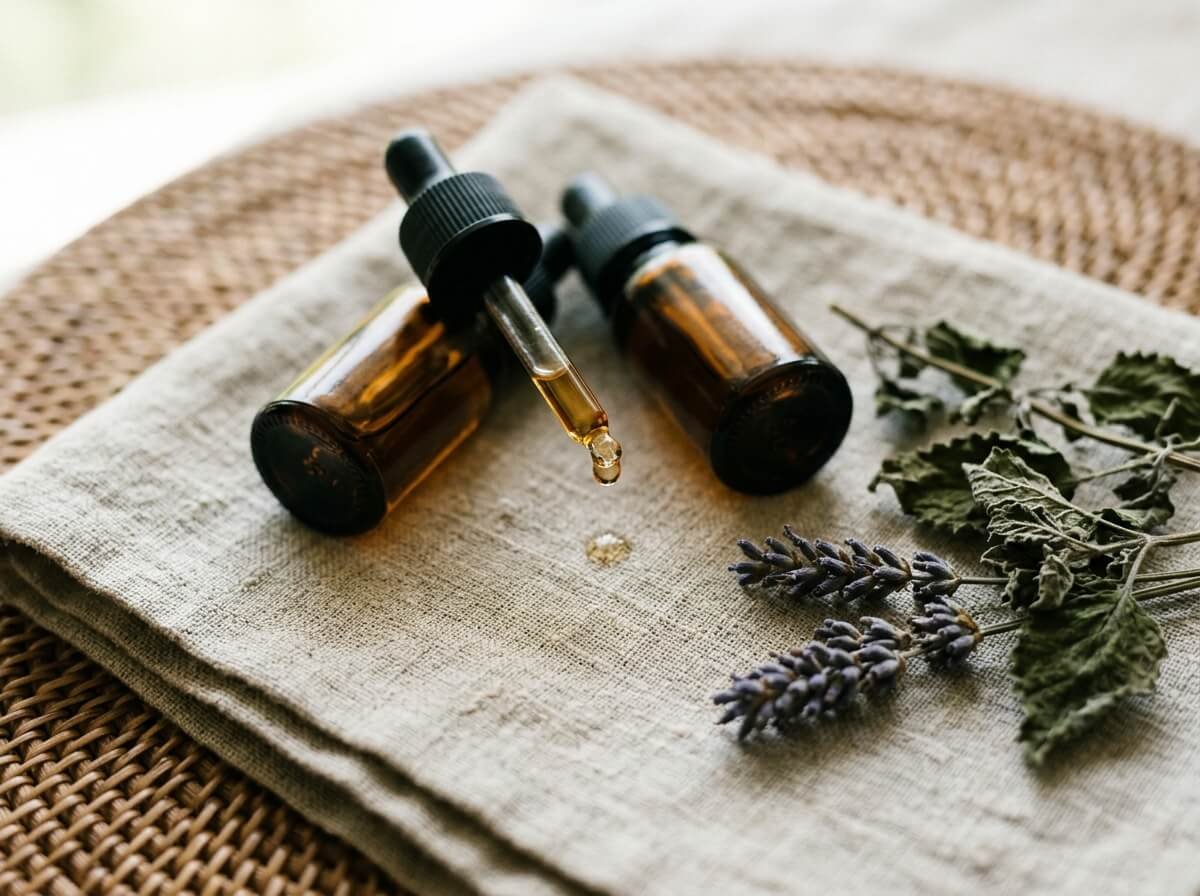
A diffuser blend is not just a list of oils that smell good together. It is a small piece of chemistry built from three layers: top notes that meet you first, middle notes that hold the centre of the scent, and base notes that ground the blend and slow how quickly it fades. Citrus and mint sit in the top layer, vaporising within fifteen to thirty minutes. Florals, herbs, and warm spices fill the middle. Resins, woods, and roots anchor the base, sometimes for hours.
Synergy is the second piece. Some pairs of oils carry one another, deepening rather than competing. Lavender and bergamot calm together in a way neither does alone. Lemongrass and ginger lift the mind without becoming sharp. Sandalwood and ylang-ylang round one another into something quiet and long. The brief, useful rule is to combine at most one strong personality per blend. Two assertive oils in the same diffuser tend to cancel into noise.
Dilution matters even in an electric or nebulising diffuser, where no carrier oil is used. The water reservoir is the carrier. Most ultrasonic diffusers want three to five drops total per 100 ml of water for a small room, six to eight for a larger one. A nebulising diffuser like the Danau Dua disperses neat oil at a much higher concentration, so you only need two to four drops at a time, run on short intervals. More is not more. Over-saturation dulls the nose within minutes, the opposite of what you came for.
For the science of which oil does what, our complete guide to aromatherapy oils covers each botanical family, and the essential oils uses chart gives a quick visual reference for pairing.
The Balinese aromatherapy palette
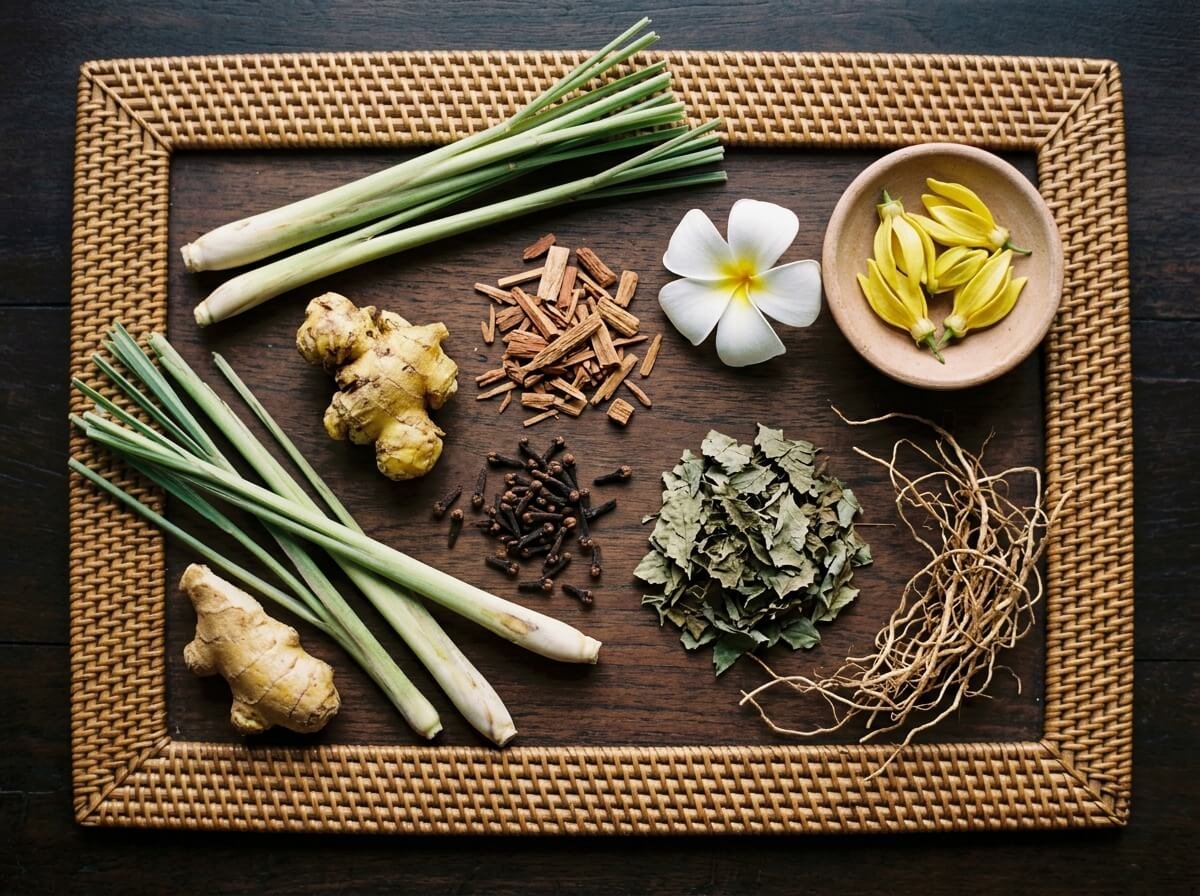
Most diffuser-blend roundups draw from the same European apothecary: lavender, rosemary, eucalyptus, peppermint, tea tree. Lovely oils, all of them. But Indonesia carries a different and older palette, one shaped by tropical heat, temple offerings, and a thousand years of kitchen herbalism. Recipes built from this palette feel rooted in place rather than airlifted from somewhere else.
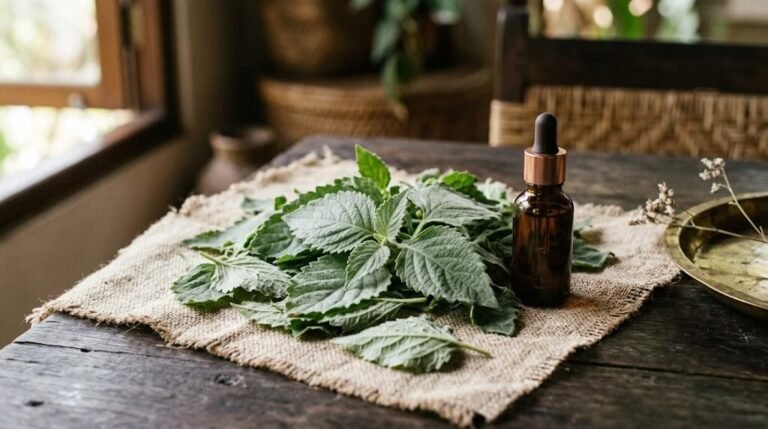
- Lemongrass. Bright, clean, citrus-edged. Lifts a tired mind without the sharpness of pure citrus. The backbone of Balinese kitchen scent. Try lemongrass essential oil as your morning top note.
- Ginger. Warm, earthy, lightly sweet. Settles the stomach and grounds anxious energy. Excellent against rainy-season damp.
- Clove. Deep, slightly numbing, antiseptic in the old herbal sense. A drop, never two, in a sleepy afternoon blend.
- Sandalwood (cendana). Quiet, dry, resinous. Used in Balinese temple ritual for centuries because it draws the mind inward. A reliable base note for evening blends.
- Ylang-ylang. Sweet, floral, almost narcotic. A small drop opens the heart, two drops can overwhelm. Pair with citrus to keep it from becoming heavy.
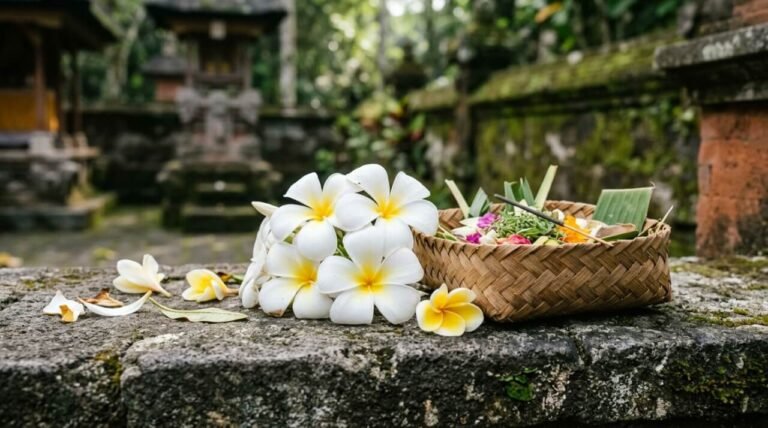
- Frangipani (kamboja). Bali’s temple flower. Light, milky, slightly fruity. Best used in trace amounts in evening or sleep blends.
- Patchouli. Damp earth, dark soil, old wood. Anchors lighter florals. A grounding base for moody afternoon rituals. Patchouli essential oil deepens any blend it joins.
- Vetiver. Smoky, root-deep, almost cooling. The strongest grounding oil in the palette. Use sparingly in sleep blends.
- Kaffir lime. Sparkling, leafy, distinct from common lemon or sweet orange. A morning oil with a clean afternoon edge.
You do not need every oil in this palette to build good blends. Three or four are plenty to start. The pre-built Bali Night Essential Oil Blend is a shortcut to the evening end of the palette if you want one bottle that already carries the rhythm.
One thing worth saying about provenance. Most essential oils on the global market are distilled in industrial-scale European or North American facilities, even when the plant is grown in the tropics. The result is a clean but flattened scent profile, missing the heat and humidity character of the original place. Indonesian-distilled oils carry that origin in the bottle, partly because the plants travel less, partly because small-batch distillation keeps more of the volatile compounds intact. When you can choose oils distilled close to where the plant grew, the blends you build from them carry a different weight.
Morning aromatherapy diffuser blend recipes
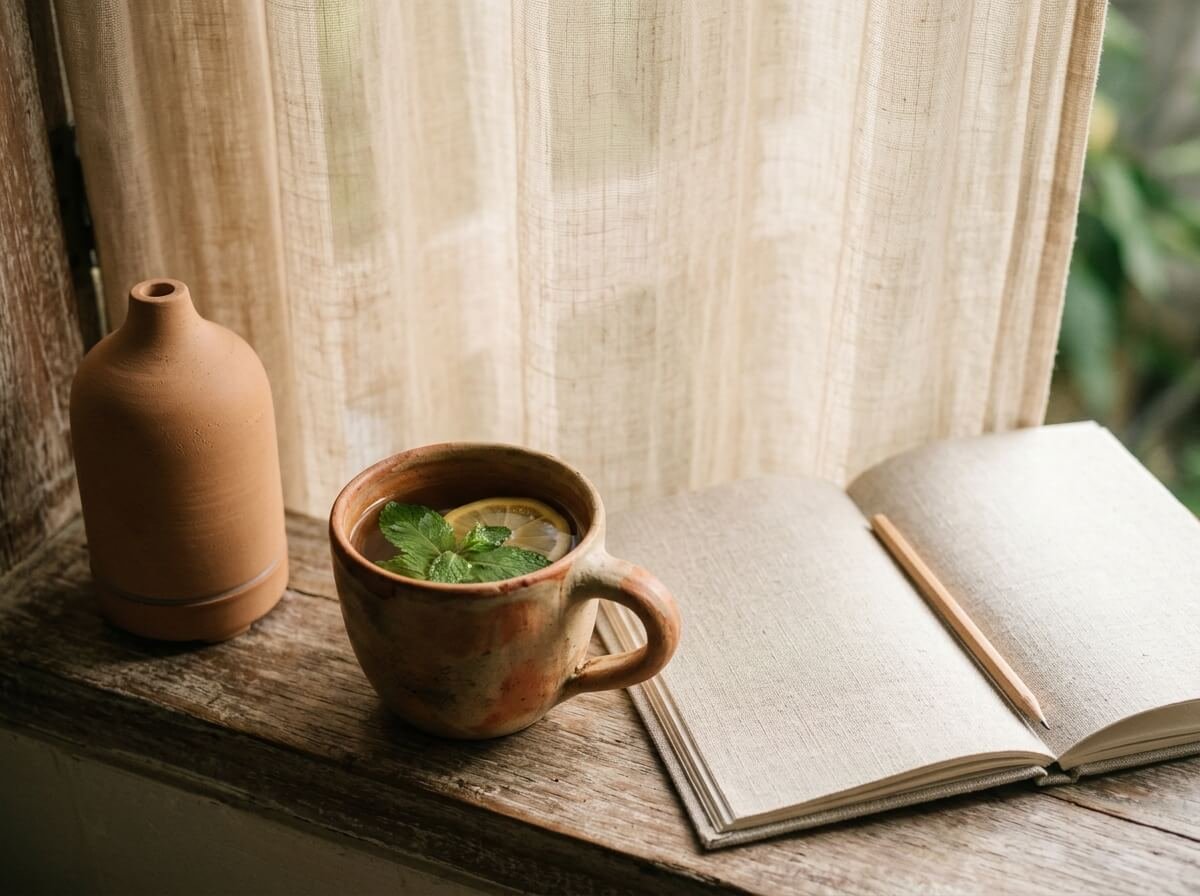
The first scent of the day shapes the hour that follows. Morning blends want clarity, lift, and a sense of opening. Top notes lead, with a small middle to keep the blend from disappearing within ten minutes. Run a small diffuser for fifteen to twenty minutes while you make tea or set the day’s intention, then let it rest.
- Sunrise clarity. Three drops lemongrass, two drops mint, one drop ginger. A 100 ml ultrasonic diffuser. Clean, awake, gently warm. Pairs well with the first cup of green tea.
- Bali kitchen. Two drops kaffir lime, two drops lemongrass, one drop ginger. Bright and citrus-led. The morning blend our team in Ubud reaches for when the rain has just stopped.
- Focused start. Two drops mint, two drops rosemary, one drop lemon, one drop frankincense. For workdays that need a clear head from the first hour. Holds for roughly forty minutes.
- Steady gratitude. Two drops sweet orange, two drops bergamot, one drop sandalwood. Warmer, more grounded than a pure citrus blend. Good for slower mornings, weekend reading, journalling.
One quiet trick from Balinese morning ritual: scent and breath belong together. While the diffuser warms up, three slow breaths through the nose, four counts in, six counts out. The blend will settle into your morning differently if your breath has already arrived.
Morning blends are also where most people overdose without realising. The first scent of the day feels like nothing until you step outside and come back in, and the room has gone heavy. If the blend is still strong when you re-enter the room twenty minutes later, you used too many drops. Cut by a drop next time. The Balinese rule of thumb for morning offerings is that the scent should hint, never insist.
If your mornings need help with mental clarity more than mood, the essential oil blends for diffuser guide walks through note structure in more depth, and the best essential oil diffuser guide compares ultrasonic, nebulising, and reed options if you are still choosing equipment.
Afternoon reset blends
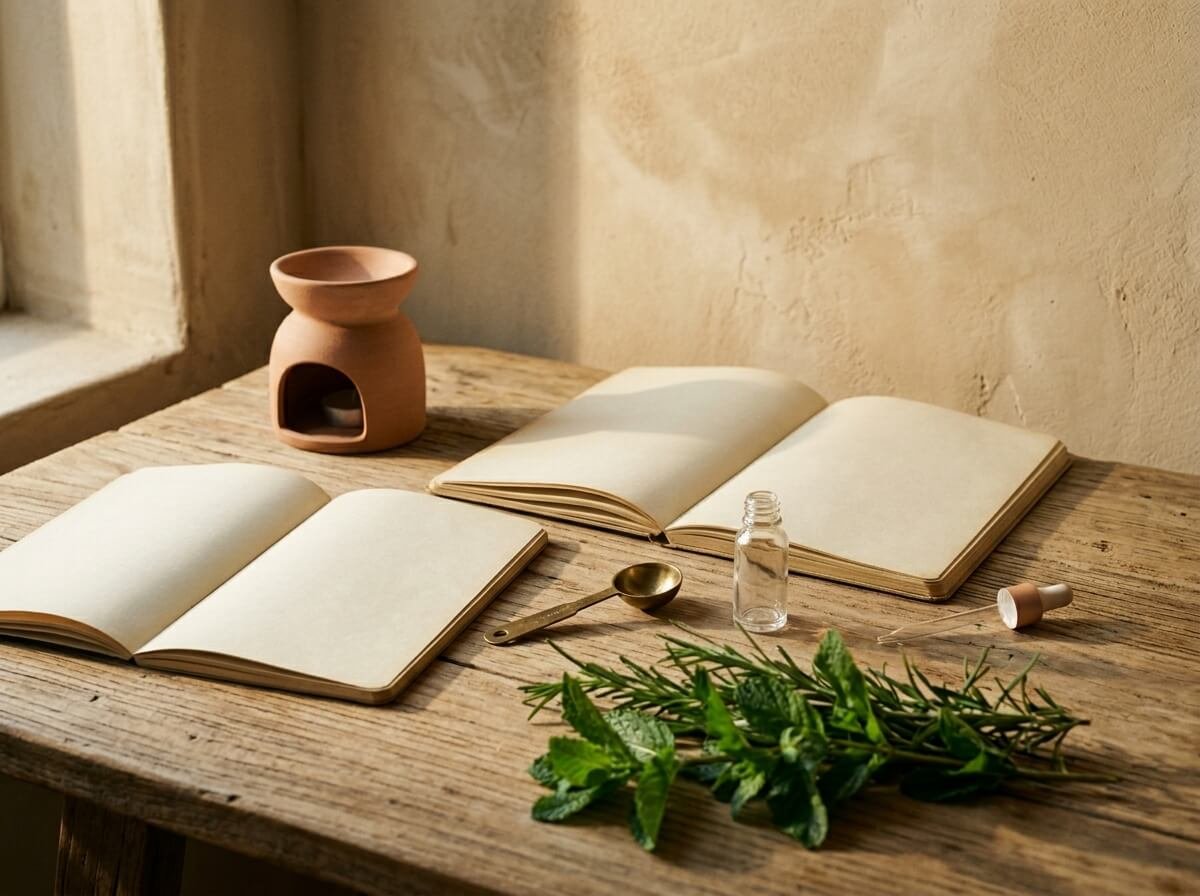
The afternoon is where most days quietly slip. The blood sugar dips, attention thins, the room starts to feel stale. A diffuser blend at this hour does two jobs. It refreshes the air physically, and it gives the nervous system a small reset that coffee cannot. Aim for blends with a clear middle note and a touch of brightness, not the heaviness of evening.

- Three o’clock lift. Two drops grapefruit, two drops rosemary, one drop basil. A clean wake-up without the steep climb of pure peppermint. Holds for thirty minutes.
- Studio stillness. Two drops bergamot, two drops lavender, one drop sandalwood. For creative work that needs both alertness and patience. The lavender softens the bergamot’s edge.
- Tropical reset. Three drops lemongrass, one drop ginger, one drop ylang-ylang. Indonesian to the bone. Mood-lifting without becoming sweet.
- Workspace clear. Two drops eucalyptus, two drops mint, one drop lemon. For shared rooms or stuffy afternoons. The Clearing essential oil blend is a ready-made shortcut for this brief.
If you work near other people, run the diffuser in fifteen-minute bursts rather than continuous mode. Scent fatigue sets in fast in shared rooms, and what feels like a fresh blend to you may register as too much for someone two desks over.
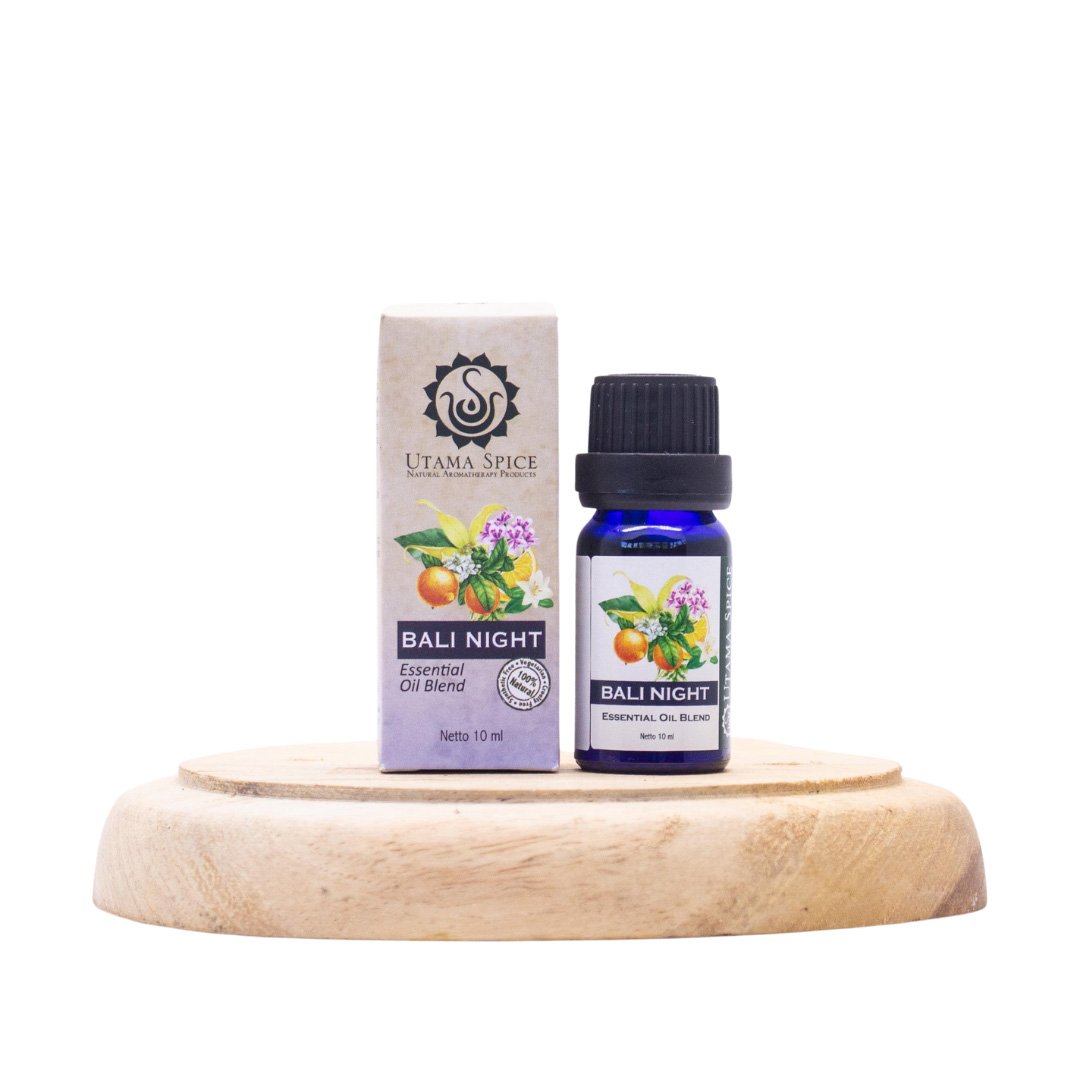
A Bali evening, in a 10 ml bottle
Our Bali Night Essential Oil Blend carries the sandalwood-and-frangipani end of the palette in a single small-batch bottle, hand-blended in Ubud. Five drops in a 100 ml diffuser will quiet a room for the slow hour before bed.
Evening unwind blends
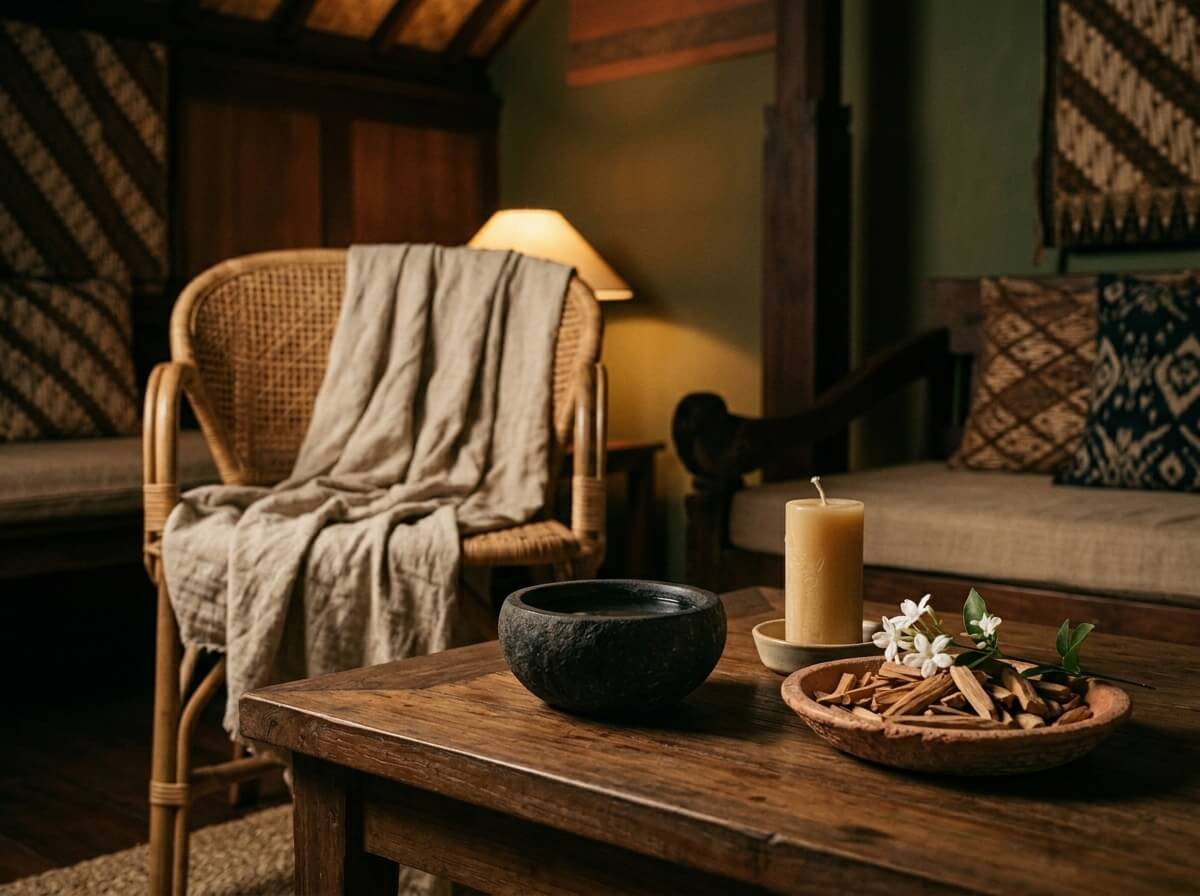
Evening is where the Balinese palette comes into its own. Sandalwood, ylang-ylang, frangipani, and patchouli were all carried in temple offerings precisely because they slow the body toward stillness. Evening blends want a heavier base and a softer top. The brightness recedes. Warmth and depth carry the room.
- Slow descent. Two drops bergamot, two drops sandalwood, one drop ylang-ylang. The classic transition blend. Bergamot lifts mood without keeping you awake; sandalwood and ylang-ylang carry the room into evening.
- Temple quiet. Three drops sandalwood, one drop frankincense, one drop frangipani. Deeply grounding. Excellent for meditation, slow yoga, or the last hour before bed.
- Warm hearth. Two drops cedarwood, two drops sweet orange, one drop clove, one drop patchouli. A blend for cool evenings and rainy seasons. Sweet, dark, and quiet.
- Bali night, ready-made. Five drops of the Bali Night Essential Oil Blend in a 100 ml diffuser. Sandalwood-led, with the kind of frangipani softness that anyone who has slept in Ubud will recognise.
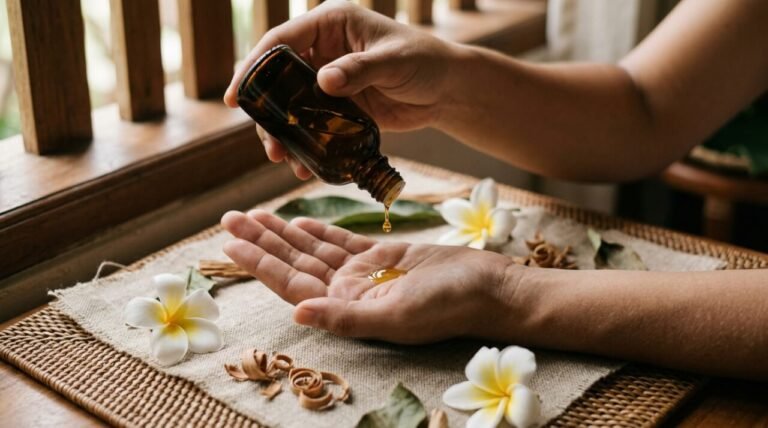
If you treat evening blends as part of a longer ritual rather than a standalone scent, they work harder. A warm shower with a gentle balinese massage oil before lighting the diffuser, then a slow hour with no screen, lets the blend carry weight that a five-minute exposure never could.
A note on layering. Evening is also when most homes light a candle or burn incense, and stacking three scent sources in one room tends to muddle them rather than deepen the mood. Choose one carrier for the evening: the diffuser, or the candle, or the incense, not all three. If you do want to layer, pair a single-note candle (sandalwood, jasmine) with a complementary diffuser blend that shares its base note. The two will read as one mood rather than two competing fragrances.
Sleep and dreamscape blends
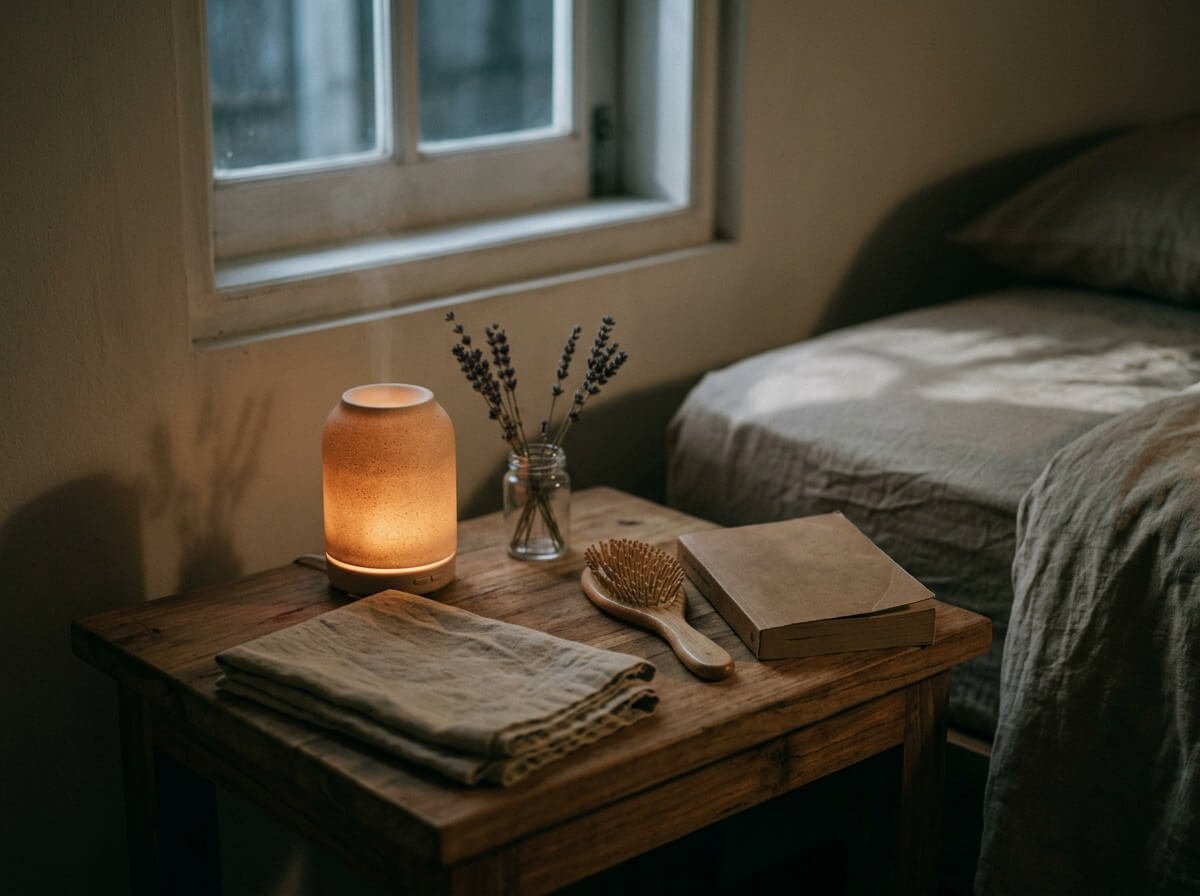
Overnight blends are a separate category. The nose is sensitive while you sleep, and prolonged exposure to a strong blend can disrupt the rest you came for. The rule for any blend left running through the night is fewer drops, simpler structure, and conservative oils. Two to three drops total in a 100 ml diffuser, set on intermittent rather than continuous, with the diffuser at least two metres from the pillow.
- Quiet body, quiet mind. Two drops lavender, one drop sandalwood. The simplest reliable sleep blend in the book. Twenty-minute intermittent setting.
- Tropical sleep. One drop ylang-ylang, one drop sandalwood, one drop sweet orange. Slightly sweeter than the standard lavender base. For the nights when lavender alone is not landing.
- Anxious mind. One drop vetiver, two drops lavender. Root-deep grounding. Especially useful for the kind of sleeplessness that lives in the chest rather than the head. The essential oils for stress and anxiety guide covers this pattern in more depth.
Three Balinese cautions worth keeping. Do not run a diffuser in a baby’s room overnight; their developing nervous systems are more sensitive than adults to long exposure. Do not blend more than two oils for sleep; complexity wakes the brain rather than settling it. And do not run a diffuser dry. The motor will burn out, and the oils will scorch into a smell no one wants to wake to.
Safe blending: dilution, drop counts, and who should be careful
Aromatherapy is safer than most home practices, but it is not without rules. The safety primer below is the part of most diffuser-blend articles that gets buried at the bottom. We have put it here on purpose, because it shapes every recipe above.
- Drop counts. Three to five drops total in a 100 ml ultrasonic diffuser is the working range for a small room. Six to eight for a larger room. Two to four for a nebulising diffuser like the Danau Dua, run on short cycles.
- Duration. Thirty minutes on, thirty minutes off is the most useful rule. Continuous diffusion of any blend, even a gentle one, dulls the nose and stresses the respiratory system.
- Pregnancy. Avoid clove, sage, rosemary, basil, jasmine, and cinnamon during the first trimester. Lavender, sandalwood, and citrus are generally considered safer, but check with your midwife or care provider for your specific situation.
- Children. Eucalyptus, peppermint, and rosemary are not recommended for diffusion around children under six. Use lavender, sweet orange, and chamomile sparingly, at half the adult drop count.
- Pets. Cats lack the liver enzymes to process certain monoterpenes safely. Avoid tea tree, citrus, pine, eucalyptus, and ylang-ylang in rooms cats spend time in. Dogs are more tolerant, but still keep diffusion intermittent and the room ventilated.
- Asthma and respiratory sensitivity. Start with a single oil rather than a blend, and a single drop. Eucalyptus and peppermint can trigger constriction in sensitive lungs.
Every blend in this guide is built around these constraints. None of the recipes use more than five drops in a 100 ml diffuser, and none combine more than four oils, because more is rarely more in aromatherapy.
One last quiet truth most aromatherapy roundups skip. Cheap essential oils are often cut with synthetic carriers, fractionated coconut oil, or perfumer’s solvents. They will smell roughly correct on the bottle, but they will not behave in a diffuser the way pure oil does, and the safety guidance above assumes pure oil. If you cannot tell whether what you bought is the real botanical, the simplest test is to put a drop on plain paper and let it dry overnight. Pure essential oil evaporates almost completely. A solvent-cut oil leaves a faint, slightly greasy halo. It is a small thing, but it changes everything that follows.
Building your own aromatherapy diffuser blend recipes
Once the palette and the safety frame are familiar, blending becomes a quiet daily practice rather than a search for the next recipe online. Three patterns help. Choose a single lead note, the one personality that defines the blend. Add one supporting middle note that complements rather than competes. Finish with a single base note that grounds the lift. Three oils, one strong, two soft. That is the structure of almost every well-built blend in this guide.
The Balinese sensibility behind these blends is the same one that runs through our approach to skincare and our balinese face oil: tradition is not nostalgia, it is research. A thousand years of ritual is a long, careful clinical trial. We trust it, and we build on it. The same logic that put sandalwood in temple offerings puts it in our evening diffuser tonight.
For more specific lookups, the list of essential oils and their uses covers individual oils in detail, the aromatherapy diffuser oils guide walks through what each oil does in a diffuser specifically, and our daily Ingredient Tuesday posts profile single Balinese botanicals one at a time. Used together, they let you build aromatherapy diffuser blend recipes that belong to your life, your room, and the part of the day you actually need them for.
Scent is one of the oldest ways humans have shaped time. A blend in the morning, a different blend at three, a quieter one at dusk, the simplest one for sleep. Not more aromatherapy. Better-placed aromatherapy. That, more than any single recipe, is what makes diffuser blends actually work.