Vetiver essential oil benefits: the grounding root oil of the tropics
Some scents lift you. Vetiver settles you. If you have ever stood on wet earth after tropical rain and felt your shoulders drop, you already know the direction this oil pulls in. The vetiver essential oil benefits that people reach for again and again are quiet ones: a calmer mind, steadier sleep, and skin that feels balanced rather than stripped. It is a base note distilled from grass roots, and it has been part of tropical wellness for a very long time.
This guide walks through what vetiver actually is, where it comes from, and what it can genuinely do for the mind, the body, and the skin. We will also be honest about what it cannot do, and how to tell a real vetiver oil from a thin imitation. No miracle language, no shortcuts, just what the root, the tradition, and the research tell us.
What vetiver essential oil is, and where it comes from

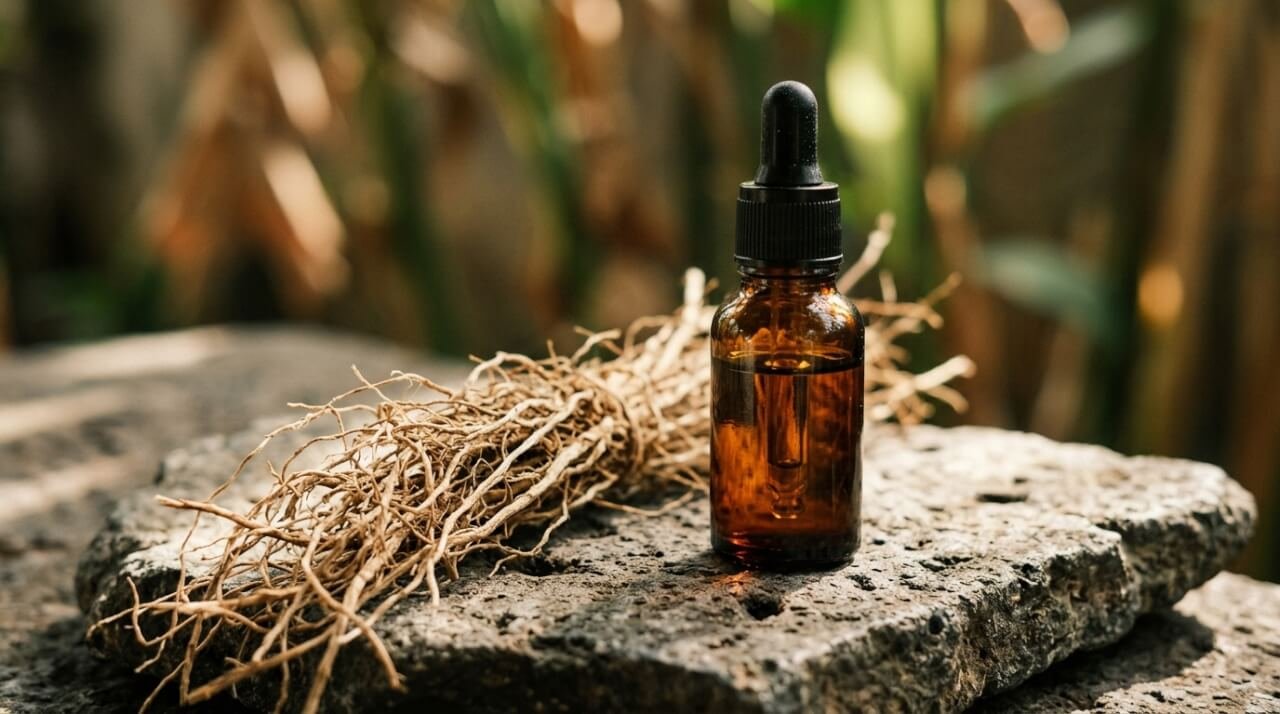
Vetiver (Chrysopogon zizanioides) is a tall, clumping grass that grows across the tropics, from India and Indonesia to Haiti and Réunion. Unlike most aromatic plants, its value lives underground. The oil is steam-distilled from the dense, fibrous root system, which can reach two to four metres deep. Those roots are why vetiver is planted on hillsides to hold soil in place, and why its oil carries such a grounded, earthy character. The plant that anchors a slope gives an oil that seems to anchor a mood.
Across South and Southeast Asia the root has a long domestic life beyond perfumery. In India it is known as khus, woven into cooling mats and window screens that are dampened in hot season. In Indonesia, root and grass botanicals like this belong to the same broad tradition of plant-based care we explore in our look at Indonesian wellness at home. Vetiver was never a novelty ingredient here. It was infrastructure, comfort, and ritual at once.
The oil itself is thick, amber to deep brown, and slow to leave the skin or the air. That density is a clue to how it behaves in a blend and why a single drop travels so far. If you are new to reading oils by their role, our complete guide to aromatherapy oils is a gentle place to start, and our A-to-Z reference of essential oils and their uses puts vetiver in context alongside its more familiar neighbours.
Distillation matters here more than with most oils. Because the aroma is locked inside woody root fibre rather than a soft petal or leaf, vetiver needs long, patient steam distillation to release it, sometimes 18 to 24 hours. Older roots and slower runs tend to give a rounder, more complex oil. This is craft measured in hours, not minutes, and it is part of why good vetiver has always been treated as something to keep rather than to burn through. The same respect for time and source runs through the way we think about every botanical we work with, from wild-harvested butters to the roots and resins of the aromatherapy line.
Vetiver essential oil benefits for a calmer mind
The most valued of the vetiver essential oil benefits is its effect on a restless nervous system. Aromatically, vetiver is a sedative-leaning oil. Small studies on inhaled vetiver point toward reduced anxiety-type responses and steadier attention during the day, and it has a long traditional reputation as a grounding, sleep-friendly scent. The mechanism is partly simple: heavy, earthy base notes slow the breath, and a slower breath tells the body it is safe.
There is a reason for this that has nothing to do with belief. Scent reaches the brain through the olfactory bulb, which sits close to the regions that handle emotion and memory, so aroma lands before conscious thought does. We wrote about that pathway in why scent reaches you before thought does. Vetiver uses it well. It does not stimulate or brighten. It lowers the volume.
It helps to be clear about what this is and is not. Vetiver is not a sedative you swallow, and it will not switch off a racing mind on its own. What it does is set a mood, the way a dim light or a slow song sets one. Used as part of a ritual you repeat, a scent your body comes to associate with rest, it becomes a cue. Over a few weeks that association does real work. The oil is the anchor, and the repetition is what gives the anchor something to hold.
Ways people use vetiver for grounding
- In a diffuser at night, one to two drops, often paired with a softer floral so it does not feel too heavy on its own.
- On the soles of the feet, well diluted in a carrier oil, as part of a wind-down ritual before sleep.
- As a steadying anchor in a stressful moment, one drop on a tissue, breathing slowly for a minute.
Vetiver rarely works alone in a blend. It is a base note, which means it is the foundation other scents rest on. Cananga, its Balinese floral counterpart, is a natural partner, and you can read how that flower behaves in our piece on cananga essential oil benefits. Our house Bali Night essential oil blend leans on exactly this pairing of earthy base and calming floral for the end of the day. For building your own evening combinations, the diffuser blend recipes guide gives ratios that actually hold together.
Vetiver essential oil benefits for skin
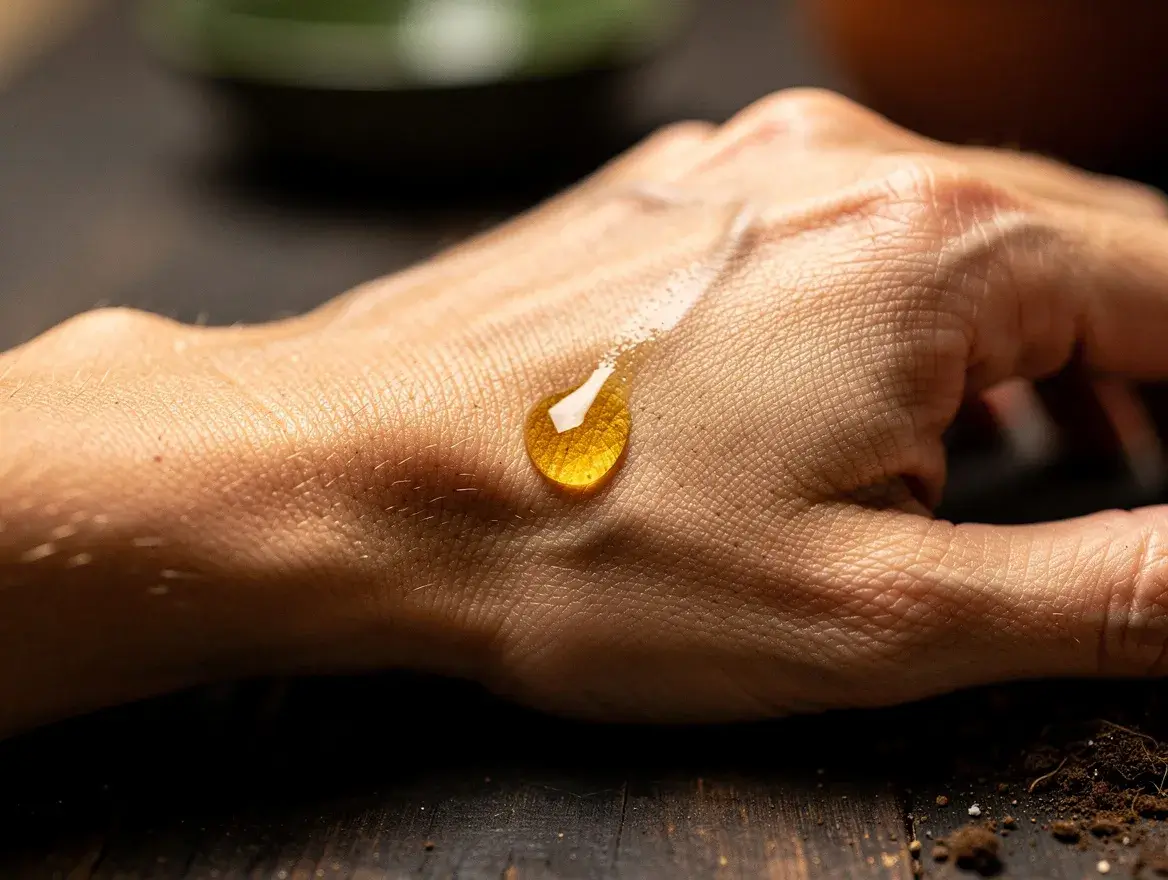
On skin, the vetiver essential oil benefits are more modest than the marketing around it sometimes suggests, and honesty serves you better here than hype. Vetiver is traditionally valued as a soothing, balancing oil for skin that runs oily or congested, and it carries antioxidant and calming properties studied in the lab. It is not a spot treatment, not an anti-aging cure, and not something to apply neat. Treated as a supportive botanical rather than an active, it earns its place.
Because it is warming and grounding, vetiver suits massage and body rituals more than delicate facial routines. Diluted properly into a carrier, it becomes part of the slow, sensory kind of care that Balinese bodywork is built around. If that tradition interests you, our guide to Balinese massage oil explains how base notes like this one are chosen to linger on warm skin. You will also find vetiver quietly at work in body blends such as our Aphrodisia body oil, where it grounds brighter florals.
It suits some skin better than others. People with oily, congested, or easily overwhelmed skin often find its balancing character welcome, while very dry or reactive skin usually prefers gentler oils. The point is not to chase a trend but to match the plant to the person. That honest, progress-over-perfection approach is the same one we take across our range, from body oils to the fuller aromatherapy line. Vetiver is a supporting player in a routine, not the whole cast.
Dilution, always
The single most important skin rule with vetiver is dilution. A safe general range for body use is one to three drops of essential oil per teaspoon of carrier oil, roughly a 1% to 3% dilution. Patch test on the inner arm and wait a day before wider use. Avoid the eye area, keep essential oils away from young children unless guided by a professional, and check with your care provider if you are pregnant. These are not disclaimers to skim. Respecting a potent plant is part of using it well.
The scent of vetiver, and why it anchors a blend
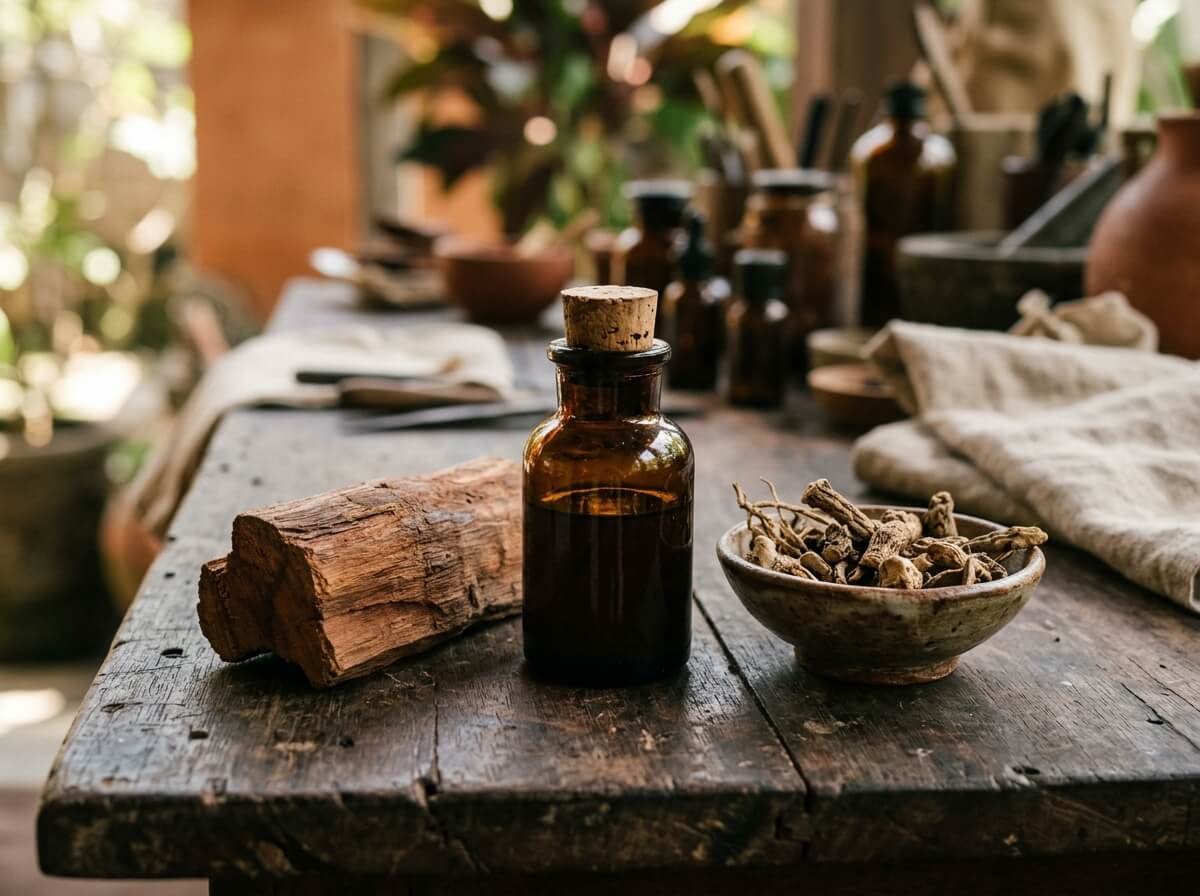
Describing vetiver takes a handful of words that rarely appear together: earthy, woody, smoky, green, and faintly sweet. It smells like damp soil and dry roots at the same time, with a cool undertone that keeps it from feeling heavy. Perfumers prize it as a fixative, an oil that slows how quickly the lighter notes around it evaporate, so a blend holds its shape for hours instead of minutes.
In practical terms, that makes vetiver the base of the pyramid. Top notes such as citrus greet you first and fade fast. Heart notes such as florals carry the body of a blend. Base notes such as vetiver, sandalwood, and patchouli arrive last and stay longest. Understanding this structure is what turns a random mix into a real composition, and it is the backbone of our guide to essential oil blends for the diffuser.

This anchoring quality is also why vetiver appears in incense and grounding rituals across the region. The same logic that lets it hold a perfume together lets it settle a room. Our Temple Spice incense works in this earthy, rooted register, made for the moment you want a space to feel calm rather than bright.
If you have ever found a beautiful diffuser blend that vanished within twenty minutes, a missing base note is usually why. Adding a single drop of vetiver to a citrus-and-floral mix does two things at once: it slows the fade, and it grounds the sweetness so the whole blend reads as calmer and more grown-up. This is the quiet skill behind our Bali Night blend, and it is a good first experiment for anyone learning to compose their own scents rather than buy them ready-made.
How to use vetiver essential oil at home
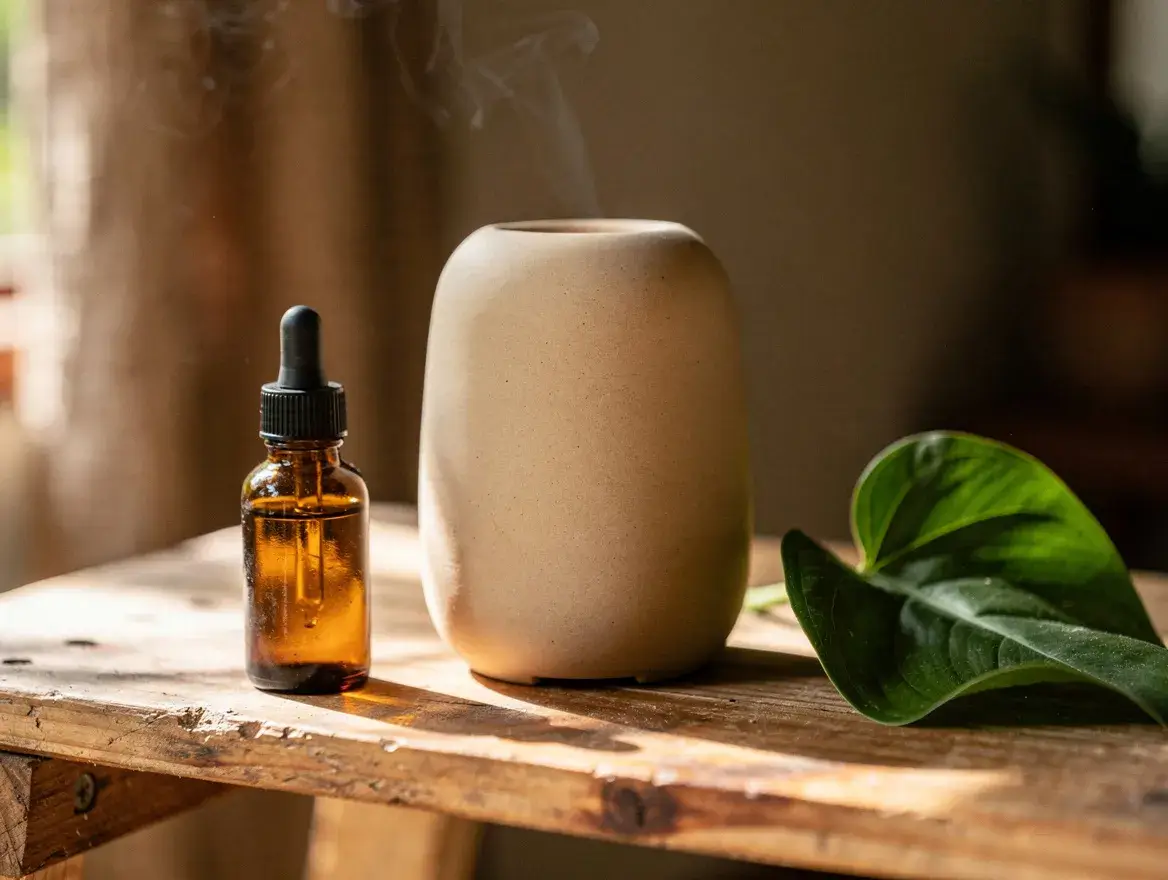
You do not need a shelf of equipment to bring the vetiver essential oil benefits into daily life. A diffuser, a carrier oil, and a little patience with ratios will carry you a long way. Because vetiver is so concentrated and long-lasting, restraint is the whole skill. Start with less than you think you need.
- Evening diffuser: one drop of vetiver with two drops of a citrus or floral oil, run for 30 to 60 minutes before bed.
- Grounding roller: two to three drops of vetiver in a 10ml roller topped with coconut or jojoba oil, for pulse points during a tense day.
- Bath ritual: a single drop mixed into a spoon of carrier oil or full-fat milk before it goes in the water, never dropped straight in.
- Massage base: a few drops in a warm carrier oil for slow, mindful bodywork.
If you would rather not measure at all, a ready-made blend removes the guesswork while keeping the same grounded character. Our Vetivert essential oil is single-origin and unblended for people who want to compose their own, while the Bali Night blend pairs it with calming florals for sleep straight out of the bottle.
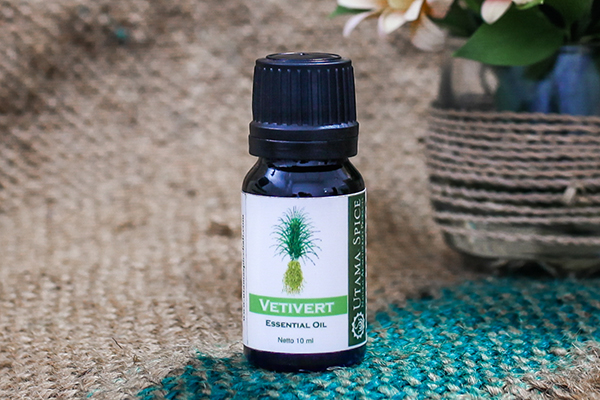
Single-origin Vetivert essential oil
Steam-distilled from vetiver root, thick, earthy, and grounding. Hand-bottled in Bali for your own diffuser blends and grounding rituals.
How to choose a vetiver oil worth keeping
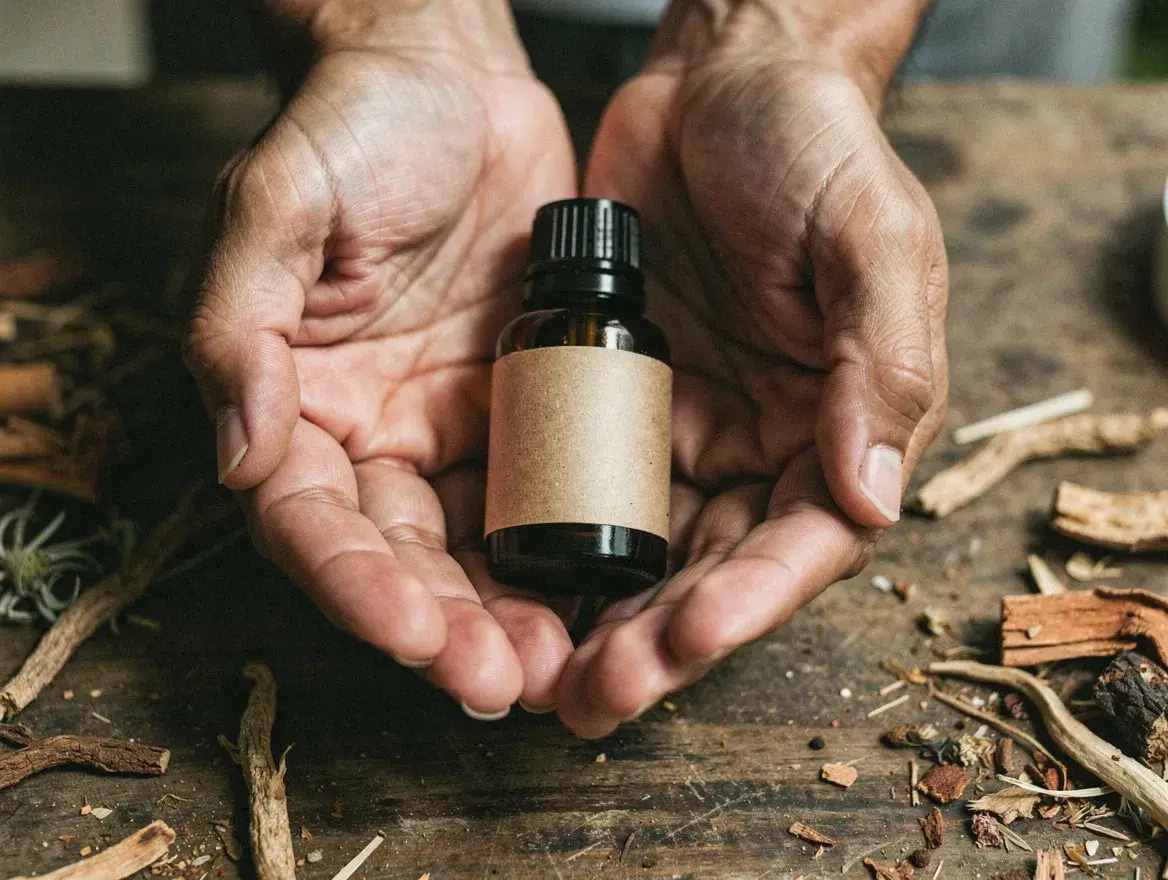
Vetiver is labour-intensive to produce. The roots must be dug, cleaned, dried, and slowly distilled, and it takes a great deal of root to yield a little oil. That cost is exactly why cheap vetiver should make you pause. A bottle priced like a common carrier oil is usually diluted, synthetic, or both. Here the honest question is not what a label promises, but what it proves.
What to look for
- The botanical name Chrysopogon zizanioides (older labels may read Vetiveria zizanioides), not just the word vetiver.
- A country of origin and, ideally, a distillation method, because provenance is not decoration, it is accountability.
- Amber glass packaging, since essential oils degrade in light and heat.
- A thick, deep-coloured oil with a genuinely earthy, long-lasting scent. Watery, sharply sweet, or quick-to-vanish oils are red flags.
- A price that respects the work. Real vetiver is not the cheapest oil on the shelf, and it should not pretend to be.
This is where sourcing stops being a marketing word and starts being the whole point. An oil is only as trustworthy as the ground it came from and the hands that harvested it. We hold our own line to that standard because we believe care has to run all the way back to the source, not just the shelf. That is the same principle behind refilling instead of discarding, and behind naming our partners rather than hiding them.
Frequently asked questions
Can I put vetiver essential oil directly on my skin?
No. Vetiver should always be diluted in a carrier oil before it touches skin, generally at a 1% to 3% dilution for body use. Patch test first, and avoid the eye area. Neat application risks irritation and wastes a precious oil.
Is vetiver good for sleep?
Many people find it helpful. Vetiver is a heavy, sedative-leaning base note, and diffusing a drop or two in the evening, often with a calming floral, is one of its most popular traditional uses. It sets a grounded mood rather than forcing sleep, so pair it with an unhurried wind-down.
What does vetiver blend well with?
As a base note, vetiver anchors almost anything. It pairs beautifully with citrus oils, with florals like cananga and ylang ylang, and with other woody notes such as sandalwood. Our diffuser blend recipes offer tested combinations to start from.
Does vetiver essential oil expire?
Unusually for essential oils, vetiver tends to improve with age, mellowing and deepening over a few years if stored well in amber glass, away from light and heat. It is one of the more stable oils you can keep.
Is vetiver the same as ylang ylang or patchouli?
No, though they are often shelved together as grounding, earthy oils. Patchouli is another deep base note but reads sweeter and more resinous. Ylang ylang and cananga are heady florals that sit in the heart of a blend rather than the base. Vetiver is drier and rootier than any of them, which is exactly why it partners so well with florals like cananga, balancing their sweetness with cool earth.
Why is real vetiver more expensive than other oils?
Because it is slow and labour-heavy to make. The roots have to be dug by hand, washed, dried, and distilled over many hours, and the yield is small. A very cheap vetiver is a warning sign, not a bargain. You are usually paying for dilution or a synthetic stand-in rather than the real root.
Final thoughts
Vetiver asks for a slower kind of attention, and it rewards it. The real vetiver essential oil benefits are not dramatic before-and-after promises. They are the steadier evening, the calmer breath, the blend that holds together, the skin that feels balanced rather than fixed. This is an oil that has anchored hillsides and quieted rooms for generations, and it works the same way now that it always has.
There is a small sustainability lesson tucked inside a bottle of vetiver, too. An oil this concentrated lasts a long time, and one that improves with age rewards you for keeping it rather than replacing it. Buying less, better, and using it slowly is quietly circular, the same logic behind refilling a bottle instead of tossing it. Care that lasts is care that costs the Earth less.
Choose one that respects its source, use it with a light hand, and let it do what roots do. If you want to keep exploring the plants behind these rituals, our aromatherapy oils guide and our cananga essential oil story are good next steps. What you give a ritual, in patience and care, is what it gives back.