Tea tree essential oil benefits: the chemistry, the safety rules, and its Bali cousin
The tea tree essential oil benefits you have read about are real, but they are often oversold. Tea tree is one of the most studied botanical oils in the world, with a genuine track record against blemishes, dandruff, and minor skin irritation. It is also one of the most misused, because the same potency that makes it effective makes it easy to overdo. This guide walks through what tea tree oil actually is, what the evidence supports, the chemistry behind its action, its little-known Indonesian cousins, and how to fold it into daily care without harming your skin barrier.
We craft in Bali, where tea tree’s botanical relatives grow in the same tropical soils. That closeness gives us a grounded, working respect for this oil: powerful when treated with care, harsh when treated carelessly. No miracle claims here, just the honest picture.
What tea tree essential oil actually is
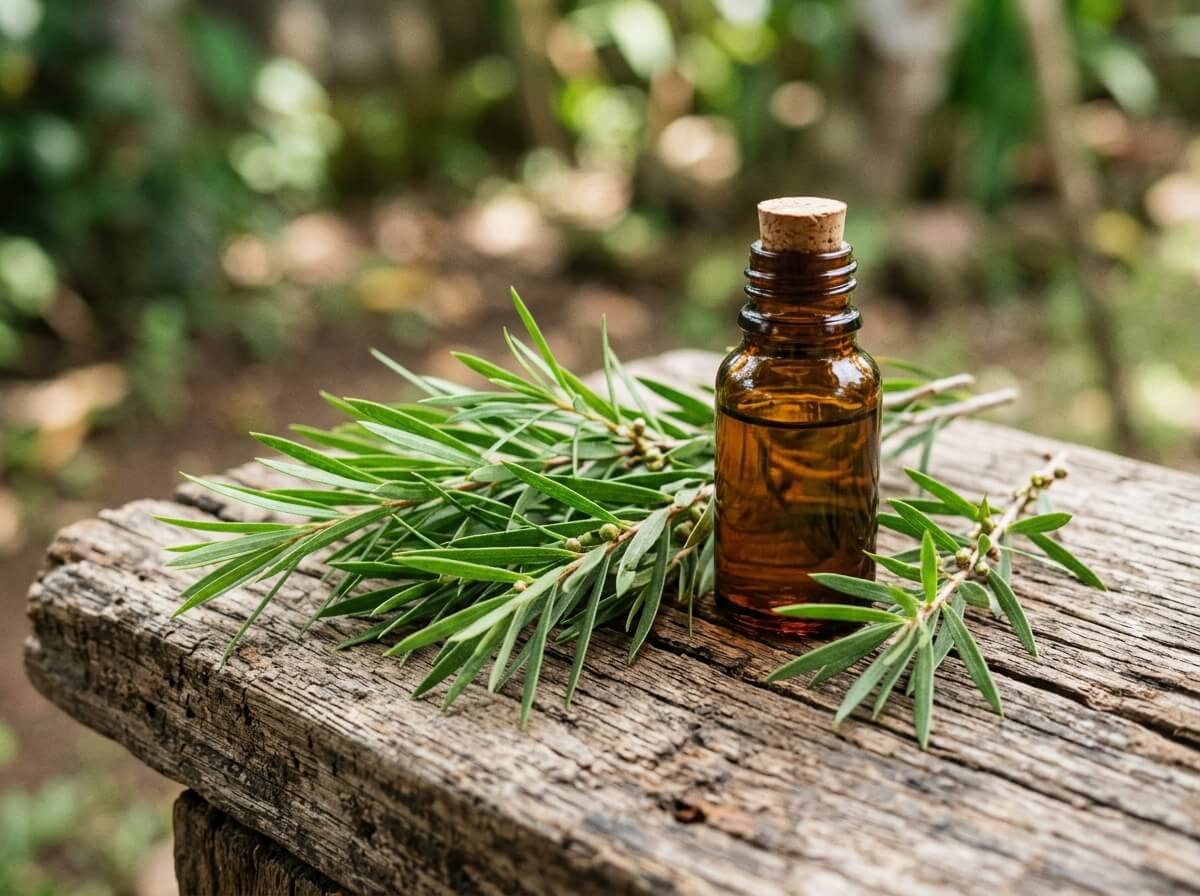
Tea tree oil is steam-distilled from the narrow leaves of Melaleuca alternifolia, a small tree native to the coastal wetlands of New South Wales, Australia. Indigenous Australians crushed and inhaled its leaves long before the oil was ever bottled. The modern oil arrived in the 1920s, when researchers first measured its antiseptic strength, and it has been in continuous use since.
The plant belongs to the Melaleuca genus, part of the wider myrtle family that also gives us eucalyptus, clove, and cajeput. That family resemblance matters, because several of these cousins grow across Indonesia and share overlapping chemistry. If you have read our list of essential oils and their uses, you will recognise tea tree as one of the few oils people reach for by name rather than by scent.
A quality tea tree oil is clear to pale yellow, with a sharp, medicinal, camphor-like aroma. It should smell clean and green, never sweet or perfumed. If a bottle labelled tea tree smells soft and floral, treat that as a warning sign, as it may be diluted or blended with cheaper material.
The oil is produced by steam distillation, where steam passes through the harvested leaves and carries the volatile compounds up into a condenser, separating oil from water. It takes a great deal of leaf to make a little oil, which is part of why genuine, well-made tea tree is not the cheapest option on the shelf. Price that seems too good usually reflects a diluted or lower-grade product.
How to choose a good tea tree oil
A few markers separate a trustworthy bottle from a disappointing one. Look for the botanical name, Melaleuca alternifolia, printed on the label, so you know exactly which plant you are buying. Amber or cobalt glass matters, because clear bottles let light degrade the oil. A batch or best-before date signals a maker who takes freshness seriously. And where a brand shares its terpinen-4-ol content, higher is better. These are the same honesty checks we apply across our own range, and the same ones we encourage you to hold every brand to.
Tea tree essential oil benefits, and what the evidence says
Here is where honesty matters most. Tea tree has real, measured effects, but the strength of the evidence varies from claim to claim. We will separate the well-supported from the hopeful.
Blemishes and acne-prone skin
This is tea tree’s strongest case. Several controlled studies have found that diluted tea tree gel, usually around 5%, reduces mild to moderate acne lesions over several weeks. It tends to work more slowly than harsh conventional treatments, but with less dryness and peeling. For skin that reacts badly to stronger actives, that gentler curve is a genuine advantage. A pared-back routine matters here too, which is why we walk through cleanser choices in our guide to a natural face wash.
Dandruff and scalp balance
Tea tree shampoo has modest but real support for reducing flaking and itch linked to a common scalp yeast. The effect is supportive rather than curative, and it works best as part of regular washing rather than a one-off fix.
Minor cuts, insect bites, and general antisepsis
Tea tree is a capable antiseptic against many common bacteria and fungi in laboratory testing, which is why it appears in so many first-aid and after-bite formulas. Diluted properly, it can help keep a minor graze clean. It is not a replacement for medical care on anything deep, spreading, or slow to heal.
Fungal skin concerns
Tea tree has a long folk history against athlete’s foot and similar fungal skin issues, and small studies back a modest effect at higher dilutions. It tends to ease itching and scaling more reliably than it fully clears an infection, so think of it as supportive care alongside good foot hygiene rather than a standalone cure. Persistent or spreading fungal problems deserve a pharmacist or doctor’s input.
Where the claims outrun the science
You will see tea tree marketed for everything from nail fungus to household disinfecting to hair growth. Some of these have small, promising studies; most have thin or mixed evidence. Treat sweeping cure-all promises with the same caution you would give any oil sold as a fix for a dozen unrelated problems. Real care means saying what we do not yet know.
The chemistry behind the benefits
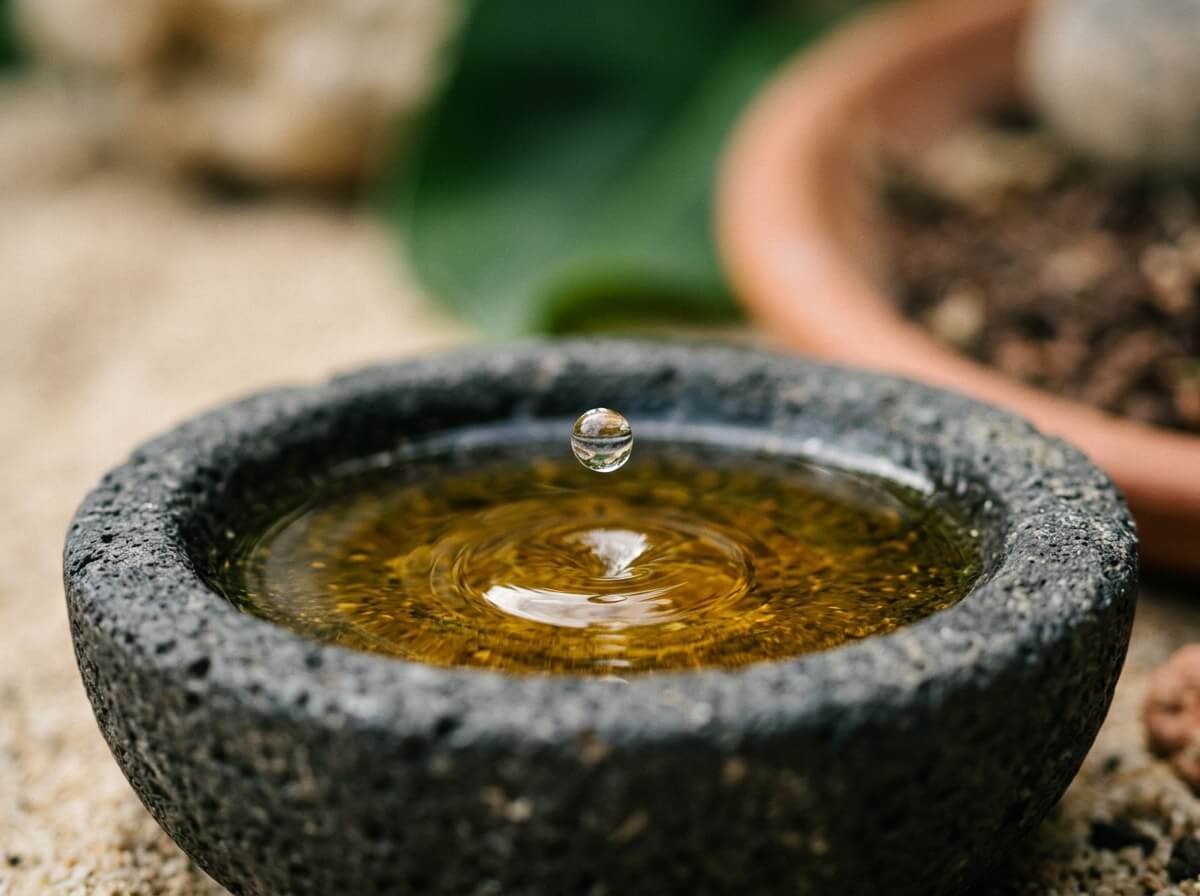
Tea tree oil is a mix of more than 100 compounds, but two of them tell most of the story. The first is terpinen-4-ol, the main active, responsible for most of the oil’s antimicrobial and anti-inflammatory action. The second is 1,8-cineole, a compound that can irritate skin when present in high amounts.
A good tea tree oil is defined by getting this balance right: high terpinen-4-ol, low cineole. The international standard, ISO 4730, sets a minimum of 30% terpinen-4-ol and a maximum of 15% cineole. Better oils sit well inside those limits. This is the same principle we describe in our clove essential oil benefits guide, where a single dominant compound drives both the benefit and the caution.
The other 100-odd compounds are not just filler. They shape the aroma and appear to work together, which is why whole tea tree oil often behaves differently from an isolated single molecule. Nature rarely offers one active in isolation, and a well-distilled oil keeps that natural balance intact. It is a small reminder that tradition and modern chemistry are describing the same thing from two directions.
Chemistry also explains why storage matters. Tea tree oxidises when exposed to air, light, and heat, and oxidised oil is far more likely to cause reactions. This is one reason we bottle in amber glass and why you should keep any essential oil sealed, cool, and out of sunlight. An oil that has turned sharp, thick, or oddly scented has aged past its best and should be retired.
Kayu putih and cajeput: tea tree’s Indonesian cousins
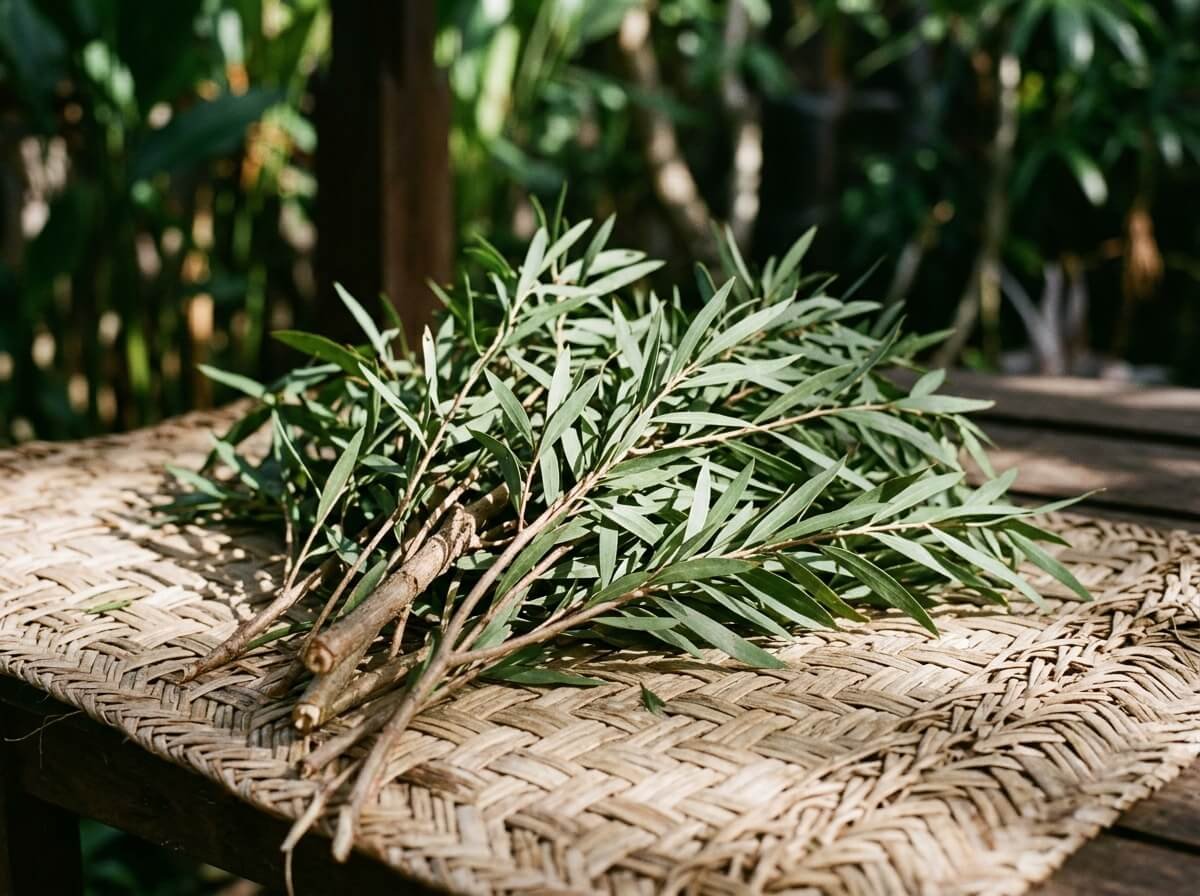
Here is the part few tea tree guides tell you. Tea tree has close relatives that have been part of Indonesian home care for generations. Melaleuca cajuputi, known locally as kayu putih, grows across the archipelago, and its steam-distilled oil, cajeput, has been a household remedy here long before tea tree became a global name. In many Indonesian homes, a bottle of minyak kayu putih sits in the cupboard the way tea tree might sit in yours.
Cajeput shares tea tree’s myrtle-family lineage and much of its cleansing, clarifying character, though its aroma is warmer and more eucalyptus-like, and its chemistry leans more toward cineole. That makes it wonderful for clearing, breathing, and warming rituals rather than a like-for-like swap on blemishes. If you want to meet this tradition first-hand, our Cajeput Essential Oil is distilled from the same botanical family, and our rose geranium oil benefits guide shows how these clarifying oils pair with softer, balancing ones.
This is the story we care about most: every oil comes from a place, a plant, and a people. Tea tree carries Australian roots, while its cousins carry Indonesian ones, and honouring both is part of using them well. Ancient knowledge and modern research point the same way when you let them.
Attribution matters here too. Indigenous Australians held tea tree knowledge for generations before it was commercialised, just as Indonesian households have carried kayu putih wisdom forward through daily use. When a botanical goes global, the tradition that raised it should travel with it, credited rather than quietly erased. That respect is not a marketing line for us, it is a working principle: name the source, honour the hands, tell the truth about where efficacy comes from.
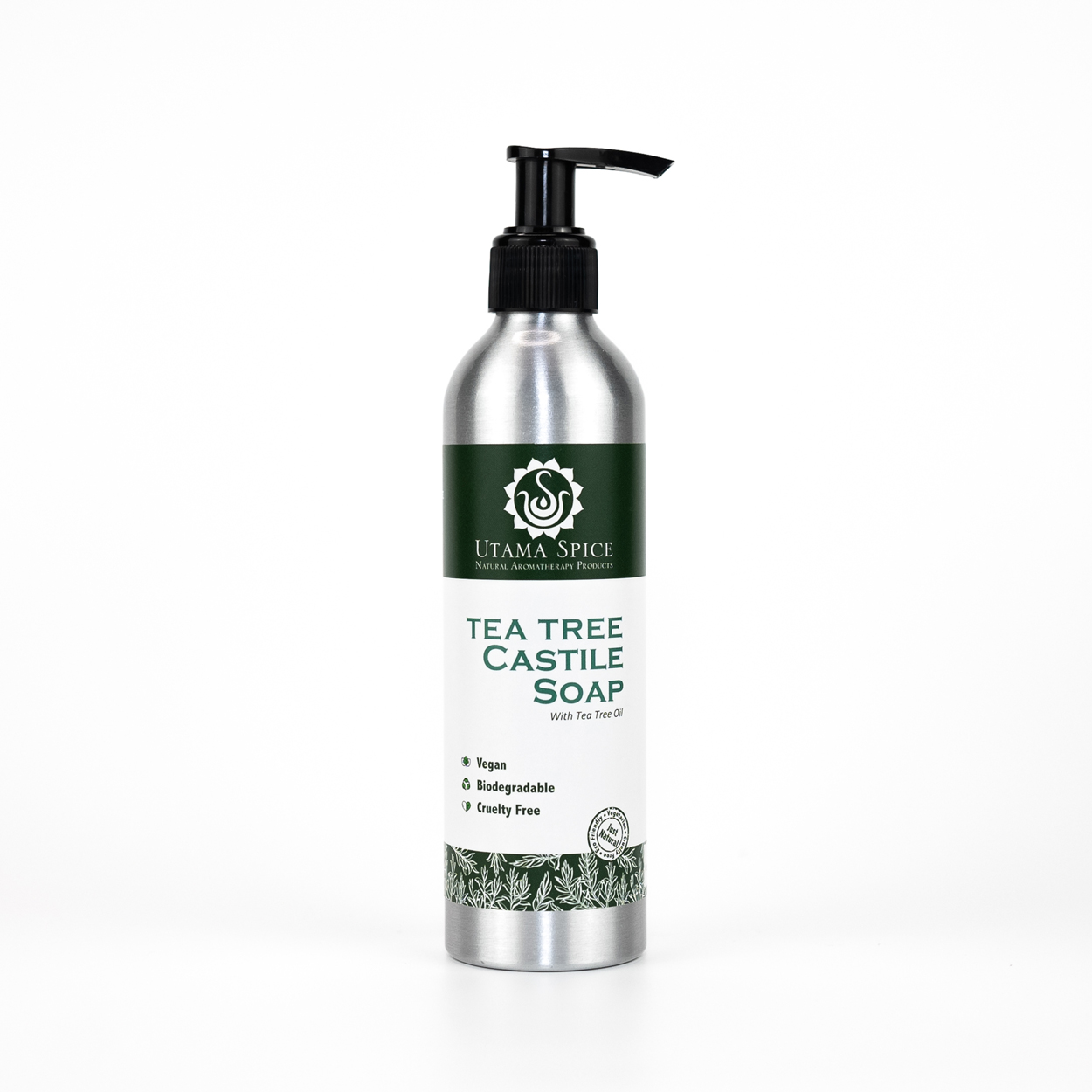
Tea tree, in a daily wash
Our Tea Tree Body Wash blends tea tree and peppermint into a coconut-oil base that cleanses without stripping. A calm, everyday way to bring this oil into your ritual, already diluted and ready for skin.
How to use tea tree essential oil safely
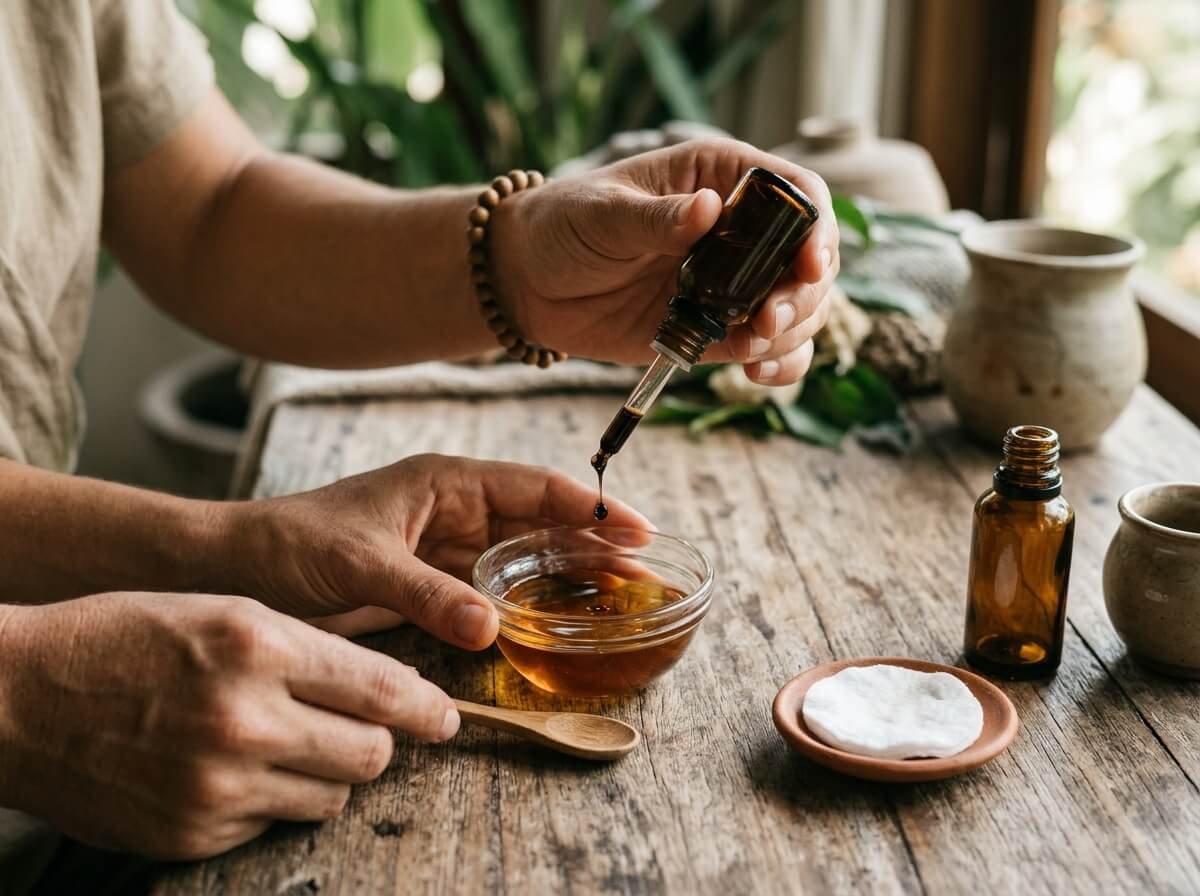
Tea tree’s strength is exactly why it demands respect. Used neat and undiluted, it is a common cause of irritation and allergic reactions. A few simple rules keep it on the helpful side of that line.
- Always dilute. For skin, keep tea tree to roughly 1 to 5% in a carrier oil or a finished product. That is around one to five drops per teaspoon of carrier.
- Patch test first. Apply a small diluted amount to your inner forearm and wait 24 hours before using it more widely.
- Never swallow it. Tea tree is toxic if taken internally, even in small amounts. Keep it well away from children.
- Protect your pets. Tea tree can be genuinely harmful to cats and dogs. Keep bottles and treated skin away from them.
- Mind oxidation. Old, air-exposed oil is more irritating. Buy small amounts, seal tightly, and store cool and dark.
The same dilution discipline applies to every potent oil, a point we make in our peppermint essential oil benefits guide. If you would rather not measure drops at all, a ready-formulated product like our Tea Tree Face Scrub or Acne Facial Wash does the diluting for you, at a level tested for daily use.
Folding tea tree into a daily ritual
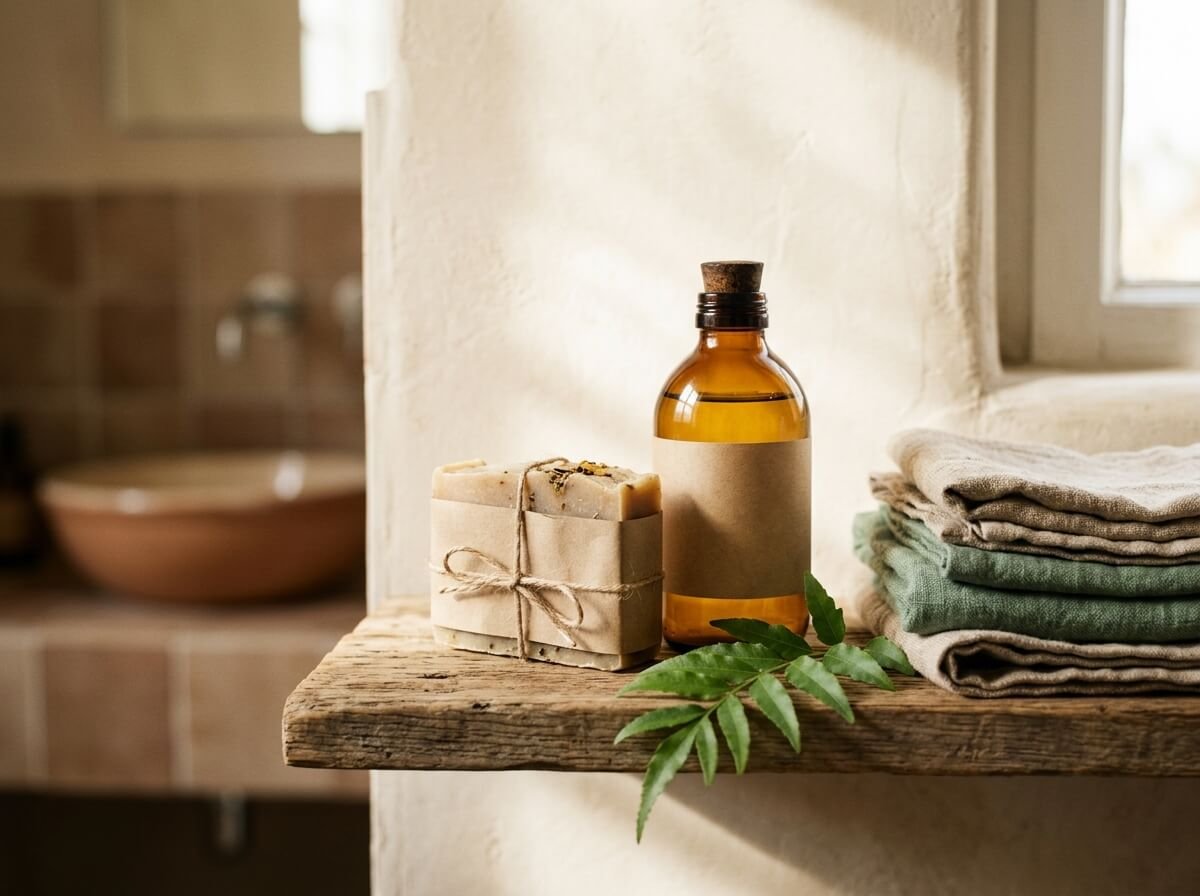
You do not need a shelf of products to benefit from tea tree. You need one or two well-made ones, used consistently. Think of it as a supporting oil in a simple routine rather than the whole routine.
For blemish-prone skin, a tea tree cleanser or scrub two or three times a week is plenty, followed by a light, non-clogging moisturiser. For scalp balance, a Tea Tree Shampoo used in your normal wash rhythm does more than an occasional intensive treatment. To calm and tone skin between washes, a splash of Witch Hazel pairs cleanly with tea tree’s clarifying character.
If you enjoy the aromatic side, a diffused blend is a gentler way to meet these oils than putting them on skin. Our aromatherapy diffuser blend recipes show how to combine a clarifying oil with grounding and citrus notes for a room that feels clean without feeling clinical. This is care as ritual: small, repeatable, and rooted in something real.
There is a quieter benefit to choosing one or two good products over a crowded shelf, and it reaches past your skin. Fewer, better-made items mean fewer bottles, and where those bottles can be refilled rather than replaced, the saving compounds. We built refill into Utama Spice from the start for exactly this reason, so that a daily ritual can be kind to skin and to the place it comes from at the same time. Care, in our reading, is not a single purchase, it is a habit that adds up.
Frequently asked questions about tea tree essential oil benefits
Can I put tea tree oil directly on a pimple?
It is better not to use it neat. Even on a single spot, undiluted tea tree can irritate the surrounding skin and slow healing. Dilute it in a carrier oil first, or use a product already formulated at a safe level.
How long does tea tree oil take to work on acne?
In studies, meaningful improvement usually appears over four to eight weeks of consistent use, not overnight. Its gentler, slower action is part of the trade-off for less dryness and peeling.
Is tea tree oil safe during pregnancy?
Evidence is limited, so caution is wise. If you are pregnant or breastfeeding, keep use light and diluted, and check with your healthcare provider before adding any new essential oil.
What is the difference between tea tree and cajeput oil?
They are botanical cousins in the same myrtle family. Tea tree is higher in terpinen-4-ol and favoured for blemishes, while cajeput leans toward cineole with a warmer, more eucalyptus-like scent suited to clearing and breathing rituals.
Final thoughts
The real tea tree essential oil benefits are steady, not spectacular: clearer skin over weeks, a calmer scalp, a clean antiseptic touch, all resting on well-understood chemistry. Use it diluted, store it well, respect its strength, and it earns its place. Read its cousins, kayu putih and cajeput, as part of the same living tradition, and you hold the whole story, from the leaf to the ritual. That is what real care looks like: grounded, honest, and rooted in place.