Natural body mist: what it is, how to read the label, and how long it lasts
A natural body mist is one of the gentlest ways to carry scent, and one of the most misunderstood. It looks simple: a fine spray, a bright note of citrus or lavender, an instant lift on a warm afternoon. Yet the label on the back tells a longer story about what is really inside, how it was made, and how long it will actually stay with you. This guide walks through what a natural body mist truly is, how to read the ingredient list without the fear or the greenwashing, and the honest truth about longevity that most brands would rather not print in bold.
We craft body mists in Bali, so we will speak plainly about both their gifts and their limits. A mist is not a perfume, and it is not trying to be. Once you understand the difference, choosing one becomes a calm, informed decision rather than a guess.
What a natural body mist actually is
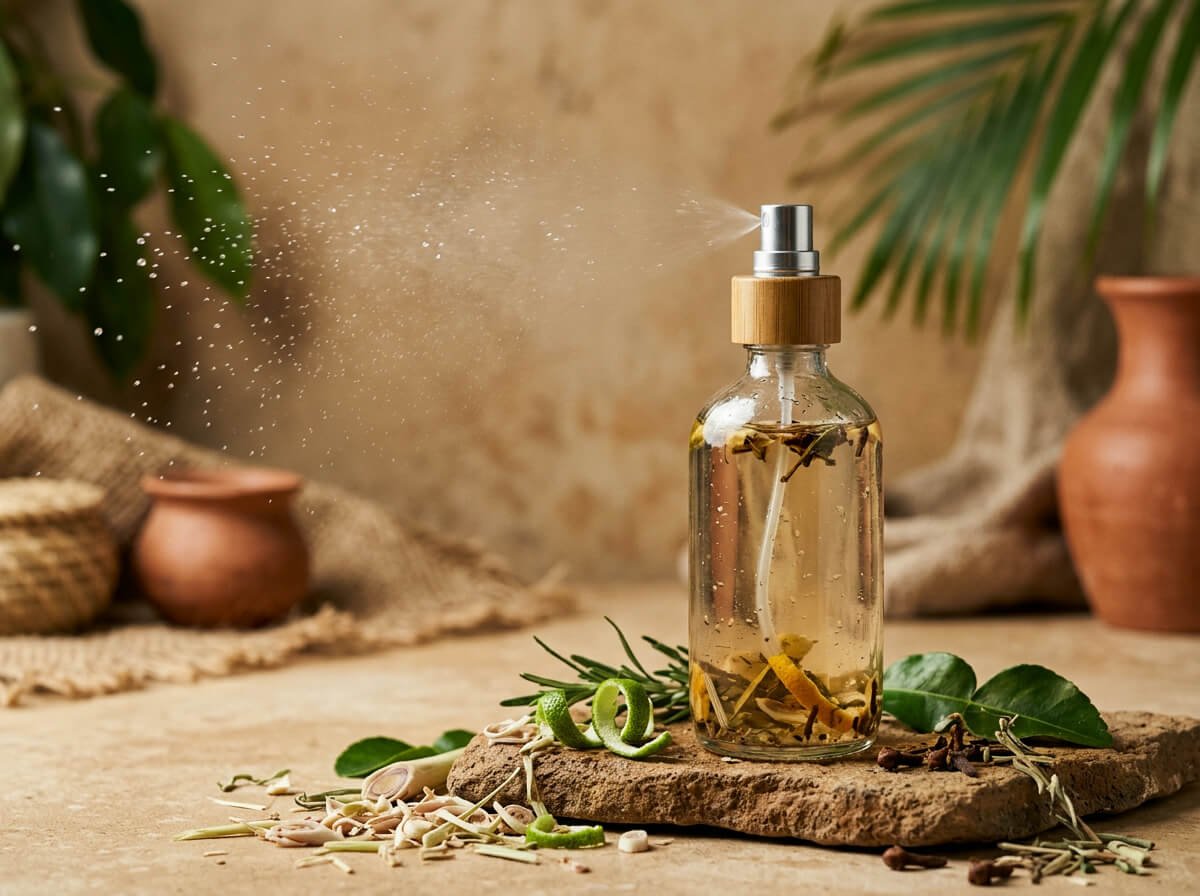
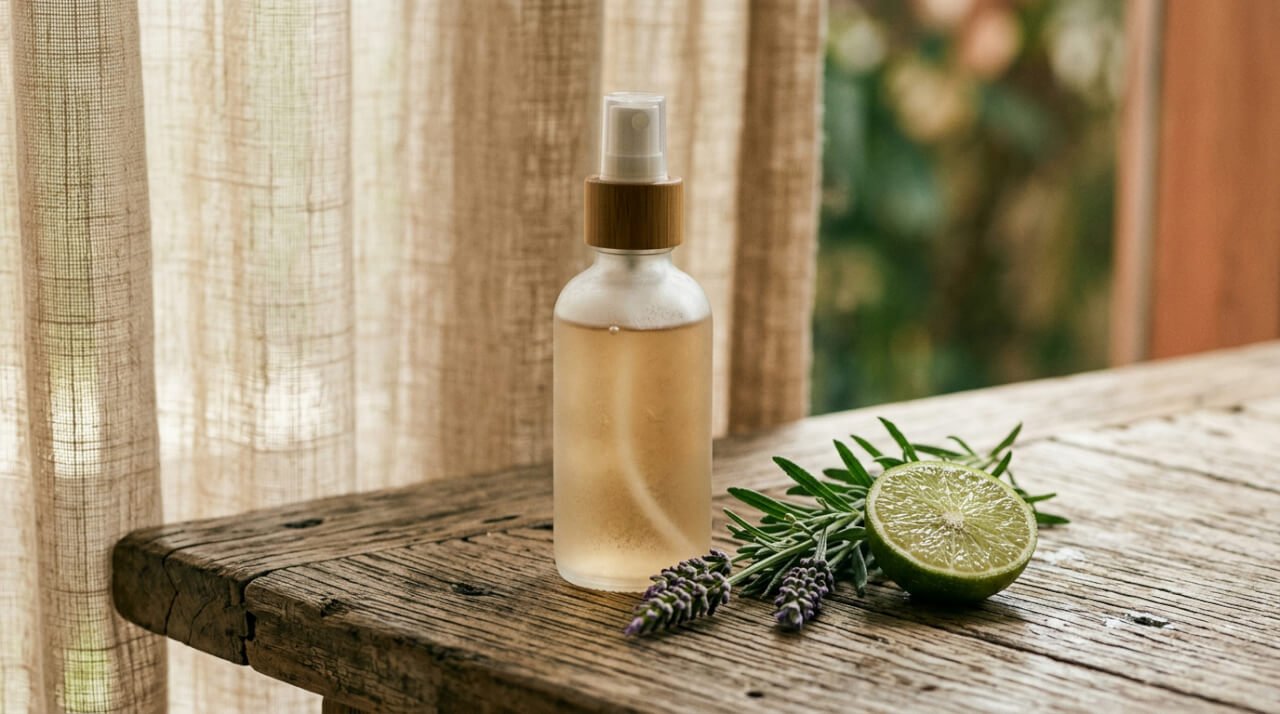
A natural body mist is a lightweight scented spray built mostly on water, applied to skin, hair, or clothing for a soft, short-lived aroma and a cooling refresh. Where a perfume concentrates aromatic compounds in alcohol or oil, a mist dilutes them into a watery base so the effect is airy rather than intense. That is the whole design. It is meant to be reached for often, sprayed generously, and enjoyed in the moment rather than worn all day like a signature.
The base of a natural mist usually combines a few things. Water or a floral hydrosol carries the scent. A small amount of essential oil, or a blend of them, provides the aroma. Because oil and water do not mix on their own, most formulas include either a gentle solubilizer, a splash of plant-derived alcohol, or a natural emulsifier so the essential oils disperse evenly instead of floating on top. Some mists add aloe, glycerin, or agar for a light, hydrating slip on the skin.
The word natural matters here, and it is worth being honest about. There is no legal definition of it in personal care, which is exactly why we prefer transparency over the claim itself. A genuinely natural mist earns the word by using real botanical aromatics rather than synthetic fragrance, and by telling you what those aromatics are. If you want to understand why that distinction runs deeper than marketing, our guide to essential oil versus fragrance oil unpacks what the label often hides.
Scented mists are not new, and they are not a marketing invention. Across Bali and much of Indonesia, aromatic waters and botanical sprays have long been part of everyday care, a way to cool the skin and settle the mind in a warm climate. A natural body mist is the modern, bottled form of that old, sensible habit. Seen that way, it is less a beauty trend and more a small daily ritual with deep roots, a splash of plant and water reached for when the afternoon turns heavy.
How to read a natural body mist label
The ingredient list is the most honest part of any bottle, once you know how to read it. Ingredients are listed by weight, highest first, so the opening words tell you what the mist mostly is. On a natural body mist, the first ingredient is almost always aqua, which is simply water, or a named hydrosol such as lavender or rose water. That is expected, and it is not a sign of a watered-down product. It is the nature of a mist.
After the base, look for how the scent is carried and kept stable. Here are the terms worth recognizing:
- Aqua or a named hydrosol: the water base, or a botanical water distilled from flowers or leaves, which carries a faint scent of its own.
- Essential oils, named individually: for example lavandula angustifolia (lavender) or citrus limon (lemon). Named oils are a good sign. A single word like parfum or fragrance is the opposite, a catch-all that can hide dozens of undisclosed synthetics.
- Ethanol or alcohol denat: plant-derived alcohol that dissolves the oils and helps the mist dry quickly. In small amounts it is useful, though it can feel drying on very sensitive skin.
- Glycerin, aloe, or agar: humectants and light hydrators that give the spray a soft, non-sticky slip.
- A preservative: anything with water needs one to stay safe from microbial growth. A responsible natural mist will name a gentle preservative rather than pretend it needs none.
Two honest cautions belong on every label reader’s radar. First, natural does not mean risk-free. Essential oils are potent, and a few carry real cautions, which is why the same care we apply when we dilute essential oils for the skin applies to mists too. Second, if a mist promises to last all day yet lists water as the first ingredient and nothing that would fix the scent, treat that promise gently. The label and the marketing should agree, and when they do not, the label is telling the truth.
A few quiet red flags are worth naming plainly. A very long ingredient list dominated by words you cannot pronounce, with no named essential oils, usually points to a synthetic fragrance dressed in natural language. A bottle that lists water high up but claims no preservative at all is either leaving something off the label or risking spoilage, and neither is reassuring. And any mist that leans harder on the word natural than on its actual ingredients is asking you to trust the marketing instead of the formula. The remedy is always the same: turn the bottle over and let the list, not the front label, make the decision for you.
The honest truth about how long a natural body mist lasts

This is the question every mist buyer really wants answered, so we will answer it directly. A natural body mist is light by design, and light scents fade. On most skin, a water-based botanical mist holds its clear aroma for roughly one to two hours, with a soft trace lingering longer on hair and fabric than on skin. Anyone who tells you a genuinely natural, water-based mist will perfume you from morning to night is selling the promise, not the product.
The reason is chemistry, not quality. Essential oils are volatile, meaning they evaporate readily, which is exactly why we can smell them at all. Bright top notes like citrus and mint lift first and leave first, often within the hour. Heavier, grounding notes such as sandalwood, patchouli, or vetiver cling longer because their molecules are larger and slower to evaporate. A perfume stretches this out by concentrating far more aromatic material and suspending it in alcohol or oil, which slows the release. A mist deliberately does the opposite. It trades staying power for a fresh, breathable lightness you can reapply whenever you like.
Longevity also shifts with your skin and your surroundings. Scent lasts longer on well-moisturized skin than on dry skin, because oil holds aroma while dry skin lets it escape. It fades faster in heat, humidity, and moving air, which is simply life in the tropics. Rather than fight this, we suggest working with it. A quick reapplication is not a flaw in the mist. It is the ritual the format was built for, a small, repeatable moment of care rather than a single heavy dose meant to last. If you value that same honesty about what a product can and cannot do, our take on body balm versus body butter follows the same clear-eyed spirit.
There are a few honest ways to coax a little more from a mist without pretending it is something it is not. Spray onto skin still slightly damp from a shower, when the surface can hold moisture and aroma together. Keep the bottle out of heat and direct sun, since warmth degrades delicate essential oils over time and dulls the scent. Store it somewhere cool, use it within its shelf life, and give it a gentle shake before spraying so the oils and water are evenly mixed. None of this turns a mist into a perfume, and that is fine. It simply lets the format perform at its honest best.
Natural body mist versus perfume, body spray, and hydrosol
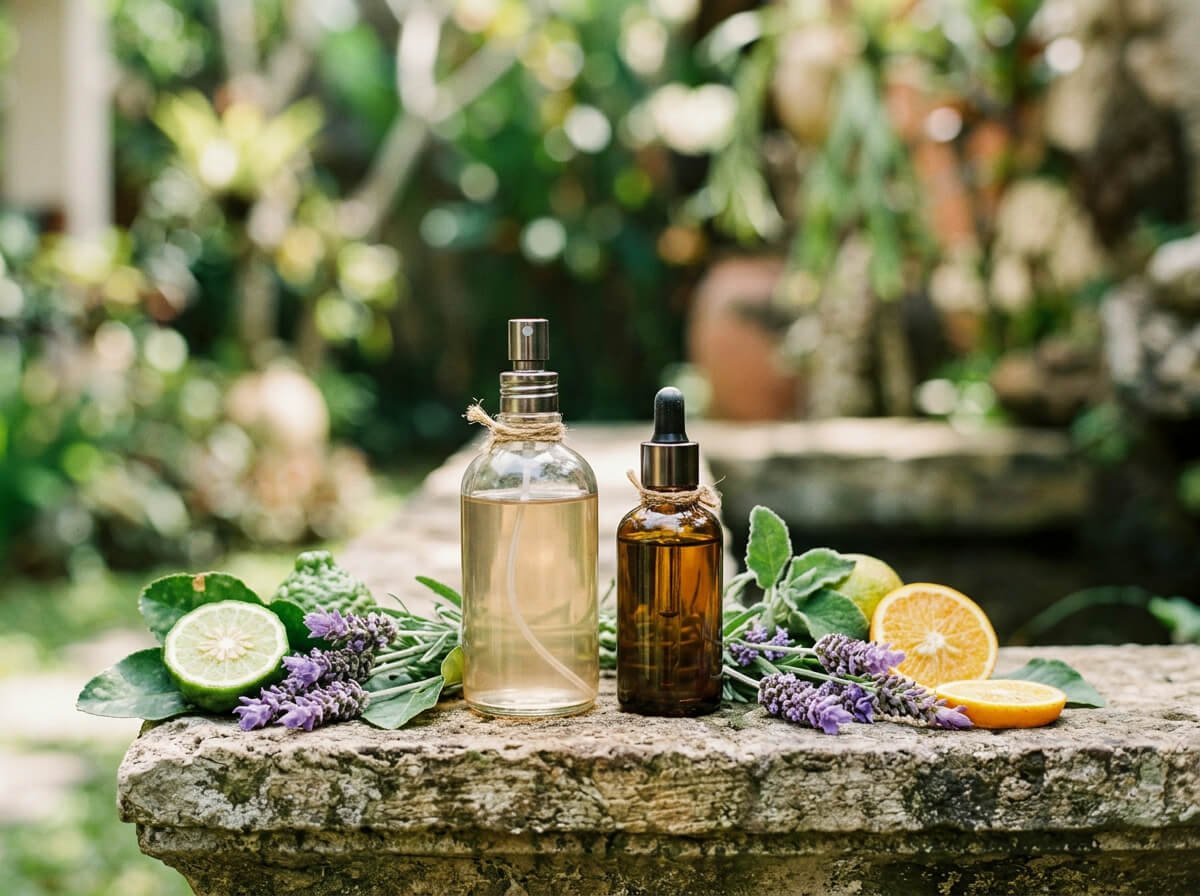
These four words get used interchangeably, and the confusion costs people money. Knowing where a natural body mist sits among them helps you buy the right thing for the right reason.

A perfume, or its lighter cousins eau de parfum and eau de toilette, concentrates aromatic compounds in an alcohol base at much higher strength. It is designed to project and to last, and it usually costs more because there is more aromatic material in the bottle. A body spray in the conventional sense often means a synthetic fragrance in alcohol, cheaper and stronger-smelling, but rarely built on botanical ingredients. A hydrosol is the pure floral water left after distilling essential oils, faintly scented and gentle enough to use as a facial toner, though its aroma is subtle and brief. A natural body mist sits between the hydrosol and the perfume: more scent than a plain hydrosol, far lighter and more skin-friendly than a perfume, and grounded in named botanicals rather than a mystery fragrance blend.
Which one serves you depends on what you actually want. If you want a bold scent that announces itself for eight hours, a mist is the wrong tool and a perfume is right. If you want a clean, cooling lift you can reach for through a hot day, a mist is exactly right. Our Senja Body Mist is built for that second purpose, a soft aromatherapy spray meant to refresh the senses in the moment rather than linger for hours.
If you only remember one thing, remember this order of strength and staying power, from lightest to boldest:
- Hydrosol: the gentlest, a faintly scented floral water, wonderful as a facial refresh but brief on the skin.
- Natural body mist: light and cooling, named botanicals in a water base, an hour or two of soft scent made to be reapplied.
- Eau de toilette and eau de parfum: concentrated aromatics in alcohol, stronger and longer, designed to project.
- Perfume extract: the most concentrated and the longest-lasting, and usually the most expensive by volume.

A mist made for the moment
Senja Body Mist blends natural essential oils into a light, cooling spray that rejuvenates your senses whenever you need a lift. Crafted in Bali, no synthetic fragrance, just an honest botanical refresh you can return to all day.
How to use a natural body mist in daily ritual

A mist rewards a little intention. Because it is light, how and where you apply it changes the experience more than it would with a heavy perfume. Here is how we use ours through the day.
- Spray onto skin that holds scent. Pulse points such as the wrists, the neck, and the inner elbows are warm, which gently releases the aroma. A light layer of moisturizer underneath makes the scent last noticeably longer.
- Mist your hair and clothes, not just your skin. Fabric and hair hold aroma longer than skin does, so a pass over a scarf or a shirt keeps the scent near you for hours after your skin has let it go.
- Layer with a carrier oil for staying power. A thin film of virgin coconut oil on the skin gives the aromatic molecules something to hold onto. If you are new to that idea, our guide on how to use coconut oil for skin explains the ritual.
- Reapply without guilt. This is the point of a mist. Keep it in your bag, at your desk, or by the bed, and use it whenever you want to reset. A cooling spray of Citrus Delight Body Mist in the afternoon is a small act of care, not an admission that the morning one failed.
- Match the scent to the moment. Reach for a calming Lavender Fields Body Mist in the evening and a brighter Ocean Breeze Body Mist or Fresh Soul Body Mist when you need to wake up your senses.
One practical caution ties the ritual to safety. Citrus oils can make skin more sensitive to sunlight, so if a mist is heavy on lemon, lime, or bergamot, be mindful about spraying sun-exposed skin before a day outdoors. We explain the mechanism in our piece on grapefruit essential oil and the sunlight rule. When in doubt, mist clothing or shaded skin instead.
How to choose a natural body mist you can trust
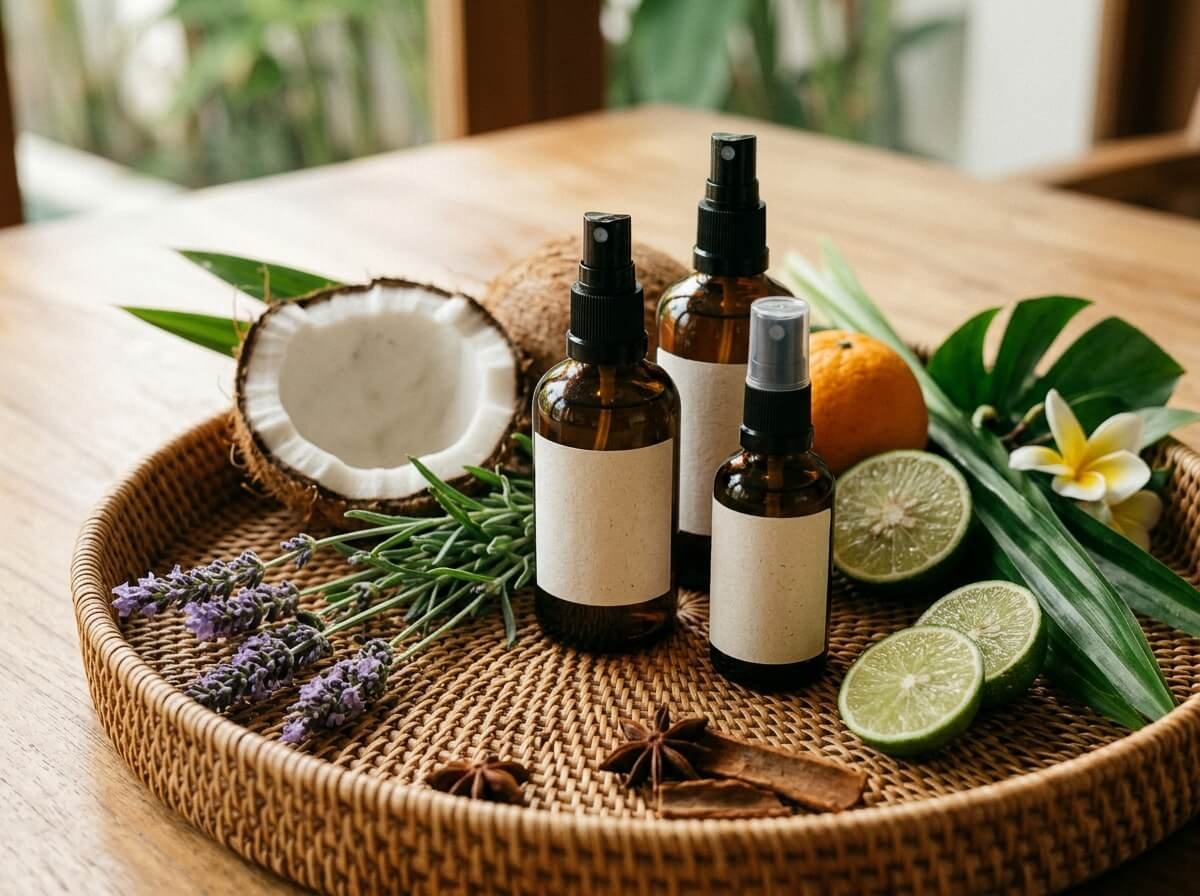
Once you know how a mist works, choosing one becomes a question of trust rather than hype. A few honest tests separate a genuine botanical mist from a synthetic spray wearing a natural label.
Start with the ingredient list, because a brand that trusts its formula prints it plainly. Named essential oils are a good sign. The single word fragrance, with nothing to explain it, is a reason to pause. Look for a base you recognize, a gentle preservative named openly, and no claim that the mist will outlast a perfume. Transparency about limits is itself a mark of quality, and it is the same standard we hold ourselves to when a product simply cannot do everything, the way we are honest about which items in your bathroom can and cannot be refilled.
Then consider sourcing and skin safety together. Where do the aromatics come from, and who made the mist? A brand rooted in place tends to know its ingredients by name. Patch test a new mist on your inner arm before spraying it widely, especially if your skin is reactive, and give any essential-oil product the same respect for safety we describe in our guide to using essential oils on sensitive skin. A mist you can trust is one that tells you what it is, respects your skin, and does not pretend to be a perfume. That honesty is worth more than any promise of all-day scent.
Frequently asked questions about natural body mist
Is a natural body mist the same as perfume?
No. A perfume concentrates aromatic compounds in an alcohol or oil base for strength and staying power. A natural body mist dilutes botanical aromatics into a water base for a lighter, cooling, short-lived scent meant to be reapplied. They are different tools for different moments, and a mist is not trying to replace a perfume.
How long does a natural body mist last on skin?
Usually one to two hours on skin, with a soft trace lasting longer on hair and clothing. Bright citrus notes fade first, while heavier woody notes linger. Moisturized skin holds scent longer than dry skin, and heat and humidity shorten it. Reapplying through the day is normal and expected.
Can I spray a natural body mist on my face or hair?
Hair, yes, and it often holds the scent beautifully. For the face, check the label first. Many mists contain essential oils or alcohol that are formulated for the body, not the delicate skin of the face. If you want a facial refresh, a pure hydrosol or a mist that names itself as face-safe is the gentler choice.
Are natural body mists safe in pregnancy or for sensitive skin?
Some essential oils carry cautions in pregnancy or on reactive skin, so read the named oils and patch test before regular use. When you are unsure, choose a mist with a short, clearly named ingredient list, and speak with a healthcare provider about specific oils. Transparency on the label makes this easy, which is exactly why it matters.
Does a natural body mist moisturize the skin?
Lightly, if it contains humectants like glycerin or aloe, but a mist is primarily about scent and a cooling refresh, not deep hydration. For real moisture, layer the mist over a body oil, butter, or lotion. The mist then adds aroma on top of skin that is already cared for.
Final thoughts on the natural body mist
A natural body mist is a small, honest pleasure. It refreshes, it lifts the mood, and it carries a botanical scent close to the skin for an hour or two before it gently lets go. Understood for what it is, it disappoints no one. Expected to behave like a perfume, it will always fall short, because that was never its purpose. The clarity is the point.
So read the label, trust the named botanicals over the vague promises, and let the format do what it does best: a fresh, repeatable moment of care you can return to whenever the day asks for it. Choose a mist that tells you the truth about itself, and reapply it without a second thought. That is care in action, light as it should be, and honest all the way through.