Natural after sun care: a Balinese ritual for skin that lives in the sun
Natural after sun care is the quiet part of a day spent outdoors, the step most people skip and then wonder why their skin feels tight, dull, and thirsty by nightfall. We were built in Bali, where the sun is a daily companion rather than an occasional hazard, so we think of after-sun not as emergency first aid but as a calm evening ritual. Cool the skin, soothe it, rehydrate it, then seal that water in. This guide walks through what heat and light actually do to your skin, which botanicals genuinely help, and how to build a simple routine you can keep all year, using ingredients rooted in generations of Balinese craft.
There is a lot of noise in this space. Product listings promise cooling relief, recipe roundups pile on yogurt and green tea, and almost none of them explain the why. We would rather give you the honest version, the one that respects your skin and your time.
What the sun actually does to your skin

Sun exposure is not a single event, it is a stack of small stresses. Ultraviolet light generates free radicals in the skin, unstable molecules that nick at collagen and the lipids that hold your barrier together. Heat drives up water loss, so the skin quietly dehydrates even when you feel slick with sweat. And a low-grade inflammatory response switches on, which is why skin can feel warm, tight, and a little raw hours after you have come inside, long before any visible redness appears.
The part that matters most for after-sun care is the barrier. Your skin barrier is a wall of cells held together by a mortar of ceramides, fatty acids, and cholesterol. Sun and heat thin that mortar, which raises transepidermal water loss, the rate at which moisture escapes upward and evaporates. A disrupted barrier loses water faster, feels tight, and lets in irritation more easily. This is true even after a normal day at the beach with sunscreen on, and it is worth understanding before you reach for the first jar of sunscreen next time, because prevention and repair are two halves of the same practice. If you want the prevention side, our guide to the best natural sunscreen and our look at natural sunscreen without chemicals both walk through how to shield skin before the sun, not just soothe it after.
There is also a timing lesson hidden in the biology. Skin does most of its repair work at night, when it is not busy defending against fresh light and heat. Transepidermal water loss actually rises in the evening, which is one reason skin can feel driest at bedtime after a sunny day. That makes the hours before sleep the natural window for after-sun care. Support the barrier then, with antioxidants to counter lingering free radicals and lipids to rebuild the mortar, and you are working with your skin’s own rhythm rather than against it.
Once you see after-sun through the barrier lens, the goal becomes clear. We are not trying to erase a day of sunshine. We are helping the skin cool down, calm its inflammation, replace the water it lost, and rebuild the lipid mortar so the barrier can hold moisture again. Everything that follows serves those four aims.
After-sun care versus treating a sunburn
These are two different jobs, and confusing them is where most people go wrong. After-sun care is maintenance, the daily practice of restoring skin that has been warmed and dried by ordinary sun. A sunburn is an injury, an actual burn to the skin, and it deserves care that treats it as one.
A true sunburn is red, hot, tender, and sometimes swollen or blistered. The right response is closer to first aid: cool the skin with tepid water, keep it out of further sun, hydrate from the inside by drinking water, and reach for gentle, cooling relief while it settles. Broken skin or blisters, fever, chills, or a burn covering a large area are signs to see a healthcare professional rather than to treat at home. Never treat a fresh burn with heavy occlusive oils or butters straight away, because sealing heat and inflammation under a thick layer can make it feel worse. We wrote a dedicated piece on aloe vera for sunburn that covers that recovery process in detail.
Everyday after-sun care is gentler and more routine. Your skin is not injured, it is simply depleted. Here you can move through the full ritual, cool, soothe, rehydrate, and seal, without worrying about aggravating a wound. The simple test is how the skin feels. If it is tender and inflamed like a burn, treat the burn and keep things light. If it is merely warm, tight, and thirsty, you are in after-sun territory, and the routine below is exactly what it needs.
It helps to think of the two as points on one line rather than separate worlds. A mild burn today, cared for gently, becomes depleted-but-healing skin in a few days, and that healing skin still benefits from soothing and sealing as it recovers. The mistake is jumping straight to rich, heavy layers on angry skin, or treating a genuine burn as if it were nothing. Read the skin honestly, match your care to what you see, and you will rarely go wrong. When you are unsure, err toward cool, light, and simple, and let the skin tell you when it is ready for more.
The four steps of a natural after sun care ritual
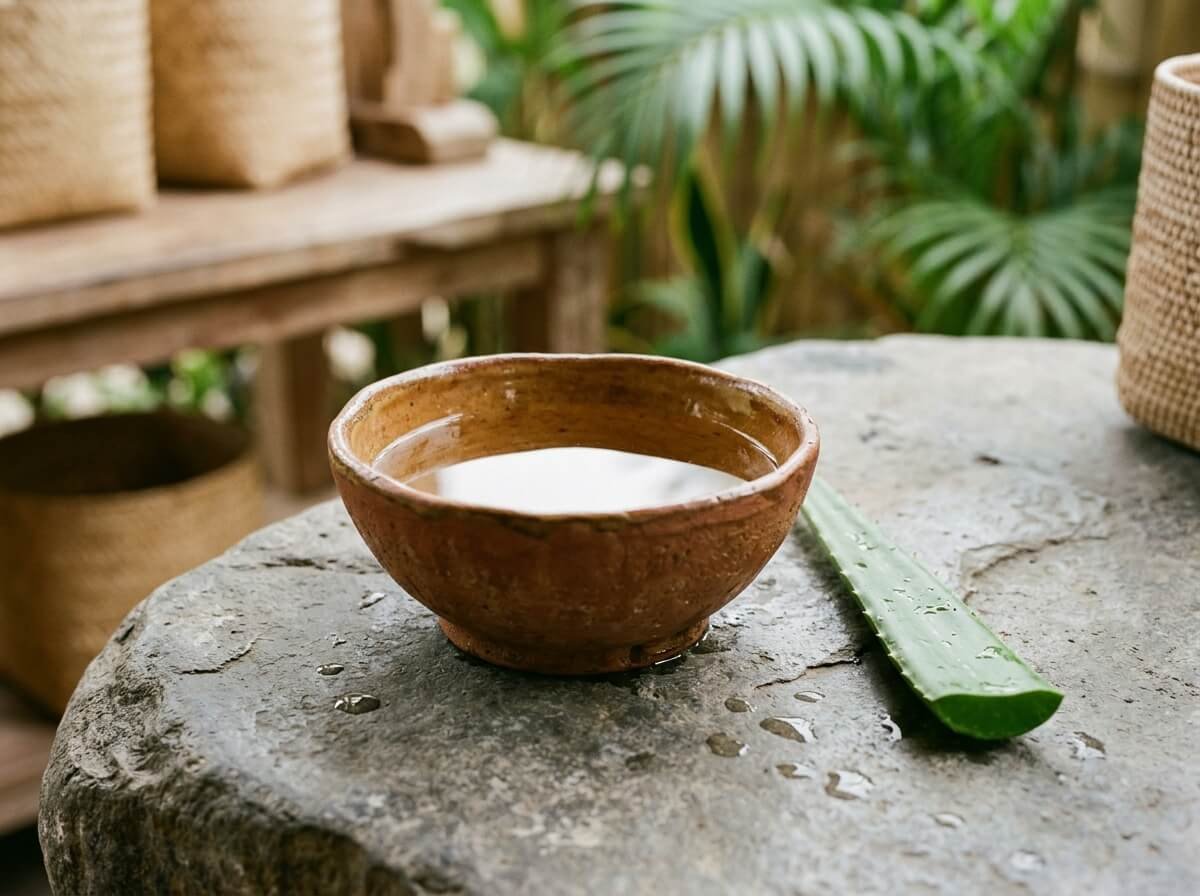
The order matters more than the product count. Skin that is still hot cannot absorb what you give it well, and water sitting on the surface will simply evaporate unless you seal it. So we follow four steps in sequence, each one preparing the skin for the next.
Cool
Bring the skin temperature down first. A tepid, not cold, shower or a soft cloth soaked in cool water lowers the heat and quiets the early inflammatory signal. Cold water can shock the skin, so aim for cool and comfortable. Pat dry gently and leave the skin slightly damp, because that residual moisture becomes the water your next steps will lock in.
Soothe
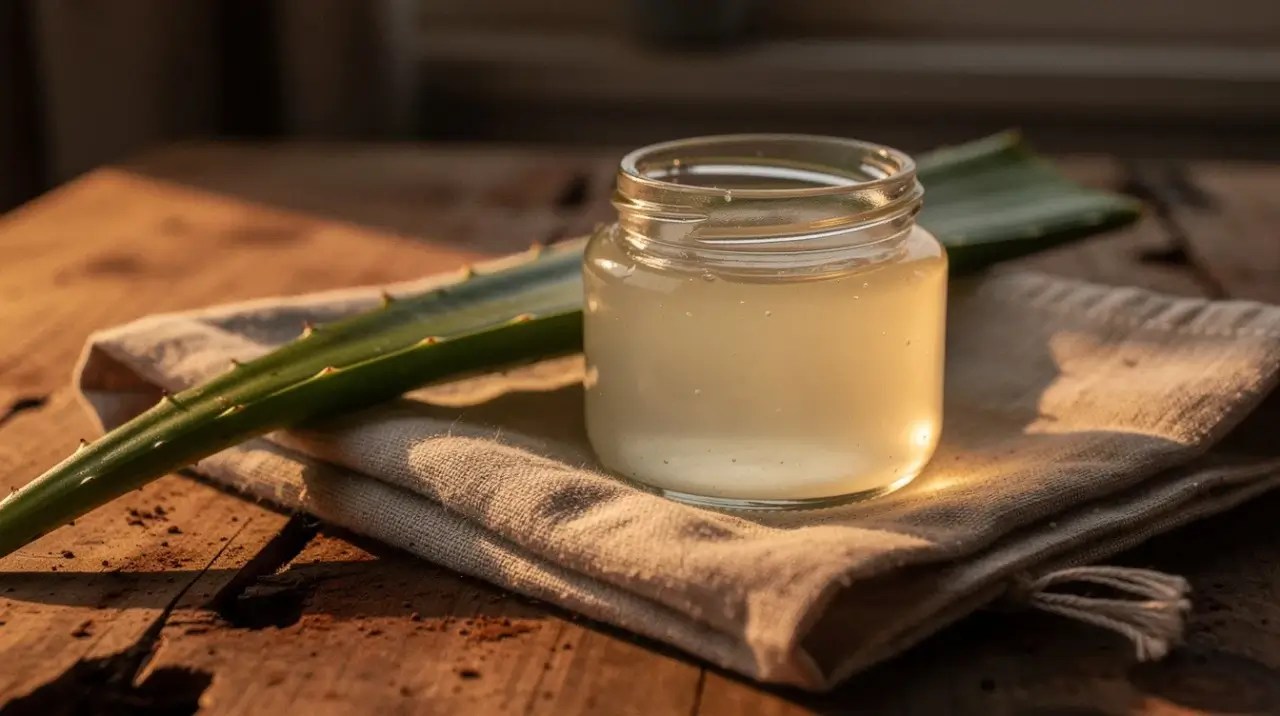
While the skin is damp, apply a light, water-based soothing layer. This is where aloe vera earns its long reputation, calming the sensation of heat and delivering water without heaviness. Our Aloe Vera Gel is blended with a touch of lavender to settle irritation, and it sinks in fast so you can build on top of it.
Rehydrate
Water is the point of this step. Sun-stressed skin has lost moisture, so before you reach for anything rich, add hydration with humectant-forward layers, a hydrating mist, a light lotion, or the aloe layer above doing double duty. Drinking water helps from the inside too, though it will not rehydrate the outer barrier on its own. The visible surface needs topical water, and the damp-skin trick keeps that water where you want it.
Seal
Finally, lock everything in with a barrier-supporting layer of oil, butter, or a rich lotion. This is the step that lowers transepidermal water loss overnight and lets the barrier rebuild. A body butter with cocoa or illipe, or a nourishing lotion, forms a soft occlusive film over the hydration you just added. Our guide to natural body butter explains why the seal step is where a lot of after-sun routines quietly fall apart, people soothe and rehydrate, then forget to seal, and the water they added drifts back out by morning.
The botanicals that genuinely help, and what is overhyped
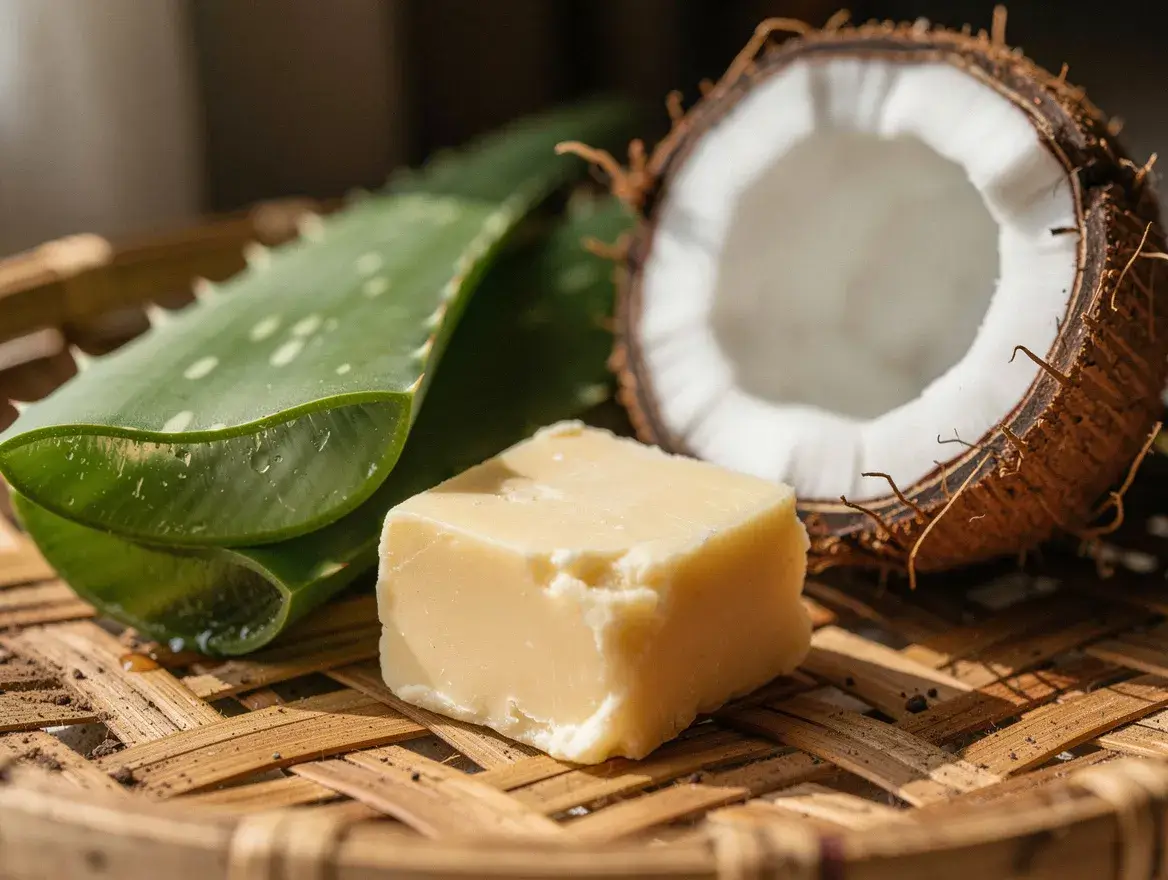
We believe in proof over promise, so here is the honest read on the ingredients that matter for after-sun, and the ones that get more credit than they earn.

Aloe vera is the genuine workhorse. It is roughly water by weight, so it cools and hydrates at once, and it has a long, well-documented history of calming the sensation of heat and irritation. It is the ideal soothe-and-rehydrate layer precisely because it is light. If you want the fuller picture of how it works and what to look for on a label, our deep dive on aloe vera gel for skin covers it. The one honest caveat is that aloe hydrates but does not seal, so on its own it can leave skin feeling tight again once it dries. Aloe is a step, not the whole ritual.
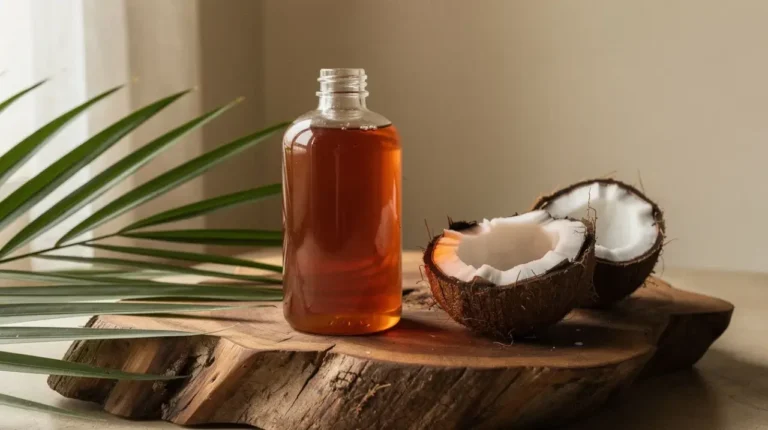
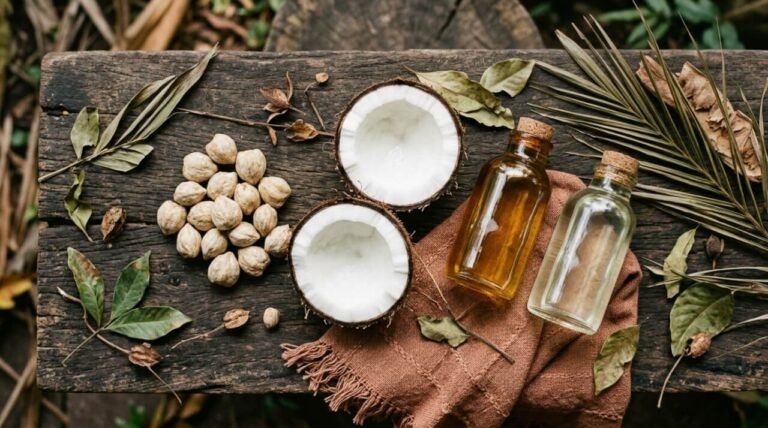
Coconut oil is a strong seal-step ingredient, rich in fatty acids that support the barrier and slow water loss. The nuance is timing. Coconut oil is occlusive, so it belongs at the end, over hydrated skin, and not slapped onto skin that is still hot or onto a fresh burn, where it can trap heat. Used correctly it is one of the most versatile carriers we make. Our guide to using coconut oil for skin goes deeper, and our cold-pressed Virgin Coconut Oil, sourced from Bali plantations through our Aluan partnership, is the version we reach for.
Cocoa and illipe body butters are the richest seal option, forming a soft film that supports overnight barrier repair. Illipe butter is wild-harvested in Kalimantan by families who have worked the same rainforest groves for generations, so choosing it protects the forest that produces it. A coconut body lotion is the lighter alternative for warm, humid nights when a full butter feels like too much. What is overhyped, honestly, is the parade of kitchen recipes: yogurt masks and heavy food oils feel indulgent but do little for the barrier and can sit greasily on the skin. Simpler and better-formulated beats complicated and improvised.
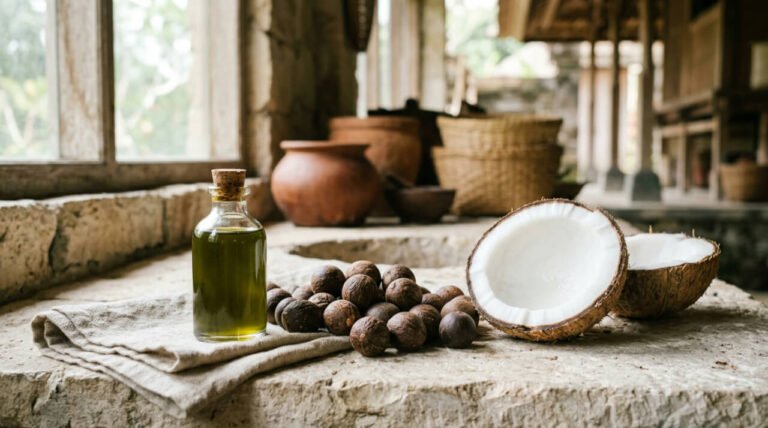
Tamanu oil deserves a mention among the quieter helpers. Traditionally used across the Pacific for soothing stressed skin, it is a heavier oil rich in fatty acids, which makes it a considered choice for the seal step on dry patches or areas that take a beating in the sun. Our Tamanu Oil is best used sparingly and last, over hydrated skin, the same rule that governs coconut. And for warm evenings when even a lotion feels like a lot, a soft option like our Cocoa Love Lotion seals without the weight of a full butter. The point is not to own every texture, it is to match the richness of your seal to your skin and your climate.
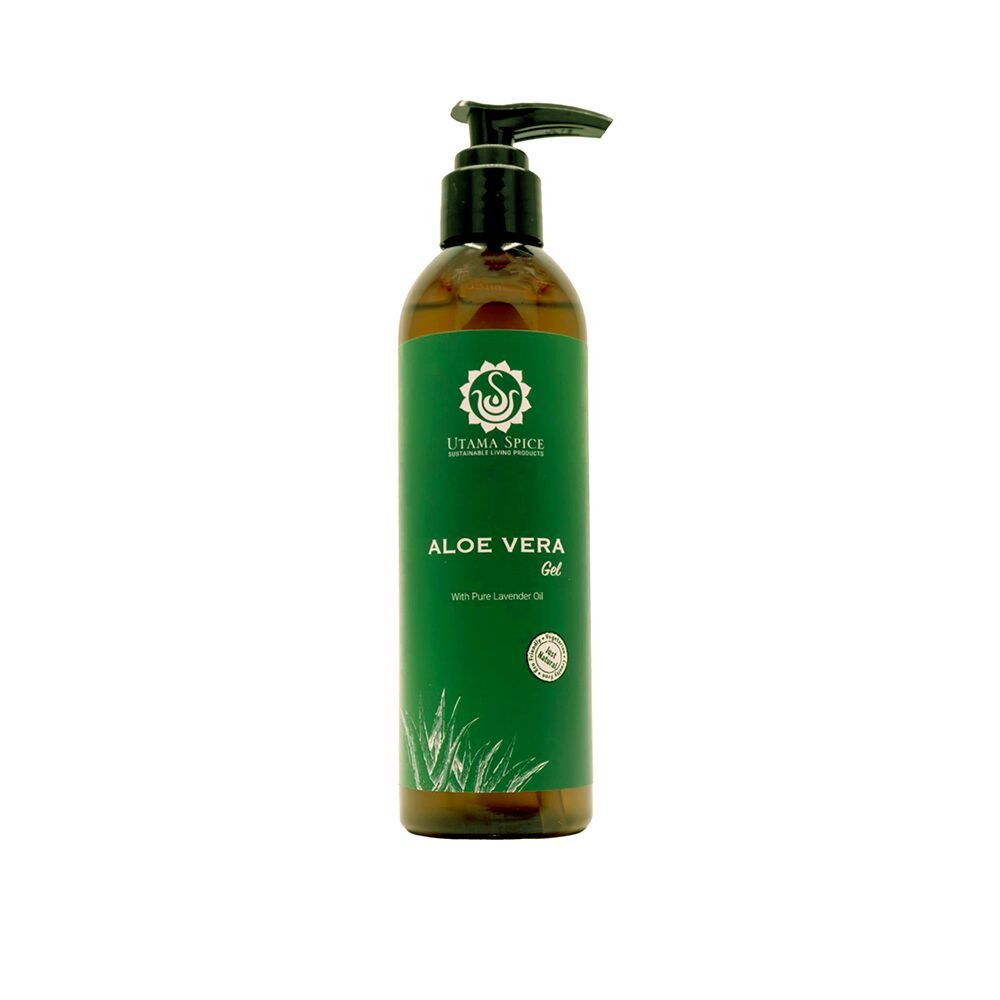
The soothe step, made simple
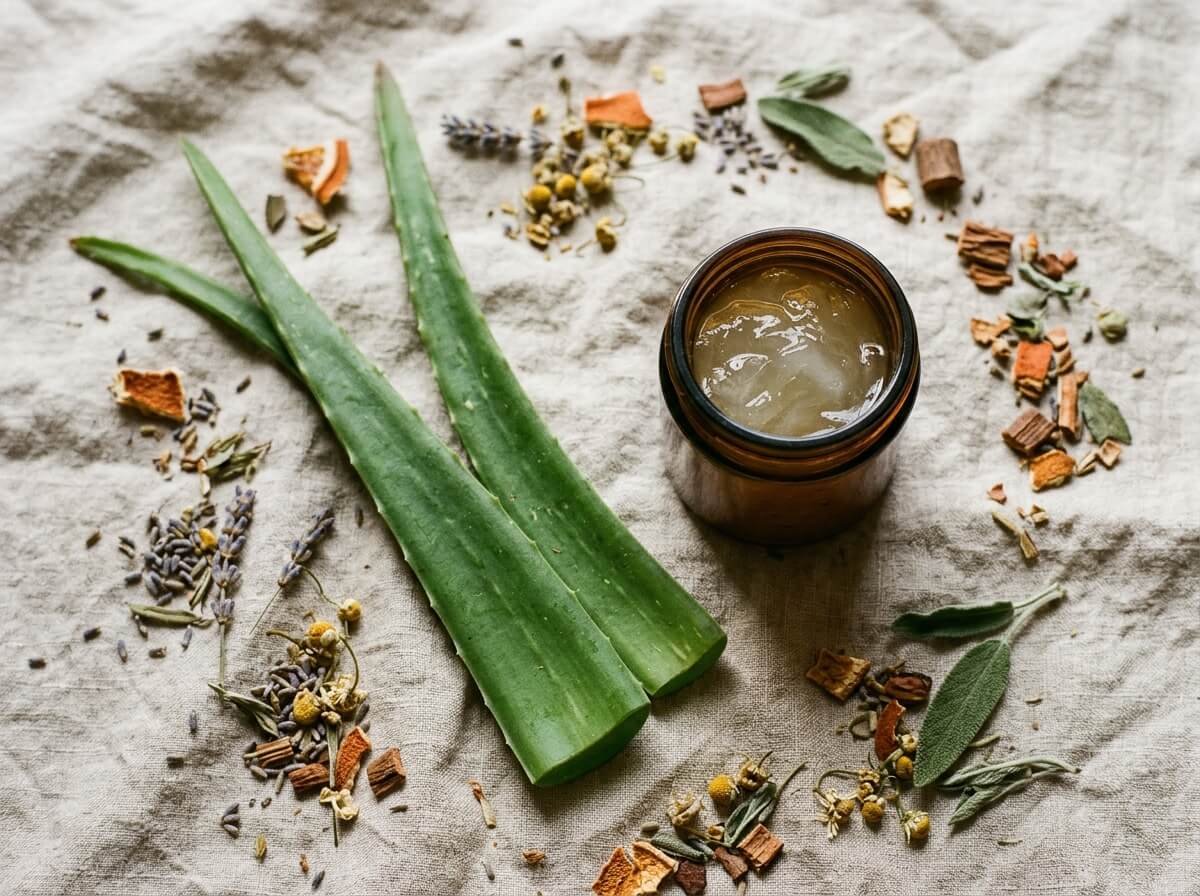
Our Aloe Vera Gel cools sun-warmed skin and adds a light layer of water without heaviness, blended with lavender to settle irritation. It is the calm centre of an after-sun ritual, ready for the seal step to follow.
A simple evening after sun care ritual to keep all year
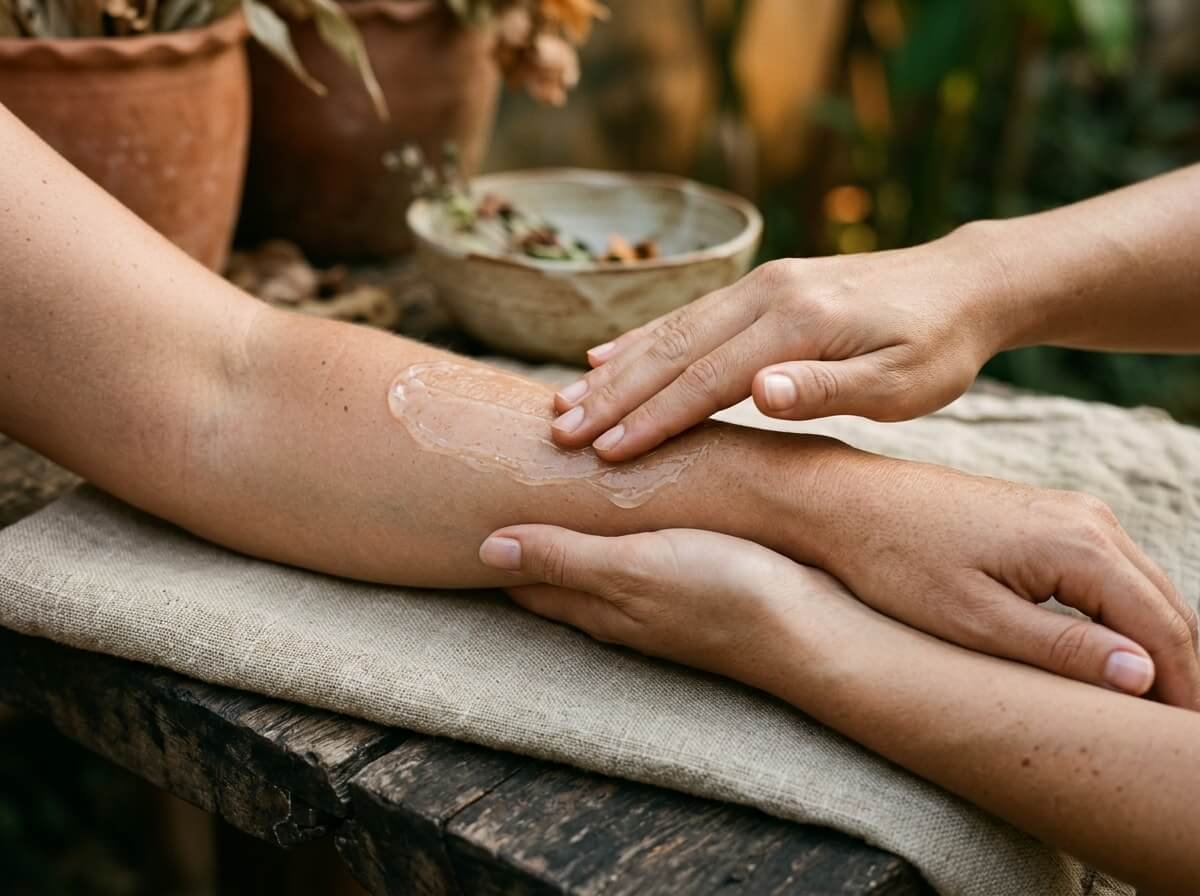
In Bali, sun is not seasonal, so after-sun is not a summer-only fix for us. It is a small evening practice, the same way you might light incense or brew tea to mark the shift from day to rest. Here is the ritual we would hand a friend, stripped to what works.
- Cool in the shower. Finish your evening rinse tepid rather than hot. Warm water feels good but pulls more moisture from already-depleted skin.
- Pat, do not rub. Leave the skin lightly damp. This is the single most overlooked step, and it changes how well everything after it absorbs.
- Soothe with aloe. Smooth a thin layer of aloe gel over the areas that saw the most sun, shoulders, chest, forearms, and the tops of the feet.
- Rehydrate. Add a light lotion or a hydrating mist while the aloe is still fresh, so you are layering water on water.
- Seal. Warm a little body butter or coconut oil between your palms and press it over the top. Save this step for last, and skip it on any patch that feels genuinely burned.
The whole thing takes a few minutes and asks for nothing exotic. You can make it more of a moment by choosing scents you love, folding in a slow breath, or tending your feet last as a small closing gesture. Ritual is not performance, it is attention. Done nightly through a sunny stretch, this routine keeps the barrier steady rather than letting it slide a little further each day. Small, consistent care is what real repair looks like, not a single heroic product.
There is a quieter benefit to keeping the ritual simple, too. A short list of trusted products means fewer half-used bottles gathering in the bathroom, and the ones you do keep can often be refilled rather than replaced. We have run refill stations since our earliest days in Ubud, because care that costs the Earth is not really care. When your after-sun routine is three or four staples you genuinely use, restocking becomes a refill rather than a fresh haul of plastic. That is the same principle that runs through everything we make: choose well, use fully, refill when you can, and let the ritual, not the packaging, be the thing that grows.
After sun care for face, body, and sensitive skin
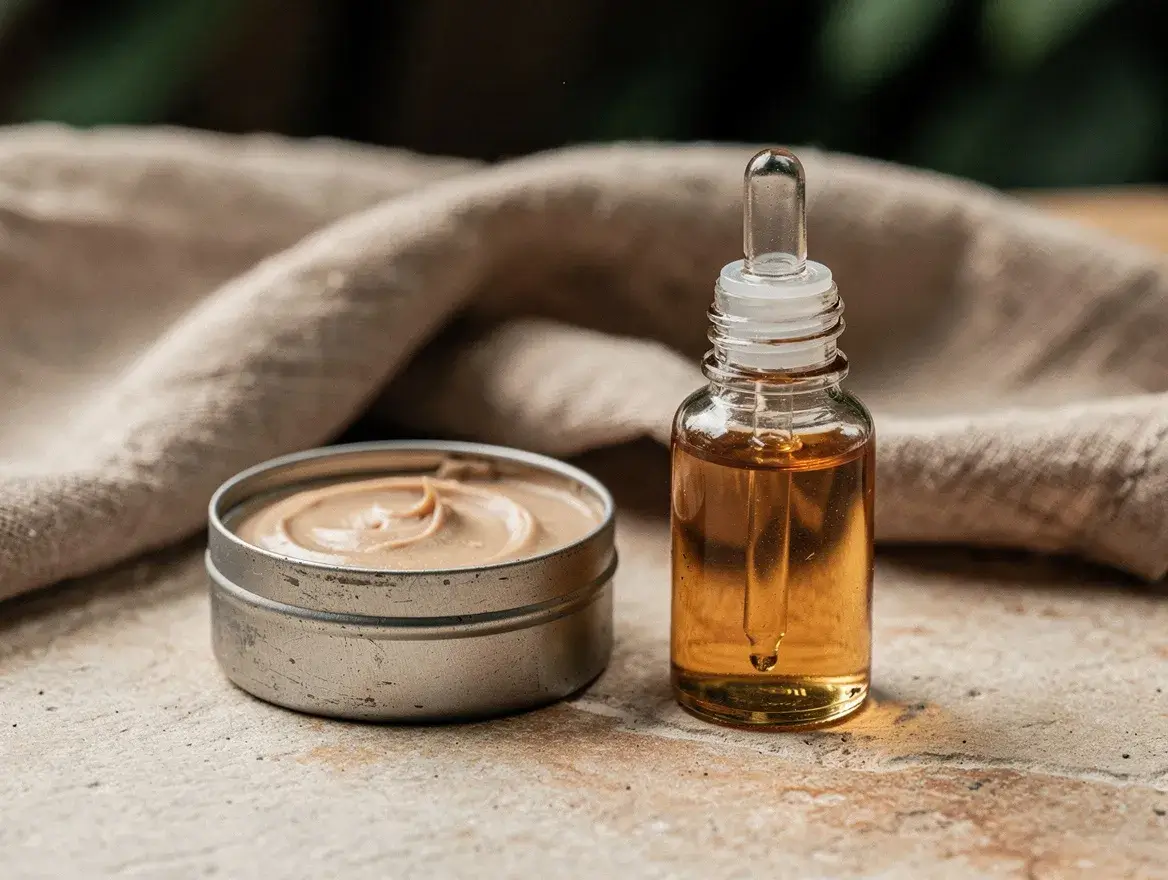
One routine does not fit every part of you. The face is thinner, more expressive, and more prone to congestion, so the seal step there should be lighter than on the body. Aloe and a hydrating layer suit most faces well after sun, followed by a light facial oil or a gentle cream rather than a heavy butter. If your skin runs oily or breaks out, keep the face seal minimal and let the hydration do the work, saving richer textures for the body.
The body can take more. Shoulders, chest, arms, and legs handle a full seal of butter or a body oil without complaint, and they usually need it, because they take the brunt of a day outdoors. This is where the cool, soothe, rehydrate, and seal sequence shines in full.
Sensitive skin asks for restraint. Fewer ingredients, no fragrance if you react to it, and a patch test before anything new. Reach for well-formulated single-purpose layers rather than long ingredient lists. And whatever your skin type, remember that after-sun care sits downstream of sun protection. The gentlest thing you can do for reactive skin is to reduce the sun stress in the first place with a mineral shield like our Zinc Natural Sunscreen, so your evening ritual has less to repair. Care and prevention are one system, not two.
Natural after sun care questions, answered
How long does sun-stressed skin take to settle?
Ordinary after-sun tightness and dryness usually ease within a day or two of consistent cooling, hydration, and sealing. A genuine sunburn takes longer, often several days to a week to fully calm and finish peeling, and it needs the gentler burn-recovery approach rather than the full ritual. If skin stays red, painful, or broken beyond a few days, treat it as an injury and consider professional advice.
Can I use aloe vera every day?
Yes, for most skin, daily aloe is fine and even pleasant, especially in a hot climate. It is light and water-rich, so it works as an everyday soothe-and-hydrate layer, not only after a sunny day. Just remember to seal over it, since aloe alone can leave skin feeling tight once it dries.
Is coconut oil too occlusive to use after sun?
It depends on timing. Coconut oil is occlusive, which is exactly what you want in the seal step over cooled, hydrated skin. What you should avoid is putting it on skin that is still hot or on a fresh burn, where trapping heat can make things worse. Cool and soothe first, then seal.
What about after-sun care for children?
Keep it simple and gentle. Cool the skin, offer water to drink, and use a plain, fragrance-free soothing layer. Avoid essential oils and strongly scented products on young children unless a product is specifically formulated and labelled for them, and treat any real burn on a child with extra caution, seeking medical advice for anything beyond mild. When in doubt, less is more.
Care that meets the sun where you live
After-sun care is not about undoing a day outdoors, it is about tending the skin that carried you through it. Cool, soothe, rehydrate, seal. Four small acts, done with attention, that keep the barrier steady and the skin comfortable. None of it needs a miracle claim or a ten-step cabinet, only honest botanicals used in the right order at the right time.
We craft these products in Bali, where the sun asks something of the skin every single day, and we have learned that consistency beats intensity. Choose the aloe, the coconut, the butter that suit your skin and your climate, layer them with care, and let the ritual become a part of how your evenings close. That is what real care looks like, rooted, unhurried, and yours to keep.