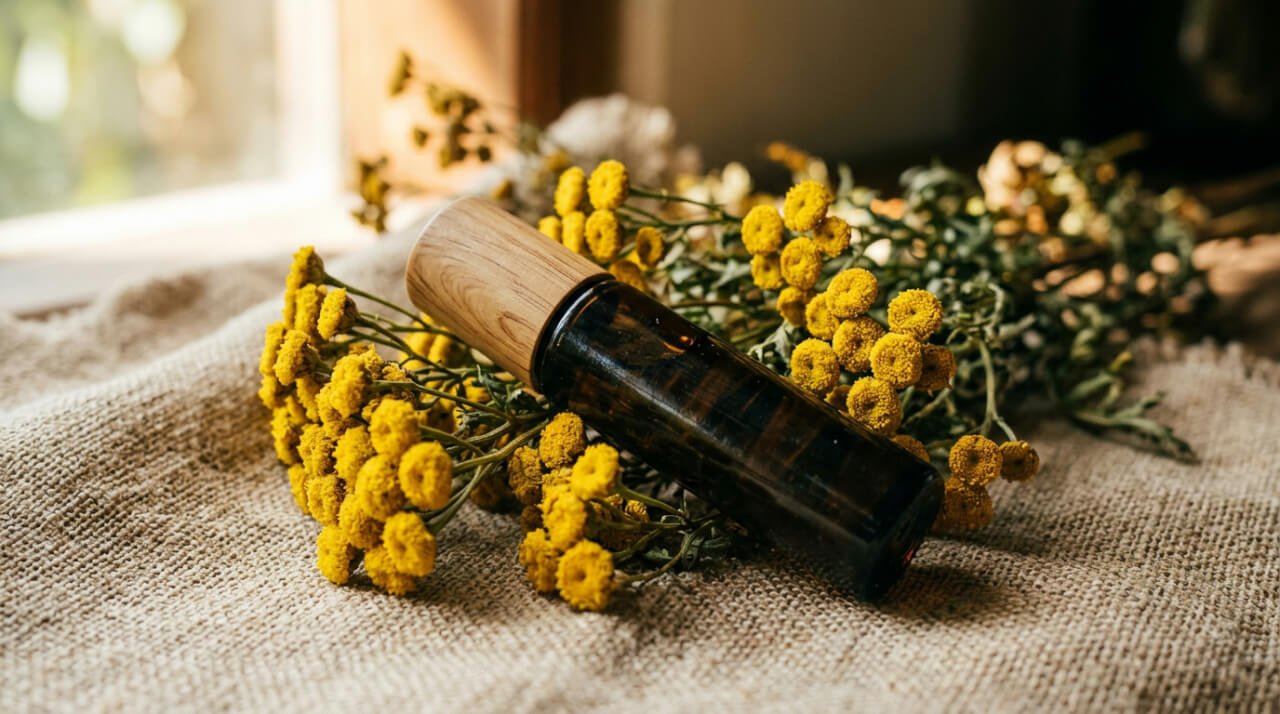
Blue tansy benefits for skin: the calming oil, honestly explained
Blue tansy benefits for skin have become a genuine talking point in natural skincare, and for good reason. The oil is striking: a deep, vivid cobalt blue that looks almost too alive to be real. It calms visibly reactive skin, carries a pleasant, faintly sweet and herbaceous scent, and delivers an active that most botanical oils simply cannot match. But the category is also full of confusion, mislabeling, and a fair amount of wishful thinking. This guide is the honest version: what blue tansy actually is, what it does on skin, why the bottle matters, and whether it belongs in your routine.
What blue tansy actually is (and the three plants people confuse it with)

Blue tansy is the common name for Tanacetum annuum, an annual flowering plant native to Morocco. Steam distillation of the flowers yields the essential oil. The colour, that distinctive deep cobalt blue, comes from a compound called chamazulene, which forms during the distillation process when heat acts on a precursor molecule called matricine. Before distillation, the oil is not blue. The colour is an artifact of chemistry, and it is one of the first things worth understanding.
Here is where the confusion begins, because three plants often get tangled under the same “blue tansy” label, and they are not interchangeable.
- Tanacetum annuum (Moroccan blue tansy): the plant this article is about. Annual, from Morocco, safe for topical use when correctly diluted. High chamazulene content is what creates the blue colour and the anti-inflammatory action.
- Tanacetum vulgare (common tansy): a different species. Also called common tansy or garden tansy, it grows across Europe and has a long history in herbal medicine, but it contains significant levels of thujone, a compound that is toxic in concentrated amounts. You do not want common tansy in your skincare oil, and a mislabeled bottle is a real risk in an under-regulated market.
- Blue chamomile (Matricaria chamomilla, steam-distilled): also turns blue via chamazulene and is genuinely calming for skin, but it is not tansy. Some sellers use the terms interchangeably. They are separate plants with different aromatic profiles and somewhat different active compound ratios.
When buying blue tansy essential oil, the Latin name on the label matters more than any marketing description. Look for Tanacetum annuum, country of origin Morocco, and a batch-specific GC/MS report (gas chromatography and mass spectrometry, the standard for verifying essential oil composition). Any reputable supplier provides this on request. If the supplier cannot, that tells you something. Our guide to the list of essential oils and their uses covers botanical naming conventions that help with exactly this kind of label reading.
One more thing worth saying plainly: “blue tansy” is sometimes applied loosely to any blue-coloured oil, including those artificially coloured or blended from cheaper sources. The vivid blue you see in a genuine distillate is specific and consistent. If a product’s blue seems oddly uniform, almost like dye, that instinct is worth following.
Why it’s blue: chamazulene and the chemistry of distillation
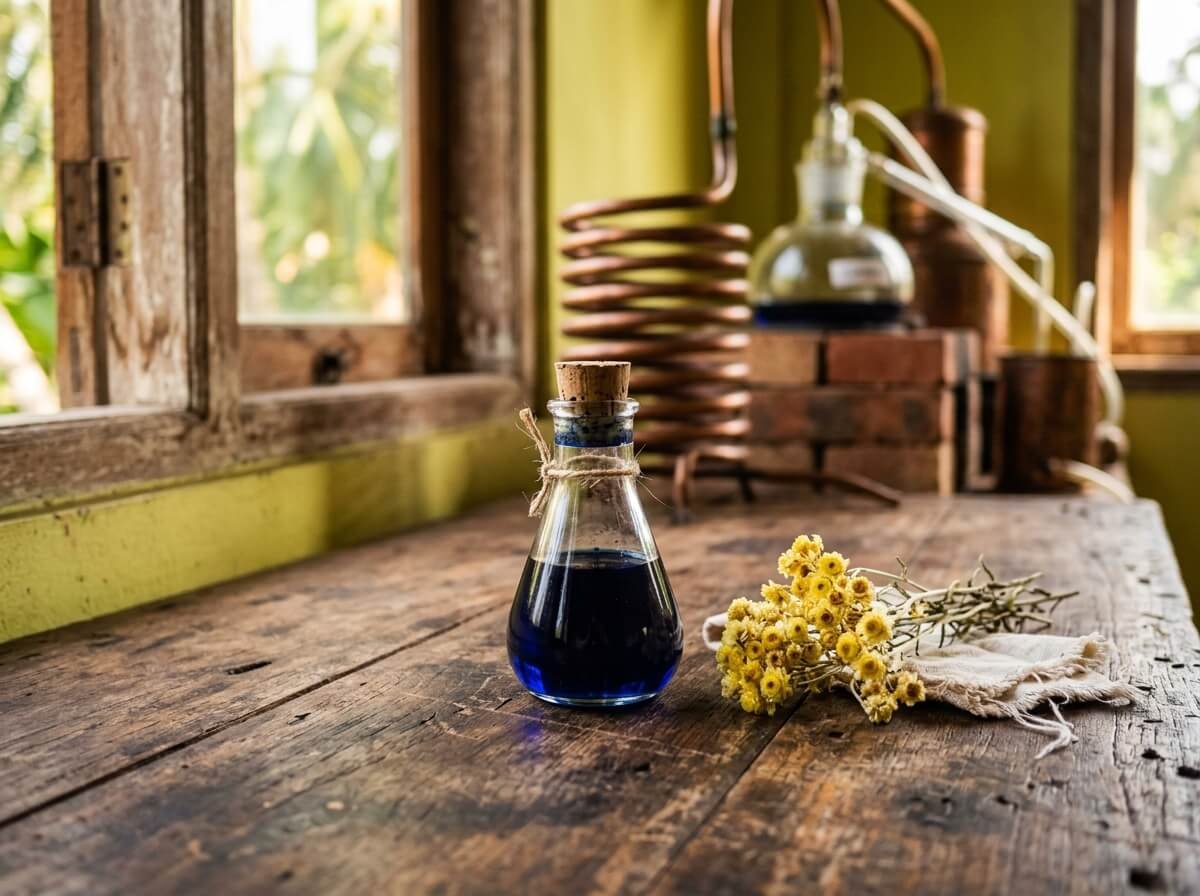
The colour is not cosmetic. It is evidence of active chemistry.
Chamazulene forms during steam distillation from matricine, a sesquiterpene lactone precursor present in the plant material. Heat and steam break down matricine into chamazulene, which is deeply coloured, has a low molecular weight, and carries anti-inflammatory properties that survive into the finished oil. The concentration of chamazulene in a quality Tanacetum annuum distillate typically runs between five and 30 percent, depending on plant source, harvest timing, and distillation conditions. Higher chamazulene generally means a more intense blue and stronger anti-inflammatory activity.
Alongside chamazulene, two other active compounds shape the oil’s skin behaviour. Sabinene, a monoterpene, contributes mild antimicrobial and skin-soothing properties. Camphor, present in smaller amounts, brings a gentle warming sensation and has a long history of use in calming irritated skin, though it also means the oil should be used thoughtfully around the face in high dilution rather than liberally applied.
What the distillation process matters for is quality, not just colour. Slow, low-temperature distillation preserves the delicate volatile compounds that make the oil useful. Rushed or high-heat distillation produces a product that looks blue but has lost much of its chamazulene integrity. This is one of the reasons why price tracking genuine blue tansy is worth doing: very cheap distillates are often cut at the extraction stage, not after.
If you want to explore the broader science of what essential oils do in the body and on skin, our piece on essential oils benefits covers the mechanisms in accessible detail, including how volatility, molecular size, and carrier chemistry affect how actives reach your skin.
What blue tansy benefits for skin actually mean: calming, antioxidant, and barrier support
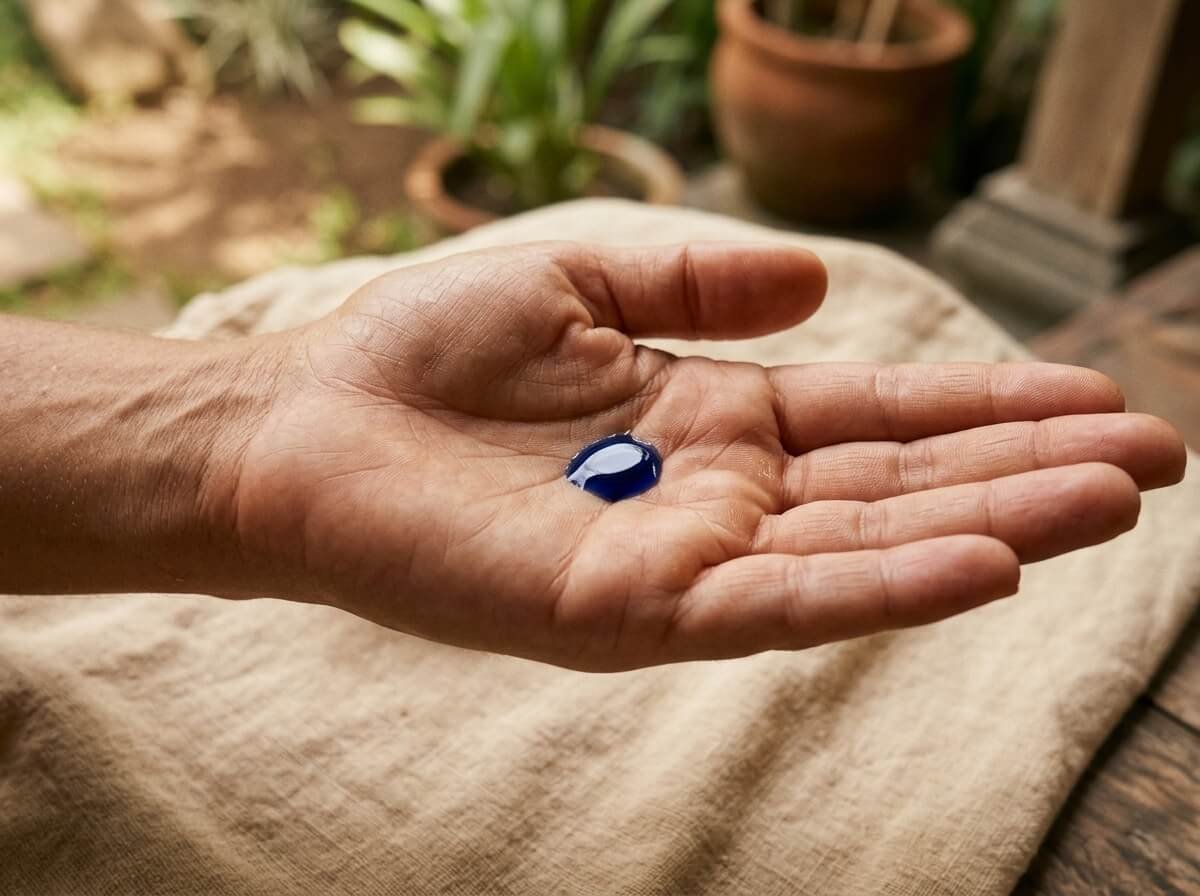
Blue tansy benefits for skin cluster around three mechanisms. It is worth being honest about what the research shows and what is still primarily anecdotal, because this oil has attracted more enthusiasm than it has rigorous clinical study. That does not make the benefits false, but it does mean framing matters.
Calming redness and visible irritation
This is where the evidence is strongest. Chamazulene inhibits certain inflammatory pathways, specifically the production of leukotriene B4, a compound involved in the kind of immune-mediated inflammation that causes persistent skin redness. For skin that flares in response to heat, stress, or certain topical products, this matters. The effect is topical and localised, meaning you are not taking a systemic anti-inflammatory, you are applying a gentle mediator to a reactive surface. The results, for many people with redness-prone or sensitised skin, are noticeable and consistent.
Antioxidant support
Chamazulene is also an antioxidant, meaning it neutralises free radicals that accelerate cellular breakdown and contribute to dullness and uneven texture over time. The antioxidant capacity of blue tansy is not as well-documented in human clinical trials as, say, vitamin C or resveratrol, but in vitro studies confirm the activity. At realistic topical concentrations, the oil can reasonably be expected to contribute modest protective benefit. Not a substitute for SPF, but a complementary layer.
Barrier comfort and congestion
Blue tansy has a light, non-comedogenic profile when used in correct dilution in a jojoba or similar carrier. Jojoba is technically a liquid wax ester that closely mimics the skin’s own sebum, making it an effective delivery system that does not add to congestion. For combination and oily skin types dealing with both reactive redness and congested pores, the combination of blue tansy in jojoba addresses both concerns without overwhelming the skin. This is the logic behind a pre-diluted roller as the entry point: jojoba is already doing the barrier work, and the blue tansy is doing the calming work.
What blue tansy does not do: it is not a treatment for active acne in the clinical sense, it does not directly affect melanin or hyperpigmentation, and it should not be presented as a substitute for medical care for conditions like rosacea or eczema. The honest framing is botanical support for reactive skin, not pharmaceutical intervention. Progress, not a promise.

The honest entry point into blue tansy
Our Blue Tansy Essential Oil Roller comes pre-diluted in jojoba oil, ready to apply directly to pulse points or reactive areas. No measuring, no guesswork, no risk of applying a concentrated oil neat. A clean, considered starting point.
The dilution question: why you never apply blue tansy neat, and why a roller is the safe first step
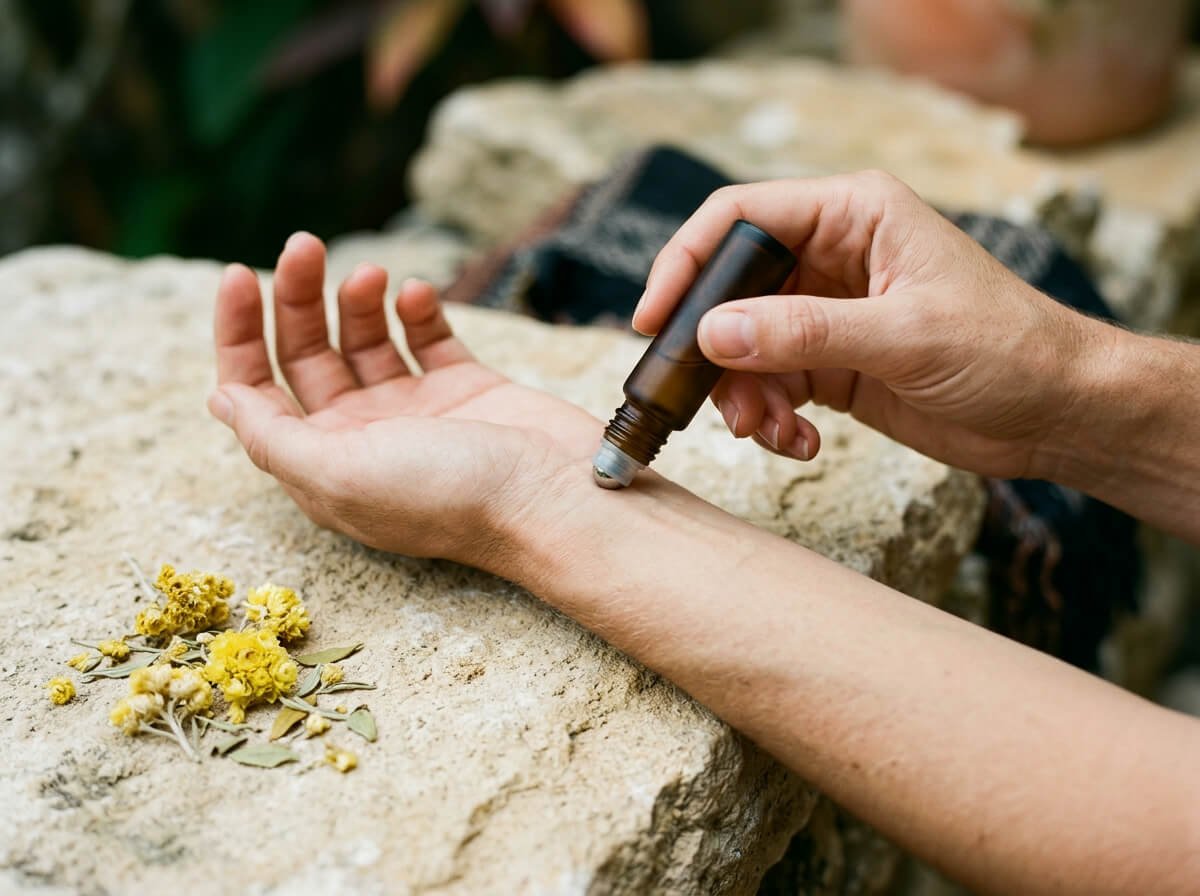
Essential oils are highly concentrated plant extracts. Blue tansy is no exception. A single milliliter of the pure distillate contains the aromatic and active compounds from a significant volume of plant material. Applying it directly to skin without dilution is not a more effective approach, it is simply a higher-risk one: sensitisation, irritation, and, in some cases, phototoxicity (though blue tansy carries low photosensitisation risk compared to citrus oils, care is still warranted).
The standard professional dilution guideline for facial application is 0.5 to one percent in a carrier oil. That translates to roughly three drops of essential oil per 30 ml of carrier. For body application on normal skin, two to three percent is generally considered safe. These are not arbitrary numbers. They reflect decades of aromatherapy practice and the findings of bodies such as the International Fragrance Association and the Research Institute for Fragrance Materials.
A pre-diluted roller solves the practical problem. Most people arriving at blue tansy for the first time are not measuring dilutions. They want a simple, safe way to try the oil without the risk of under-diluting or, more likely, losing confidence after a confusing measuring exercise. A roller with the dilution already done correctly means the benefits are accessible without the variables. Our Blue Tansy Essential Oil Roller is diluted in jojoba oil, which is among the most skin-compatible carrier options available. Jojoba does not oxidise quickly, does not clog pores, and has a long shelf life, all of which matter when you are storing a product for daily use.
For people who want to blend their own formulations, the process is straightforward: start with a good carrier, add blue tansy at one percent for facial use, and introduce it to your routine once daily rather than layering it into a complex product stack immediately. This gives your skin time to demonstrate how it responds before you increase frequency.
Our broader essential oils uses chart includes carrier pairing guidance for different skin types, which is useful if you are building your own dilution at home.
Real vs adulterated: how to spot faked or over-diluted blue tansy oil
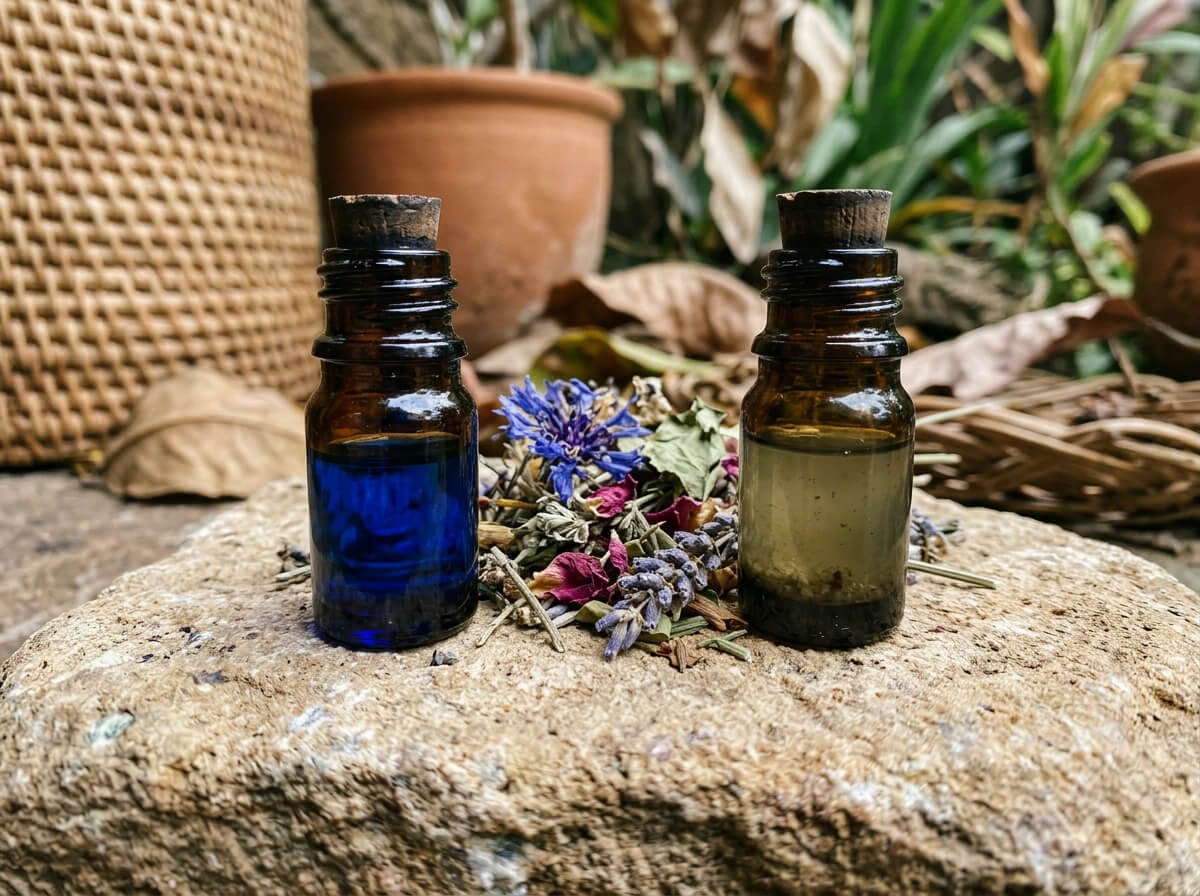
Blue tansy is among the most frequently adulterated essential oils on the market. This is partly because of the gap between supply and demand (genuine Moroccan Tanacetum annuum cultivation is limited), partly because the vivid blue colour makes it visually easy to approximate with other blue oils or synthetic additives, and partly because the market for essential oils lacks robust enforcement.
Common forms of adulteration include:
- Blending with blue cypress oil (Callitris intratropica): blue cypress is a legitimate essential oil that is also blue due to guaiazulene, a different compound from chamazulene. It is sometimes used to extend blue tansy or even substituted entirely. The aromatic profile is different, and the skin chemistry is not the same.
- Artificial colorants: some products achieve their blue colour with synthetic dyes rather than genuine distillation-derived chamazulene. This is straightforward fraud, but it is not always obvious without testing.
- Over-dilution in carrier before bottling: a product sold as “blue tansy essential oil” that arrives as a very pale blue or nearly colourless liquid has likely been pre-diluted to a degree not reflected in the pricing. Genuine, high-chamazulene distillate is a deep, almost ink-like cobalt.
- Misidentified species: receiving Tanacetum vulgare (common tansy) labeled as Tanacetum annuum. This is the most problematic version, as common tansy contains thujone. A GC/MS report makes this immediately apparent.
What to look for when buying:
- Latin name on the label: Tanacetum annuum
- Country of origin: Morocco (or sometimes Spain for cultivated crops)
- A GC/MS report specific to the batch you are purchasing, available on request
- Consistent deep cobalt-blue colour (not pale, not grey-blue, not artificially vivid)
- A characteristic aroma: slightly sweet, herbal, camphoraceous, with a floral undertone. If it smells primarily of wood or has no herbal note at all, it may not be what it claims.
The Outlaw energy here is not about lecturing: it is about knowing what you bought. An oil that cannot prove what it is, is not worth the price of a genuine distillate. This is the same transparency standard we hold ourselves to across everything in our range. Our piece on how essential oils work and what to look for in quality gives the broader framework for applying this level of scrutiny across your oils.
Who blue tansy genuinely suits, and its honest limits
Blue tansy is not a universal oil. Being clear about who it genuinely benefits, and who might do better with a different choice, is part of using it thoughtfully.
Skin types where blue tansy tends to help most
- Reactive and sensitised skin: if your skin flares in response to temperature changes, synthetic fragrance, certain food triggers, or hormonal shifts, the chamazulene in blue tansy offers a measured, plant-based calming response. This is its clearest application.
- Combination skin with redness: the non-comedogenic nature of the oil in jojoba means it does not contribute to congestion while addressing the inflammatory aspects of combination reactivity. This is less common in botanical oils, which often suit either oily or dry skin but not both.
- Skin showing early stress-related response: sleep deprivation, travel, and urban environmental stress all manifest in the skin before they manifest elsewhere. A calming botanical oil used consistently, rather than as a crisis response, tends to give steadier results.
Honest limits
- It is not a treatment for clinical rosacea: if you have a diagnosed inflammatory skin condition, your dermatologist’s recommendations come before a botanical oil. Blue tansy may complement a care plan, but it does not replace medical treatment.
- Pregnancy: camphor-containing oils are generally avoided during pregnancy as a precaution. Consult your healthcare provider before using blue tansy topically if you are pregnant.
- Dry, flaky, or compromised skin barrier: blue tansy in jojoba is reasonably moisturising, but if the barrier is significantly compromised, a richer emollient base is likely more helpful as a first step. See how argan oil benefits for skin specifically addresses barrier repair, which may be the better starting point for very dry skin before introducing an active like blue tansy.
- Sensitivity to camphor or salicylates: a small proportion of people are genuinely sensitive to camphor-group compounds. Patch testing before full facial application is always worth the extra two days of patience.
And here is the honest commercial reality: the wellness category tends to oversell everything. Blue tansy is a genuinely useful botanical ingredient for certain skin concerns, particularly reactive redness and surface inflammation. It is not a standalone skincare routine, not a daily antioxidant serum, and not a substitute for the basics: a gentle cleanser, a barrier-supporting moisturiser, and consistent SPF. Within those basics, it earns its place.
A simple calming ritual with blue tansy in daily practice
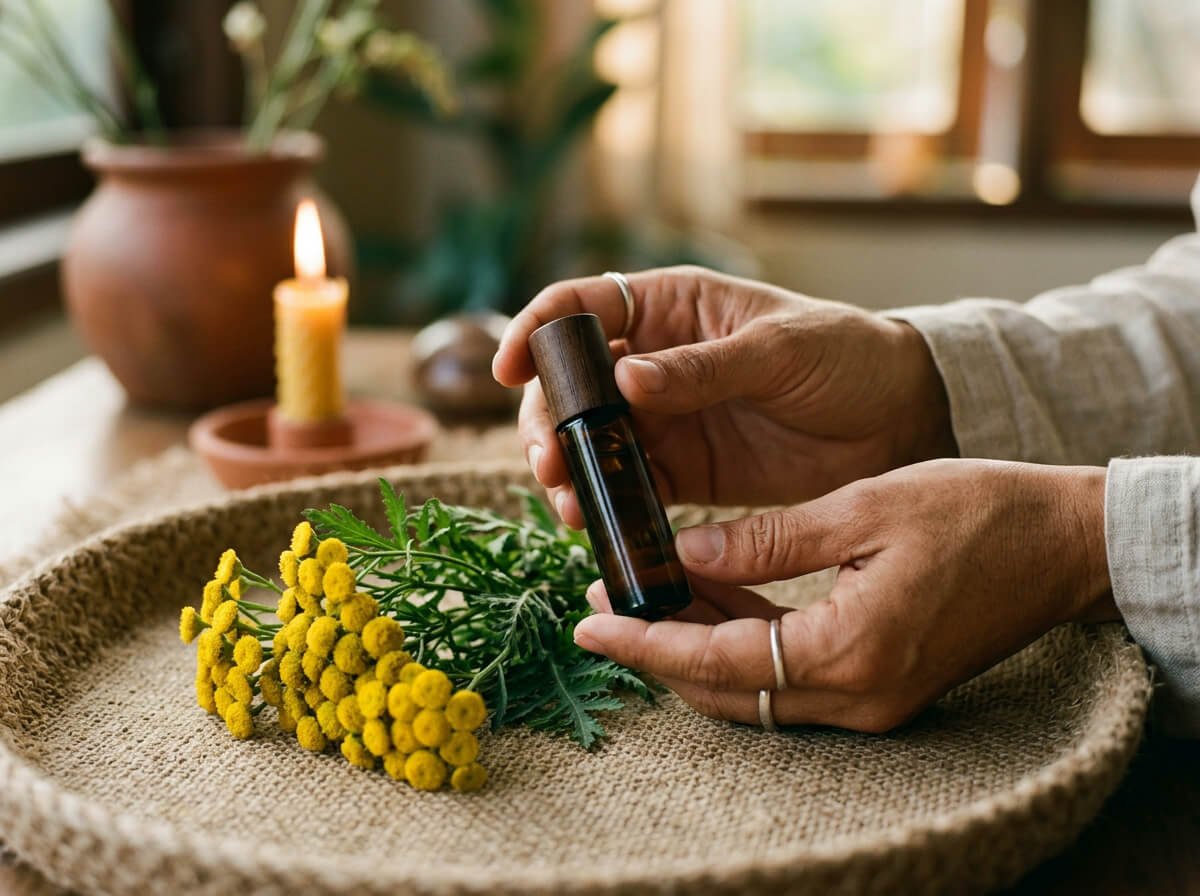
The most consistent results from blue tansy come not from occasional use during a flare, but from quiet daily integration. Here is how to do that simply, without adding complexity to an already layered routine.
Morning use (targeted calming)
After cleansing and before moisturiser, roll the blue tansy roller across the areas prone to redness: the sides of the nose, the inner cheeks, the forehead if that is where your reactivity shows. Two or three passes is enough. The oil absorbs quickly into skin that has just been cleaned, and applying before moisturiser means it is in contact with skin rather than sitting on top of a film of cream. Allow 60 seconds before applying your next product.
Evening use (wind-down)
Blue tansy has an aromatic dimension worth noting. The scent, faintly sweet, slightly camphoraceous, and herbal, is calming to the nervous system alongside its topical action. Rolling the oil across the temples and the back of the neck in the evening serves double duty: botanical support for skin that has been exposed to environmental stress all day, and an aromatic signal to the nervous system that the day is done. This is the logic behind using blue tansy in aromatherapy practice: the calming mechanism works through more than one channel.
Weekly deepening
Once a week, take two to three minutes in the evening for a slower application. Warm the roller between your palms before applying, which gently increases the oil’s spreadability. Apply to the whole face with light upward strokes. Leave for five minutes before moisturising. This is not a treatment, it is a ritual: an opportunity to check in with your skin with something in your hands, which is its own form of attentiveness. Wellness that comes from slowing down, not from adding more products.
If you want to explore how other essential oils integrate into a calming daily practice, our guide on essential oils for focus offers a different angle on botanical aromatherapy, and the aromatherapy diffuser oils guide covers the complementary practice of diffusing for environmental effect while you apply your topical oils.
Putting it together: what blue tansy offers, honestly
Blue tansy benefits for skin are real, specific, and earned by the chemistry of a genuinely distinctive oil. Chamazulene is an active compound, not a marketing term. The anti-inflammatory effect is documented. The antioxidant activity is measurable. The sensory experience of using a vivid cobalt-blue oil is, frankly, a small pleasure that asks nothing complicated of you.
But the category needs honest framing. The most adulterated oils in aromatherapy include blue tansy. The most overpromised applications in skincare include blue tansy. Buying a genuine distillate, using it at a correct dilution, and integrating it consistently into the routine of someone whose skin actually suits it: that is where the results live. Not in the bottle alone. In the practice.
If reactive, redness-prone, or combination skin is your concern, this oil is a reasonable next step. A pre-diluted roller is where to start, because it removes the variables that trip people up. From there, the practice builds itself.