Double cleansing for natural skincare: the honest guide to oils, order, and when to skip it
Double cleansing sounds like one more step in an already crowded routine, and most of what is written about it does nothing to change that impression. The idea is simple: an oil-based first cleanse to dissolve sunscreen, sebum, and the day, followed by a water-based second cleanse to lift away what is left. Done with the right botanical oil for your skin, in the right climate, at the right frequency, it is one of the most honest habits in natural skincare. Done blindly, with the wrong oil or every single night regardless of what your skin is asking for, it can leave dry or sensitive skin worse off than before. This guide covers which oil to reach for, what actually makes a natural second-cleanse wash work, and, just as importantly, when to skip the whole ritual.
None of what follows requires a nine-step shelf or a specific brand’s product ladder. It requires one well-chosen oil, one gentle wash, and a willingness to read your own skin honestly rather than follow a routine written for someone else’s climate and someone else’s skin type.
What double cleansing actually is (and where the two-step habit came from)
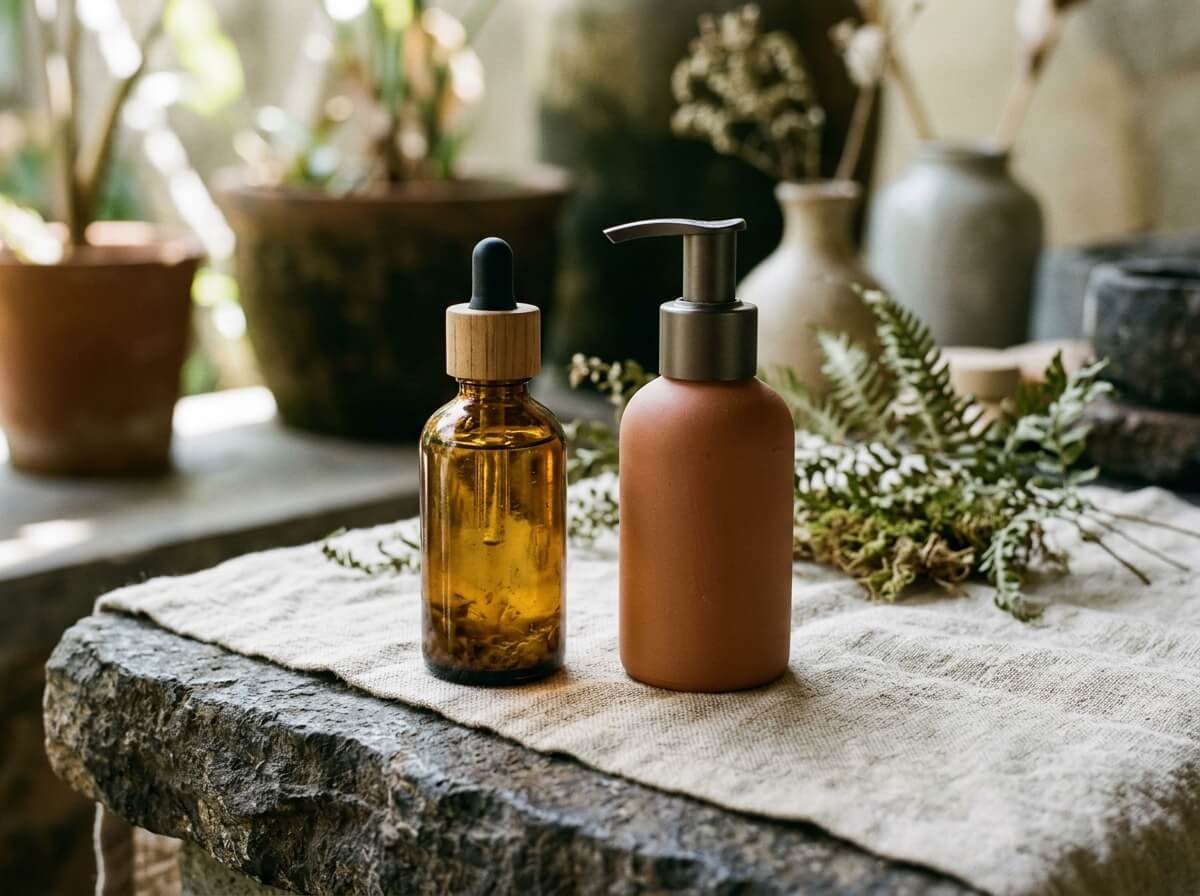
Double cleansing is credited to Korean skincare culture, where a two-step evening ritual (an oil or balm cleanser, followed by a foaming water-based cleanser) became standard practice long before it reached Western routines. The logic holds up under scrutiny: sunscreen, sebum, and much of the pollution that settles on skin through the day are oil-soluble. Water and a mild surfactant alone often cannot fully lift them, so residue is left behind, worked back into the skin overnight rather than removed from it. Oil dissolves oil. A second, water-based cleanse then clears any remaining film, along with the light residue the first oil step leaves behind.
What gets lost in translation, though, is that the K-beauty version was built around specific climate assumptions and specific product formulations, many of them synthetic mineral oils and silicone-based balms chosen for glide rather than skin benefit. A botanical oil cleanse asks more of the ingredient itself: the oil is not just a solvent, it is doing skin work while it cleanses. That distinction is the difference between double cleansing as a borrowed routine and double cleansing as something that actually earns its place.
Not everyone needs it in equal measure. Daily sunscreen wearers, anyone applying makeup regularly, and people who sweat heavily through exercise or Bali’s midday heat are the clearest candidates: all three leave an oil-soluble film that a single water-based cleanse tends to only partially lift. Someone with a bare-skin, indoor, low-exposure day has a much smaller case for it, a distinction we come back to later in this guide.
Choosing your first-cleanse oil: tamanu, argan, or coconut, honestly

Most guides to double cleansing skip the one decision that actually determines whether the first step helps or harms: which oil goes on your face. Oils are not interchangeable, and the comedogenic scale (a rough measure of how likely an oil is to clog pores) is the honest place to start.
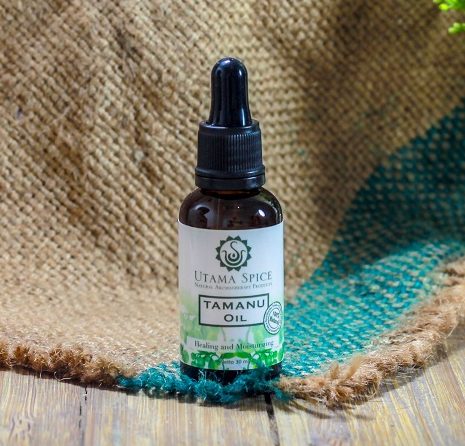
- Tamanu oil sits at the low end of the comedogenic scale, rich in calophyllic acid, and is the carrier we reach for on oily or acne-prone skin. Our Tamanu Oil 30ml is a first-cleanse oil that will not undo the work of a second cleanse by re-clogging what it just dissolved. Read the full tamanu oil benefits breakdown if you want the science behind why this particular oil earned that reputation.
- Argan oil is the dependable middle ground: light enough for combination skin, nourishing enough for normal to dry skin, and gentle on skin that reacts to almost everything else. Our Argan Oil 30ml works well as a daily first-cleanse for most skin types, and the full argan oil benefits guide covers the fatty acid profile in more depth.
- Coconut oil is the oil most people already have in the kitchen, and the one most commonly reached for by default. It sits higher on the comedogenic scale, closer to 4, which makes it a real risk for oily and acne-prone skin used as a leave-on product. As a rinse-off first cleanse, on very dry or mature skin, it can still work well. Our Virgin Coconut Oil 100ml is worth keeping for that purpose specifically, not as a universal answer. We compare it honestly against another Balinese staple in coconut oil vs illipe butter, and there is more on general use in how to use coconut oil for skin.
The rule of thumb: match the oil to your skin’s actual behavior, not to whichever bottle is already open in your kitchen cupboard.
If you are unsure which category your skin falls into, patch test on the inner forearm for three to four nights before committing your face to a new oil. Watch for small, skin-colored bumps around the jaw and hairline a few days later, the classic sign an oil is too heavy for your skin’s current state, rather than judging by how the oil feels going on. A genuinely well-matched first-cleanse oil should absorb into the skin’s own texture within the sixty seconds of massage described further down, leaving a faint residue that emulsifies easily once water is added, not a lasting film.
What makes a natural second-cleanse wash actually work
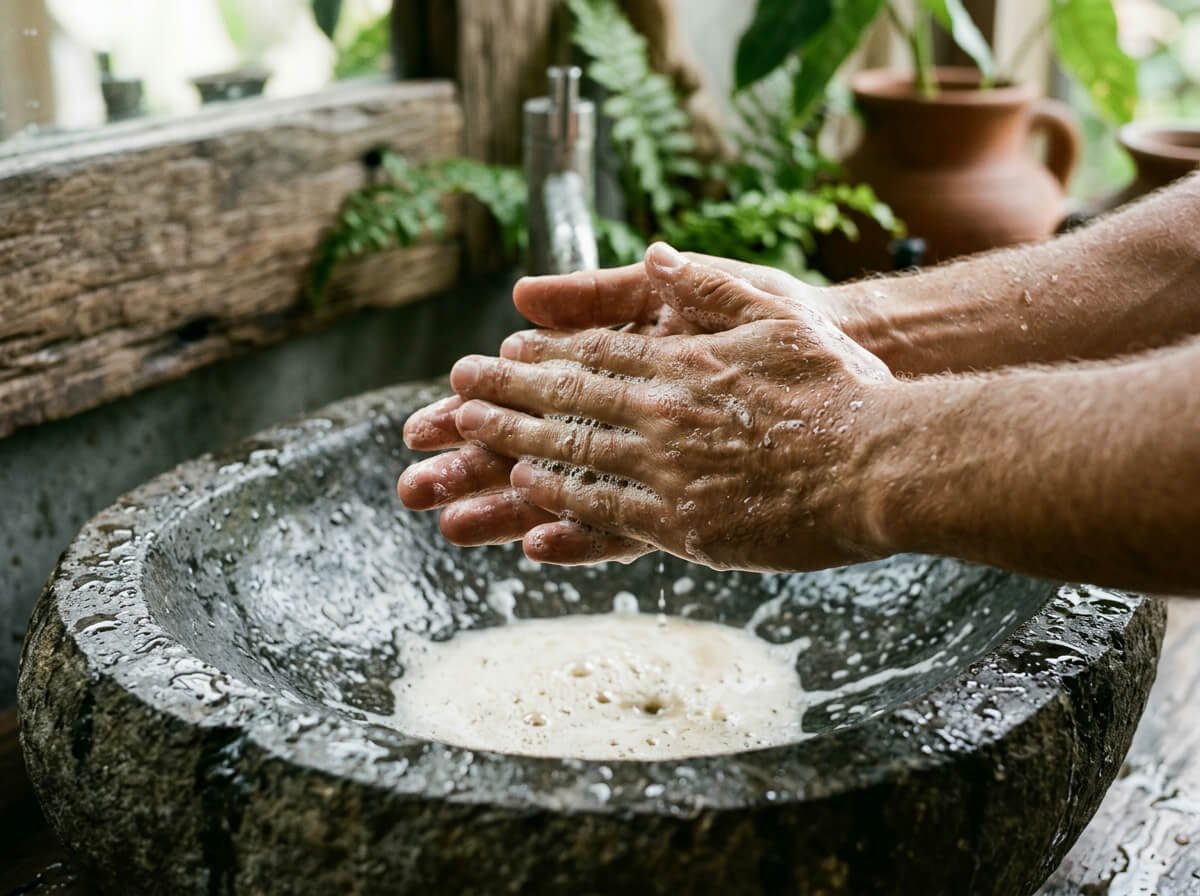
The second cleanse depends on a surfactant, the ingredient that lets water bind to oil and lift it away rather than let it bead on the surface of the skin. Conventional face washes often lean on sodium lauryl sulfate or sodium laureth sulfate (SLS and SLES), effective at stripping oil but frequently just as effective at stripping the skin barrier’s own natural lipids in the process. That is the part of double cleansing that gives it a bad reputation: two aggressive steps back to back leaves skin raw rather than clean.
Coco-glucoside and decyl glucoside, both derived from coconut and plant sugars, are gentler surfactants that clean without the same barrier disruption. They lather less dramatically than SLS, which can feel, at first, like they are doing less. In practice, a face that is not tight and reactive an hour after washing is the more reliable signal that a cleanser is working with your skin rather than against it. Our Bliss Botanical Face Wash 100ml and Serenity Face Wash 100ml are both built on this gentler surfactant base, one lightly clarifying and the other calming, so the choice between them comes down to whether your skin needs a nudge toward balance or a moment of comfort. For a broader look at how to choose any second-cleanse formula, our natural face wash guide walks through label reading in more detail.
pH is the other detail worth knowing. Healthy skin sits slightly acidic, generally in the 4.5 to 5.5 range, and that acidity is part of what keeps the barrier’s protective microbiome intact. Many conventional foaming cleansers sit well above that, closer to neutral or even alkaline, which is part of why skin can feel tight after washing even once the visible residue is gone. A formula built around gentler, plant-derived surfactants tends to sit closer to skin’s own pH, which is one more reason the second cleanse should feel like a finishing touch, not a second round of stripping.
How to double cleanse, step by step

The order matters more than the number of products in front of you. Here is the honest, unrushed version.
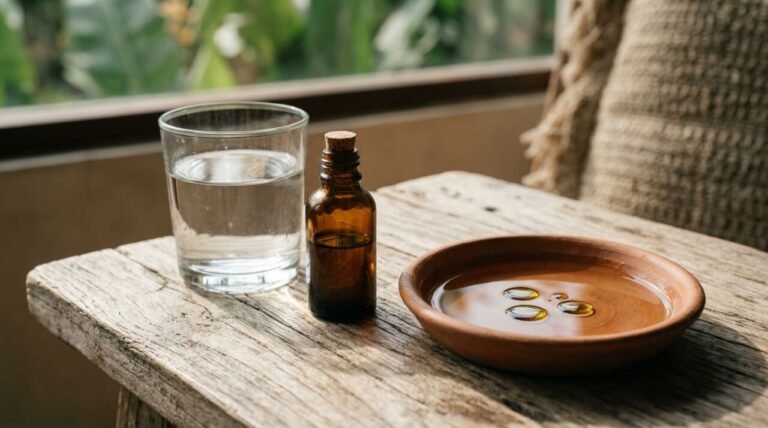
- Warm the oil in your palms first. A few drops of your chosen first-cleanse oil, warmed briefly between dry hands, spreads more evenly and feels less shocking on contact than oil applied cold.
- Massage onto completely dry skin, for a full sixty seconds. This is where the actual dissolving happens: sunscreen, makeup, and the day’s sebum lift into the oil as you work it in circular motions across the face and jaw.
- Add a small amount of warm water and continue massaging. The mixture will turn slightly milky as the oil begins to emulsify. This is the signal that it is ready to rinse.
- Rinse thoroughly with warm, not hot, water. Hot water strips more than it needs to and can leave skin tight even before the second cleanse begins.
- Follow with your natural surfactant face wash, worked into a light lather for twenty to thirty seconds, then rinsed clean.
- Pat, do not rub, dry. Skin should feel clean and comfortable, never squeaky or tight. Tightness is a sign the second cleanse was too much for what the first step already handled.
Total time: closer to two minutes than thirty seconds. Rushing the first-cleanse massage is the most common reason people conclude double cleansing “does not work” for them.
If your skin still feels tight or looks dull after this routine, the fix is rarely to add a third step. It is almost always one of two things: the first-cleanse oil is too heavy for your skin type, or the second-cleanse wash is still built on an aggressive surfactant that is undoing the calm the oil step just created. Troubleshoot the oil first, since it does most of the actual work, and only adjust the wash if a lighter oil does not solve the tightness on its own.
A first-cleanse oil that will not fight your skin
Low on the comedogenic scale and rich in calophyllic acid, our Tamanu Oil is formulated for skin that reacts badly to heavier carriers. It dissolves the day without leaving anything behind for your second cleanse to fight.

When you do not need to double cleanse at all
This is the part most articles selling a two-step routine leave out entirely: not every night calls for it, and for some skin, most nights do not.
- Dry or already-compromised skin. If your skin barrier is visibly struggling (flaking, tight, reactive to products it used to tolerate), two cleansing steps can be one too many. A single gentle cleanse, or an oil cleanse alone with no second step, is often the kinder choice until the barrier settles.
- Makeup-free, sunscreen-free days. If nothing but daily air and a light moisturizer touched your skin, a single water-based cleanse fully does the job. Double cleansing exists to remove what a normal cleanse cannot, and on a bare-skin day, there is nothing extra to remove.
- Cooler, less humid climates. Skin in dry or cold air produces less sebum and holds moisture less easily to begin with. Layering two cleansing steps onto a barrier that is already working harder to stay hydrated tends to do more harm than good.
The honest test is simple: if your skin feels tight, dull, or reactive the morning after, that is not a sign to cleanse harder. It is a sign to cleanse less. Progress over perfection applies here as much as anywhere else in a routine. For a wider view of where double cleansing sits alongside the rest of your steps, see how to layer natural skincare and the full natural skincare routine guide.
There is a quieter, more practical reason to skip it on the nights it is not needed, too. Fewer steps means fewer products moving through your routine, which means less packaging, less water used per wash, and a bottle of oil or face wash that lasts considerably longer than a nightly-regardless habit would allow. Restraint, applied thoughtfully, is one of the more sustainable choices available in any skincare routine, ours included.
Adapting double cleansing for humid, tropical climates

Most double cleansing advice is written for cooler, drier climates, and it shows. In Bali’s humidity, skin produces more sebum by midday than it would in a temperate winter, sunscreen reapplication is more frequent, and sweat adds another layer that a single water-based cleanse can genuinely struggle with. That makes the case for double cleansing stronger here, not weaker, but it also changes what “right” looks like.
The adaptation is lighter touch, not more steps. A thinner oil like tamanu, used sparingly rather than in the generous amount a dry-climate routine might call for, dissolves the day’s buildup without adding to what is already an oilier baseline. The second cleanse can be briefer too. Because the barrier is not fighting cold, dry air, it does not need the same restorative gentleness that a winter routine in a temperate climate requires. What stays constant, regardless of climate, is temperature: warm water, never hot, because heat strips moisture that humidity alone cannot fully replace.
Timing shifts too. In a temperate climate, double cleansing is almost exclusively an evening habit. In consistently humid conditions, a lighter version of the same two steps in the morning, a brief oil massage followed by a quick rinse with your usual wash, can make sense on days with heavy overnight sweat or after an early swim, something a dry-climate routine would rarely need to consider. The principle underneath both cases stays the same: read what the day has actually done to your skin, and let that decide the routine, rather than following a fixed schedule regardless of season or humidity.
The Balinese ritual double cleansing already borrows from
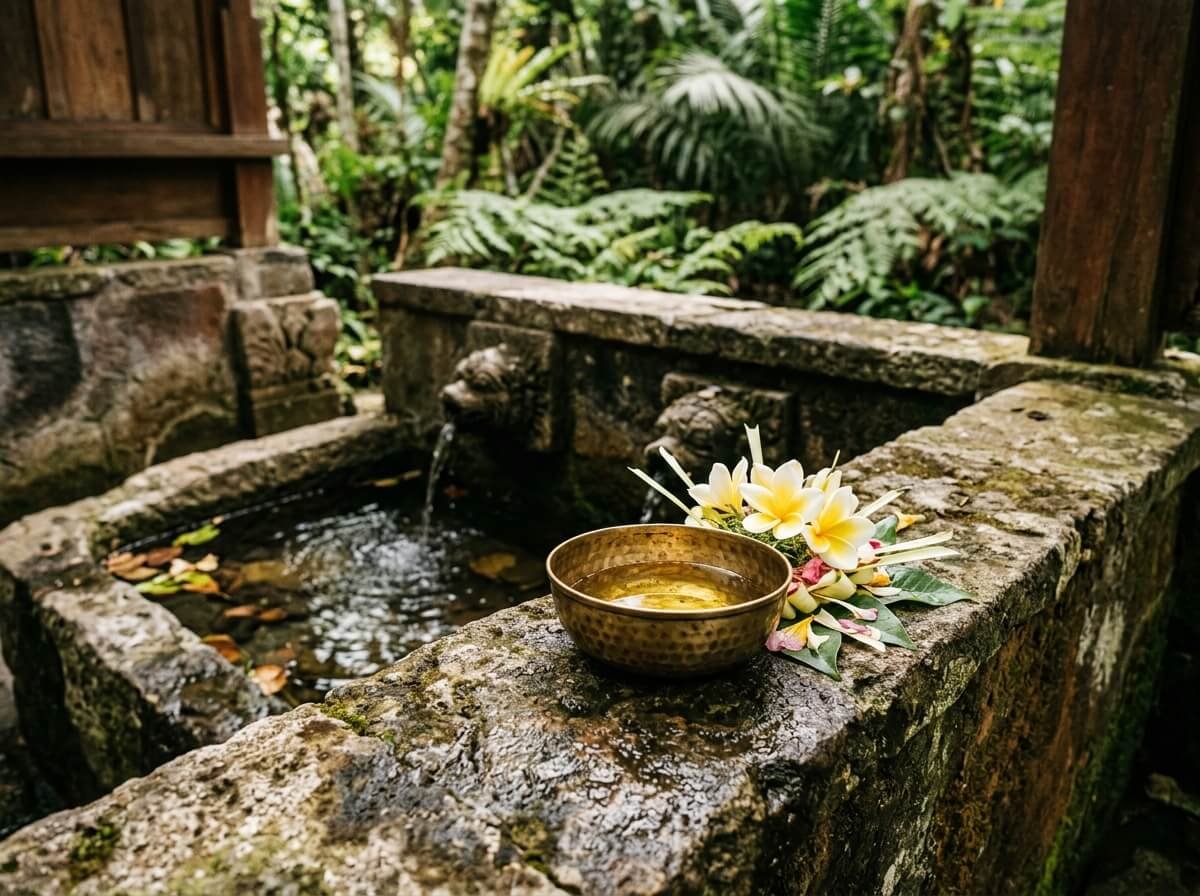
Long before the term “double cleansing” reached a skincare shelf, Balinese households practiced a version of it as ordinary daily care rather than a trend: warm oil applied to dry skin before mandi, the traditional bath, left to sit and soften whatever the day had left on the skin before water washed it away. The oil was never separate from the wash; it was the first, necessary half of it. Melanie Templer learned this rhythm in Ubud kitchens in 1989, and it shaped the earliest Utama Spice formulations long before “oil cleansing” became a recognizable category anywhere else.
What that older practice understood, and what modern double cleansing sometimes forgets, is that the ritual is not the point. The skin’s actual state is the point. Bali’s pre-mandi oiling was never done identically every day; it responded to the season, to the work someone had done, to how their skin felt that morning. That is the piece worth carrying into a modern two-step routine: match the ritual to the skin in front of you, not the other way around.
It is worth naming plainly, too, that oil-first cleansing did not originate on a Korean skincare shelf, and it did not originate in a Western routine either. Traditions across Indonesia, across much of Asia, and across many wild-harvesting cultures reached for warmed oil against skin as ordinary daily care generations before it was packaged and given a name for export. Naming that history is not a footnote. It is the same honesty this brand was built on since 1989: real care borrows from real tradition, and it says so.
Frequently asked questions about double cleansing
Is double cleansing necessary every day?
No. It earns its place on days with sunscreen, makeup, or heavy sweat. On bare-skin, low-exposure days, a single gentle cleanse is enough for most people.
Can double cleansing cause breakouts?
It can, almost always because of the oil chosen for the first step rather than the method itself. A heavier, more comedogenic oil like coconut left on oily or acne-prone skin is the most common cause. Switching to a lighter oil such as tamanu usually resolves it.
Should double cleansing happen in the morning, evening, or both?
Evening is where it matters most, clearing the accumulation of a full day. Morning skin, having only produced overnight oil, rarely needs more than a single gentle cleanse.
Do I need two separate products, or can one product do both steps?
The two steps rely on different mechanisms (oil-based dissolving, then surfactant-based lifting), so a single hybrid product tends to compromise on both. Two purpose-built products, used briefly, outperform one product asked to do everything.
Is coconut oil ever the right choice for double cleansing?
Yes, on very dry or mature skin, and used strictly as a rinse-off first cleanse rather than a leave-on treatment. For oily, combination, or acne-prone skin, tamanu or argan will serve you better without the comedogenic risk.
Final thoughts: a routine that listens back
Double cleansing, at its best, is not a rule to follow every night without question. It is a tool: reach for it on the days your skin has earned it, skip it on the days it has not, and choose the oil and the wash that match what your skin is actually doing rather than what a routine says it should be doing. That is the same principle Balinese households applied to oiling long before it had a name, and it holds up just as well today.