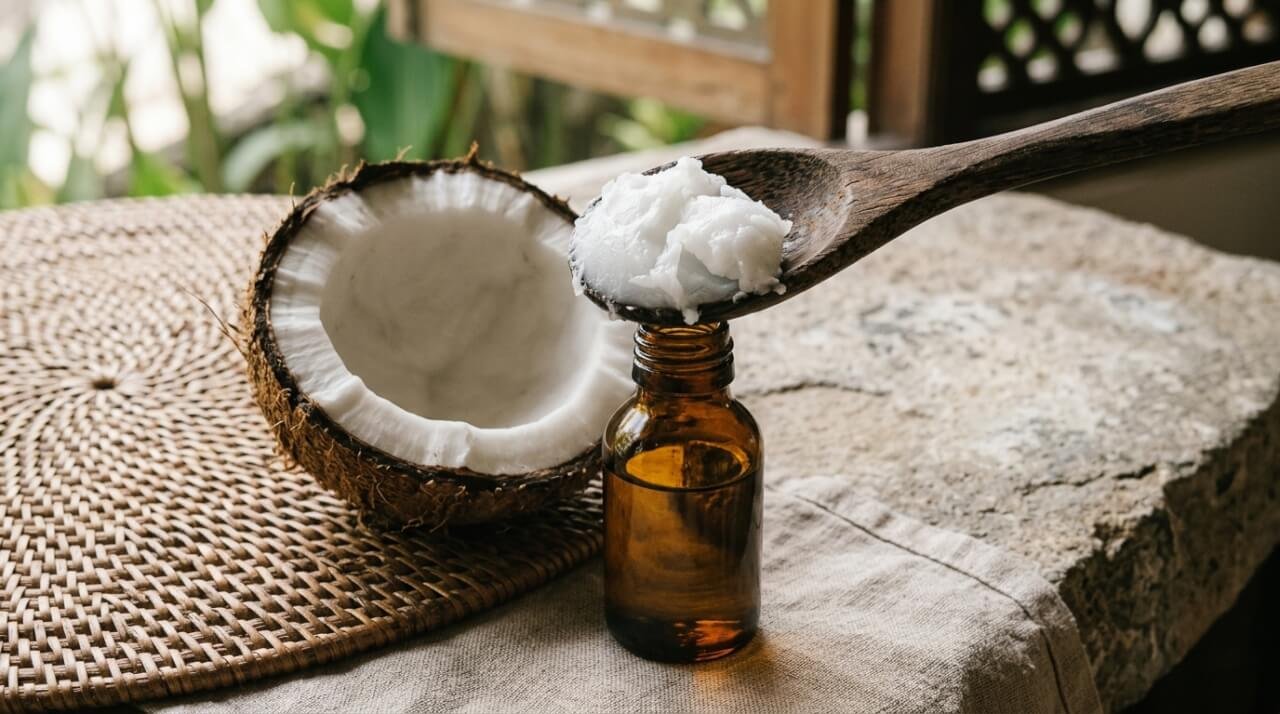
How to use coconut oil for skin: sourcing, ritual, and the honest science
Coconut oil is one of the oldest, simplest, and most misunderstood ingredients in natural skincare. Knowing how to use coconut oil for skin is less about slathering it everywhere and more about understanding what it does well, where it falls short, and which oil you actually have in your hands. In Bali, where we have crafted with wild and cold-pressed botanicals since 1989, coconut has never been a trend. It is a daily ritual, a carrier for other actives, and a quiet act of care. This guide walks through the science, the sourcing, and the everyday practice, honestly.
We will cover what coconut oil can genuinely do for your skin barrier, how to choose a virgin, cold-pressed oil worth using, a step by step method for applying it, and the honest limits that most articles skip. Wellness is reconnection, not perfection, so we would rather you use one ingredient wisely than ten without thinking.
What coconut oil actually does for skin
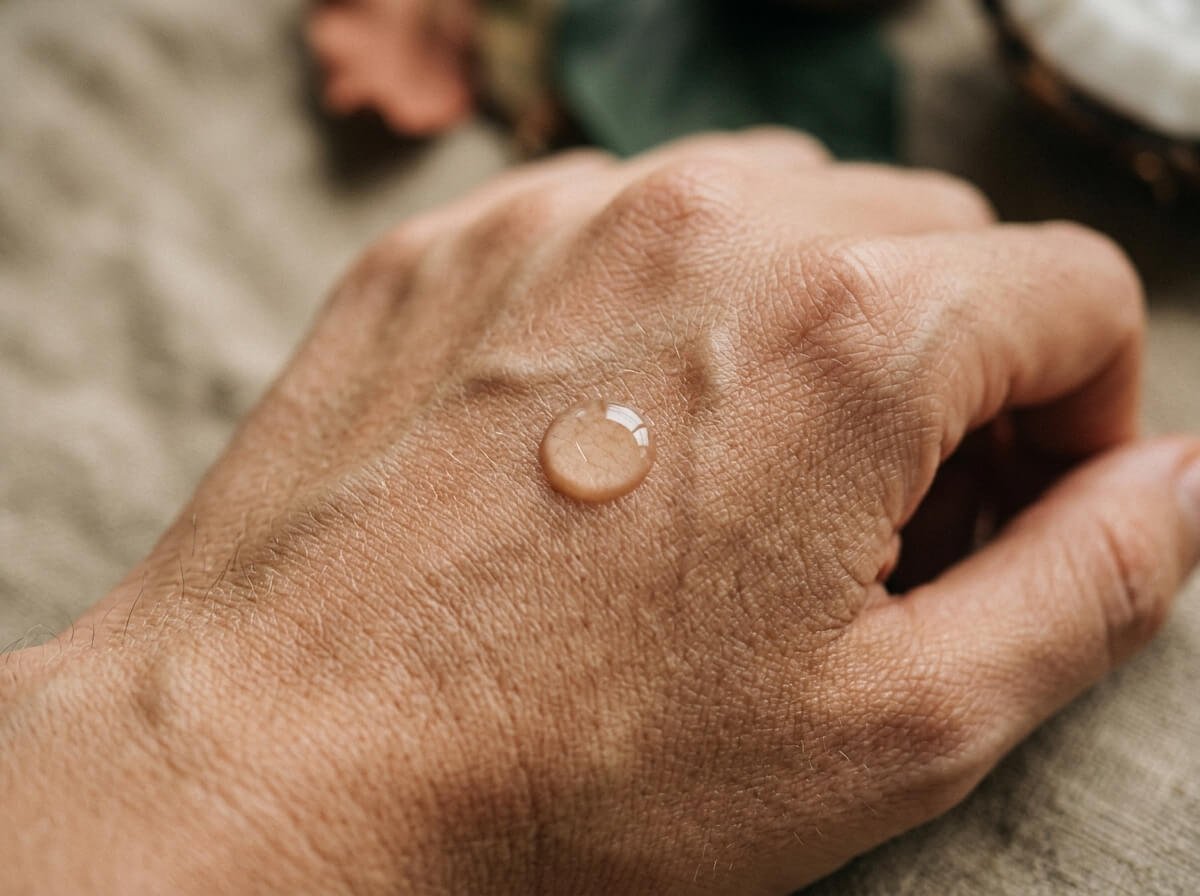
Coconut oil is roughly 90% saturated fat, and most of that is medium-chain fatty acids, with lauric acid making up close to half. That composition matters. Saturated, stable fats sit well on the skin surface, resist rancidity, and form a soft occlusive layer that slows water loss. In practical terms, coconut oil is a very good sealant. When you apply it to slightly damp skin, it helps trap the moisture already there rather than adding water itself.
Research backs the barrier story. Studies on virgin coconut oil have shown measurable improvement in skin hydration and a reduction in transepidermal water loss, which is the technical name for moisture evaporating out of your skin. There is also good evidence that virgin coconut oil helps calm the dryness and roughness associated with mild eczema, largely because a stronger barrier means less irritation. Lauric acid carries some antimicrobial activity too, which is part of why coconut oil has such a long history in traditional care.
It helps to be clear about categories. Coconut oil is an occlusive and an emollient, not a humectant. Humectants like aloe or glycerin draw water into the skin; occlusives lock it in. This is exactly why coconut oil works best as a final step or a companion to a water-based product, a point we return to below. If you want the fuller picture of how plant oils behave differently on the face and the body, our guide on face oil versus body oil is a useful companion read.
The antimicrobial angle deserves a careful word, because it is where hype tends to creep in. Lauric acid and its derivative monolaurin can disrupt certain bacteria in a laboratory setting, and coconut oil has a long folk history of soothing minor skin troubles. That is genuine, but it is not the same as a treatment for active acne or infection. Think of it as a gently supportive quality of a good moisturiser, not a medicine. Holding both truths at once, real benefit and honest limits, is how we prefer to talk about any ingredient.
One more piece of grounding: not all coconut oil is the same on your skin. Virgin, cold-pressed oil retains more of its natural antioxidants and its faint, sweet aroma. Refined and bleached oil is more neutral and more processed. For skin, the virgin version is the one worth reaching for, and the reason sits in how it is made. The way an oil is grown, pressed, and handled changes what lands on your skin, which is why the next question is not how to use it, but which one to choose.
Choosing the right coconut oil, and why sourcing matters
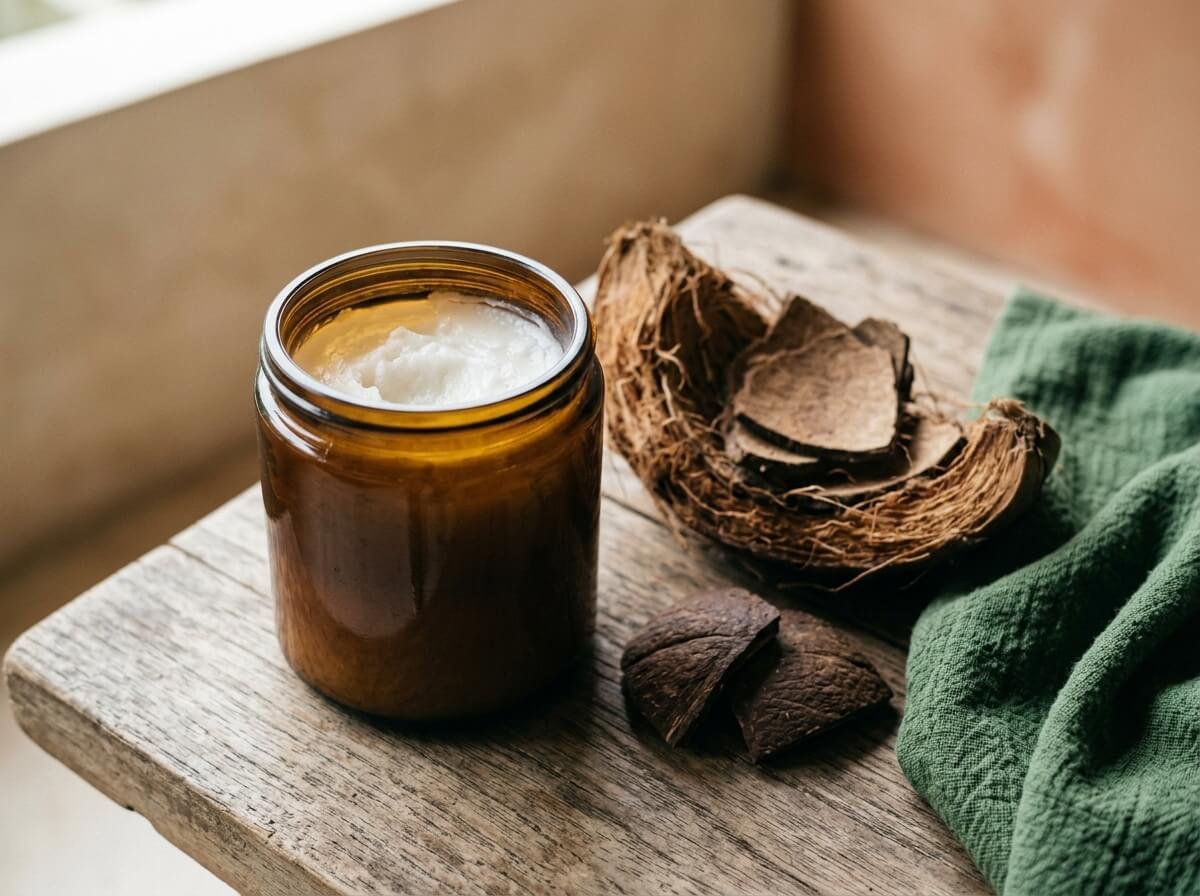
If you take one thing from this guide, let it be this: the label tells you most of what you need to know. Look for the words virgin and cold-pressed. Virgin means the oil was made from fresh coconut, not dried copra. Cold-pressed means it was extracted without high heat, so more of the antioxidants and the delicate aroma survive. Skip anything labelled RBD, which stands for refined, bleached, and deodorised. That oil is fine for a fryer, but it has been stripped of the compounds that make coconut worth putting on your skin.
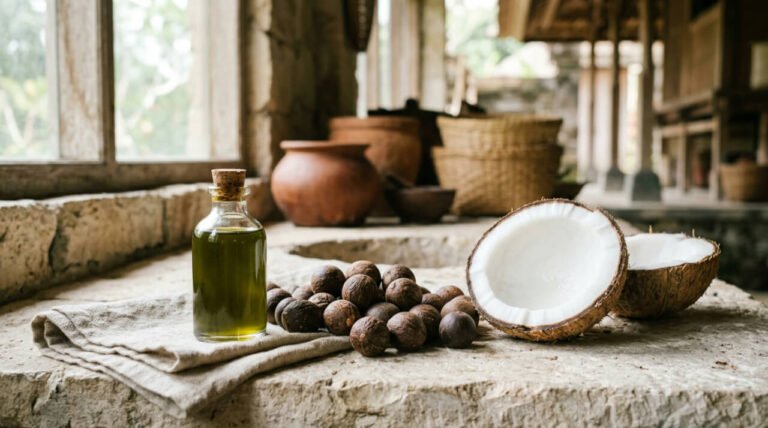
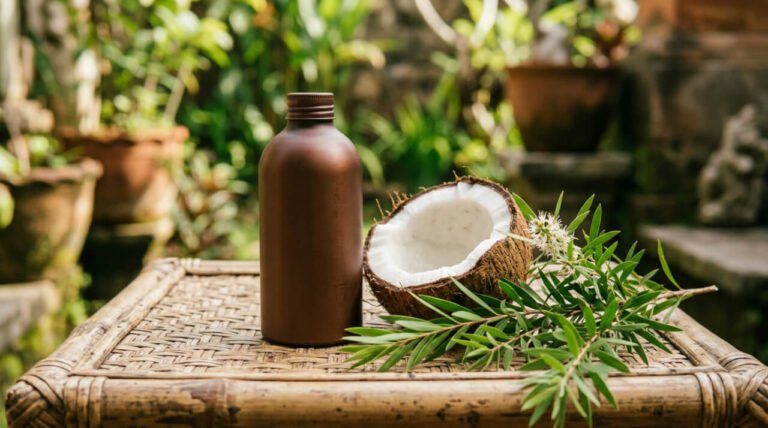
Sourcing is not a marketing footnote. Coconut is the most versatile carrier in our whole range, and we source ours through our Aluan partnership on Balinese plantations, cold-pressed close to where the fruit is grown. That closeness protects the oil, because coconut is at its best when it is pressed fresh and handled gently. It also protects the people and the land, which is the part most brands leave out. Real care means asking where an ingredient comes from, who harvested it, and what community it supports.
A quick label checklist
- Virgin, and ideally cold-pressed or raw
- A short ingredient list: coconut oil, and nothing else
- A faint, natural coconut scent, not a heavy perfumed one
- Packaging in glass where possible, and a brand that names its source
- Solid below about 24C and clear liquid above it, which is normal and reversible
There is a circular side to choosing well, too. A jar of pure coconut oil is one of the most refillable, low-waste things you can keep in a bathroom, because it does the work of several products and comes without a cabinet of plastic. Buying a well-sourced oil once, and using it thoughtfully, is quietly more sustainable than chasing a shelf of single-use novelties. Sustainability should be simple, and sometimes it looks like one honest jar rather than ten clever ones.
Our own Virgin Coconut Oil is cold-pressed and single-ingredient, made to be used on skin and hair as much as in the kitchen. If you are weighing coconut against other Balinese oils, our comparison of kukui oil versus coconut oil explains where each one shines, because they are genuinely different tools. Coconut seals and comforts, kukui sinks in lighter and faster, and knowing that difference is what lets you build a routine instead of a pile of guesses.
How to use coconut oil for skin, step by step
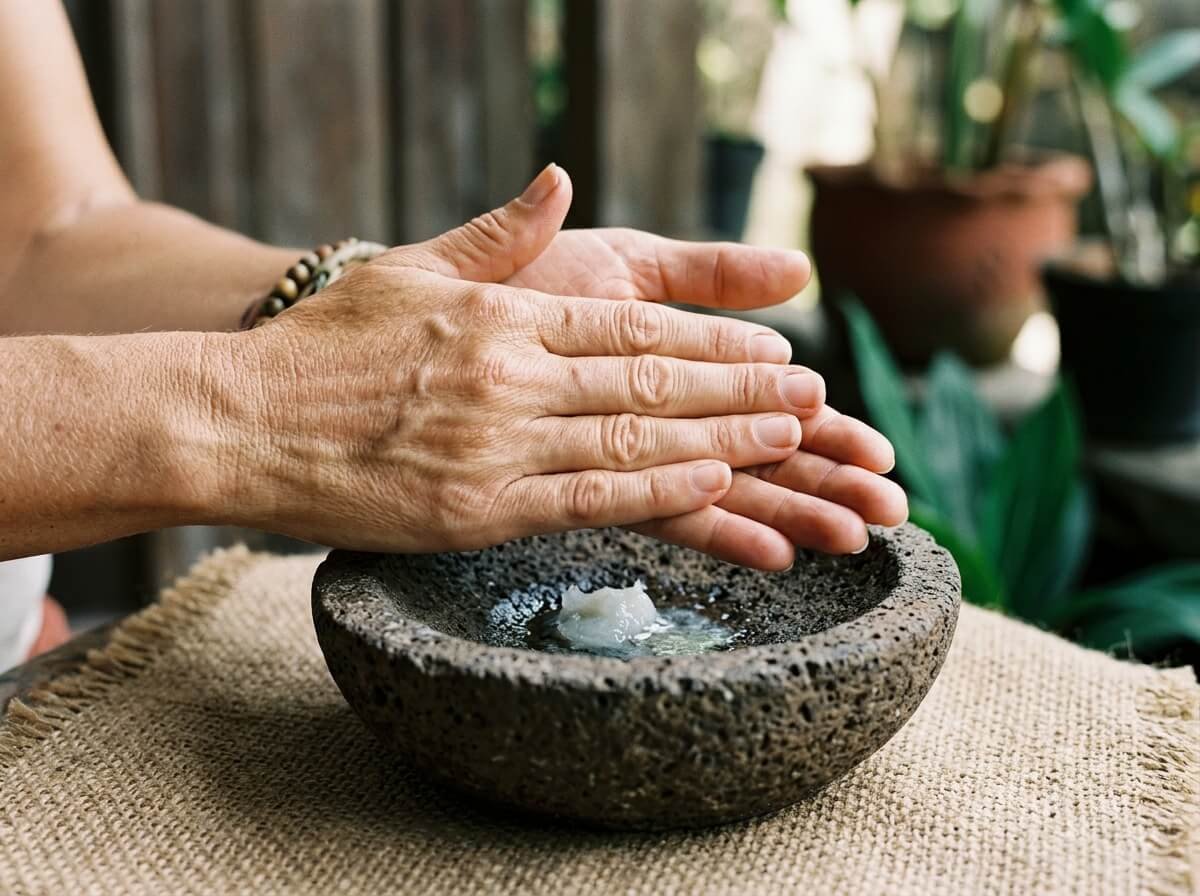
The method matters more than the amount. Because coconut oil is an occlusive, the golden rule is to apply it to damp, not bone-dry, skin. That way you are sealing in water rather than laying oil over a dry surface. Here is the simple ritual we come back to.
The core method
- Start small. Scoop a pea-sized to almond-sized amount. Coconut oil goes a long way, and too much just sits on top.
- Warm it. Rub it between your palms for a few seconds until it melts from solid to clear. Body heat is all it needs.
- Apply to damp skin. After a shower or after misting with water or a hydrosol, press and smooth the oil over the area rather than rubbing hard.
- Give it a minute. Let it absorb before dressing, so it settles into the skin instead of onto your clothes.
- Less at night, if layering. Coconut oil makes a lovely final seal over a water-based serum.
Timing is the quiet secret. Skin does much of its repair work overnight, so a thin seal of coconut oil over damp skin before bed uses that window well. In the morning, keep the layer light so makeup or sunscreen still sits cleanly on top. Coconut oil offers almost no meaningful sun protection on its own, so it is never a substitute for proper SPF.
If you like the idea of a water step before your oil, a humectant such as aloe vera gel underneath coconut oil is a classic pairing: the aloe draws in moisture, the coconut locks it down. This layering logic is the same one we describe in our guide to a natural face serum, where lighter, water-friendly textures go first and richer seals go last.
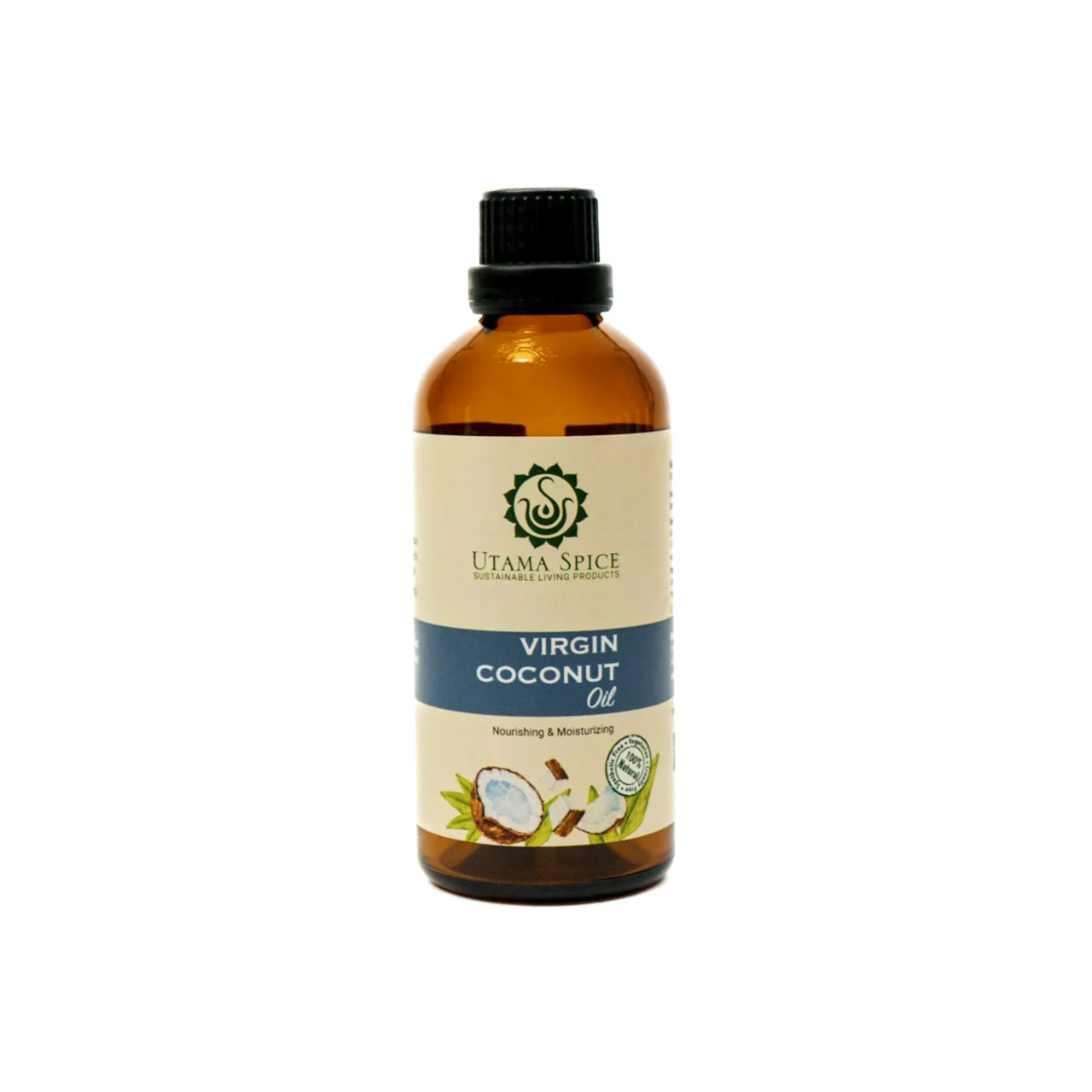
One honest jar, crafted in Bali
Our cold-pressed Virgin Coconut Oil is single-ingredient and sourced through our Aluan partnership on Balinese plantations. One jar for skin, hair, and daily ritual, made with care since 1989.
Coconut oil for the face: who it helps, who should be careful
This is where honesty matters most, because coconut oil is not right for every face. It rates high on the comedogenic scale, which is a rough measure of how likely an oil is to clog pores. For dry, mature, or normal skin that is not prone to breakouts, coconut oil can be a beautiful, comforting facial treatment, especially as an overnight balm or as the oil in an oil-cleansing routine. For oily, congestion-prone, or acne-prone skin, it can sit heavily in pores and make things worse.

So the guidance is skin-type-first, not one-size-fits-all. If your skin is dry or you simply want to try it, patch test on your jaw for a few nights before committing to your whole face. If you are acne-prone, treat coconut oil as a body-and-hair ingredient rather than a facial one, and reach for lighter, less pore-clogging oils on the face instead. There is no failure in that choice. It is just reading your own skin honestly.
Oil cleansing with coconut oil
One of the loveliest uses is as a gentle cleanser to dissolve sunscreen and the day off the skin. Massage a small amount of coconut oil over dry skin, then lay a warm, damp cloth over your face for a few seconds and wipe gently. Because like dissolves like, the oil lifts other oils and stubborn sunscreen without stripping. Follow with your usual water-based wash if you prefer a double cleanse. If exfoliation is more your concern, our natural face scrub guide covers gentler ways to smooth skin without overdoing it.
Coconut oil for the body, hands, and hair ends

The body is where coconut oil truly belongs. Skin below the neck is thicker and far less prone to clogging, so a rich occlusive is welcome. After a warm shower, while your skin is still damp, smooth a thin layer over dry areas: shins, elbows, knees, and heels especially. These are the places that lose moisture fastest and thank you most.
This is also where ritual, not routine, earns its place. Taking a slow minute to warm the oil and press it into tired skin turns a functional step into a small pause in the day. There is a reason massage with warm oil sits at the heart of Balinese care, handed down through generations: the touch matters as much as the ingredient. You do not need a ceremony, only attention, a warm room, and a little time before you dress.
For very dry patches, coconut oil pairs beautifully with richer blends. A body butter or a coconut-based lotion can carry the same nourishment in a form that spreads more easily over large areas. Our Coconut Lotion in Lavender and our Bliss Body Butter both build on coconut as a base, which is a gentler way to get that seal without scooping neat oil in the cooler months. If you are unsure which texture suits you, our comparison of body oil versus body butter lays out the trade-offs.
Hands, cuticles, and hair
Hands take a beating, and a little coconut oil worked into the cuticles and knuckles at night is a small, restorative ritual. For a deeper repair on hardworking hands, a dedicated natural hand cream holds up better through washing. On hair, coconut oil is unusual: it is one of the few oils shown to penetrate the hair shaft and reduce protein loss, which is why it works so well as a pre-wash treatment on dry ends. Warm a small amount, work it through the lengths and ends only, leave it for 30 minutes or overnight, then shampoo out. Our Wellkiss Hair Oil builds this idea into a ready blend if you would rather not measure.
What coconut oil cannot do, and what to pair it with
No greenwashing, no pretending: coconut oil is a wonderful sealant and a poor everything-else. It does not hydrate on its own, because it holds no water. It does not exfoliate, brighten, or treat active acne, and it will not protect you from the sun. Articles that call it a miracle do the ingredient a disservice, because the truth is more useful than the hype.
The smart move is pairing. Put a humectant first, then seal with coconut oil. Use it as a carrier to soften a drop or two of a well-diluted essential oil for the body. Reserve it for the parts of your routine it does best, and let other botanicals do the jobs it cannot. This is how a small ingredient earns a permanent place: not by doing everything, but by doing one thing honestly and reliably.
Simple pairings that work
- Aloe, then coconut oil for dry skin that needs both water and a seal
- Coconut oil as a carrier for a properly diluted essential oil on the body
- A gentle scrub, then coconut oil to smooth and then soften rough patches
- A coconut-based lotion such as our Cocoa Love Lotion when neat oil feels too heavy
A note on storage and safety, since it comes up often. Keep coconut oil somewhere cool and dry, away from direct sun, and use a clean, dry spoon rather than wet fingers to keep it fresh. It naturally shifts between solid and liquid around room temperature, which is normal and changes nothing about its quality. If you have a known coconut or tree-nut sensitivity, patch test first or skip it entirely, because the kindest ingredient is still the one your own skin agrees with.
Choosing well also means choosing less. A single, well-sourced jar of coconut oil can quietly replace several single-use products, which is the kind of small, meaningful step that adds up. That is the heart of what we mean by care in action.
Frequently asked questions about using coconut oil for skin
Can I use coconut oil on my face every day?
If your skin is dry or normal and not prone to breakouts, yes, a thin layer at night can be part of a daily ritual. If your skin is oily or acne-prone, use it on the body instead, since coconut oil can clog facial pores. Always patch test first.
Should coconut oil go on wet or dry skin?
Damp skin, in almost every case. Coconut oil seals in moisture rather than adding it, so applying it just after a shower or after a hydrating step gives you far better results than using it on completely dry skin.
Does coconut oil clog pores?
It can. Coconut oil rates high on the comedogenic scale, so it is more likely than lighter oils to block pores on the face. This varies from person to person, which is why a small patch test over a few nights is the honest way to find out how your skin responds.
Is coconut oil a sunscreen?
No. Any sun protection from coconut oil is negligible and nowhere near enough to rely on. Use a dedicated broad-spectrum SPF for sun protection and keep coconut oil for moisture.
Virgin or refined coconut oil for skin?
Virgin, cold-pressed coconut oil is the one to choose for skin. It keeps more of its natural antioxidants and its light aroma, while refined and deodorised oil has been stripped of much of what makes coconut worth using on the body.
How much coconut oil should I use?
Less than you think. A pea-sized to almond-sized amount, warmed between the palms, covers a good area. If the oil sits shiny on top after a minute, you have used too much for that spot.
A grounded final thought
Learning how to use coconut oil for skin comes down to a few honest habits: choose a virgin, well-sourced oil, apply it to damp skin, respect your skin type, and pair it with the ingredients it needs rather than asking it to do everything. Used this way, one small jar becomes a quiet, repeatable ritual, the same kind of care our makers in Bali have practised for over 35 years. What you give, you get back.