How to clean a yoga mat naturally: a safe, material-by-material guide
Your yoga mat touches more of your skin, for longer, than almost anything else you own. Yet most guides to how to clean a yoga mat naturally stop at one vinegar recipe and a warning to “check your material.” That leaves a real gap: people want to use essential oils, because they smell honest and work, but the biggest natural-soap brands actively warn against putting oils on a mat at all. Both camps are half right. This guide closes that gap, material by material, so you can clean your mat properly without guessing and without ruining the surface you practice on.
We will walk through why a mat gets dirty in the first place, how to read your specific material, the safe way to use essential oils on it (and which oils to avoid), a thirty-second daily habit, a proper weekly deep clean, and the honest answers to the questions every student eventually asks. By the end, cleaning your mat will feel less like a chore and more like the last few minutes of practice.
Why your yoga mat actually needs cleaning
A single hour of practice can leave a mat damp with sweat, body oils, and whatever dust or sunscreen was on your skin beforehand. None of that evaporates cleanly. It settles into the mat’s surface texture, especially in the small grooves that give rubber and TPE mats their grip. Left there, it becomes food for bacteria and the yeast responsible for that familiar sour smell that no amount of air-drying seems to fix.
This is not about fear of germs. Your skin hosts a healthy microbiome, and a lightly used mat is not a health hazard. The honest reason to clean regularly is simpler: a build-up of oil and salt changes the surface itself. Grip mats get slick. Open-cell mats absorb moisture they cannot release. Cork can darken unevenly. Cleaning is maintenance for performance, not a response to danger, and that distinction matters because it is what keeps the ritual from tipping into anxious over-scrubbing.
Shared studio mats need more attention than a personal mat used only at home, simply because more skin, and more varied skin, touches the same surface in a day. Either way, the goal is the same: remove what has built up before it changes how the mat feels under your hands and feet.
Heat speeds all of this up. A hot yoga or power vinyasa mat sees far more sweat per session than a gentle Hatha or restorative class, so it crosses the “needs cleaning” line faster, sometimes within two or three uses rather than two or three weeks. A reliable sign it is time, beyond smell, is a mat that feels slightly sticky in a new way rather than its usual grip, or one that leaves a faint residue on your palms after a long session. Both point to the same thing: oils and salts sitting on the surface rather than your own skin’s clean grip doing the work.
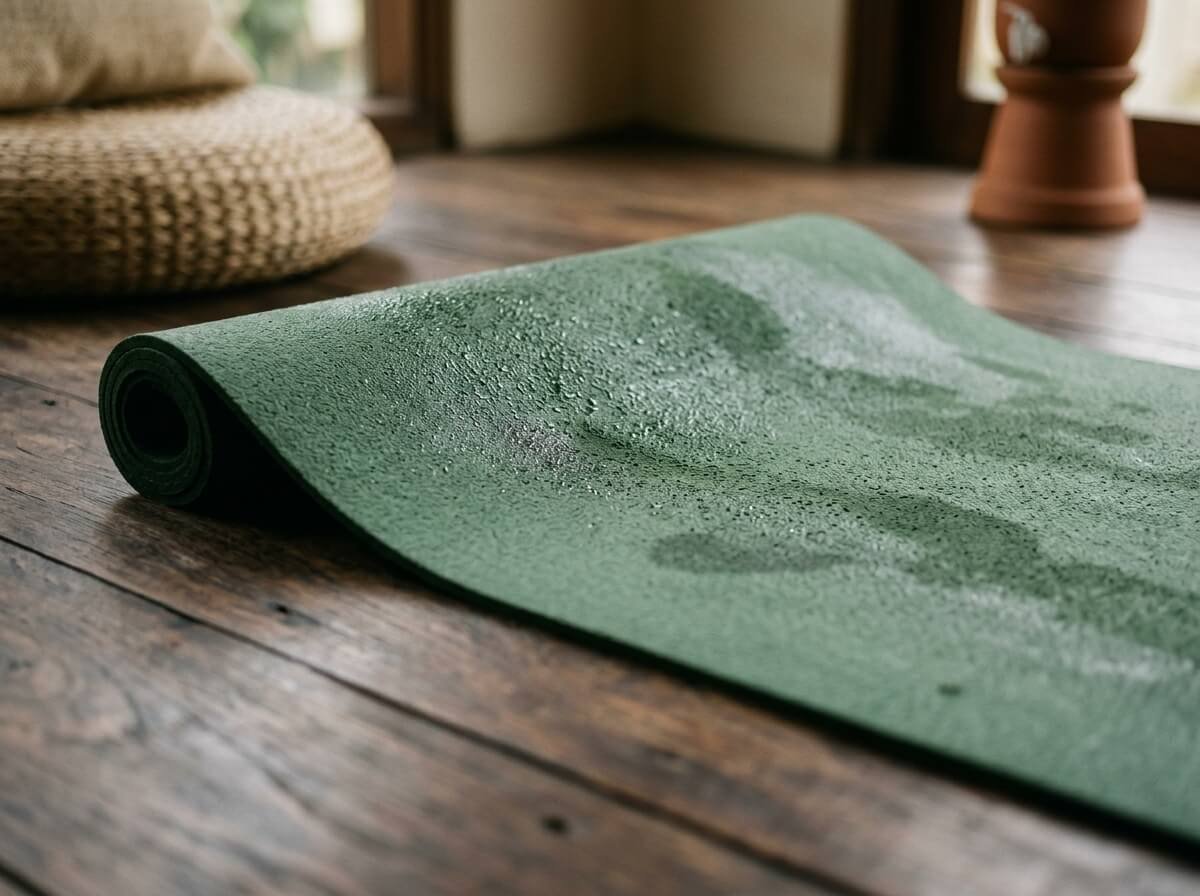
Know your mat material before you clean it
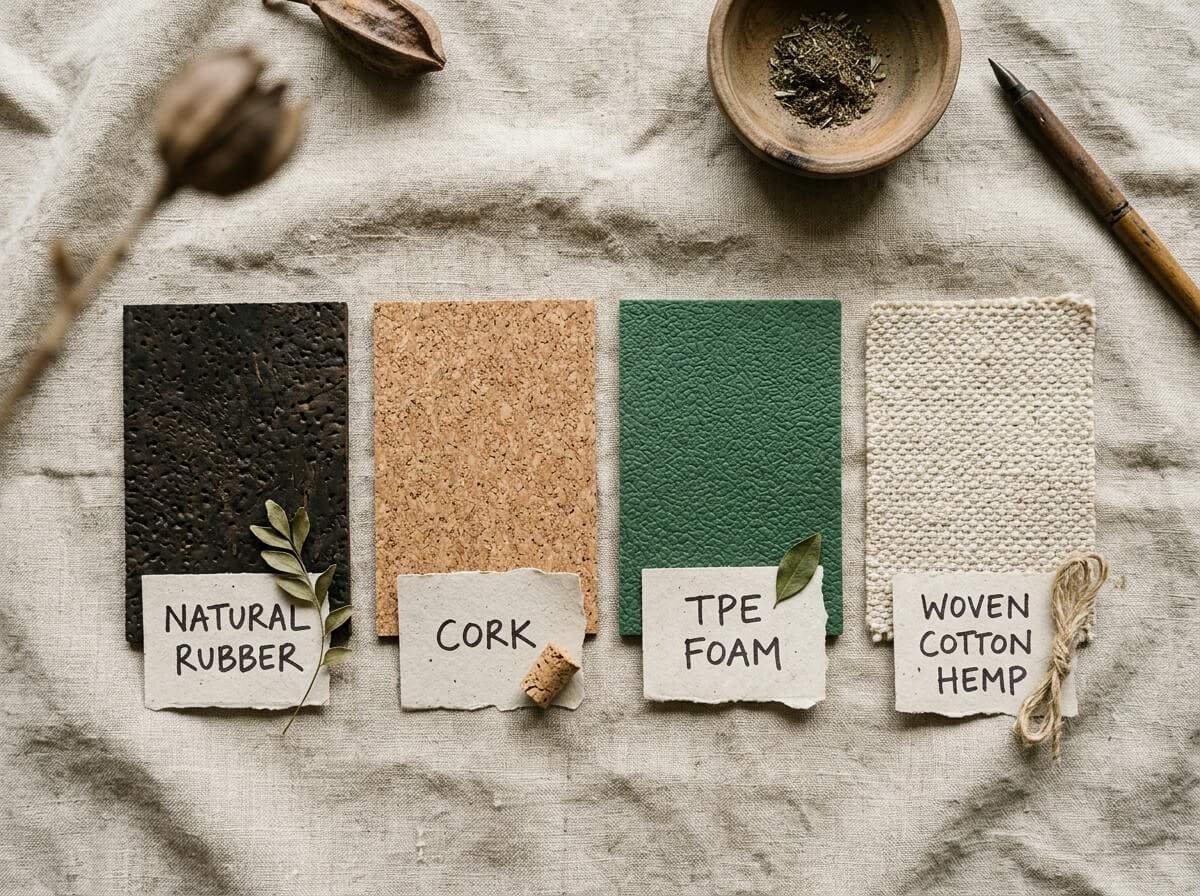
Every cleaning mistake we hear about traces back to the same root cause: treating every mat like it is made of the same thing. It is not. Four materials cover almost every mat on the market, and each one tolerates cleaning differently.
Natural rubber. Grippy, biodegradable, and the most sensitive to oil-based products. Rubber can degrade or turn tacky if saturated with carrier oils or citrus oils over time. Water-based cleaning only, applied lightly.
TPE (thermoplastic elastomer). Closed-cell and water-resistant, which makes it the most forgiving of the four. It will not absorb moisture into its core, but alcohol-based cleaners can dull its surface over repeated use, so keep it to occasional deep cleans rather than a daily habit.
Cork. A natural, porous material that genuinely resists bacteria on its own, cork’s one real vulnerability is standing water. Spray lightly, wipe, and never let it sit wet. Oversaturation is what causes the dark, uneven staining cork owners sometimes complain about.
Cotton and hemp. Usually layered over a rubber base as a sweat-absorbing top layer, these are the only mat materials that can be properly machine washed on their own, separate from the base. Treat the woven layer and the rubber base as two different cleaning jobs.
If you are not sure what you own, look at the texture under good light. Rubber has a matte, slightly tacky surface. TPE feels smoother and more uniform. Cork shows visible grain and small pore marks. When in doubt, use the gentlest method here first, and work up only if it is not enough.
The open-cell versus closed-cell distinction matters more than most buying guides let on. Open-cell rubber and some cork mats breathe, which gives better grip in a sweaty class but also means moisture and whatever you clean with can sink in rather than sit on top. Closed-cell mats like most TPE stay on the surface only, which is easier to manage but less absorbent during practice itself. Knowing which category your mat falls into tells you how forgiving it will be if you ever apply a little too much spray.
How to clean a yoga mat naturally with essential oils, answered honestly
This is the part most guides avoid. Some natural-soap brands print an explicit warning against putting essential oils on a mat at all, citing slip risk and material breakdown. They are not wrong to be cautious, but the warning is really about concentration and oil type, not about essential oils as a category. Used correctly, a diluted essential-oil spray is one of the more effective, least harsh ways to keep a mat genuinely clean.
The rule that organizes everything else: essential oils belong in a well-diluted spray, never applied neat, and the mat should always be wiped and air-dried afterward rather than left damp. A typical ratio is a small number of drops of essential oil per cup of water with a splash of witch hazel or a mild natural surfactant to help the oil disperse evenly, since oil and water do not mix on their own.
Tea tree and lemongrass are the two oils with the strongest case behind them. Our guide to tea tree essential oil benefits covers the research in full, but the short version for mat care is that tea tree has documented antimicrobial activity against several of the bacteria and fungi responsible for mat odor. It is not a hospital-grade disinfectant, and no honest source will tell you otherwise, but it does measurably reduce the organisms that cause the smell. Lemongrass essential oil works on the same principle and brings a brighter, cleaner scent that many people prefer for a mat they roll out at home.
Eucalyptus is a reasonable third choice for the same antimicrobial reasons, used at the same light dilution.
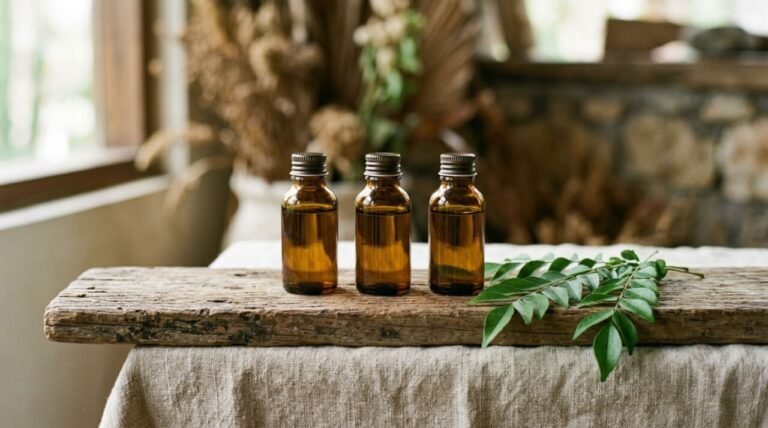
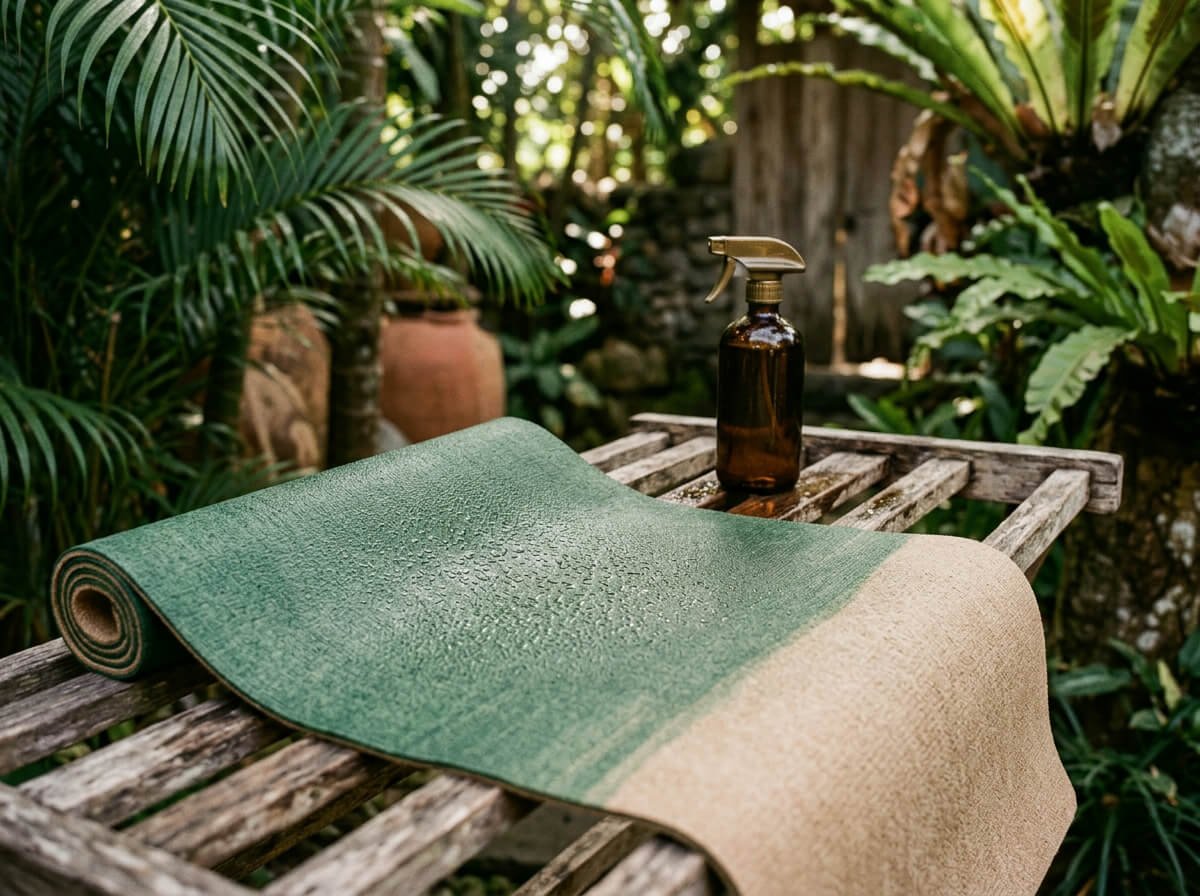
For anyone mixing a spray at home, a workable starting ratio is eight to ten drops of essential oil per two hundred and fifty milliliters of water, with a teaspoon of witch hazel or unscented castile soap to help the oil disperse instead of floating on top. Shake before every use, since the oil and water will separate again within minutes. Patch-test on a small corner of the mat first and let it dry fully before judging the result, since any color or texture change will show up there before it shows up across the whole surface.
What to avoid, and why: citrus oils (lemon, orange, grapefruit) are phototoxic and can also be harder on rubber over repeated use, so save them for a diffuser rather than a mat spray. Undiluted oils of any kind are the real risk the warning labels are pointing at, because a neat oil sitting on a porous or textured surface will eventually change its grip and its structure. Dilution, light application, and drying time are the three habits that turn a risky idea into a safe one.
If mixing your own blend is not where you want to spend your time, a pre-diluted, material-tested spray takes the guesswork out entirely. Our Supa Dupa Yoga Mat Spray was formulated for exactly this question: the right ratio of botanical oils to water, tested across rubber, TPE, and cork, so you can spray and wipe without doing the dilution math yourself. If you practice at different times of day, our Energizing Yoga Mat Spray suits a morning flow, and our Lavender Yoga Mat Spray suits an evening wind-down, both built on the same safe, pre-diluted ratio.

The pre-diluted answer to the oils-on-your-mat question
Supa Dupa Yoga Mat Spray is formulated at the safe dilution this guide walks through, tested across rubber, TPE, and cork, so your mat gets the clean without the guesswork.
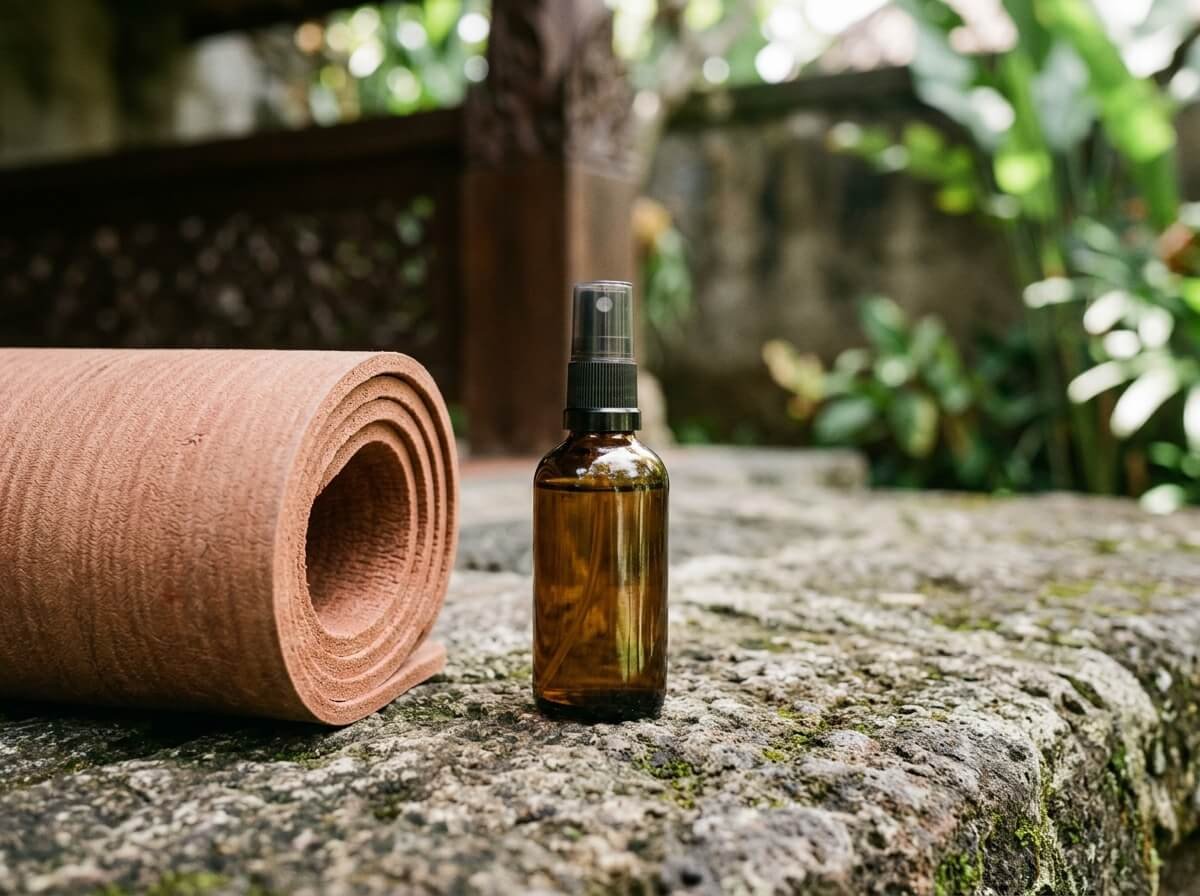
The thirty-second daily wipe, the habit that does the most work
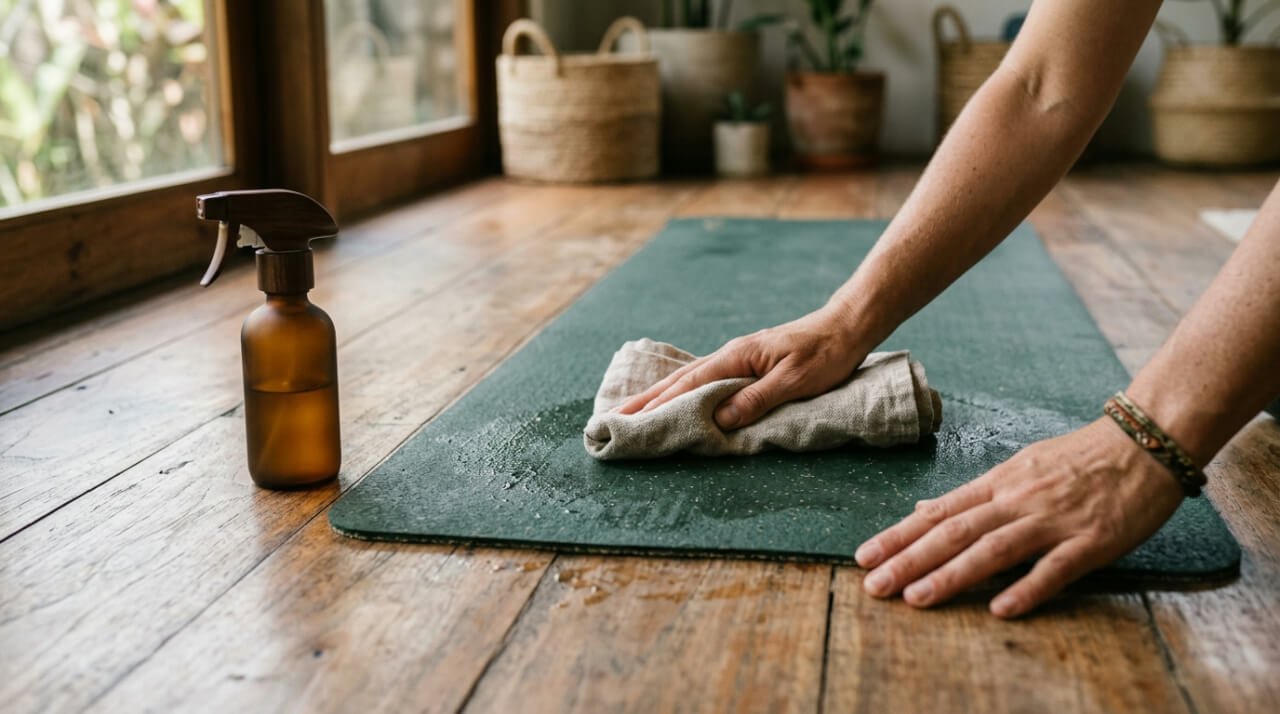
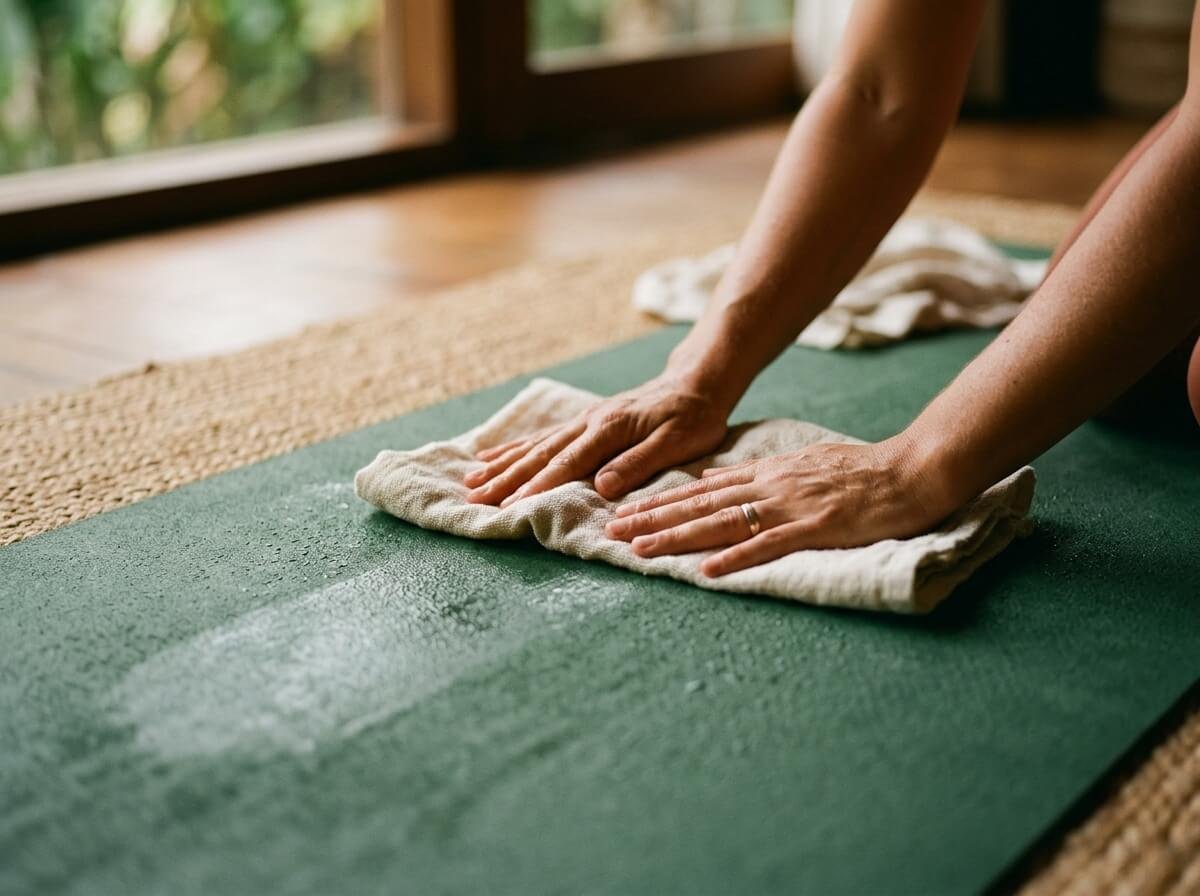
One habit prevents more buildup than any deep clean: wiping the mat down immediately after you roll it up, while the sweat is still fresh and has not had time to settle into the texture. Mist lightly with your diluted spray, wipe the full surface with a soft cloth, then leave the mat unrolled for a few minutes to air-dry fully before storing it. Rolling a damp mat traps moisture against itself and is the single most common cause of persistent odor, regardless of material.
This step takes less time than changing shoes. It also means your weekly deep clean stays genuinely light, because you are not asking one Sunday session to undo six days of accumulated sweat. If you practice at a studio, the same thirty seconds applies before the mat goes back in its bag, since a bag is the most airless place a damp mat can sit.
For anyone who also uses body oil as part of a post-practice ritual, our guide to aromatherapy oils for massage is worth reading alongside this one, since the same oils that calm the body after practice often double as the ones that keep the mat beneath you clean.
The weekly deep clean, mat by mat
Once a week, or every ten to fifteen sessions, give the mat a proper clean rather than a quick wipe.
Rubber: spray evenly, let sit for one minute, then wipe with a damp cloth and a dry one immediately after. Hang to dry fully before rolling.
TPE: the most tolerant of the group. Spray, wipe, dry. It can handle a slightly more thorough wipe without the same risk of surface change.
Cork: mist lightly rather than spraying directly, wipe immediately, and never submerge. Standing water is the one thing cork cannot recover from gracefully.
Cotton or hemp top layer: if it is removable, machine wash on a gentle cold cycle and air-dry flat. If it is fixed to the base, spray and wipe as you would the rubber beneath it, since a washing machine would damage the bonded layer.
Whichever material you own, always finish with full air-drying before the mat gets rolled and stored. A mat that goes away slightly damp is the start of the smell you were trying to clean away in the first place.
What to avoid when cleaning a yoga mat
A short list, because the mistakes here are consistent and avoidable:
- Harsh disinfectants and bleach, which break down rubber and foam faster than regular wear ever would.
- Soaking any mat, rubber especially, which can cause the layers to separate over time.
- Alcohol-based sprays on TPE or cork, used as a daily habit rather than an occasional one.
- Undiluted essential oils applied directly to the surface, for the reasons covered above.
- Machine washing a mat with a fixed, non-removable top layer.
- Storing any mat while still damp, which undoes every other step on this list.
Frequently asked questions about cleaning a yoga mat naturally
Can I use vinegar instead of essential oils? Yes, a one-to-one vinegar and water solution is a reasonable, fully natural base. The smell fades once the mat dries, and it will not clean or protect against odor-causing bacteria as effectively as a diluted essential-oil spray, so many people use vinegar for a deep clean and an oil-based spray for daily wipes.
How often should I actually deep clean? Once a week for a mat used most days, every two weeks for occasional practice. The daily wipe matters more than the frequency of the deep clean.
Will cleaning make my mat less grippy? Only if you oversaturate it or use the wrong product for the material. Light, correctly diluted sprays and prompt drying maintain grip. It is standing moisture and heavy oils that reduce it.
Can I put my yoga mat in the washing machine? Only if it has a removable cotton or hemp top layer designed for it. A full rubber, TPE, or cork mat should never go into a washing machine or dryer.
What actually causes that sour smell? A build-up of sweat, body oils, and the bacteria and yeast that feed on them, trapped in the mat’s texture by incomplete drying. It is not a sign of a bad mat, only one that has not been wiped down consistently.
Can I use baking soda? A light sprinkle of baking soda, left for a few minutes and then wiped or vacuumed away, is a gentle, fully natural way to pull out trapped odor between deeper cleans. It will not disinfect, so treat it as a complement to your essential-oil spray rather than a replacement for it.
I cleaned my mat and it still smells, now what? This almost always means the mat was stored damp at some point, letting the smell set into the material rather than sitting on top of it. Give it a proper deep clean by material, then dry it fully in open air, ideally outdoors or near a window, for several hours rather than the usual few minutes. Persistent smell after that points to the mat reaching the end of its useful life rather than a cleaning failure.
Mat care as ritual, not a chore
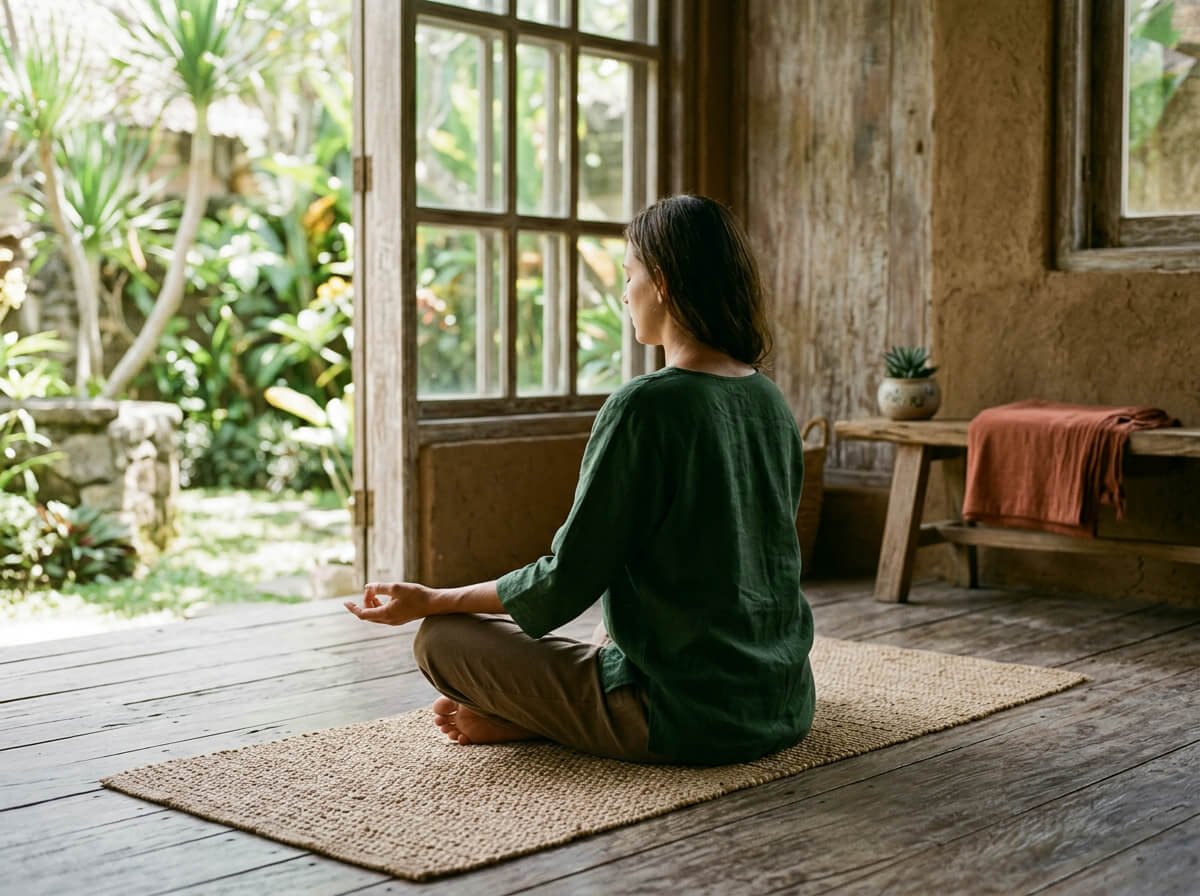
In Ubud, the line between practice and care for the tools of practice barely exists. The mat, the incense, the few quiet minutes before and after, all belong to the same act. Wiping your mat down with intention, rather than rushing it as an afterthought, turns thirty seconds of maintenance into the last pose of the session. Many practitioners pair the habit with a few minutes of grounding in the same space, the kind our guide to aromatherapy diffuser blend recipes explores for setting a room before or after practice, or a stick of natural incense lit nearby while the mat airs out.
None of this needs to be elaborate. A cloth, a light mist, and a few minutes of air are the whole method, regardless of what your mat is made of. What changes the experience is treating that short routine as part of the practice rather than a task squeezed in before you leave. The mat that holds you up every day deserves the same quiet attention you give the rest of the ritual.
It is worth saying plainly: a mat spray is one more small bottle in a bathroom or gym bag that is already full of them. Refilling the same bottle, rather than buying a new one every few months, keeps this daily ritual from quietly adding to the plastic pile it is meant to help you step away from. Small, repeated choices, a refill instead of a replacement, a diluted spray instead of a harsh one, add up to the same kind of care this practice already asks of you.