Refill Friday: replace the part that broke, not the whole thing
A glass part slips from wet hands at the sink. A cap rolls off the nightstand and cracks. In most homes, that small moment ends with the whole object in the bin and a new one in the basket. But only one piece broke. Refilling taught us to keep the bottle and replace what is inside. The same logic works for the things we use every day: replace the part, and keep the rest.
Why whole-object replacement became normal
Many household goods are sealed, glued, or moulded as one piece, so a single chip makes the whole thing look finished. Spare parts are often hard to find or priced close to a new unit, and that nudges us toward throwing away perfectly good wood, metal, and electronics. Lawmakers have started to notice. In 2024 the European Union adopted a right-to-repair directive that asks makers of certain household goods to keep offering repair after the warranty ends. Repair is slowly becoming the expected choice again, not the awkward one.
How to live by “replace the part”
- Ask before you buy. Can the part most likely to break be bought on its own? Glass, caps, wicks, and bases are the usual suspects.
- Name the part that failed. Look closely before deciding something is broken. Often it is one cap, one seal, or one cracked glass, and the rest still works.
- Clean before you condemn. Resin from thick oils can clog glass and slow a diffuser. Rinsing the glass (never the wood) with a little rubbing alcohol, then letting it air-dry fully, often brings it back.
- Keep the base, change the vessel. The wooden incense holder stays on the shelf for years while only the sticks change. A diffuser can work the same way.
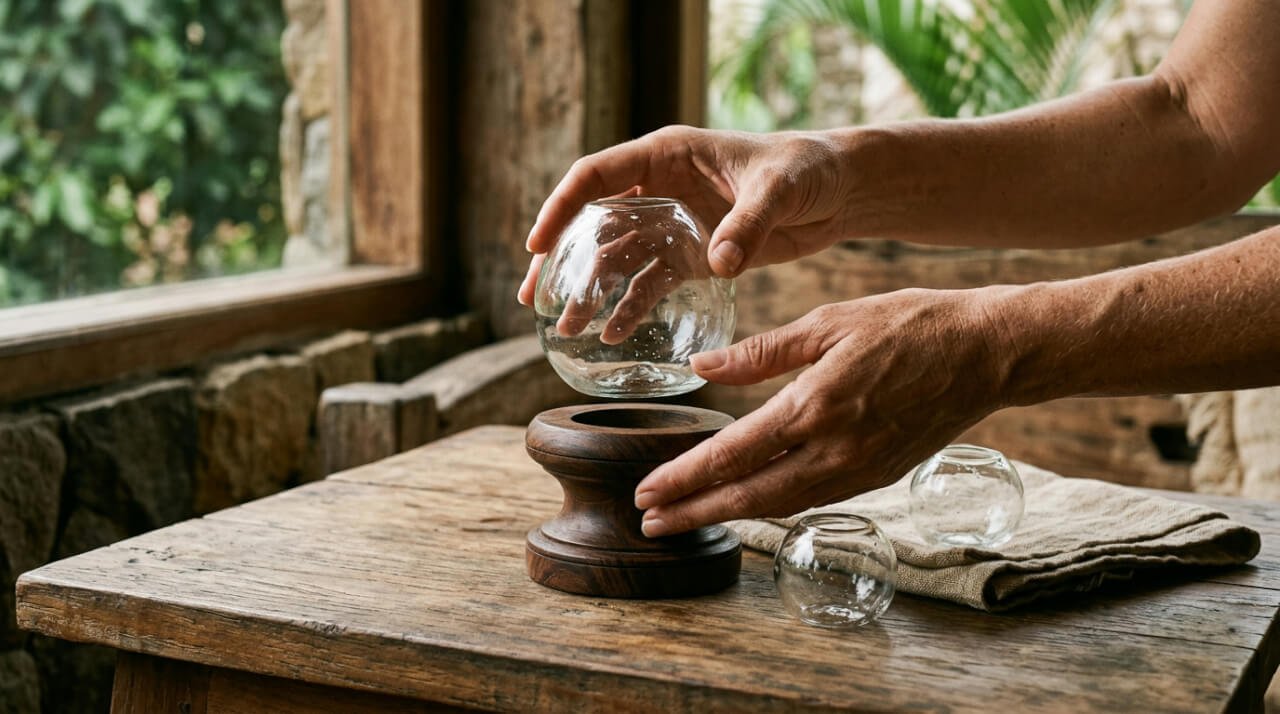
We built this into our own diffusers. The Danau Satu pairs a plantation hardwood base with hand-blown glass, and if the glass breaks, the Danau Satu Replacement Glass Set costs less than a third of a new diffuser. If only the top is lost or chipped, the Replacement Glass Cap is sold on its own, and a replacement wood base exists for the rarer case where the base fails. For keeping the oils themselves at their best between uses, see how to store essential oils. And the habit underneath all of this starts with the containers already in your kitchen.
The takeaway: before something goes in the bin, find the one part that actually failed. Replace that, keep the rest, and let the object you already own outlast the trend that sold it. Refill, reuse, repair.