Ingredient Tuesday: sirih, the betel leaf Balinese households have trusted for generations
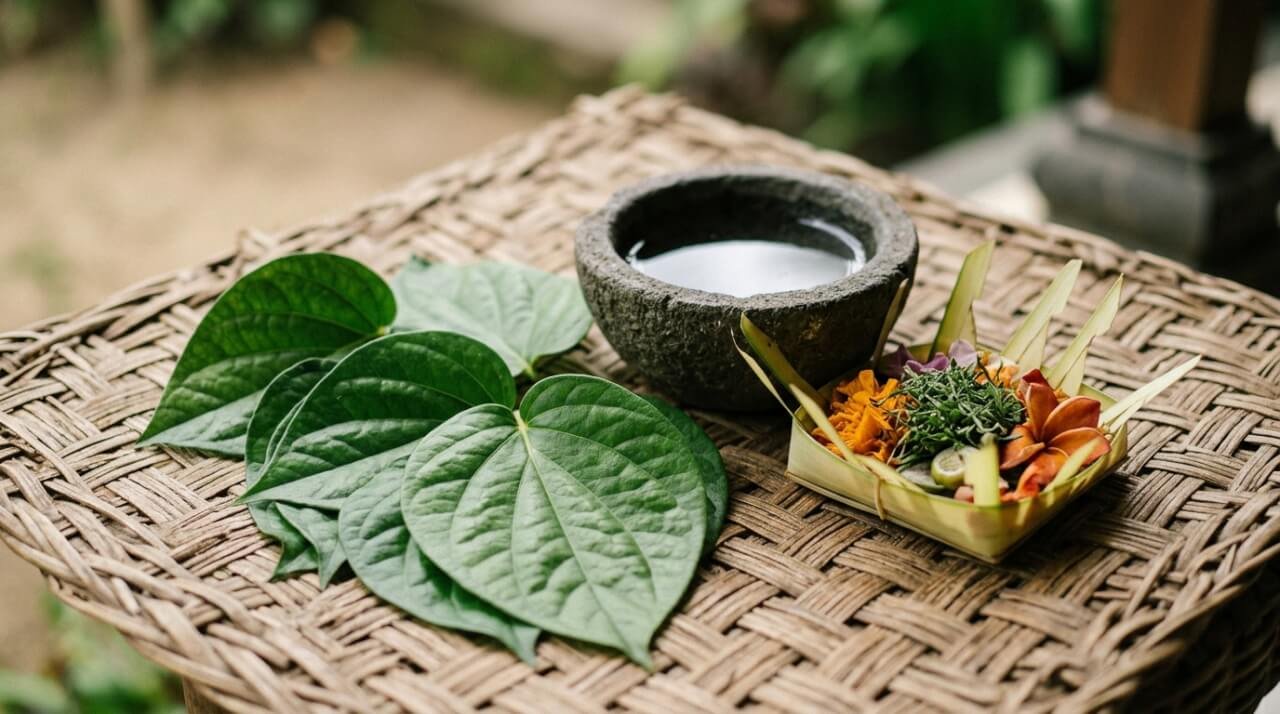
In Bali, few plants are as woven into daily life as sirih, the betel leaf (Piper betle). It climbs the garden fence, rests in temple offerings, and is folded into the sirih pinang bundle shared between elders as a gesture of welcome and respect. Long before the word antiseptic existed, Balinese and wider Indonesian households reached for this heart-shaped leaf to clean, to soothe, and to care.
The quiet science beneath the tradition
What makes sirih more than symbolic is its chemistry. The leaf carries a fragrant essential oil rich in phenols, among them chavibetol, eugenol, and hydroxychavicol. These belong to the same families of compounds that give clove and nutmeg their warmth and their natural preserving power. In laboratory studies, betel leaf extracts show measurable antimicrobial and antioxidant activity, the modern science that sits quietly beneath centuries of traditional use.
Across the archipelago, sirih has served as a mouth rinse, a wound wash, and a gentle cleansing infusion. Grandmothers steeped the leaves in warm water, and the astringent, faintly peppery liquid was used to freshen and to settle irritated skin. We share this not as a medical claim but as heritage: a plant tested by generations, now studied in the laboratory, and best understood with honesty rather than hype.
What the leaf teaches natural skincare
That astringent, antimicrobial character is why betel-family botanicals sit comfortably in natural cleansing and balancing formulas, especially for skin that runs oily or blemish-prone. Like turmeric and the other roots of the Balinese tradition, sirih rewards a light hand. A little, used consistently, does more than a lot used occasionally.
This is the wisdom the leaf carries: care does not need to be loud to be real. To read more of the heritage it belongs to, explore our guide to Balinese skincare and the deeper story of Indonesian traditional herbal knowledge.