Natural sunscreen without chemicals: how to choose mineral protection that is truly safe
If you have ever flipped a sunscreen bottle over and struggled to pronounce half the ingredients, you are not alone. The search for natural sunscreen without chemicals reflects a growing awareness: what we put on our skin matters, both for our health and for the ecosystems we share. The good news is that mineral sunscreens built on zinc oxide and titanium dioxide offer broad-spectrum UV protection without the synthetic UV filters linked to hormone disruption and coral reef damage. This guide will walk you through the science, the label-reading, and the practical choices that make switching simple.
Whether you are a parent reaching for a safer option for your family, an eco-conscious traveller preparing for a reef dive, or someone who simply wants honest protection from the sun, this article covers everything you need to know. We will look at what “chemical-free” really means, which ingredients to avoid, how mineral sunscreen works on a molecular level, and how to build sun care into a broader natural skincare routine that respects both your body and the planet.
What makes a sunscreen “without chemicals” (and what that actually means)

The phrase “natural sunscreen without chemicals” is widely used, but it deserves a closer look. In strict scientific terms, everything is a chemical, including water and zinc oxide. When consumers search for sunscreen without chemicals, they are really asking for sunscreen that avoids synthetic organic UV filters: the lab-created compounds that absorb UV radiation, convert it to heat, and release it from the skin.
Mineral sunscreens, sometimes called physical sunscreens, use inorganic minerals (zinc oxide, titanium dioxide, or both) to create a protective barrier on the skin’s surface. Instead of absorbing UV light and undergoing a chemical reaction, these minerals reflect and scatter UV rays before they penetrate the epidermis. The distinction is not about “chemical” versus “natural” in the laboratory sense. It is about the mechanism of protection and the safety profile of the active ingredients.
The U.S. Food and Drug Administration reviewed 16 sunscreen active ingredients and classified only two as GRASE (generally recognized as safe and effective): zinc oxide and titanium dioxide. The remaining 12 synthetic actives, including oxybenzone, avobenzone, and homosalate, were flagged as lacking sufficient safety data. That regulatory gap is why so many people now look for the best natural sunscreen options built on mineral actives alone.
For us at Utama Spice, the question has always been straightforward. We formulate with ingredients we understand, ingredients with a track record measured in decades, not marketing cycles. Zinc oxide has been used in wound care and skin protection for centuries. That kind of heritage is hard to argue with.
Six chemical UV filters to avoid in your sunscreen

Not all sunscreen ingredients carry equal risk. Here are the six synthetic UV filters most frequently flagged by researchers, regulators, and environmental scientists.
- Oxybenzone (benzophenone-3). The most studied and most concerning chemical UV filter. It absorbs through the skin within minutes and has been detected in blood, urine, and breast milk. Research links it to hormonal disruption, particularly estrogenic activity. Hawaii banned oxybenzone in sunscreen products in 2021 after studies showed it causes coral bleaching at concentrations as low as 62 parts per trillion.
- Octinoxate (octyl methoxycinnamate). Another hormone-active compound that readily penetrates skin. Banned alongside oxybenzone in Hawaii’s Reef Act 104. Studies suggest it may interfere with thyroid function and reproductive hormones.
- Homosalate. Used to absorb UVB rays, homosalate accumulates in the body faster than it can be eliminated. The European Commission’s Scientific Committee on Consumer Safety has recommended concentration limits due to potential endocrine disruption.
- Octocrylene. Breaks down into benzophenone over time, a compound flagged as a potential carcinogen. It is also persistent in marine environments, contributing to reef toxicity.
- Avobenzone. While less acutely concerning than oxybenzone, avobenzone is unstable when exposed to UV light (the very thing it is supposed to block) and requires stabilizers that introduce additional synthetic compounds into the formula.
- Octisalate. Helps other chemical filters penetrate skin more effectively, which amplifies the absorption of any problematic actives it is paired with. A chemical enhancer that makes the cocktail more potent, not less.
If you see any of these on a sunscreen label, the product relies on chemical UV filtration. That is not automatically dangerous for a single application, but the cumulative effect of daily use over years is what researchers are now questioning. The precautionary approach is simple: choose mineral actives with a proven safety record and skip the ingredients that regulators themselves cannot yet fully endorse.
One more ingredient to watch: “fragrance” or “parfum” listed without specifics. This catch-all term can mask dozens of undisclosed synthetic compounds, some of which are hormone disruptors. A truly natural sunscreen without chemicals will list its scent sources transparently, whether that is essential oils or simply “unscented.”
How mineral sunscreen protects your skin naturally
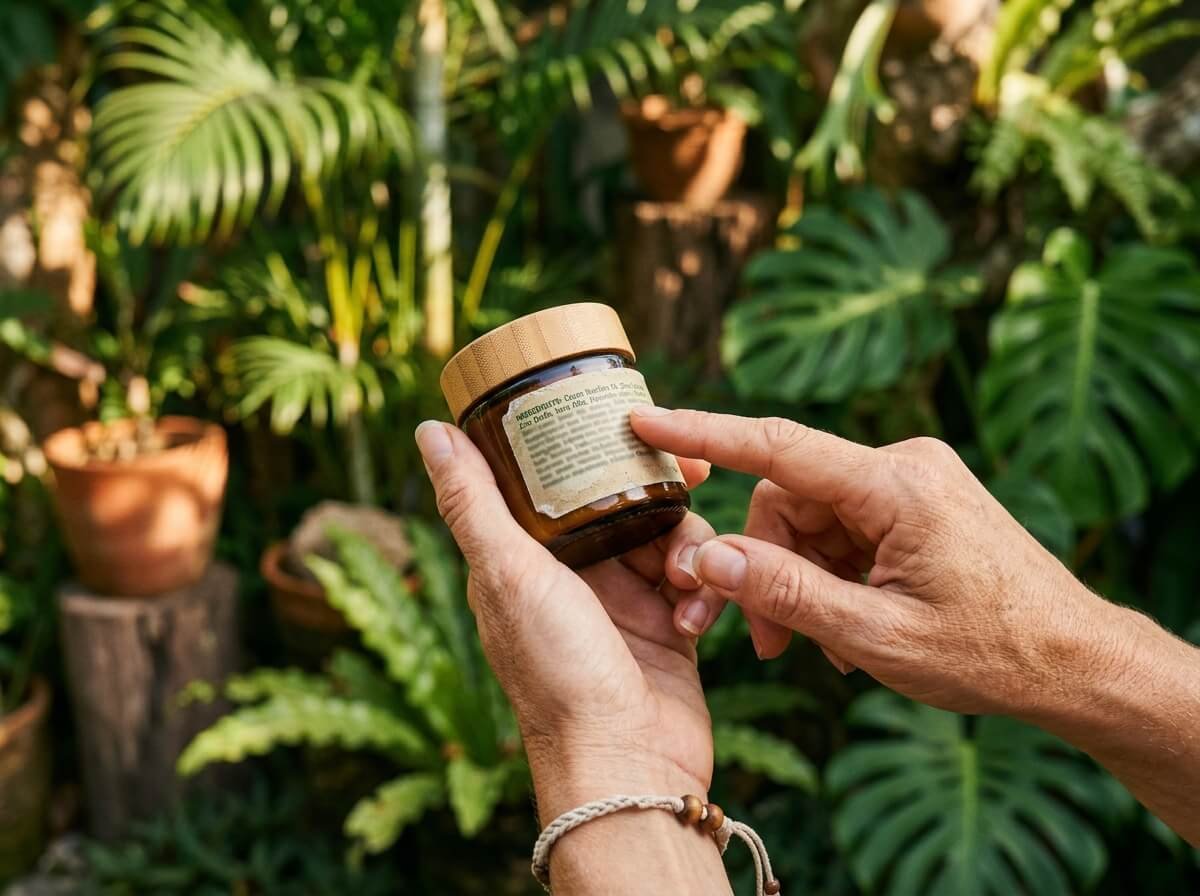
Zinc oxide is the gold standard of mineral sun protection. It is the only single ingredient that provides true broad-spectrum coverage, blocking both UVA rays (which cause premature aging and DNA damage) and UVB rays (which cause sunburn). Titanium dioxide covers UVB well but has gaps in UVA protection, which is why many mineral formulas combine both.
The mechanism is elegantly simple. When you apply a mineral sunscreen, the zinc oxide and titanium dioxide particles sit on the surface of your skin and act as a physical shield. UV photons hit the mineral particles and are reflected, scattered, or absorbed by the mineral itself, all before reaching living skin cells. Unlike chemical filters, mineral actives do not penetrate into the bloodstream. They stay on the surface, doing their job from the outside.
This surface-level protection has several practical advantages:
- Immediate effect. Mineral sunscreen works from the moment you apply it. Chemical sunscreens need 15 to 30 minutes to absorb and activate.
- Gentle on sensitive skin. Because zinc oxide sits on the skin rather than absorbing into it, mineral formulas are far less likely to cause irritation, allergic reactions, or breakouts. Dermatologists routinely recommend them for children, pregnant people, and anyone with reactive skin.
- Stable in sunlight. Zinc oxide does not degrade under UV exposure. Chemical filters like avobenzone lose efficacy over time and need reapplication more frequently.
- No systemic absorption. The FDA’s 2019 and 2020 studies found that chemical sunscreen actives enter the bloodstream at levels that exceed the safety threshold after just one day of use. Mineral actives showed no such absorption.
The historical complaint about mineral sunscreens, the chalky white cast, has improved significantly. Modern micronized zinc oxide formulations spread evenly and blend into a wider range of skin tones. Our own Zinc Natural Sunscreen SPF50 uses a zinc oxide formula paired with vitamin E, which absorbs smoothly without the thick, ghostly residue that older mineral sunscreens were known for.
How to read a sunscreen label like a conscious consumer

Label literacy is one of the most empowering skills you can develop. Here is a step-by-step approach to evaluating any sunscreen before it goes in your cart.
Check the active ingredients first
In the United States, sunscreen is regulated as an over-the-counter drug, which means active ingredients must be listed separately at the top of the label. Look for “zinc oxide” and/or “titanium dioxide” here. If you see oxybenzone, octinoxate, homosalate, octocrylene, avobenzone, or octisalate in the active section, the product uses chemical filtration.
Scan the inactive ingredients
This is where the full formulation lives. Look for carrier oils and butters you recognize: coconut oil, shea butter, jojoba oil, beeswax. These are the base that delivers the mineral actives onto your skin. Red flags include “fragrance” or “parfum” without specifics, parabens (methylparaben, propylparaben), and synthetic preservatives. A truly natural sunscreen will read more like a recipe than a chemistry set.
Understand SPF numbers
SPF (sun protection factor) measures UVB protection. SPF 30 blocks about 97% of UVB rays. SPF 50 blocks about 98%. The difference between 30 and 50 is small in practice, but for extended outdoor exposure or fair skin, SPF 50 provides a meaningful extra margin. What matters more than the number is consistent, generous application. Most people apply only 25 to 50% of the recommended amount, which dramatically reduces effective protection.
Look for “broad spectrum”
This label means the product protects against both UVA and UVB. Zinc oxide inherently provides broad-spectrum coverage. If a mineral sunscreen contains only titanium dioxide, check that it is specifically labeled broad-spectrum, as titanium dioxide alone may leave UVA gaps.
Evaluate “reef safe” claims critically
“Reef safe” is not a regulated term. Any brand can print it. The only way to verify is to check that the formula contains no oxybenzone, no octinoxate, and ideally uses non-nano mineral particles. Non-nano means the zinc oxide or titanium dioxide particles are large enough that they do not dissolve in seawater and become bioavailable to marine organisms. We will explore this in detail in the next section.
If you are also building a broader natural sunscreen routine for your face, the same label-reading principles apply. Face formulas simply tend to be lighter in texture and may include additional skin-nourishing botanicals.
Natural sunscreen and coral reefs: a view from Bali
Bali’s coral reefs are not abstract to us. They are part of our daily landscape, the ecosystems our neighbours depend on for food and livelihood, the underwater world our visitors come to see. When we talk about reef-safe sunscreen, we are speaking from lived experience, not a marketing angle.

The science on chemical sunscreen and reef damage is now well documented. Oxybenzone causes coral bleaching at concentrations as low as 62 parts per trillion. It does not just bleach adult coral. It damages coral DNA, deforms coral larvae, and disrupts the reproductive cycle of multiple marine species. A single swimmer wearing chemical sunscreen in a small bay can release enough oxybenzone to exceed that threshold.
Non-nano zinc oxide behaves differently in marine environments. The particles do not dissolve in seawater the way chemical filters do. They settle as inert mineral particles rather than becoming bioavailable to corals and fish. Independent studies confirm that non-nano zinc oxide does not cause coral bleaching or harm reef ecosystems. This is why Palau, Hawaii, the U.S. Virgin Islands, and parts of Mexico have moved to ban chemical UV filters while mineral formulations remain permitted.
In Bali, where tourism and marine conservation must coexist, the choice matters on a very personal level. Every bottle of natural sunscreen without chemicals that replaces a chemical one is a small act of stewardship for the reef systems that sustain coastal communities across Indonesia. The same principle applies whether you are snorkelling in Amed, surfing in Uluwatu, or swimming at your local beach. The ocean connects all of us.
If you are planning outdoor adventures and want broader natural protection from insects as well, our guide to natural bug repellent for skin pairs well with a mineral sunscreen routine.

Mineral protection, crafted in Bali
Our Zinc Natural Sunscreen SPF50 pairs non-nano zinc oxide with vitamin E for broad-spectrum protection that absorbs smoothly and respects reef ecosystems. One ingredient, one mission: care that works.
Building a sun-care ritual with natural ingredients
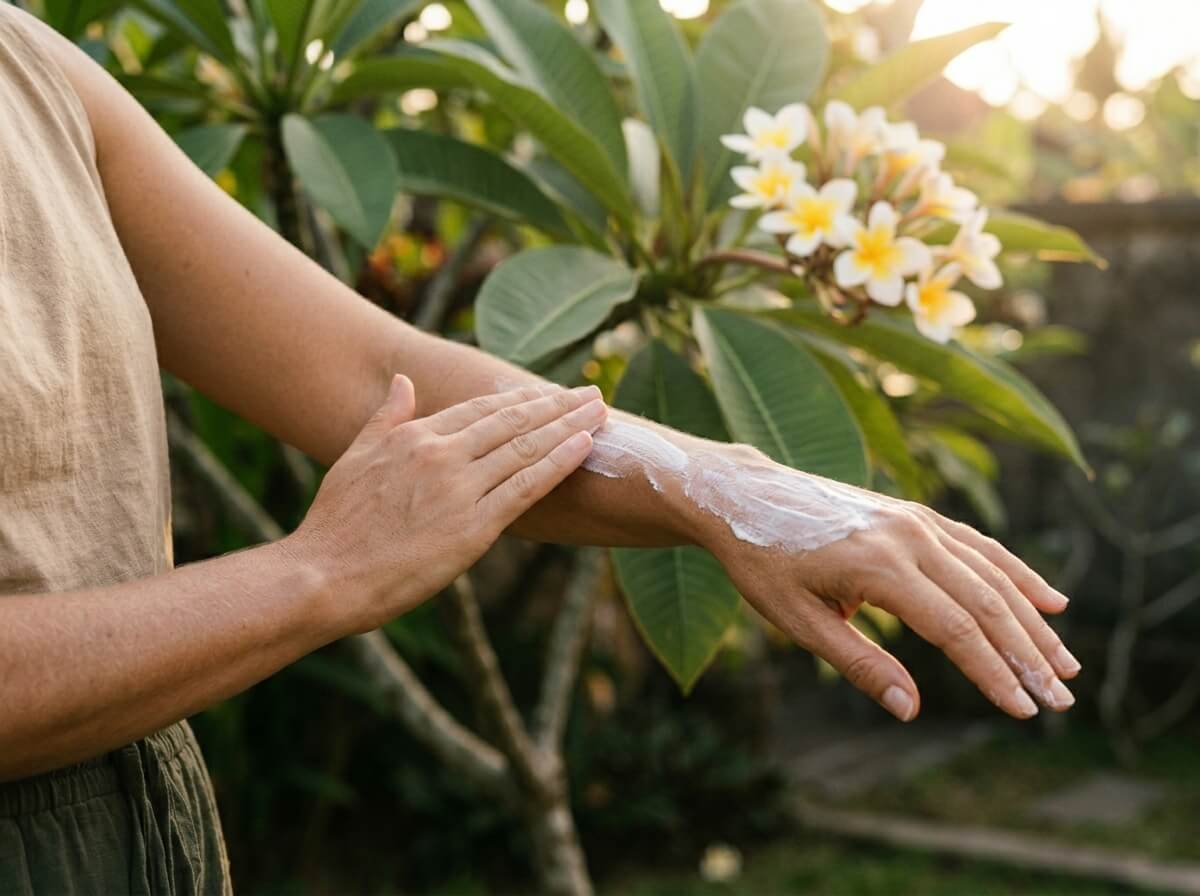
Sun protection does not exist in isolation. It works best as part of a broader ritual that nourishes skin before, during, and after sun exposure. Here is how to build a simple, effective sun-care practice using natural ingredients.
Before sun exposure: hydrate and prepare
Well-hydrated skin holds sunscreen better and recovers faster from UV exposure. Start your morning with a lightweight moisturiser or natural face oil that absorbs quickly. Ingredients like jojoba, squalane, and coconut oil create a smooth base for mineral sunscreen application. Allow the moisturiser to absorb for a few minutes before applying sunscreen as the final step.
During sun exposure: apply generously and reapply
The standard recommendation is one ounce (about a shot glass full) for the entire body and a nickel-sized amount for the face. Reapply every two hours, or immediately after swimming or heavy sweating. Mineral sunscreens are more water-resistant than many chemical formulas, but no sunscreen is waterproof. The word “waterproof” is actually banned from sunscreen labelling by the FDA because it is misleading.
For daily urban wear where you are not swimming or sweating heavily, a single morning application with a midday touch-up is usually sufficient. Pair your sunscreen with physical sun protection: a wide-brim hat, UV-blocking sunglasses, and lightweight long sleeves during peak hours (10 a.m. to 4 p.m.).
After sun exposure: soothe and restore
After a day in the sun, cleanse gently to remove sunscreen residue without stripping your skin. Follow with aloe vera gel, which calms heat and redness while delivering deep hydration. Our guide to aloe vera gel for skin covers the science behind why aloe is so effective for post-sun recovery.
For the body, a rich natural body lotion or body butter helps replenish lipids and lock in moisture that UV exposure depletes. Think of after-sun care as the second half of your sun-care ritual: protection and restoration working as a pair.
Frequently asked questions about natural sunscreen without chemicals
Is zinc oxide sunscreen truly chemical-free?
In strict scientific terms, zinc oxide is itself a chemical compound. When people say “chemical-free sunscreen,” they mean free of synthetic organic UV filters like oxybenzone and octinoxate. Zinc oxide is an inorganic mineral that occurs naturally and has been used in skin protection for centuries. It is the safest UV-blocking active available, recognized as GRASE by the FDA.
Does natural sunscreen leave a white cast?
Older zinc oxide formulations were notorious for their chalky appearance. Modern micronized formulas spread more evenly and leave significantly less residue. Some tinted mineral sunscreens eliminate the white cast entirely. Application technique matters too: warm the product between your palms before pressing it into the skin in thin, even layers rather than rubbing it like a lotion.
Can I use natural sunscreen on my baby or child?
Mineral sunscreens are the recommended choice for children and infants over six months. The American Academy of Pediatrics advises against chemical sunscreen for babies because their skin absorbs more per unit of body weight. Zinc oxide sits on the surface without absorbing, making it the gentlest option for young skin. For babies under six months, the AAP recommends avoiding direct sun and using shade, hats, and protective clothing instead of any sunscreen.
How often should I reapply mineral sunscreen?
Every two hours during continuous sun exposure, or immediately after swimming, toweling off, or heavy sweating. Mineral sunscreen does not degrade in sunlight the way chemical filters do, but it can physically rub or wash off. Consistent reapplication is the single most important factor in effective sun protection, regardless of SPF level.
Is SPF 30 enough, or do I need SPF 50?
SPF 30 blocks about 97% of UVB rays, and SPF 50 blocks about 98%. For everyday urban use, SPF 30 is effective when applied properly. For extended outdoor activity, higher altitudes, or very fair skin, SPF 50 provides a useful extra margin. The difference is small in percentage terms but meaningful in practice, especially if you tend to under-apply (as most people do).
What about spray sunscreens?
Most dermatologists advise caution with spray formulations. They create inhalation risk (especially for children), deliver uneven coverage, and often contain chemical UV filters plus propellant chemicals. If convenience is the goal, a mineral sunscreen stick is a better portable option than a spray.
Choosing natural sunscreen without chemicals is choosing care
The shift toward natural sunscreen without chemicals is not a trend. It is a return to what makes sense: protecting skin with minerals that have worked for generations, avoiding synthetic compounds that regulators themselves cannot fully endorse, and choosing products that respect the marine ecosystems we all share.
You do not need to be a scientist to make a good choice. Check the active ingredients for zinc oxide. Scan the inactive list for recognizable, plant-based carriers. Look for non-nano, broad-spectrum, and reef-safe credentials that you can verify (not just printed on the label). And apply generously, because the best sunscreen in the world cannot protect skin it does not cover.
At Utama Spice, we have been crafting with nature since 1989. Our Zinc Natural Sunscreen SPF50 carries that same philosophy: mineral protection, vitamin E antioxidant support, and a formula designed to absorb smoothly without leaving your skin or the reef compromised. Sun care, done with care. That is the standard we hold ourselves to, and the one we invite you to expect from every product you put on your skin.
If you are building out a full natural skincare ritual, our guide to coconut body lotion and our overview of aloe vera gel for your face are good next reads. Small, conscious choices compound. That is how change happens.