Essential oils for stress and anxiety: a Balinese wellness guide to natural calm
Essential oils for stress and anxiety are not a modern wellness trend. They are one of the oldest tools humans have used to soften the nervous system, and the science is finally catching up to what Balinese healers, Egyptian temple priests, and Indonesian grandmothers have always known: scent reaches the part of the brain that holds fear and calm before the thinking mind has a chance to weigh in. In this guide we share what the research actually says, which botanicals carry the strongest evidence for relieving stress and anxiety, how we use them in our daily rituals here in Bali, and how you can build a small, grounded practice of your own.
This is not a list of every oil ever marketed as calming. It is a careful, sourced look at the few that have earned their reputation, paired with the simple, repeatable ways of using them that actually help.
Why scent reaches the nervous system before thought
Almost every sensation we feel passes through the thalamus first, where the brain decides what is worth conscious attention. Smell is the exception. Scent molecules travel up the nose, dissolve into the olfactory epithelium, and signal directly to the olfactory bulb, which sits inside the limbic system, the brain’s emotional core. That is why the smell of damp earth after rain can return you to a childhood memory in a single breath, and why a calming aroma can begin to shift your nervous system before you have consciously named what you smell.
Researchers studying aromatherapy have repeatedly observed this pattern. Inhaled essential oils can lower heart rate, reduce salivary cortisol, and shift brainwave activity within minutes. A 2020 review in Phytotherapy Research looked at 47 randomized trials of aromatherapy for anxiety and found consistent, measurable benefit for inhaled lavender in particular, with smaller but real effects for bergamot, frankincense, and chamomile. The mechanism is not mystery. It is the limbic system responding to chemistry that humans have been refining for centuries.
If you want a deeper look at the neurobiology, we explored it from a different angle in our guide to what essential oils actually do. For now, the takeaway is simple: essential oils for stress and anxiety work because the wiring of the human brain rewards scent with a faster route to the parts of us that hold tension.
Five essential oils with real evidence for stress and anxiety
Many oils carry calming reputations. Far fewer have the human-trial evidence to back them up. These five are the ones we return to when stress is the question.
Lavender (Lavandula angustifolia)
The most studied essential oil in the world for anxiety. Linalool and linalyl acetate, the dominant compounds in true lavender, have been shown in animal and human studies to dampen sympathetic nervous system activity, lower blood pressure, and improve sleep onset. The benefit holds whether lavender is inhaled, applied diluted to the skin, or, in the case of the pharmaceutical preparation Silexan, taken orally under medical supervision. For everyday use, inhalation is enough. A single drop of our lavender essential oil on a tissue placed near your pillow is a quiet, reliable place to start.
Bergamot (Citrus bergamia)
A bright, slightly green citrus oil with a calming reputation that the data supports. In studies of hospital waiting rooms and high-stress workplaces, inhaled bergamot lowered participants’ self-reported anxiety and reduced cortisol levels compared with control groups. Bergamot is photosensitizing on skin (it can cause sun reactions if applied topically before sun exposure), so we prefer it in a diffuser or on a cotton ball in a coat pocket. Our bergamot essential oil is the citrus we reach for when stress carries a heavy, low-mood weight rather than a racing-mind quality.
Ylang-ylang (Cananga odorata)
Native to Indonesia and the Philippines, ylang-ylang has been used in Balinese floral offerings for centuries before Western researchers measured its effect on blood pressure and pulse rate, both of which it modestly lowers. The aroma is sweet, intensely floral, and best used in tiny amounts. A single drop in a diffuser is plenty. Our ylang-ylang essential oil is sourced from the same regional traditions that introduced the flower to the world.
Frankincense (Boswellia carterii)
Frankincense has been burned in temples for at least 5,000 years, and modern research suggests the ancient priests were on to something. The compound incensole acetate, found in Boswellia resins, acts on TRPV3 receptors in the brain in ways that produce calming, antidepressant-like effects in animal models. In humans, the slow, woody aroma of frankincense lengthens the breath and slows the pulse. Our frankincense essential oil is the one we reach for at the end of a long day, when the goal is depth more than freshness.
Roman chamomile (Chamaemelum nobile)
Soft, apple-like, gently sedating. Roman chamomile has been studied for generalized anxiety, and a small but consistent body of evidence supports its use as an inhalation aid for restlessness and overstimulation. It pairs naturally with lavender, and a drop of each on a diffuser pad is one of the simplest blends in our home. Chamomile is the oil we trust around children’s bedtimes, properly diluted and never undiluted on skin.
The Balinese tradition behind botanical calm
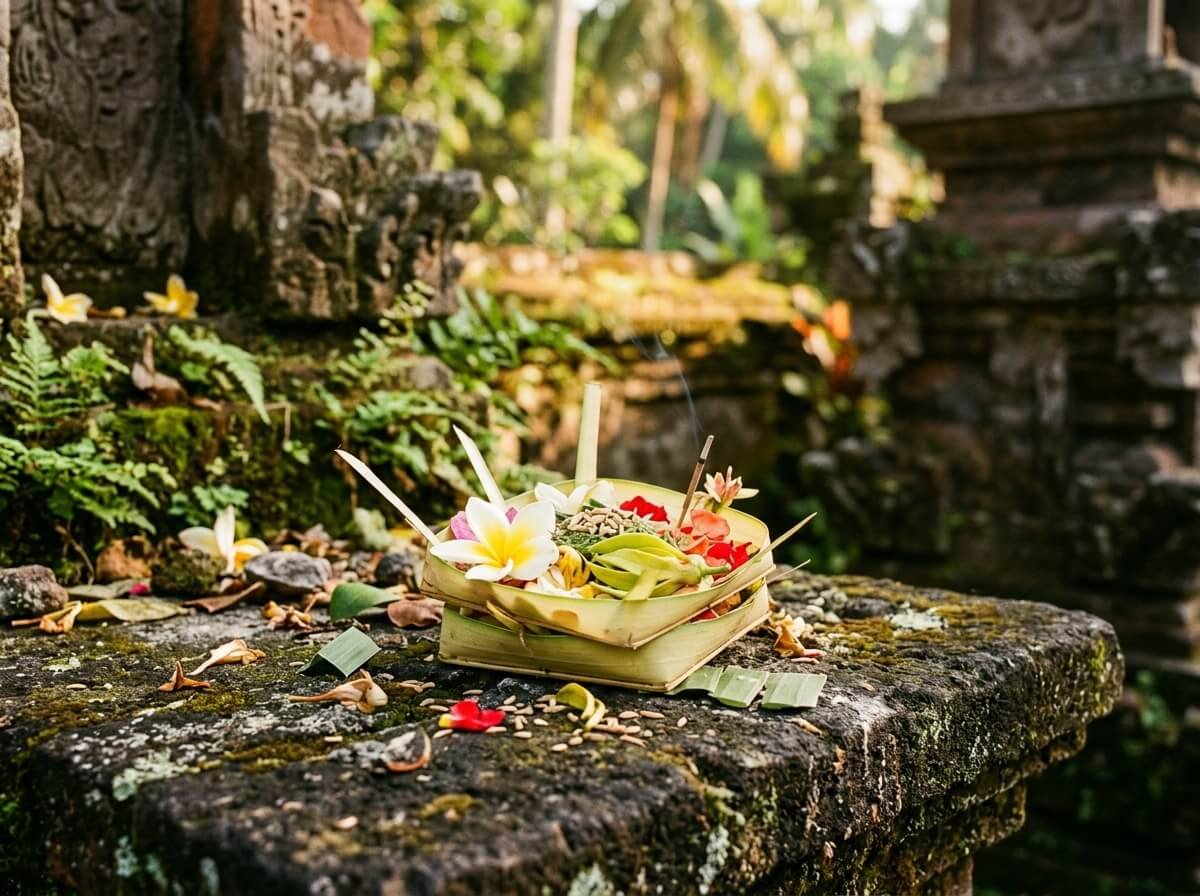
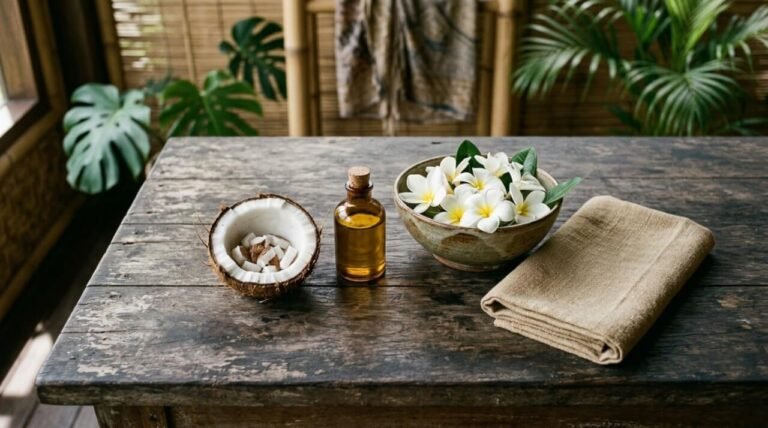
Long before the term aromatherapy was coined in Europe in the 1930s, the people of Bali were weaving scent into daily life as quietly and consistently as the tides. Every morning, a small woven offering called canang sari is placed at thresholds, shrines, and storefronts. The offering carries flowers chosen for their meaning, and many of them, cananga, jasmine, frangipani, are also among the most calming aromas the world knows. The ritual is not pharmacology. But it is the act of pausing, lighting incense, breathing in something fragrant, and letting the day begin from a settled place.
This is the inheritance our products are built on. Patchouli, sandalwood, kenanga (the Indonesian name for ylang-ylang), kaffir lime, and clove are not new to our small-batch blends. They were the tools our grandmothers used to calm a child, settle a tired body after a day in the rice fields, or prepare a space for prayer. When we say our oils are crafted in Bali with care, we mean the knowledge is from here too, not borrowed and rebranded but carried forward by the people who have always understood it.
For a closer look at one of these Balinese botanicals, our patchouli essential oil shows how a single ingredient can hold both grounding (patchouli is one of the deepest base notes in perfumery) and the story of the place that produced it.
Five ways to use essential oils for stress, beyond the diffuser
The diffuser is a fine entry point, and we love a good diffuser, but it is only one of many ways the oils can meet your day. These five methods cover almost every situation where calm is needed.
- Direct inhalation. One drop on a clean tissue, or two drops in a small inhaler tube. Cup your hands over your nose and take three slow breaths. Useful in waiting rooms, on planes, before a difficult conversation. A pre-blended Bliss essential oil roller is the same principle in a pocketable, no-spill format.
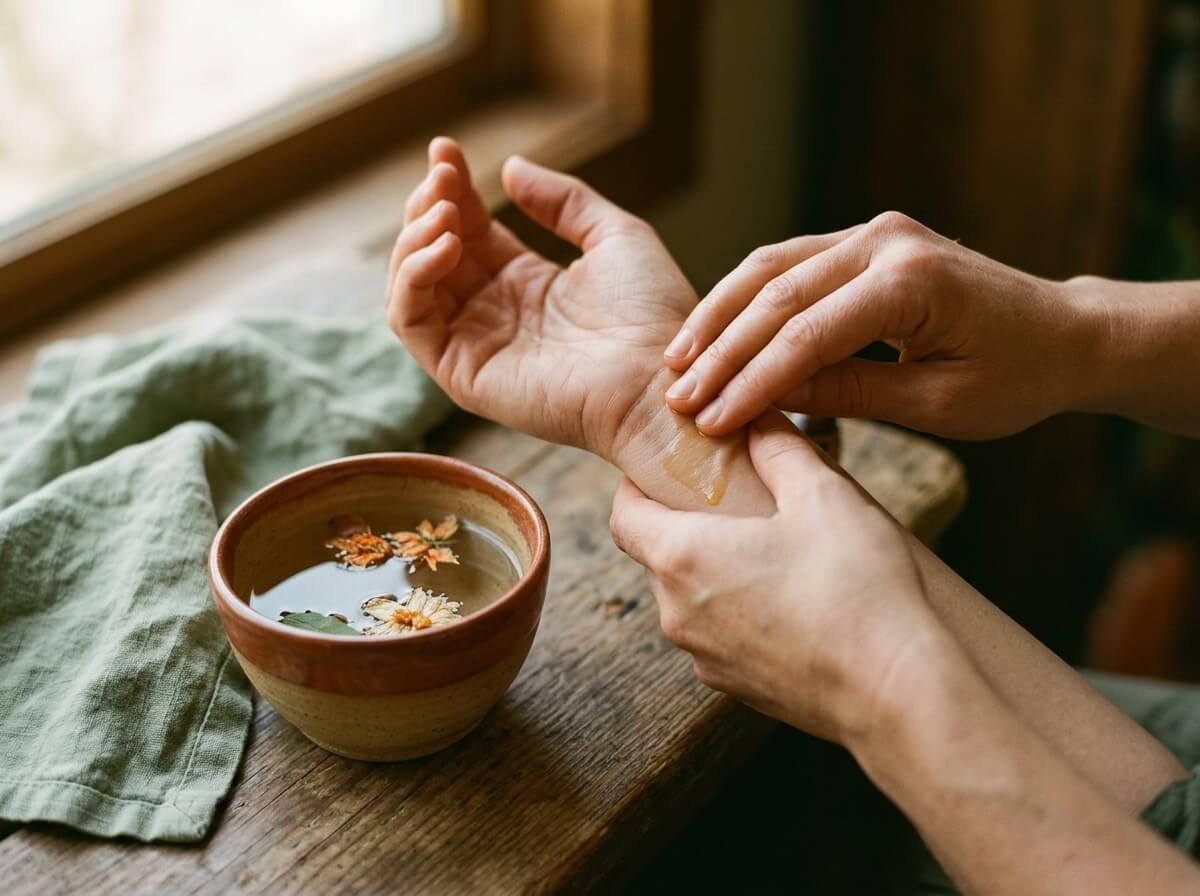
- Topical pulse points. Diluted in a carrier oil (1 to 2% for adults, around 6 to 12 drops per 30 ml), apply to wrists, behind the ears, or at the base of the throat. The combination of skin contact and inhalation deepens the effect.
- Warm water inhalation. Two drops in a bowl of just-boiled water, tent a towel over your head, and breathe for a minute. Surprisingly grounding before bed.
- Bath or shower. Four to six drops blended into a tablespoon of carrier oil or unscented body wash before adding to a bath, never poured directly into water (oils float on the surface and can sting skin). In the shower, a few drops on the floor away from the direct stream creates a slow-release aromatherapy.
- Pillow or scarf. A drop of lavender or chamomile on the corner of a pillowcase, or on the inside seam of a scarf, gives you a portable, low-effort dose for hours.
If you are still building a diffuser practice, our guide to choosing diffuser oils walks through how to pick a method that fits your home, and how to choose the diffuser itself covers the hardware side. Both pair naturally with this article.

Our Deep Calming blend, ready when you are
Deep Calming is the blend we built for the moments described in this article: end-of-day overload, a racing mind before sleep, the breath that needs lengthening. Lavender, frankincense, and cananga, slowly blended in our Bali kitchen and bottled in glass that returns to a refill station when empty.
Three diffuser blends to start with
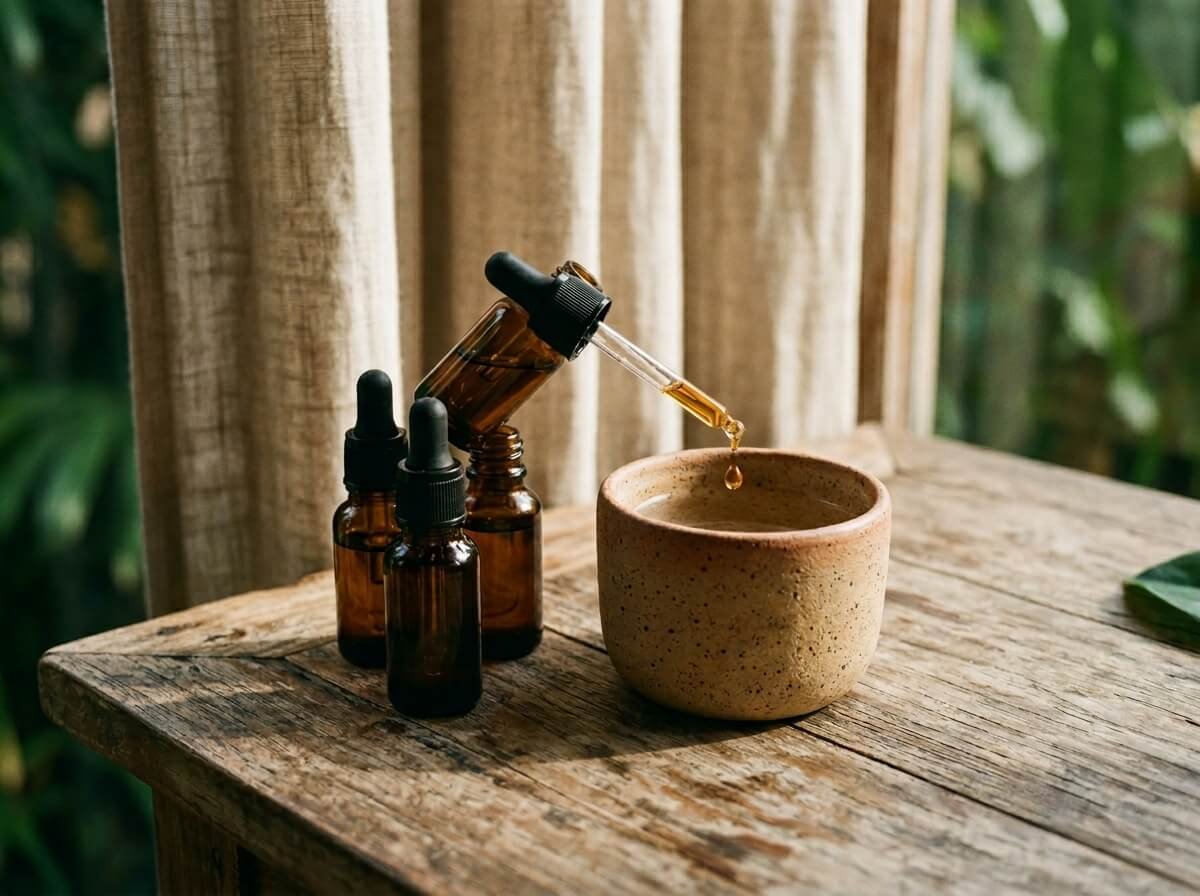
These three blends cover the three points in a day where stress most often shows up. Each recipe is for a standard 100 ml water-based diffuser. Halve them for smaller units, and never exceed 8 to 10 total drops in one diffuser session.
Morning calm, for the rushed start
Three drops bergamot, two drops lavender, one drop frankincense. Bergamot opens the day with light, lavender keeps the heart rate from climbing, frankincense grounds the blend so it does not feel too bright. We run this for the first 30 minutes of the workday.
Afternoon reset, for the 3 p.m. slump
Two drops rosemary, two drops bergamot, one drop lavender. Rosemary brings the cognitive lift, bergamot soothes any frayed edges, lavender stops the rosemary from becoming sharp. This blend is for the hour when stress and tiredness combine.
Evening wind-down, for unwinding
Three drops lavender, two drops ylang-ylang, one drop chamomile. Lavender does the heavy lifting, ylang-ylang adds floral softness, chamomile rounds the blend into something genuinely restful. Begin diffusing 30 minutes before bed and let it run as you read or stretch. For an even simpler ritual, our Calming candle carries a similar profile in a single, no-blending object.
Safety, dilution, and when to ask for help
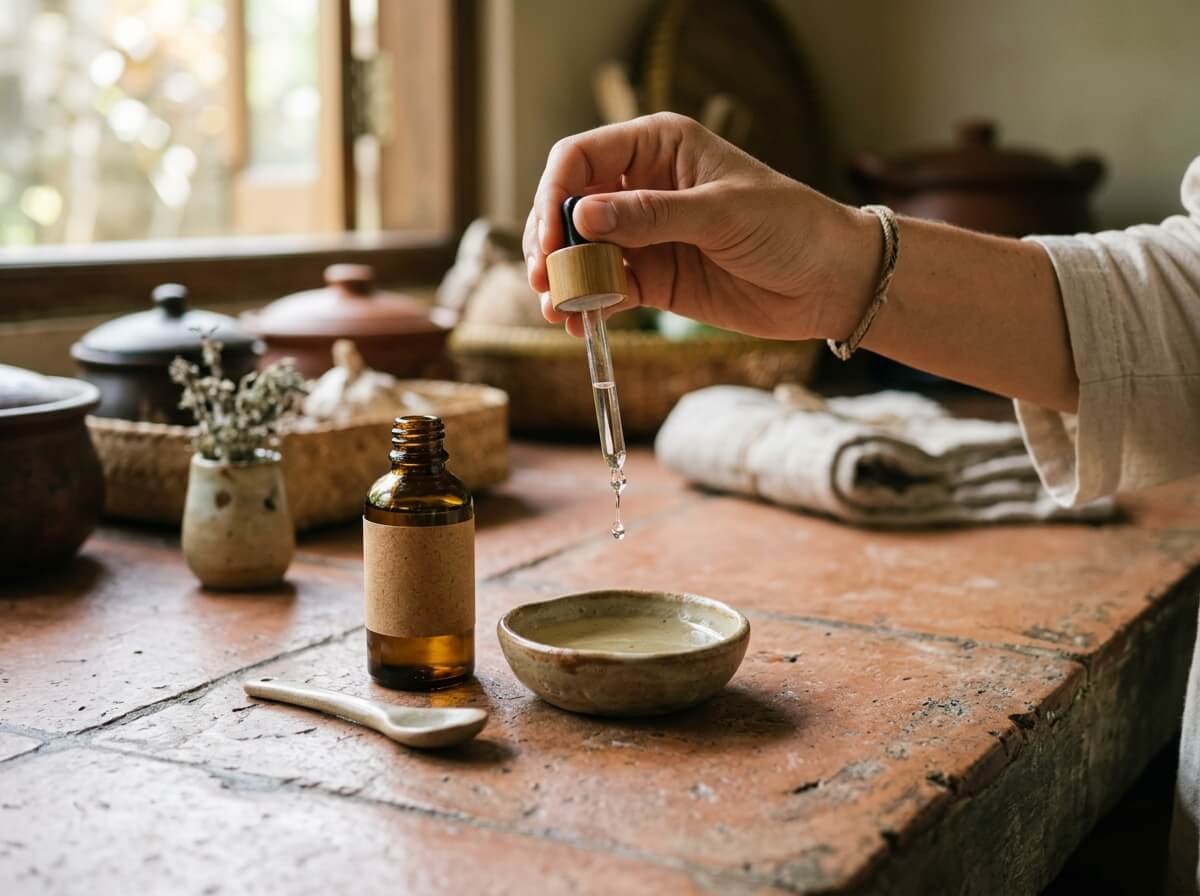
Essential oils are concentrated plant medicine. The same potency that makes them effective for stress and anxiety also makes them worth using with respect.
- Dilute for skin. Adults: 1 to 2% in a carrier (6 to 12 drops per 30 ml). Children over two, elderly, or sensitive skin: 0.5% (around 3 drops per 30 ml). Never apply most undiluted oils directly to skin (lavender and tea tree are partial exceptions, but a patch test is still wise).
- Check photosensitizers. Bergamot and other cold-pressed citrus oils can cause skin reactions to sunlight for up to 12 hours after topical use. Use them in a diffuser, or only after dark when applied to skin.
- Pregnancy, breastfeeding, infants. Many essential oils, including clary sage, rosemary, and peppermint, are not recommended in pregnancy. Always consult your midwife, GP, or a qualified aromatherapist before use during pregnancy or with infants under three months.
- Asthma and respiratory conditions. Strong inhalation of any essential oil can trigger symptoms in sensitive people. Start with a tiny amount, ventilate the room, and stop if anything feels off.
- Pets. Cats in particular lack the enzymes to metabolize certain monoterpenes. Diffuse only in well-ventilated rooms, give pets a way to leave, and never apply essential oils to their fur.
Most importantly, essential oils are a complement to care, not a replacement for it. If anxiety is persistent, intrusive, or interfering with sleep, work, or relationships, please speak to a doctor or therapist. Aromatherapy is a beautiful supporting tool, and the best supporting tools know what they support.
Scent as part of a fuller wellness practice
Here is what we have learned in 35 years of making these blends in Bali: the oil is rarely the whole story. The diffuser running in the corner becomes powerful when it is paired with the small pause that turns it on, the lit incense before meditation, the slow exhale at the end of the workday, the friend across the table who notices you are tense. Essential oils for stress and anxiety help. They help most when they sit inside a fuller practice of paying attention to yourself.
If you are looking for nearby companions to this practice, our deeper dive into aromatherapy for anxiety picks up where this guide leaves off, and our guide to natural incense looks at the other side of the same ritual coin. Natural candles offer a slower, longer-burning version of the same idea.
Which essential oil is best for anxiety attacks in the moment?
Lavender, by a wide margin. The evidence is strongest, the safety profile is excellent, and direct inhalation from a tissue or a roller works within minutes. Frankincense is the second oil to keep close, particularly when the anxiety has a tight-chest, shallow-breath quality.
Can I apply essential oils for stress directly to skin?
Almost always dilute. Lavender and tea tree are the two oils generally considered safe to apply neat in small amounts on adult skin, and even then a patch test is wise. For every other oil discussed in this guide, dilute in a carrier oil (coconut, jojoba, sweet almond) at 1 to 2% for adults.
How quickly do essential oils for stress and anxiety actually work?
Inhalation acts within minutes. Most users report feeling the first shift in 2 to 5 minutes, with deeper effects building over 15 to 20 minutes as the limbic system settles. Topical and bath applications are slower, around 20 to 40 minutes, but the combined skin-plus-scent effect is often longer-lasting.
Are pre-made blends better than mixing my own?
Neither is better, but pre-made blends like our Deep Calming blend save the trial-and-error of getting proportions right, and the synergy between specific oils has often been refined over many small batches. Mixing your own is rewarding once you know the families of scent (citrus, floral, woody, resinous) and how they balance. Many people use both: a tested blend for the everyday, custom blends for special occasions.
However you begin, begin small. One oil, one ritual, one breath at a time. That, more than any single bottle, is what real care looks like.