Refill Friday: the bottle you already own
Walk into any refill station and the eye gets pulled to the display. Matching pumps, fresh labels, a coordinated set in a gentle palette. It looks like the responsible upgrade. It is usually the most wasteful purchase in the room.
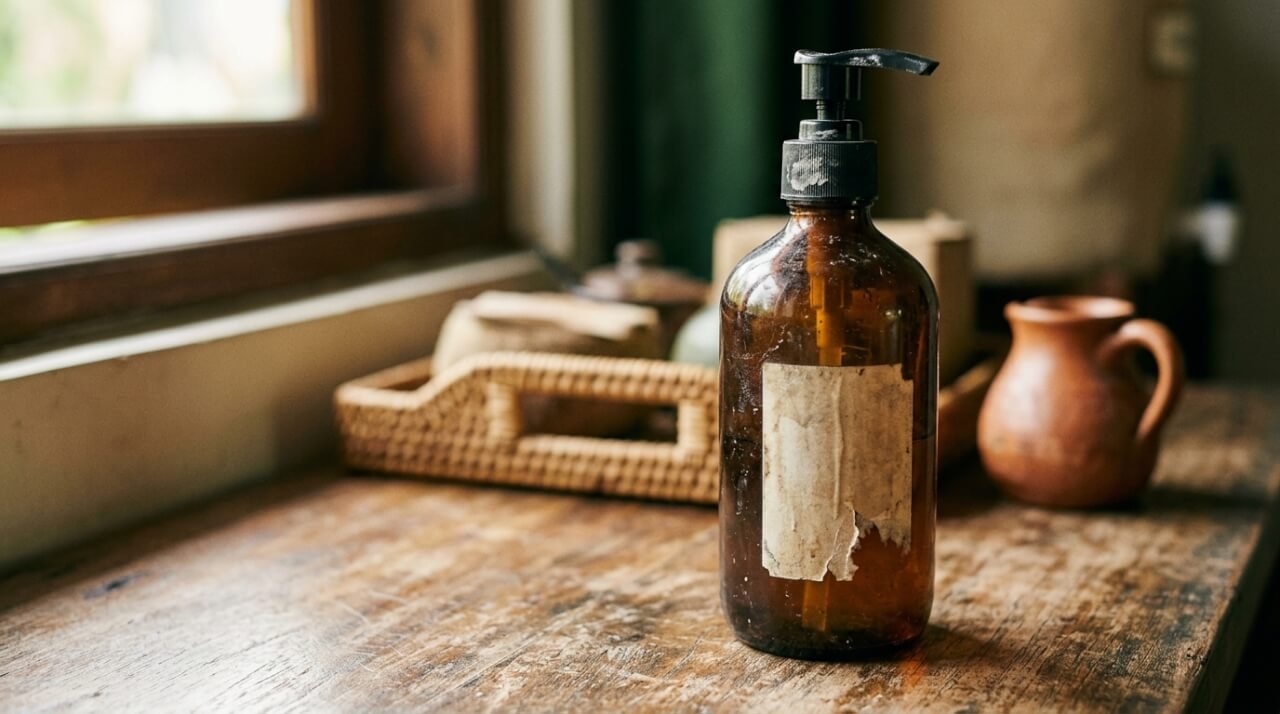
The most honest refill is the bottle already on your counter. The one you bought two years ago, with the label peeling slightly at one corner. The one whose pump still works fine. The one that was made to be discarded after the first pour and somehow survived a dozen refills. That bottle is doing more for the planet than any new refill kit ever will.
The matching-set fantasy
Refill culture is sometimes sold the same way fast fashion is sold. New aesthetic, new colors, new collection. Buy the set, post the photo, feel virtuous. But every new container, however beautifully designed, carries an embodied footprint of glass, ceramic, aluminum, and shipping kilometers. If you replace a working bottle with a prettier one in the name of sustainability, you have added to the waste, not subtracted from it.
The math is uncomfortable. A new glass refill bottle takes roughly 20 reuses to break even against the single-use plastic it claims to replace, depending on weight and shipping distance. If you swap it out after six months because the aesthetic moved on, the math never closes. The bottle was busywork.

The simple rule
A refillable container is sustainable only if it gets refilled, again and again, until it actually breaks. Not until something cuter comes along. Not until your shelf needs styling. Until the pump fails or the glass cracks.
That means the dish soap bottle from the supermarket can become your hand wash bottle. The old kombucha jar can become your bath salt jar. The plastic shampoo bottle, if it still pumps, is still a tool. Strip the label, wash it well in hot water with a drop of unscented soap, dry it fully, and refill it. The bottle does not know what was in it before. Neither does your skin.
What we ask at our refill room
When customers come in for their first refill at our shop in Ubud, we ask one question before they look at the dispensers. What did you bring from home. A regular from Sanur uses a small wine carafe for her face mist. A traveler we have seen for three years keeps refilling the same olive-oil bottle with our coconut body oil. Both look unbothered by what does not match. Both have saved a small mountain of plastic without ever buying a single new container in our name.
If you are starting today, start with what you already own. If you must buy a refill container, buy one. Refill it until it breaks. Then buy the next one. This is the quiet version of refill culture, and it is the only version that does the math.
For more on how to read a refill program honestly, see our guide to choosing a real refill program (and spotting the greenwashing). And if you are nearby, our refill room in Ubud is open all week.