Ylang ylang essential oil benefits: the Indonesian temple flower most guides mislabel
Search for ylang ylang essential oil benefits and you will find the same guide written a dozen times: a list of uses, a paragraph on mood, a note on blood pressure, and a warning about dilution. Almost none of them tell you the one thing that changes how you buy and use the oil. Ylang ylang is not a single, fixed product. It is a series of grades distilled in stages from one Indonesian flower, and the bottle labelled “ylang ylang” on most shelves may not be what you think you are getting. We have hand-blended botanicals in Bali since 1989, and the kenanga flower this oil comes from grows in the same landscape we work in. So this guide starts where the others stop.
Below, we untangle ylang ylang from its close cousin cananga, explain what the grades actually mean, ground the oil in the Balinese tradition it belongs to, and tell the honest truth about what it does for skin, hair, and rest. Some of the popular claims hold up. Some are folklore dressed as fact. Knowing the difference is how you use this oil with care rather than hope.
What ylang ylang essential oil actually is
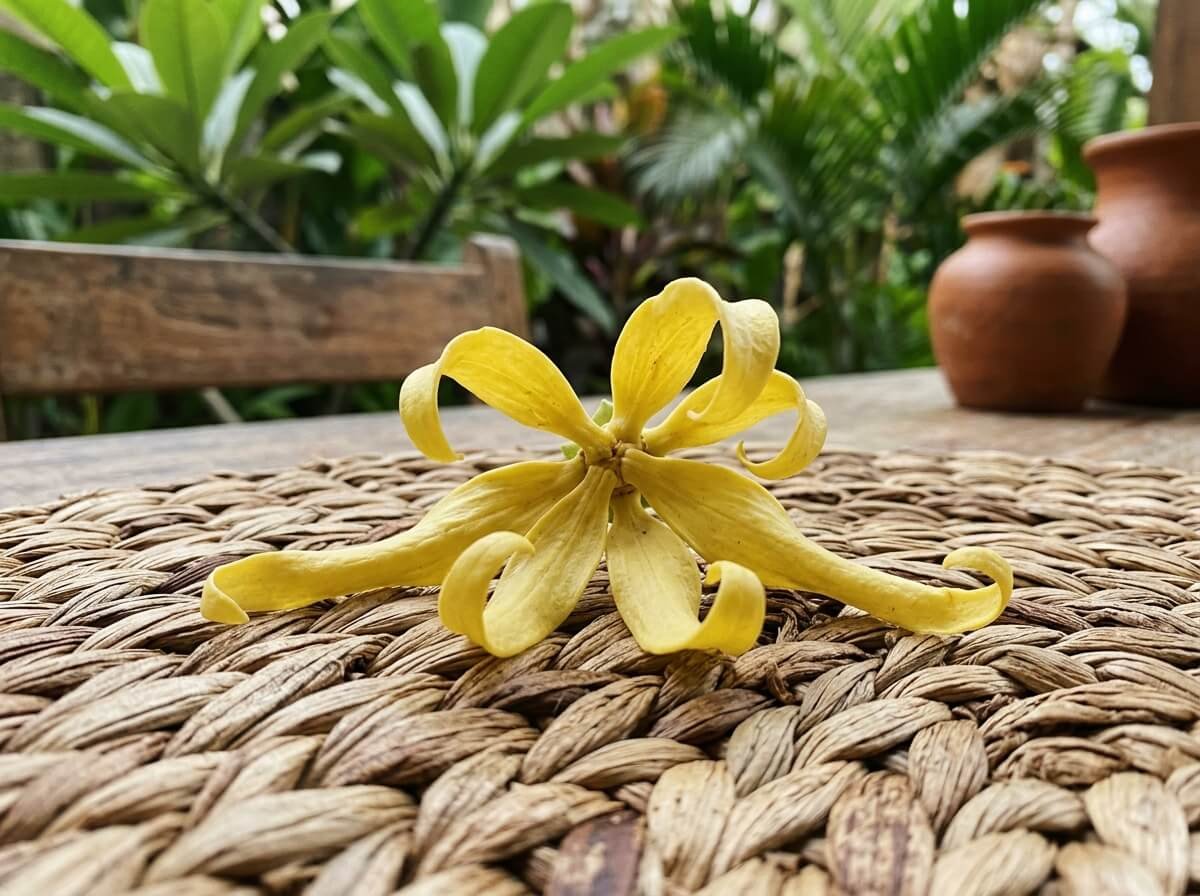
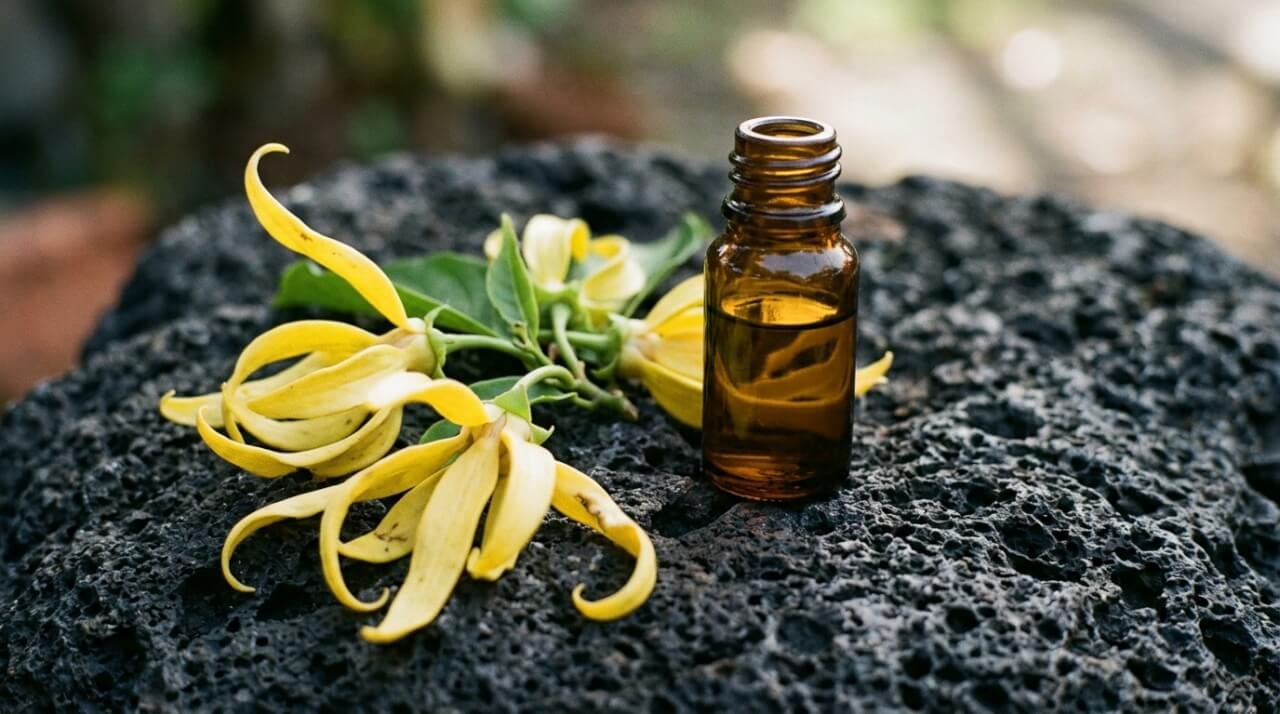
Ylang ylang essential oil is steam-distilled from the flowers of Cananga odorata, a fast-growing tropical tree native to Indonesia, the Philippines, and the wider Malay archipelago. In Indonesian the flower is kenanga, and its long, drooping, yellow-green petals release one of the richest floral scents in the botanical world: sweet, heady, faintly banana-and-jasmine, warm rather than bright.
The name comes from a Tagalog root often read as “flower of flowers,” and it fits. Ylang ylang is one of the pillars of classical perfumery, the floral heart in countless fine fragrances. What most guides skip is that the oil in your hand is a snapshot of a much longer process. Distillers do not run the flowers once and stop. They collect the oil in fractions over many hours, and each fraction is chemically different from the last. That single fact is the root of nearly every point of confusion around this oil, and it is where we go next.
The active chemistry is worth naming plainly. Ylang ylang is rich in linalool, geranyl acetate, benzyl acetate, benzyl benzoate, and para-cresyl methyl ether, along with sesquiterpenes like germacrene and caryophyllene. These compounds carry both the scent and the effects people reach for. For a wider view of how these molecules behave across different plants, our list of essential oils and their uses is a useful companion to this guide.
The tree itself tells you something about the oil. Cananga odorata grows quickly and tall in the humid tropics, and its flowers are picked by hand in the cool of early morning, when the scent is at its fullest and the petals have not yet been dulled by the day’s heat. It takes a great many blooms to yield a small amount of oil, which is part of why a genuine ylang ylang is never cheap. When you understand that the raw material is a fragile, hand-gathered flower rather than a bulk crop, the price of an honest bottle stops looking like a markup and starts looking like the true cost of care.
Ylang ylang vs cananga oil: the grade and species confusion nobody explains
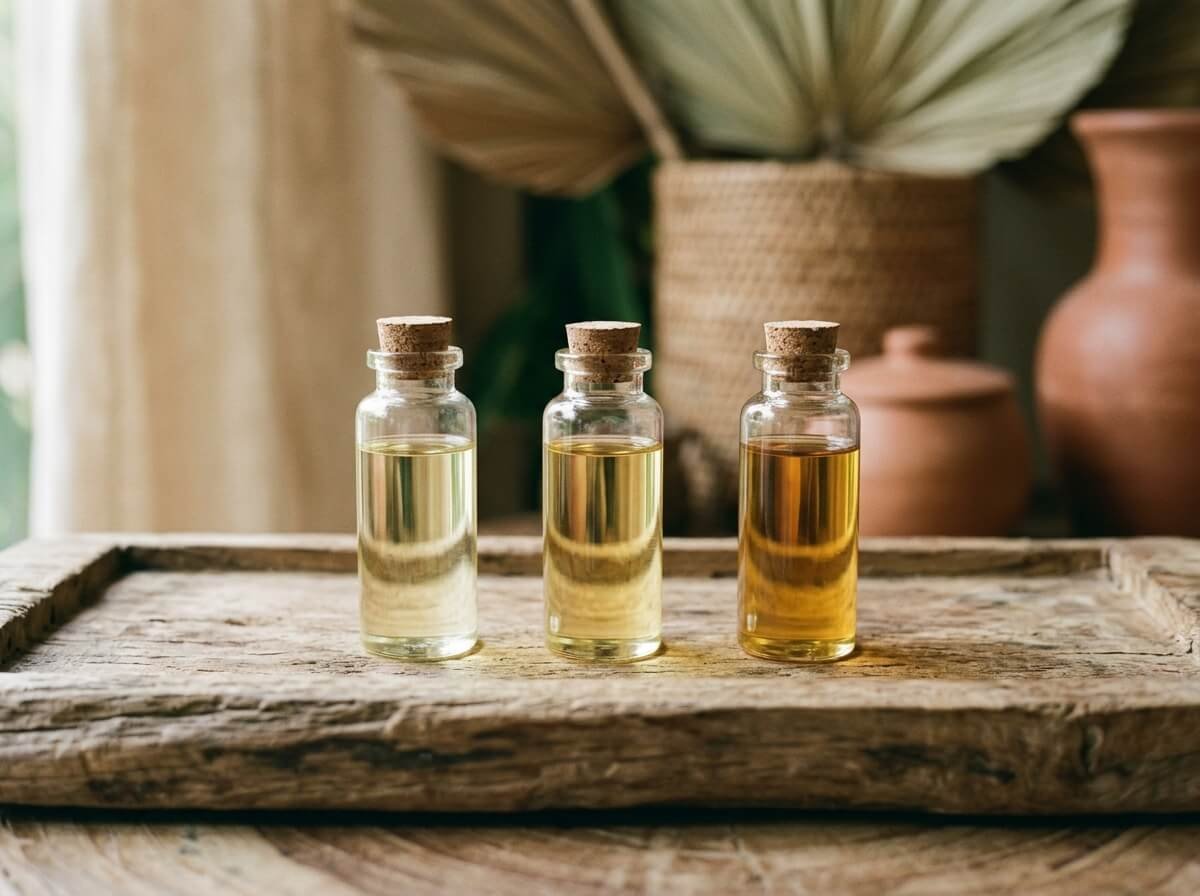
Here is the part almost every article leaves out. During distillation, the oil is drawn off in stages, and each stage is graded:
- Ylang ylang Extra: the first fraction, taken in roughly the first hour. It is the lightest, sweetest, most delicate grade, prized by perfumers for the top of a fragrance.
- Grade I, II, and III: successive fractions taken over the following hours. As distillation continues, the oil grows heavier, woodier, and less floral, with a higher share of sesquiterpenes.
- Ylang ylang Complete: not a separate run, but an unbroken distillation that captures every fraction together, or a reconstruction blended to represent the whole. This is the most balanced grade for aromatherapy and the one most home users actually want.
Then there is cananga oil. Cananga comes from the same species but a different variety, Cananga odorata var. macrophylla, and it is distilled in a single run without fractional grading. It is woodier, less refined, and more affordable, common in soaps and lower-cost fragrance. It is a real and useful oil, not a fake, but it is not interchangeable with a graded ylang ylang, and honest labelling should tell you which you are buying. Because we craft both, we can say this without hedging: they are siblings, not twins. If you want the fuller chemistry story of the cousin oil, we wrote a companion piece on cananga essential oil benefits that pairs directly with this one.
What does this mean in practice? For a diffuser or a calming blend, Complete or Grade I gives you the rounded, true-to-flower character. For fine fragrance layering, Extra is the treasure. For a budget-friendly scent in a candle or wash, cananga does the job. The problem is not choice. The problem is that most shelves say only “ylang ylang,” leaving you to guess. A brand that respects you tells you the grade.
There is a quiet lesson in this for how you read any botanical label. The word “natural” tells you almost nothing. What tells you something is specificity: the species, the variety, the grade, the origin, the method. Ylang ylang is simply a clear example of a truth that runs through the whole natural-care world. When a producer knows their material well and has nothing to hide, they name it precisely. When a claim stays vague, that vagueness is usually doing work, and rarely in your favour. Learning to read a ylang ylang label well is really learning to read every label well.
The kenanga flower in Balinese ritual
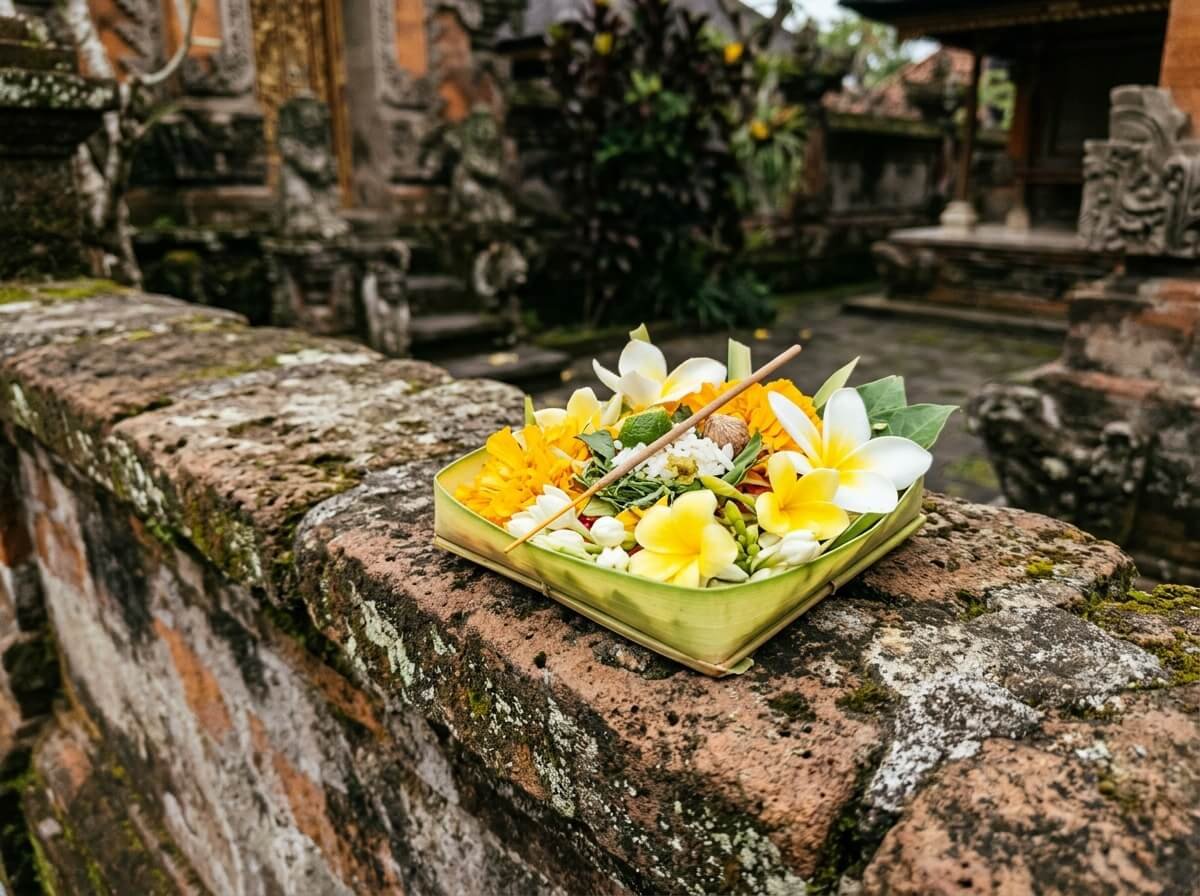
Western aromatherapy tends to treat ylang ylang as a mood accessory, a scent for relaxation and little more. That framing misses where the flower has lived for centuries. In Bali, kenanga is not a novelty. It is woven into daily devotion.
Walk any Balinese street in the morning and you will find canang sari, small woven palm-leaf trays holding flowers, placed at doorways, shrines, and crossroads. The colours are chosen with meaning, and fragrant yellow blossoms like kenanga carry a place of honour. The flower also appears in ceremony, in bridal traditions, and in the quiet, repeated acts of care that mark Balinese life. Its scent is tied to reverence, to thresholds, to the turning of day into evening when the flower is most fragrant.
This matters for more than romance. It tells you the flower has been observed, handled, and trusted by a living tradition for generations, long before a lab measured its linalool. When we talk about ancestral knowledge meeting modern research, this is the concrete shape of it. The same instinct runs through Balinese self-care, from flower-strewn baths to the botanical oils we explore in our guide to Balinese skincare. Honouring that origin is not decoration. It is accuracy, and it is respect.
Ylang ylang essential oil benefits for skin and hair
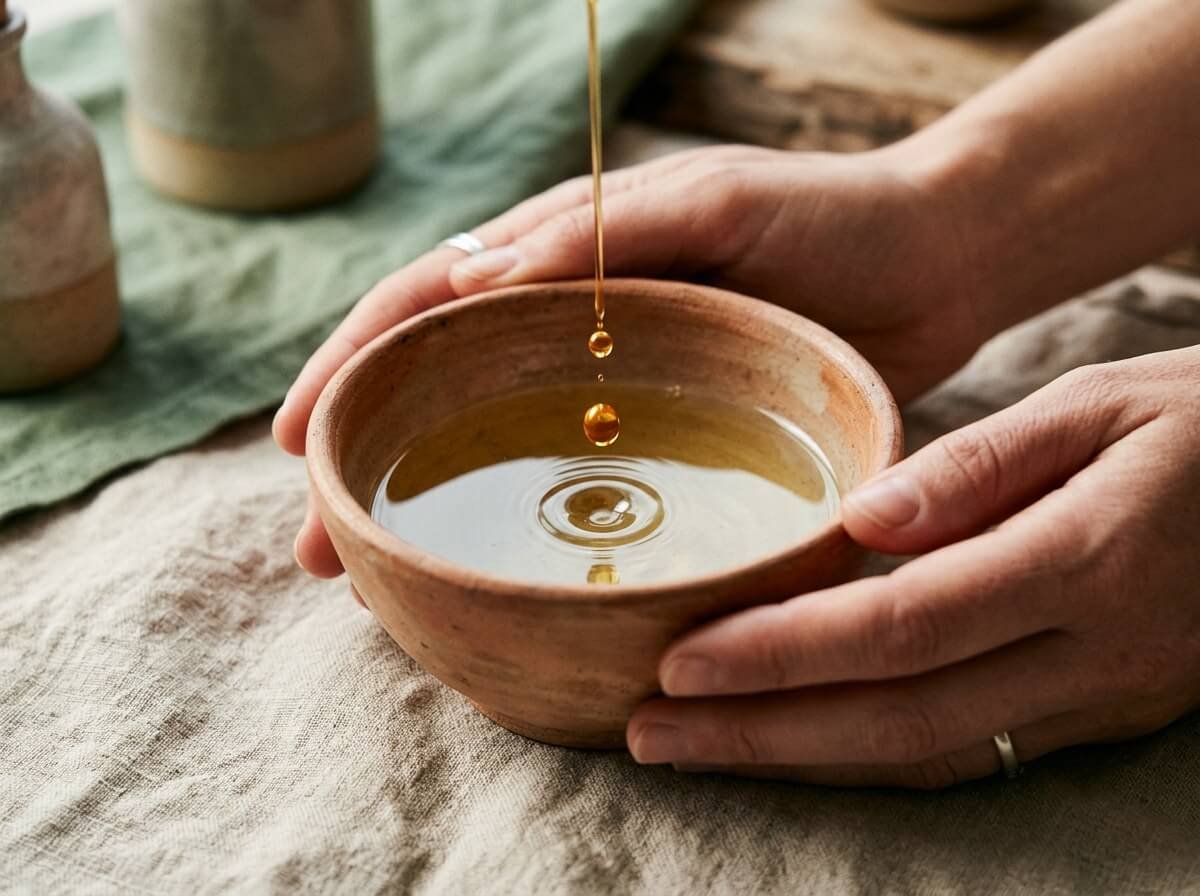
The most credible ylang ylang essential oil benefits for skin centre on balance rather than transformation. Traditional use and small studies point to a soothing, sebum-regulating effect, which is why the oil turns up in preparations aimed at both dry and oily skin. It does not strip and it does not smother. Used correctly, meaning heavily diluted in a carrier, it can support a calmer, more even-feeling complexion and lend a soft floral warmth to a nightly ritual.
Be honest about the limits. Ylang ylang is not a treatment for a specific skin condition, and the evidence for dramatic claims is thin. Its value is as a supporting, sensory ingredient in a well-built routine, not a cure. It also belongs to the more sensitising floral oils, so a patch test is not optional. This is where carrier oil choice matters, and our note on Balinese face oil walks through pairing florals with the right base.
For hair and scalp, the picture is similar: real but modest. Ylang ylang has a long folk history in hair care, used to add shine, support scalp comfort, and perfume the strands. A few drops blended into a carrier and massaged through the scalp can make an ordinary oiling ritual feel considered and calm. It will not regrow hair or repair damage on its own, and any guide promising that is selling theatre. What it can do is make consistent care more pleasurable, which is often what keeps a ritual going.
A simple way to fold it in: warm a tablespoon of coconut or a lighter carrier oil in your palms, add two or three drops of ylang ylang, and work it slowly through the scalp with your fingertips before a wash. The point is not the oil alone but the few minutes of unhurried attention it invites, the pressure of your own hands, the scent settling the mind while the carrier softens the strands. Care of this kind compounds quietly over weeks, and the flower is a companion to the practice rather than a shortcut around it.
If you want to work with a single-flower oil you can trust, our Ylang Ylang Essential Oil is a pure, 10ml bottle distilled from Indonesian kenanga, made to be diluted into the skin, hair, and diffuser rituals described here. For a ready-made evening blend that leans on the same floral warmth, our Bali Night Essential Oil Blend pairs it with grounding botanicals.

Pure kenanga, distilled in Indonesia
Our Ylang Ylang Essential Oil is a pure, 10ml bottle from Indonesian kenanga, made to be diluted into the skin, hair, and diffuser rituals in this guide. One flower, honestly labelled, crafted in Bali with care.
Ylang ylang essential oil benefits for mood, calm, and rest
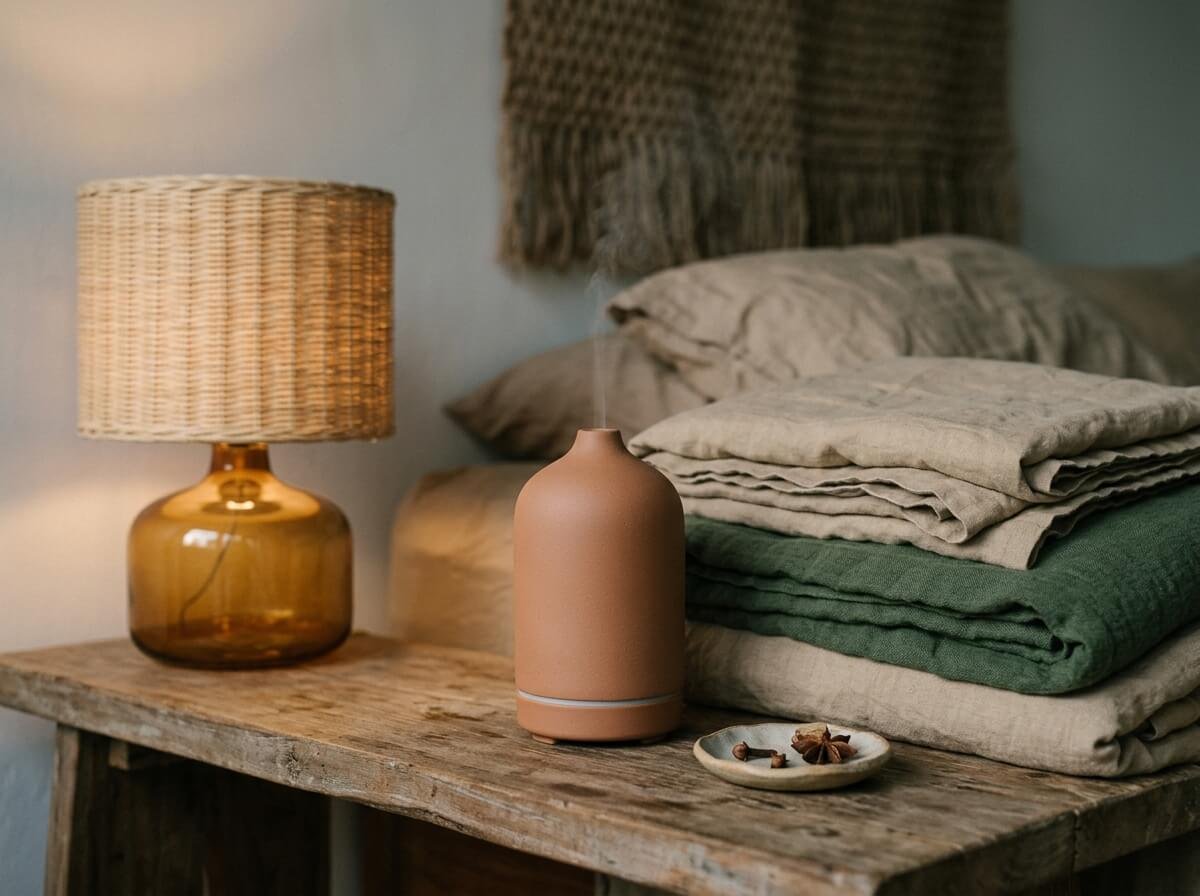
This is the ground where ylang ylang earns its reputation, and where the honest evidence is strongest. Several small human studies have found that inhaling ylang ylang is linked to lower feelings of tension and a calmer, more settled state, sometimes with mild drops in stress markers. The effect is gentle and personal, not sedation, but for many people it is real and repeatable. As a companion for winding down, it belongs in the same family as the oils we cover in our guide to essential oils for stress and anxiety.
Now the folklore. Ylang ylang is often sold as an aphrodisiac and a blood-pressure remedy. The aphrodisiac reputation is cultural and sensory, tied to its use in bridal traditions and its lush scent, and there is little clinical proof behind it. The blood-pressure claim rests on a handful of very small studies with mixed results. Enjoy the calming, mood-lifting quality of the scent for what it genuinely is. Do not treat the oil as medicine, and never use it to manage a health condition in place of proper care.
The simplest way to feel the benefit is also the oldest: scent in the air. A few drops in a diffuser in the hour before sleep, on their own or in a blend, turns an ordinary evening into a marked ritual. If you like building your own, our aromatherapy diffuser blend recipes give ylang ylang good company, and a ready roller like our Santi Essential Oil Roller makes the same calm portable.
It helps to hold the mood question with a little honesty about how scent works at all. Aroma reaches the parts of the brain that handle emotion and memory quickly and directly, which is why a single breath of a familiar flower can shift how a room feels. That is a genuine, well-understood effect, and it is enough on its own. You do not need ylang ylang to be a medicine for it to be worth having by your bed. The value is in the ritual it anchors: the same drops, the same hour, the same slow exhale, night after night, until your body learns that this scent means rest is near.
How to use and buy ylang ylang oil safely
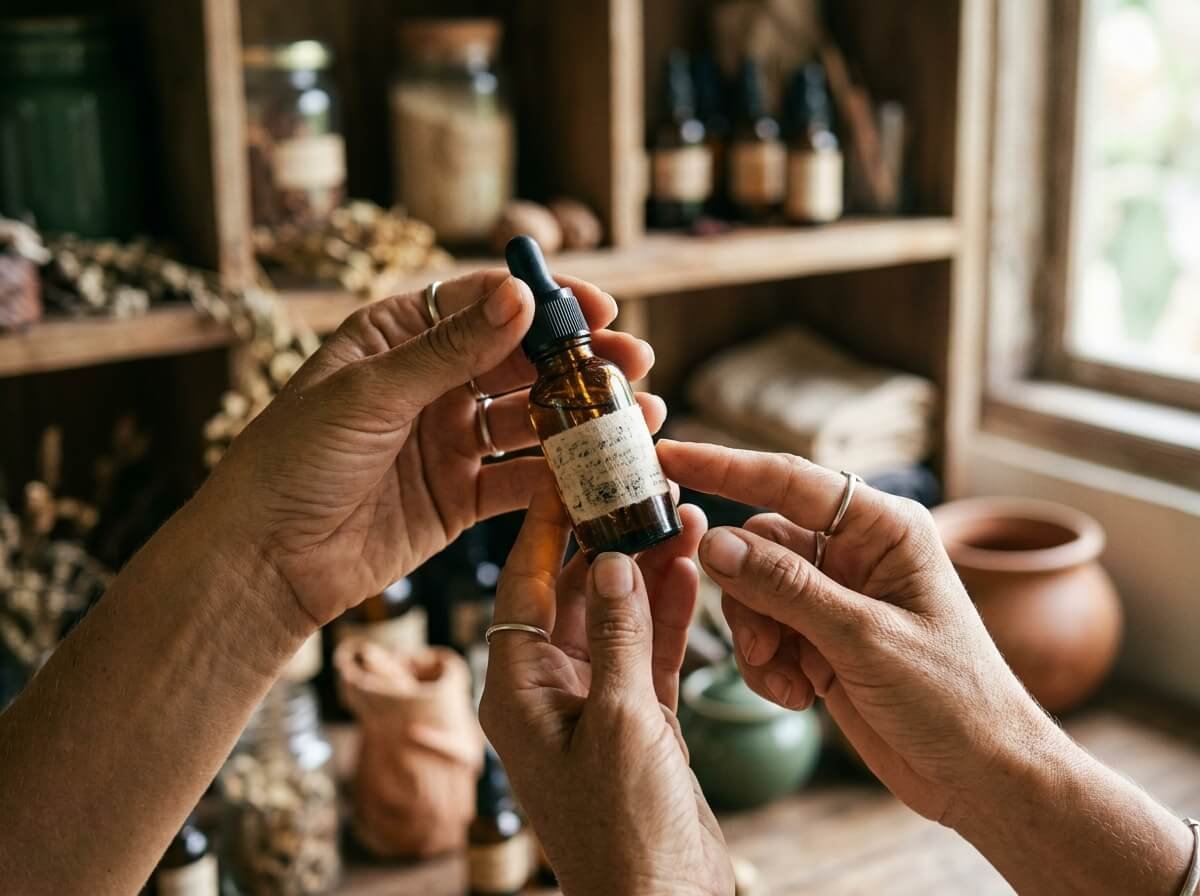
Ylang ylang is potent, so use it with a light hand. A few practical rules keep it safe and pleasant:
- Always dilute for the skin. Keep it to roughly 1% for facial use and up to about 2% for the body, blended into a carrier such as coconut or jojoba. Neat application invites irritation.
- Patch test first. As a more sensitising floral, ylang ylang deserves a 24-hour test on the inner arm before wider use.
- Mind the heady note. Too much, too close, can bring on a headache or nausea in sensitive people. Less is genuinely more here.
- Take care if pregnant, nursing, or with young children, and check with a professional first. Keep it away from sensitive medical situations.
- Diffuse in moderation. A few drops in a well-ventilated room, not a saturated space, for a session rather than all day.
Buying well is its own skill, because ylang ylang is one of the more commonly adulterated oils. Its value and complex chemistry make it a target for cutting with cheaper cananga, synthetic fragrance, or a carrier. Look for the Latin name Cananga odorata on the label, a stated grade such as Complete or Grade I, a country of origin, and a price that reflects real distillation rather than a bargain that is too good to be true. A trustworthy oil comes in dark glass, smells layered and alive rather than flatly sweet, and tells you what it is without hiding behind the word “natural.” For versatile bases to blend it into, our Balinese massage oil guide and a grounding single oil like our Vetivert Essential Oil both pair beautifully with a floral heart.
Ylang ylang questions, answered
Is ylang ylang the same as cananga oil?
They come from the same species, Cananga odorata, but they are not the same product. Ylang ylang is the fractionally graded oil, distilled in stages and sold as Extra, Grade I, II, III, or Complete. Cananga oil comes from a different variety and a single, ungraded distillation, and it is woodier and more affordable. Both are real and useful. A trustworthy label will tell you which one is in the bottle.
Which grade of ylang ylang should I buy?
For most people, Complete is the best all-round choice, since it captures the full character of the flower and suits diffusing, blending, and diluted skin use. Grade I is a close second for aromatherapy. Extra is a perfumer’s grade, lovely but specialised. If a bottle names no grade at all, treat that silence as a reason to ask questions.
Can I put ylang ylang oil directly on my skin?
No. Ylang ylang should always be diluted in a carrier oil, roughly 1% for the face and up to about 2% for the body, and patch tested first. It is one of the more sensitising florals, so neat application invites irritation. Diluted and used with a light hand, it is gentle and pleasant.
Does ylang ylang actually help with stress and sleep?
The calming, tension-easing effect of inhaling ylang ylang has modest but real support in small studies, and many people find it genuinely settling before rest. It is a companion for winding down, not a treatment for a sleep disorder or anxiety. Use it to mark the end of the day, and seek proper care for anything clinical.
Final thoughts: a flower worth knowing well
Ylang ylang rewards the person who slows down enough to understand it. Know that it comes graded, so you can choose the right one. Know that it is kenanga, a flower with a home and a heritage, so you can use it with respect. Know what it genuinely offers, calm, a little balance for skin and hair, and a scent that turns an evening into a ritual, and know where the claims outrun the evidence. That is not a smaller story than the miracle version. It is a truer one, and truth is the only ground real care can stand on.