Natural face serum: what it is, how it differs from a face oil, and how to match one to your skin
A natural face serum promises a lot in a small bottle: concentrated botanicals, a lightweight feel, and visible results without a shelf full of products. The trouble is that the words on the front tell you almost nothing. “Natural” is not a regulated term, and a serum can be brilliant or barely more than scented oil depending on how it is made. This guide is our honest attempt to explain what a natural face serum actually is, how it differs from a face oil or a moisturizer, and how to match one to the skin you have rather than the skin an advertisement imagines for you.
We have been hand-blending botanical skincare in Bali since 1989, so we will speak plainly about formulation, sourcing, and the small print. Our aim is not to sell you the idea of perfect skin. It is to help you read a label with confidence, choose well, and build a ritual you will actually keep. By the end, you will know what to look for, what to walk past, and which questions to ask before anything touches your face.
What a natural face serum actually is (and what “natural” leaves unsaid)
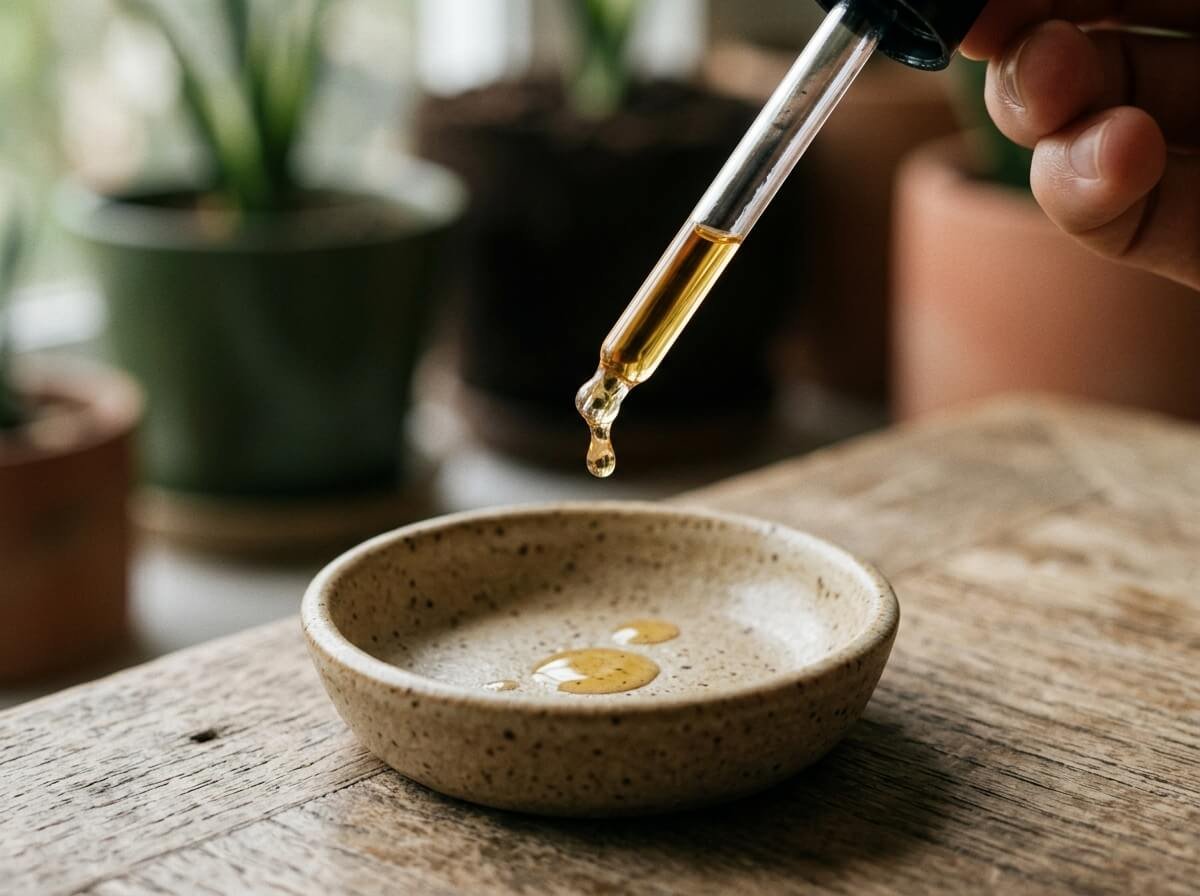
A serum is a concentrated treatment step. Its job is to deliver active ingredients in a light, fast-absorbing base so they reach the skin before a heavier cream seals everything in. A natural face serum does the same work, but its actives and its carrier come from plants and minerals rather than synthetic chemistry. Think cold-pressed botanical oils, plant extracts, and naturally derived vitamins instead of lab-built silicones and fillers.
Here is the part the front label rarely admits. The word “natural” has no fixed legal definition in most markets, so a brand can use it freely. A product can be 95% naturally derived or barely qualify, and both can carry the same claim. This is exactly the kind of gap we stand against, because vague language is how greenwashing hides. The remedy is not cynicism, it is literacy. Once you can read the ingredient list, the front of the bottle stops mattering so much.
Concentration is the other half of the definition. A serum carries a higher proportion of active ingredients than a lotion or a cleanser, because it is not diluted by the large volume of water that cushioning products need. That is why a little goes a long way, and why the good ones arrive in small bottles. When you buy a serum, you are paying for potency and precision rather than volume, so the quality of what is inside matters far more than the size of the container.
A well-made natural serum tends to share a few honest traits: a short, recognisable ingredient list, transparency about where the botanicals come from, and no need to shout with words like miracle or flawless. If you are new to the category, it helps to understand why a face serum earns its place in a routine first, then come back to sourcing. A serum is a tool, not a promise, and the makers worth trusting talk about it that way. The goal is progress, steady and real, rather than the perfection that so much of the industry sells and no bottle can deliver.
Serum vs face oil vs moisturizer: how they actually differ
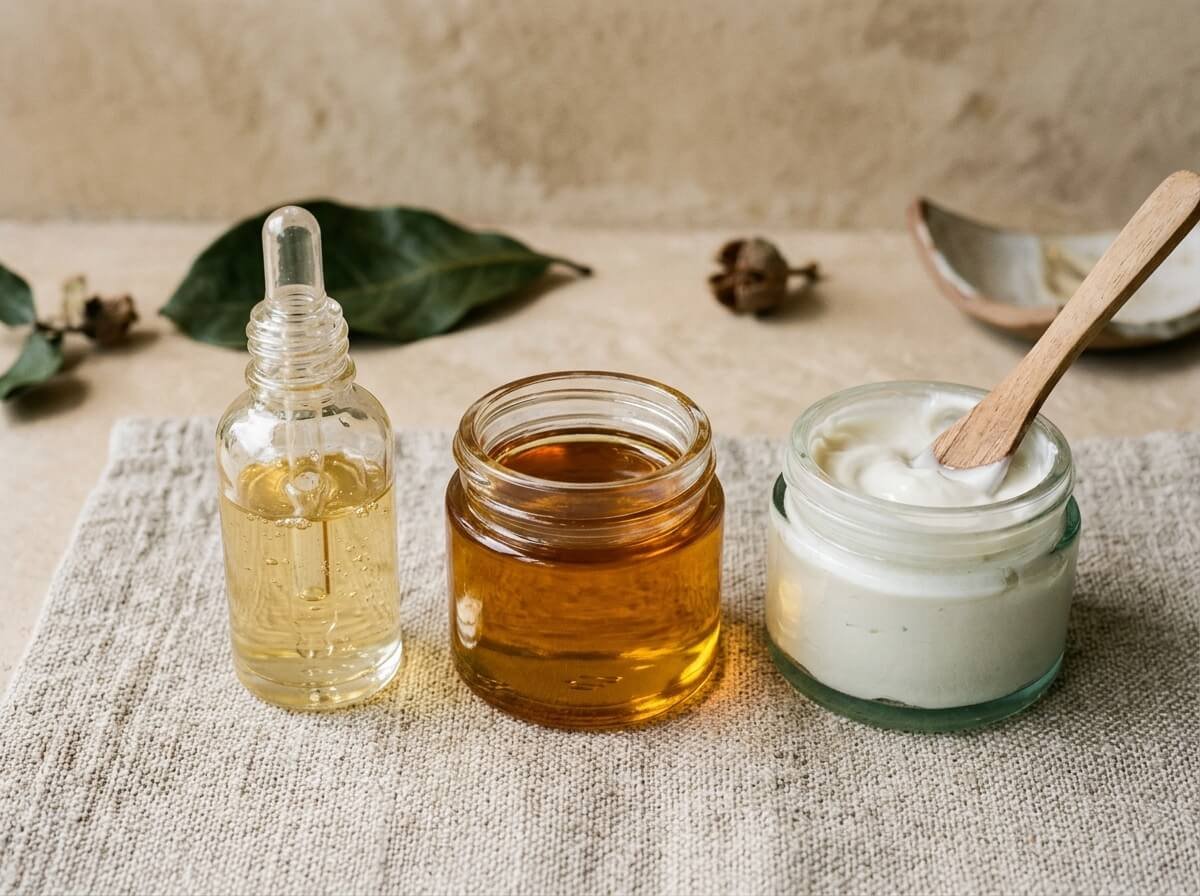
These three get muddled constantly, partly because a natural serum and a face oil can look almost identical in the bottle. The clearest way to tell them apart is by what each one is designed to do, not by texture alone.
The short version
- Serum: a concentrated treatment. Delivers targeted actives (antioxidants, soothing extracts, barrier lipids) in a light base. Used before your moisturizer.
- Face oil: a nourishing, occlusive step. Rich in fatty acids that soften skin and help slow water loss. Often used as the last step, or mixed into a cream.
- Moisturizer: usually a blend of water and oil that hydrates and seals at once. The cushioning layer most routines are built around.
The line blurs with natural products because many plant oils are genuinely active, not just emollient. A serum built around tamanu oil or rosehip is treating and nourishing at the same time. If you want the fuller comparison, our guide to the difference between a natural face oil is a good companion read, and so is our breakdown of face oil and body oil, which covers why the same oil behaves differently on the face and the body.
A simple way to decide: reach for a serum when you want to target something specific, such as dullness, dryness, or an oily T-zone. Reach for a natural face moisturizer when your skin mainly needs comfort and a protective layer. Most people do best with both, layered thin to thick, which is the backbone of how we build a simple skincare routine.
It helps to picture a real layering order. On a calm morning that might look like this: cleanse, apply a water-light serum, seal with a moisturizer, and finish with sun protection. At night, you might swap the moisturizer for a richer oil, or press an oil over the serum when the weather turns dry. The serum is almost always the treatment step in the middle, doing the focused work while the layers around it hydrate and protect. Once you see it that way, the marketing names matter less than the job each product is asked to do.
How to read a natural face serum label
The ingredient list is the most honest part of any bottle, because it is ordered by quantity. The first three to five ingredients make up the bulk of the formula, so that is where your attention belongs. If a hero botanical is buried near the bottom, next to the fragrance, it is there for the marketing, not for your skin.
What deserves a closer look
- Carrier oils first: names like Cocos nucifera (coconut), Aleurites moluccanus (candlenut, the source of kukui), or Calophyllum inophyllum (tamanu) tell you the base is plant-derived.
- Recognisable actives: vitamin C, vitamin E (tocopherol), and plant extracts you can actually look up.
- A real preservative if there is any water: water plus botanicals plus no preservative is a recipe for spoilage. Anhydrous oil serums are the exception, since bacteria struggle to grow without water.
- Honest fragrance: essential oils listed by name are fine in small amounts. A single vague “fragrance” or “parfum” line hides a lot.
A few things worth walking past
- A hero botanical listed last, right beside the fragrance, so it can appear on the front for almost none of the cost.
- A long tail of ingredients you cannot pronounce or look up, with no plain-language explanation anywhere.
- The claim “100% natural” with no ingredient list to back it, which is the kind of empty promise we refuse to make.
- Clear plastic packaging for an oil-based serum, since light and air turn delicate botanicals rancid faster than most people expect.
Packaging is part of the formula, not an afterthought. Botanical oils are living materials, and they degrade when exposed to light and oxygen. Amber or violet glass, a dropper or pump rather than an open mouth, and a sensible shelf life all tell you the maker respects what is inside. It is also worth noticing whether a brand offers refills, because a serum you can top up rather than replace is a small, ongoing act of care for the planet as well as your skin.
Length matters less than clarity. A ten-ingredient serum can be cleaner than a five-ingredient one if those five include mystery fillers. We keep our own lists short and name our sources, which is why a bottle like the Natural Face Serum reads like something you could almost assemble in your own kitchen, if you had access to the same wild-harvested oils. That transparency is the whole point, and it is the fastest way to spot the difference between real care and clever packaging.
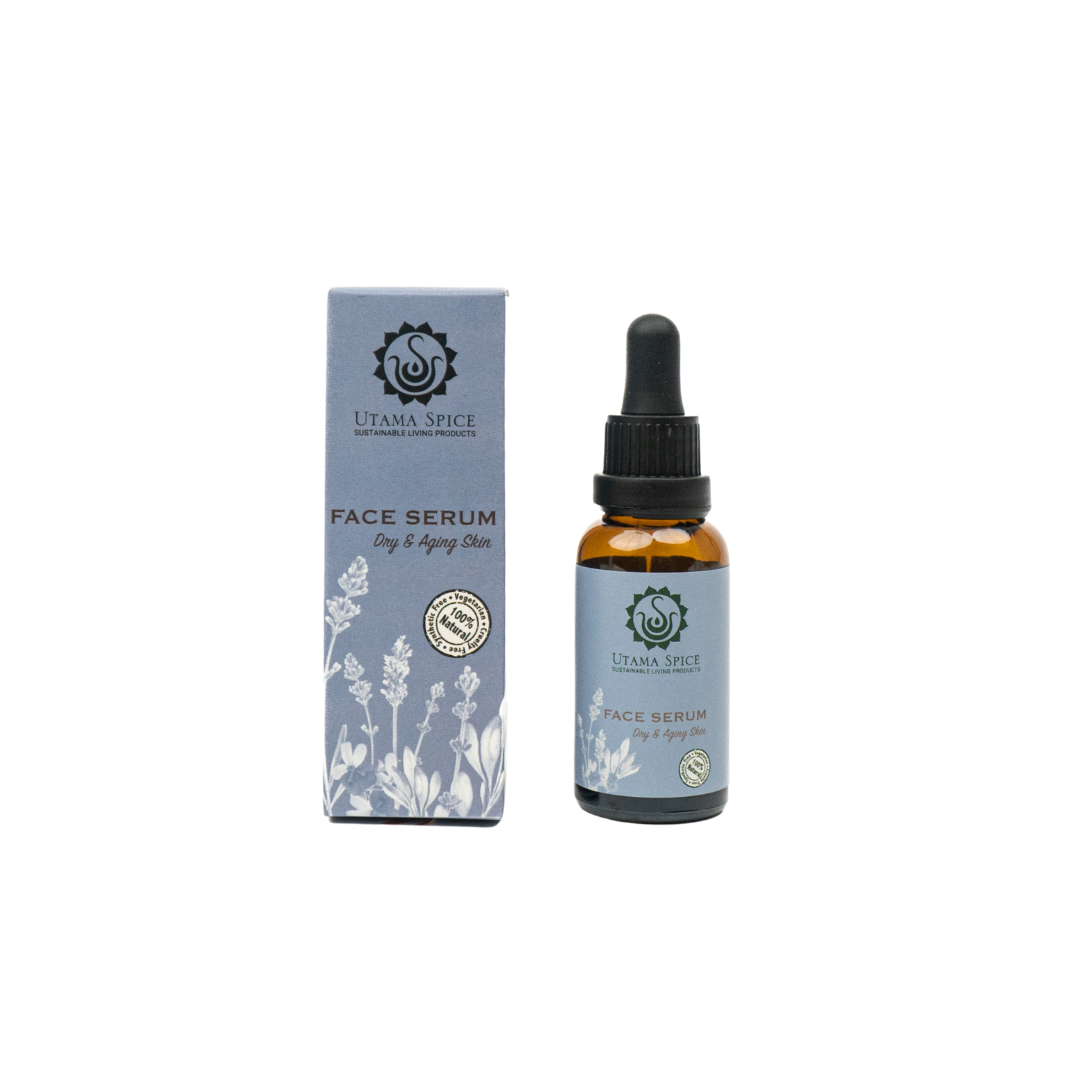
A serum made the way we have described
Short ingredient list, named sources, and botanicals wild-harvested and cold-pressed in Bali. Our Natural Face Serum is a calm, honest place to begin, formulated to nourish and protect without the theatrics.
How to match a natural face serum to your skin type
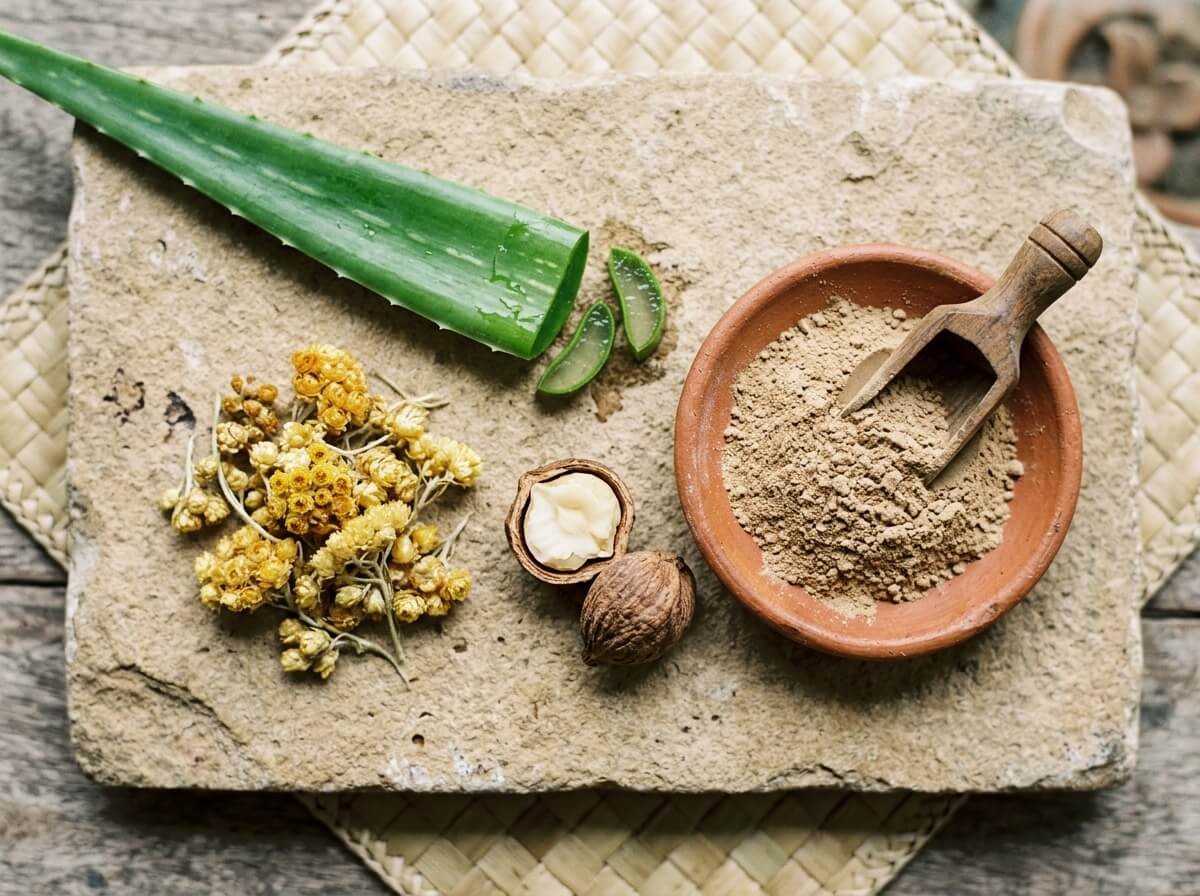
The best serum is the one suited to your skin, not the one with the busiest label. Skin type is less about a fixed category and more about how your skin behaves most days. Here is how we think about matching, with room for the fact that skin shifts with season, stress, and age. A face that runs oily in a humid Bali summer can turn dry and tight in a cold, dry winter, so it is fair to keep more than one serum on hand and choose by feel.
Balanced and normal skin
If your skin is generally comfortable, neither tight nor shiny, you have room to choose by goal rather than by problem. A light antioxidant serum in the morning protects against daily stress, while a slightly richer blend at night supports repair. The aim here is maintenance and glow, not correction, so keep the formula simple and let consistency do the work.
Oily and combination skin
Lightweight, fast-absorbing oils are your friends. Squalane, jojoba, and kukui sit close to the skin without a greasy film, and they can actually help balance oil production rather than feed it. A dedicated a serum for oily skin keeps the T-zone comfortable, and our Oily Face Serum was built around exactly this: a light botanical base that hydrates without heaviness.

Dry and mature skin
Look for richer, barrier-supporting lipids. illipe butter and tamanu are dense in the fatty acids that dry skin loses, and they pair well with a serum worn under a cream at night. If your skin feels tight by afternoon, this is usually the direction to move.
Sensitive and reactive skin
Fewer ingredients, gentler extracts, and no harsh essential oils. Calming botanicals such as helichrysum and calendula soothe rather than stimulate. Our Sensitive Face Serum keeps the formula quiet on purpose, and the Immortelle Helichrysum Face Serum leans on helichrysum for skin that flushes easily. When in doubt, patch test on the inner arm for a few days before it reaches your face.
The Balinese botanicals inside a well-made serum
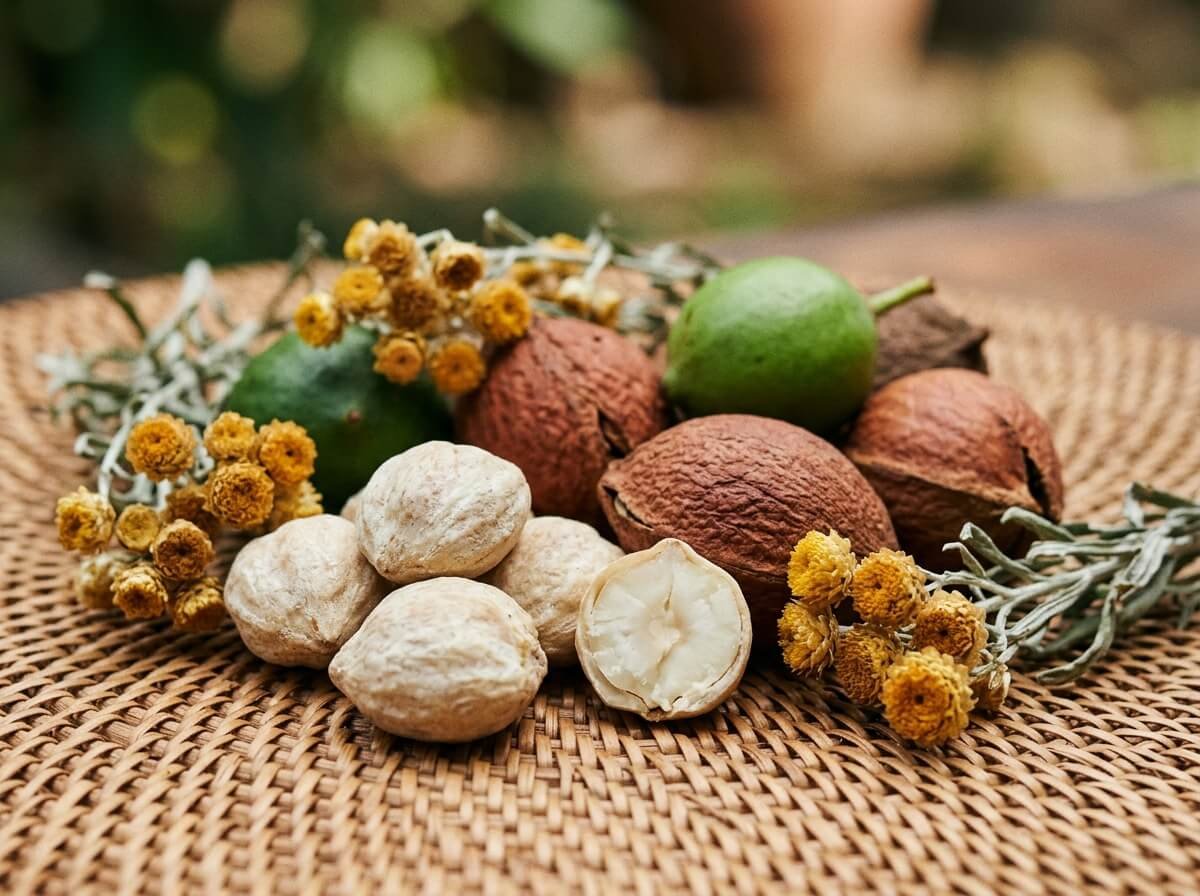
Every ingredient in a natural serum carries a story of where it came from and who harvested it. This is where sourcing stops being a marketing word and starts being a supply chain you can trace. These are the botanicals we return to, and the reasons they earn their place.
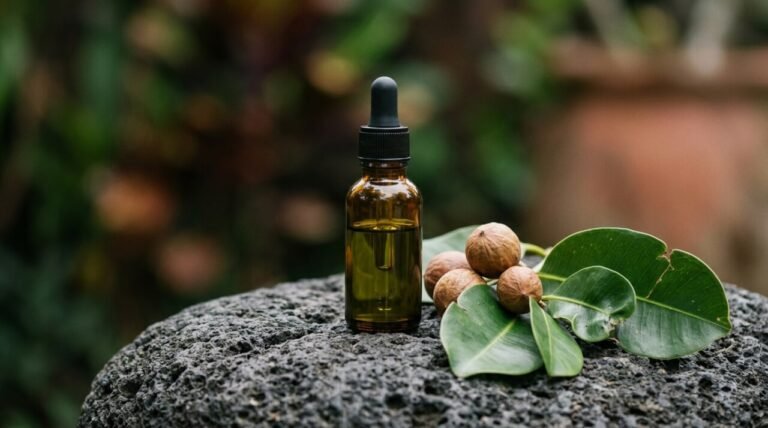
kukui oil, pressed from the candlenut, has been part of Balinese ritual for generations. It is light, it absorbs quickly, and it is rich in linoleic acid, which suits oily and combination skin. We wild-harvest it in Kalimantan through our Forestwise partnership, alongside illipe butter, a butter gathered by families who have worked the same rainforest groves for generations. Protecting the forest is not separate from making good skincare here, it is the same act.
tamanu oil, from the Calophyllum tree, is one of the most studied traditional oils for skin recovery, prized for soothing and supporting the barrier. You will find it in our Tamanu Oil as a single-oil option, and woven into serum blends where its richness balances lighter carriers. Coconut oil, cold-pressed on Bali plantations through our Aluan partnership, rounds out many of our formulas as the most versatile carrier we grow. Each of these answers the same four questions we ask of every ingredient: where did it come from, who harvested it, what tradition does it belong to, and what community does it support.
There is a wider circle around each drop, too. Through our Seven Clean Seas partnership we remove ocean-bound plastic equivalent to what we produce, and our refill program means a serum bottle can be filled again rather than discarded. The Munti Gunung social enterprise supports women and families in East Bali with fair work and skill-building. None of this changes how a serum feels on your face, and all of it changes what your purchase sets in motion. That is what we mean when we say connection over consumption: the ingredient and its impact are not separate stories.
How to use a natural face serum in your daily ritual

A serum only works if you use it consistently, and consistency comes from a ritual that feels good rather than a routine that feels like a chore. The order is simple: thinnest textures first, richest last, so nothing blocks what comes after.
A morning and evening rhythm
- Cleanse with a gentle, natural face wash and pat the skin until it is just damp, not dry.
- Apply three to five drops of serum to your palm, warm it between your hands, and press it into the face and neck. Pressing beats rubbing for absorption and for calm.
- Follow with a moisturizer to seal, and in the morning, always finish with sun protection.
- At night, you can layer a richer oil over the serum if your skin feels thirsty.
Applying serum to slightly damp skin helps it spread and sink in, a small trick that makes a noticeable difference. Give any new product a fair trial of four to six weeks before you judge it, since skin renews on its own slow schedule and honest results take patience over drama. If you are assembling your first set of steps, our guides to starting a natural skincare routine and how to build a simple skincare routine walk through the whole sequence, from cleanser to serum to seal.
Small mistakes that quietly cost you
A few habits undo good products. Using too much serum does not speed results, it just sits on the surface and can leave skin feeling greasy, so three to five drops is plenty for most faces. Layering in the wrong order, richest first, blocks the lighter serum from ever reaching the skin. Switching products every week never gives any of them the four to six weeks they need to show what they can do. And skipping sun protection in the morning undoes much of the repair a serum works toward overnight. None of these are dramatic errors, but together they are the difference between a serum that seems to do nothing and one that quietly earns its place.
There is a quieter benefit here too. Warming a few drops of botanical oil between your palms and breathing in before you press it to your skin turns a functional step into a moment of pause. That is what we mean by ritual: care you feel, not care you perform. The scent of real botanicals, the warmth of your own hands, the minute of stillness before the day begins or ends, these are not extras. They are part of why a natural serum, used with intention, feels different from squeezing something out of a tube in a hurry.
Natural face serum: frequently asked questions
Can I use a natural face serum every day?
Yes. Most natural serums are gentle enough for morning and evening use. Start once a day if your skin is sensitive or new to actives, then build up as it adapts.
Do I still need a moisturizer if I use a serum?
Usually, yes. A serum treats and a moisturizer seals, so they do different jobs. Very oily skin can sometimes rely on a serum alone, but most people benefit from both. Our comparison of a serum and a natural face moisturizer explains when you can simplify.
Is a face oil the same as a serum?
Not quite. A face oil focuses on nourishing and softening, while a serum is formulated to deliver targeted actives. Many natural oils do both, which is why the categories overlap. Our guide to natural face oil covers the nuance.
How long before I see results?
Give it four to six weeks of consistent use. Hydration and comfort often improve within days, but changes in tone and texture follow the skin’s natural renewal cycle. We would rather tell you the truth than promise overnight change.
Are natural serums safe during pregnancy?
Many are, but some essential oils are best avoided. Check the full ingredient list and speak with your midwife or doctor if you are unsure. When a label is transparent, this is an easy conversation to have.
Final thoughts
A natural face serum is one of the most useful steps you can add to your care, but only when you choose it with clear eyes. Read the ingredient list before the front label. Match the formula to how your skin actually behaves. Ask where the botanicals came from and who gathered them. When the answers are honest and specific, you are usually holding something worth keeping.
That is how we make ours: short lists, named sources, and botanicals wild-harvested and cold-pressed with the communities who tend them. If you would like to feel this approach on your own skin, our Natural Face Serum is a calm place to begin. Small, steady acts of care add up, which has always been our operating principle. What you give, you get back.