Natural shampoo: what it really means, which ingredients matter, and how to choose one
Walk down the haircare aisle of any pharmacy and the word “natural” appears on roughly half the bottles. But natural shampoo as a meaningful category is something different from a marketing label on a conventional formula. It starts with what is in the bottle: what is cleaning your scalp, what is conditioning the hair shaft, and what has been left out because it serves no useful purpose or actively causes harm over time. This guide covers what natural shampoo really means, how to read a haircare label with confidence, and how to choose a formula that works with your scalp rather than working against it.
What makes a shampoo natural
The word “natural” in haircare has no regulatory definition in most markets, which is why the label alone tells you very little. A product can call itself natural while containing synthetic sulfates, artificial fragrance, and silicones that build up on the hair shaft. What actually separates a genuine natural shampoo from a conventional one is the surfactant system: the ingredients that do the actual cleaning.
Conventional shampoos typically rely on sodium lauryl sulfate (SLS) or sodium laureth sulfate (SLES) as their primary cleansers. These are inexpensive and effective, but also quite aggressive. They strip sebum (the scalp’s natural protective oil) faster than the scalp can replenish it, which often leads to a cycle of over-washing: the scalp produces more oil to compensate, the person washes more frequently, and the cycle continues.
Natural shampoos replace SLS and SLES with milder surfactants derived from plant sources. The most common are coco-glucoside (from coconut oil and glucose), decyl glucoside (from corn and coconut), sodium cocoyl isethionate (coconut-derived), and sodium lauroyl sarcosinate (from coconut or palm). These clean effectively while being gentler on the scalp’s natural microbiome and sebum production. They also produce a less dramatic lather, which is one reason people new to natural shampoo sometimes feel their hair is not getting clean during the adjustment period. It is getting clean; it is just a different sensory signal.
Beyond the surfactant, a genuinely natural shampoo avoids synthetic fragrance (using essential oils for scent instead), avoids silicones, parabens, and formaldehyde-releasing preservatives. It uses botanical extracts and plant-derived conditioning agents rather than synthetic polymers. The result is a shorter, more readable ingredient list, and a formula that does not accumulate in ways that undermine scalp health over time.
Scalp health: the foundation most shampoos overlook

Most people think of shampoo as a product for hair. But what shampoo is actually doing is cleaning the scalp. The hair shaft from mid-length to ends does not produce sebum or accumulate the same kind of buildup that the scalp does. Treating the scalp well is the foundation of everything that happens to the hair that grows from it.
The scalp is skin. It has the same basic architecture as facial skin: a microbiome, sebaceous glands, hair follicles, and a barrier function. The difference is density: the scalp has more sebaceous glands per square centimeter than almost any other area of the body. This makes it more reactive to whatever surfactants and ingredients touch it regularly.
A scalp that is frequently stripped of sebum tends to overproduce oil to compensate, a condition called seborrhoea. This excess sebum creates an environment that supports Malassezia yeast overgrowth, one of the main contributors to dandruff and scalp inflammation. Paradoxically, over-washing with aggressive shampoos often sustains a dandruff cycle rather than breaking it.
Natural shampoos formulated with antimicrobial botanical actives address this directly. Tea tree oil is the most studied: its primary active compound, terpinen-4-ol, inhibits Malassezia growth at concentrations well-tolerated by the scalp. Our focused post on tea tree essential oil benefits covers its antimicrobial profile in detail, and our product guide on the Tea Tree Shampoo shows how these properties are formulated into a daily-use product.
Scalp massage during washing also matters. Working the shampoo in with the pads of the fingers (not the nails) increases circulation to the follicles and helps distribute the cleansing agents evenly. Our guide on the scalp massage ritual explains the technique in full, including how a simple practice can meaningfully support hair health over time.
The transition period: what to expect when you switch
The most common reason people abandon natural shampoo is the transition period: a stretch of one to three weeks during which the hair feels heavier, waxy, or less clean than expected. This is not a failure of the product. It is a recalibration of the scalp, and it is temporary.
When you switch from SLS-based shampoo to a milder natural formula, the scalp’s sebum production does not immediately adjust. The scalp was producing oil at a rate calibrated to compensate for frequent stripping. Once the stripping stops, the scalp continues overproducing for a period before settling into a lower baseline. During this window, hair can feel oilier between washes than you would expect.
The other contributor to transition-period heaviness is silicone buildup from previous products. Silicones coat the hair shaft to provide shine and slip, but they accumulate with each wash and require a sulfate-based cleanser to fully remove. A natural shampoo without sulfates may not clear this residue immediately. One practical approach is a single clarifying wash before starting the natural shampoo routine, to clear accumulated silicones before the transition begins.
Practical advice for the transition: wash every two to three days rather than daily, use dry shampoo at the roots if needed between washes, and give the scalp at least four to six weeks before making a judgment about the formula. Most people who navigate the transition find their washing frequency decreases naturally and their scalp behaves more consistently once it has recalibrated. Less washing is not a compromise; it is a healthier baseline.
Key ingredients that make natural shampoo work
A good natural shampoo draws from botanical actives that have real, documented benefits for scalp and hair health. These are not decorative ingredients: they earn their place in the formula through demonstrated function.
Coconut oil and coconut-derived surfactants
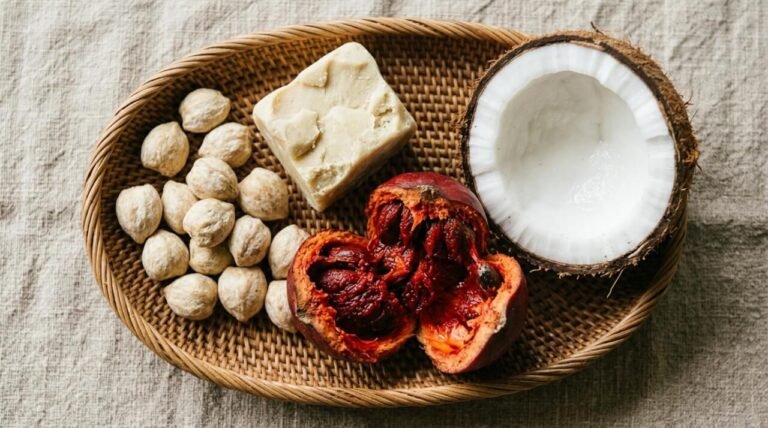
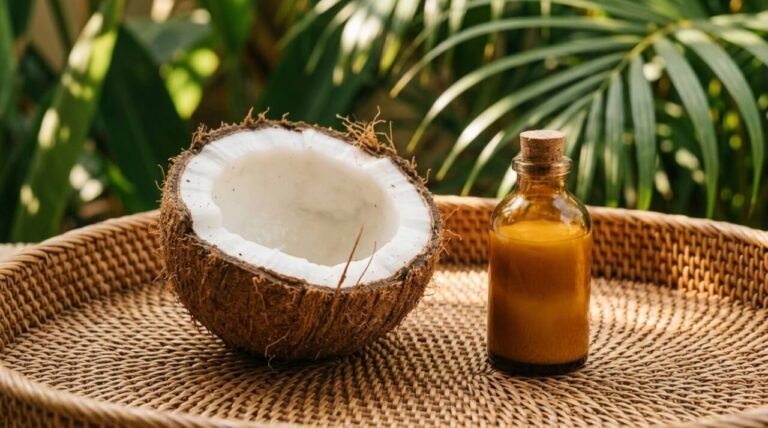
Coconut oil has a unique molecular structure that allows it to penetrate the hair shaft rather than merely coating it. Lauric acid, the dominant fatty acid in coconut oil, binds to hair proteins and reduces protein loss during washing. This protective action is the reason coconut oil appears as a conditioning base in well-formulated natural shampoos, including the Utama Spice Tea Tree Shampoo. Sourced through the Aluan Partnership in Bali, the coconut oil in this formula comes with a known supply chain, not just a sourcing claim.
Tea tree essential oil
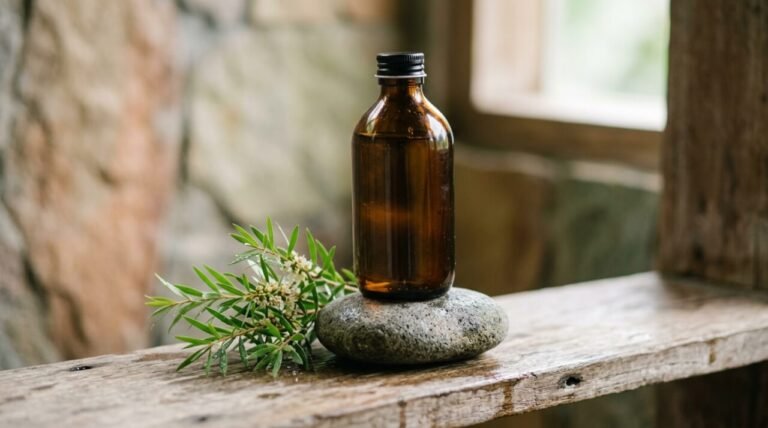
Melaleuca alternifolia (tea tree) is one of the most studied antimicrobial essential oils in scalp care. Clinical studies have shown five percent tea tree shampoo to be effective at reducing dandruff severity, scalp itching, and greasiness. At the concentrations used in shampoo formulation, it is safe for daily use on most scalp types. It should never be applied to the scalp in undiluted form, as this can cause chemical burns. In a formulated shampoo, the concentration is controlled and safe for daily contact.
Aloe vera
Aloe vera soothes an irritated scalp in the same way it calms irritated skin elsewhere on the body. Its acemannan polysaccharides create a light hydrating film on the scalp, reducing tightness and flaking without adding oil. It pairs well with cleansing surfactants because it provides moisturizing protection without interfering with the cleaning action of the formula.
Rosemary extract
Rosemary has become one of the most evidence-supported botanical actives for hair density. Research has shown rosemary oil to be comparable to 2% minoxidil at six months for hair count increase in certain trial conditions. Our post on rosemary oil for hair growth covers this research in full. In shampoo formulation, rosemary extract supports scalp circulation and provides antioxidant protection to the follicular environment.

Natural shampoo that actually works
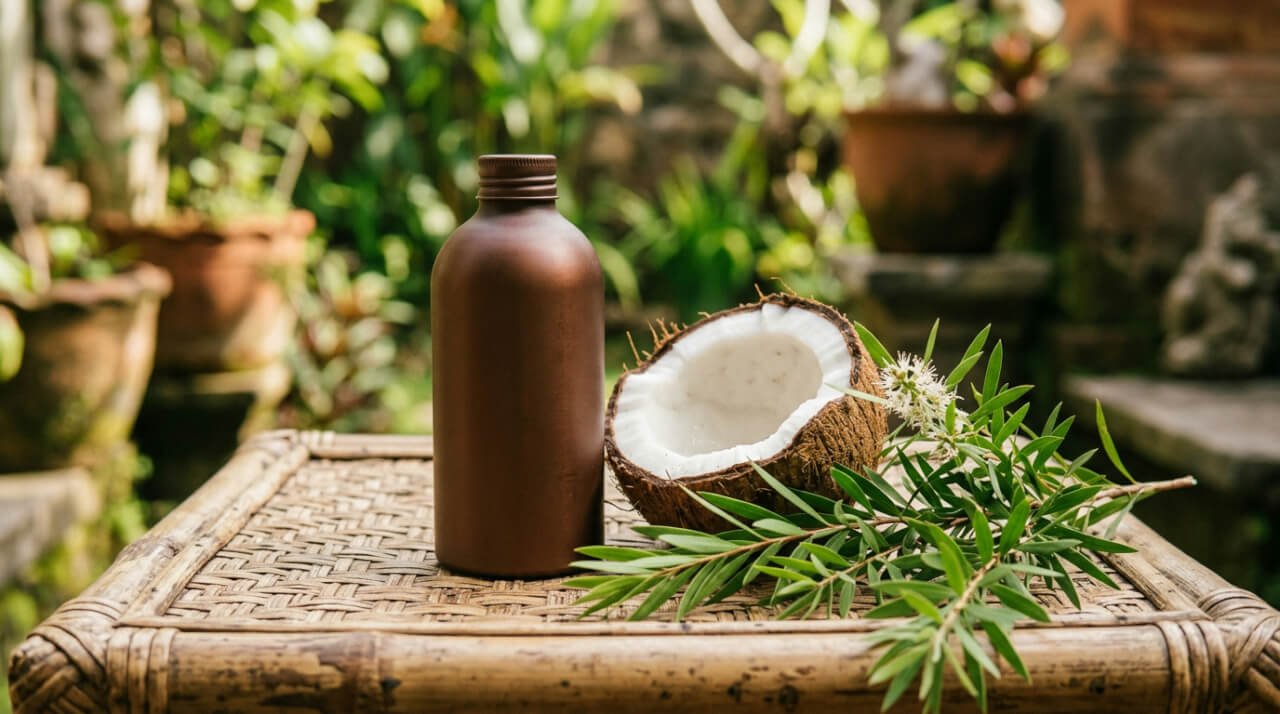
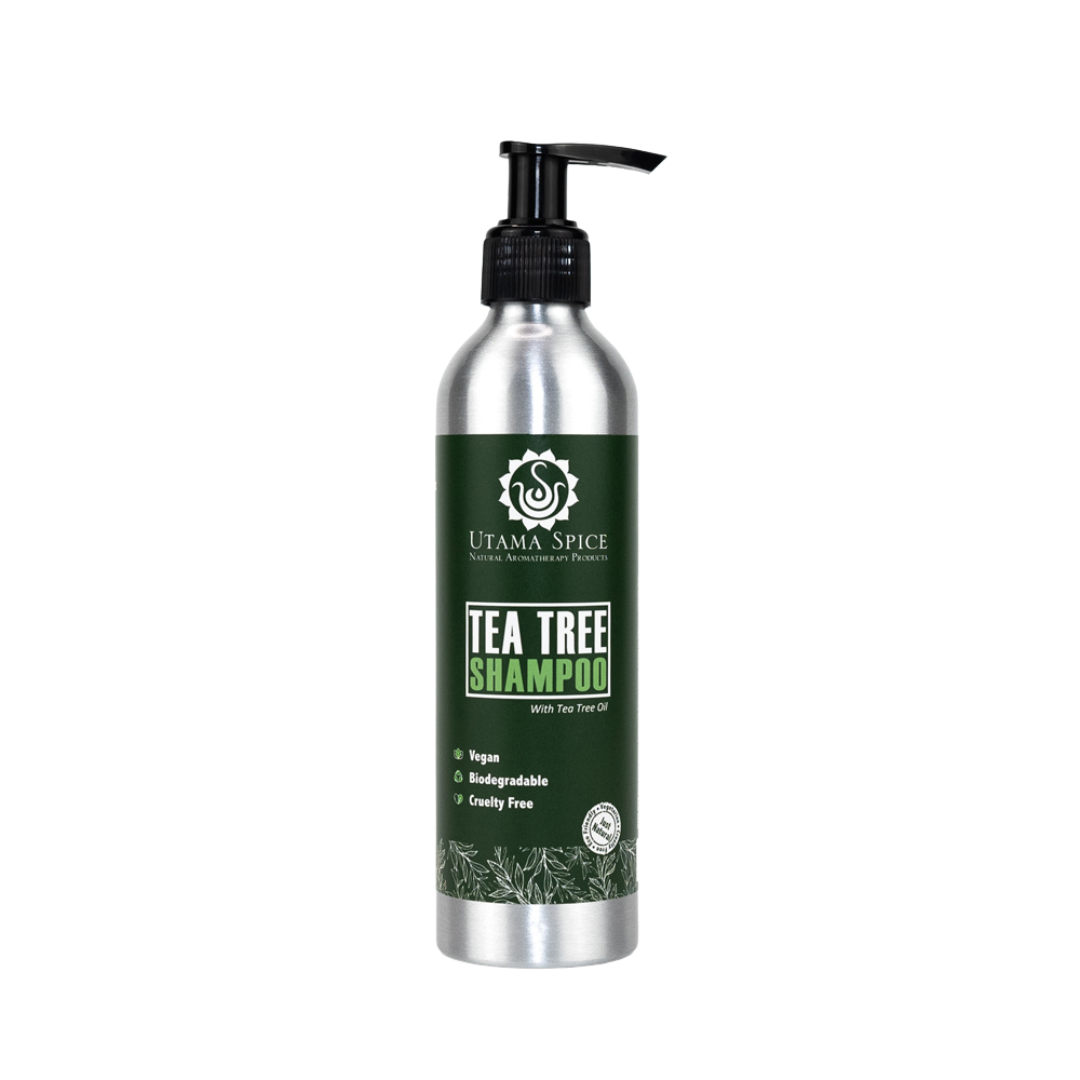
Our Tea Tree Shampoo is built on a coconut oil base and free from sulfates, parabens, and synthetic fragrance. Now available in a refillable aluminum bottle, because sustainable packaging should not compromise on formula quality.
How to read a natural shampoo label

The ingredient list tells you more than the marketing text on the front ever will. Once you know what to look for, reading it takes about thirty seconds. Our broader guide on skincare ingredients to avoid covers full label literacy; here we focus on what is specific to shampoo.
Surfactants: what to look for and what to deprioritize
Look for: coco-glucoside, decyl glucoside, sodium cocoyl isethionate, sodium lauroyl sarcosinate, sodium cocoamphoacetate. These are mild, plant-derived cleansers. Deprioritize: sodium lauryl sulfate (SLS), sodium laureth sulfate (SLES), ammonium lauryl sulfate. These work but are harsher than necessary for most scalp types and most situations.
Silicones
Any ingredient ending in -cone, -conol, -silane, or -siloxane is a silicone. Common ones include dimethicone, cyclopentasiloxane, and amodimethicone. They are not toxic, but they accumulate on the hair shaft over time and require sulfate cleansers to fully remove. Most genuinely natural shampoos omit silicones entirely and use plant-based conditioning agents instead.
Fragrance
“Fragrance” or “parfum” on a label is a catch-all that can contain hundreds of undisclosed synthetic compounds, some of which are known allergens. Natural shampoos use specific essential oils for scent and list them by name. If a label lists only “fragrance” without specifying the source, the scent is synthetic, regardless of the natural claims on the front.
Preservatives
Every water-based product needs preservation. Acceptable: phenoxyethanol (safe at concentrations below 1%), sodium benzoate, potassium sorbate, benzyl alcohol. Avoid: DMDM hydantoin, imidazolidinyl urea, quaternium-15, diazolidinyl urea. These release formaldehyde slowly over time and have a worse safety profile than the alternatives available to formulators today.
Balinese botanical heritage in haircare

Bali’s plant knowledge has always included hair and scalp care. Traditional Balinese haircare drew on the compound garden: coconut oil applied to the scalp before washing, herbal infusions as a final rinse, and hibiscus used for conditioning. These practices reflect a deep empirical understanding of what the scalp needs, developed over generations of observation and use without laboratory confirmation of the mechanisms involved.
The pre-wash coconut oil treatment is worth adopting. Balinese women have applied raw coconut oil to their scalp and hair lengths as a pre-wash treatment for generations, a practice that modern hair science now understands in molecular terms: lauric acid penetrates the hair shaft and reduces the protein loss that occurs during washing. Apply a small amount of Herbal Silk Hair Oil or raw coconut oil to the scalp and hair lengths thirty minutes before washing. It acts as a buffer that reduces the impact of cleansing on the hair structure, especially for dry or color-treated hair.
Utama Spice sources its coconut oil through the Aluan Partnership in Bali, a relationship built on sustainable farming and fair terms with local growers. When that coconut oil appears in the Tea Tree Shampoo formula, the supply chain is short and known. This is different from standardized ingredient sourcing, where a single molecule might pass through several processing facilities across different countries before reaching a formulator.
Tea tree itself is not a Balinese plant: Melaleuca alternifolia is native to Australia. Its inclusion in the Utama Spice formula reflects a different principle: choosing the most effective botanical for the job, regardless of origin, while being transparent about where it comes from and what it does. Efficacy and honesty are not in tension when formulation decisions are made with integrity.
Frequently asked questions about natural shampoo

How often should I wash my hair with natural shampoo?
Less frequently than most people currently do. Most hair types do well with washing every two to three days rather than daily. Daily washing, even with a gentle formula, removes the sebum the hair shaft needs for natural protection and shine. Very fine or oily hair may need washing every other day; thick, dry, or coily hair can often go three to four days or longer. Let the scalp guide the schedule rather than following a fixed routine.
Why does my hair feel different after switching to natural shampoo?
The transition period described above is the most likely cause. The hair is recalibrating after years of aggressive cleansing, and the scalp is adjusting its sebum output. Give it four to six weeks. If the hair still feels wrong after that window, the issue may be the specific formula rather than natural shampoo as a category. Some natural surfactants work better for certain hair types than others. It may be worth trying a different natural shampoo formulation before returning to sulfate-based products.
Can I use natural shampoo on color-treated hair?
Yes, and natural shampoo is generally gentler on color-treated hair than conventional alternatives. Sulfates accelerate color fading because they strip the hair shaft aggressively. A natural shampoo with gentle surfactants allows the hair structure to stay intact longer after coloring. Avoid clarifying washes during color maintenance periods. The pre-oil treatment described above also reduces stress on color-treated hair during each wash.
Is natural shampoo effective for dandruff?
It depends on the formula. A natural shampoo with a meaningful concentration of tea tree oil is a well-studied option for dandruff caused by Malassezia overgrowth. Look for tea tree oil within the first several ingredients on the label. A natural shampoo without antimicrobial actives will clean well but will not address the microbial component of a dandruff problem. The formula matters as much as the category.
Should I use conditioner after natural shampoo?
For most hair types, yes. Natural shampoo cleans thoroughly but does not leave the conditioning film that conditioner provides. The conditioner step addresses mid-lengths and ends, not the scalp. Our guide on natural hair oil covers how to use oils as a pre-wash treatment or a post-wash finishing product, both of which can reduce dependence on conventional conditioner over time.
Can I use natural shampoo as body wash?
Occasionally, but not as a regular practice. Shampoo and body wash have different pH requirements and conditioning systems, even when they share similar natural surfactant bases. The hair shaft performs best within a slightly acidic pH range (4.5 to 5.5), and most natural shampoos are formulated to this specification. Our Tea Tree Body Wash uses similar botanical actives but is formulated specifically for skin. The two products are related but not interchangeable for regular use.
A formula worth trusting starts with what is in it
The word “natural” on a shampoo bottle is a starting point for investigation, not a conclusion. The actual marker is the surfactant system: plant-derived, mild, effective without stripping the scalp. Everything else, the botanical actives, the essential oils, the conditioning agents, follows from that foundation.
The transition period is the main obstacle most people face when switching to natural shampoo, and it is worth navigating. What comes after is a scalp that behaves more predictably, hair that needs washing less frequently, and a formula that works with the scalp’s biology rather than cycling through it aggressively every day.
At Utama Spice, the Tea Tree Shampoo represents this approach applied to the specific context of Bali’s botanical resources and refill culture. Coconut oil base. Tea tree active. A surfactant system chosen for gentleness. And a refillable aluminum bottle, because a formula worth trusting over time should come in packaging that earns the same commitment. The same principle applies to everything we make: what you put in matters more than what you put on the front.