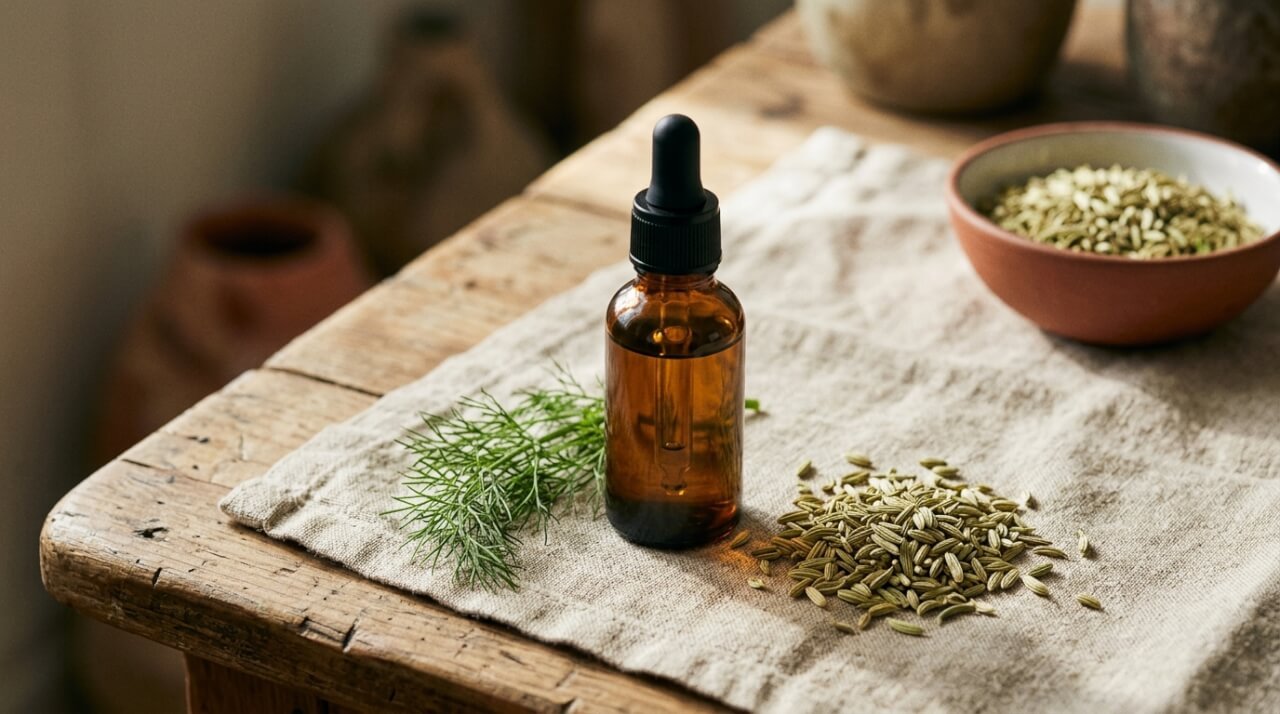
Fennel essential oil benefits: what it does, and who should skip it
Fennel essential oil smells like liquorice and warm hay, and it carries a reputation that outruns the facts. Search for fennel essential oil benefits and most pages will tell you it soothes digestion, the way fennel tea does. That claim belongs to the seed and the tea, not to the concentrated oil in a ten millilitre bottle. This guide separates what the oil genuinely does from what gets borrowed from its cousins, and it says plainly who should leave this one on the shelf.
We carry Fennel Essential Oil in our aromatherapy line, steam-distilled and unblended, so we have reason to be exact about it rather than generous with it. What follows is the version we would want to read before opening the bottle: the botany, the honest use case, the real cautions, and the Balinese and Indonesian tradition that has known this seed for generations.
What fennel essential oil actually is
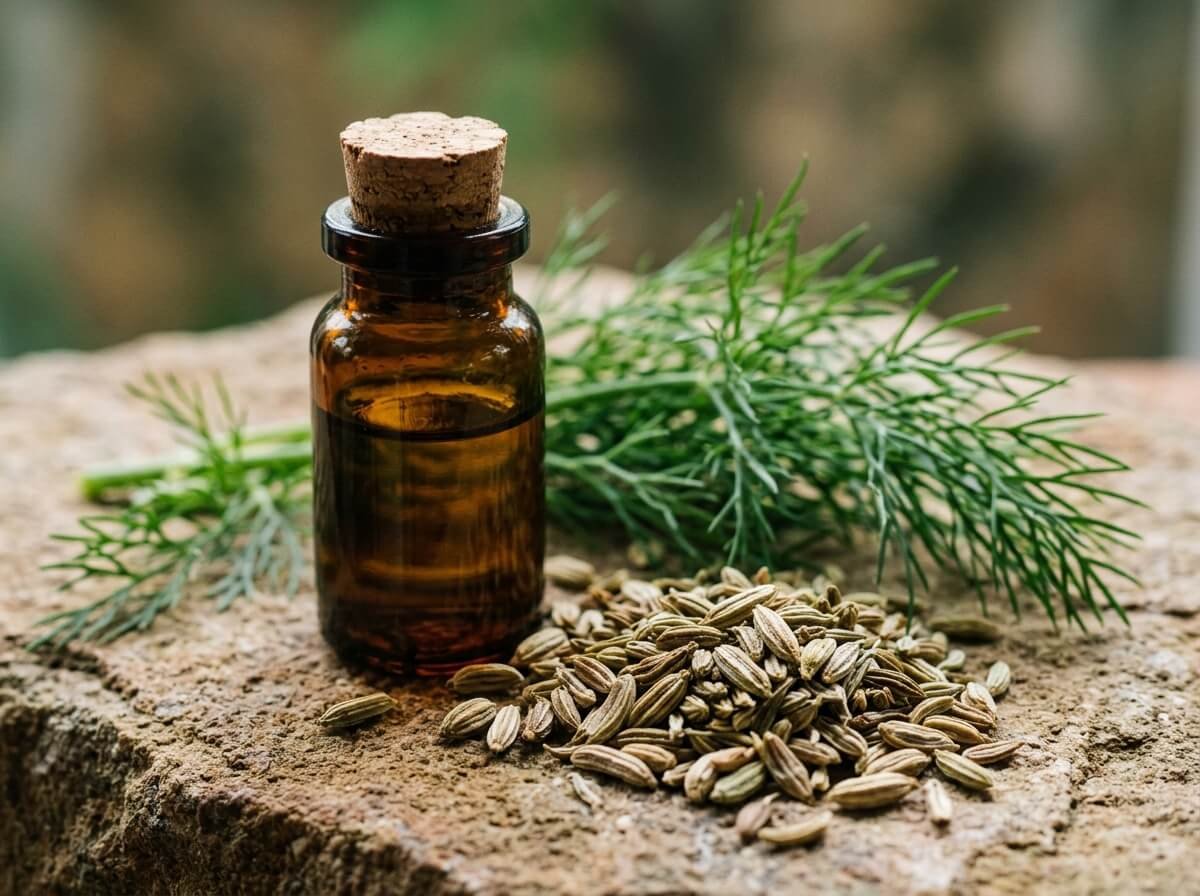
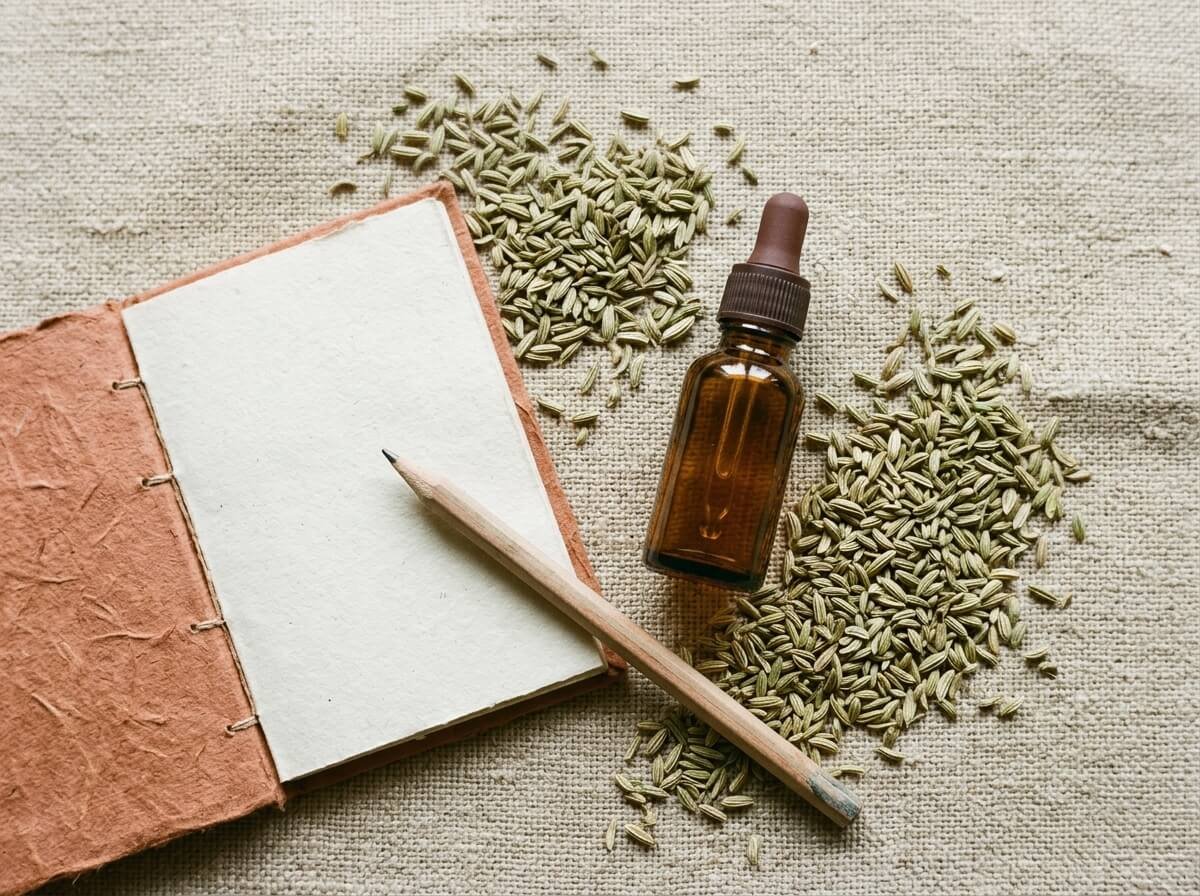
Fennel essential oil comes from Foeniculum vulgare, steam-distilled from the crushed seeds rather than the feathery leaves or the bulb you might roast for dinner. The result is a pale yellow oil with a warm, slightly sweet, anise-like aroma, closer in feel to star anise than to anything green or herbal. That aroma comes from a compound called trans-anethole, which makes up the majority of the oil and is also the reason fennel behaves the way it does on skin and in the body.
In whole-plant form, fennel has a long record across Mediterranean, Middle Eastern, and Southeast Asian kitchens and remedy cabinets. The essential oil is a newer, far more concentrated expression of the same plant: roughly fifty pounds of seed reduced to a single small bottle. That concentration is exactly why the oil deserves more care and more precise claims than the tea does, a distinction the next section covers directly.
Steam distillation itself is a slow, low-heat process: seeds are packed into a still, steam passes through them, and the aromatic compounds travel with the vapour before being cooled and separated from the water. No solvents, no high heat that would degrade the delicate anise notes. It is the same method used for most of the essential oils in our line, chosen because it keeps the plant’s chemistry close to how it exists in nature rather than pulling it apart with harsher extraction techniques.
Fennel seed itself has travelled a long way before reaching a distillation still. Ancient Egyptian, Greek, and Roman households used it in food and simple remedies, and that same seed later became a staple spice across South and Southeast Asia, carried along trade routes that also brought clove, nutmeg, and pepper through the archipelago. The essential oil is a recent chapter in that much older story, a concentrated by-product of a spice that has been part of daily life for far longer than aromatherapy itself has existed as a category.
Sweet fennel vs bitter fennel: the difference that changes everything
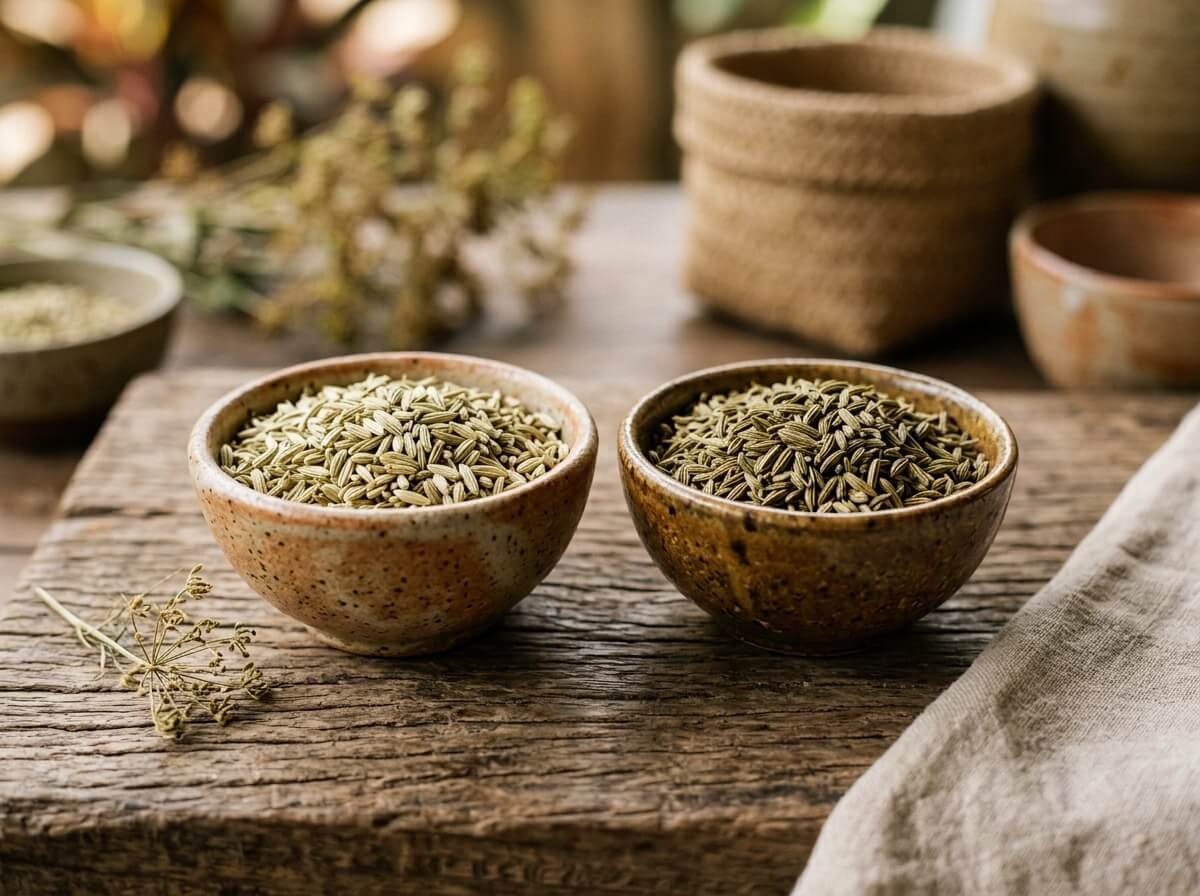
Most articles on this topic treat fennel essential oil as one thing. It is not. Foeniculum vulgare var. dulce, sweet fennel, is higher in trans-anethole and lower in a compound called estragole (also known as methyl chavicol). Foeniculum vulgare var. vulgare, sometimes called bitter fennel, carries more estragole and a sharper, more medicinal edge. This is not a subtle labelling detail. Estragole is the compound regulatory bodies watch most closely, and higher-estragole bitter fennel oil is the one carrying the greater long-term safety concern.
Reputable suppliers state the chemotype and the estragole percentage on a certificate of analysis. If a listing does not say sweet or bitter, and does not offer a batch report, treat that as a gap, not a technicality. Our own Fennel Essential Oil is distilled from sweet fennel seed, which is the variety we recommend for home aromatherapy use precisely because of this chemistry.
Why this matters in practice:
- Sweet fennel: milder, more rounded aroma, the variety most aromatherapy guidance is written for.
- Bitter fennel: sharper, higher estragole, generally reserved for professional or clinical use rather than home diffusion.
- If the listing does not specify, assume you cannot verify which one you are holding.
The reason this gets so much attention from safety bodies comes down to estragole itself. In animal studies at high, sustained doses, estragole has raised concern as a compound to limit long-term exposure to, which is why international aromatherapy safety standards set maximum usage levels for fennel oil rather than leaving it open-ended. That is a reason to respect the dilution guidance in this piece, not a reason to avoid the oil altogether. Used within sensible limits, sweet fennel with its lower estragole share is the more forgiving, better-documented choice for home use.
What fennel essential oil is genuinely used for
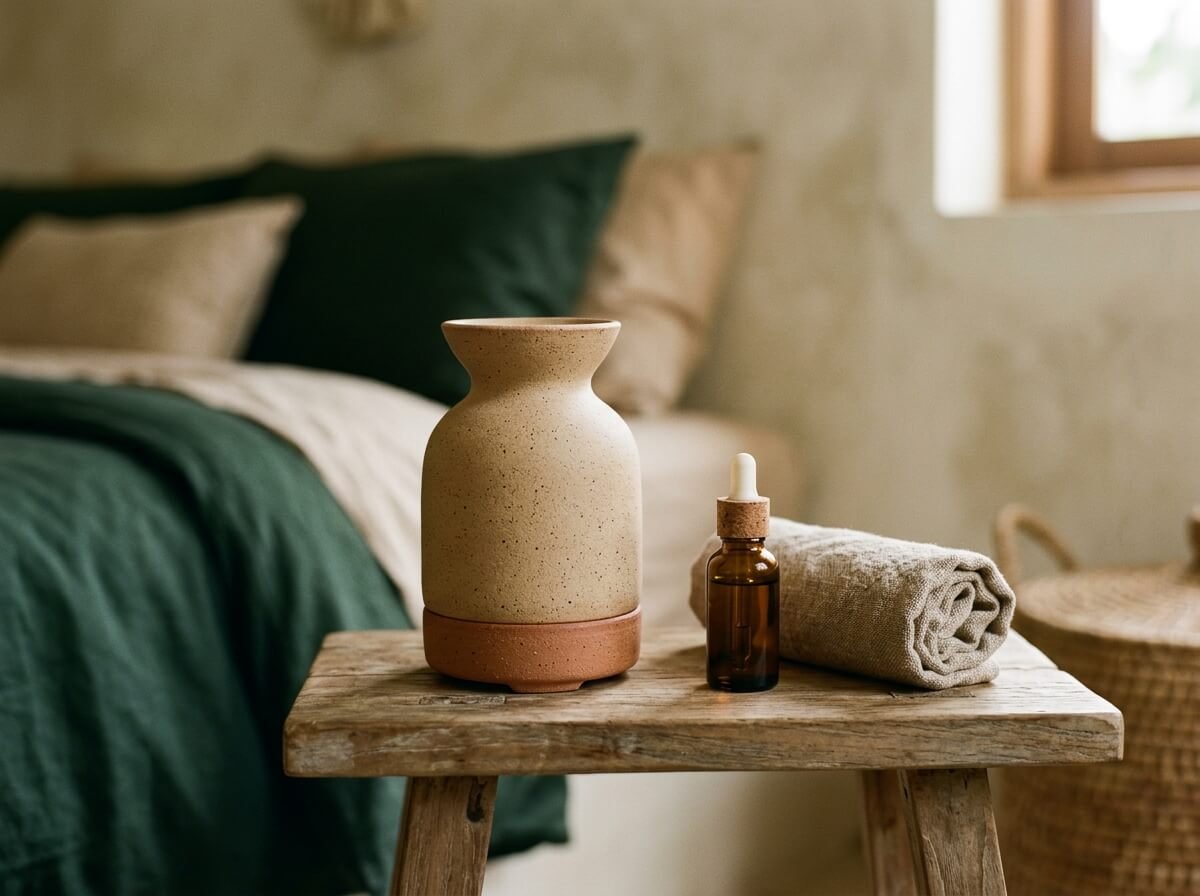
Inhaled through a diffuser or a personal roller, fennel essential oil is genuinely useful for the same reason lavender or ginger are: it shifts how a room feels and how a body settles. The warm, liquorice-sweet note reads as grounding rather than stimulating, which is why it pairs well in an evening blend after a long day. That is a real, defensible benefit. It is a scent and a ritual effect, not a treatment.
Diluted in a carrier oil and massaged over the abdomen, fennel is also part of a long tradition of warming, comforting touch, the kind that eases physical tension through the ritual of massage itself as much as through the plant. We pair it well with Ginger Essential Oil for exactly this kind of warming evening blend, and with a citrus note if the aim is closer to alert and clear than to settled and slow.
If you are building a broader diffuser rotation rather than a single-oil habit, our aromatherapy diffuser blend recipes guide has time-of-day pairings worth trying alongside fennel, and a nebulizing diffuser like ours gives a truer, undiluted read on how the oil actually smells before you commit to a blend.
A simple evening blend worth trying:
- Three drops fennel essential oil
- Two drops ginger essential oil
- One drop sweet orange essential oil, if you want a lighter top note
Run it in a diffuser for the last hour before bed, or use it as the basis for a diluted massage blend using the ratios in the “how to use it well” section further down.
This is where the Caregiver side of fennel shows up more than the science does. A warm, familiar scent at the end of the day is doing something real, just not a medical something. It signals to a tired body that the day is closing, the same way a familiar cup of tea or a dimmed lamp does. That is a legitimate reason to keep a bottle on hand, and it does not need a health claim attached to be worth the ritual.
The ingestion question: fennel tea is not fennel oil
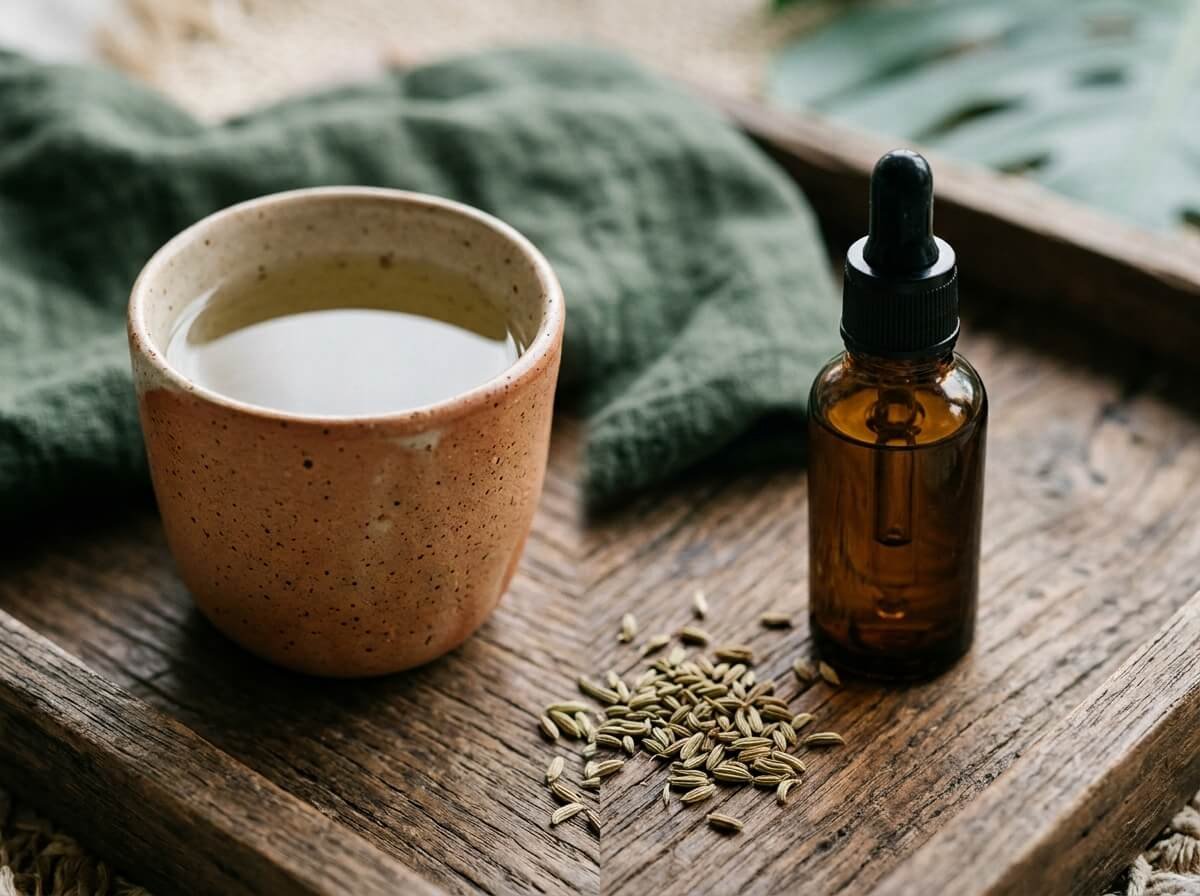
Here is where honesty matters most. A great deal of what circulates online about fennel and digestion comes from fennel seed and fennel tea, taken by mouth in small, dilute, food-safe amounts, studied as a food and a folk remedy for centuries. That evidence describes the whole seed or the infusion. It does not transfer to the essential oil, which is a different order of concentration entirely.
We do not recommend ingesting fennel essential oil, ours or any brand’s, without direct guidance from a qualified practitioner who has assessed your specific situation. This is not caution for its own sake. Essential oils concentrate a plant’s chemistry by a wide margin, and what is gentle in a cup of tea is not automatically gentle in a dropper. If digestive comfort is the goal, the tea, the whole seed, or a professional’s guidance is the honest path. The oil belongs in a diffuser, a diluted blend, or a room, not in a glass of water.
For the fuller picture of how different essential oils are meant to be used, our essential oils benefits guide walks through inhalation, topical dilution, and where the evidence for each is strongest.
Part of why this confusion persists is that fennel seed, fennel tea, and fennel essential oil all share one label on a search results page. A wellness article about the seed and a product listing for the oil can sit side by side, using the same word, “fennel,” to describe two different concentrations of the same plant. We would rather slow down and separate them than let the confusion carry the marketing.
Real safety, stated plainly: who should skip fennel essential oil
Most fennel content buries the caution section or skips it. We would rather lose the sale than lose the honesty, so here it is stated first, not last.

- Pregnancy: trans-anethole has a mild oestrogen-like action, and fennel essential oil is one of the oils most consistently flagged to avoid during pregnancy. Skip it, and ask a midwife or doctor before using it postpartum.
- Hormone-sensitive conditions: if you manage endometriosis, certain hormone-sensitive cancers, or a similar condition, talk to your practitioner before adding fennel oil to a routine.
- Epilepsy: some clinical sources caution against fennel oil for people with seizure disorders. If this applies to you, skip it or clear it with a doctor first.
- Children: fennel essential oil is not recommended for young children. The seed and the tea have a much longer track record in that population; the oil does not.
- Skin sensitivity: always dilute in a carrier oil before topical use, and patch test on a small area first, the same rule we would give for any essential oil.
None of this makes fennel essential oil a dangerous ingredient. It makes it a respected one. The same plant that has flavoured food and eased digestion for generations asks for real care once it is concentrated into an oil, and treating it that way is the actual mark of using it well.
If any of the above applies to you and you are still drawn to the aroma, ask a doctor, midwife, or qualified aromatherapist before using it, rather than assuming a plant-derived product is automatically low-risk. That assumption is one of the more common ways essential oils get misused, and it is exactly the kind of quiet overclaiming we try to correct rather than repeat.
Adas: fennel’s place in Indonesian tradition
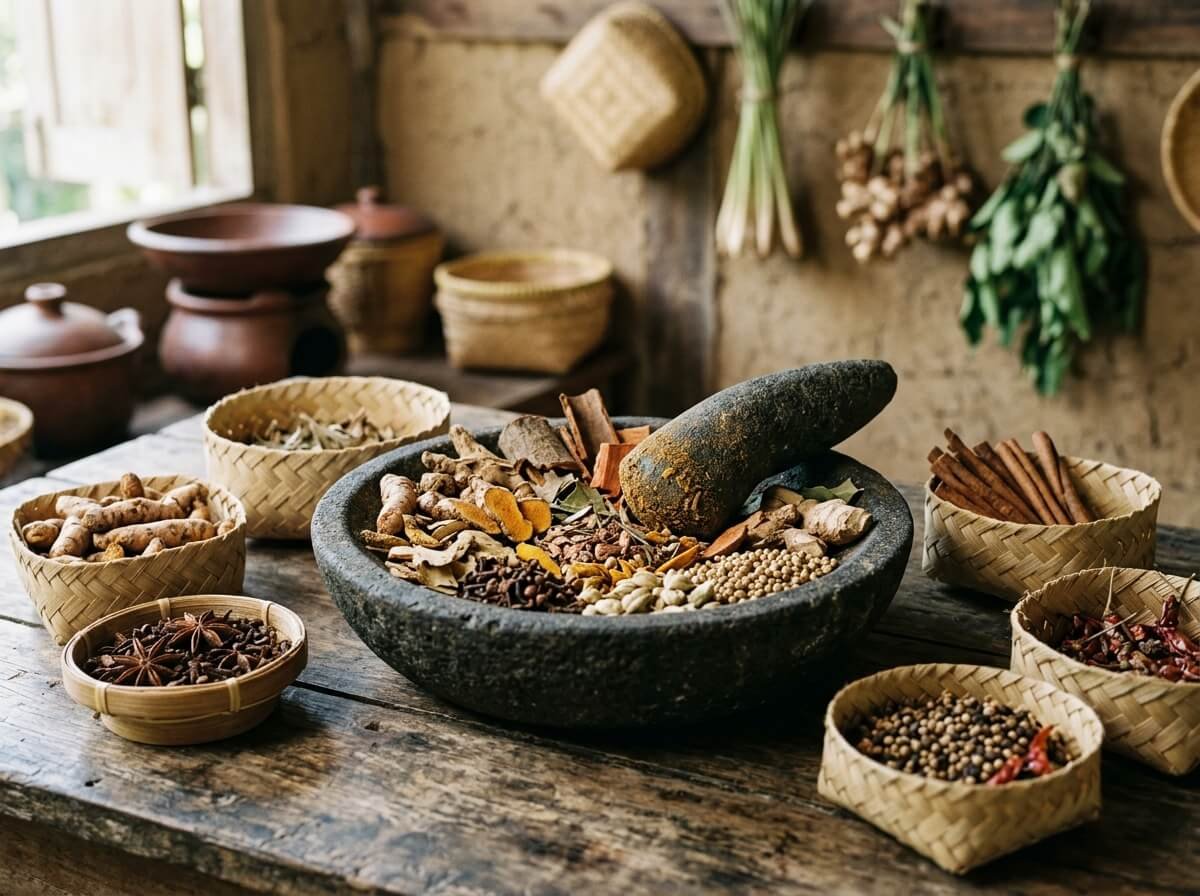
In Indonesia, fennel is known as adas, and it holds a steady place in jamu, the traditional herbal medicine practised across the archipelago for generations. Ground with other roots, barks, and seeds in a stone mortar, adas is valued as a warming, digestive-supporting ingredient in whole-plant remedies passed down through families rather than bought off a shelf.
We want to name that tradition plainly rather than borrow its authority without saying so. Jamu is a whole-plant practice, built on seeds, roots, and water, not on distilled essential oils. The oil we sell sits in a different, more modern category: a concentrated aromatherapy tool inspired by the same plant, not a substitute for the jamu itself. Respecting the source means being precise about which practice we are actually offering.
If this kind of ingredient story is one you want more of, our ginger essential oil benefits guide traces a similar Indonesian root through the same lens, honest about what the oil does and does not carry forward from tradition.
Adas is only one thread in a much larger fabric of plant knowledge that runs through daily life in Bali and across the wider archipelago, alongside the plant wisdom passed down through Balinese grandmothers and healers we have written about elsewhere. We keep coming back to that fabric because it is where our own formulations start, not as a marketing frame layered on afterward.

Fennel essential oil, unblended and steam-distilled
Sweet fennel, steam-distilled from the seed, warm and liquorice-sweet in a diffuser or diluted evening blend. Crafted in Bali, the same way we have worked since 1989.
How to use fennel essential oil well
A few drops in a diffuser is the simplest and safest place to start. Fennel blends easily with warming notes like ginger and cinnamon leaf for an evening scent, or with citrus oils such as sweet orange when the mood calls for something brighter. If you like the convenience of a pre-diluted roller for on-the-go use, our Bliss Essential Oil Roller works the same principle at a gentler, ready-to-wear dilution.
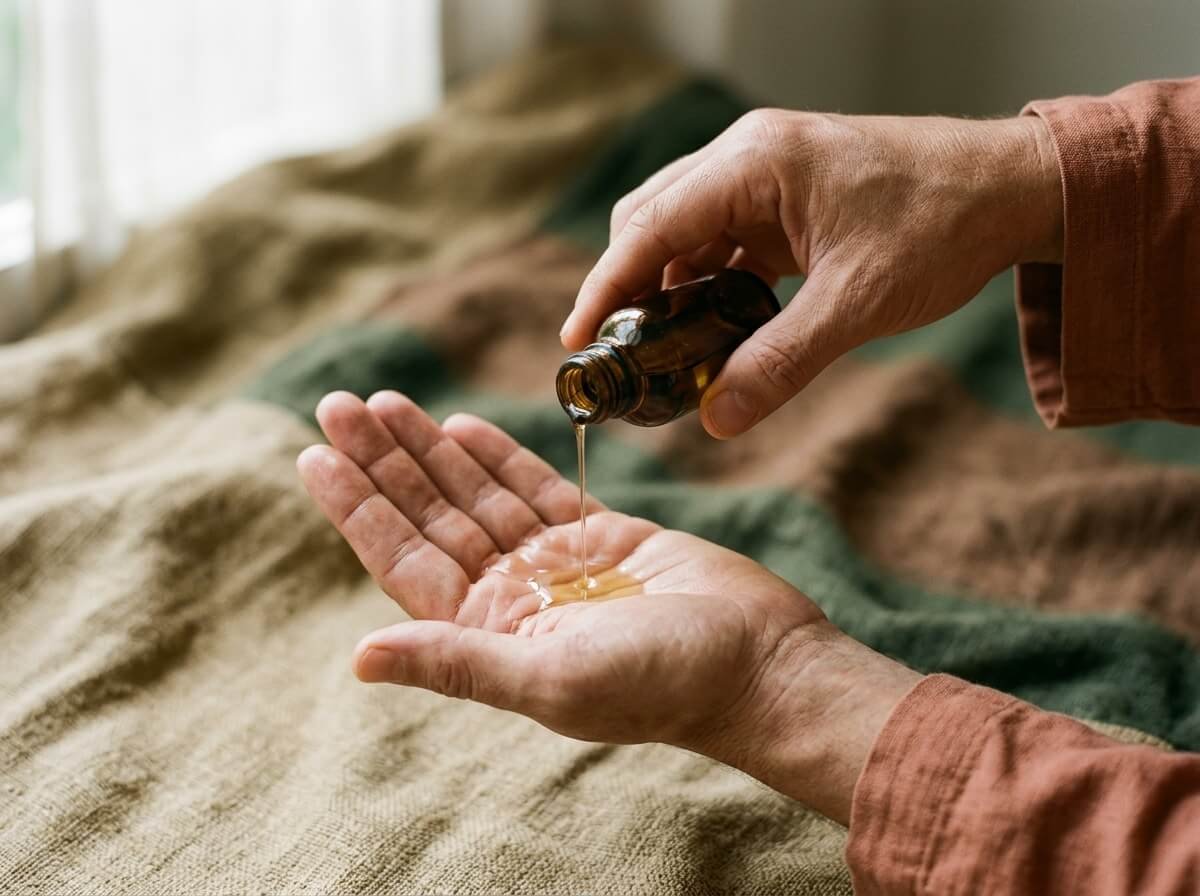
For a body ritual, always dilute fennel oil in a carrier such as coconut or sweet almond oil before it touches skin, roughly one drop of essential oil to a teaspoon of carrier as a starting point, less for sensitive skin. Massage into the abdomen or shoulders as part of a slow evening routine, the same unhurried pace behind every ritual we build our products around.
Store the bottle away from direct sunlight and heat, tightly capped, ideally in a cool cupboard rather than a steamy bathroom. Bali’s humidity is not kind to essential oils left open to warm air, and a properly stored bottle will hold its aroma and its chemistry far longer than one left on a sunny windowsill.
A quick dilution reference, for a thirty millilitre carrier oil bottle:
- Six drops fennel essential oil for a one percent dilution, gentle enough for daily body use.
- Twelve drops for a two percent dilution, a reasonable ceiling for most healthy adults.
- Always patch test a new blend on the inside of your forearm and wait twenty-four hours before wider use.
If you would rather skip the measuring altogether, a pre-diluted roller is the simpler entry point, and it travels well for anyone who wants the ritual without carrying a full bottle of carrier oil.
Frequently asked questions about fennel essential oil benefits
Is fennel essential oil safe to ingest?
We do not recommend it without direct guidance from a qualified practitioner. Digestive benefits associated with fennel come from the tea or the whole seed, not the concentrated oil.
Can I use fennel essential oil while pregnant?
No. Fennel essential oil is one of the oils most consistently flagged to avoid during pregnancy because of its mild oestrogen-like activity. Skip it, and check with a midwife or doctor before resuming use postpartum.
What is the difference between sweet fennel and bitter fennel oil?
Sweet fennel carries more trans-anethole and less estragole, making it the milder, more commonly recommended variety for home aromatherapy. Bitter fennel is sharper and higher in estragole, generally reserved for professional use.
What does fennel essential oil pair well with?
Warming notes such as ginger and cinnamon leaf for an evening blend, or citrus oils such as sweet orange for something brighter and more alert.
Is fennel essential oil the same as fennel tea?
No. They come from the same plant, but the tea is a dilute, food-safe infusion with a long history of internal use, while the essential oil is a concentrated aromatic product intended for diffusion and diluted topical use, not drinking.
Can children use fennel essential oil?
We do not recommend fennel essential oil for young children. If you want a fennel-based remedy for a child, the whole seed or a mild tea, guided by a paediatrician, has a longer safety record than the oil.
How much fennel essential oil should I use in a diffuser?
Three to five drops in a standard water diffuser is a sensible starting point. Run it for thirty to sixty minutes rather than continuously, and give the room a break between sessions.
Does fennel essential oil expire?
Yes. Kept capped, cool, and out of direct sunlight, most citrus and herbaceous oils like fennel hold their quality for one to two years. A change in colour or a flat, dull aroma is the sign to replace the bottle.
The honest takeaway
Fennel essential oil earns its place in a rotation for what it actually is: a warm, liquorice-sweet aromatic with real value in a diffuser and a diluted evening ritual, drawn from a seed that Balinese and Indonesian households have known as adas for generations. It does not need to borrow the tea’s reputation to be worth using well. Choose sweet fennel, dilute before it touches skin, keep it away from pregnancy and young children, and let the rest of it be what it honestly is: one good oil among many, used with the same care we would want for anything we put on our bodies. If you would like a wider foundation before building your own blend, our list of essential oils and their uses and our essential oils for stress and anxiety guide are both good next stops, alongside our full aromatherapy oils collection.