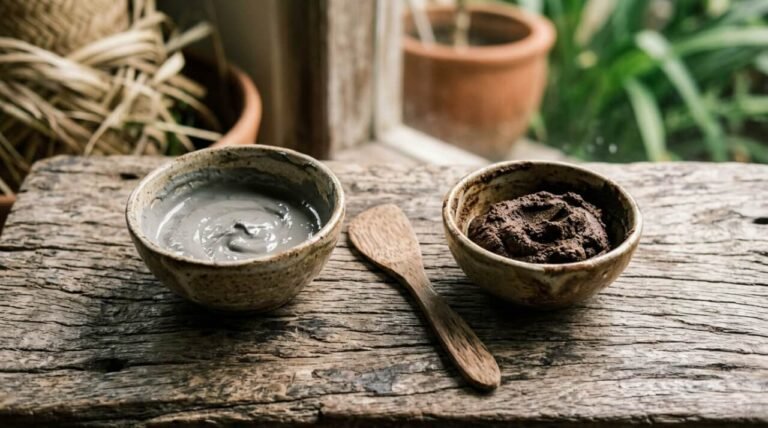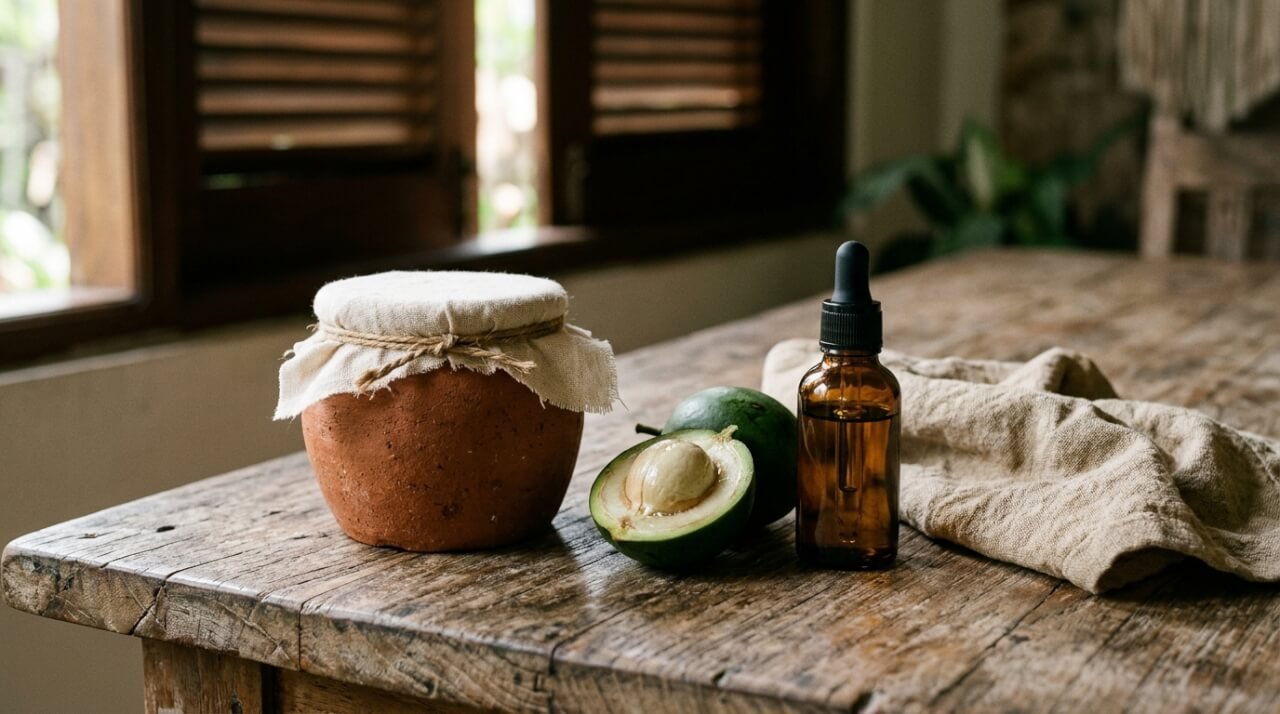
Fermented skincare: what the science supports, and where we draw the line
Fermented skincare is everywhere this year: rice ferments, kombucha toners, yeast filtrates, and serums that promise the “power of probiotics” in a dropper. The trend is real, and so is a good part of the science behind it. Fermentation changes plant material in ways that can make a formula gentler, more hydrating, or more antioxidant-rich. But a trend that is real is not the same as a trend everyone needs.
This guide does three things. It explains what fermented skincare actually is and what the research supports. It gives the honest caution that most articles mention once and move past. And it shares why, as a Balinese brand that grew up surrounded by fermented food, we have chosen to keep our face and body care built on whole, unfermented botanicals. Not because fermentation is bad, but because for many skins, especially skins living in heat and humidity, simpler can do the same work with fewer unknowns.
What fermented skincare actually is, and why it is trending now
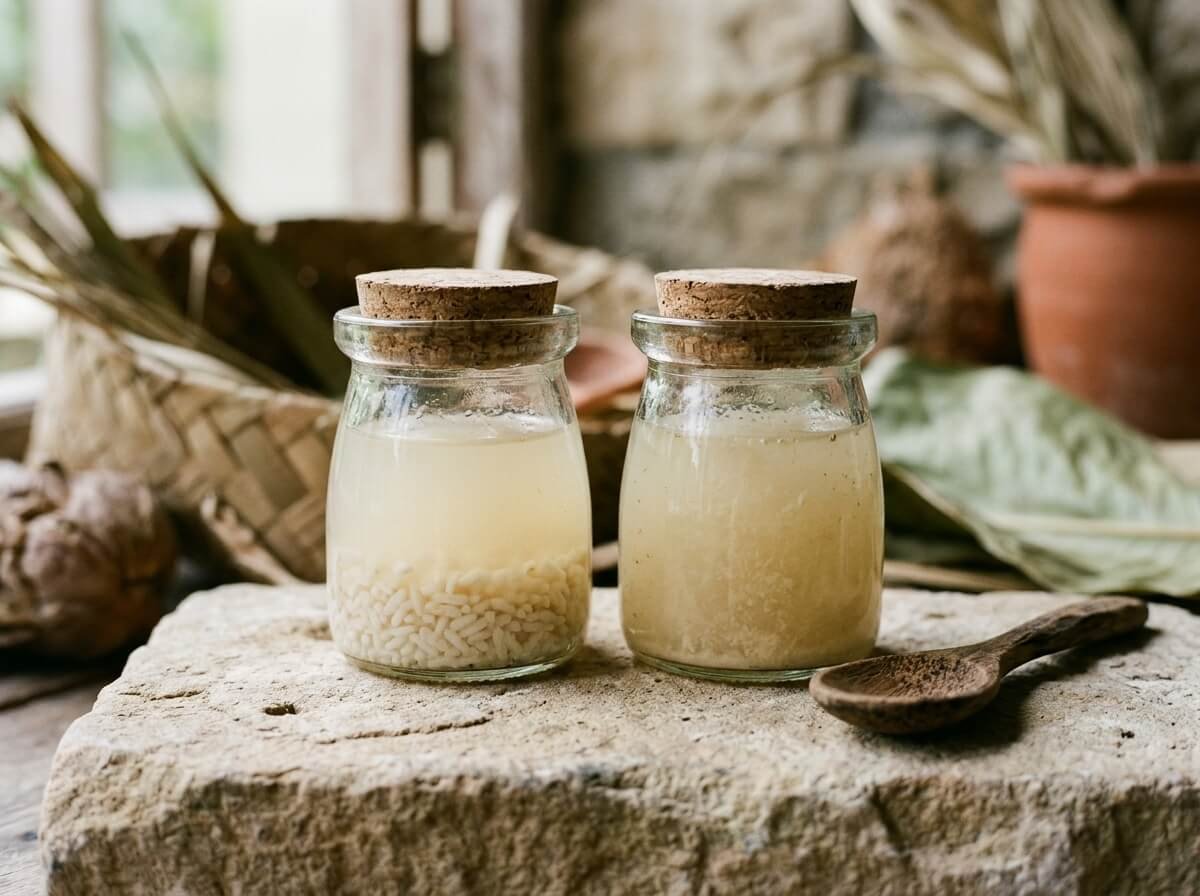
Fermentation is one of the oldest crafts we have. A microorganism, usually a yeast or a bacterium, feeds on a raw material such as rice, soy, tea, or fruit. As it feeds, it breaks that material down and leaves new substances behind: organic acids like lactic acid, amino acids, small peptides, sugars, and a range of other byproducts. Bread, yogurt, tempeh, wine, and vinegar all come from this same quiet work.
Fermented skincare applies that process to cosmetic ingredients. On an ingredient list, you will usually see it written in one of three ways:
- Ferment filtrate: the liquid left after fermentation, filtered so the microorganisms are removed. Galactomyces ferment filtrate (a yeast-like fungus grown on rice) is the most widely studied example.
- Ferment lysate: the microorganisms themselves, broken open so their contents can be used. Lactobacillus ferment lysate is common in “probiotic” moisturizers.
- Ferment extract: a plant, such as a mushroom, tea, or soybean, that has been fermented first and then extracted.
One detail is worth knowing early. Most products marketed as “probiotic skincare” contain no live bacteria at all. Live cultures are hard to keep stable in a jar that also has to stay free of contamination. What you are usually buying is a postbiotic: the filtered liquid or the broken-down cells, not a living culture. That is not a flaw, it is simply chemistry, but the marketing rarely says so plainly.
Why now? Part of it is the long reach of Korean and Japanese beauty, where fermented essences have been staples for decades. Part of it is the wider cultural interest in gut health and the microbiome, which made the word “ferment” feel like a shortcut to wellness. And part of it is that fermentation gives brands a compelling story: ancient craft meets modern lab. We understand the appeal. We just think the story deserves the full picture, including the parts that do not fit on a label.
If the microbiome side of this interests you, our short piece on why your skin is a living ecosystem, not a surface to scrub is a good companion read before going further.
The real science: what fermentation byproducts do to skin
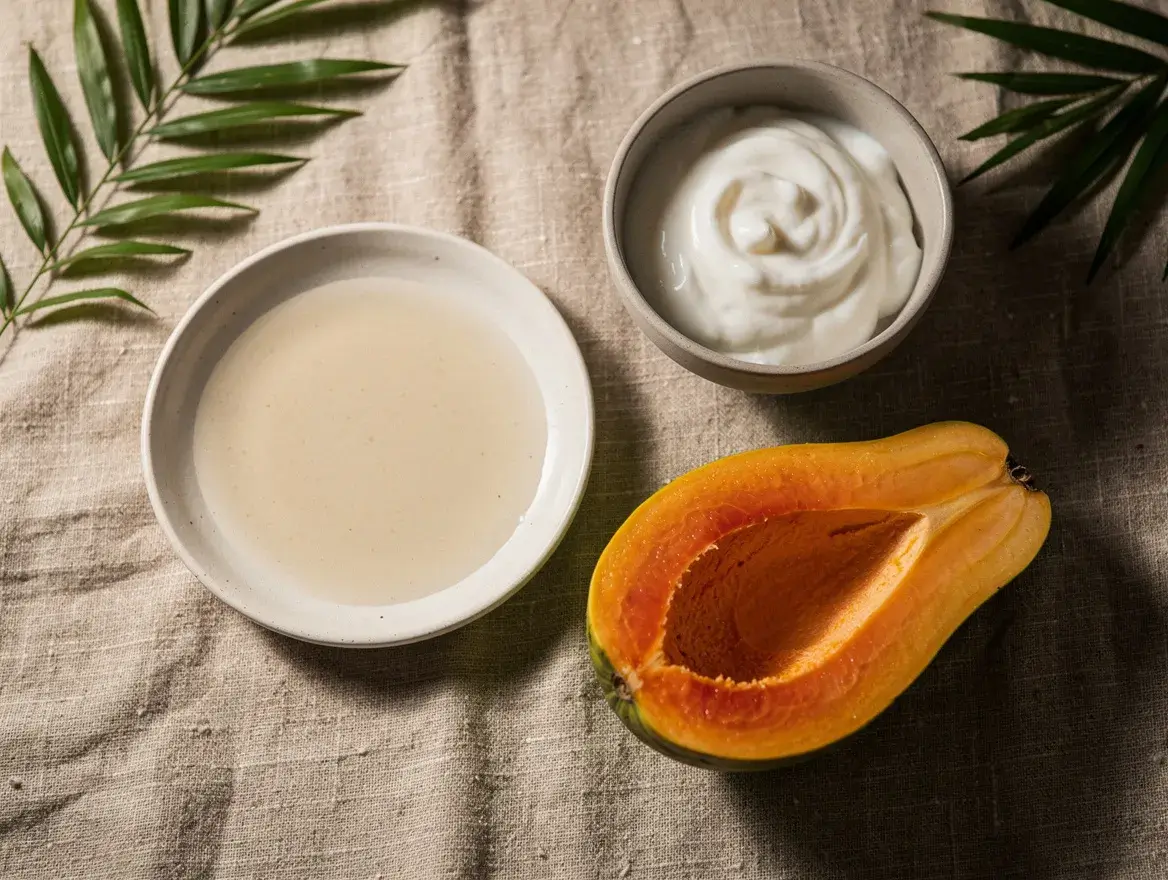
Let us give fermented skincare its due, because the research is not nothing. Here is what the evidence broadly supports, and where it gets thinner.
Gentle acids and a mild exfoliating effect
Many fermentations, especially those driven by lactic acid bacteria, produce lactic acid. Lactic acid is an alpha hydroxy acid (AHA). In the right concentration and at the right pH, it loosens the bonds between dead surface cells, which is why ferments are often described as smoothing or brightening. In most fermented products the acid content is low, so the effect is softer than a dedicated exfoliant. That softness is part of the appeal.
Hydration and barrier support
Fermentation leaves behind amino acids, sugars, and organic acids that overlap with the skin’s own natural moisturizing factors. Some clinical work on Lactobacillus ferment lysates has shown reduced water loss through the skin and improved hydration over several weeks. Studies on Galactomyces ferment filtrate point to antioxidant activity and some calming of redness.
The “bioavailability” claim
You will often read that fermentation makes ingredients “more bioavailable.” The reasoning is sound in principle: microbes break larger molecules into smaller ones, and smaller molecules can be easier for skin to take up. What is less established is how much that matters in a finished product sitting on a shelf, applied once or twice a day, at the concentration a brand actually uses.
Where the evidence gets thin
Three honest caveats run through the research. First, many studies are small, short, or funded by the companies selling the ingredient. Second, results usually come from specific, named strains, not the generic “ferment” on a label, and two products with the same INCI name can behave quite differently. Third, much of the lab work uses concentrations far higher than a typical multi-ingredient formula delivers. None of this makes fermented skincare a gimmick. It makes it a promising category that is still earning its long-term track record.
Compare that with something like tamanu oil, which people across Southeast Asia and the Pacific have pressed and used on skin for generations. We wrote about its research and its history in our guide to tamanu oil benefits. Long use is not the same as clinical proof, but it is a different kind of evidence, and it matters when deciding what to put on reactive skin every day.
The honest caution: sensitization and patch-testing
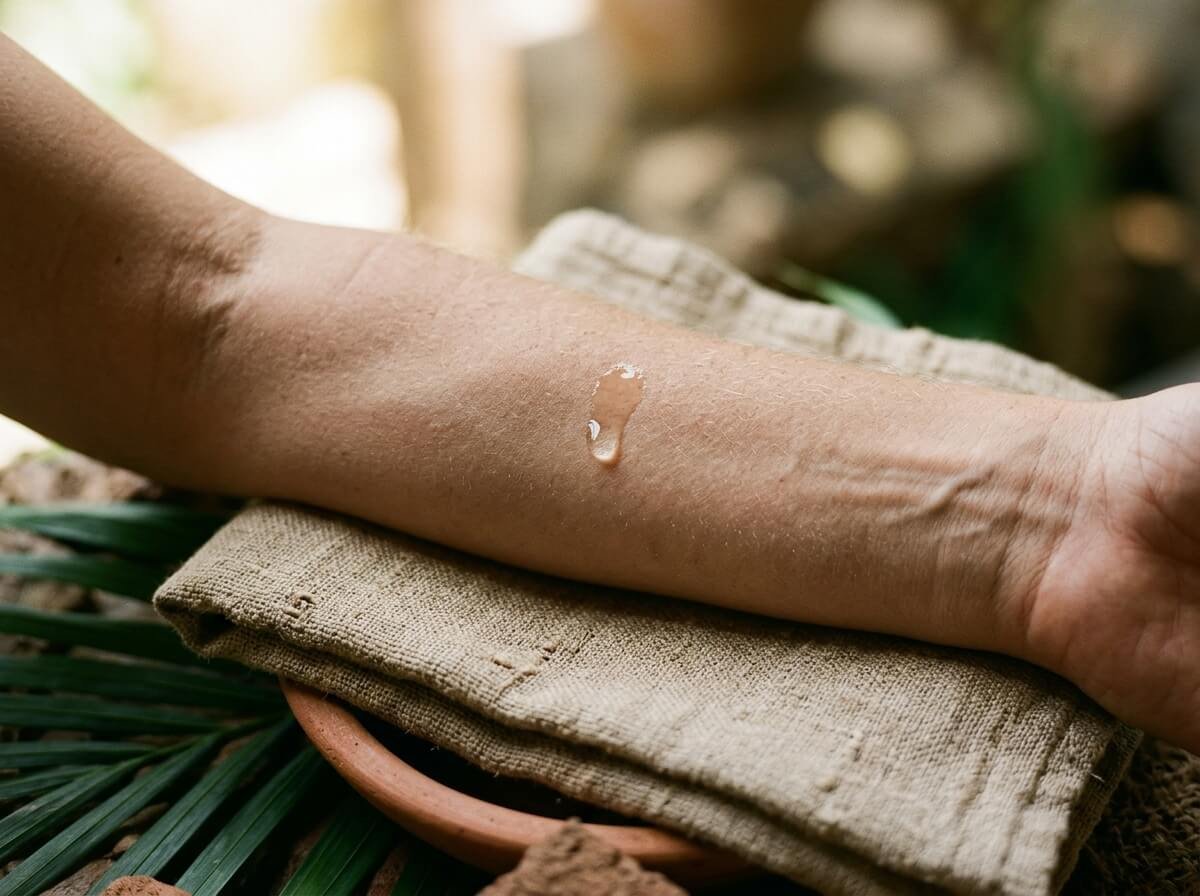
Almost every guide to fermented skincare includes a line that says “patch test first.” It is usually one sentence, near the end. We think it deserves its own section, because it is the part that matters most for the people we hear from: those with sensitive, reactive, or rosacea-prone skin.
A ferment is not a single ingredient. It is a complex mixture of whatever the microorganism produced, and that mixture varies by strain, by raw material, by how long it fermented, and by how it was filtered. For most people this is fine. For some, it introduces several new variables at once, and if skin reacts, it is hard to know which one is responsible.
A few specific things are worth watching for:
- Stacked acids. If your routine already includes an AHA, BHA, vitamin C, or retinoid, adding an acidic ferment can tip skin from smooth into stinging. Mild exfoliation adds up across products.
- Alcohol from the fermentation itself. Rice-wine and sake-style ferments can carry residual alcohol, which some skins find drying.
- Fragrance layered on top. Ferments can smell earthy or sour, so many products add fragrance to mask them. That is a second, separate sensitizer.
- Barrier already under stress. If skin is flaky, tight, or burning, it is not the moment to introduce anything new. Repair first, experiment later. Our guide on how to repair your skin barrier walks through that order.
How to patch test properly. Apply a small amount to the inner forearm or just behind the ear, once or twice a day, for seven to 10 days. Use it the way you would use it on your face: same amount, same frequency. A single dab for one evening tells you very little, because many reactions build slowly. If you see redness, itching, bumps, or burning, stop.
If you live with rosacea or eczema, it is wise to introduce only one new product at a time and to keep the rest of your routine very plain while you do. We have written more on that approach in our natural skincare for rosacea guide and our sensitive skin routine.
Here is the quiet truth competitors rarely say: a patch test is a tool for managing risk, not a reason the risk is worth taking. If your skin is calm and healthy on a simple routine, “should I add a ferment?” is a fair question with a fair answer, which might be no.
Fermentation is not new here either

Most fermented skincare articles tell the story as if fermentation began in East Asian beauty and then travelled west. The beauty application did, largely, come from Korea and Japan. But fermentation itself was never absent from this part of the world. In Indonesia, it is part of daily life.
Tempeh comes from Java, where soybeans are inoculated with a mould culture and wrapped, traditionally in banana or teak leaves, until they bind into a firm, nutty cake. It is one of the most important contributions Indonesia has made to the world’s food.
Tapai is fermented glutinous rice or cassava, made with ragi, a small dry starter cake of rice flour, spices, and a living community of moulds and yeasts. The result is sweet, slightly sour, and gently alcoholic, and families make it at home and share it at gatherings.
Brem is a rice wine made from black or white glutinous rice, fermented with the same kind of starter. It first appears in old Javanese writing around the year 1000, and over the centuries it became deeply woven into Balinese life. In Bali, brem has a place in Hindu ceremonies, which is exactly why we would never treat it as a beauty ingredient or a styling prop. Some things belong to the temple and the family, not to the shelf.

So when we look at fermented skincare, we do not see something exotic. We see a familiar craft, applied to a new purpose. And it is worth noticing that in this region, a place with deep fermentation knowledge and a long tradition of botanical skin care, the two largely stayed separate. Balinese and Javanese skin rituals reached for oils, roots, rice powders, spices, and leaves, used fresh or simply prepared. We do not want to overstate what that means. It does not prove fermented skincare is wrong. But it does remind us that whole botanicals carried skin care here for a very long time without needing a culture first.
That heritage is part of why our formulators start where Melanie Templer started in her Ubud kitchen in 1989: with plants, presses, and patience.
Why whole botanicals can do similar barrier work with fewer unknowns
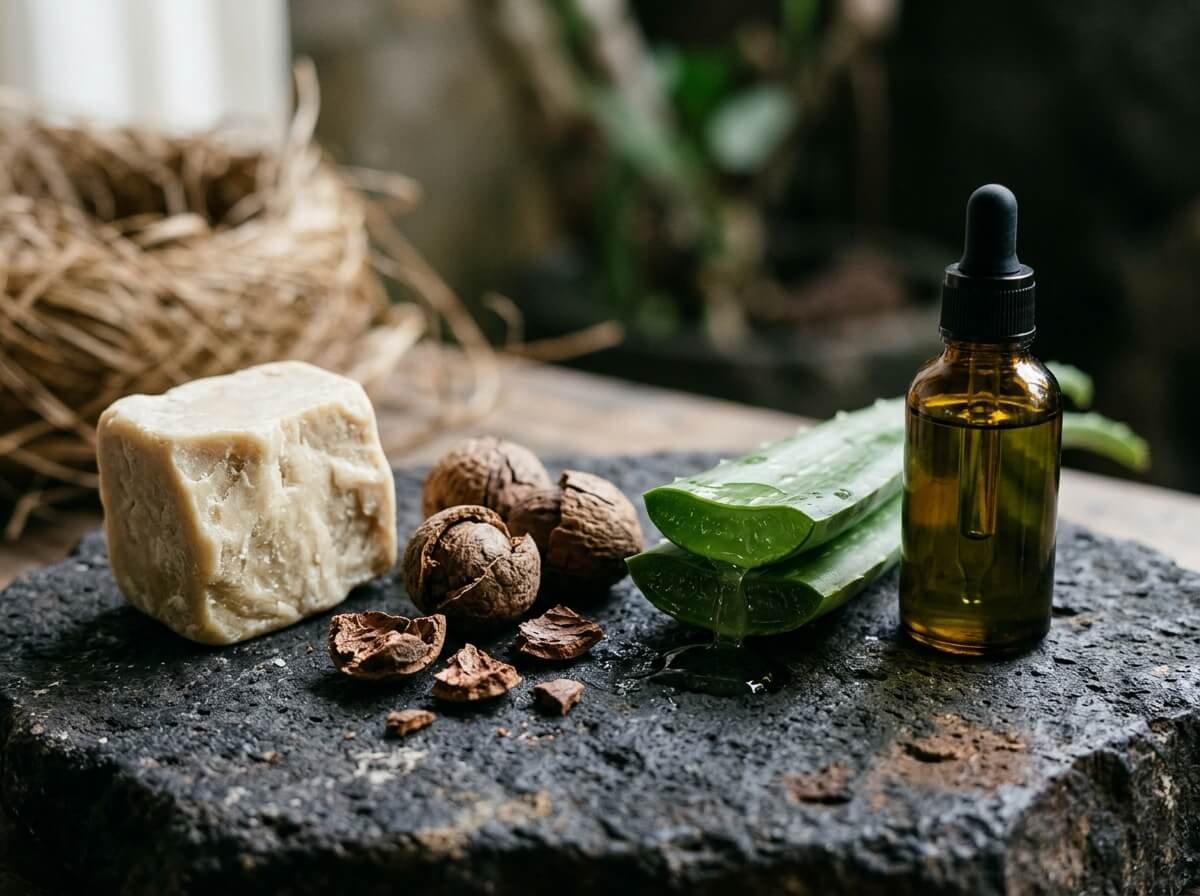
The main promise of fermented skincare is a better-hydrated, calmer, more resilient barrier. That is a goal we share completely. Our view is that, for many people, whole and unfermented botanicals reach the same place through a simpler route.
Plant butters and oils: the lipids your barrier is built from
The skin barrier is often described as bricks and mortar, with cells as the bricks and lipids as the mortar. Plant butters and oils supply fatty acids that support that mortar and slow water loss. Wild-harvested illipe butter from Kalimantan is a good example, and we have covered its barrier science in our post on butter skin, so we will not repeat it here. On the body, our Pure Energy Body Butter uses illipe as its base. It also contains bergamot, so if you plan to spend time in strong sun, apply it in the evening.
Tamanu oil: calm, steady support
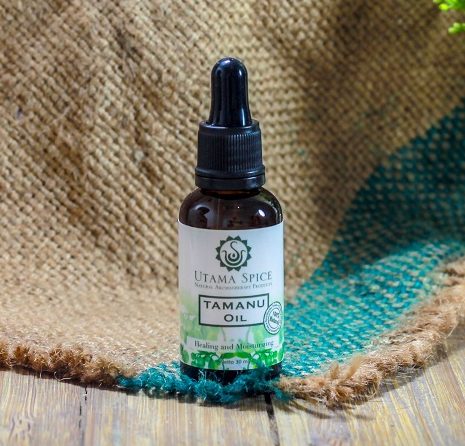
Tamanu oil, pressed from the nut of Calophyllum inophyllum (known in Indonesia as nyamplung), has a long history across the region for skin that is irritated, scarred, or slow to heal. Our Tamanu Oil is a single ingredient, with no added fragrance and no essential oils. That makes it one of the simplest things you can put on reactive skin: one variable, not 10.
Aloe vera: water-based hydration
Aloe gel gives skin water, soothing polysaccharides, and a cooling feel, which is especially welcome after sun or heat. Our Aloe Vera Gel includes a little lavender essential oil, so if you are fragrance-sensitive, patch test it the same way you would test anything new. Our aloe vera gel for skin guide covers how to layer it under an oil.
Why simplicity matters more in the tropics
Heat and humidity change how skin behaves. Sweat, sunscreen reapplication, air conditioning, and frequent cleansing all put extra load on the barrier. In that setting, every added active is one more thing that can tip skin over. We explored this in our note on why humidity changes what your skin needs from oil. Fewer, well-chosen products are easier on skin that is already working hard, which is the heart of skinimalism.
To be fully transparent: we do use a probiotic base in one place, our Probiotic Deodorant. Underarm odour comes from bacteria breaking down sweat, so working with the skin’s microbes there has a clear, specific job. We explain the thinking in our probiotic deodorant guide. Face and body barrier care is a different job, and for that we keep choosing whole botanicals.
One ingredient, steady barrier care
Our Tamanu Oil is pure, cold-pressed tamanu with nothing added: no fragrance, no essential oils, no ferments. A few drops pressed into damp skin at night is a calm, simple alternative to a crowded routine.
How to decide if fermented skincare is worth it for your skin
We are not here to tell you never to try a ferment. Plenty of people use fermented essences happily and see real results. What we want is for the choice to be yours, made with clear eyes. These questions can help.
1. What problem are you trying to solve?
If your skin feels dull and you want gentle smoothing, a low-acid ferment might be a reasonable, softer alternative to a strong exfoliant. If your skin is dry or tight, a plant oil or butter addresses that more directly. If you have no particular problem, you may not need anything new at all.
2. How reactive is your skin right now?
Calm, resilient skin can usually experiment safely with a patch test. Skin that is red, stinging, or recovering from over-exfoliation should wait. Read our piece on how to safely exfoliate your face if you suspect you have been doing too much.
3. What else is in the bottle?
Turn the bottle over. Is the ferment near the top of the ingredient list, or a token amount near the end? Is there added fragrance or a long list of essential oils? Is there denatured alcohol high up? A product sold on its ferment can still be mostly water, thickeners, and scent.
4. Does the brand name the strain and the evidence?
A brand that tells you which organism, which raw material, and what testing it has done is giving you something to judge. A brand that only says “fermented” and “probiotic” is giving you a mood.
5. Can you add it as the only change?
Introduce one new product at a time and give it about four weeks before judging. If you add a ferment, a new cleanser, and a new serum in the same week, you will never know which one helped or which one caused trouble.
If, after all that, a plain routine still sounds better, here is a simple one built on whole botanicals: a gentle cleanse, aloe gel on damp skin, and a few drops of tamanu or Argan Oil pressed in to seal it. For body and hair, Virgin Coconut Oil from Balinese coconuts does a lot of quiet work on its own. That is care you can understand, ingredient by ingredient.
Fermented skincare: frequently asked questions
Is fermented skincare good for sensitive skin?
It can be, and some ferments are marketed specifically as soothing. But because a ferment is a complex mixture, and often comes with acids, alcohol, or fragrance, sensitive skin should patch test for seven to 10 days and introduce it on its own. If your skin is currently irritated, repair the barrier first.
Do probiotic skincare products contain live bacteria?
Usually not. Most use ferment filtrates or lysates, which are byproducts or broken-down cells rather than living cultures. These are often called postbiotics. They can still have useful effects, but “probiotic” on the label rarely means something alive in the jar.
Can fermented skincare cause breakouts?
Any new product can, and some people report congestion with certain rice or yeast ferments. Reactions vary from person to person, so track your skin for a few weeks after adding one, and stop if new bumps appear.
Can I use fermented skincare with acids or retinol?
Many people do, but be careful with stacking. Fermented products often contain mild acids of their own. If you already use an AHA, BHA, or retinoid, add the ferment on alternate nights at first and watch for stinging or tightness.
Is rice water the same as fermented skincare?
Plain rice water is not fermented. Fermented rice water is left to sit so microbes can work on it, which lowers its pH and changes its makeup. Homemade versions are hard to keep consistent or clean, so if you try one, make small batches and discard them quickly.
Does Utama Spice make fermented skincare?
Not for face or body care. We build those on whole botanicals such as tamanu, illipe butter, coconut, argan, and aloe. Our one microbe-based product is our probiotic deodorant, where the job is specific: working with the bacteria that cause underarm odour.
A closing thought
Fermented skincare is a real category with real science, and we respect the craft behind it. Fermentation has always been on the tables around us, in tempeh and tapai, and we know the place brem holds in ceremony. But we do not chase trends, we question them. For skin that wants to feel calm, nourished, and resilient, the simplest answer is often already in the plant itself. Choose with curiosity, test with patience, and let your skin, not the trend cycle, decide.