Ingredient Tuesday: sereh wangi, the citronella grass Java once supplied to the world
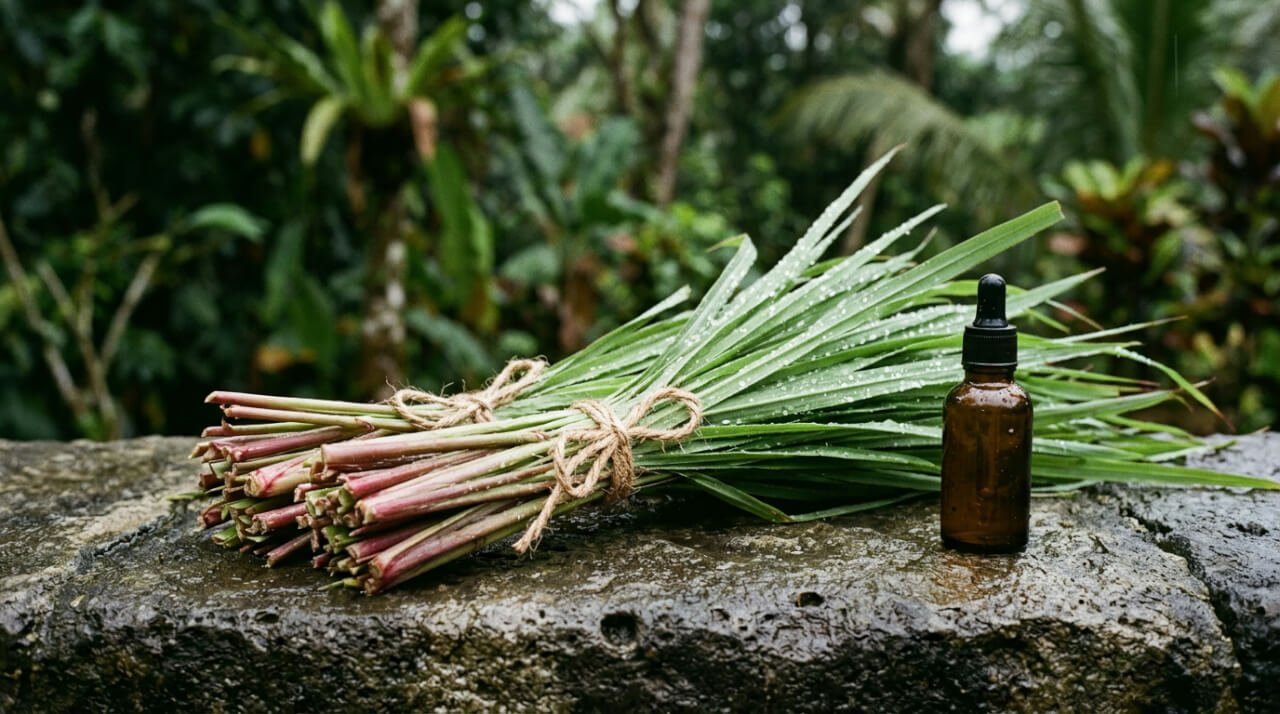
When the wet season reaches Bali, the evenings change. The air thickens after the afternoon rain, the frogs start up in the rice fields, and the mosquitoes come out at dusk. In many Indonesian homes, the answer has long come from a tall grass with reddish stems: sereh wangi, the fragrant sereh. It looks almost like the kitchen lemongrass we wrote about in our sereh post last month, but this one is grown for its scent rather than for the pot. In English, we call it citronella.
A grass that crossed an ocean
Java citronella (Cymbopogon winterianus) is not native to Java. Botanical records from the Prosea plant resources project note that growers brought it to Java from Sri Lanka in 1899. The grass thrived in volcanic soil and steady rain, and within a few decades Java had replaced Sri Lanka as the world’s main source of citronella oil. The Java type became the grade perfumers asked for. Its oil is rich in citronellal, often 35% or more, alongside geraniol, which gives it a deeper, rounder scent than the Ceylon type (Cymbopogon nardus).
So a plant now linked with Indonesian evenings arrived here a little over a century ago. Small farmers across Java and Aceh still cut it by hand, wilt it for a day, and steam-distil it in simple stills. Each harvest is a few leaves cut from a living clump that grows back.

Why the scent fades so fast
Here is the honest part. Citronella does deter mosquitoes, but its key molecules are light and leave the skin quickly. In laboratory studies, plain citronella oil on skin often protects for well under an hour. A 2011 review of published trials found that citronella protects for less time than DEET, and that formulas with vanillin, which slows evaporation, lasted noticeably longer. The plant works. It simply works on a short clock.
That is why the old habit of keeping a bundle by the doorway makes sense. Scent fades, so you top it up. We cover the full evidence in our guide to natural mosquito repellents and in our citronella essential oil guide.
A wet-season ritual
- Time it to dusk. Mosquitoes in the tropics are most active at dawn and in the early evening, so apply care then rather than all day.
- Reapply, do not pile on. A light layer every hour or so outdoors does more than one heavy coat.
- Always dilute. Citronella essential oil should never go onto skin undiluted. Patch test first, and keep it away from eyes and broken skin.
- Know when to choose more. In areas with dengue or malaria, follow local health advice and use a repellent with proven long-lasting protection. Botanicals are part of the picture, not the whole of it.
If you want to bring sereh wangi into your evenings, our Begone Bug Spray blends Java citronella with clove bud and cajeput oils in a light, ready-diluted mist. If you have already kept your bottle, the Begone Bug refill can tops it up. For your own diffuser blends, our Citronella Essential Oil is single-note and distilled from the Ceylon type, Cymbopogon nardus, which has a softer, greener scent.
A grass carried across the Indian Ocean, planted in volcanic soil, and cut by hand every few months. When the rain comes back each year, it is one more reason to know where your care comes from.