How to get rid of razor bumps naturally: start with the blade
If you have ever looked up how to get rid of razor bumps naturally, you have probably been handed a list of things to put on your skin. Tea tree. Aloe. Witch hazel. Lemon juice. Some of those help. One of them makes things worse. And almost none of them deal with the reason the bumps keep coming back.
Here is the honest truth we have learned from more than 35 years of making skin care in Bali: razor bumps are mostly a hair problem, not a product problem. They start with the blade, the direction of the stroke, and how close the hair is cut. Products can calm what is already there. Only technique stops the next crop.
In this guide we will look at what a razor bump is, how to shave so fewer of them form, which natural remedies are worth your time, what to skip, how body shaving differs, and how to prevent the dark mark a bump so often leaves behind.
What a razor bump actually is (and how it differs from razor burn)
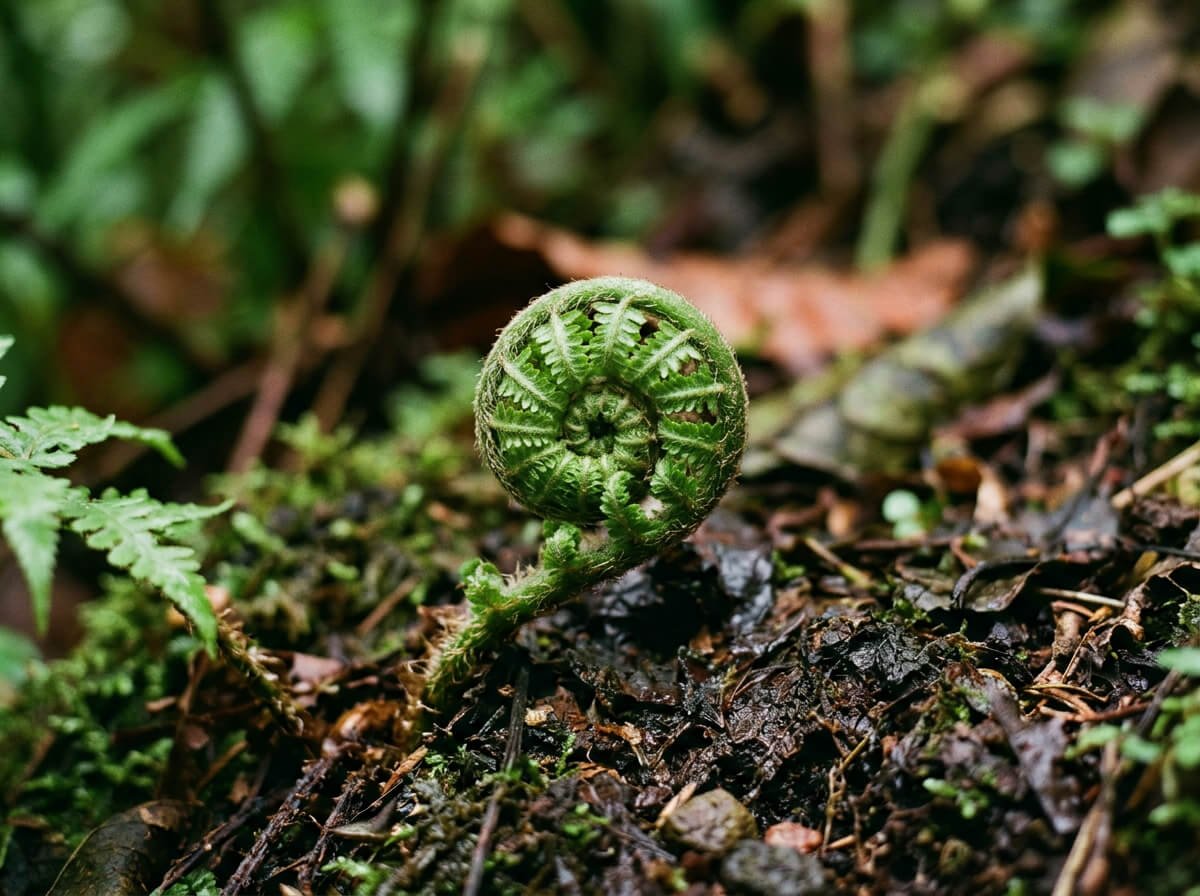
A razor bump is a hair that has grown back into the skin. Dermatologists call it pseudofolliculitis barbae when it shows up in the beard area, but the same thing happens anywhere we shave. The word “pseudo” matters: it looks like an infected follicle, but at the start it usually is not an infection at all. It is the body reacting to a hair it treats as a splinter.
There are two ways it happens. In the first, the hair grows out of the follicle, curls back, and pierces the skin a millimeter or two away. In the second, the hair is cut so short (often below the surface, because the skin was stretched during the shave) that the sharp tip never makes it out of the follicle and pushes sideways through the follicle wall. Either way, the skin responds with a small, red, sometimes itchy or tender bump. Sometimes you can see the hair looped just under the surface.
Razor burn is something different
Razor burn and razor bumps often get used as if they were the same thing. They are not, and the difference changes what helps.
- **Razor burn** is surface irritation from the shave itself. It shows up within minutes to hours as redness, stinging, or a hot, raw feeling, usually from a dull blade, dry shaving, too many passes, or too much pressure. It tends to fade within a day or two.
- **Razor bumps** appear a day to several days later, as the hair starts to grow back. They are individual raised spots, one per follicle, and they can linger for weeks if the hair stays trapped.
You can have both at once. Burn tells you the shave was too rough. Bumps tell you the hair was cut in a way that sent it back into the skin.
Why some of us get them more
Curly and coarse hair is far more likely to curve back into the skin, which is why razor bumps are especially common for people with tightly coiled hair, and for anyone shaving coarse hair on the bikini line or underarms. This is about the shape of the hair shaft, nothing else. It also means the advice below matters more, not less, if your hair curls: the closer the shave, the sharper the curl has to travel to get out, and the more likely it is to turn back in.
To tell a razor bump from a breakout: a bump that sits exactly where you shaved, appears a few days after shaving, and has a hair at its center is almost certainly a razor bump. Spots that show up in unshaved areas, or that come with blackheads, are more likely acne, and our guide to natural acne treatment is a better place to start.
How to get rid of razor bumps naturally starts with technique
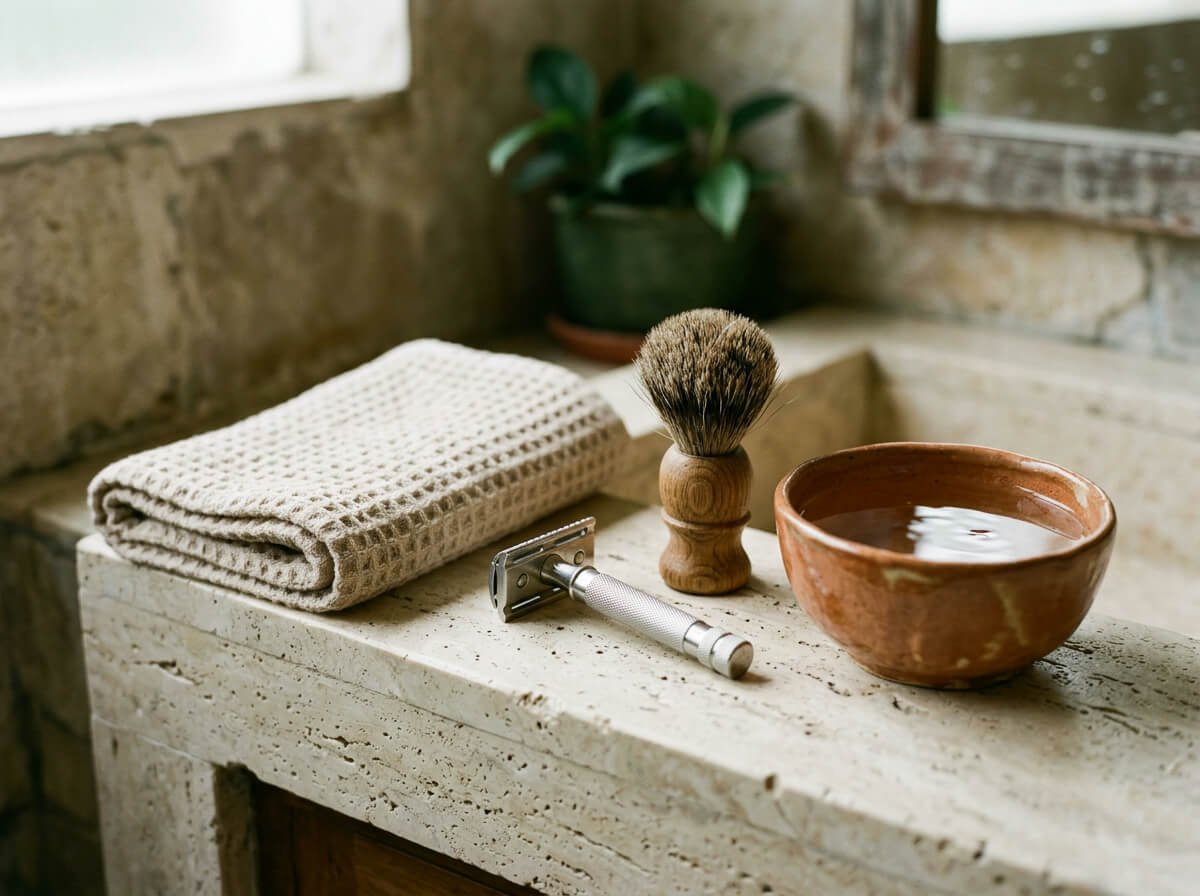
Most guides bury this part at the bottom, yet it does most of the work.
Use a sharp, simple blade
A dull blade drags. It tugs the hair before it cuts it and scrapes the skin on the way, so you get burn and bumps together. Dermatologists generally suggest replacing a blade or disposable razor after about five to seven shaves, and rinsing it after every stroke so hair and foam do not clog it.
The number of blades matters too. Multi-blade cartridges are designed to lift the hair with the first blade and cut it with the next, so the stub springs back below the surface of the skin. That is exactly what makes a shave feel close, and exactly what sends curly hair back into the follicle wall. A single-blade or two-blade razor leaves the hair cut level with the skin, not under it. You cannot buy your way out of razor bumps with a five-blade cartridge. Fewer blades, kept sharp, usually do better.
Shave with the grain
Shaving against the direction of hair growth cuts the hair at a sharper angle and closer to the root. That is the closest shave, and the most likely to bump. Shave in the direction the hair grows instead. Run your palm over the area first: the smooth direction is the grain. On the neck and underarms, hair often grows in several directions within a small space, so take a moment to map it.
Fewer passes, no stretching
Every extra pass over the same patch removes a little more of the skin’s outer layer. One pass with the grain, then a light touch-up only where you need it, is kinder than three. And resist pulling the skin tight. Stretching the skin lets the blade cut the hair below the surface; when the skin relaxes, the hair tip retreats under it.
Prepare, then shave last
Soft hair cuts more cleanly. Shave at the end of a warm (not hot) shower, after the hair and skin have had a few minutes to soak. Use a slick, cushioning lather or a thin layer of oil so the blade glides rather than scrapes. Then rinse with cool water and pat, do not rub, dry.
Consider not shaving so close
If bumps keep coming back, the most effective natural fix is often the least exciting one: leave a little length. A trimmer with a guard cuts the hair above the skin, so there is nothing sharp below the surface to grow back in. A pause from shaving for a few weeks also lets trapped hairs grow out and the skin settle before you start again with better technique.
If you shave your face, our natural skincare routine for men covers the rest of a simple daily rhythm around the shave.
Calming a bump that is already there
Once a bump has formed, the goal is simple: reduce the inflammation, keep the area clean, and let the hair find its way out. Here is what helps, gently.
A cool compress first
Before you reach for anything in a bottle, try cool water. A clean cloth soaked in cool water and held against the area for a few minutes eases heat and swelling. It costs nothing and is often enough for a mild crop of bumps.
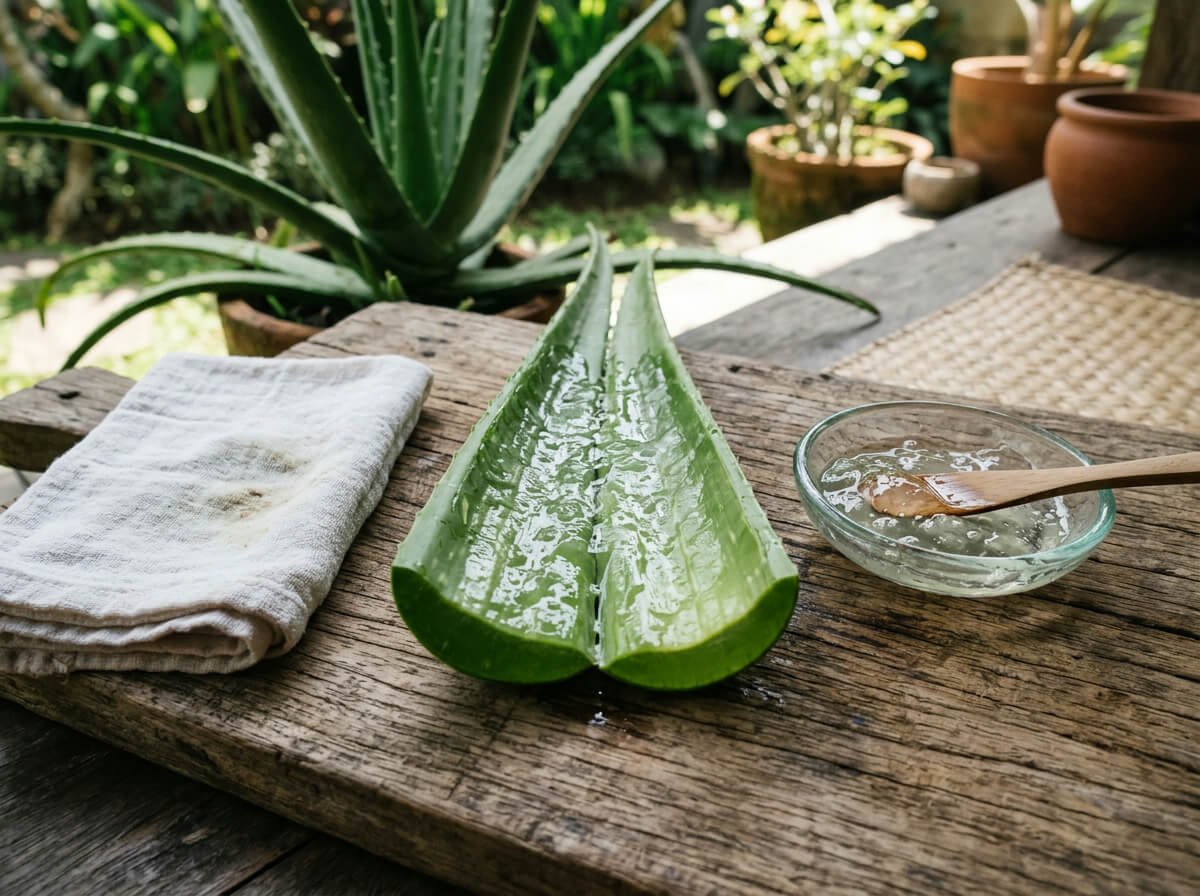
Aloe vera
Aloe vera gel is cooling and light, and it has a long history of use on irritated skin. The clearest form is the gel straight from a fresh leaf: split a leaf, scoop a little of the inner gel, and smooth a thin layer over the area. If you prefer a ready-made gel, check the label. Our Aloe Vera Gel includes lavender essential oil and a little grain alcohol, which many people enjoy on intact skin but which can sting on a fresh shave, so we suggest waiting a few hours after shaving before using it. Our guide to aloe vera gel for skin goes deeper into what it can and cannot do.
Witch hazel, used with care
Witch hazel is a traditional astringent: its tannins tighten, cool, and calm. It can help once the skin is no longer raw. But many witch hazel products contain alcohol, and our own Witch Hazel contains grain alcohol too. On a fresh shave, that means sting and dryness. Use it later in the day on a cotton pad, on bumps rather than across the whole area, and stop if it leaves your skin tight. Our honest look at natural toner and the older piece on why witch hazel is good for your face explain the trade-offs in more detail.
A light, fragrance-free oil
Bumps heal faster on skin that is not dry and tight. A few drops of a simple oil, pressed in after the skin has cooled, soften the surface so a trapped hair can find its way out more easily. A single-ingredient oil with no added fragrance, such as our Tamanu Oil or a little Argan Oil, is the gentlest choice on recently shaved skin.
Free the hair, do not dig for it
If you can see a loop of hair sitting just above the skin, you can lift the end free with clean tweezers. Lift, do not pluck: pulling the whole hair out restarts the cycle, and the new hair has the same chance of turning in. If the hair is under the skin, leave it. Digging with tweezers or a needle breaks the skin, invites infection, and is one of the most common causes of the dark marks we talk about later.

Tea tree oil without the burn

Tea tree oil is one of the most recommended natural remedies for razor bumps, and with reason. It has well-documented antimicrobial activity, and gels with around 5% tea tree have been studied for mild acne. For bumps that look red and angry, a properly diluted drop can help keep the area clean while it settles.
But two of the most visited guides on this topic tell readers to add drops of tea tree to a bowl of warm water, or to “dilute it with a little water.” That does not work. Essential oils do not dissolve in water. The oil floats to the surface in droplets, and those droplets land on freshly shaved skin at full strength. Neat tea tree on broken skin is a fast route to stinging, redness, and, over time, sensitization, where your skin starts reacting to it every time.
Dilute in oil, not water
- Add one to two drops of Tea Tree Essential Oil to a teaspoon (about 5 ml) of a carrier oil. That is roughly a 1% to 2% dilution, which is plenty for a small area.
- Use a simple carrier. Cold-pressed Virgin Coconut Oil is the carrier we have used in Bali for generations, and it is gentle on the body. On the face, if you are prone to clogged pores, a lighter oil may suit you better.
- Mix a fresh small amount each time rather than a large batch.
- Dab a thin layer onto the bumps once or twice a day, not across the whole shaved area.
Patch-test first, and keep it fresh
Before using tea tree on a large area or near the bikini line, test a little of your diluted mix on the inside of your forearm and wait a day or two. Tea tree also becomes more irritating as it oxidizes, so keep the cap tight, store it away from heat and light, and replace a bottle that smells sharper or more turpentine-like than it used to. Our full guide to tea tree essential oil benefits covers the research and the safety notes in more depth.
Wait until the skin has stopped stinging from the shave before applying any essential oil, even diluted. A few hours later, or the next morning, is kinder than straight after.
What to skip: lemon juice, alcohol, and stacked exfoliants

Natural does not automatically mean gentle. A few remedies that appear often online are worth leaving out.
Lemon juice
Lemon juice is sometimes suggested as a way to “dry out” bumps or lighten the marks they leave. It is strongly acidic, so on micro-cut skin it stings. Citrus juices can also make skin react to sunlight, causing a blistering, patchy rash or dark streaks where the juice sat. On deeper skin tones especially, irritation from lemon can leave behind the very marks it was meant to fade. Keep the lemon in the kitchen.
Alcohol-heavy aftershaves
A high-alcohol aftershave feels bracing because it stings. That sting is alcohol pulling water and lipids from skin the blade has just thinned, leaving it drier and more reactive. A cool rinse and a little fragrance-free oil calm the skin without the burn.
Stacking acids, scrubs, and brushes
Gentle exfoliation can help prevent razor bumps by clearing the dead skin that traps hairs at the surface. The trouble starts when we stack it. A salicylic acid wash, a glycolic toner, a grainy scrub, and a dry brush, all on skin that is also being shaved, add up to an inflamed, stripped barrier that bumps more, not less. We wrote about the same trap in our guide to keratosis pilaris natural remedies.
Choose one method. Use it once or twice a week, never on the same day you shave, and never over bumps that are already inflamed. If you like a physical scrub, our guide to a natural face scrub explains how to keep it gentle. If your skin already feels tight, sore, or shiny, the kindest step is to stop exfoliating for a while and focus on repairing your skin barrier first.
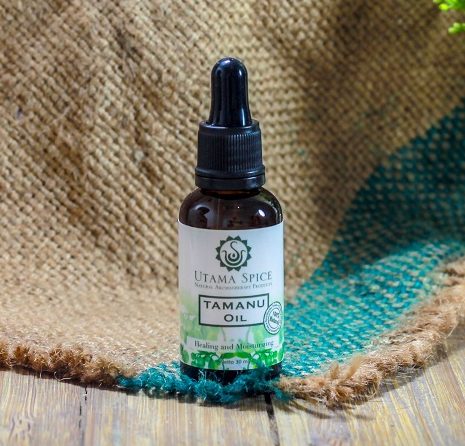
One simple oil for skin after shaving
Our Tamanu Oil is a single ingredient: cold-pressed tamanu seed oil, with no added fragrance or essential oils. Press a few drops into cooled skin after shaving, or use it as a gentle carrier for one drop of tea tree. Tamanu comes from a tree nut, so patch-test first if you have a nut allergy.
Body shaving: legs, underarms, and bikini line

Almost every guide to razor bumps is written for beards. Yet most body shaving happens on legs, underarms, and the bikini line, and each area has its own quirks. The principles stay the same (sharp blade, with the grain, fewer passes, no stretching) but the details shift.
Legs
Legs are the largest area most of us shave, and in cooler months often the driest, which makes the blade drag. Shave at the end of a warm shower, after a few minutes of soaking, and always with a cushion of lather or oil. Hair on the lower leg usually grows downward, so shaving down is with the grain. Afterwards, a little body oil on damp skin helps more than you might expect; our guide on how to use body oil explains why applying it while the skin is still damp matters.
Underarms
Underarm skin is thin, folded, and constantly in friction. Hair there often grows in two or three directions, so map it first and shave each patch with its own grain. Give the skin time before applying deodorant, especially anything with fragrance or essential oils. If your underarms sting or bump after shaving, our guide to natural deodorant for sensitive skin covers how to reduce irritation from both habits together.
Bikini line
The bikini line is where razor bumps are most stubborn. The hair is coarse and often curly, the skin is delicate, and underwear and clothing rub over it all day. A few things help:
- **Trim first.** Use small scissors or a trimmer to shorten the hair before shaving, so the blade is not dragging through length.
- **Use a fresh blade.** This is the one area where a new blade every time makes a real difference.
- **Shave with the grain, once.** No going back over the same patch for a closer finish.
- **Wear loose, breathable cotton afterwards.** Less friction means less irritation while the hair grows back.
- **Consider trimming instead of shaving.** Keeping hair short rather than removing it entirely avoids most bumps, and many people find it the most comfortable choice.
Preventing the dark mark, and when to see a dermatologist
For many people, the bump itself is not the real problem. It is the dark spot it leaves behind. When skin is inflamed, it can respond by producing extra pigment. This is called post-inflammatory hyperpigmentation, and it is much more common and longer-lasting on medium and deeper skin tones. A bump that clears in a week can leave a mark that lingers for months.
How to keep marks from forming
- **Reduce inflammation early.** Cool compresses, gentle care, and no picking keep the inflammation shallow and short.
- **Avoid harsh treatments.** Lemon juice, strong acids, and alcohol all add irritation, and more irritation means more pigment.
- **Protect from the sun.** UV darkens existing marks and slows their fading. Daily sun protection on shaved areas that see the sun, like the face, neck, and legs, makes a visible difference over a season. Our Zinc Natural Sunscreen SPF50 is a mineral option.
- **Be patient.** Most marks fade once new bumps stop. Our guide on how to get rid of dark spots naturally covers gentle, realistic ways to support that fading.
When to see a dermatologist
Natural care has limits, and it is important to know them. See a doctor or dermatologist if:
- A bump becomes increasingly painful, hot, swollen, or filled with pus, or if redness spreads, as these can be signs of infection.
- You have a fever alongside infected-looking bumps.
- Bumps are becoming firm, raised, and larger over time, especially if you or your family are prone to keloid scars. Bumps at the back of the neck and hairline that harden can be a related condition that needs medical care.
- Bumps keep coming back for weeks despite changing your technique.
- You are not sure the bumps are from shaving at all.
A dermatologist can offer options we cannot, including prescription creams, treatment for infection, and long-term solutions such as laser hair removal for people whose bumps never settle with shaving.
How to get rid of razor bumps naturally: frequently asked questions
How long do razor bumps take to go away?
Mild razor bumps usually settle within a few days to two weeks once you stop irritating them. Pausing shaving, or switching to a trimmer for a while, gives trapped hairs time to grow out. Any dark marks left behind can take longer, sometimes several months, to fade fully.
Can I shave over razor bumps?
It is best not to. Shaving over bumps cuts into inflamed skin, spreads irritation, and makes new bumps more likely. If you must, use a sharp blade, shave with the grain in a single pass, and keep pressure very light. Trimming with a guard is a gentler option until the skin calms.
Is coconut oil good for razor bumps?
Coconut oil can soften skin and make a good carrier for diluted tea tree, and it works well on the body. On the face, some people find it clogs their pores, so if you are acne-prone, use it sparingly or choose a lighter oil.
Does tea tree oil work on razor bumps?
Tea tree oil has antimicrobial properties that may help keep bumps clean and calmer. It should always be diluted in a carrier oil, never in water, and never applied neat to freshly shaved skin. Patch-test first.
Should I stop shaving altogether?
Not necessarily. Most people get relief from better technique and a less close shave. If bumps never settle, trimming, a short pause, or a conversation with a dermatologist about longer-term hair removal may be the kinder path.
Razor bumps are not a sign that your skin is failing, or that you need a cabinet of new products. They are a sign that the hair was cut in a way it did not like. Start with the blade. Shave with the grain, once. Let your skin rest between shaves, keep remedies simple, and protect the marks from the sun while they fade. Care, in this case, looks a lot like doing less, and doing it well.