Natural incense sticks: a complete guide to ingredients, benefits, and choosing wisely
Natural incense sticks carry thousands of years of tradition in a single thin rod of compressed botanicals. Unlike their synthetic counterparts, which rely on petroleum-derived fragrances and charcoal fillers, truly natural incense sticks use only plant-based resins, dried herbs, essential oils, and wood powders to create their scent. The difference is immediate: softer smoke, gentler fragrance, and a ritual that connects you to the source materials rather than masking them behind artificial chemistry.
Whether you burn incense for meditation, to scent your living space, or simply to mark the transition between work and rest, understanding what goes into your incense matters. In this guide, we explore the botanical ingredients behind natural incense sticks, the wellness benefits they offer, how they differ from synthetic alternatives, and what to look for when choosing incense that aligns with both your values and your senses.
What makes natural incense sticks different from synthetic ones
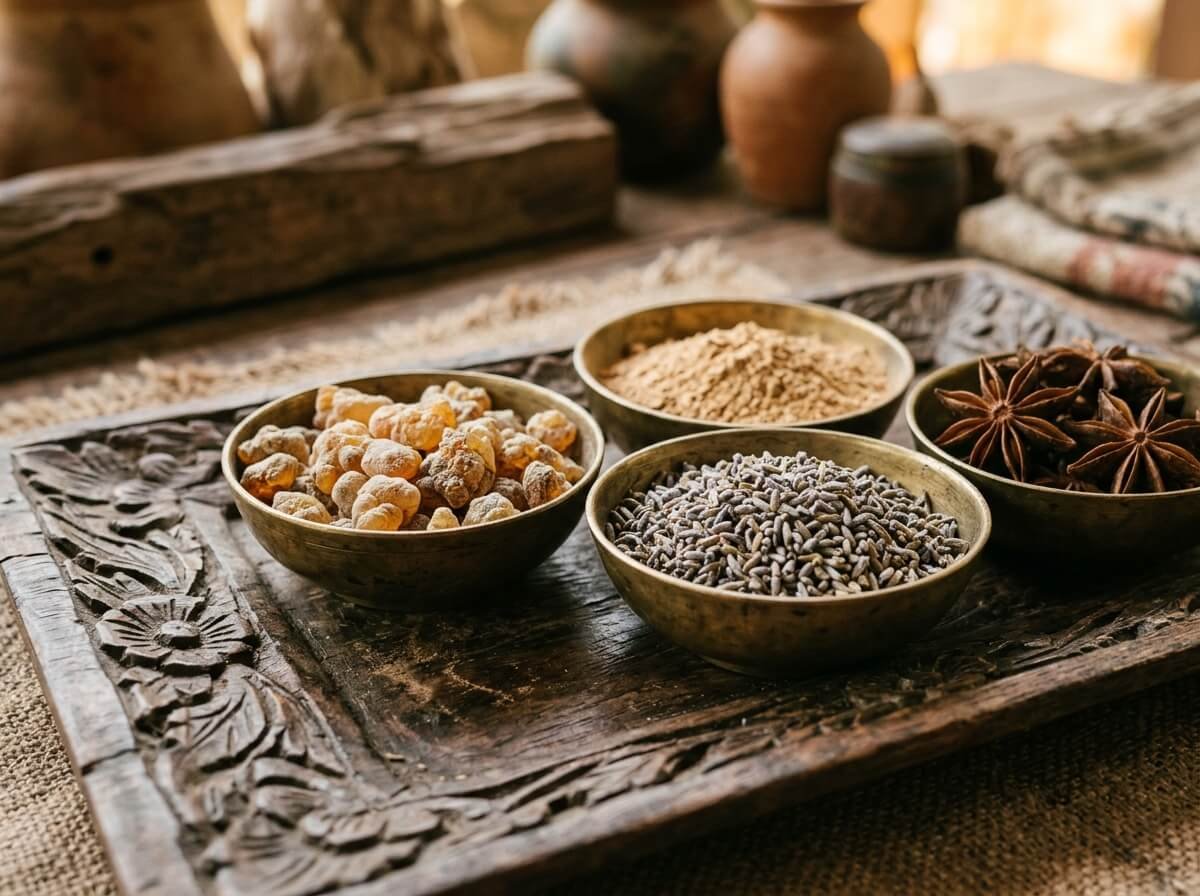
The distinction between natural and synthetic incense comes down to ingredients. Natural incense sticks use a base of wood powder (typically sandalwood, cedar, or bamboo) bound with a natural adhesive like makko powder (from the tabu-no-ki tree) or gum arabic. The fragrance comes from whole botanical materials: crushed resins, ground herbs, dried flower petals, bark, and pure essential oils.
Synthetic incense, by contrast, relies on dipropylene glycol (DPG) or diethyl phthalate (DEP) as fragrance carriers. These petroleum-derived solvents allow manufacturers to create strong, uniform scents cheaply, but they also release volatile organic compounds when burned. The charcoal base common in mass-produced incense contributes its own particulate emissions, creating heavier, more acrid smoke.
A simple test: read the ingredients list. If you see “fragrance” or “parfum” without specifics, the scent likely comes from a synthetic compound. Genuine natural incense sticks list their botanical components: frankincense resin, lavender flower, cedarwood powder, cinnamon bark. The transparency itself is a signal of quality.
The burn quality also differs. Natural incense produces thinner, lighter smoke that dissipates more gently. The scent builds gradually rather than hitting immediately, and it leaves less residue on surfaces. If your incense makes you cough or leaves a sharp chemical note in the room after extinguishing, it likely contains synthetic binders or fragrances.
Core botanical ingredients in natural incense sticks
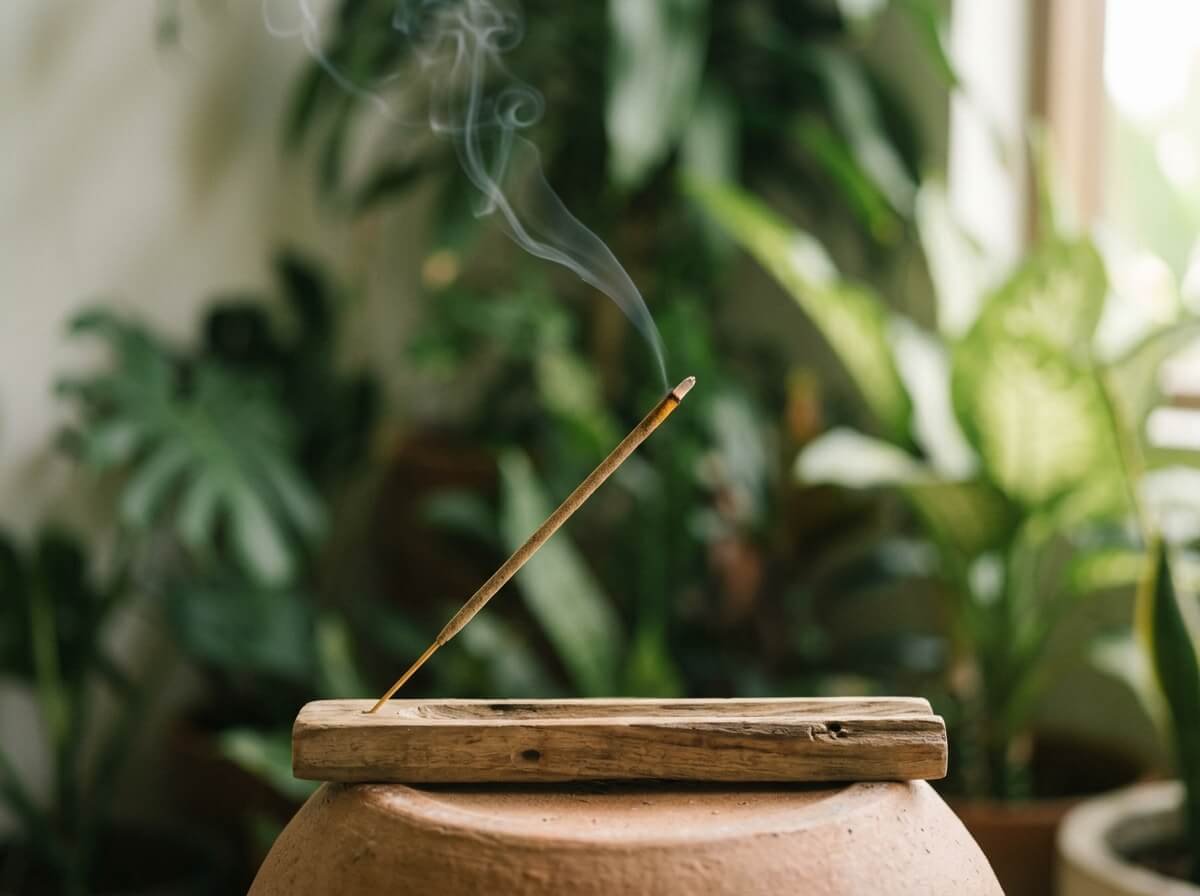
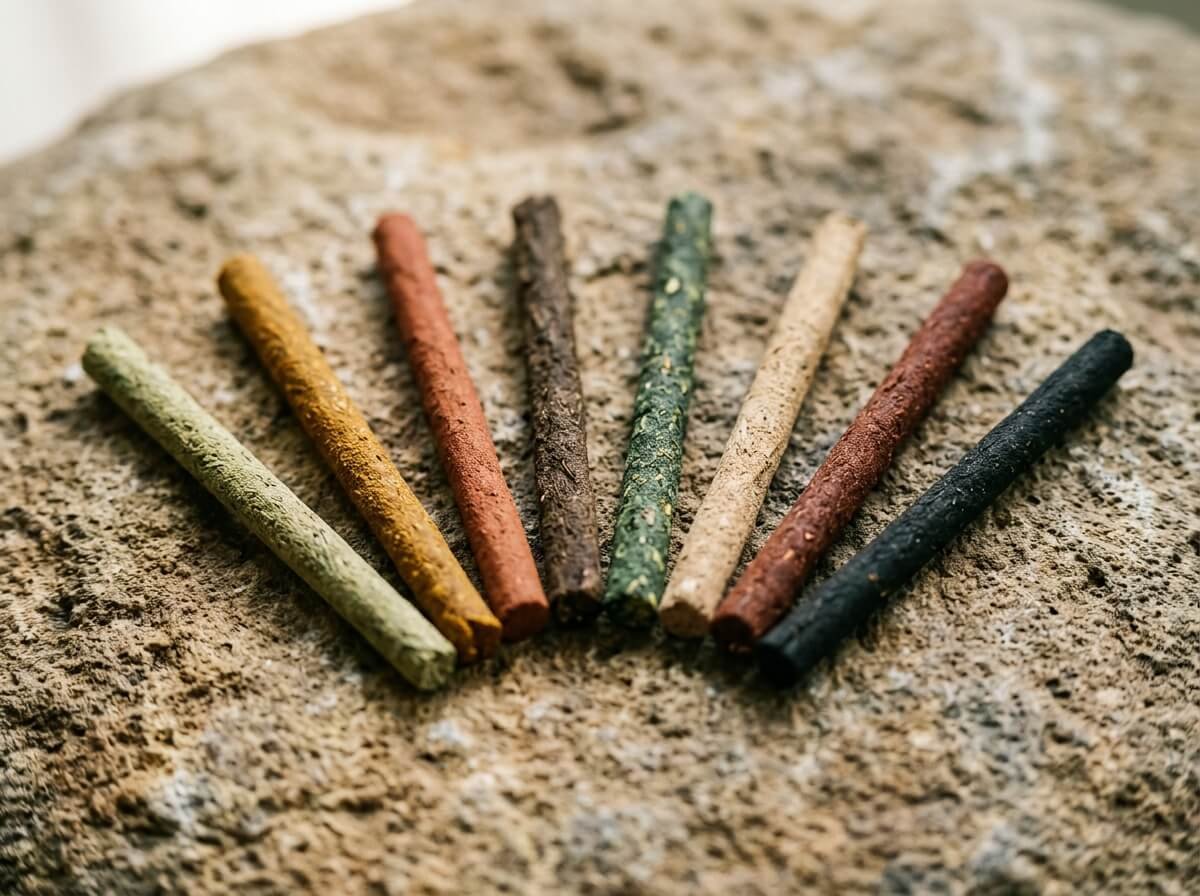
Understanding what goes into natural incense helps you choose blends that suit your preferences and your space. Here are the major categories of botanical ingredients used in traditional incense-making.
Resins
Tree resins form the aromatic backbone of many incense traditions. Frankincense (Boswellia sacra), harvested from trees in Oman and East Africa, produces a warm, slightly citrus smoke prized in meditation practices. Myrrh offers a deeper, earthier profile. Benzoin resin, tapped from Styrax trees across Southeast Asia, adds sweetness and warmth. Copal, used in Mesoamerican ceremonial traditions, burns clean with a bright, piney character.
Woods and bark
Sandalwood (Santalum album) is perhaps the most recognised incense wood globally, valued for its creamy, warm, persistent scent. Cedarwood provides a grounding, forest-floor quality. Agarwood (oud) is among the rarest and most expensive aromatic woods, produced when Aquilaria trees respond to fungal infection by saturating their heartwood with fragrant resin. Cinnamon bark, common in Indonesian incense traditions, adds spice and warmth without overpowering other notes.
Herbs, flowers, and spices
Lavender flowers lend a calming, herbaceous quality. Sage (both white sage and common garden sage) is used for its clean, purifying smoke. Rose petals contribute a gentle floral sweetness. Clove buds, star anise, and cardamom appear frequently in spice-forward blends. In Balinese incense-making, local flowers like frangipani (jepun) and jasmine (melati) are incorporated for their cultural significance and their soft, sweet smoke. Our guide to essential oil blends explores how these botanicals work together in aromatherapy contexts.
Binding agents
Natural incense requires something to hold the powdered ingredients together. Makko powder (Machilus thunbergii bark) is the gold standard: it burns evenly, produces minimal smoke of its own, and has no notable scent. Gum arabic (from Acacia trees) and honey are also used traditionally. These contrast sharply with the synthetic binders in mass-produced incense, which often use petroleum-derived adhesives that contribute to heavier smoke and chemical off-gassing.
Wellness benefits of burning natural incense sticks
Burning natural incense is not simply about fragrance. The practice carries documented benefits rooted in both traditional use and contemporary research.
Stress reduction and nervous system support
A 2008 study published in the FASEB Journal found that burning frankincense resin (Boswellia) activates ion channels in the brain associated with anxiety reduction. The compound incensole acetate, present in frankincense smoke, was shown to have anxiolytic and antidepressive effects in animal models. While human clinical trials remain limited, the traditional use of frankincense for calming and centering spans thousands of years across cultures. Lavender-based incense similarly leverages linalool, a compound extensively studied for its calming effects on the nervous system. If you already use essential oils for their benefits, incense offers another pathway to the same botanical compounds.
Focus and mental clarity
Rosemary, peppermint, and cedarwood incense blends support cognitive function. The act of lighting incense also serves as a “transition ritual,” a sensory cue that signals your brain to shift modes, from work to rest, from scattered to focused. This is why incense has been integrated into meditation, study, and creative practices across Buddhist, Hindu, and indigenous traditions for millennia.
Air purification (with caveats)
Some natural resins, particularly frankincense and sage, have demonstrated antimicrobial properties in research settings. A 2007 study in the Journal of Ethnopharmacology found that medicinal smoke from certain botanicals reduced airborne bacterial counts by up to 94% within a closed space. However, it is important to acknowledge that all combustion produces particulate matter. Even natural incense should be burned in well-ventilated spaces, not continuously, and never in rooms where infants or people with respiratory conditions are present.
Ritual and mindfulness
Perhaps the most universal benefit of incense is its capacity to anchor a ritual. The 30 to 45 minutes a stick burns creates a natural timer for meditation, journaling, yoga, or simply being still. The visual element of rising smoke, the tactile act of lighting, and the gradual unfolding of scent engage multiple senses simultaneously, making it easier to stay present. Our guide to building a natural skincare routine explores how small daily rituals compound into meaningful self-care practice.
How natural incense sticks are made: traditional craft methods
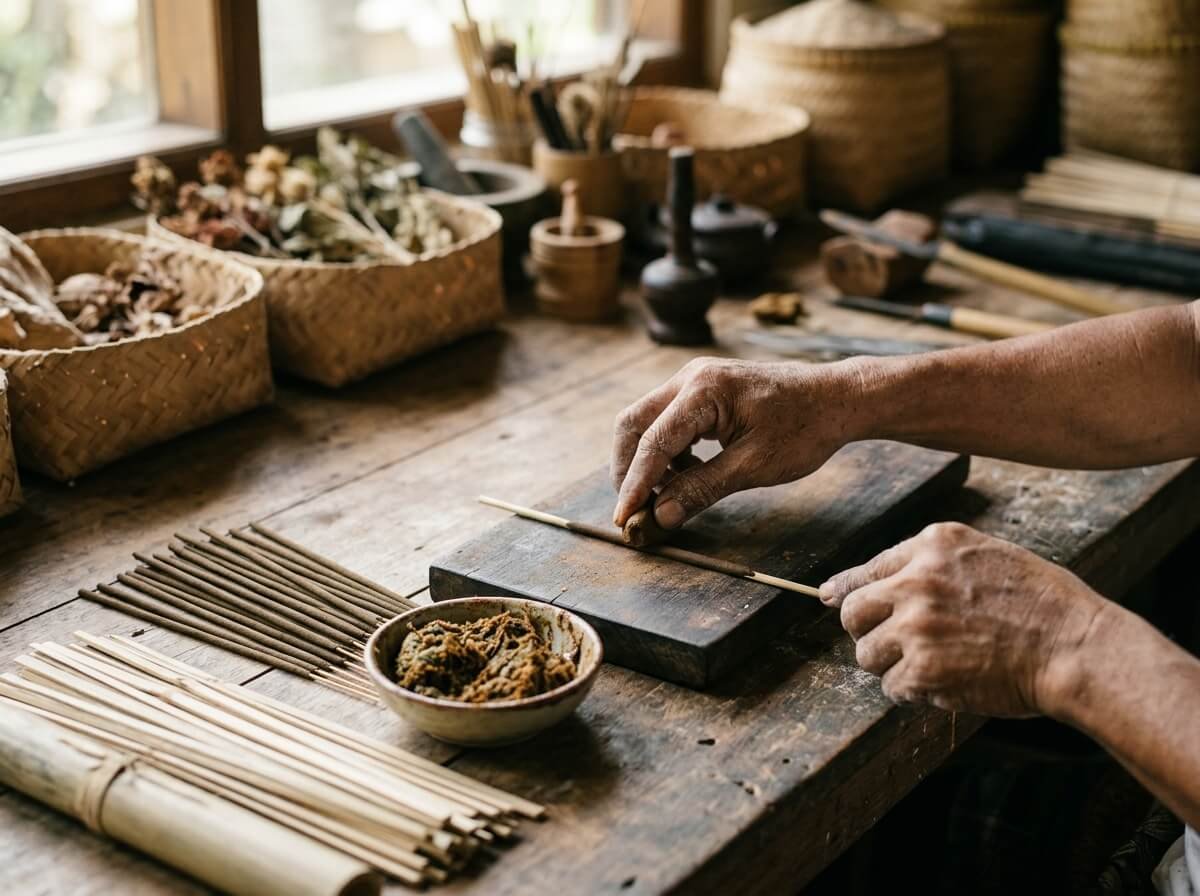
The process of making natural incense sticks by hand has changed remarkably little over centuries. Understanding the craft helps you appreciate why quality natural incense costs more than mass-produced alternatives, and why that cost reflects real value.
Ingredient preparation
Raw materials arrive as whole botanicals: chunks of resin, bark strips, dried flower heads, whole spices. Each must be individually ground to a fine, consistent powder. Some makers use traditional stone mortars; others use low-speed grinding mills that avoid heat buildup (which would volatilize delicate essential oils before the incense is even lit). The fineness of the grind directly affects burn quality: too coarse and the stick burns unevenly; too fine and it may extinguish itself.
Blending and paste formation
The powdered ingredients are blended according to recipe, then mixed with water and a natural binder (makko or gum arabic) to form a pliable paste. The ratio matters enormously: too much binder and the incense smells flat; too little and the stick crumbles or burns too quickly. Traditional makers work by feel, developed over years of practice, adjusting hydration based on humidity and ingredient batch variation.
Rolling and drying
The paste is hand-rolled onto thin bamboo sticks (or, in Japanese-style incense, formed without a bamboo core entirely). Each stick is rolled to uniform thickness, then laid on drying racks. Natural drying takes 24 to 72 hours depending on climate and stick diameter. Industrial shortcuts using heat dryers can degrade volatile compounds, which is another reason artisanal incense often carries a richer scent profile than factory-produced versions.
In Bali, where Utama Spice has been making incense since our founding in 1989, the tropical humidity and warmth create ideal slow-drying conditions. Our Temple Spice incense follows this same hand-rolled, slow-dried method, using botanicals sourced from the island and broader Indonesian archipelago.

Experience Balinese incense craft firsthand
Our Temple Spice incense is hand-rolled in Bali using traditional botanical blends: cinnamon, clove, and sandalwood from Indonesian growers we have partnered with for over 35 years. Each stick burns for 45 to 60 minutes of warm, grounding fragrance.
How to choose quality natural incense sticks
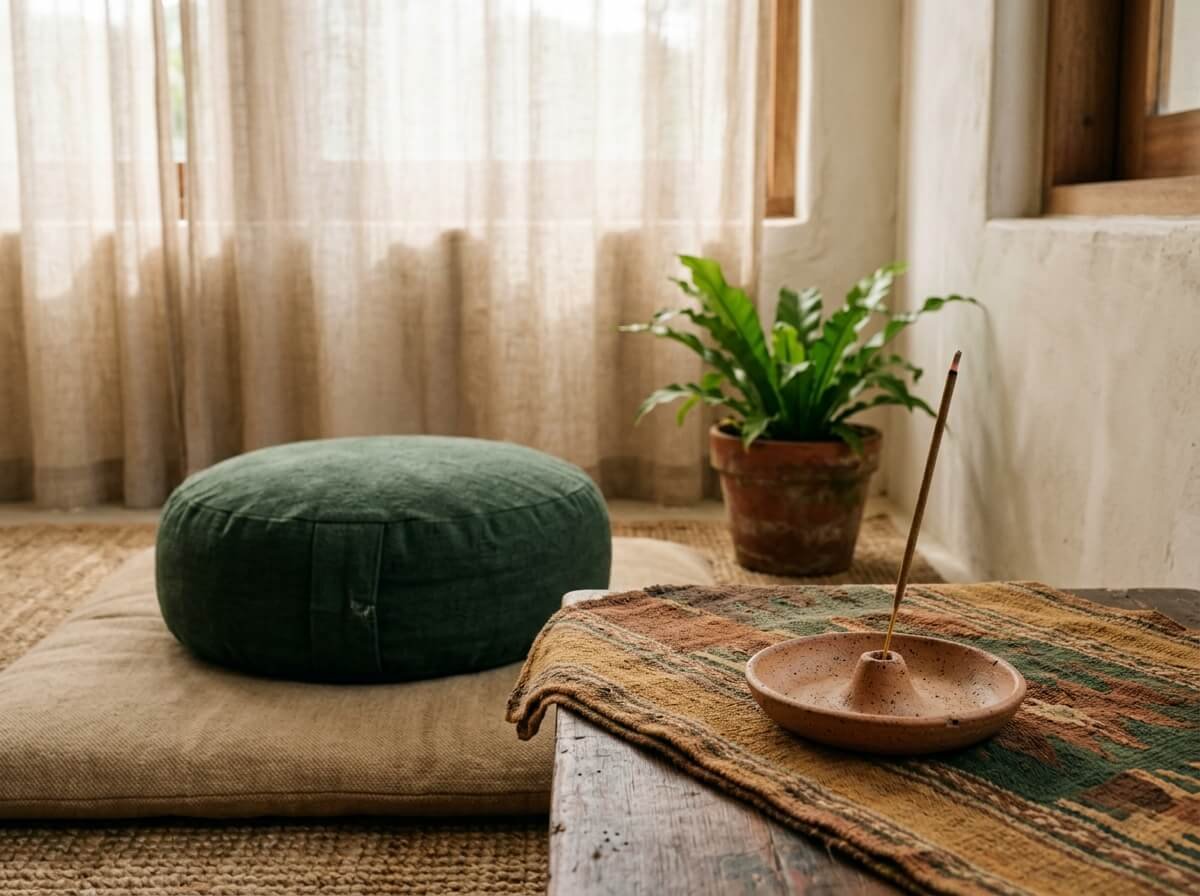
The market for incense is largely unregulated, which means labels can be misleading. Here is what to evaluate when choosing natural incense sticks that are genuinely botanical, clean-burning, and worth your investment.
Read the full ingredient list
Genuine natural incense brands list every component. Look for named botanicals: “sandalwood powder, frankincense resin, makko binder, lavender essential oil.” If the list says simply “fragrance,” “natural fragrance,” or “essential oil blend” without specifics, treat it with skepticism. Transparency is the baseline indicator of quality.
Assess the smoke character
Light one stick and observe. Clean natural incense produces thin, wispy smoke that is white or pale grey. The scent should unfold gradually, not hit you like a wall of fragrance upon lighting. If the smoke is thick, dark, or leaves a heavy residue, or if the scent is sharp and perfume-like, synthetic components are likely present.
Check for charcoal content
Many conventional incense sticks use a charcoal base to ensure consistent ignition. While charcoal itself is natural, it burns hotter and produces more particulate matter. Premium natural incense uses makko or similar tree-bark binders that combust at lower temperatures and produce less smoke. If a stick has a completely black base (rather than a brown or tan colour from wood powders), it likely contains charcoal filler.
Consider the source and maker
Small-batch makers who identify their sourcing (where resins come from, which farms or forests supply their botanicals) are almost always more trustworthy than brands offering dozens of scents at very low prices. The economics are straightforward: genuine frankincense resin costs significantly more than synthetic frankincense fragrance oil. If a pack of 20 sticks costs less than the raw materials would, something has been substituted. Our guide to choosing natural candles covers similar sourcing principles for another combustion-based aromatherapy product.
Burn time and diameter
Standard incense sticks burn for 30 to 60 minutes depending on thickness and density. Thinner sticks (common in Japanese incense traditions) offer shorter, more delicate sessions. Thicker hand-rolled sticks, like those in Indonesian and Indian traditions, provide longer burn times with more robust scent projection. Match the format to your intended use: shorter sticks for quick meditation sits, longer ones for extended evening rituals or room scenting.
Using natural incense sticks safely and effectively
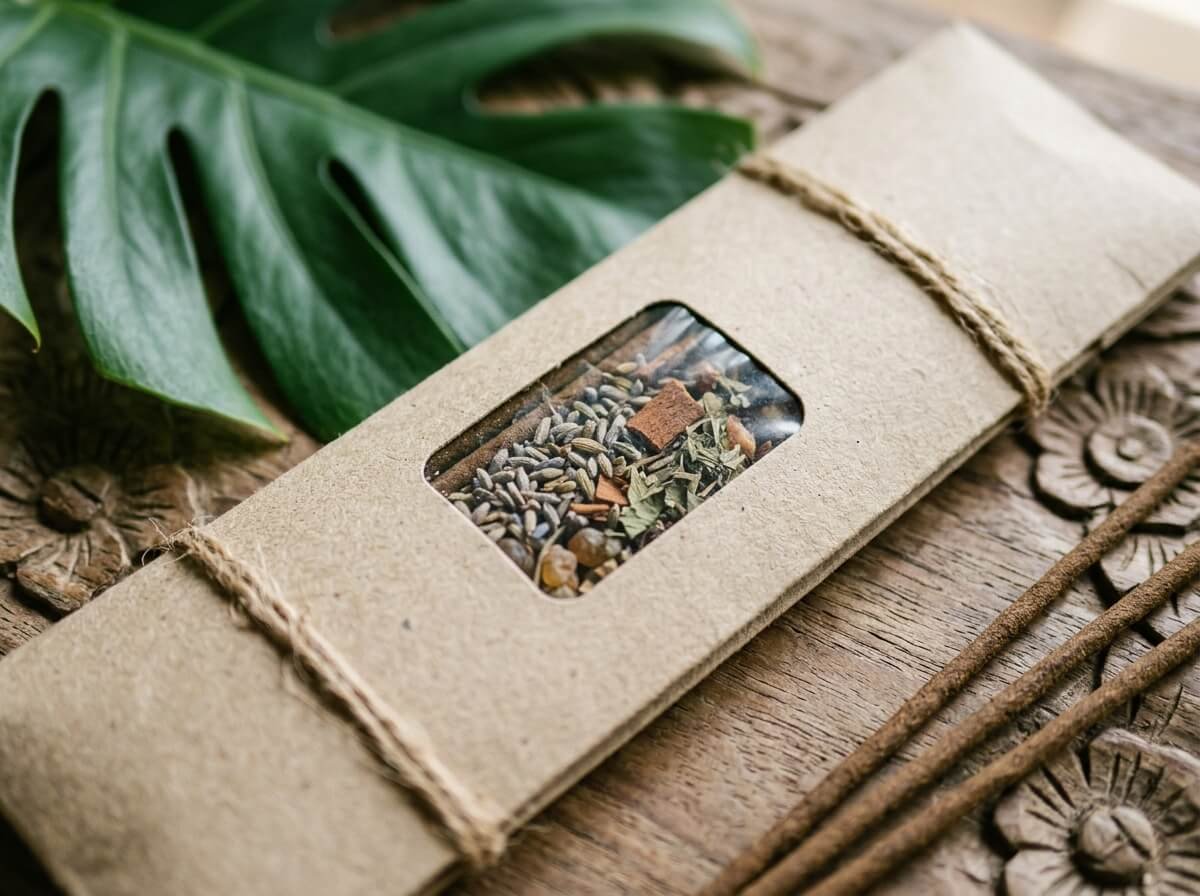
Even the cleanest natural incense involves combustion, so mindful use is essential. Here are practices that maximise benefit while minimising any potential irritation.
Ventilation is non-negotiable
Always burn incense in a room with some air movement. An open window, a slightly ajar door, or a ceiling fan on low speed is sufficient. The goal is not to eliminate the fragrance (cross-ventilation would do that) but to ensure particulate matter does not accumulate. Enclosed, unventilated spaces concentrate smoke particles regardless of how natural the source material is.
Choose an appropriate holder
A proper incense holder catches falling ash, keeps the stick stable, and protects surfaces from heat. Materials like ceramic, stone, brass, or reclaimed wood work well. The Utama Spice Bali Reclaimed Wood Incense Holder, crafted from repurposed chopsticks, combines functionality with zero-waste principles. Avoid burning incense directly on flammable surfaces, near curtains, or anywhere it could tip and create a fire hazard.
Duration and frequency
One stick per session is typically sufficient for a medium-sized room. Burning multiple sticks simultaneously creates unnecessarily dense smoke. For daily practice, one session of 30 to 45 minutes is a healthy rhythm. If you notice irritation in your throat or eyes, reduce frequency or switch to a lighter blend. People with asthma or respiratory sensitivities should consult their healthcare provider before incorporating any incense into their routine.
Storage for longevity
Natural incense sticks retain their potency longest when stored in a cool, dry place away from direct sunlight. Airtight containers or sealed bags work well, particularly in humid climates where moisture can cause sticks to burn unevenly or develop mould. Properly stored natural incense can maintain its fragrance for one to two years, though resins and woods tend to age gracefully, sometimes improving with time.
Frequently asked questions about natural incense sticks
Are natural incense sticks safe to breathe?
When burned in ventilated spaces and used in moderation (one stick, one session per day), natural incense is generally considered safe for healthy adults. The key distinction is that natural incense produces fewer volatile organic compounds than synthetic alternatives. However, all smoke contains fine particulate matter, so no incense should be burned around infants, pets with respiratory sensitivity, or in sealed, unventilated rooms.
How can I tell if my incense is truly natural?
Look for full ingredient transparency (every botanical named), a thin smoke profile, gradual scent release rather than immediate perfume-like intensity, and a non-black stick colour. Certifications like organic or wildcrafted help but are not universal in the incense industry. The best indicator remains the reputation and transparency of the maker.
What is the difference between incense sticks and incense cones?
Both use the same botanical ingredients, but the format affects the burn. Sticks burn linearly from tip to base, producing a steady, consistent fragrance over 30 to 60 minutes. Cones burn from the top down with increasing surface area, meaning the scent intensifies toward the end of the burn and the session is shorter (15 to 25 minutes). Sticks are generally preferred for longer meditation or room-scenting sessions, while cones suit shorter rituals or smaller spaces.
Can natural incense help with sleep?
Certain botanical blends support relaxation before sleep. Lavender, chamomile, and sandalwood are the most studied in this regard. However, we recommend burning incense 30 to 60 minutes before bed and extinguishing it well before you fall asleep, both for safety and to avoid overnight particulate exposure. The ritual of lighting incense can itself become a “sleep signal” for your nervous system, similar to how dimming lights cues melatonin production. If you are building an evening wellness ritual, our guide to natural face oils complements incense practice beautifully as part of a wind-down routine.
How long do natural incense sticks burn?
Standard sticks (8 to 10 inches) burn for 30 to 45 minutes. Long-format sticks (12+ inches) can burn for 45 to 75 minutes. Japanese-style thin sticks may burn for only 15 to 25 minutes. The burn time depends on thickness, density of the paste, and the specific binder used. Makko-bound incense tends to burn slightly faster than gum arabic-bound varieties.
Choosing natural incense sticks that align with your values
The incense you burn is part of a supply chain that connects you to forests, farms, and artisan communities. Choosing thoughtfully means considering not just scent and ingredients, but also how those ingredients were sourced, who made the incense, and what happens at end of life.
Look for makers who identify their sourcing partnerships. Wild-harvested resins should come from sustainable tapping practices that do not over-exploit trees. Wood powders should originate from plantation-grown or reclaimed sources, not old-growth forests. The bamboo sticks at the core should be sustainably grown (bamboo is inherently regenerative, but sourcing still matters).
Packaging is another consideration. Natural incense wrapped in plastic defeats part of the purpose. Look for recycled paper, compostable wrapping, or minimal packaging. At Utama Spice, our incense range, including Moonflower, Temple Spice, and Begone Bug, uses botanicals sourced from Indonesian growers and communities we have worked with since 1989. Every stick is hand-rolled in our Bali workshop, supporting local employment and keeping traditional craft alive.
The act of choosing natural incense sticks is itself a small act of care: for your body (fewer synthetic chemicals), for your home (lighter, cleaner smoke), and for the communities whose hands and knowledge produce these aromatic traditions. As with our coconut body lotion and other products, the ingredient story and the human story are inseparable.