Aromatherapy oils for anxiety: how they work, which to use, and how to build a calming ritual
Aromatherapy oils for anxiety have been used for thousands of years, long before modern clinical trials began documenting what Balinese healers and botanical practitioners already knew: that certain plant essences can genuinely shift how we feel. The science is now catching up, with peer-reviewed research confirming that specific essential oils interact with the olfactory nerve and limbic system to reduce cortisol, calm the nervous system, and ease both state and trait anxiety.
This guide walks you through the most effective aromatherapy oils for anxiety, how they work in the body, the safest ways to use them, and how to build a personal practice that supports calm without replacing professional care. Whether you are new to essential oils or looking for a more intentional approach, what follows is grounded in both research and the lived wisdom of botanical traditions.
How aromatherapy oils for anxiety actually work
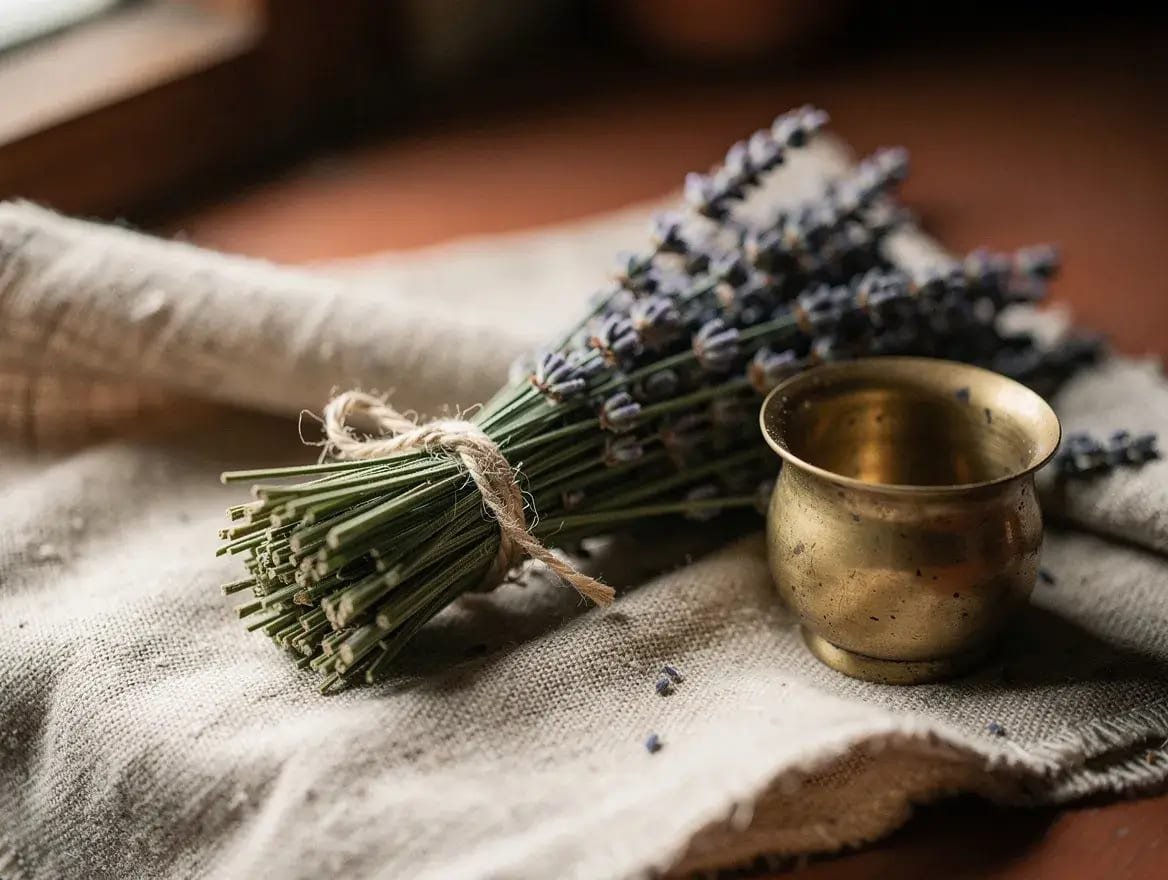
When you inhale an essential oil, tiny volatile molecules enter through the nose and reach the olfactory bulb within milliseconds. From there, signals travel directly to the limbic system, the brain region governing emotion, memory, and stress response. This pathway bypasses the rational cortex entirely, which is why a single breath of lavender can shift your mood before you consciously register the scent.
The mechanism is not purely psychological. Research published in the Journal of Affective Disorders has shown that linalool (a compound in lavender) modulates GABA receptors, the same neurotransmitter system targeted by anti-anxiety medications. A 2023 systematic review in Frontiers in Psychiatry analysing 27 clinical trials found that aromatherapy significantly reduced anxiety scores across diverse populations, from pre-surgical patients to those with generalised anxiety disorder.
What this means in practice: aromatherapy oils for anxiety are not a placebo or a pleasant smell. They are bioactive plant compounds that interact with your neurobiology in measurable ways. The question is not whether they work, but which oils, in what combinations, and through which methods, will serve you best.
The best aromatherapy oils for anxiety: what the evidence supports
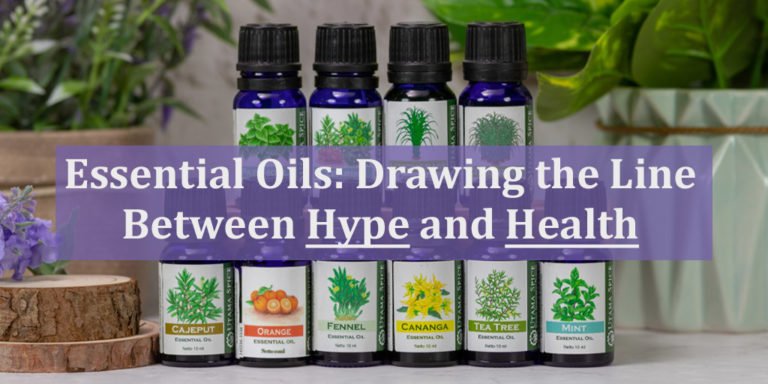
Not all essential oils are equal when it comes to calming the nervous system. The following have the strongest clinical backing for anxiety reduction, each with distinct profiles that suit different people and situations.
Lavender (Lavandula angustifolia)
The most researched anxiolytic essential oil. Lavender’s primary active compounds, linalool and linalyl acetate, have been shown to reduce salivary cortisol, lower heart rate, and improve sleep quality in intensive care patients. A meta-analysis of 90 studies confirmed its efficacy for both acute and chronic anxiety. Best for: generalised tension, pre-sleep anxiety, and daily maintenance.
Bergamot (Citrus bergamia)
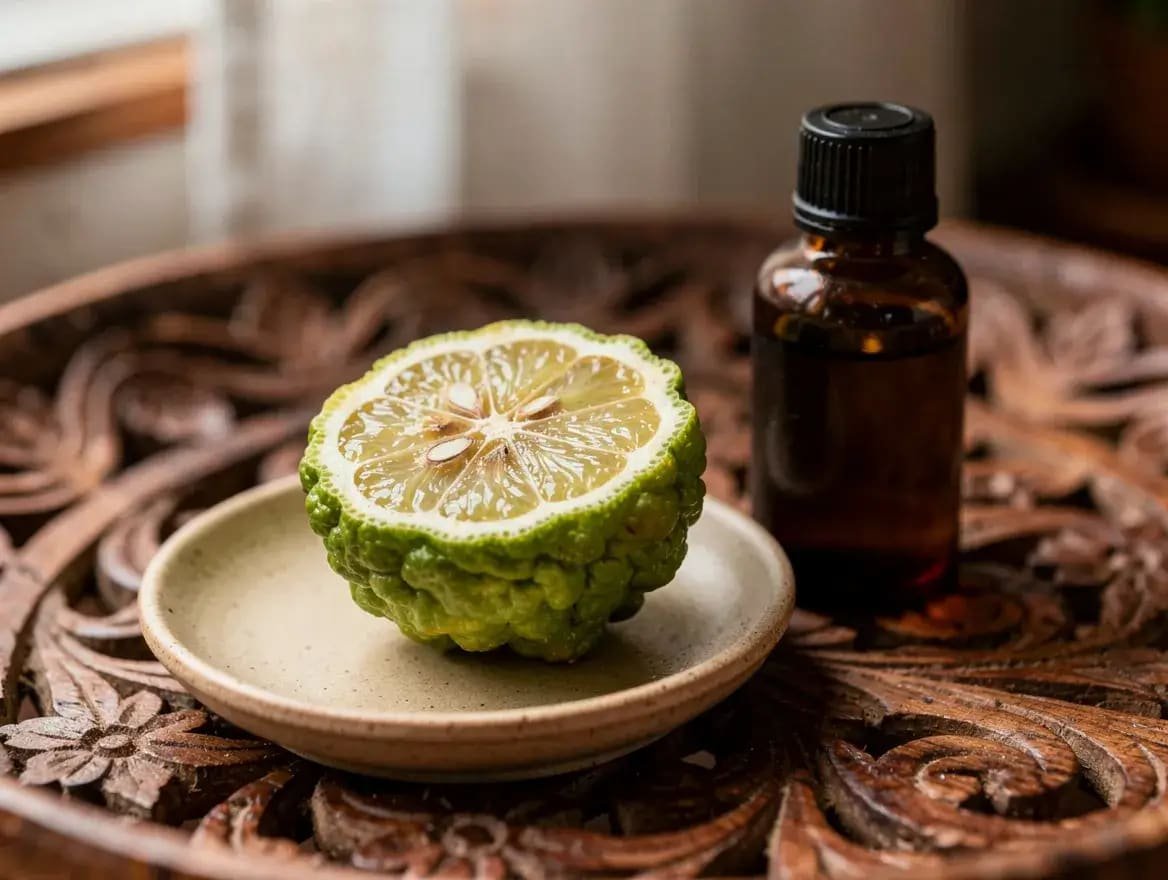
A citrus oil with an unusually complex chemistry that bridges energising and calming effects. Bergamot contains limonene (uplifting) alongside linalool (calming), making it ideal for anxious fatigue, the state where you feel both wired and exhausted. Clinical trials show it reduces cortisol and improves mood within 15 minutes of inhalation. Best for: situational anxiety, low mood with nervous energy, morning use.
Ylang-ylang (Cananga odorata)
A deeply floral, almost heady essential oil that acts as a sedative and hypotensive agent. Studies show ylang-ylang significantly lowers blood pressure and reduces self-reported stress within 5 minutes. It also decreases serum cortisol and increases alertness simultaneously, a rare combination. In Bali, cananga flowers are woven into temple offerings and ceremonial garlands, a tradition rooted in the intuitive understanding that this scent centres the mind. Best for: acute overwhelm, evening wind-down, nervous heart palpitations.
Chamomile (Matricaria chamomilla)
Roman chamomile is gentle enough for children and effective enough for clinical anxiety. It contains bisabolol and chamazulene, compounds with both anti-inflammatory and anxiolytic properties. A randomised controlled trial found chamomile extract significantly reduced generalised anxiety disorder symptoms over 8 weeks. As an essential oil, it works best blended with lavender or bergamot. Best for: gentle daily support, evening baths, sensitive individuals.
Vetiver (Chrysopogon zizanioides)
A deeply grounding root oil with earthy, smoky complexity. Vetiver is less studied than lavender but shows promise for ADHD-related anxiety and nervous restlessness. Its heavy molecular weight means it evaporates slowly, providing sustained background calm. In our Bali Night Essential Oil Blend, vetiver provides the grounding base note that anchors the lighter florals. Best for: restlessness, racing thoughts, grounding practice.
Other oils worth knowing
Clary sage, frankincense, rose, neroli, sandalwood, and sweet orange all show anxiolytic potential in smaller studies. Frankincense (incensole acetate) activates ion channels associated with warmth and anti-depression. Rose oil reduced anxiety in first-time mothers during labour. If you are drawn to natural incense and resinous scents, frankincense and sandalwood may resonate with your nervous system most deeply.
How to use aromatherapy oils for anxiety safely
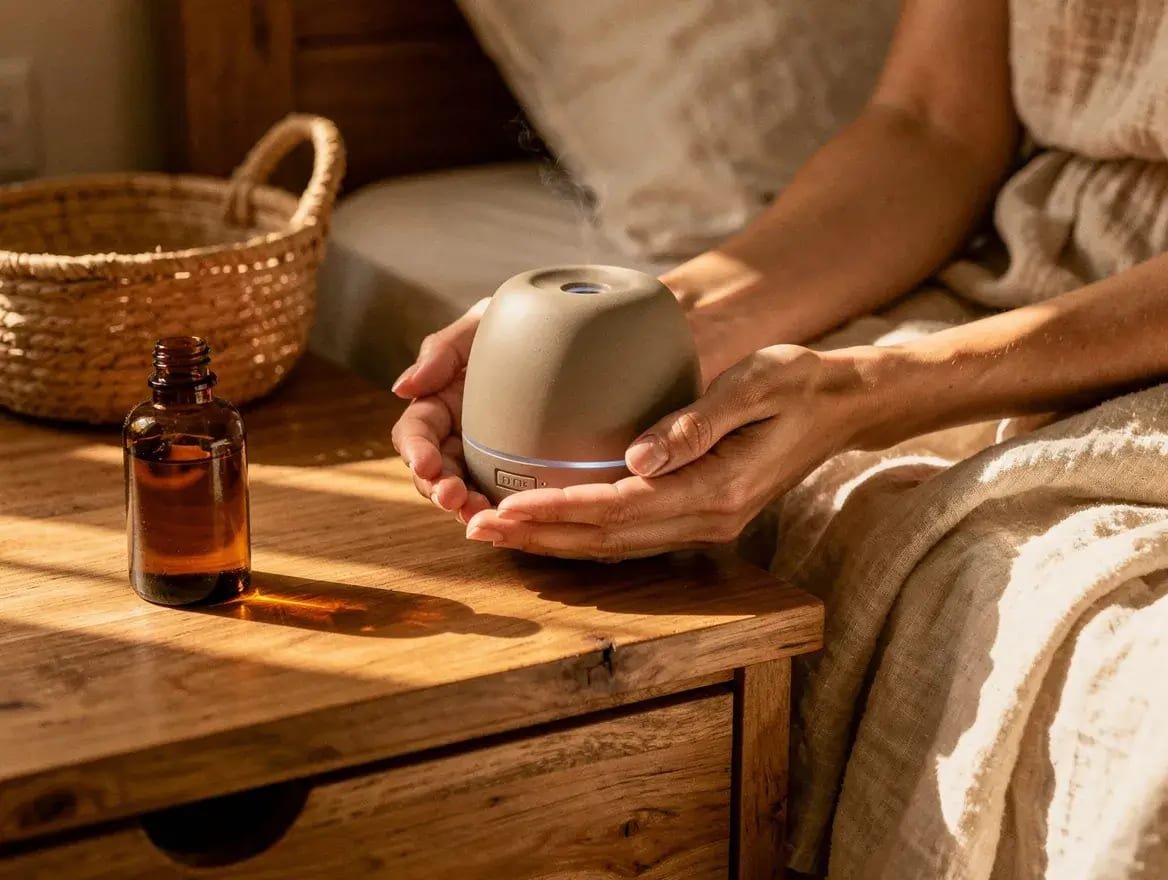
Effectiveness depends on method. The three primary ways to use aromatherapy oils for anxiety are inhalation, topical application, and bathing. Each has distinct advantages.
Inhalation (the fastest route to calm)
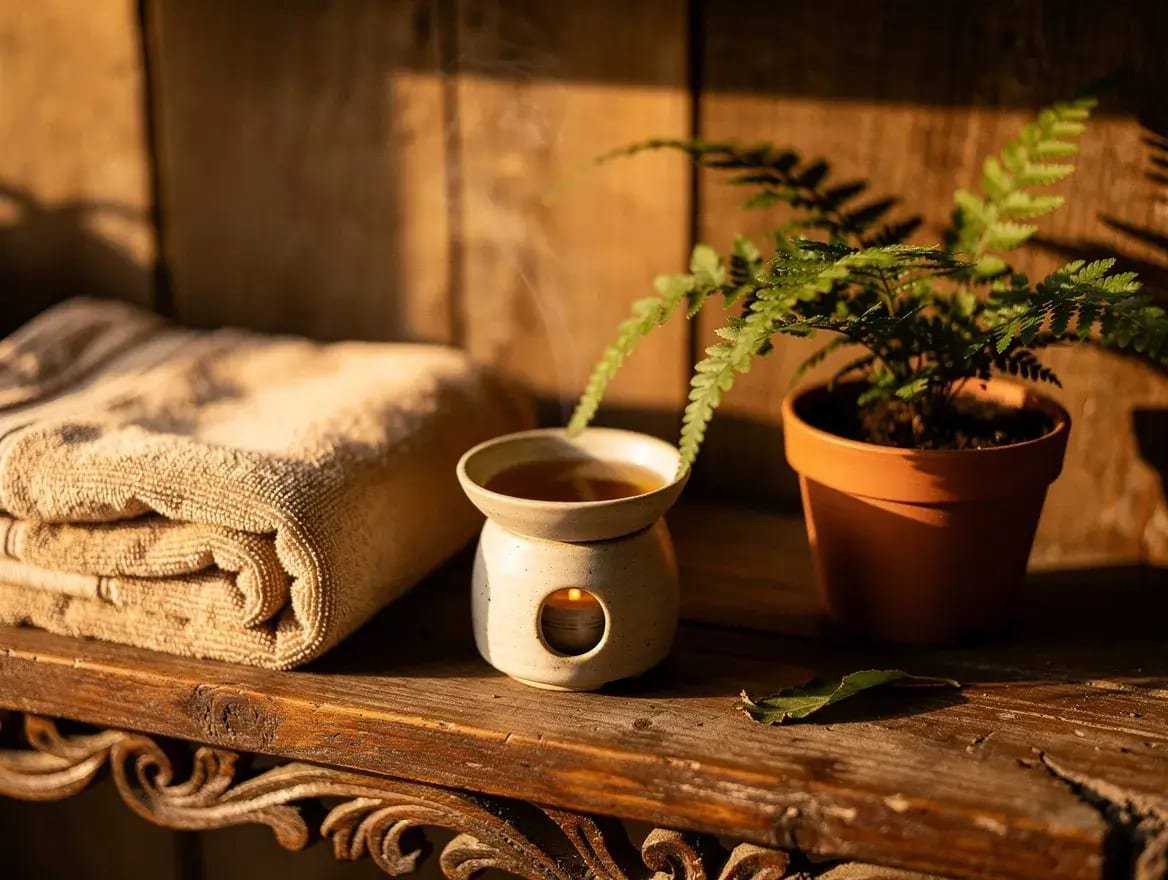
Diffusion is the most common and gentlest method. An ultrasonic essential oil diffuser disperses micro-droplets into the air without heat, preserving volatile compounds. Run for 30 to 60 minutes in a medium-sized room. For acute moments, place one to two drops on a tissue or inhale directly from the bottle with slow, deep breaths. A quality diffuser with intermittent mode prevents olfactory fatigue and keeps the experience effective over longer periods.
Topical application (sustained release)
Essential oils must always be diluted in a carrier oil before skin contact. A safe ratio for adults is 2 to 3 percent: roughly 12 to 18 drops of essential oil per 30ml of carrier. Coconut oil is an excellent carrier because it absorbs cleanly and has its own skin-nourishing properties. Apply to pulse points (wrists, temples, behind ears) where body heat gently diffuses the scent throughout the day.
Bathing (full-body immersion)
Add 5 to 8 drops of essential oil to a tablespoon of carrier oil or unscented bath gel, then disperse into warm (not hot) bath water. Hot water dissipates volatile compounds too quickly. A 20-minute aromatic bath combines hydrotherapy benefits (muscle relaxation, vagal tone activation) with inhalation for a compound calming effect. Lavender, chamomile, and ylang-ylang are the safest choices for bathing.
Safety essentials
- Never apply undiluted essential oils directly to skin
- Perform a patch test 24 hours before using a new oil topically
- Bergamot is phototoxic: avoid sun exposure on application areas for 12 hours
- Consult your healthcare provider if pregnant, breastfeeding, taking medications, or managing epilepsy or asthma
- Keep oils away from children and pets (cats are especially sensitive to many essential oils)
- Aromatherapy complements, but does not replace, professional mental health treatment
Building an aromatherapy ritual for daily anxiety management
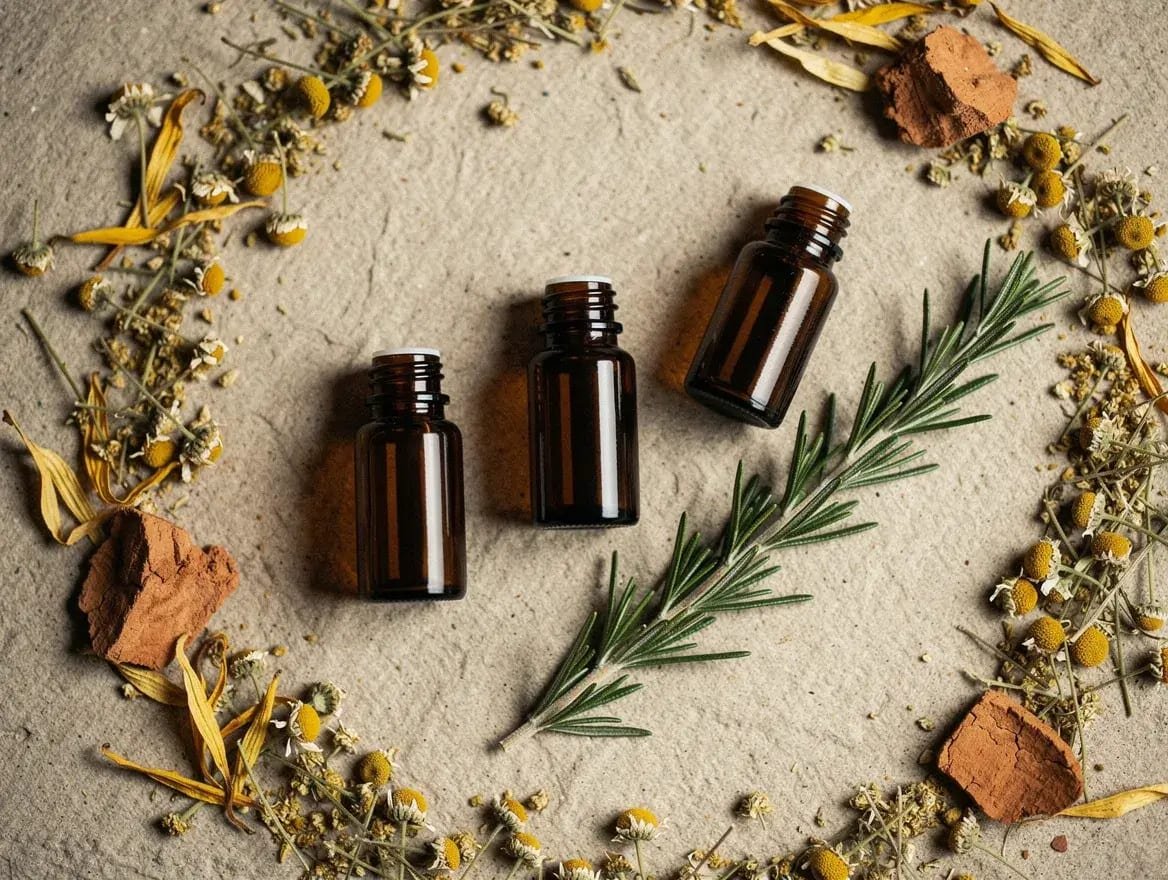
The difference between occasional oil use and genuine anxiety support lies in consistency and intention. A ritual, even a two-minute one, anchors the practice in your nervous system so that over time, the scent itself becomes a cue for calm.
Morning grounding (2 minutes)
Before reaching for your phone, apply a pre-made rollerball blend (bergamot, sweet orange, vetiver in jojoba) to your wrists. Inhale three slow breaths. This pairs the uplifting citrus with grounding vetiver to set a calm-alert baseline for the day. The act of pausing before the world rushes in is itself a regulation technique.
Midday reset (5 minutes)
When cortisol peaks (typically early afternoon), run your diffuser with lavender and clary sage for 30 minutes. If you work in a shared space, keep a personal inhaler stick: a cotton wick saturated with your blend inside a pocket-sized tube. Three deep breaths with closed eyes interrupts the stress cascade before it escalates.
Evening wind-down (15 minutes)
Begin 60 to 90 minutes before sleep. Diffuse ylang-ylang, chamomile, and lavender, or light natural incense sticks containing calming botanicals. Combine with a warm foot soak or self-massage using diluted oil on the soles of the feet (a practice common in Balinese wellness traditions). The feet contain dense nerve endings that respond well to aromatic touch.

Consistency matters more than duration. A two-minute morning ritual practiced daily will shift your baseline anxiety more effectively than an occasional hour-long session. The nervous system learns through repetition.
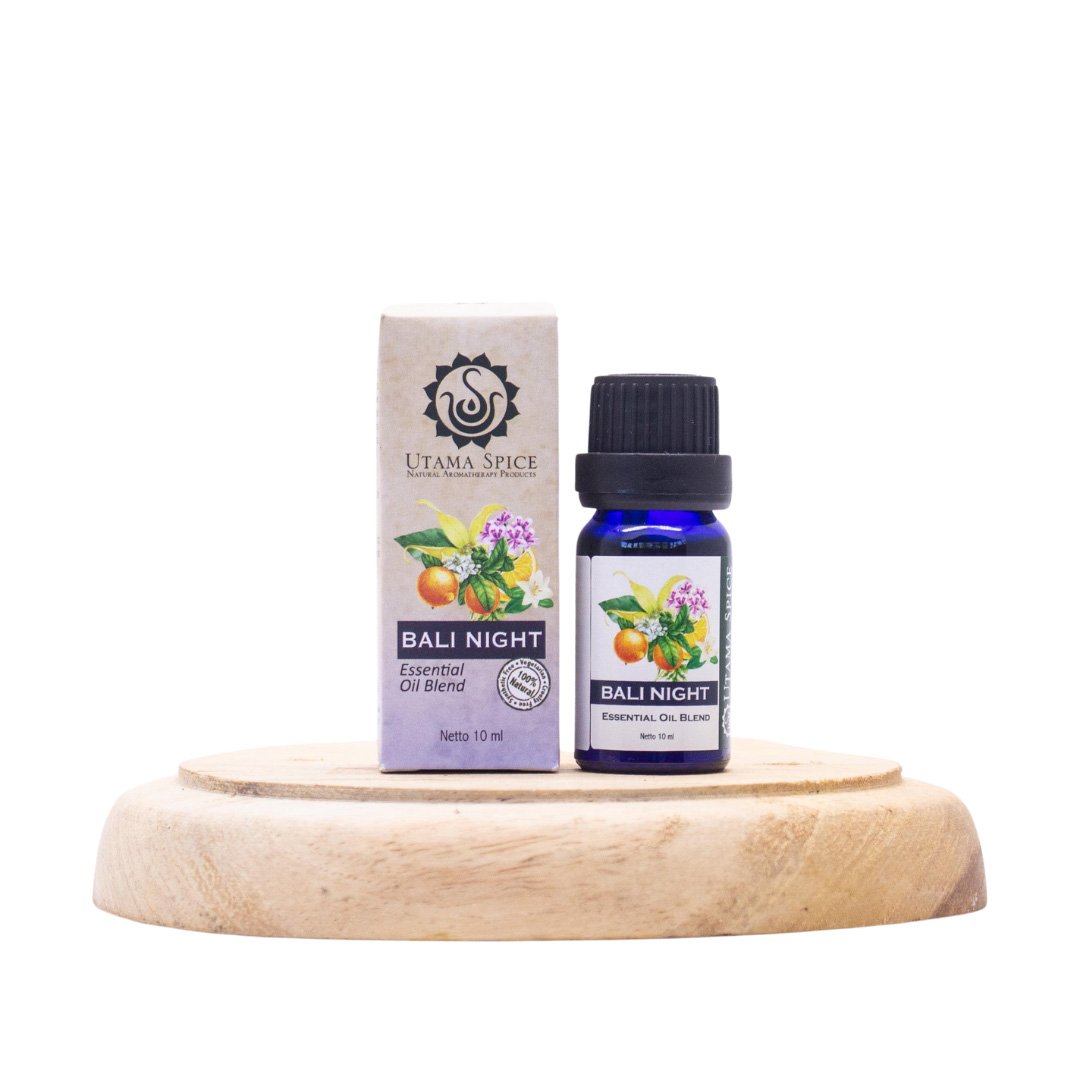
Calm begins with what you breathe
Our Bali Night Essential Oil Blend combines ylang-ylang, vetiver, rose geranium, and citrus oils into a single evening ritual. Hand-blended in Bali from botanicals we know by name.
Blending aromatherapy oils for anxiety: combinations that work together
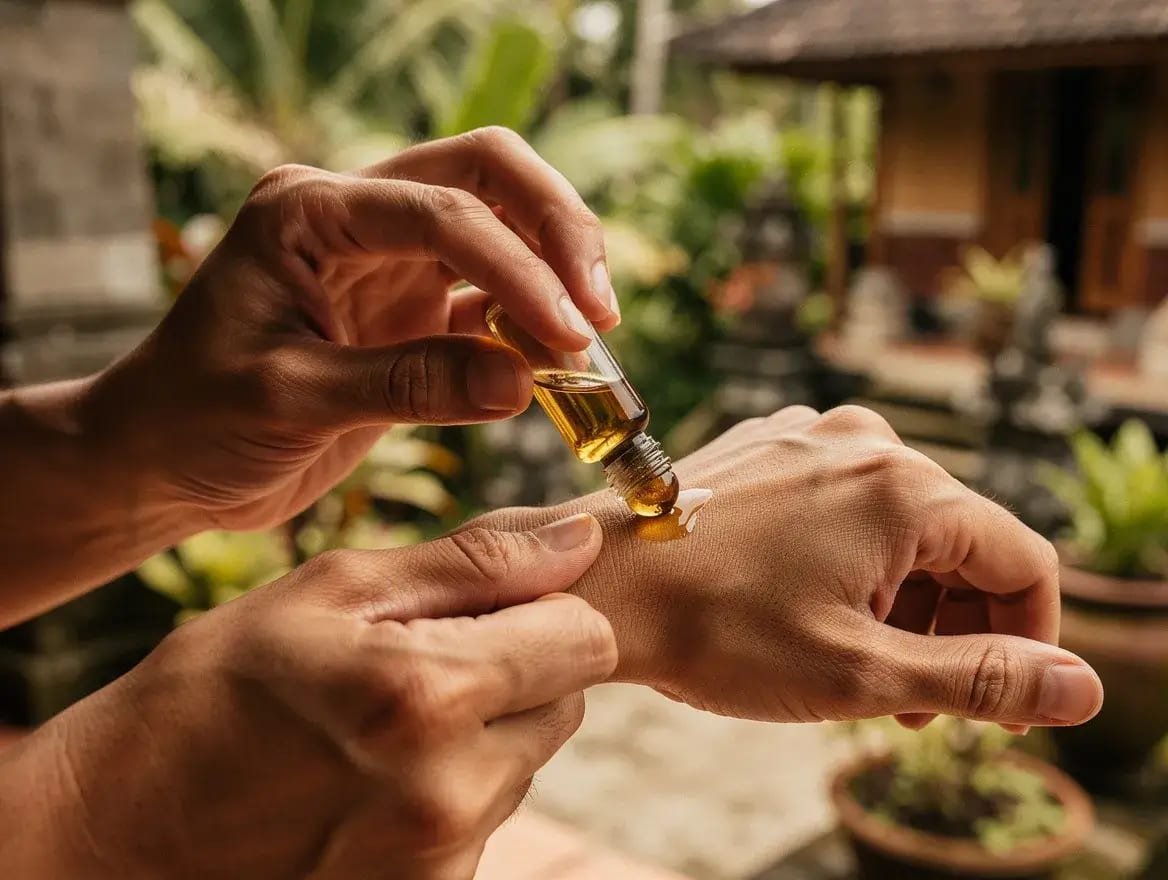
Single oils are effective, but blends create synergy. When you combine top notes (fast-evaporating, bright), middle notes (the heart of the blend), and base notes (slow-evaporating, grounding), you get a scent that evolves over hours and addresses anxiety from multiple angles simultaneously.
Calming daytime blend
3 drops bergamot (top) + 2 drops lavender (middle) + 1 drop frankincense (base). Bright enough to stay alert, calm enough to ease racing thoughts. Ideal for work hours or social anxiety.
Deep sleep blend
2 drops Roman chamomile (top/middle) + 3 drops lavender (middle) + 2 drops vetiver (base). Heavy, sedative, deeply grounding. Best in a diffuser set to run for 30 minutes as you fall asleep.
Panic-moment blend
3 drops sweet orange (top) + 2 drops ylang-ylang (middle) + 1 drop sandalwood (base). Keep this pre-made in a personal inhaler for acute episodes. The sweet orange activates quickly while ylang-ylang and sandalwood provide sustained calm as the moment passes.
When creating blends, start with small batches (10 to 15 drops total) and test by inhaling from the open bottle before committing to a full mix. Trust your nose: if a blend repels you, it will not serve your nervous system regardless of what the research says. Aromatherapy is deeply personal, which is why clean beauty brands that use real botanical ingredients rather than synthetic fragrance produce genuinely different therapeutic outcomes.
What the research says (and what it does not)
A 2023 systematic review in Frontiers in Psychiatry examined 27 randomised controlled trials and concluded that aromatherapy significantly reduces anxiety in clinical settings. Lavender, citrus oils, and rose were the most frequently studied, with lavender showing the most consistent effect sizes. Another meta-analysis found that aromatherapy reduced both state anxiety (acute, situational) and trait anxiety (chronic, dispositional).
However, honest assessment requires noting the limitations. Many studies have small sample sizes. Blinding is difficult (people can smell the intervention). Publication bias likely inflates positive results. And the quality of essential oils varies enormously between studies, making direct comparison challenging.
What the science supports with reasonable confidence:
- Lavender inhalation reduces cortisol and subjective anxiety in most populations studied
- Aromatherapy massage reduces pre-procedural anxiety more effectively than massage alone
- Citrus oils (bergamot, sweet orange, lemon) have acute mood-lifting and anxiolytic effects
- Regular aromatherapy practice (daily for 4+ weeks) shows cumulative benefit
- Aromatherapy works best as a complement to other interventions, not as standalone treatment for clinical disorders
The honest position: aromatherapy oils for anxiety are a genuinely useful tool in a broader wellness toolkit. They are not a cure, they are not a substitute for therapy or medication when those are needed, and they are not magic. They are plant compounds with real biological activity that, used consistently and correctly, can meaningfully support nervous system regulation. For many people navigating everyday stress and mild to moderate anxiety, that support makes a tangible difference in quality of life.
Frequently asked questions about aromatherapy oils for anxiety
Which essential oil is best for anxiety overall?
Lavender (Lavandula angustifolia) has the most robust evidence base. If you are starting with one oil, start there. For a more complex practice, add bergamot for daytime and vetiver for grounding.
How quickly do aromatherapy oils work for anxiety?
Inhalation effects begin within 5 to 15 minutes. Topical application takes 20 to 30 minutes as oils absorb through skin. For cumulative, baseline-shifting effects, consistent daily use over 4 to 8 weeks is needed.
Can I use aromatherapy oils while taking anxiety medication?
Generally yes, but always consult your prescribing physician. Some oils (particularly clary sage) may interact with sedatives. Aromatherapy can complement medication, and some people find it supports eventual dose reduction under medical guidance.
Are synthetic fragrance oils effective for anxiety?
No. Synthetic fragrances mimic scent but lack the bioactive terpenes, esters, and alcohols that create therapeutic effects. Look for 100 percent pure, steam-distilled or cold-pressed essential oils from transparent sources. Natural plant oils deliver the full spectrum of beneficial compounds.
How do I know if my essential oil is good quality?
Check for: botanical name on the label, country of origin, extraction method stated, no added carrier or fragrance, GC/MS testing available. Price is also an indicator: genuine rose otto costs hundreds per 10ml; if it is cheap, it is diluted or synthetic.
Bringing it all together: your first week with aromatherapy for anxiety
Start simply. Choose one oil that resonates (lavender is the safest entry point), one method (diffusion is the easiest), and one moment in your day (evening is often most impactful for anxiety). Practice that single ritual for seven days before adding complexity.
Day one through three: diffuse your chosen oil for 30 minutes before bed. Notice, without judging, any changes in how quickly you fall asleep or how you feel upon waking. Day four through seven: add a midday check-in, either a personal inhaler at your desk or a rollerball application to wrists. By the end of the week, you will have enough personal data to know whether this particular oil serves your nervous system.
From there, expand intentionally. Try a second oil. Experiment with blending. Explore topical application. Build towards a layered practice that meets you at different stress points throughout the day. The nervous system responds to gentle, consistent input far more than dramatic, occasional interventions.
What matters most is not which specific oil you choose, but that you choose to pause, breathe, and give your body a botanical cue that safety is available. In a world that accelerates endlessly, the act of slowing down with intention is itself medicine. The oils simply make that pause richer, more embodied, and more consistently accessible.