Kukui oil: the candlenut oil for skin, hair, and Balinese ritual
Kukui oil is one of those quiet botanical oils that has been doing real work for centuries, long before it had a marketing story. Pressed from the nut of the candlenut tree, it is light, fast-absorbing, and rich in the fatty acids dry and sensitive skin tends to crave. Most guides tell only its Hawaiian chapter. We want to tell the fuller one, because the same tree grows across the Indonesian archipelago, and here in Bali it has been part of cooking, healing, and daily care for generations.
This is a complete, honest guide to kukui oil: where it comes from, who harvests it, what the science actually says, how to use it well, and how it compares with the other botanical oils you may already know. No miracle claims. Just a clear look at a genuinely useful oil and the tradition behind it.
What is kukui oil
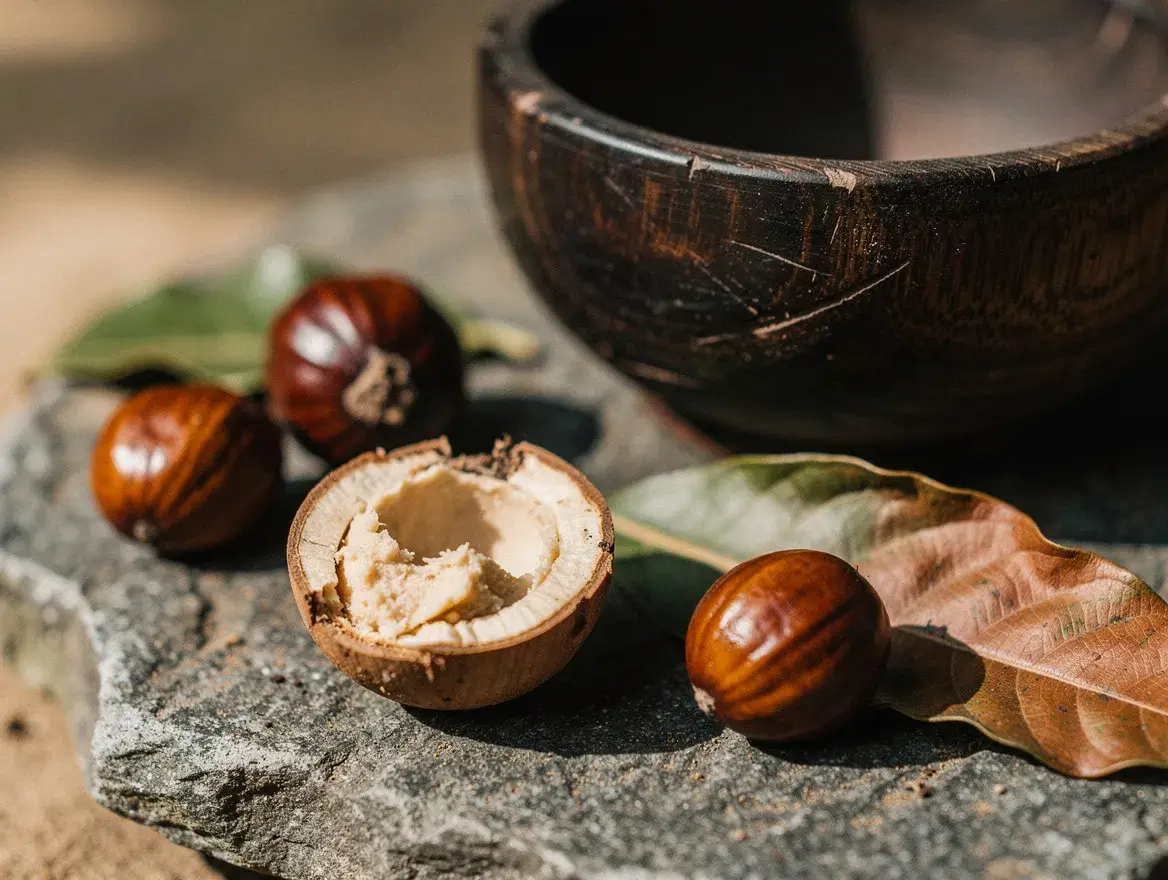
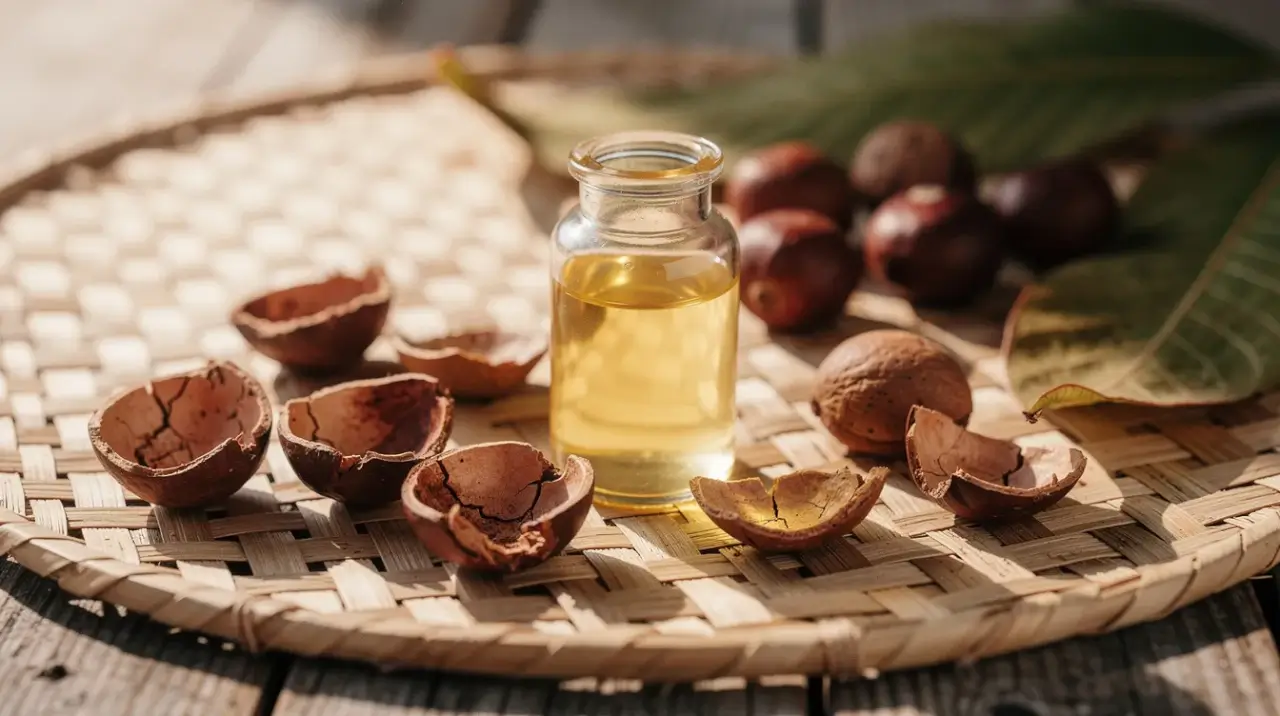
Kukui oil is the oil pressed from the seed of Aleurites moluccana, the candlenut tree. In Hawaii the tree is called kukui, a word that means light, because the oily nuts were once strung together and burned like slow candles. That image is lovely, and it is also only half the map. The candlenut is native across Southeast Asia and the Pacific, and across Indonesia it is known as kemiri. In Balinese kitchens, roasted candlenut is ground into the spice pastes that flavor everyday meals. In traditional care, the oil has long been used to soothe chapped skin, calm irritation, and protect skin exposed to sun, wind, and salt water.
So when you read that kukui oil is a Hawaiian secret, hold that gently. It is a Pacific and Southeast Asian inheritance, shared across many islands and many hands. The tree is generous and widespread, and the knowledge of how to use its oil belongs to more cultures than one. We think that fuller story matters, because an ingredient is never just a molecule. It is a place, a season, and the people who know it.
As a skincare oil, kukui has a distinctive feel. It is thin and dry-touch rather than rich and occlusive, so it sinks in quickly and leaves very little residue. That makes it different from a heavy butter or a slow oil like coconut, which has its own place in care, as we cover in our guide to why coconut oil is good for your skin. Kukui sits at the lighter end of the spectrum, closer to a serum than a balm, which is exactly why so many people who dislike the feeling of oil still get along with this one.
Where kukui oil comes from: sourcing and the people behind it

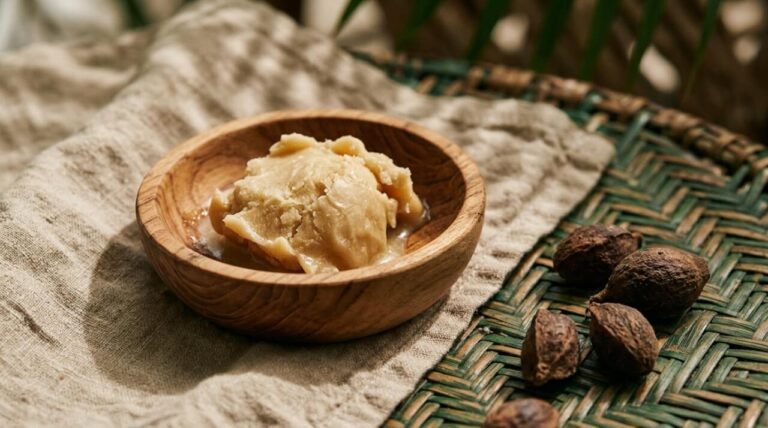
Here is the part most ingredient articles skip. An oil is only as honest as its harvest. The candlenuts we work with are wild-harvested in the rainforests of Kalimantan, on the island of Borneo, by families who have worked the same forest groves for generations. We source them through our Forestwise partnership, the same regenerative supply chain that brings us wild-harvested illipe butter. If you want the deeper version of that story, we tell it in our piece on what clean beauty really means.
Wild-harvesting is slower and harder than plantation farming, and that is the point. The trees stay where they grew. The forest stays standing. The income from each harvest flows to the communities who protect that forest, which gives the forest a living reason to remain forest. This is the logic behind everything we make: protect the source, and the source keeps giving back. It is also why we will not pretend kukui oil is endless or effortless. It is wild, seasonal, and finite, and that is a feature, not a flaw.
When you choose a botanical oil, the question that matters most is rarely on the front of the bottle. It is this: where did this come from, who harvested it, and what did that harvest do to the land. A brand that can answer those questions plainly is a brand worth trusting. A brand that cannot, or will not, is asking you to take greenwashing on faith. We would rather show our work.
The science: what makes kukui oil good for skin
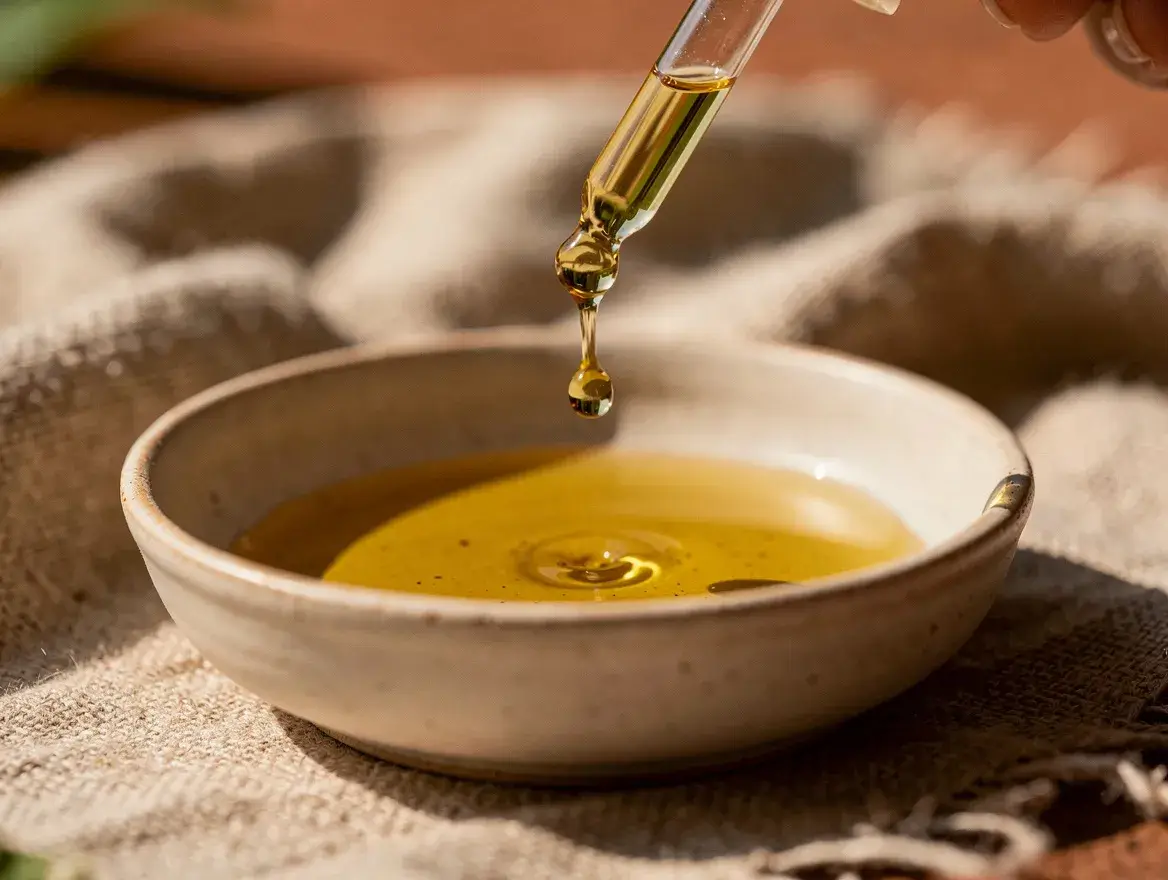
Kukui oil earns its reputation through its fatty acid profile. It is unusually high in polyunsaturated fatty acids, mainly linoleic acid and alpha-linolenic acid, with a smaller share of oleic acid. Linoleic acid is the one to notice. It is a core building block of the skin barrier, the layer that holds moisture in and keeps irritants out. Skin that is dry, reactive, or acne-prone is often low in linoleic acid, which is part of why a linoleic-rich oil like kukui can feel so settling rather than greasy.
That same chemistry explains the texture. Polyunsaturated oils are lighter and absorb faster than oils dominated by heavier saturated fats. Kukui also carries naturally occurring antioxidants, including vitamins A, C, and E, which help the oil resist some oxidation and bring a mild soothing quality to the skin. It has a low tendency to clog pores, which makes it workable even for combination and oilier skin types, where a heavier oil would feel like too much.
The traditional uses are not only folklore. A clinical study published in the International Journal of Dermatology looked at kukui nut oil as a topical treatment for psoriasis and atopic dermatitis and found it a reasonable, well-tolerated emollient option for these dry, inflamed skin conditions. That is the kind of evidence we like: modest, specific, and aligned with what generations of practice already suggested. Ancient knowledge and modern research pointing the same direction is the most trustworthy signal there is.
One honest caveat lives inside that same chemistry. Oils high in polyunsaturated fats oxidize faster than stable oils. That is not a defect, it is physics, and it shapes how kukui oil should be made, stored, and used. We come back to this in the how-to section, because it is the single most useful thing to understand about this oil.
Kukui oil benefits for skin, hair, and everyday ritual
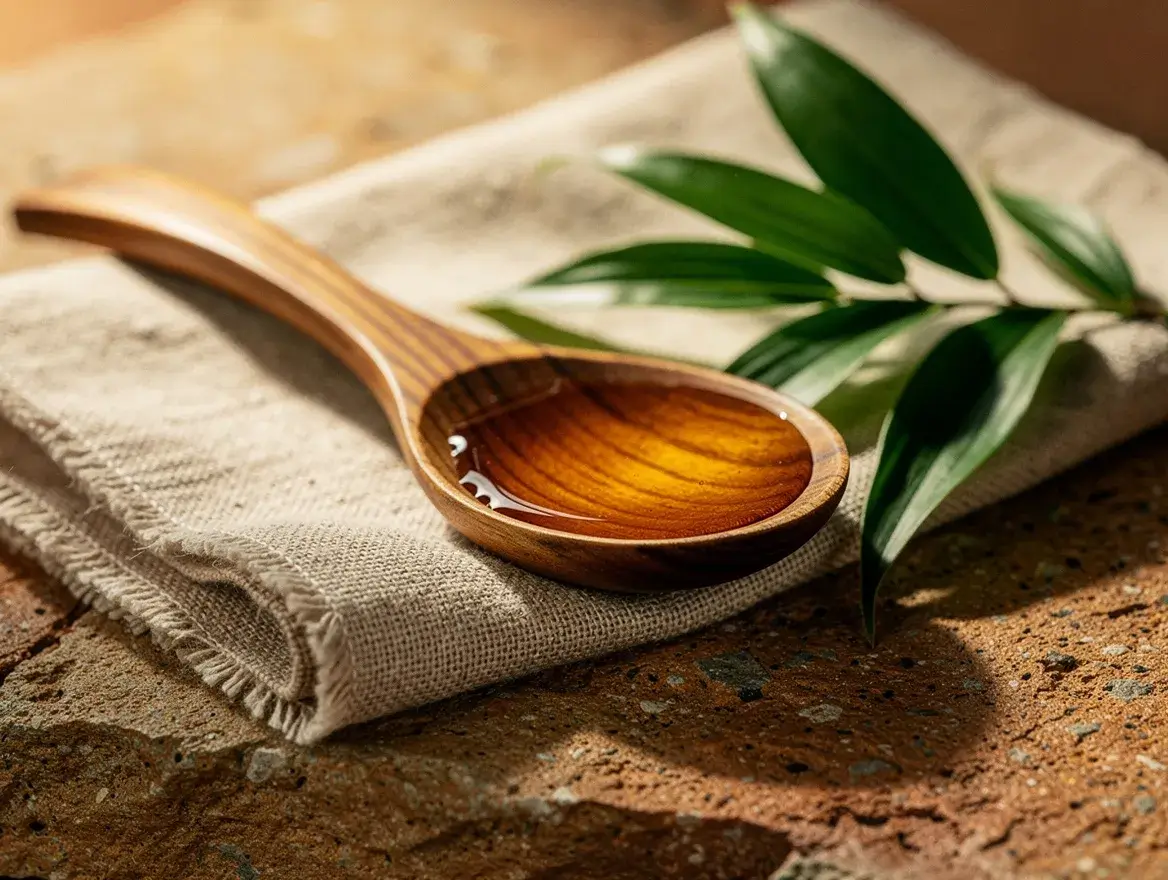
The clearest benefit of kukui oil is fast, non-greasy moisture. It softens dry patches, eases the tight feeling after sun or wind exposure, and supports the skin barrier without the heavy film many oils leave behind. For skin that runs dry or reactive, it can be the difference between an oil you tolerate and one you reach for. People often use it the way they would a lightweight serum, and we explore that lighter category more fully in our carrier oil guide for every skin type.
- Dry and dehydrated skin: a thin layer over slightly damp skin helps seal in water without a greasy finish.
- Sensitive and irritated skin: its soothing, low-comedogenic nature suits eczema-prone and easily reactive skin, the traditional and clinical use case.
- After sun and after wind: a calming aftercare oil for skin that has had a hard day outdoors. It comforts, but it is not a sunscreen and never replaces one.
- Scars and stretch marks: by keeping skin supple and well-hydrated it can soften their appearance over time. It does not erase them, and any product that promises it does is selling theatre.
- Hair and scalp: a small amount smooths dry ends and adds shine without weighing hair down, which is why candlenut oil has a long history in hair care.
The hair and scalp use deserves its own note. Because kukui is light, it conditions mid-lengths and ends without the greasy build-up heavier oils can cause, and it makes a calm, grounding scalp-massage oil. We walk through that practice step by step in our warm-oil scalp massage ritual, and our older guide to kukui nut oil for hair vitality and shine goes deeper on the hair side specifically. If you would rather reach for a ready-blended option, our Herbal Silk Hair Oil carries the same lightweight, botanical-oil thinking into a finished ritual product, and you can compare it against other options in our roundup of the best natural hair oils.

On the face, kukui plays well with sensitive and combination skin. If you prefer a formulated serum to a single-ingredient oil, our Sensitive Face Serum follows the same calm, barrier-first logic. None of this is about chasing perfection. It is about small, repeatable acts of care that add up, which is the whole point of a ritual.
How to use kukui oil, and how to choose a good one
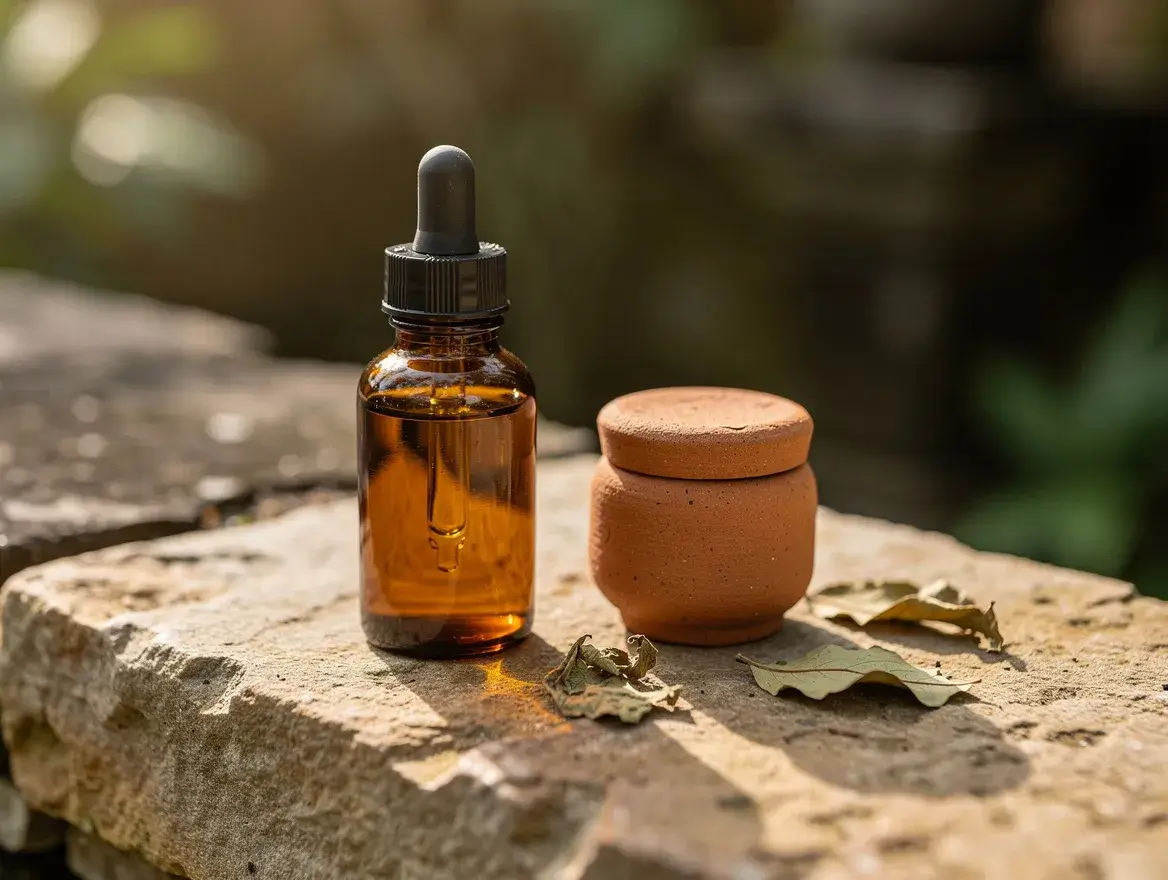
Using kukui oil well is simple, and a few small habits make a real difference. Start with a patch test on the inner forearm for a day, especially if you have nut sensitivities, since kukui is a tree-nut oil. From there, less is more. This is a light oil that rewards restraint.
- Face: two to three drops pressed gently into clean, slightly damp skin at night. Layer it after a water-based serum and before or instead of a heavier cream.
- Body: a small amount smoothed over damp skin straight after a shower, while the door is still closed and the air is warm. This locks in moisture with the least product.
- Hair: a few drops warmed between the palms, worked through mid-lengths and ends, or massaged into the scalp before washing.
- Layering: pair it with a humectant like aloe or a hydrating mist underneath, so the oil seals in water rather than sitting on dry skin.
Now the part that matters most, and the part the science section promised. Because kukui oil is high in polyunsaturated fats, it oxidizes faster than stable oils. Oxidized oil smells sharp or crayon-like and loses its soothing quality, so storage is not an afterthought, it is the whole game. Keep it in a dark glass bottle, away from heat and direct light, and use it within a reasonable window rather than hoarding it for a year. This is also the honest argument for buying small-batch rather than bulk: a fresh, smaller bottle used while it is alive beats a giant one going stale on a shelf. It is the same principle behind our refill approach, where smaller, fresher, repeatable beats big and wasteful every time.
When you choose a kukui oil or a product built around it, read past the front label. Look for cold-pressed and unrefined oil, dark glass packaging, a brand that names its source, and ideally a refill or low-waste option. If you would rather have kukui-style lightness inside a finished formula, a botanical body oil such as our Rose Allure Body Oil or a richer treatment like our Pure Energy Body Butter brings the same intention into a daily ritual. Building any of this into a wider routine works best when it is consistent rather than complicated, which is the spirit of our calming ritual guides.

Bring the same lightweight ritual home
Our Rose Allure Body Oil carries the same calm, barrier-first thinking into a finished blend of coconut and rose geranium oils, hand-crafted in Bali to soften dry skin and settle into a daily ritual. Sourced with care, made in small batches.
Kukui oil compared with other botanical oils
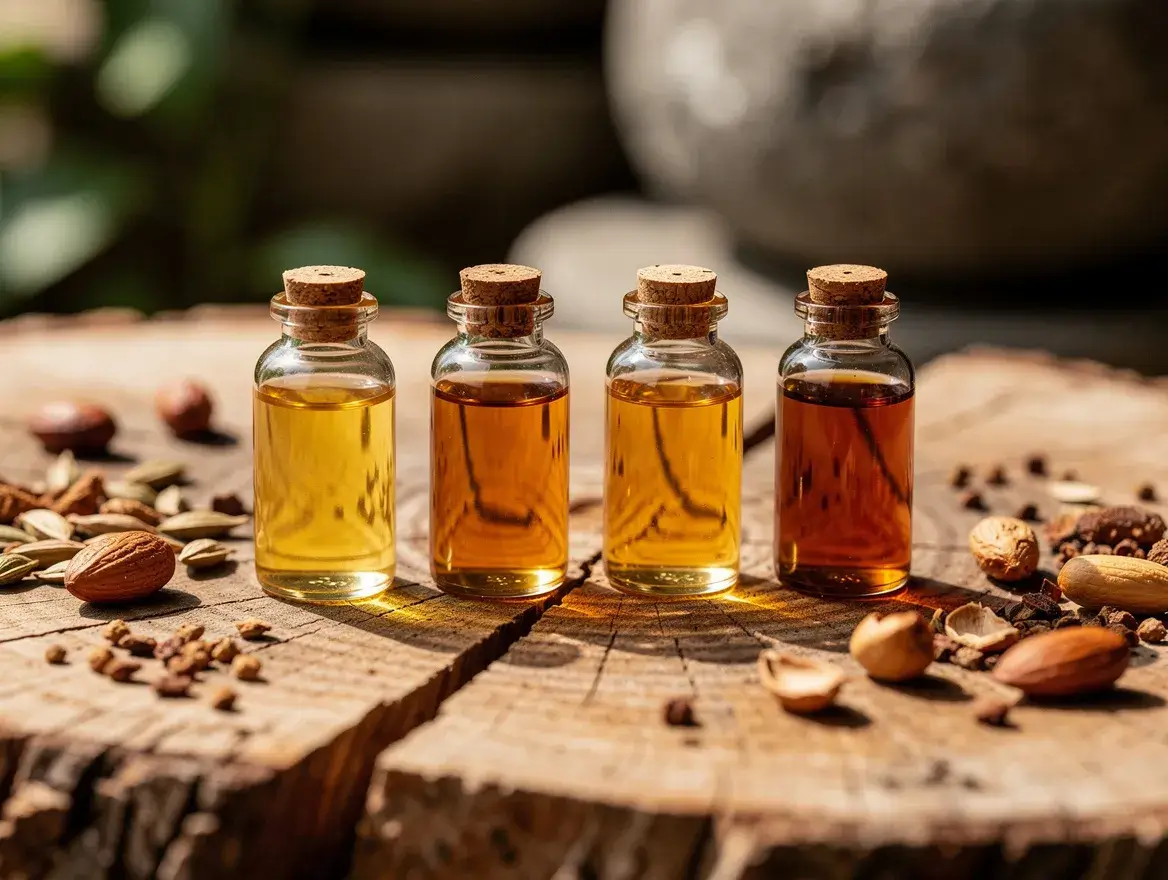
No single oil is best for everything, and any guide that crowns one is not being honest with you. The useful question is which oil suits which job. Here is how kukui sits beside the botanical oils people most often compare it with.
- Kukui vs jojoba: jojoba is technically a wax ester, very stable, and close to skin’s own sebum. Kukui is lighter and more deeply moisturizing for dry skin but oxidizes faster. Choose jojoba for balance and shelf life, kukui for fast comfort on dry, tight skin.
- Kukui vs argan: argan is a well-rounded, moderately rich oil with good stability. Kukui is thinner and absorbs faster. Choose argan for an all-purpose daily oil, kukui when you want minimal residue.
- Kukui vs rosehip: both are high in polyunsaturated fats and both oxidize quickly. Rosehip leans toward tone and texture concerns, kukui toward soothing and barrier comfort. Both reward small, fresh bottles.
- Kukui vs coconut: coconut is rich, occlusive, and slow to absorb, wonderful as a sealing layer or for hair, heavier on the face. Kukui is the lightweight counterpart. Many people keep both for different jobs.
The honest summary: kukui oil is a specialist, not an all-rounder. It is the oil to reach for when you want fast, calming, barrier-supporting moisture with almost no greasy feel, particularly on dry or reactive skin. For a fuller side-by-side of the lighter oils and who each one suits, our carrier oil guide lays them out together.
Frequently asked questions about kukui oil
Is kukui oil comedogenic
Kukui oil is generally considered low on the comedogenic scale, which means it is unlikely to clog pores for most people. Its light texture and linoleic-rich profile make it one of the friendlier oils for combination and breakout-prone skin, though every skin is individual, so a patch test is still wise.
Can you use kukui oil on your face
Yes. Kukui oil suits most skin types on the face, including dry and sensitive skin. Use two to three drops on clean, slightly damp skin at night, ideally layered over a water-based hydrator so it seals in moisture rather than sitting on dry skin.
Is kukui oil good for eczema
Traditional practice and a clinical dermatology study both point to kukui nut oil as a well-tolerated emollient for dry, inflamed conditions like eczema and psoriasis. It soothes and supports the barrier rather than treating the underlying condition, so it works best alongside the care a clinician recommends, not instead of it.
What is the difference between kukui oil and candlenut or kemiri oil
They are the same oil from the same tree, Aleurites moluccana. Kukui is the Hawaiian name, candlenut is the common English name, and kemiri is the Indonesian name used across Bali and the wider archipelago. Different words, one generous tree.
Does kukui oil expire
Yes, and faster than more stable oils. Its high polyunsaturated content means it oxidizes over time, especially with heat and light exposure. Store it in dark glass somewhere cool, and treat a smaller, fresher bottle as the better choice over a large one that lingers.
Is kukui oil safe for sensitive skin
It is one of the gentler botanical oils and has a long history of use on sensitive and irritated skin. Because it is a tree-nut oil, anyone with nut allergies should be cautious and patch test first, and stop use if any reaction appears.
Final thoughts
Kukui oil is not a miracle and it does not need to be. It is a light, fast-absorbing, barrier-friendly oil with deep roots in Pacific and Indonesian tradition, and it does its quiet work well when it is harvested with care and used while fresh. That is the whole story, told straight: a generous tree, honest sourcing, modest science, and a place in everyday ritual.
What you give, you get back. Choose oils whose origins you can trace, use them with intention, and let small acts of care add up. That is how good skin care and good stewardship turn out to be the same practice.