Aromatherapy oils: a complete guide to botanical scents, blends, and daily rituals
Aromatherapy oils are the quiet workhorses of a natural wellness routine. They carry scent, mood, and centuries of plant knowledge in a single drop, and they have done so long before “essential oil” became a marketing phrase. This guide is for anyone who wants to understand aromatherapy oils properly: what they are, how they work on the body and mind, which ones are worth knowing, how to use them safely, and how to choose oils that are honest rather than greenwashed.
We have been blending aromatherapy oils in Bali since 1989, so this is the long view, not a shopping listicle. By the end you will know enough to build a small, personal practice, ask the right questions of any brand, and trust your own nose more than any label.
What aromatherapy oils actually are
Aromatherapy oils are concentrated plant aromatics used to influence wellbeing through scent and, in diluted form, through the skin. The umbrella covers three things that often get muddled at the shelf.
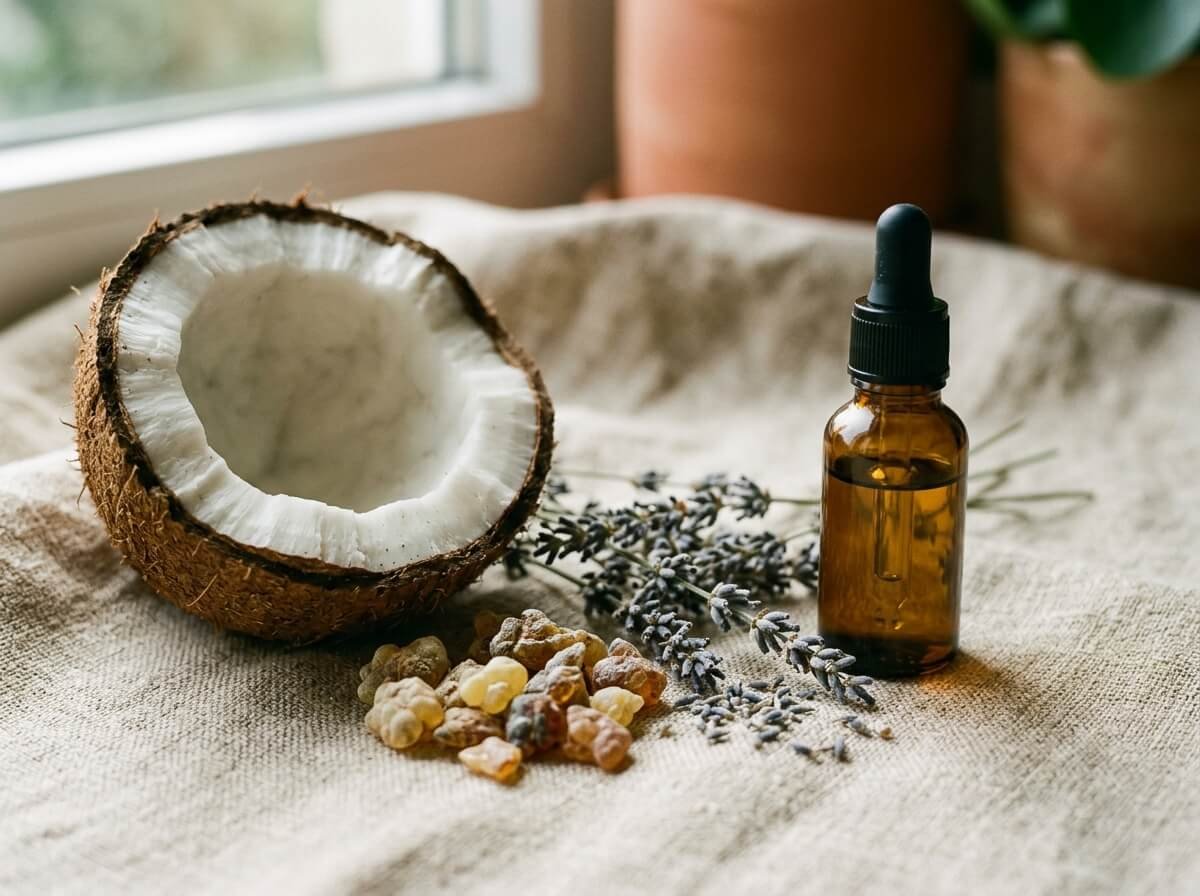
Essential oils are the volatile aromatic compounds steam-distilled or cold-pressed from a single plant species. Lavender essential oil comes from Lavandula angustifolia. Frankincense comes from the resin of Boswellia trees. One species, one oil, one chemistry profile. Blends combine several essential oils, usually for a mood or ritual outcome, sometimes pre-diluted in a carrier. Carrier oils, such as coconut, kukui, or jojoba, are fatty plant oils used to dilute essentials before they touch skin. Carriers are not aromatherapy oils on their own, but they make the rest of aromatherapy possible.
Then there are the impostors. “Fragrance oils” are synthetic or partly synthetic scent blends, sold for candle and soap making. They smell beautiful and they do not carry plant chemistry, so they cannot do the work true aromatherapy oils do. Reading the ingredient list, not the front of the bottle, is the first skill in this craft. If you want to dig deeper into how compositions vary, our essential oils uses chart maps eighteen common single oils to their best use cases and partners well with this guide.
How aromatherapy oils work on body and mind
There are two main pathways. The first is olfactory. When you inhale an aromatic oil, volatile molecules travel to the olfactory bulb, which sits next to the limbic system, the part of the brain involved in mood, memory, and stress response. This is why a familiar scent can drop your shoulders before you have consciously thought about it. Researchers studying lavender, bergamot, and ylang-ylang have measured shifts in heart rate variability and cortisol in controlled inhalation trials, which is part of why aromatherapy is taken seriously in clinical and hospice settings, not only at home.
The second pathway is topical. When an essential oil is properly diluted in a carrier and applied to skin, its smaller lipophilic molecules can cross the stratum corneum and reach surface circulation. Tea tree oil is studied for its antimicrobial effect on the skin barrier. Peppermint oil has been studied for tension headache when applied to the temples. None of this is magical. It is plant chemistry meeting human biology, which is exactly what your skin was designed for.
The boundaries are real. Essential oils are not edible by default, they are not safe undiluted on most skin, and they are not all interchangeable for pregnancy, children, or sensitive conditions. If you are using oils for a specific concern, our guide to aromatherapy oils for anxiety gets specific about which oils are evidence-supported and how to layer them into a daily ritual without overdoing it.
The most useful aromatherapy oils to know
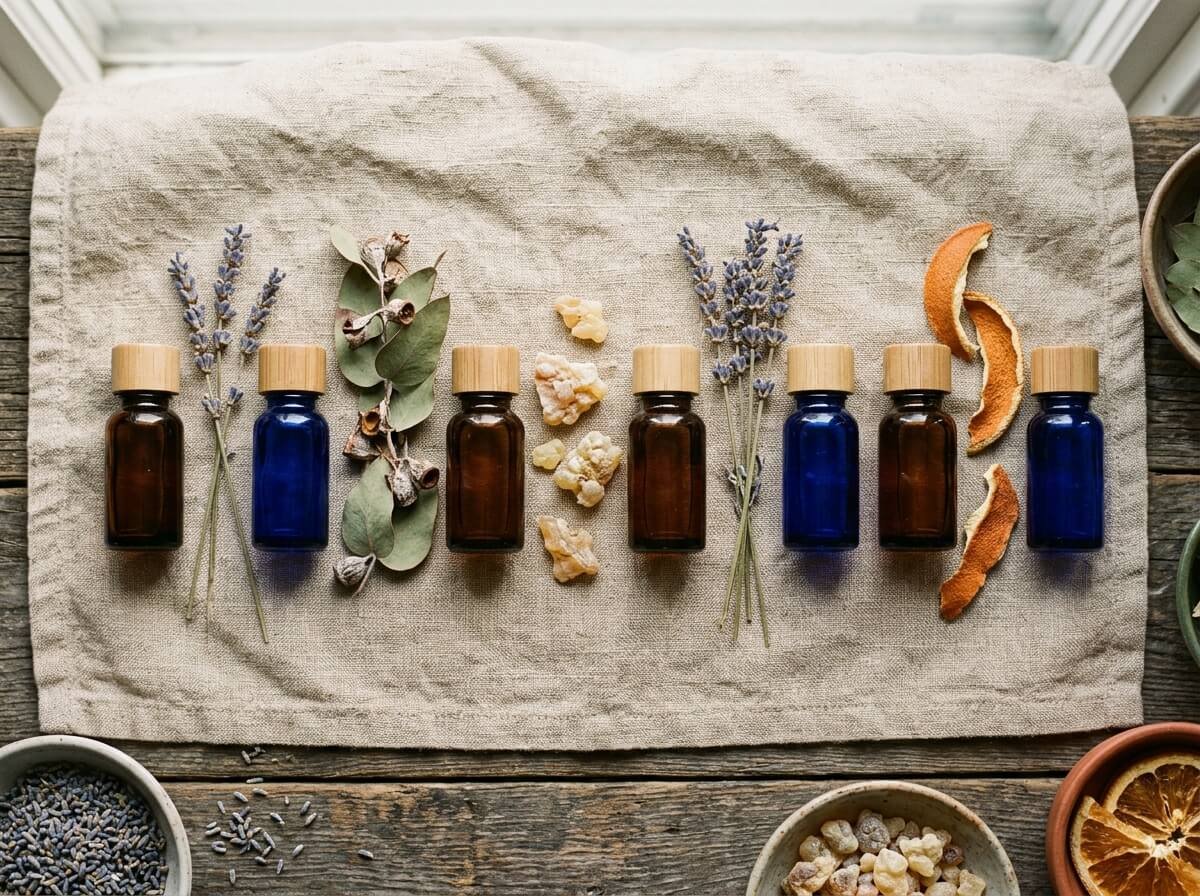
You do not need a wall of bottles. A small, well-chosen collection covers most needs. These are the workhorses worth knowing first, with notes on what they actually do.
Lavender (Lavandula angustifolia)
The most studied calming oil and the gentlest starter. Linalool and linalyl acetate, the two dominant compounds, are the reason lavender consistently shows up in sleep and anxiety research. Use it in the diffuser before bed, in a 1% bath blend, or one drop on the underside of a pillow. Skip the cheaper “lavandin” lookalike unless you specifically want a sharper, more camphor-forward scent.
Peppermint (Mentha piperita)
Cooling, clarifying, and far stronger than its candy reputation suggests. A drop diluted on the temples is the classic move for tension headache. In the diffuser, peppermint cuts through afternoon fog. Never apply undiluted, never use near the faces of children under six, and pair sparingly with eucalyptus, which doubles the cooling effect.
Eucalyptus (Eucalyptus globulus or radiata)
The classic respiratory oil. Two drops in a bowl of steam during a cold, or in the shower’s far corner so it warms gradually. E. radiata is milder and the better choice for children and sensitive lungs.
Ylang ylang (Cananga odorata)
Sweet, floral, and deeply tropical. Trials studying ylang ylang inhalation report measurable reductions in perceived stress and blood pressure. It pairs beautifully with citrus and warm spice notes. We bottle a single-origin ylang ylang essential oil for those who want to learn it on its own first.
Frankincense (Boswellia carterii or serrata)
Resinous, grounding, and one of the oldest ceremonial aromatics in continuous use. Modern studies look at boswellic acids for skin and inflammatory pathways, but for daily ritual its real gift is the quality of attention it invites. Burn the resin, diffuse the oil, or blend a drop into a face oil at 1% dilution. Our frankincense essential oil is steam-distilled from Somali resin and behaves the way a serious frankincense should.
Tea tree (Melaleuca alternifolia)
Antimicrobial, clarifying, a quiet hero in natural face care, body care, and household cleaning. One drop in a spot treatment, two drops in a sink of warm water for kitchen surfaces. Tea tree is one of the better-evidenced oils in topical use, which is partly why it has been adopted into mainstream dermatology, not only into wellness shelves.
Citrus oils (lemon, orange, bergamot, grapefruit)
Bright, uplifting, and easy to love. The catch is photosensitization. Most citrus oils, especially bergamot, can react with sun exposure on skin and cause pigmentation. Keep citrus in the diffuser, in cleaning blends, and in body products that will not see daylight for twelve hours. Their volatility is also higher, so store them away from heat and use within twelve to eighteen months of opening.
Vetiver (Chrysopogon zizanioides)
Deep, smoky, earthy. The most grounding base note in our kit. A single drop anchors a bright citrus or floral blend and adds days of shelf life to its top notes. Vetiver is also one of the oils most worth investing in unblended, because it lasts for years and a single bottle stretches across many practices.
Once you understand the singles, blends become intuitive. Our guide to essential oil blends walks through how citrus, floral, herbal, and resin notes layer into combinations you actually want to live with. If you ever feel lost in the front of a shelf, start with three: one floral, one citrus, one base note. That triangle covers more rituals than you would expect.
How to use aromatherapy oils: rituals, dilutions, and methods
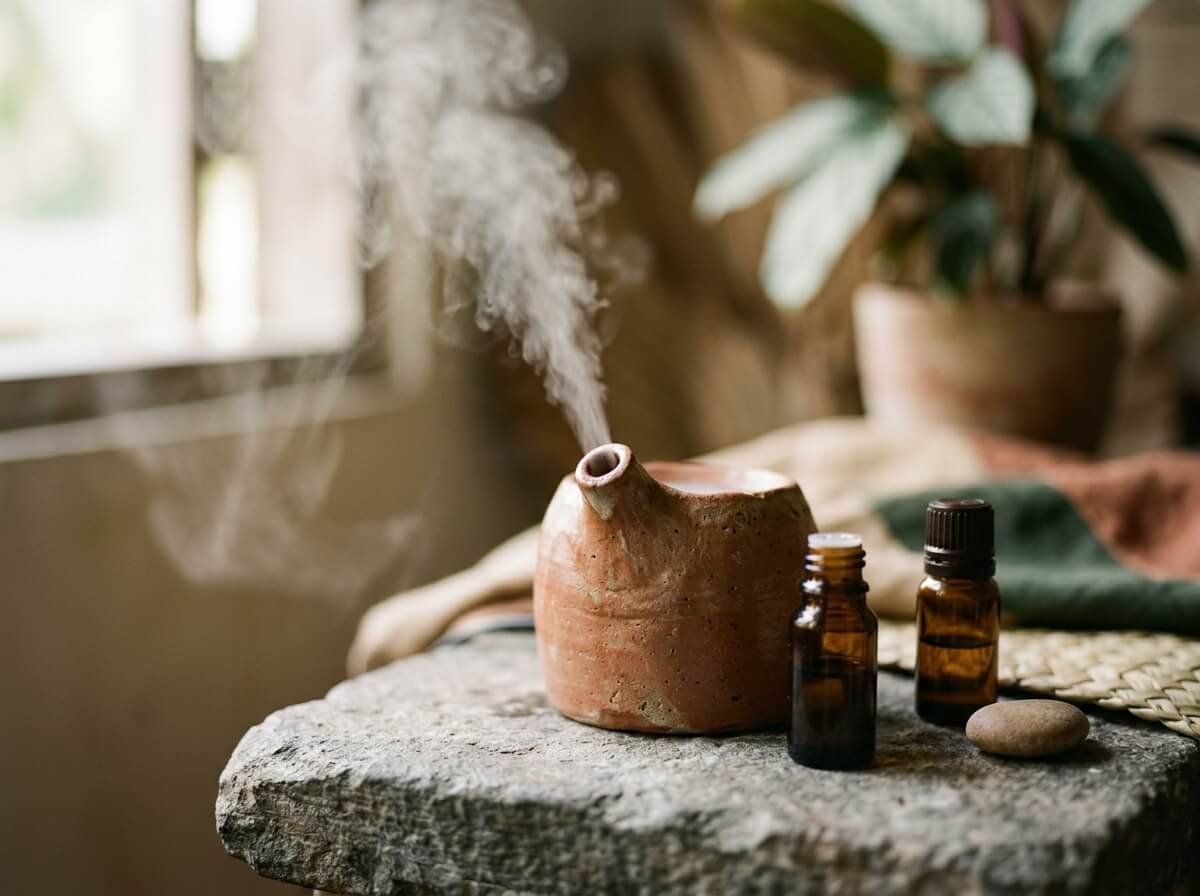
There are four core ways to use aromatherapy oils at home, and each has its own rhythm.

Diffusion
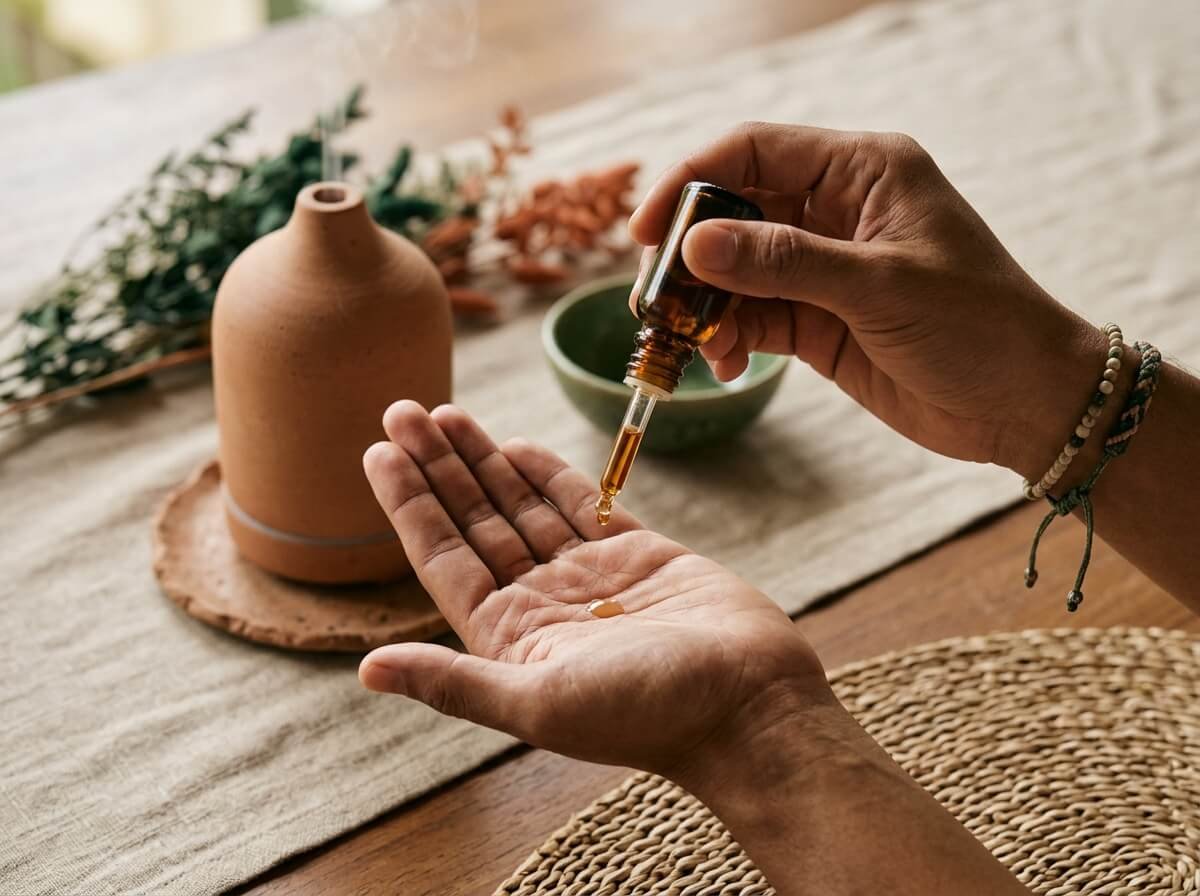
The simplest entry point. A nebulizing or ultrasonic diffuser disperses oil into the air, where you breathe it. Three to six drops in a standard room diffuser is plenty. Run for twenty to thirty minutes, then rest. The nose adapts quickly, and continuous diffusion does not increase benefit. If you are choosing your first device, our piece on aromatherapy diffuser oils covers oil pairings by mood and season, and walks through which oils work best in which diffuser types.
Topical application, always diluted
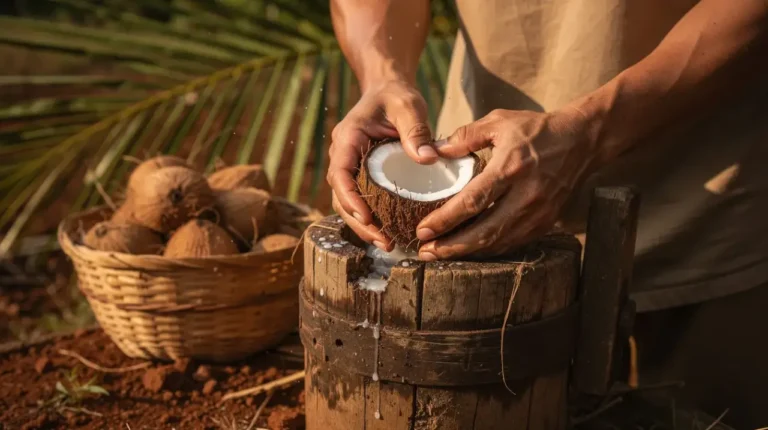
Essential oils are concentrated, so they belong in a carrier before they meet skin. A practical dilution chart: 1% (six drops per 30 ml of carrier) for sensitive skin, daily use, and children over two; 2% (twelve drops per 30 ml) for general adult use; 3% (eighteen drops per 30 ml) for short-term, targeted use on a small area. Our preferred carrier is cold-pressed Balinese coconut, sourced through our Aluan partnership, because it absorbs cleanly and supports the plant chemistry without competing with it.
Bath and steam
For a bath, mix five to ten drops of essential oil into a tablespoon of carrier oil or unscented liquid soap first, then add to the water. Oils do not dissolve in water on their own, and undiluted drops on a wet body are a fast track to irritation. For steam inhalation, two to three drops in a bowl of hot water with a towel over the head is a classic move for congestion. Eucalyptus and peppermint shine here.
Massage
Massage is one of the oldest applications, and Balinese practice has refined it for generations. Warm the carrier in the hands, blend the oil at a 2% dilution, and use long, intentional strokes. The combination of pressure, scent, and skin contact is more than the sum of its parts. We unpack the deeper tradition in our piece on aromatherapy oils for massage, which doubles as a primer on building a home massage practice without becoming a therapist overnight.
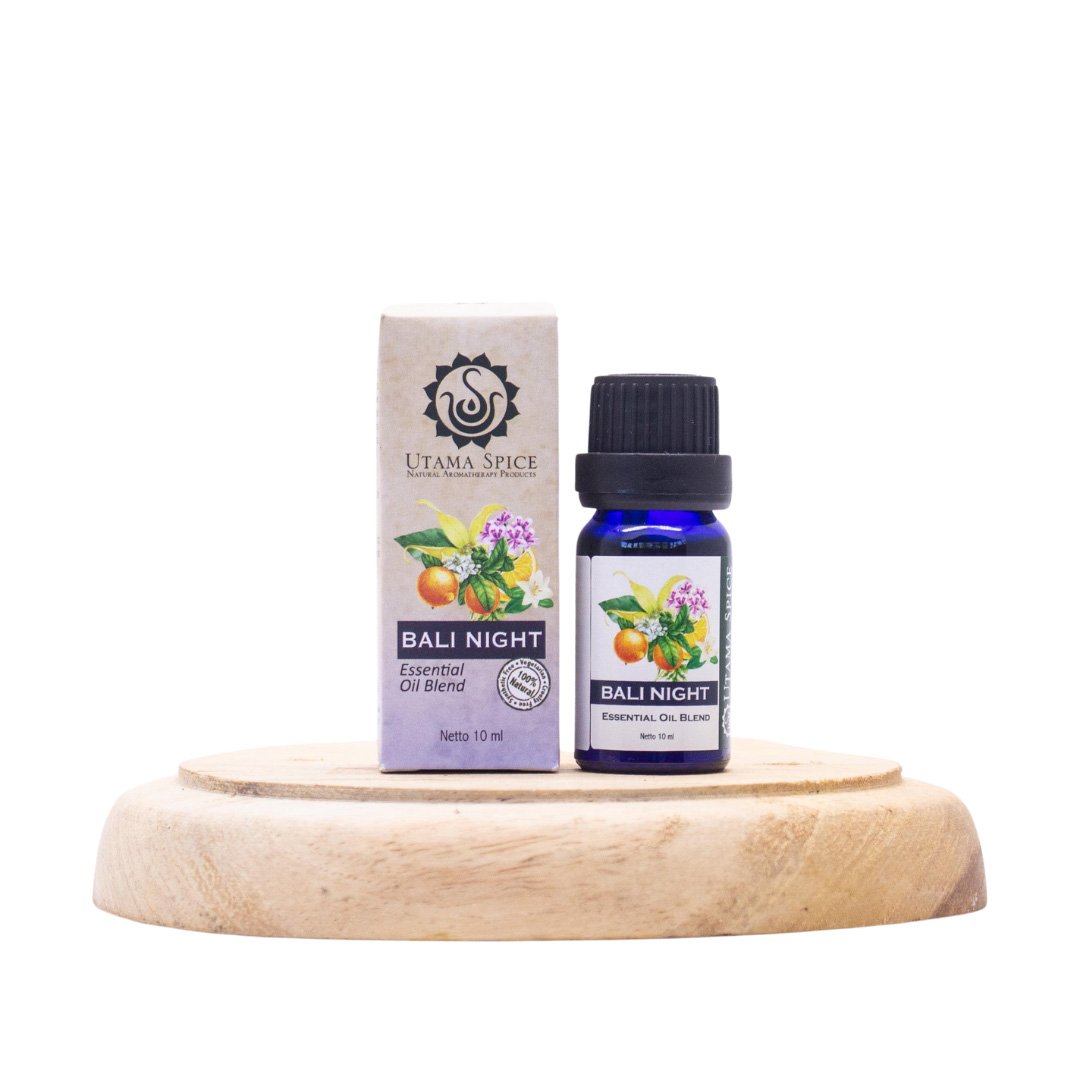
Bring the evening home with Bali Night
A small-batch blend of cananga, lemon, vetiver, ylang-ylang, rose geranium, tangerine, and orange. Built for evening diffusion, massage, and the unhurried end of a long day.
Choosing aromatherapy oils that are honest, not greenwashed
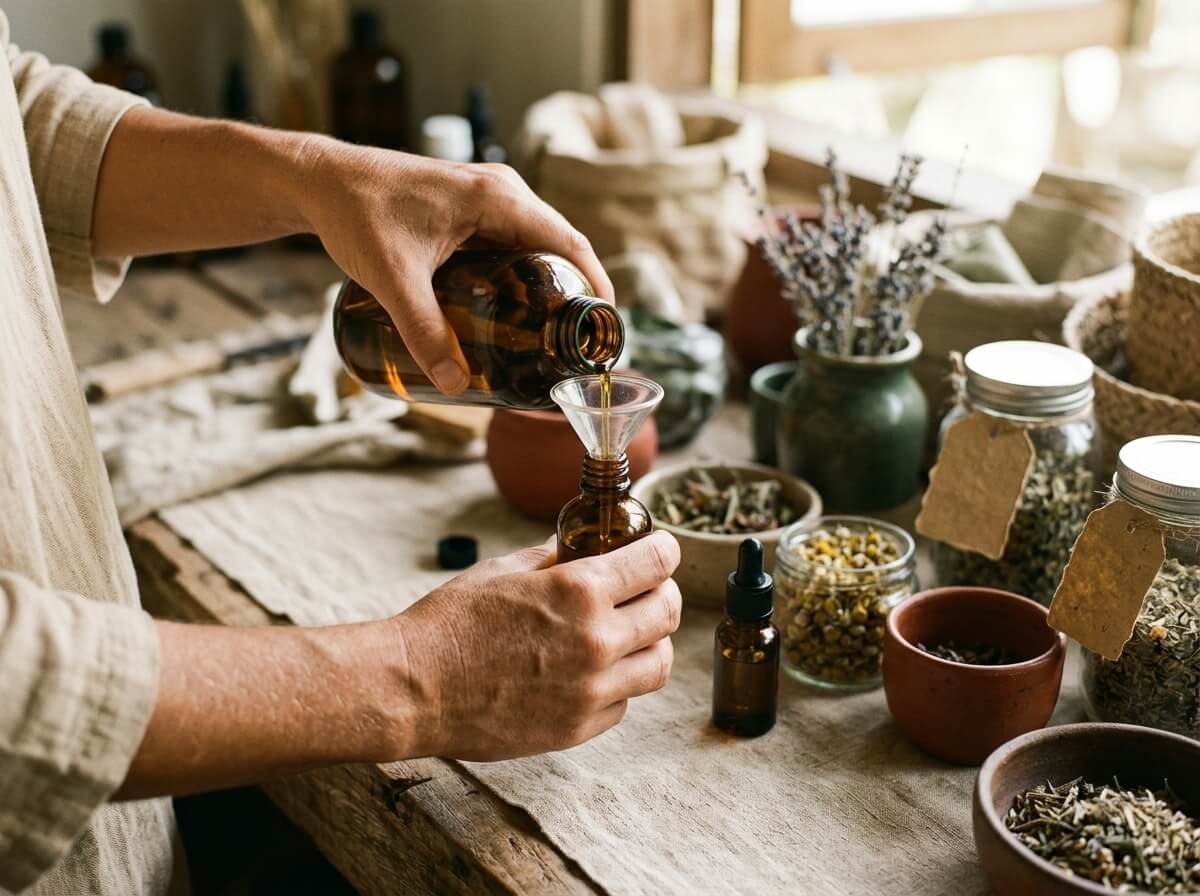
This is where the aromatherapy oils category quietly falls apart on the shelf. “Pure,” “natural,” and “therapeutic grade” are unregulated phrases. Anyone can print them. The information that actually matters tends to be small, on the back, and shared by brands who have nothing to hide.
Look for the Latin botanical name, the country of origin, the part of the plant used, and the extraction method. A real lavender oil will state Lavandula angustifolia, France or Bulgaria, flowering tops, steam-distilled. Vague packaging that names the plant in English only, with no origin and no method, is a quiet red flag. Ask whether the brand publishes GC-MS test results, which identify the chemical components in each batch. Brands that do this routinely are operating in daylight.
Sourcing is the next layer. The aromatherapy oils industry has a long history of monoculture extraction, sandalwood and rosewood being the painful examples. Wild-harvested and small-batch farmed oils, sourced from communities who steward the land, tell a different story. Our oils are blended in Bali, often using ingredients from our Forestwise and Aluan partnerships, and we run an in-store refill system for the same reason refill exists across the rest of our line: a refilled bottle is one less bottle in the waste stream. Care should not cost the Earth twice over.
Price tells a story if you read it the right way. A bottle of rose otto under twenty dollars is almost certainly diluted or synthetic, because the raw material requires thousands of petals per drop. A bottle of orange essential oil for twelve dollars is reasonable, because the source is plentiful. The number on the price tag is not a quality signal on its own, but a wildly mismatched price is a useful warning.
Building your own aromatherapy oil rituals
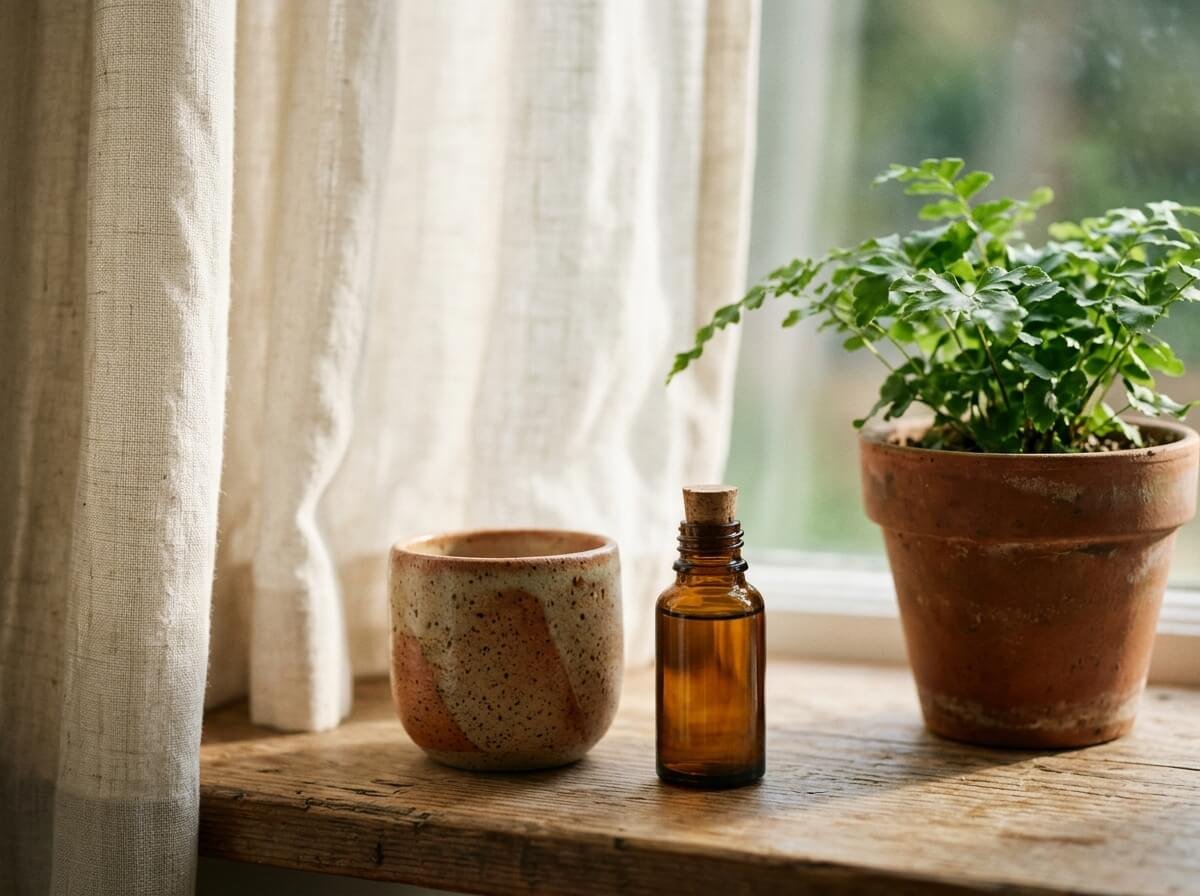
A ritual is just a small, repeated practice that anchors a moment. Aromatherapy oils are particularly good at this because scent is sticky. Use the same oil at the same time for two weeks and the smell alone will start to do half the work. A few starter rituals worth borrowing.
- Morning lift. Three drops of citrus, one drop of peppermint in the diffuser while you make coffee. Bright, clear, no caffeine required.
- Working hours. Two drops of rosemary or basil on a cotton pad placed near (not on) the keyboard. Focus without the pressure of a candle going.
- Evening unwind. A blend with ylang-ylang, vetiver, and a sweet citrus. We built our Bali Night blend for this exact pocket of the day.
- Bath ritual. Five drops of lavender, three drops of frankincense in a tablespoon of carrier, then into warm water. A bath becomes a small ceremony in about ten seconds.
- Pillow corner. One drop of lavender on the underside of the pillow, not the case. Gentle, persistent, and gone by morning.
If you want to layer in a longer-form contemplative practice, our notes on essential oils for meditation and essential oils for relaxation get specific about which oils support which kinds of stillness. None of this is complicated. Pick one ritual. Use it for a fortnight. Keep what stays.
Common mistakes with aromatherapy oils, and how to avoid them
Most aromatherapy mishaps come from one of five places, and all of them are avoidable once named.
- Using oils undiluted on skin. Lavender and tea tree get away with this more often, which is why people assume the rest do too. They do not. Skin sensitization can be permanent, so build the carrier habit first.
- Running the diffuser all day. The nose adapts within twenty to thirty minutes and stops registering scent. Continuous diffusion stops doing anything useful and starts being a low-grade respiratory irritant. Cycle on, off, on.
- Ignoring pregnancy and child cautions. Several common oils, including peppermint, rosemary, and clary sage, have specific cautions in the first trimester and around small children. A short list is not a long list, but it is real.
- Buying by scent strength alone. The strongest-smelling bottle on the shelf is often the most adulterated, or the highest in irritating compounds. A real essential oil is intense, not aggressive.
- Storing oils in sunlight. Citrus and resin oils are particularly fragile. A drawer or a closed shelf doubles shelf life. Amber or cobalt glass is the standard for a reason.
Aromatherapy oils, frequently asked
Are aromatherapy oils and essential oils the same thing?
Mostly, yes. “Aromatherapy oils” is the umbrella, and pure essential oils sit underneath it. Pre-diluted blends and roll-ons also count. Synthetic “fragrance oils” do not.
How long do aromatherapy oils last?
Citrus oils are good for around twelve to eighteen months once opened. Most florals and herbs hold for two to three years. Resin oils, including frankincense and myrrh, can hold their character for five years or more if stored cool and dark. Store everything tightly closed, away from direct light and heat.
Can aromatherapy oils replace medical treatment?
No, and any brand telling you otherwise is overpromising. Aromatherapy oils are a meaningful support layer for stress, sleep, daily skin care, mood, and certain mild concerns. They are a companion to medical care, not a substitute for it.
Are aromatherapy oils safe for pets?
Cats in particular lack the liver enzymes to metabolize many essential oil compounds, so diffusing strong oils in a small home with cats is not a good idea. Dogs are more tolerant, but tea tree, peppermint, and citrus oils carry specific cautions. When in doubt, diffuse in a room your pet can leave.
Do I need a diffuser to use aromatherapy oils?
No. Steam bowls, bath blends, roll-ons, and pillow drops all work. A diffuser is the most flexible piece of equipment, but a small bottle of well-diluted oil in your bag covers more situations than you would think.
Final thoughts
Aromatherapy oils have been doing quiet work in homes and rituals for centuries. They are not a substitute for sleep, food, movement, or real medical care, and they were never meant to be. Used with care, they are a daily reminder that wellbeing is built from small acts, not big claims. A drop, a breath, a moment of attention, repeated. That is the whole craft.
Start with three oils, learn them properly, dilute everything that touches skin, and read the back of the label more than the front. The rest grows from there.