Ingredient Tuesday: illipe butter, the rainforest’s quiet barrier balm
Most skin barrier balms on the shelf rely on a single fat: shea, cocoa, or mango. There is a quieter one that outperforms all three on melting point, and it grows wild in the rainforests of Kalimantan.
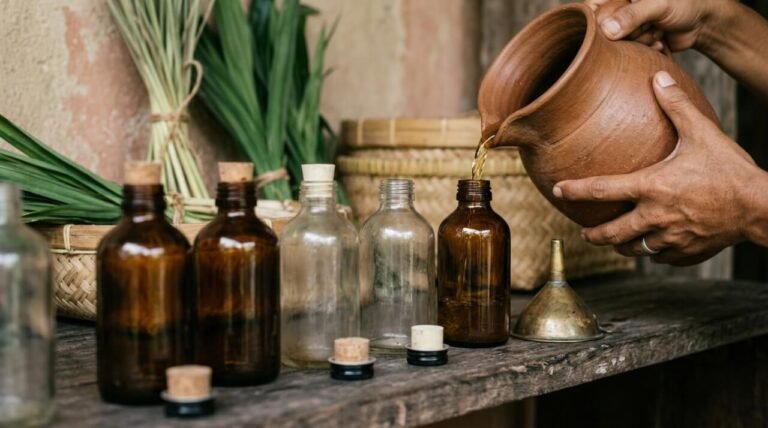
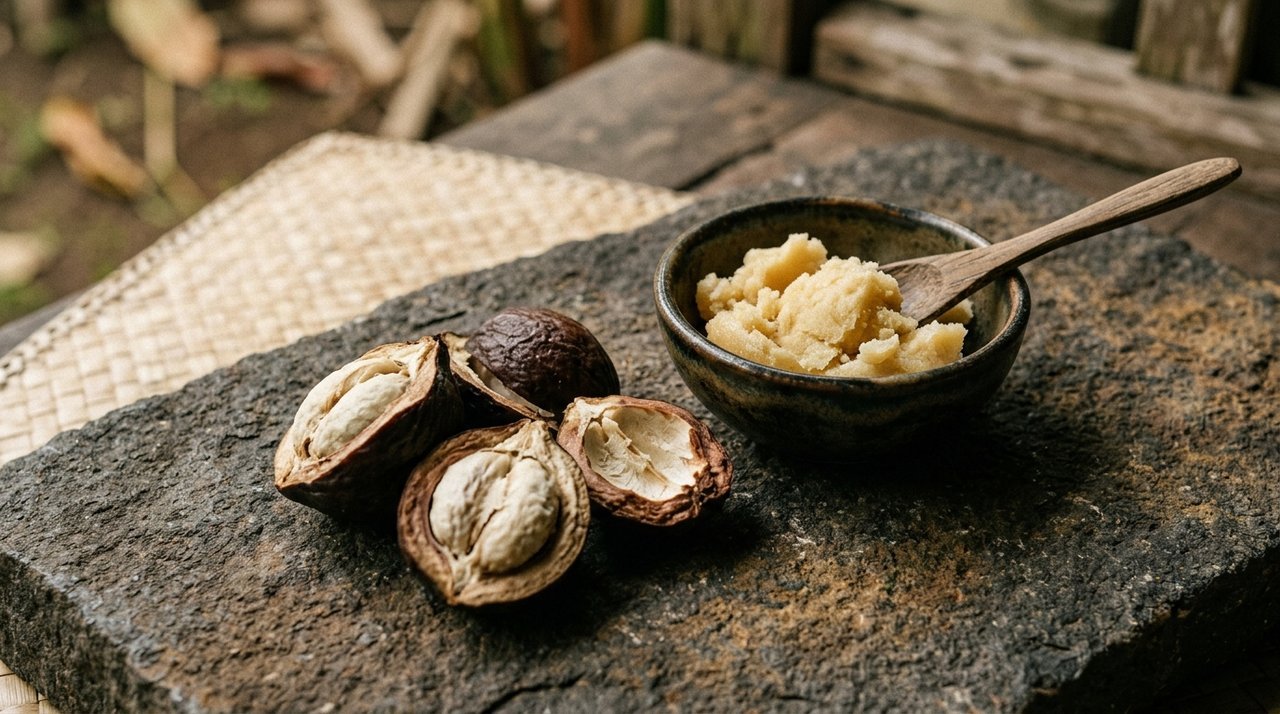
Illipe butter (Shorea stenoptera) is pressed from the nut of the engkabang tree, a slow-growing Bornean hardwood that fruits only once every four years. Families in the same forest communities have worked these groves for generations, climbing to gather fallen nuts, sun-curing them, and cold-pressing the kernels into a pale, dense butter. We source ours through our Forestwise partnership, which means the harvest funds the families who keep the forest standing.
What makes it different
Illipe shares a fatty-acid family with cocoa butter, but its balance is gentler on living skin. Roughly half is stearic acid, the rest is oleic acid with a small share of palmitic and arachidic. The result is a butter that:
- melts at body temperature, around 37 degrees Celsius, slightly warmer than cocoa butter, so it sits longer on the skin before turning to oil
- forms a soft occlusive layer that locks moisture in without clogging
- supports lipid-barrier repair after sun, wind, or hard water
- blends easily with kukui, coconut, and essential oils for a slow-absorbing balm
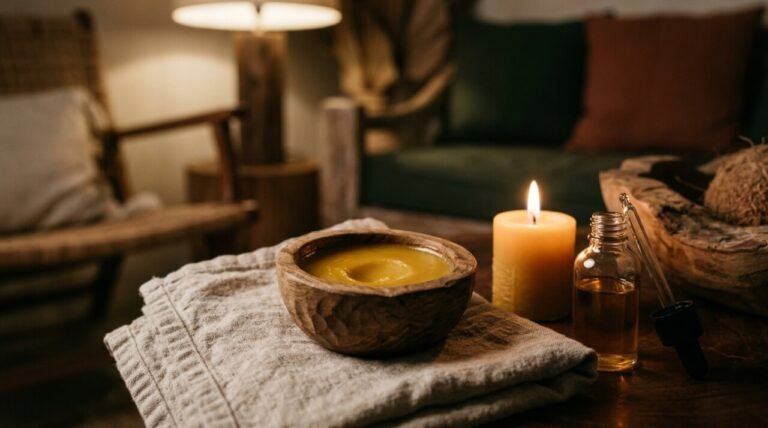
The texture is unmistakable: dense at room temperature, then almost weightless once it warms in your palms.

How to use it in a ritual
A pea-sized scoop, warmed between the fingertips, is enough for hands, elbows, knees, and lips after a warm shower. Press it into still-damp skin so the moisture stays sealed beneath. Used this way, one jar lasts a long time, which is part of the point.
For a fuller ritual, layer it under a lighter coconut body oil on damp skin, illipe first as the sealing layer, oil on top as the sensory finish. The pairing turns a quick post-shower moment into a slow, grounded one.
The wider story
Wild illipe matters beyond skincare. Every kilo pressed from standing forest is a kilo that did not come from clear-cut palm or industrial monoculture. The trees take 30 years to mature, which means the people who plant them are caring for grandchildren they may never meet. The same logic guides every Utama Spice ingredient choice: protect what protects us, and the rest follows.
Care, in this case, starts in a forest most of us will never visit. That does not make it less real.