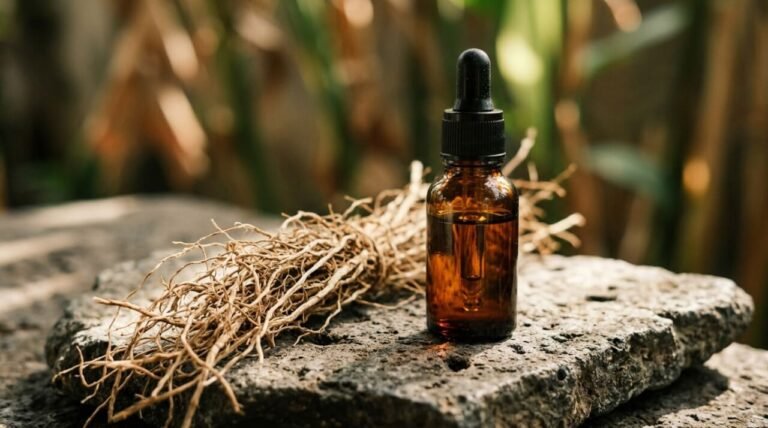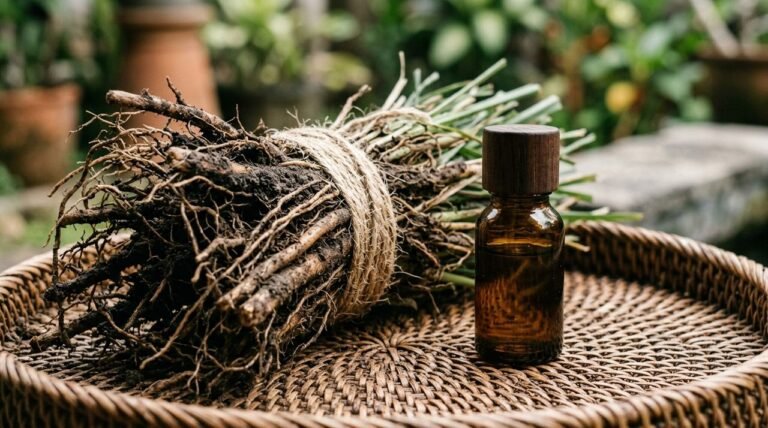
Kaffir lime essential oil benefits: leaf, peel, and the jeruk purut heritage behind the scent
The phrase kaffir lime essential oil covers more than one bottle, and that is where most confusion begins. The kaffir lime essential oil benefits you read about online often belong to three different oils sold under one name: the oil distilled from the leaf, the oil pressed from the knobbly fruit peel, and the fresh culinary leaf that never becomes an oil at all. Each has a different chemistry, a different safety profile, and a different place in your day. Before we talk about what this bright, green-citrus oil can do, it helps to know exactly what you are holding.
Kaffir lime is native to tropical Southeast Asia, and in Indonesia it is known as jeruk purut. In Bali it has been part of bathing, hair care, cooking, and temple ritual for generations, long before it appeared on a wellness shelf. That heritage matters, and we will return to it, because the story of this plant is as much about place and people as it is about aroma. Here is what we cover, honestly, without the folklore that clutters most guides.
What kaffir lime essential oil actually is: three oils, one plant
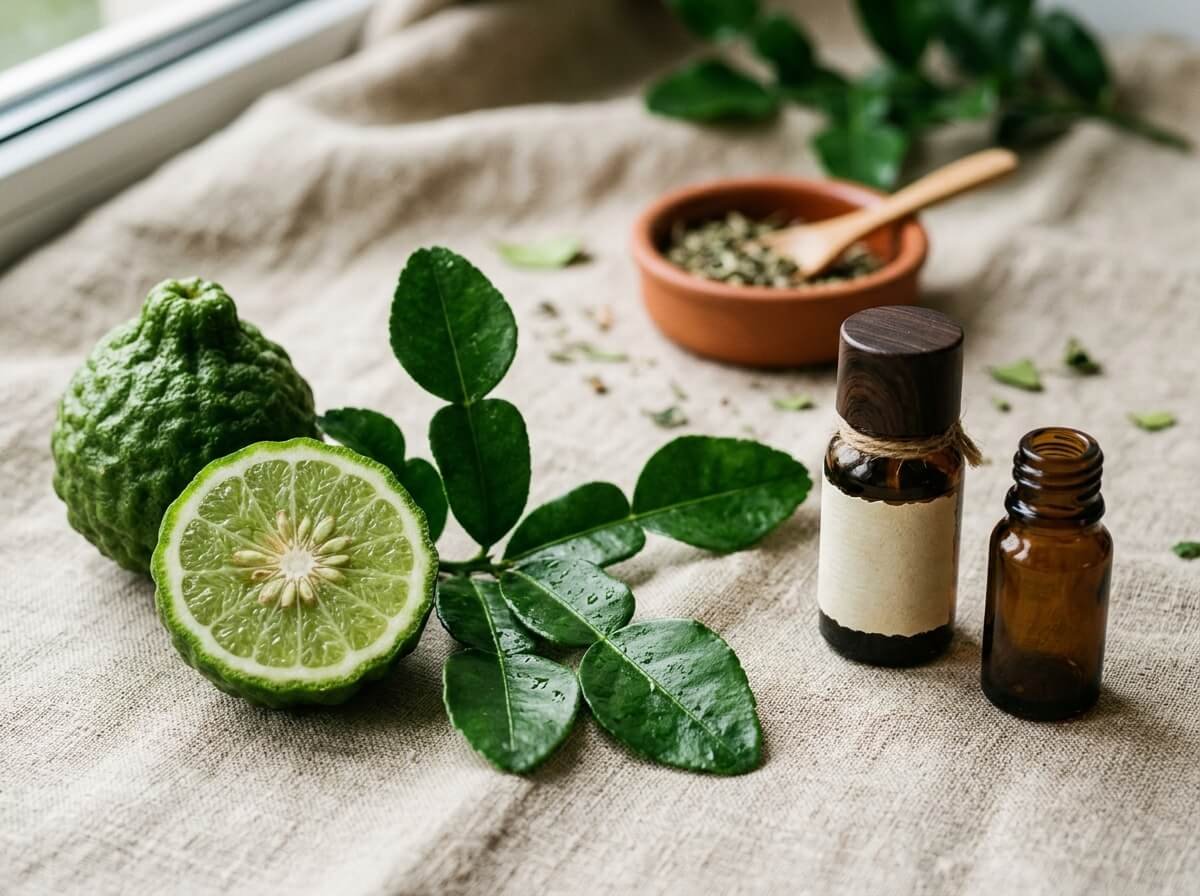
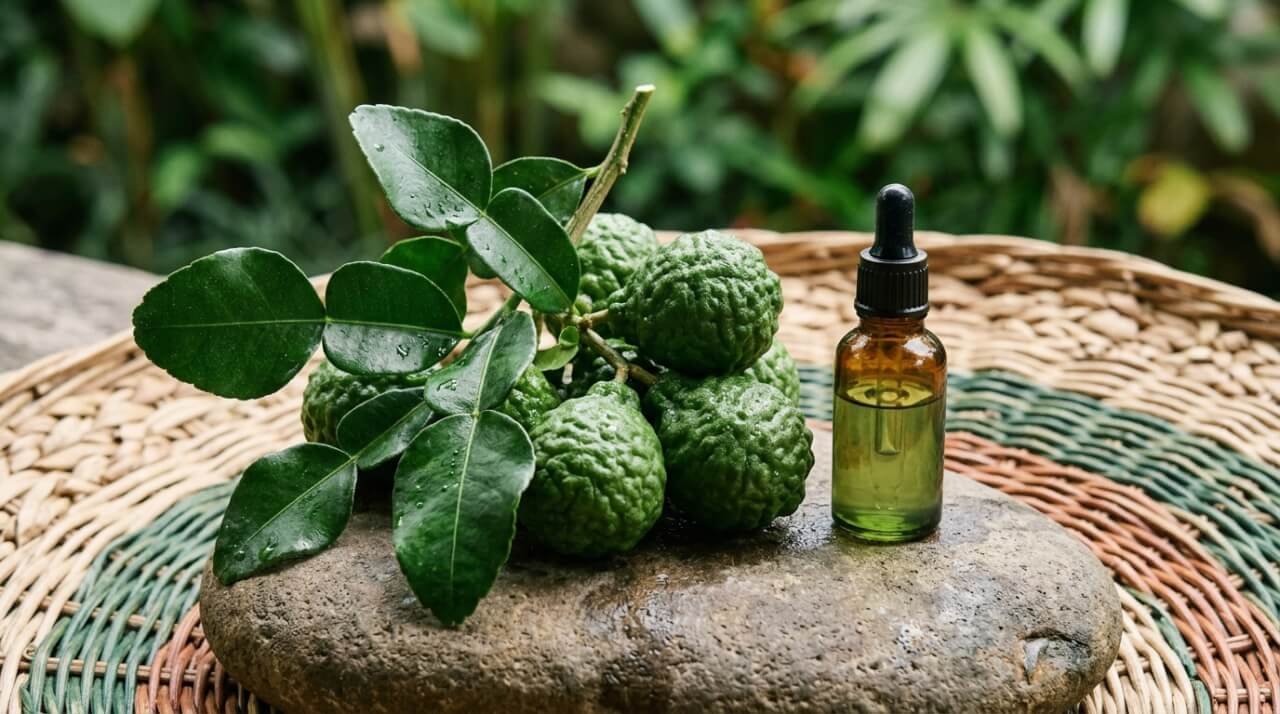
Kaffir lime, botanically Citrus hystrix, gives us more than one aromatic material, and the label on your bottle rarely explains which one. Knowing the difference is the single most useful thing you can learn about this oil, so we start here rather than with a list of promises.
Leaf oil (petitgrain)
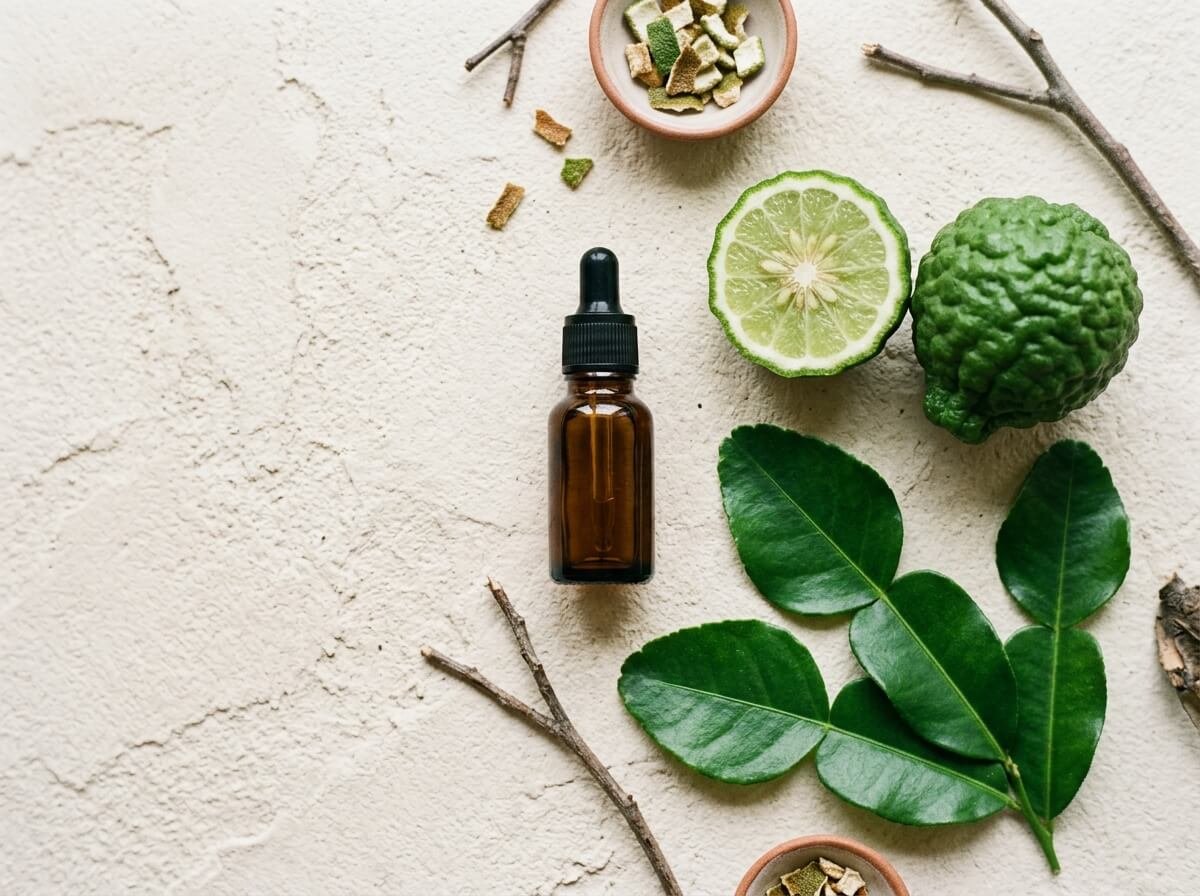
Steam-distilled from the double-lobed leaves, this is the oil most often sold simply as kaffir lime. It is rich in citronellal and sabinene, which give it that sharp, green, almost herbaceous citrus character. Because it is distilled rather than cold-pressed, leaf oil is generally considered non-phototoxic, a point we will come back to under safety. Most kaffir lime petitgrain on the market, including our own blend, is built around this leaf oil.
Peel or fruit oil
Cold-pressed from the bumpy rind, peel oil leans brighter and zestier, higher in limonene and beta-pinene. It smells closer to a conventional lime. Cold-pressed citrus peel oils can carry phototoxic compounds, so this material asks for more caution on skin exposed to sun. Peel oil is less common as a standalone but worth identifying if a product lists it.
The culinary leaf
The fresh or dried leaf you find in a Thai or Balinese kitchen is not an essential oil at all. It flavours curries and soups, and while it shares the plant, it does not carry the concentrated actives of a distilled oil. If a guide blurs cooking benefits into aromatherapy benefits, treat that as a signal to read more carefully.
A quick note on names, because they cause real confusion. You may see this plant called makrut lime, and the older common name printed on many bottles is the one used in this guide. Whatever the front label says, the useful detail lives in the botanical name and the plant part: look for Citrus hystrix, and look for the words leaf, petitgrain, or peel. A bottle that names neither the species nor the plant part is telling you less than it should, and that alone is worth noticing before you buy.
When you understand these three, the marketing noise settles. A well-made kaffir lime petitgrain sits comfortably alongside other single-note oils such as lemongrass and ginger, and it behaves predictably once you know its chemistry. If you are newer to reading these labels, our guide to essential oil blends is a gentle place to build the habit.
Kaffir lime essential oil benefits, honestly
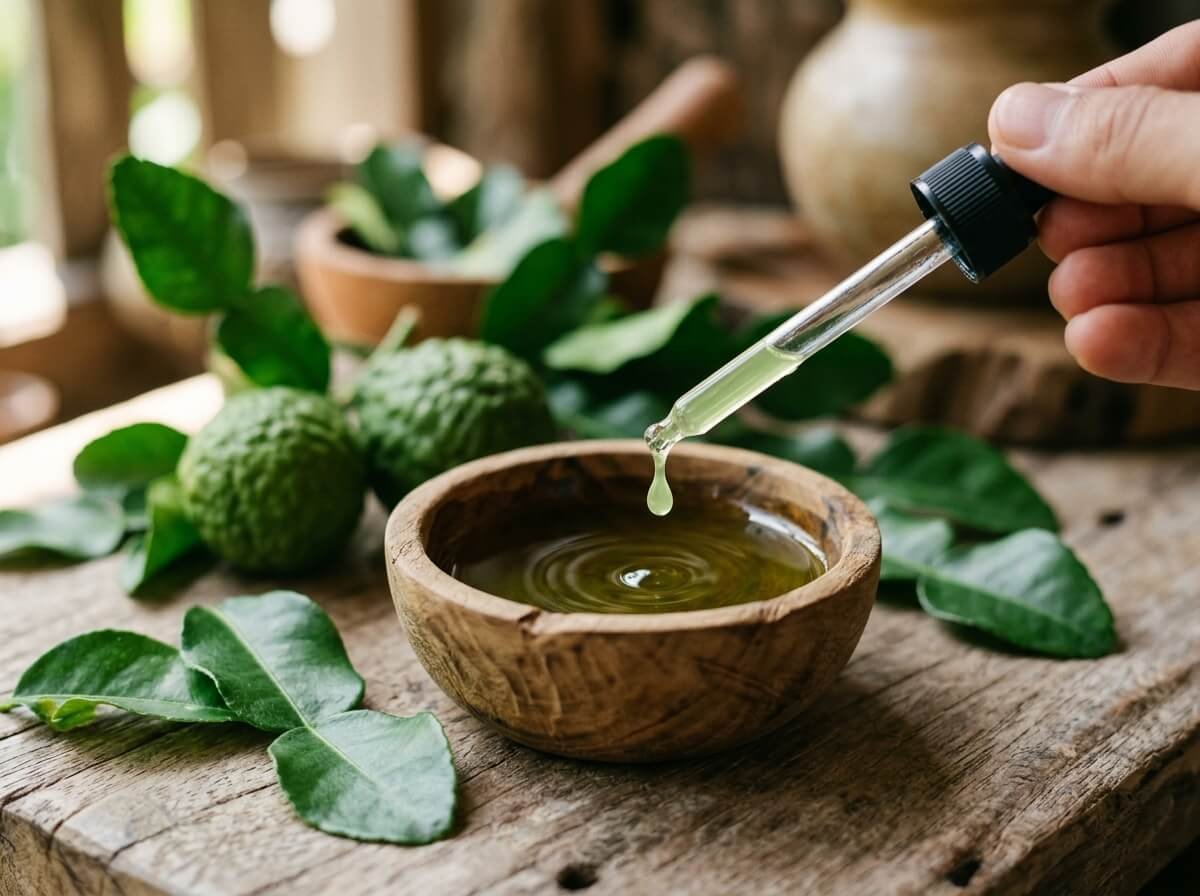
Here is the part most people arrive for, and here is where we stay grounded. The genuine kaffir lime essential oil benefits are aromatic and atmospheric first, with a few well-supported topical uses when the oil is diluted with care. We will not promise it cures anything. We will tell you what it reliably does.
Start with the aroma itself, because with a citrus oil the scent is most of the experience. Kaffir lime opens sharp and green, more like crushed leaf than sweet fruit, then settles into a clean, zesty freshness. It reads as bright and awake rather than cosy, which is why it suits mornings, kitchens, studies, and any space that has gone a little heavy. That sensory effect, the sense of a room feeling lighter, is real and repeatable, even though it is a matter of mood rather than medicine.
- Lifts a dull, heavy room. The crisp green-citrus aroma is naturally energizing, which makes it a favourite for morning diffusion and workspaces that need a reset.
- Supports a clearer head. Bright citrus notes are widely used in aromatherapy to feel more alert and focused, a sensory effect rather than a medical claim.
- Freshens the air and fabrics. Diluted into a room or linen mist, it cuts stale, closed-up smells without synthetic fragrance.
- Helps discourage insects. Its citronellal content is the same family of chemistry behind many botanical repellents, which is why it appears in outdoor blends.
- Adds structure to blends. Its herbaceous edge stops sweet citrus oils from turning one-dimensional, giving a blend backbone.
Notice what is not on that list. There is no anti-aging claim, no promise of flawless skin, no miracle. Kaffir lime is a supporting player with a distinctive voice, and used honestly it earns its place. For the insect angle specifically, we go deeper in our guide to natural bug repellent for skin, because botanical repellents work differently from what most people expect.
Inside the bottle: citronellal, sabinene, and the citrus-green chemistry
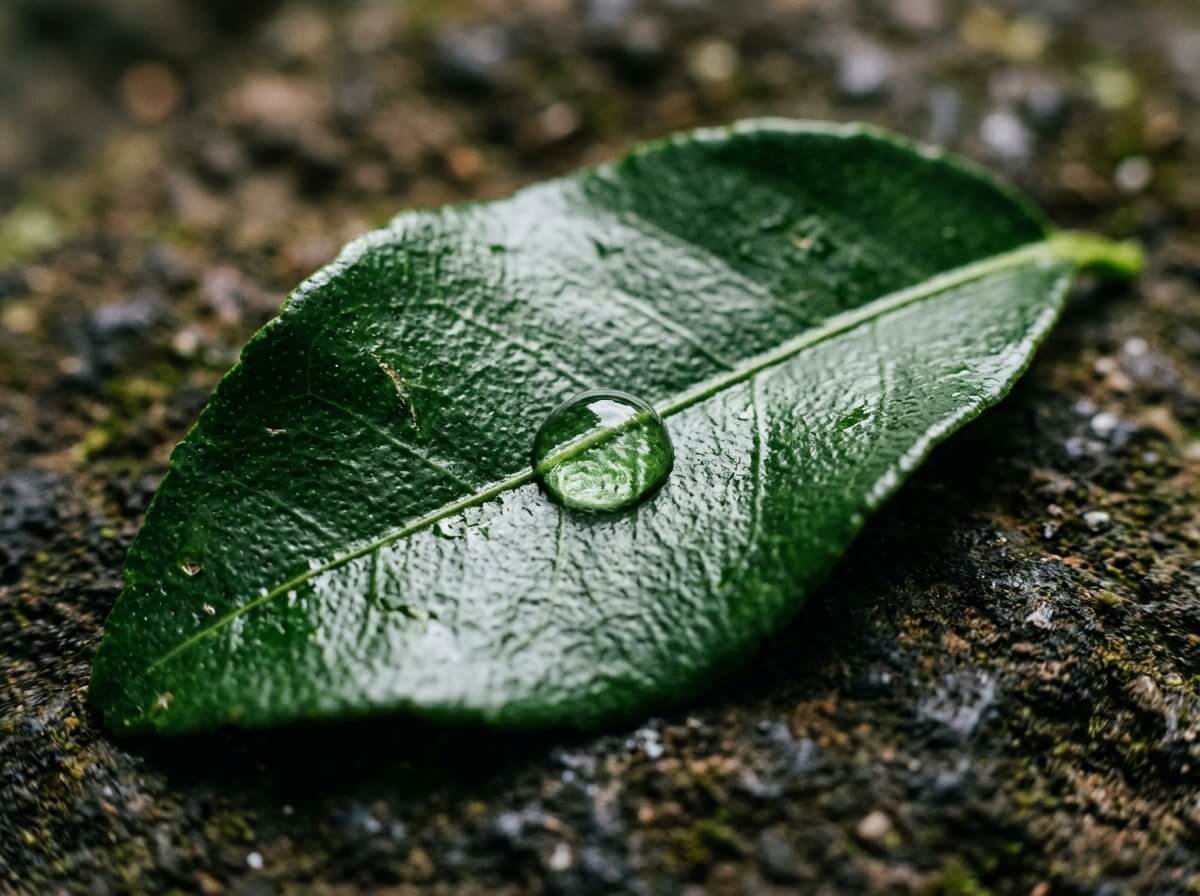
Aroma is chemistry you can smell, and kaffir lime leaf oil has a fingerprint worth knowing. Understanding it explains both why the oil is useful and where its limits sit, which is the kind of clarity we think you deserve before you buy anything.
Citronellal, the defining note
Citronellal is the dominant compound in most kaffir lime leaf oils, and it does two jobs. It carries much of that fresh, lemony-green lift, and it is the constituent most associated with the oil discouraging mosquitoes and other insects. It is a close cousin of the chemistry in true citronella essential oil, which is why the two oils are often mentioned together.
Sabinene, beta-pinene, and limonene
Sabinene brings a woody, peppery-green depth, while beta-pinene and limonene add the airy, zesty top notes that read as citrus. Together they explain why kaffir lime smells sharper and more structured than a soft, sweet orange. This is a citrus oil with edges, and that is its charm.
The honest double-edge
The same citronellal that makes the oil lively is also the compound most likely to oxidize over time and, in some people, to sensitize skin. Oxidized citrus oils are a common cause of irritation, not because the oil is unsafe, but because it was stored badly or used undiluted. One molecule sits behind both the benefit and the caution, and no honest guide should mention the first without the second. Store the bottle cool, dark, and tightly closed, and replace it once the scent turns flat or harsh.
This is also why small-batch matters more than it sounds. Citrus oils are among the shortest-lived in an aromatherapy collection, and a large bottle bought cheaply can oxidize on the shelf long before you finish it. A smaller volume, freshly made and used within a year or so, gives you the oil at its brightest and its gentlest. Buying less, more often, is not only kinder to your budget, it is genuinely better chemistry.
Is kaffir lime essential oil safe? Phototoxicity, dilution, and sun
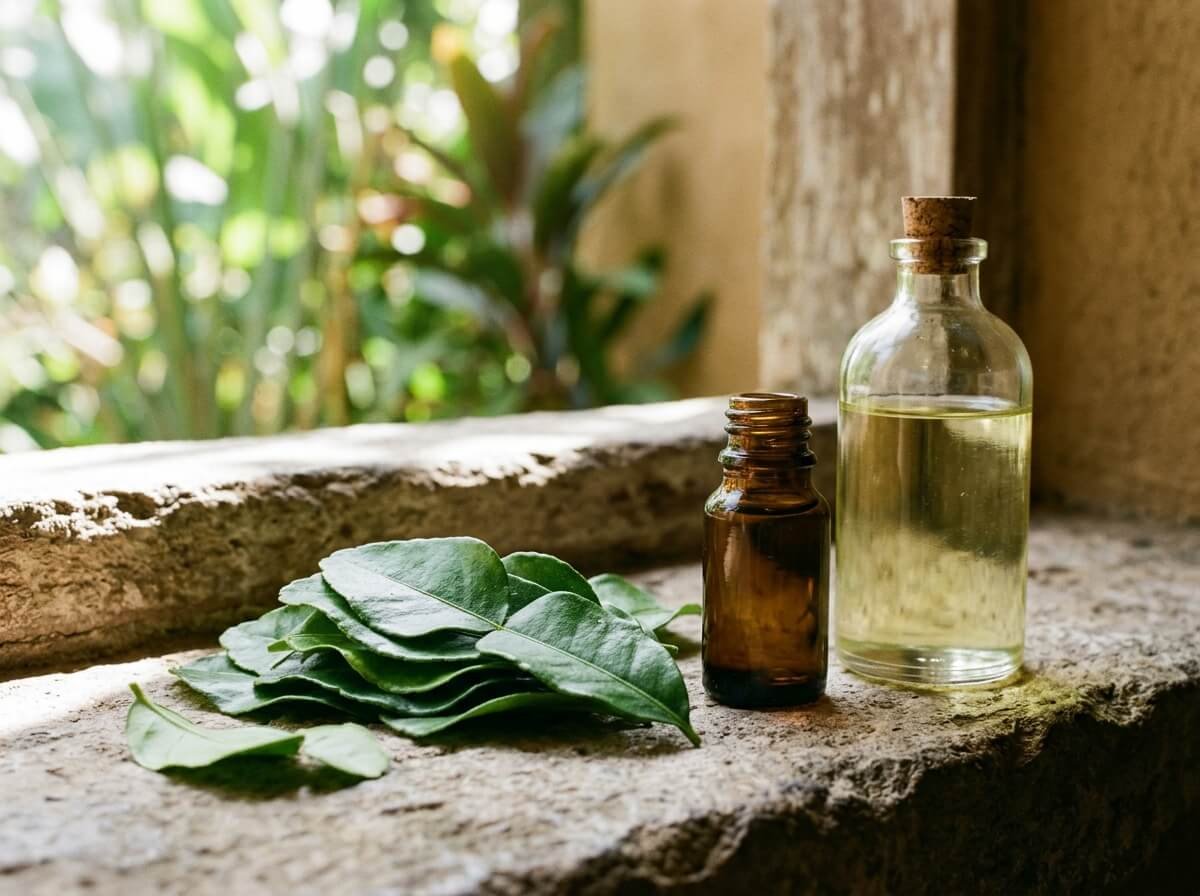
This is the section most consumer guides skip, and it is the one that protects your skin. The short answer is that kaffir lime leaf oil is generally gentle when diluted, but the details deserve a clear, calm read rather than a vague reassurance.
Leaf oil versus peel oil in the sun
Phototoxicity means a substance can cause a burn or dark patch when treated skin meets sunlight. Cold-pressed citrus peel oils are the usual culprits. Steam-distilled kaffir lime leaf oil, the petitgrain type most commonly sold, is generally considered non-phototoxic, which is one more reason to know which oil you have. If your product is a leaf-based blend, sun sensitivity is much less of a concern, though sensible caution never hurts.
Dilution, always
Kaffir lime is potent, and it belongs in a carrier before it touches skin. A safe everyday range for body use is roughly 1 to 2%, which is about six to twelve drops of essential oil per 30 ml of a carrier such as coconut or jojoba-style carrier oil. For a facial context, stay lower. Never apply it neat, and patch test on the inner forearm first, waiting 24 hours.

Who should skip it, or ask first
People with sensitive or reactive skin, anyone pregnant or nursing, and households with young children or pets should treat all citrus oils with extra care, and ideally check with a qualified professional. Diffuse in a ventilated room, keep sessions short, and never leave a diffuser running unattended around animals. For the full picture, our guide to essential oil safety walks through storage, dilution, and the questions worth asking before any oil goes near skin.
Jeruk purut: the Balinese heritage behind the scent

Long before kaffir lime became an aromatherapy note, it was jeruk purut, a working plant in Indonesian daily life. In Bali it grows in home gardens and village edges, and its leaves and fruit move easily between the kitchen, the bathroom, and the temple. This is the heritage that gives the oil its meaning, and it deserves to be told accurately rather than dressed up as folklore.
In traditional Balinese mandi, the daily bathing ritual, crushed kaffir lime leaves and fruit have long been added to water to leave skin and hair feeling clean and refreshed. The fruit has a long-standing reputation as a natural hair rinse, used to clarify the scalp and leave hair bright, a practice passed down through households rather than prescribed by a brand. In the wider tradition of jamu, Indonesia’s ancestral system of herbal wellness, aromatic citrus like jeruk purut belongs to a broader philosophy of caring for the body with what grows nearby.
Kaffir lime also appears in offerings and ceremony, part of the everyday sacred rhythm of Balinese life where plants carry both practical and spiritual weight. We mention this with care, not as a marketing flourish. When a plant has been tended and used by a community for generations, the respectful thing is to credit that knowledge plainly, and to resist the temptation to reframe it as something mystical or invented. The tradition is real, it is specific, and it is Balinese. That is the story worth telling.
There is a wider point here about how indigenous plant knowledge travels. Ingredients like jeruk purut have been carried into global wellness on the strength of traditions their new markets rarely credit. We think the honest response is simple: name the origin, describe the real use, and let the tradition speak for itself rather than repackaging it as a discovery. Bali has cared for this plant for a very long time, and that care is the point, not a backstory to be borrowed.
This is also why sourcing matters to us. An oil carries the place it came from. Choosing botanicals with a known origin, crafted in small batches, keeps the connection between the plant, the people who grow it, and the person who finally opens the bottle intact. That thread is easy to lose in mass production, and easy to honour when you slow down.
How to use kaffir lime essential oil in daily ritual
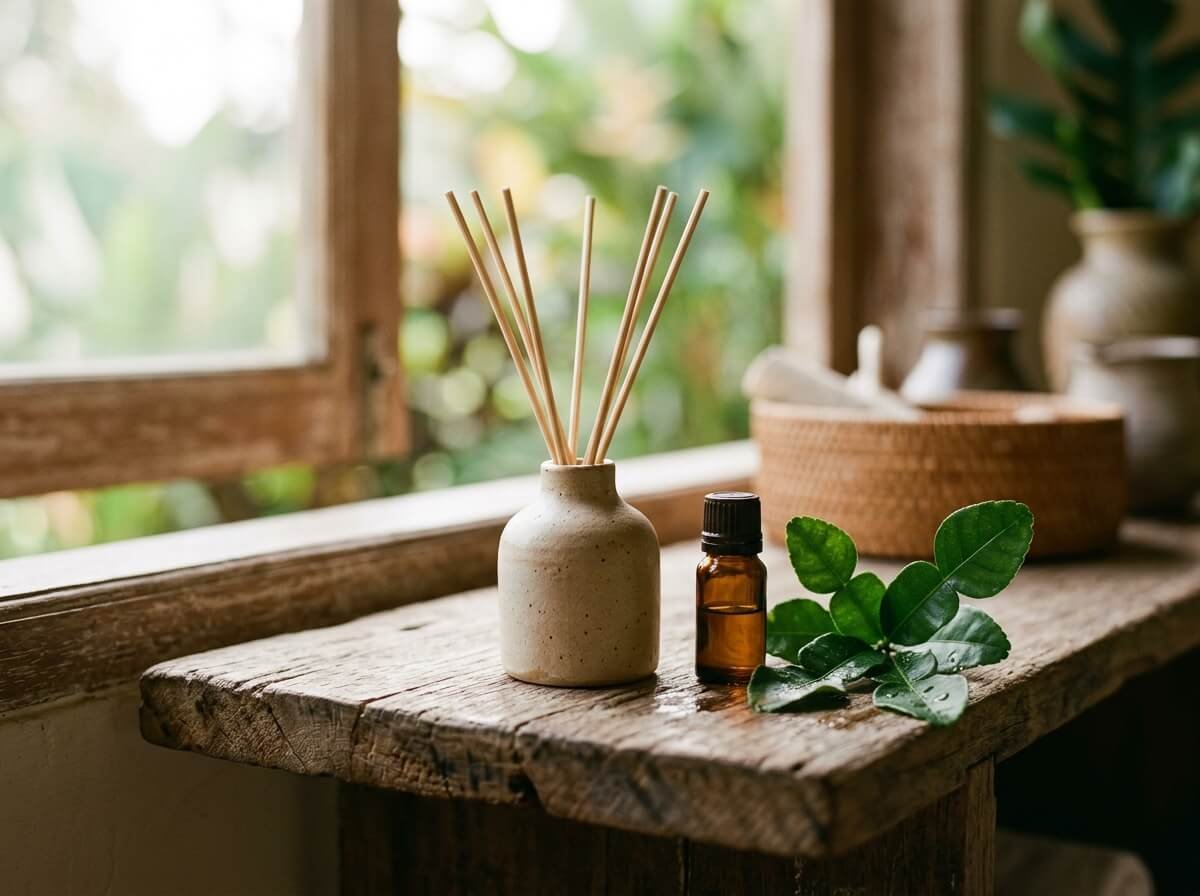
Once you know what the oil is and how to use it safely, it becomes a quietly versatile part of the day. None of these ask for much, and each one leans into the oil’s bright, structured character rather than pretending it is something softer.
Diffusion
Three to five drops in a water diffuser wakes up a room in the morning or clears a stale afternoon. Kaffir lime pairs beautifully with lemongrass for a green-citrus lift, or with lavender to round its sharp edges into something calmer. For more combinations, our aromatherapy diffuser blend recipes give a starting map.
Linen and room mist
Add a few drops to a small spray bottle of water with a dispersant, shake well, and mist over curtains, cushions, and bedding for a clean, natural freshness that skips synthetic fragrance entirely.
Diluted body and bath
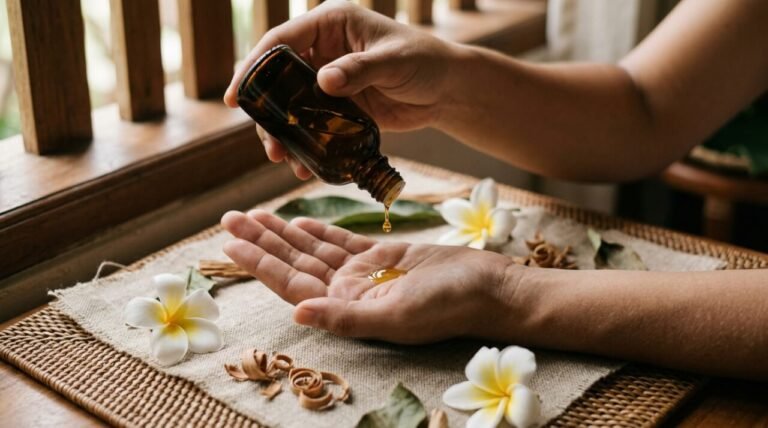
Blended into a carrier at 1 to 2%, kaffir lime adds a crisp lift to a body oil, echoing the old mandi tradition in a modern form. A single drop in a spoonful of carrier, swirled into a warm bath, is another gentle way in. Keep it diluted, and keep it off skin heading straight into strong sun.
Outdoor blends
Because of its citronellal content, kaffir lime is a natural fit for evening outdoor blends. If you would rather reach for something ready-made and field-tested, our Begone Bug Spray does the work for you, and true citronella essential oil is a classic partner if you enjoy building your own.
Our own Kaffir Lime Essential Oil Blend is made around leaf oil for exactly these uses, and it plays well in a wider aromatic wardrobe next to something grounding like our Bali Night blend. We call it a blend on purpose, because honesty about what is in the bottle is part of how we work.
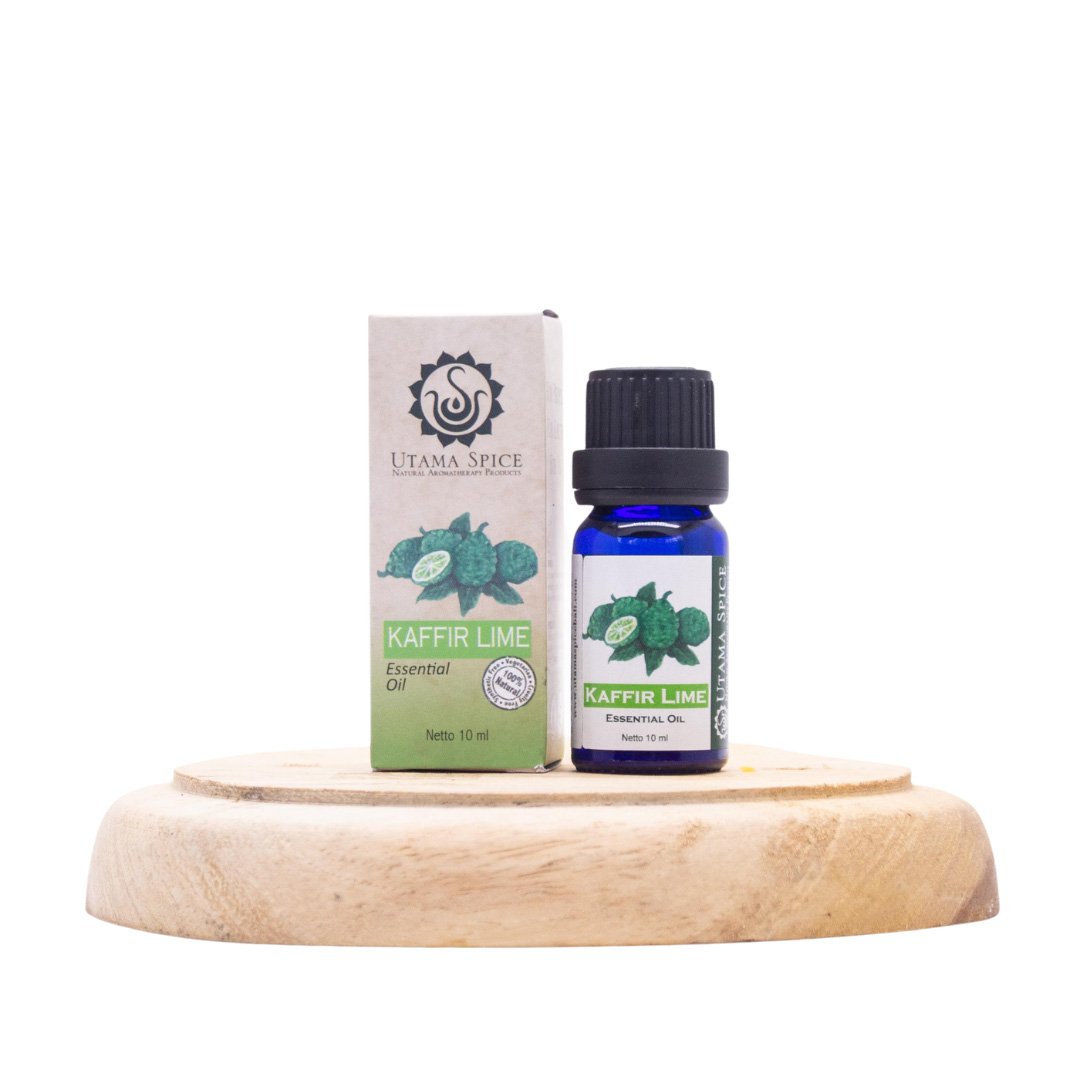
Bright, green-citrus, crafted in Bali
Our Kaffir Lime Essential Oil Blend is built around leaf oil for a fresh, uplifting lift in your diffuser, your linen mist, or a diluted body ritual. Small-batch, honestly labelled, and rooted in the jeruk purut tradition.
Kaffir lime essential oil benefits: frequently asked questions
What is kaffir lime essential oil good for?
It is best used to freshen and lift a room through diffusion, to add a crisp green-citrus note to natural linen and body blends, and to contribute to botanical insect-repelling blends thanks to its citronellal content. Diluted properly, it can bring a bright lift to body and bath rituals.
Is kaffir lime essential oil phototoxic?
Steam-distilled kaffir lime leaf oil, the petitgrain type most commonly sold, is generally considered non-phototoxic. Cold-pressed citrus peel oils are the ones that usually carry sun-sensitivity risk. Knowing which oil you have is the key, and sensible dilution is always wise.
How do I dilute kaffir lime essential oil?
For everyday body use, aim for roughly 1 to 2%, about six to twelve drops per 30 ml of a carrier oil such as coconut oil. Stay lower for the face, patch test first, and never apply it undiluted.
Does kaffir lime oil repel mosquitoes?
Its citronellal content places it in the same chemical family as many botanical repellents, so it can help discourage insects in a blend. It is a supporting actor rather than a guaranteed shield, which is why ready-made repellents combine several actives.
What is the difference between kaffir lime leaf oil and peel oil?
Leaf oil (petitgrain) is steam-distilled, rich in citronellal and sabinene, herbaceous and generally non-phototoxic. Peel oil is cold-pressed, higher in limonene, zestier, and more likely to be sun-sensitizing. They share a plant but behave differently.
Can I use kaffir lime essential oil on my hair?
The fruit has a traditional Balinese reputation as a clarifying hair rinse. With the essential oil, keep it well diluted in a carrier or added sparingly to a natural wash, and patch test the scalp first, especially if your skin is reactive.
Final thoughts
Kaffir lime essential oil rewards the person who takes a moment to understand it. Know whether you are holding leaf or peel oil, respect the dilution, store it well, and it becomes a bright, honest companion for your rooms, your rituals, and your evenings outdoors. The real kaffir lime essential oil benefits are not miraculous, and they do not need to be. They are the quiet, dependable kind: a clearer room, a fresher space, a link to a plant that Bali has cared for across generations. If that is the kind of care you are looking for, our Kaffir Lime Essential Oil Blend is ready when you are.