Essential oils for focus: what actually sharpens attention
If you have ever reached for essential oils for focus at 3pm, hoping a good scent could pull your attention back from the noise, you are asking a fair question: can a smell actually help you think, or does it just make the room nicer to sit in. The honest answer is somewhere in between, and it is more useful than either the hype or the eye-rolling. Some aromas do nudge alertness and mood in measurable ways. Others mostly change how a space feels, which matters too, just not in the way the marketing implies. This guide sorts what the research supports from what is simply pleasant, then shows how we use these oils in a real Balinese ritual, with the care and honesty that has guided Utama Spice since 1989.
We will keep two ideas in balance the whole way through. Scent is real, and scent is not a substitute for sleep, water, movement, or a clear task. Hold both, and aromatherapy becomes a small, dependable tool rather than a promise it can never keep.
What focus actually is, and where scent fits in

Before we talk about essential oils for focus, it helps to be clear about what focus even is. Attention is not one thing. Researchers usually separate alertness (how awake and ready your brain is), sustained attention (holding a task over time), and working memory (juggling information while you use it). A scent cannot write your report for you. What it can do is touch the systems that sit underneath attention: arousal, mood, and the sense of a fresh start.
The reason smell has any pull here is anatomy. Scent molecules reach the olfactory bulb, which connects directly to the limbic system, the part of the brain tied to emotion, memory, and alertness. That is why a single inhale can shift how awake you feel, or drop you into a memory before you have named the smell. Some aromatic compounds, inhaled, also have mild stimulating or calming effects that show up in small studies on reaction time and mood. The effect is real, and it is modest. Think of scent as a cue and a nudge, not an engine.
It also helps to know that the afternoon dip is normal, not a personal failing. Attention runs in natural rhythms across the day, rising and falling in roughly hour-and-a-half waves, and most of us feel a real trough in the early afternoon. A focus ritual works best when it respects that rhythm rather than fighting it: a short reset scent at the start of a work block, a break when the wave passes, and no expectation that a bottle can hold your attention flat for four hours straight. Used this way, aromatherapy becomes a gentle bookend to your energy, not a stimulant you keep chasing.
There is a second, quieter mechanism worth naming: ritual. When you always diffuse the same blend as you sit down to deep work, the scent becomes a signal your brain learns to read. Over days, the aroma itself starts to mean “we focus now.” That is not a trick. It is the same logic behind our evening scent cues for sleep, only pointed at attention instead of rest. If you want the underlying science of why oils behave the way they do, our A-to-Z reference of essential oils and their uses is a good grounding read.
The essential oils for focus that research actually supports
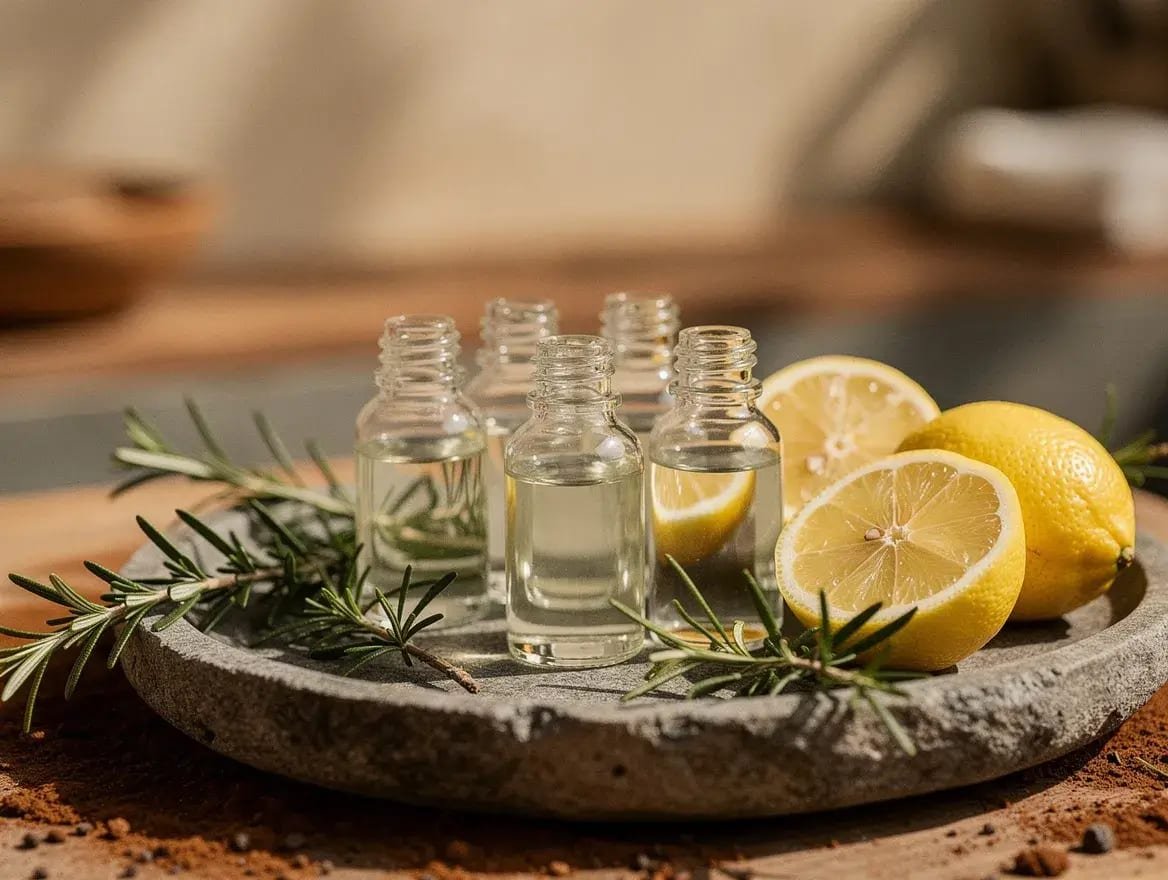
Here are the oils with the most credible evidence behind them for alertness and attention. None of these are miracle workers, and we will say plainly where the science is thin. But if you want essential oils for focus that do more than smell good, start here.
Peppermint
Peppermint is the most studied of the bunch for alertness. Its main compound, menthol, produces a cooling, waking sensation, and several small trials have linked peppermint aroma to faster reaction times, better performance on sustained-attention tasks, and lower reported fatigue. The effect sizes are small and the studies are modest, so treat it as a reliable pick-me-up rather than a cognitive rewrite. For most people, peppermint is the first oil to try when the afternoon slump hits.
Rosemary
Rosemary, particularly the 1,8-cineole rich type, has some of the more interesting research. Studies have associated rosemary aroma with improvements in speed and accuracy on memory and attention tasks, and with higher blood levels of 1,8-cineole tracking those improvements. It is a bright, herbaceous, slightly medicinal scent that many people find genuinely wakening. If peppermint is a splash of cold water, rosemary is an open window.
Citrus: lemon, grapefruit, and kaffir lime
Citrus oils are the mood lever. Lemon in particular has research tying its aroma to improved mood and lower tension, and mood is not a side issue for focus: a calmer, brighter state makes it easier to start and stay with a task. Grapefruit brings a similar lift with a slightly sweeter edge, which we cover in our guide to grapefruit essential oil benefits. In Bali we lean on kaffir lime, the jeruk purut of local tradition, for the same reason: it is instantly uplifting without being harsh. One honest caveat lives in the safety section below, because most citrus oils are photosensitizing on skin.
Frankincense
Frankincense is the grounding member of the group. It does not jolt you awake; it slows a racing mind enough to concentrate. The evidence here is more about calm and centering than measured cognition, so we place it honestly: frankincense helps focus by reducing the mental static that scatters attention. It pairs beautifully with citrus, steadying the brightness so it does not tip into restlessness.
Basil and eucalyptus
Sweet basil is a traditional clarity oil, crisp and green, often used to cut through mental fog. Eucalyptus, sharp and camphoraceous, opens the breath and feels clearing, which many people read as more alert. The direct attention research on both is thin, so we rank them as sensory support rather than proven performers. They earn a place in a blend; they do not carry one alone.
What is just a good smell (the honest part)
This is the section most focus guides skip, and it is the one that keeps you from wasting money. A great deal of what gets sold as a productivity oil is simply a pleasant aroma with a confident label. Pleasant is not nothing. But it is not the same as sharpened attention, and it is worth being clear-eyed about the gap.
Start with expectation. When you believe a scent will help you concentrate, you often do concentrate a little better, at least for a while. That is a genuine effect, and you can use it on purpose through ritual. It is also why a blend can feel powerful the first week and ordinary the third. If a product leans entirely on novelty and a strong marketing story, the lift fades as the novelty does.
Next, “energizing” is not the same as “focusing.” A scent can make a room feel lively and awake without doing anything measurable for sustained attention. Bright, loud, synthetic fragrance blends are especially good at feeling stimulating while offering no cognitive benefit at all, which is one more reason to know the difference between a true essential oil and a fragrance oil. We wrote a full breakdown on essential oil versus fragrance oil, and it matters here: a synthetic “focus blend” may smell the part and contain nothing that behaves like the plant.
Finally, the hardest truth. No oil out-competes the basics. If you are underslept, dehydrated, or trying to focus on a task you have not actually defined, aromatherapy will not save the hour. Scent is a supporting actor. Sleep, water, movement, and a single clear task are the leads. We would rather tell you that than sell you a bottle that quietly promises otherwise.
How to use essential oils for focus, method by method
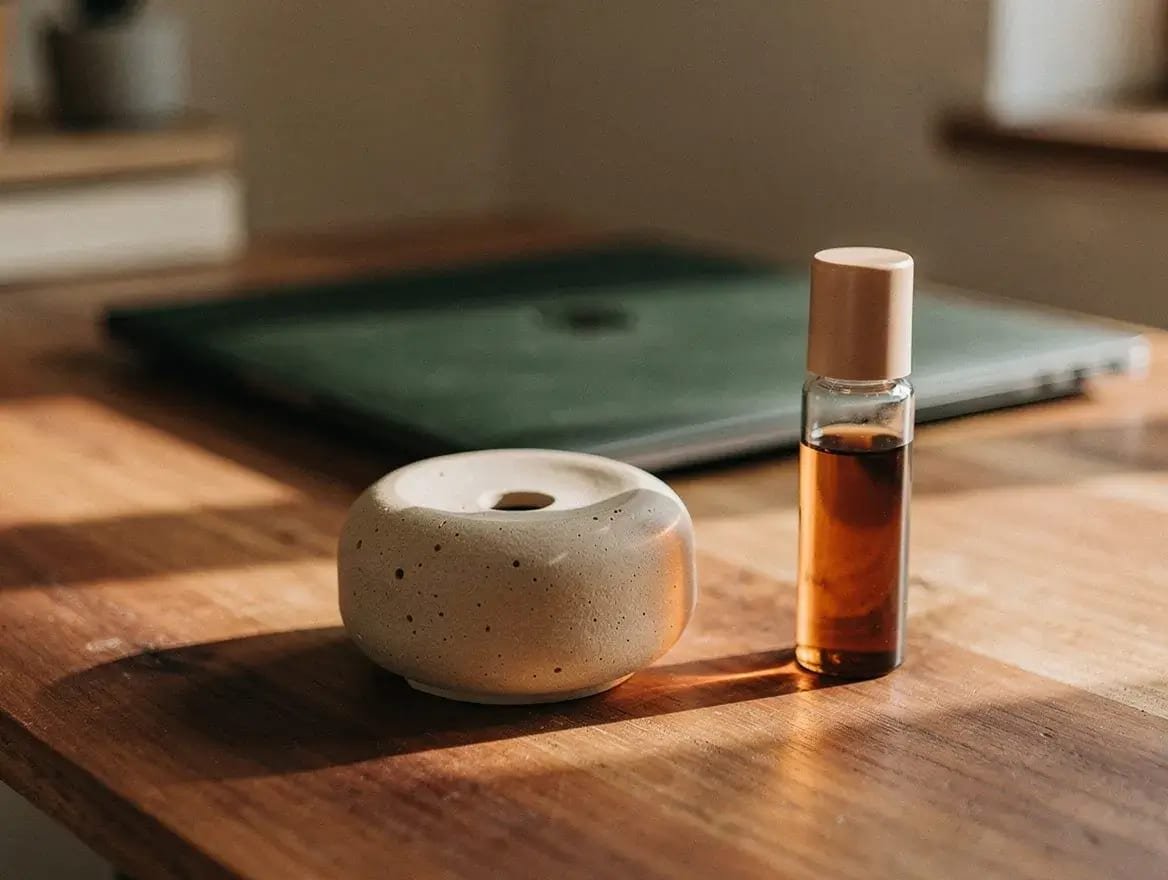
The delivery method changes the experience as much as the oil does. Here is how to match the method to your day, and where each one shines.
Whichever method you choose, scent works best alongside the rest of your setup, not instead of it. Pair your blend with one clear task written down, a tidy surface, and a phone set out of reach, and the aroma has something to anchor to. On its own, a lovely smell drifts. Tied to a defined block of work, it becomes the opening note of a ritual your brain starts to recognise.
Diffusion, for a whole work session
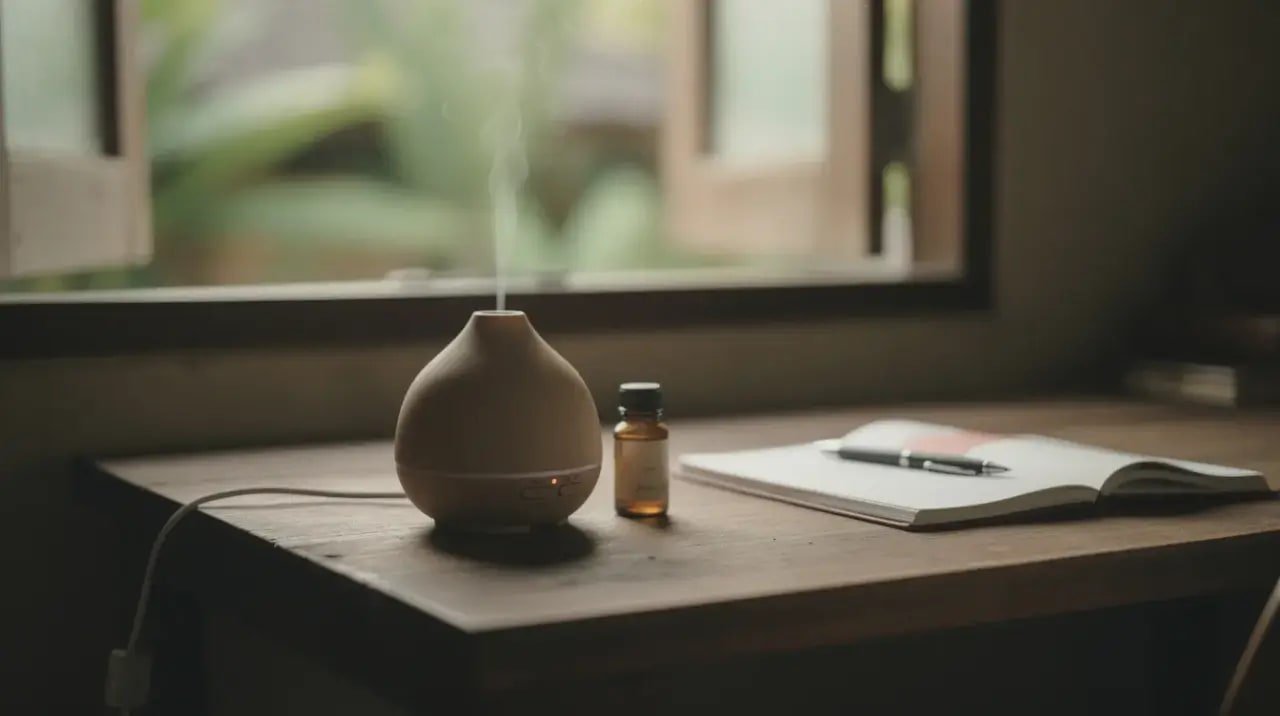
A diffuser fills a room with a low, steady level of aroma, which suits deep work that runs for an hour or more. Keep it gentle: a few drops in an ultrasonic diffuser, run in intervals rather than continuously, so your nose does not adapt and stop noticing. Adaptation is real, and a scent you cannot smell anymore does little. A well-made diffuser like the Danau Dua diffuser gives you enough control to keep the aroma present without flooding the space. For ready-made combinations, our Balinese diffuser blend recipes cover morning-to-night rituals.

A roller, for focus on the move
A pre-diluted roller is the most practical way to carry focus with you: at a desk, on a commute, before a meeting where a diffuser is not an option. You roll it onto pulse points or the inner wrists, then cup your hands and take a slow breath. Because the oils are already blended into a carrier, a roller is also the safest everyday format for skin. Our Pure Energy essential oil roller was built for exactly this moment, an uplifting, wakening blend you can reach for without measuring a single drop. If you tend toward an anxious, scattered kind of unfocus, a calming roller such as the Bliss roller can steady you first, since calm often has to come before concentration.
Direct inhalation, for a fast reset
The quickest method needs no equipment. Place one drop on a tissue or in your palms, hold it a few centimetres from your nose, and take two or three slow breaths. This is ideal for the 3pm slump or the moment before a hard task, when you want a sharp, brief cue rather than an all-afternoon ambience. It is also the most controllable, since you decide exactly how much scent reaches you.

Carry focus in your pocket
Our Pure Energy roller blends bright, wakening botanicals into a pre-diluted format you can reach for at your desk, on a commute, or before anything that needs your full attention. No measuring, no mess, just one slow breath and a fresh start.
Three focus blends you can build yourself
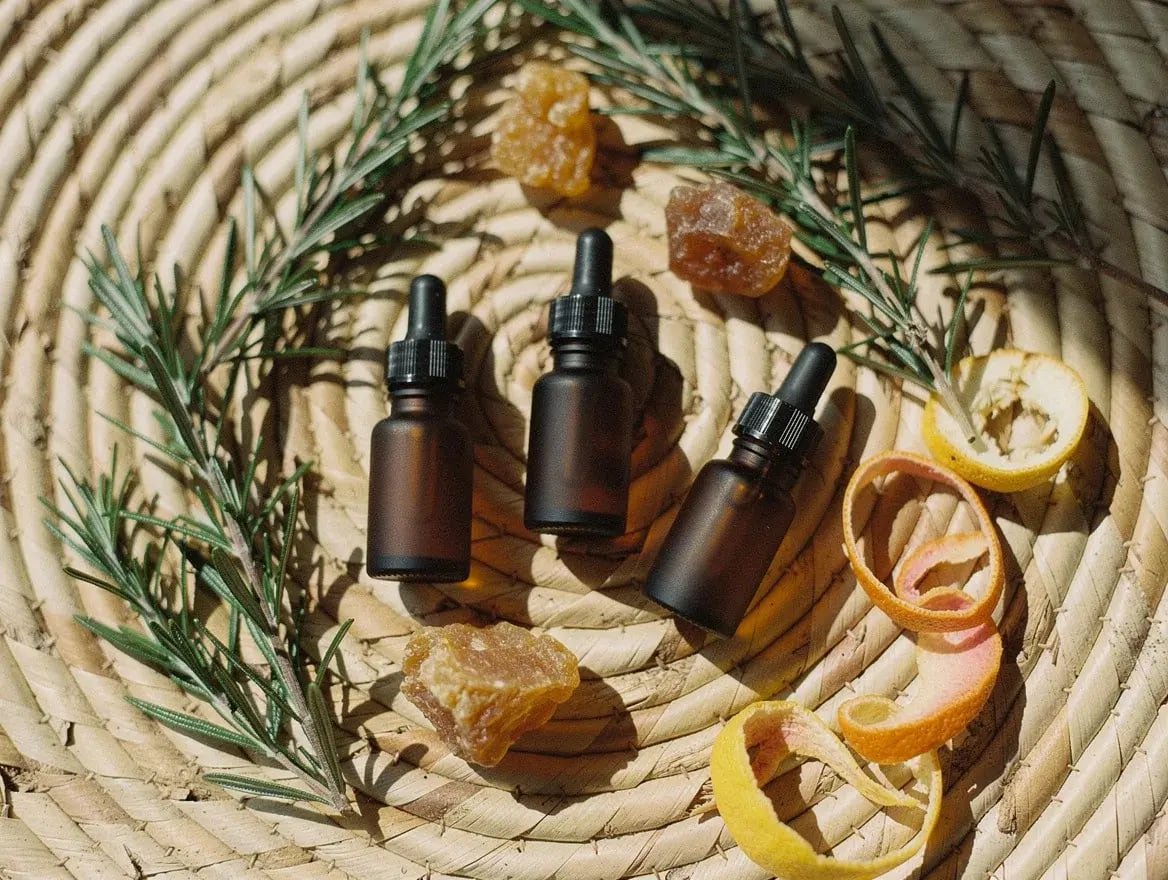
Building your own blend is where this becomes a ritual rather than a purchase. These recipes are for an ultrasonic diffuser; scale the drop counts to your device and your room. Start light, since you can always add.
Morning clarity: bright and waking
- 3 drops peppermint
- 2 drops rosemary
- 2 drops lemon or grapefruit
This is the classic wake-up combination: peppermint and rosemary for alertness, citrus for mood. Use it as you start the day or open a demanding project. A single-note grapefruit essential oil keeps the citrus bright without sweetness.
Grounded focus: steady and calm
- 3 drops frankincense
- 2 drops kaffir lime
- 1 drop rosemary
For work that needs endurance rather than a jolt, lead with frankincense essential oil to quiet the static, then lift it with a little kaffir lime. Our Kaffir Lime blend is an easy shortcut if you would rather not source the note separately.
Afternoon revival: cut the fog
- 2 drops peppermint
- 2 drops sweet basil
- 2 drops eucalyptus
The slump blend: crisp, green, and clearing, aimed at the mid-afternoon dip. If you prefer not to measure, a curated Perfect Balance essential oil set gives you a range of single notes to experiment with across all three recipes.
Safety, dilution, and who should skip which oil
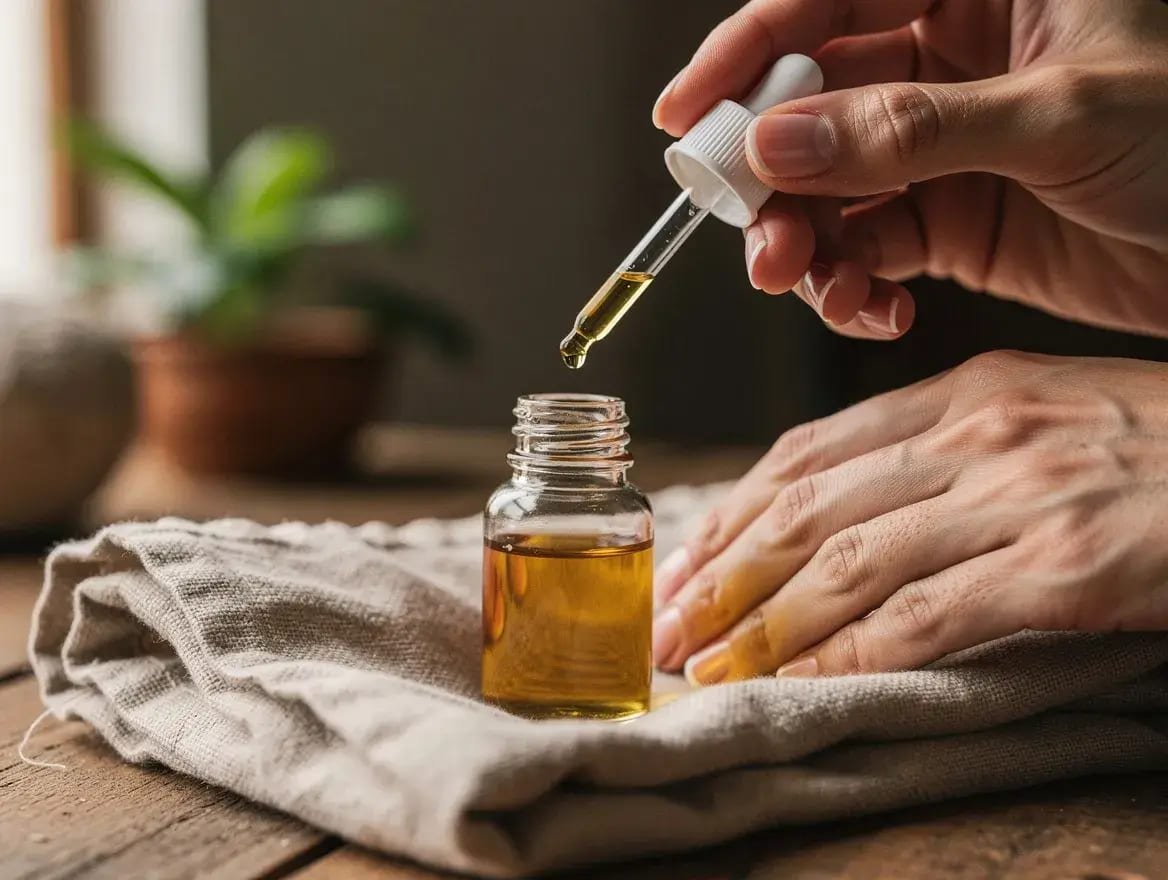
Focus is not worth a headache or an irritated skin patch, so a few rules keep this practice safe and sustainable. None of them are complicated.
Dilute before skin contact. Never apply undiluted essential oil to skin. For most adults, a 2% dilution (roughly 12 drops of essential oil per 30ml of carrier) is a sensible everyday ceiling, and the carrier you choose matters as much as the drop count. Our full walkthrough on how to dilute essential oils covers the ratios, and pre-diluted rollers remove the guesswork entirely.
Mind the sunlight rule with citrus. Lemon, grapefruit, and many cold-pressed citrus oils are phototoxic: applied to skin and then exposed to sun, they can cause burns or dark patches. Keep citrus to the diffuser, or keep treated skin covered and out of the sun for at least 12 hours. Diffusing citrus carries no such risk, which is another reason it lives happily in a focus blend.
Protect the people who cannot tell you. Pregnancy, young children, and anyone with epilepsy, asthma, or high blood pressure should check specific oils with a professional first; rosemary, in particular, is often advised against in pregnancy and for those prone to seizures. Diffuse in ventilated rooms, in intervals, and keep bottles out of reach.
Remember pets breathe your blend too. Cats especially lack the liver enzymes to process many essential oil compounds, and strong diffusion in a closed room can affect them. Give animals a way to leave the room, keep the diffuser light, and never apply oils to a pet. Safe for you does not always mean safe for them.
Frequently asked questions
What is the single best essential oil for focus?
If you want one oil to start with, choose peppermint. It has the most research behind it for alertness and reaction time, and its cooling scent gives an immediate, noticeable lift. Rosemary is a close second, especially for tasks that lean on memory. Most people find their real answer in a blend, though, since mood and alertness both feed focus.
Do essential oils for focus actually work, or is it placebo?
Both, honestly. A handful of oils, peppermint and rosemary chief among them, show small but real effects on alertness and attention in studies. Expectation and ritual add a further, genuine layer on top. The effect is modest and supportive, not dramatic. Used as a cue for focused work rather than a cure for tiredness, it earns its place.
Can I put a focus blend directly on my skin?
Only diluted. Never apply neat essential oil to skin. Use a pre-diluted roller, or blend your oils into a carrier at around 2% for adults. Take special care with citrus oils, which can react with sunlight and burn exposed skin. When in doubt, keep the blend in the diffuser and off the body.
How long should I diffuse for focus?
Work in intervals of around 30 to 60 minutes rather than diffusing non-stop. Your nose adapts to a constant scent and stops registering it, so a break keeps the aroma effective and uses less oil. Matching the diffusing session to a focused work block also strengthens the ritual link between the scent and the task.
Are essential oils for focus safe around children and pets?
With care. Diffuse lightly, in a ventilated room, and always give children and animals the option to leave. Cats are particularly sensitive to many oils. Avoid applying anything to a child’s or pet’s skin, and check specific oils, such as rosemary and eucalyptus, against age and health conditions before use.
What is the difference between an energizing scent and a focusing one?
An energizing scent makes a space feel lively and can lift your mood; a focusing effect specifically supports sustained attention. Many aromas do the first without the second. Peppermint and rosemary are among the few with evidence for genuine attention support, while much of what is sold as energizing is pleasant ambience rather than measurable help.
Final thoughts: a small, honest tool
Essential oils for focus are neither magic nor marketing myth. A few of them, used with intention, give a real, gentle lift to alertness and mood, and the ritual of reaching for the same scent as you settle into work quietly deepens that effect over time. The rest is knowing the difference between a scent that helps you think and one that simply makes the room pleasant, and being honest about which you are buying.
That honesty is the whole point of how we craft in Bali. We would rather hand you a clear method and a truthful expectation than a promise a bottle cannot keep. Choose one oil, build one blend, tie it to one task, and let care do its slow, real work. What you give, you get back.