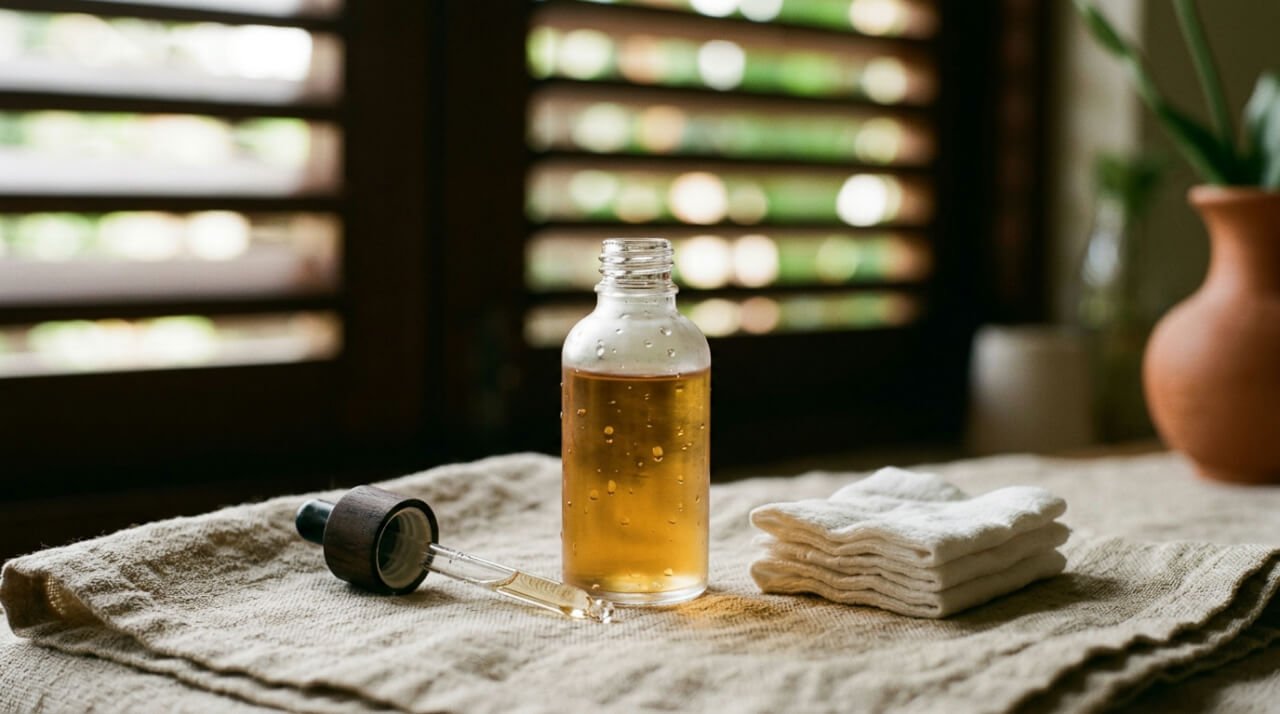
Natural toner: what it actually does, whether you need one, and the honest witch hazel truth
A natural toner sits on more bathroom shelves than almost any other skincare step, and yet it is the step most of us use on autopilot, wiping a cotton pad across our face each morning without asking what it is actually doing. The category has quietly changed over the past decade: the old astringent toner sold to “tighten pores” and mop up leftover cleanser has mostly given way to hydrating mists and humectant blends. Most of us are still carrying the old belief into a new product.
We think that gap between belief and formula is worth closing honestly, not with another roundup of ten bottles to buy. This guide explains what a toner actually does, whether your routine needs one at all, and the honest truth about witch hazel, the ingredient most natural toners are still built around. We will also map toner against its closest cousins, essence, hydrosol, and facial mist, and give you a sequence that works with your skin’s own biology rather than against it.
What a toner actually is, and how the category quietly changed
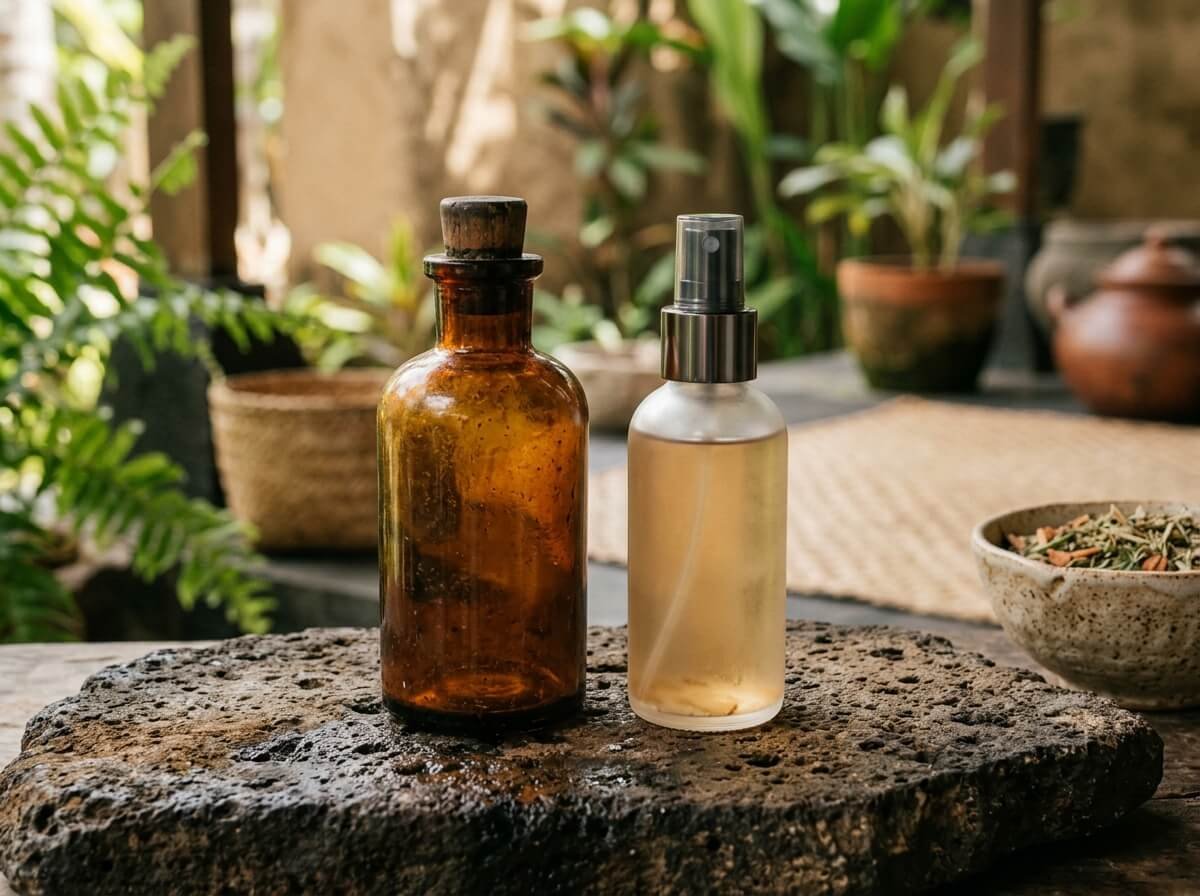
For most of the twentieth century, “toner” meant an astringent liquid, usually alcohol-based, applied after cleansing to strip remaining oil and shrink the appearance of pores. It was formulated for an era when soap-based cleansers left a residue and skin care assumed that oil was the enemy. That toner worked by drying the surface of the skin, which felt clean in the moment and damaged the barrier over time.
Today’s natural toner is a different product wearing the same name. Most modern formulas are humectant-forward: aloe, hydrosols, glycerin, and gentle plant extracts that add a layer of moisture rather than removing one. The shift happened gradually enough that the marketing never caught up. Bottles still say “toner,” and shoppers still bring decades-old assumptions to the shelf, expecting a tightening, stinging sensation that a well-made modern formula will not deliver.
Understanding this shift matters because it changes what you should look for. If you are shopping with the old definition in mind, you may pick an alcohol-heavy astringent formula that undoes the work of a gentle cleanser. If you understand the category as it exists now, you can choose (or skip) a toner based on what your skin actually needs, not on a decades-old idea of what toning is supposed to feel like.
The instinct to pat a liquid onto the face after washing is not new. Balinese skincare tradition has long used plant waters, rice water, and infused botanicals as a finishing step after cleansing, long before the word toner existed in a marketing brief. The tradition and the modern formula share a logic: water-based plant extracts, applied while skin is still damp, carry moisture and mild actives more efficiently than a heavier cream applied to dry skin alone. What changed in the industrial era was the addition of alcohol for shelf stability and a stinging sensation, which got mistaken for effectiveness. Rooted, older practices never needed that trade-off.
This is also why reading a toner’s ingredient list matters more than reading its marketing copy. Two bottles can share the word “toner” on the front label and behave completely differently: one built around alcohol and fragrance for a stinging, tightening sensation, the other built around aloe, glycerin, and a hydrosol base for a calm, moisture-forward finish. Neither is dishonest by definition, but only one tends to match what most people actually want from a daily step, which is comfort rather than a jolt.
The pH myth, and what a toner does and does not do

Search for natural toner benefits and you will find a persistent claim: that toner “rebalances your skin’s pH” after cleansing. It is one of the most repeated lines in skincare marketing, and it is mostly untrue. Healthy skin carries a naturally acidic surface, often called the acid mantle, that helps keep unwanted bacteria in check and holds moisture in. Cleansing, even with a gentle formula, temporarily raises that pH.
Here is the part the marketing leaves out: skin restores its own pH on its own, typically within twenty to thirty minutes of cleansing, with or without a toner. A toner does not perform some special rebalancing act that your skin cannot do for itself. What a good toner can genuinely do is add moisture back to the surface faster than waiting alone, prep the skin so a serum or oil absorbs more evenly, and deliver targeted plant actives in a light, fast-absorbing form.
That is a real, useful list of benefits. It is just a shorter and more honest list than “restores your pH,” and it is worth knowing the difference before you buy based on a claim that does not hold up.
What actually disrupts the acid mantle over time is not a single cleanse. It is repeated stress: very hot water, over-cleansing, harsh sulfates, and skipping moisturiser for long stretches. We wrote more about how hot water affects the skin barrier if you want the fuller picture. A toner will not undo weeks of that kind of stress, and treating it as a quick fix for a barrier problem is one more way the marketing oversells what a light, water-based product can realistically do.
Do you even need a toner? An honest answer by skin type
Here is the question most roundups skip because the honest answer does not sell more product: no, not everyone needs a toner. A well-formulated gentle face wash paired with a good moisturiser is a complete routine for a lot of skin types. Toner is an additive step, not a mandatory one, and treating it as optional rather than essential is the more honest place to start.
- Dry or barrier-compromised skin: a hydrating toner can genuinely help, layered under a richer cream, but a heavy humectant serum can do the same job.
- Oily or congestion-prone skin: a light, alcohol-free toner can feel refreshing and help other products absorb, though it will not “shrink pores,” which is a matter of genetics, not liquid.
- Sensitive or reactive skin: often the skin type that benefits most from skipping toner altogether, since fewer steps mean fewer chances for irritation.
- Normal or balanced skin: toner is entirely optional here, a nice-to-have rather than a need-to-have.
If your skin already feels calm and comfortable after cleansing and moisturising, you do not need to add a step to feel like you are doing enough. Real care means using what your skin responds to, not what a routine chart says you are missing.
There is also a quieter, more practical reason to ask the question honestly. Every step you add is another bottle to buy, store, and eventually refill or replace. A ten-step routine sold on the promise of completeness is not automatically better care, and it is rarely better for the planet. Buying only what your skin genuinely uses, and refilling it when you can, is a small, unglamorous act of restraint that does more for both your skin and your footprint than a shelf full of half-used bottles.
Witch hazel: the classic natural toner, and the alcohol truth nobody flags
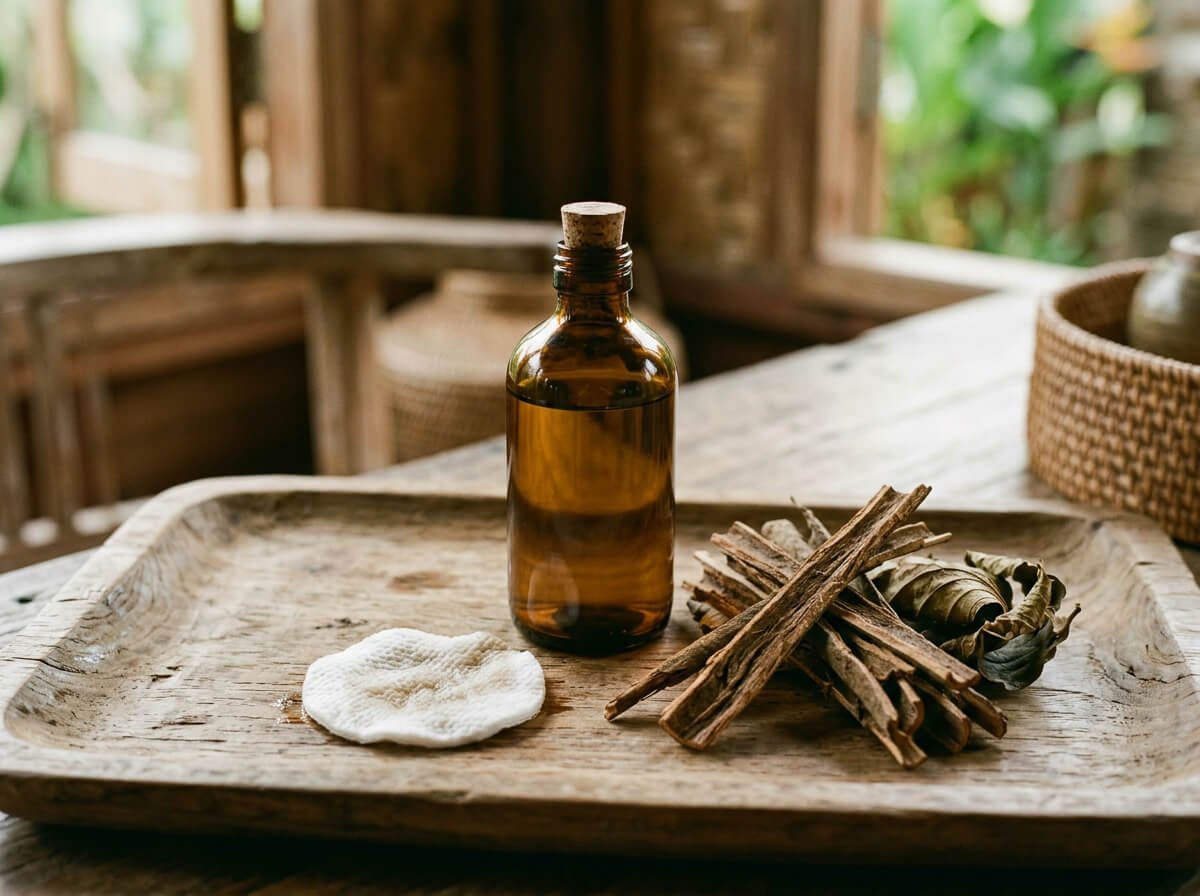
If one ingredient defines the natural toner category, it is witch hazel. Distilled from the bark and leaves of the witch hazel shrub, it has been used as a skin-soothing astringent for generations, and it remains the plant-based toner most people reach for first. Our own Witch Hazel 100ml is a simple, honest version of exactly this: one ingredient, distilled, nothing added to disguise what it is.
Here is the nuance most DIY guides leave out. Commercially distilled witch hazel typically contains around fourteen percent alcohol, used to extract and preserve the plant’s tannins. That alcohol content is part of why witch hazel feels tightening and fresh, and it is also why using it twice a day, every day, on already-dry or sensitive skin can tip into over-drying and irritation rather than care.
The honest way to use witch hazel: sparingly, patch-tested before regular use, and paired with a moisturiser rather than left to sit alone. Many people do beautifully with it once or twice a day. Others find their skin prefers it as a spot treatment, dabbed only where needed, rather than swept across the whole face. Both are legitimate ways to use a real, wild-harvested plant ingredient, and neither requires the alcohol content to be hidden from you.
Witch hazel’s astringent power comes from tannins, plant compounds that gently tighten tissue and have a long history of traditional use for calming minor skin irritation, insect bites, and razor bumps, alongside its role as a toner. Distillation captures those tannins in a fine, fast-absorbing liquid, which is part of why it remains popular a century after it first became a drugstore staple. None of that history changes the alcohol math. A plant being traditional and effective does not exempt it from being used thoughtfully, and that is exactly the kind of nuance greenwashed “clean” labels tend to skip in favour of a simpler, less accurate story.

If you are shopping for witch hazel specifically, look for a short, transparent ingredient list rather than a long one with fragrance and added dyes stacked on top of the base extract. A single-ingredient distillation, the kind that lists witch hazel and little else, gives you the clearest picture of what you are actually applying, and it lets you decide for yourself how often your particular skin can comfortably handle it. That transparency, more than any specific percentage, is what separates a natural toner worth trusting from one that is simply riding the word “natural” on the label.
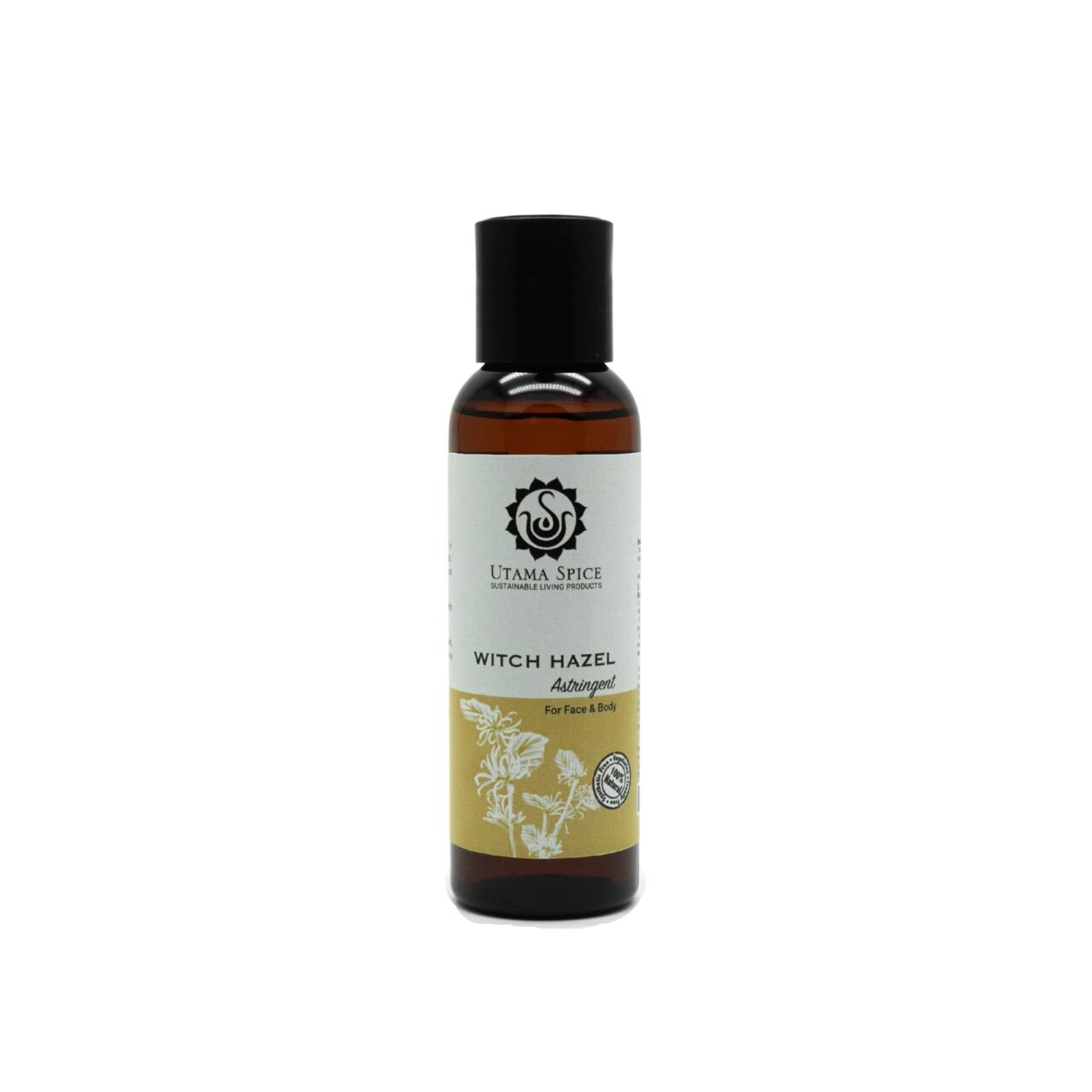
One ingredient, nothing to hide
Our Witch Hazel 100ml is a simple, wild-harvested distillation, honest about what it is and how to use it well.
Toner vs essence vs hydrosol vs facial mist: a plain-language map
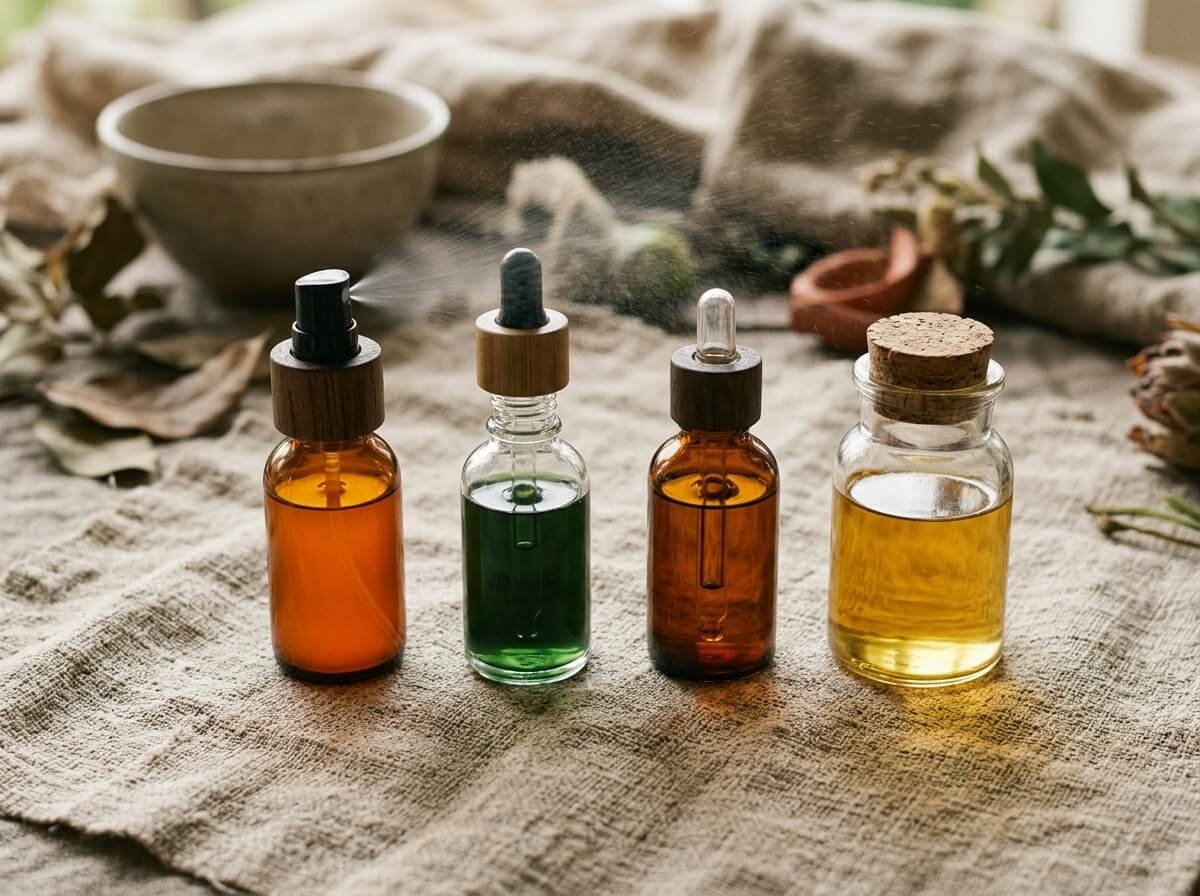
Part of why natural toner is confusing is that it sits in a crowded shelf of similarly liquid, similarly bottled products that are not the same thing, even though marketing often blurs all four into one category.
- Toner: typically the most active of the four, often containing acids, astringent plant extracts like witch hazel, or targeted actives, applied right after cleansing.
- Essence: a lighter-weight, more hydrating step, usually fermented or extract-based, meant to prep skin for serum rather than treat it directly.
- Hydrosol: the water left over from steam-distilling a plant for its essential oil (rose water is the most familiar example), gentle, lightly scented, and hydrating rather than active.
- Facial mist: the broadest category, often just a refreshing spray with minimal formulation depth, meant to be reapplied throughout the day rather than as a routine step.
None of these four is strictly better than the others. They serve different purposes, and a routine can reasonably include one, several, or none of them. Knowing the difference means you can choose based on what a product actually does rather than which of these four words happens to be printed on the label.
As a rule of thumb: reach for a toner when you want an active, treatment-style step right after cleansing. Reach for an essence when your skin feels tight but you do not want anything strong. Reach for a hydrosol when you want the lightest possible hydration with a natural scent, and keep a mist in your bag for a midday refresh rather than expecting it to do the work of your morning routine. None of the four needs to be expensive or elaborate to do its job well.
How and where to use a toner: cleanse, tone, treat, seal

If you do choose to include a toner, sequence and technique matter more than the product itself. The order that works with your skin’s own biology, rather than against it, is cleanse, tone, treat, seal.
- Cleanse with a gentle formula suited to your skin type, then pat, do not rub, the skin dry.
- Tone onto slightly damp skin, either sweeping a soaked cotton pad or pressing product in with clean hands. Damp application helps the toner absorb rather than sit on the surface.
- Treat with any targeted serum while the skin is still slightly moist, which helps active ingredients penetrate more evenly.
- Seal with a moisturiser, such as a hydrating face cream, to lock the moisture from the previous steps into the skin.
In Bali’s humid climate, this sequence needs one adjustment: give each layer a moment to absorb before adding the next, since higher ambient humidity slows evaporation and a rushed routine can leave skin feeling tacky rather than nourished. If your household refills its own bottles, keep toner in a smaller vessel you use up quickly. Botanical formulas without heavy preservatives have a shorter comfortable shelf life once opened.
A few practical notes on technique: soak a cotton pad rather than pouring toner directly into your palm, since a pad distributes the liquid more evenly and wastes less. If you are trying witch hazel for the first time, patch-test on your inner arm for a day or two before applying it to your face, especially if your skin has a history of reacting to alcohol-based products. And resist the urge to press hard or scrub with the pad. Toner is meant to be smoothed on, not worked in, which is a gentler habit for your skin either way.
Frequently asked questions about natural toner

Can I skip toner entirely?
Yes. A gentle cleanser and a good moisturiser form a complete routine for most skin types. Toner is additive, not mandatory, and skipping it will not leave your skin under-cared for.
Is witch hazel drying?
It can be, because most distilled witch hazel contains roughly fourteen percent alcohol. Used sparingly and followed by a moisturiser, most people tolerate it well. Used twice daily on already-dry skin, it can tip into over-drying.
How often should I use toner?
Once daily is a reasonable starting point for most people, with twice daily reserved for those whose skin clearly tolerates it well. Let how your skin feels, not a routine chart, set the frequency.
Is DIY rosewater toner safe to make at home?
Store-bought rosewater hydrosol used as-is is generally safe and gentle. Where DIY recipes run into trouble is home distillation without proper equipment or preservation, which can introduce contamination. If you want a hydrosol-style toner, buying a properly distilled one is the safer route.
Does toner actually shrink pores?
No. Pore size is determined largely by genetics and oil production, not by any topical liquid. An astringent toner can make pores look temporarily smaller by drying and slightly swelling the surrounding skin, but that is a cosmetic illusion, not a structural change.
Can a toner replace a serum?
Not reliably. A toner is generally lighter and less concentrated than a serum, and it is not formulated to deliver the same depth of targeted actives. Think of toner as preparation for the step that follows, not a substitute for it.
What ingredients should I watch for in a natural toner?
Check the alcohol position on the ingredient list: high up means a more drying, astringent formula, which is fine for some skin types and not others. Fragrance, both synthetic and heavily concentrated essential oil blends, can also be a source of irritation for sensitive skin, so patch-test any new formula before making it a daily habit.
Final thoughts: care means honesty, not another step
A natural toner can be a genuinely useful part of a routine, or it can be a step you never needed in the first place. Both are true depending on your skin, and neither answer sells better than the other to us. What matters is understanding what the product in front of you actually does: not rebalancing a pH your skin already manages on its own, not shrinking pores that were never going to shrink, but adding moisture, prepping skin for what comes next, and occasionally, in the case of witch hazel, offering a real plant-based astringent that deserves to be used with care rather than habit.
We would rather hand you the honest, shorter version of a routine than the impressive-looking, longer one. That is the same philosophy behind refill culture: use what genuinely serves you, refill it rather than replace it, and skip what does not earn its place on the shelf. A toner earns its place when it solves a real problem for your skin. It does not earn a place just because a nine-step routine says it should be there.
If your skin wants a simple, honest starting point, our Witch Hazel 100ml is a single, wild-harvested ingredient with nothing to hide. If your skin prefers something more soothing, our Aloe Vera Gel offers a gentler, humectant alternative. For more on building the rest of the routine around it, see our guides to the oil cleansing method, a full natural skincare routine, and how we approach Balinese skincare heritage more broadly. If you are still deciding what belongs on your shelf at all, our guide to skincare ingredients to avoid and our recent piece on double cleansing both cover the steps that come before toner in the sequence. Progress, not perfection, one honest step at a time.